-
Wallpaper
-
AR Interface
-
Data Visualization
-
Data Chart
Inspiration
Our main inspiration for this project was the island of Bali Indonesia, where there are over 1 million independent waste workers, and half the island has no waste collection, so everybody just throws their trash into the ocean. The digital revolution has basically skipped the waste industry. People do not know how to classify and identify different forms of waste and place them into correct categories when disposing them. Thus, either the trash must be sorted through manual labour or everything is thrown into landfills or into the ocean. This is detrimental to the environment costs society as a whole trillions of dollars annually. "Approximately 75% of plastic bottles are never recycled, despite being in demand by recyclers due to the high quality of plastics used... Bottled water produces up to 1.5 million tons of waste each year, ending up in our landfills, oceans, and lakes." - EPA
Since everyone has a smartphone now, we can address this problem in a way that would not have been possible just 5 years ago.
What it does
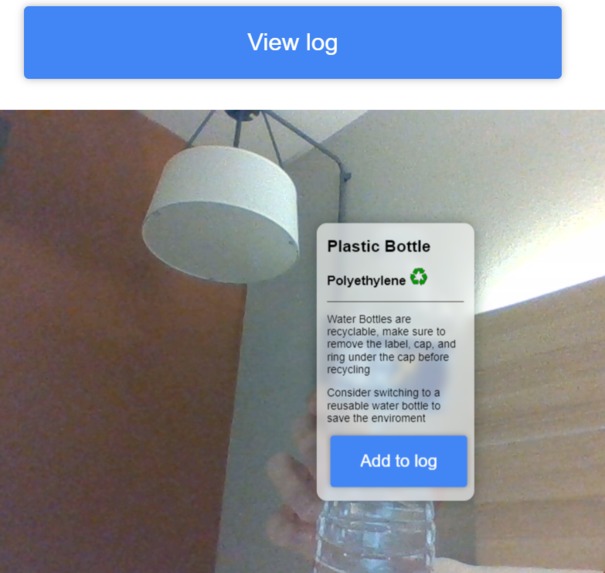
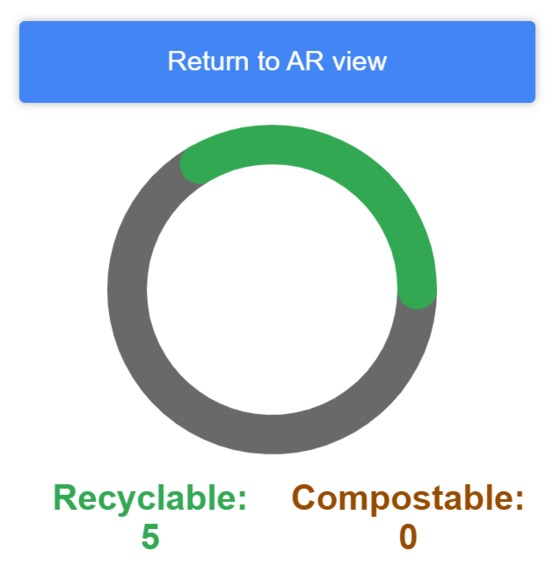
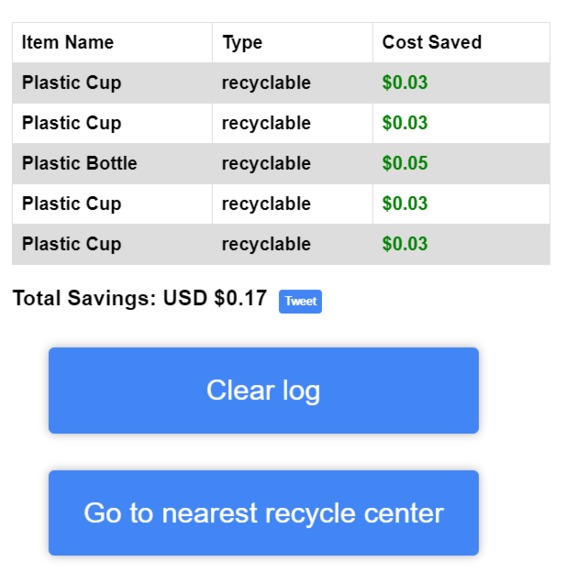
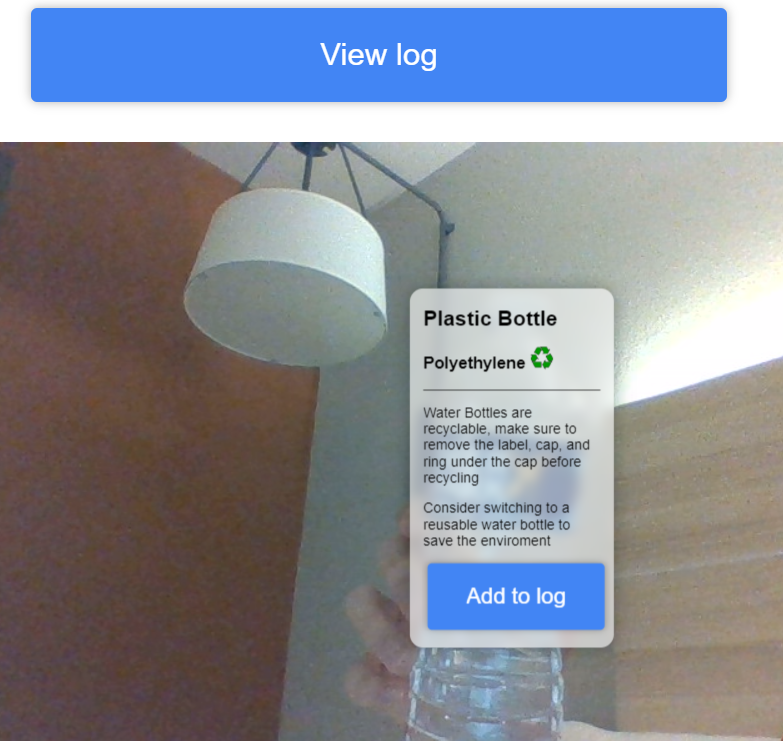
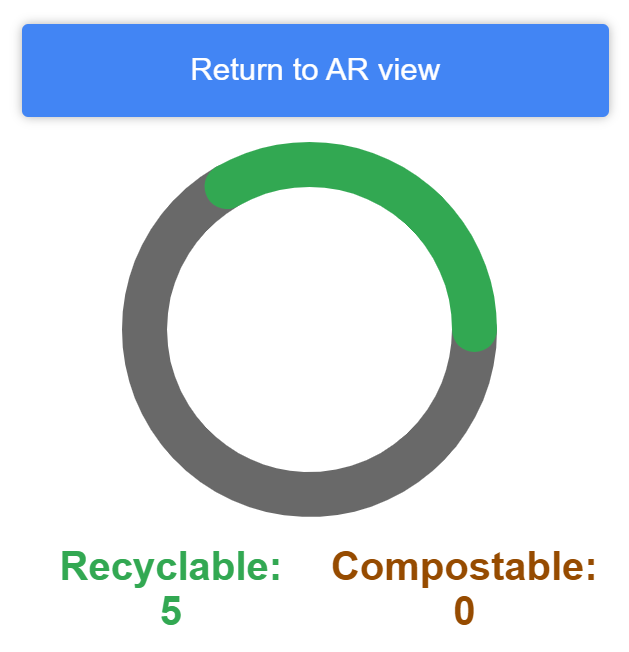
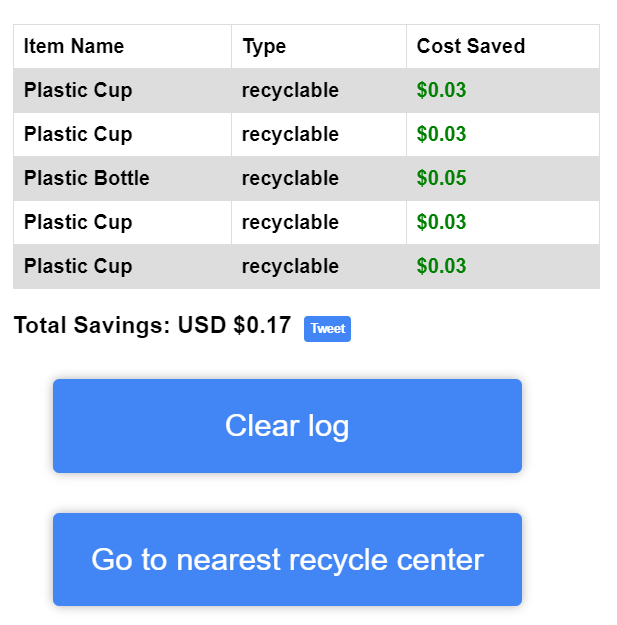
Through just a smartphone or laptop camera, we are able to instantly assess and classify 90 different common object classes and give them labels based on what our deep learning model thinks they are in real time. Another custom algorithm identifies whether the object was organic or not as well as the general material composition, and thus identifies whether the object is considered trash, recyclable, or compostable. Our model is optimized to be able to incorporate multiple waste items at the same time for more efficient cleanup tasks. Objects are correlated with external data on the monetary value of each waste item. This information is paired with useful information on how to properly dispose of these waste products and recommendations for more sustainable activity in an augmented reality interface. Thus, when a waste item is detected and it is recyclable, the return value is displayed and when it is disposed of, the amount is added to a continuous log. A heuristic algorithm detects the nearest recycling center and traces the path between your location and the recycling center. We added a twitter integration to be able to share your recycle/compost log on social media and encourage collectivized use of the application and encourage global recycling and composting. All of this is incorporated in a clean and minimalistic web application, so it can be used across all mobile devices with a camera and across all software platforms (Windows, MacOS, iOS, Android, Linux).
How we built it
We leveraged Tensorflow.js to power machine learning model which would be able to recognize 90 common objects including bottles, cups, plastic utensils, paper, food items, bowls, and many more. We used additional datasets to be able to recognize whether a waste item was recyclable or compostable through features such as material (ie. organic, plastic, etc.). We used React to create an intuitive and visually appealing user interface, and to power the augmented reality interface in real time. We matched the items detected to an external source to find the value corresponding with recycling the item. We used Google Maps to visualize the result of our heuristic recycling center path algorithm. Finally, we used Twitter integration to be able to share the results of the recycle/compost logs.
Challenges we ran into
We had some problems when attempting to map a flat, two-dimensional image to a virtual, three-dimensional representation of the user's environment. Additionally, we also had some difficulty in adapting the highly intensive algorithms and artificial intelligence models to lower-powered mobile devices.
Accomplishments that we're proud of
We are proud of being able to incorporate our custom models with our Tensorflow.js waste detection model and have it smoothly detect and show in augmented reality the classified information and labels. This allows the collectors work and do better by making their job easier such as in poor countries like Bali, Indonesia, waste workers can be overwhelmed with the tonnes of waste needing to be sorted, and so this app allows the worker to quickly and efficiently sort out the recyclable and compostable items and filter them out. We are proud that we can help average people all around the world in both developing and developed nations to quickly understand and identify which form of waste they have.
What we learned
We learned about how to use augmented reality smoothly with Tensorflow.js machine learning. We learned to navigate the intricacies of web based deep learning and computer vision. We also learned a lot about React-based graphs and charts.
What's next for RecycleCore
We plan on improving the speed and accuracy of our algorithms for better waste detection and separation. As a long term goal we plan on working with large companies to allow poor countries to have wide access to our novel application and apply this technology to automatic trash cleanup and waste sorting efforts.
Built With
- css
- javascript
- nelify
- next.js
- node.js
- react
- tensorflow
- typescript


Log in or sign up for Devpost to join the conversation.