Inspiration
The inspiration for Recycle Reader came from the need to make recycling easier and more accessible. Many people are unsure about how to properly recycle different materials, leading to contamination in recycling streams. By providing instant information about the recyclability of products through barcode scanning, we aim to promote better recycling habits and reduce waste.
What it does
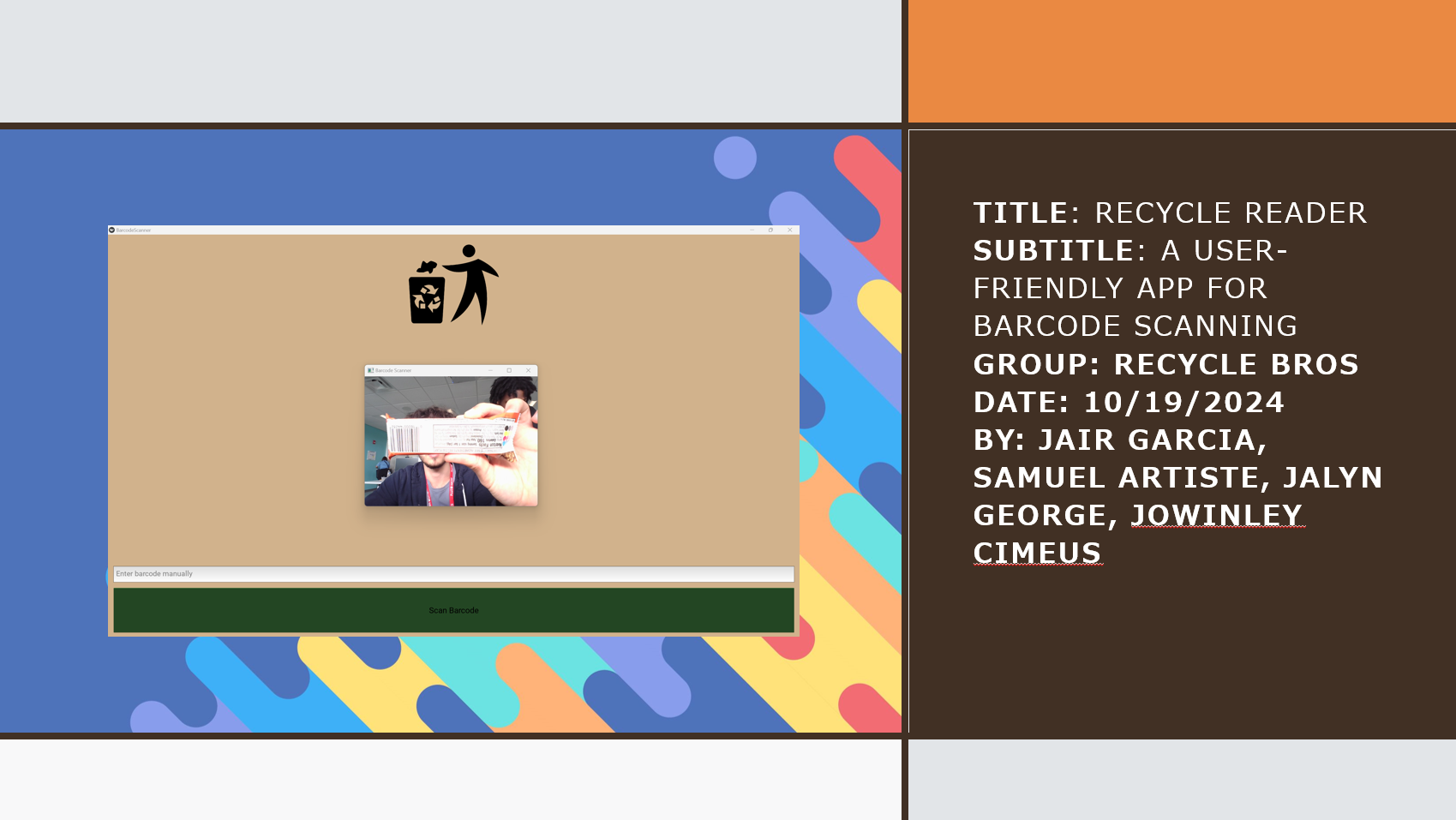
Recycle Reader scans barcodes using a camera, fetches product information from an online database, and displays the recyclability information of the product's packaging. This helps users quickly determine how to dispose of their waste correctly.
How we built it
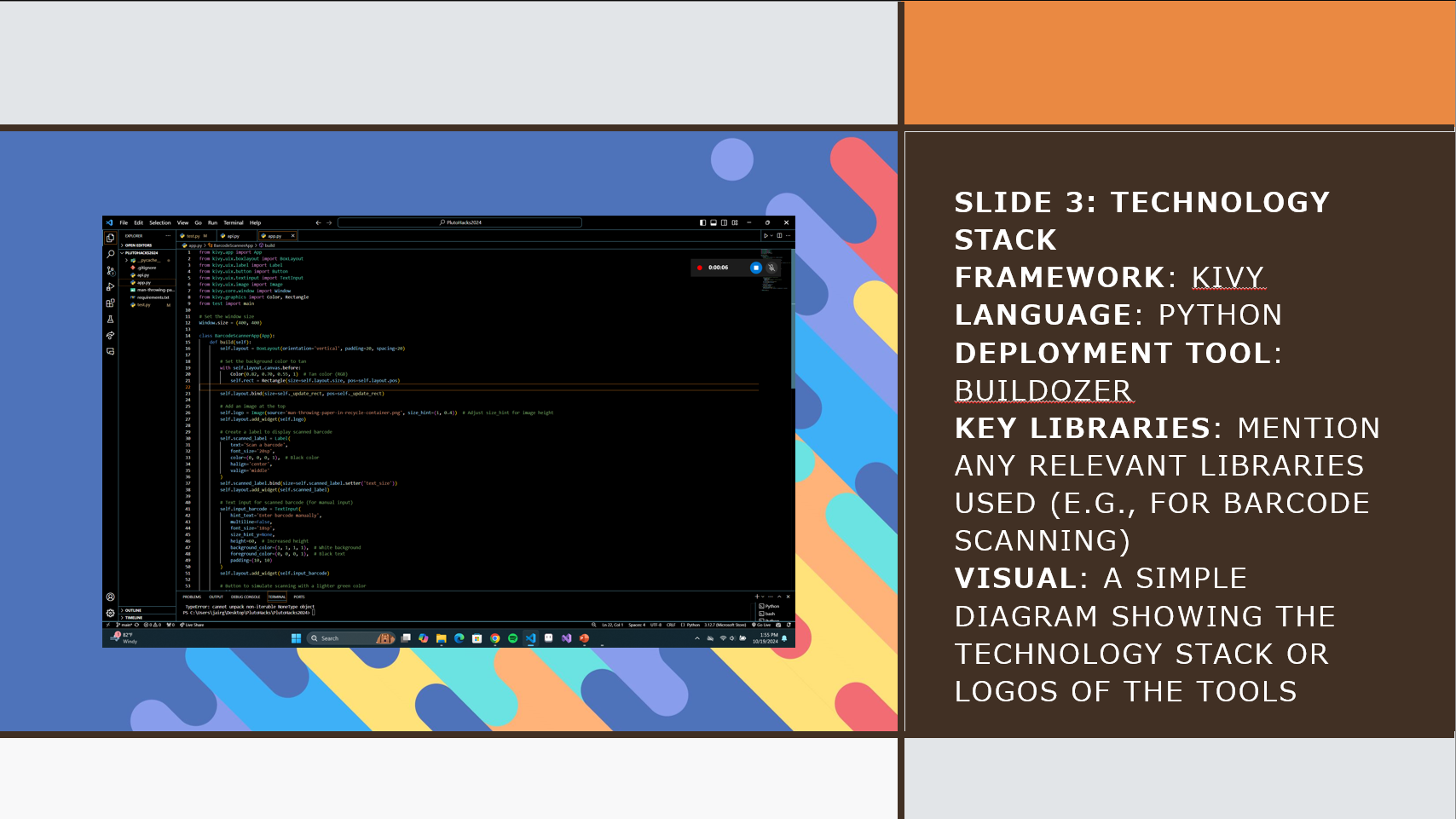
We built Recycle Reader using Python and several libraries including OpenCV and pyzbar for capturing and decoding barcodes. Requests for fetching product data from the Open Food Facts API. Kivy for creating a user-friendly graphical interface. The project is divided into three main components: barcode scanning (test.py), data fetching and processing (api.py), and the user interface (app.py).
Challenges we ran into
One of the main challenges was integrating the barcode scanning functionality with the graphical interface. Ensuring that the scanned data was accurately fetched and displayed in real-time required careful handling of asynchronous operations and user interactions. Additionally, dealing with varying barcode formats and ensuring compatibility with the Open Food Facts API posed some difficulties.
Accomplishments that we're proud of
We are proud of successfully creating a user experience that integrates real-time barcode scanning with instant feedback on recyclability. The application is easy to use, making it accessible to a wide range of users. We are also proud of the collaborative effort that went into overcoming technical challenges.
What we learned
Throughout this project, we learned a lot about working with image processing and barcode decoding libraries. We also gained experience in integrating different components of a project to create a cohesive application. Additionally, we learned about the importance of how to make technical information accessible and understandable to users.
What's next for Recycle Reader
In the future, we plan to expand Recycle Reader by adding support for more barcode formats and integrating additional data sources to provide even more comprehensive recycling information. We also aim to enhance the user interface with more features, such as saving scanned items for future reference and providing tips on reducing waste. Furthermore, we hope to collaborate with local recycling programs to provide location-specific recycling guidelines, and to even implement a points system.


Log in or sign up for Devpost to join the conversation.