Inspiration
Picture a world where recycling is seamless, waste is minimized, and every step we take moves us closer to a sustainable future. Recycle-it is here to make that vision a reality. Powered by cutting-edge machine learning, it makes waste sorting effortless, reducing contamination and ensuring more accurate recycling that is easily accessible for anyone with minimal effort. Whether you're at home, in a business, or managing a community, Recycle-it empowers you to make a tangible difference—transforming the way we handle waste, and inspiring a greener tomorrow, one smart decision at a time.
What it does
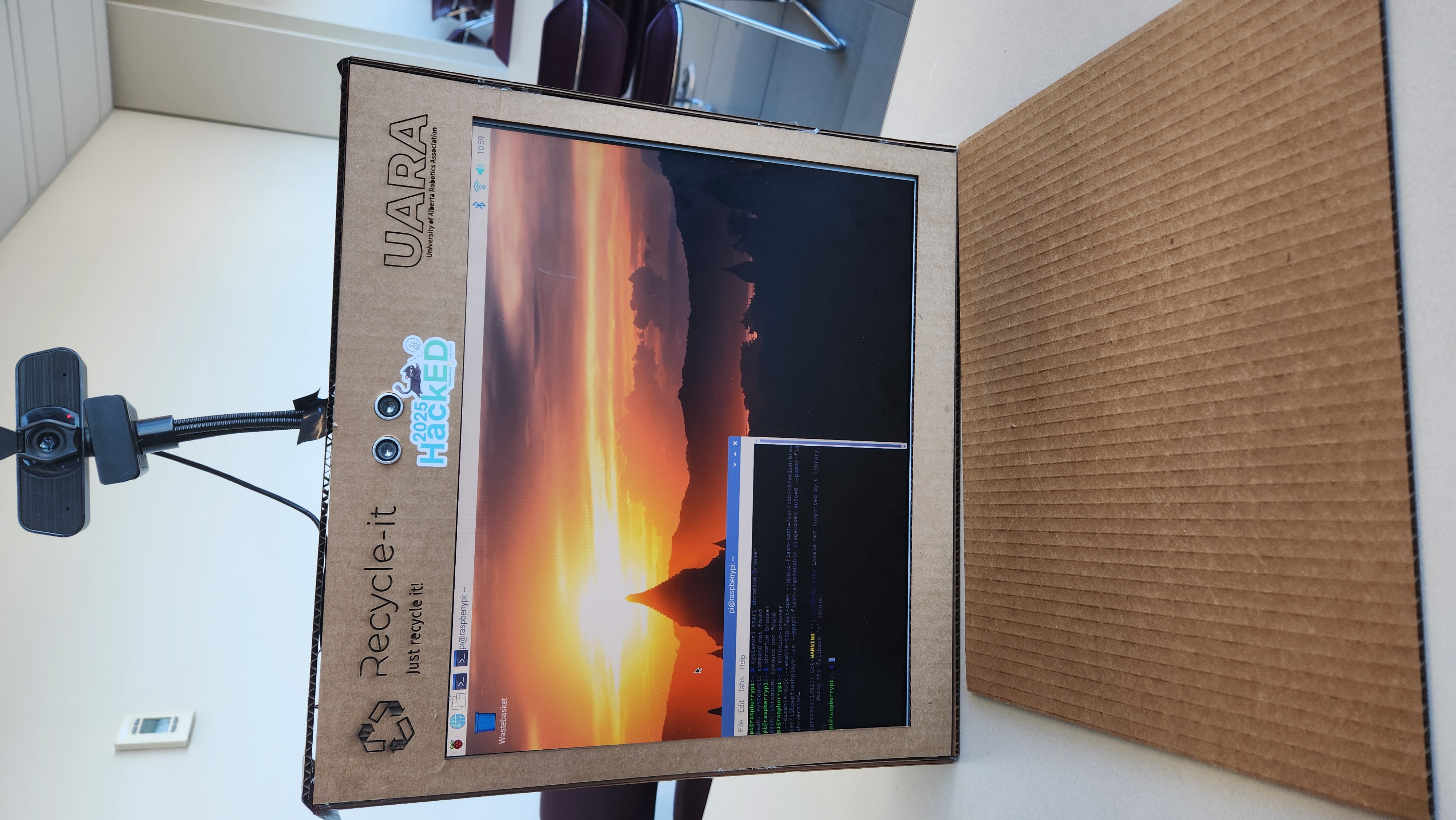
- Ultrasonic Sensors and Display Control: Optimizes the user interface for an intuitive and eco-friendly experience by preventing unnecessary energy consumption.
- Raspberry Pi and Python for Frontend: Uses a Raspberry Pi as a microprocessor with pre-scripted Python code to open our web interface. The system remains on to bypass booting time, ensuring a seamless user experience.
- Machine Learning for Object Classification: Classifies and detects lead contamination, relaying the information to the frontend to guide users on sustainable disposal methods.
- User-Friendly Frontend: The key strength is its accessibility with minimal user input effort, making it easy for anyone to adopt and contribute to positive environmental change.
How we built it
- Hardware Frameworks: Utilized ultrasonic sensors and a Raspberry Pi for efficient data processing and user interaction.
- Machine Learning Model: Trained a custom model to classify waste materials and detect contaminants like lead.
- Frontend Development: Built a responsive and intuitive web interface using Python and Flask.
- Integration: Combined hardware, machine learning, and frontend components into a cohesive system.
Technologies Used
- Backend: Python, Flask, TensorFlow (for machine learning)
- Frontend: HTML, CSS, JavaScript
- Hardware: Raspberry Pi, ultrasonic sensors
- Cloud Platforms: Google Cloud, AWS (for model training and deployment)
- Collaboration Tools: GitHub, Discord
Challenges we ran into
- Lacking and Biased Dataset: Limited datasets made it challenging to train the machine learning model for accurate classification.
- Integration of Machine Learning Model: Allocating classification criteria to predict contaminations required significant fine-tuning.
- Hardware Limitations: Ensuring the Raspberry Pi could handle real-time processing without overheating was a hurdle.
Accomplishments that we're proud of
- Designed a cost-effective, environmentally-friendly system that aligns with our sustainability goals.
- Achieved complete separation of the frontend and backend, simplifying manufacturing and scalability.
- Created an accessible system that minimizes user effort, encouraging widespread adoption.
- Delivered a functional prototype and effective demo within the hackathon timeline.
What we learned
- Machine Learning and Data: Training accurate models requires large, diverse datasets and significant computational resources.
- Hardware Design: Proper heat dissipation is critical, even for low-power devices like the Raspberry Pi.
- User Experience: Simplifying the interface and minimizing user effort are key to driving adoption.
What's next for Recycle-it
- Improve Dataset Quality: Collect more diverse and unbiased data to enhance the machine learning model's accuracy.
- Collaboration and Sponsorship: Partner with municipal governments (e.g., City of Edmonton) to make Recycle-it widely accessible.
- Expand Classification Categories: Add more waste categories to handle a broader range of materials.
- Upgrade Hardware: Use higher-spec servers to handle increased traffic and improve performance.
- Interactive Audio Feedback: Add audio cues to make the system more engaging and user-friendly.
- Enhance Ventilation: Improve hardware design to prevent overheating during prolonged use.
- Community Engagement: Launch awareness campaigns to promote smarter recycling practices.


Log in or sign up for Devpost to join the conversation.