-
-
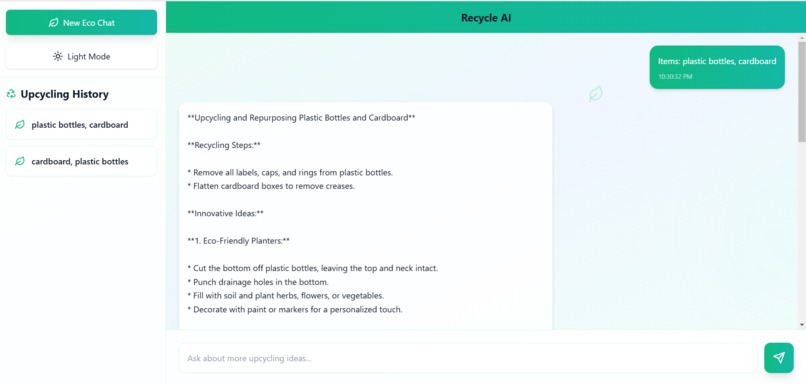
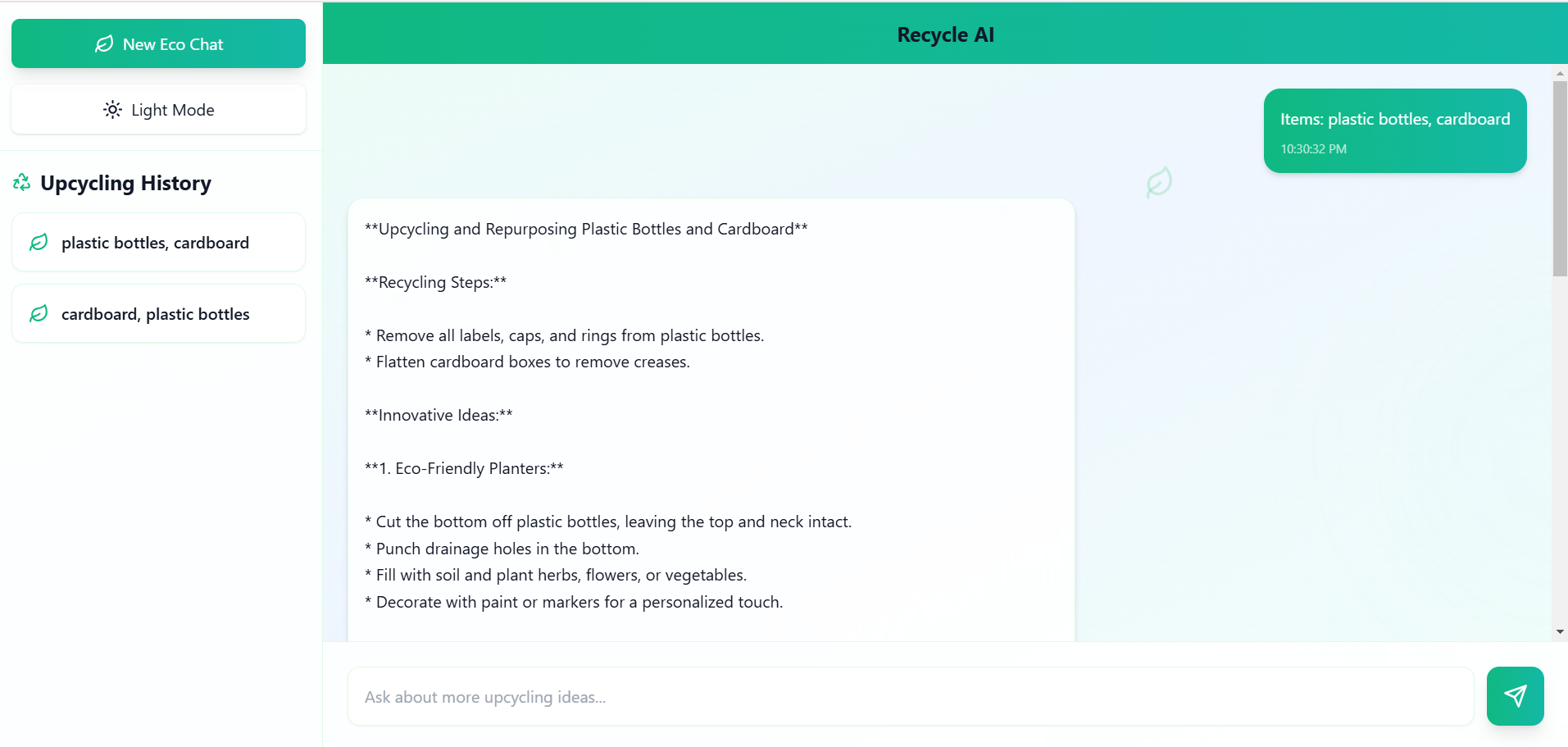
project demo image
Inspiration -
Our inspiration comes from the need for smarter waste management and a greener planet. Many people want to recycle but lack proper guidance. With AI-powered insights, we aim to simplify recycling by providing clear, actionable steps for sustainable waste disposal.
What it does -
Our AI analyzes text inputs or images of waste items and provides detailed recycling steps. It suggests the best disposal methods, alternative reuse ideas, and eco-friendly practices, making recycling easier and more accessible for everyone.
How we built it -
We built our AI-powered recycling assistant using a combination of machine learning and cloud-based APIs. The frontend is developed with React for a seamless user experience, while the backend integrates AI models to analyze text and images. We leveraged Google’s Gemini API for text processing and a vision model for image recognition, all deployed on a scalable cloud infrastructure for real-time responses.
Challenges we ran into -
One of the major challenges we faced was handling the integration of AI models effectively, especially when it came to ensuring that the responses were accurate and actionable. We also had to optimize the API requests for scalability, as rate limits and response times were crucial for a smooth user experience. Additionally, fine-tuning the AI to understand and generate specific recycling instructions for a wide variety of items required continuous testing and refinement. Finally, designing a user-friendly interface while integrating the complex AI backend posed some design and functionality challenges, but we overcame them with careful planning and iteration.
Accomplishments that we're proud of -
We’re proud of successfully integrating an AI-powered solution that provides personalized recycling and reuse instructions for a wide range of items. The AI model, with its ability to offer clear, actionable advice, is a major accomplishment in ensuring that users can make environmentally conscious decisions. Additionally, we created a seamless user experience, with a simple and intuitive interface that makes it easy for anyone to interact with the AI. The ability to efficiently handle retries and API rate limits while keeping the app responsive is another achievement we’re particularly proud of. Finally, the project allowed us to learn a lot about AI, API integration, and user-centered design.
What we learned -
Through this project, we learned valuable lessons in integrating AI models, specifically working with Google’s Gemini API to generate personalized, actionable insights. We also deepened our understanding of handling API rate limits and retries, ensuring a smooth user experience even when facing potential failures. In terms of development, we refined our skills in frontend design and user experience, creating an intuitive interface that simplifies a complex task. We also learned the importance of managing state and error handling effectively, as well as optimizing for scalability and reliability. This project has been a hands-on opportunity to explore environmental impact through technology and gain practical experience with cutting-edge AI tools.
What's next for recycle ai -
Next for Recycle AI, we plan to expand the database of recyclable materials, incorporating more specific items and regions to offer more tailored instructions. We aim to integrate a visual recognition feature that will allow users to upload pictures of items, and the AI will automatically identify and suggest recycling options. Additionally, we’re looking to collaborate with environmental organizations to provide up-to-date guidelines and to explore partnerships that could help scale the platform globally. We also plan to enhance the user experience with gamification features, such as tracking recycling progress and offering rewards for sustainable actions.
Built With
- amazon-web-services
- axios
- gemini-api
- github
- javascript-frameworks:-react
- node.js
- openai-(for-additional-text-generation-and-model-based-responses)-cloud-services:-google-cloud-platform-(for-api-integration)
- react
- render
- tailwind
- tailwind-css-apis:-google-gemini-(for-ai-driven-recycling-instructions)
- the-data-is-stored-locally-in-the-frontend-state)-libraries:-axios-(for-making-api-requests)
- typescript
- vercel
- vercel-(for-frontend-deployment)-databases:-not-applicable-(for-now


Log in or sign up for Devpost to join the conversation.