-
-

DIY things to make with the thing you took a pic of in results page
-

Initial Splash Page
-

Camera UI
-
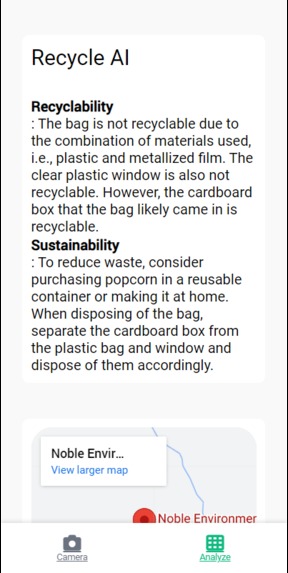
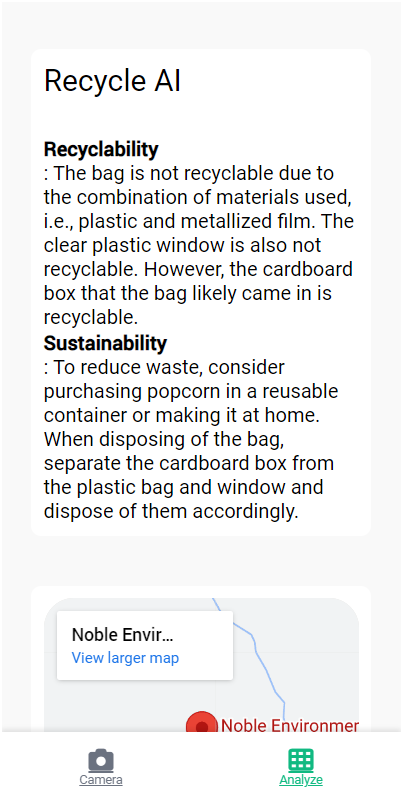
Results Page
-
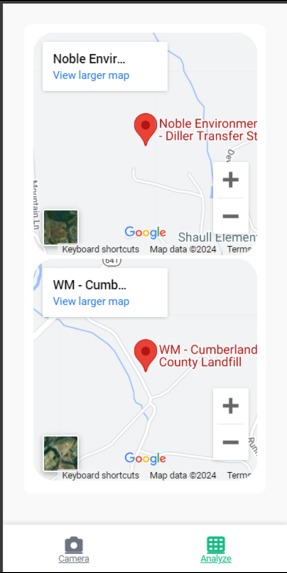
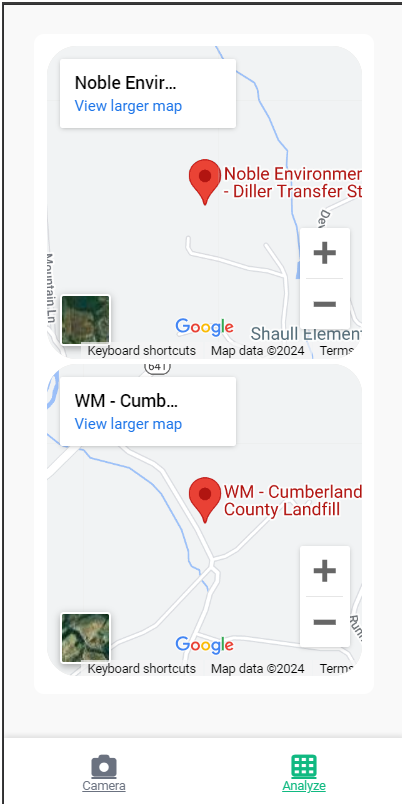
Locations in results page for where to recycle specialized items



About Recycle AI
The idea for Recycle AI stemmed from a simple realization: recycling can be unnecessarily complicated. Existing resources often leave users with more questions than answers and don't address the larger goal of building a circular economy. We wanted to change that by creating a tool that not only simplifies recycling but sparks a change in how people view their waste.
What it does
Recycle AI combines cutting-edge technology with a user-friendly design to streamline the recycling process and encourage more sustainable habits:
AI-powered image recognition: Users take a photo, and Gemini AI analyzes the image to identify the materials and offer clear disposal instructions. Location-based recycling suggestions: The app leverages Google Maps integration to pinpoint nearby recycling centers. DIY and upcycling inspiration: Recycle AI offers a curated selection of DIY videos and ideas, demonstrating the potential to give items a second life.
How we built it
Gemini AI: This forms the core of our image recognition capabilities. Google Maps API: Provides the framework for our location-specific search functions. Frontend development: We prioritized an intuitive mobile-first design with a focus on a familiar user experience.
Challenges we ran into
Image recognition accuracy: Training the AI model on a wide range of materials and complex packaging required significant refinement. DIY content curation: Sourcing high-quality, relevant upcycling content was an ongoing effort. Operating on a limited budget: We relied extensively on open-source tools and creative workarounds.
Accomplishments that we're proud of
User-centric design: Early feedback underscores the success of Recycle AI's intuitive and accessible interface. Innovative AI application: We effectively harnessed Gemini AI to address a practical, real-world problem. Fostering a sustainable mindset: Our commitment to promoting reuse and upcycling sets us apart in this space.
What we learned
The value of iterative design: Constant testing and refinement of both the AI model and user interface was essential. The potential for technology-driven sustainability: Recycle AI demonstrates how AI can drive positive environmental action. The importance of a holistic approach: Effective waste reduction goes beyond recycling and encompasses reuse and upcycling.
What's next for Recycle AI
Expanding our knowledge base: We aim to continually improve the accuracy of our AI image recognition model. Building a community: We envision adding features that allow users to share and exchange upcycling ideas and materials. Strategic partnerships: Collaborations with recycling facilities and sustainable businesses will further our reach and impact.


Log in or sign up for Devpost to join the conversation.