-
-
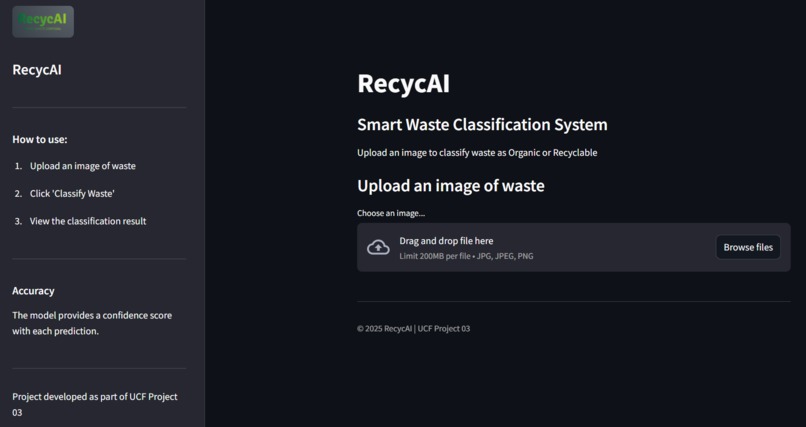
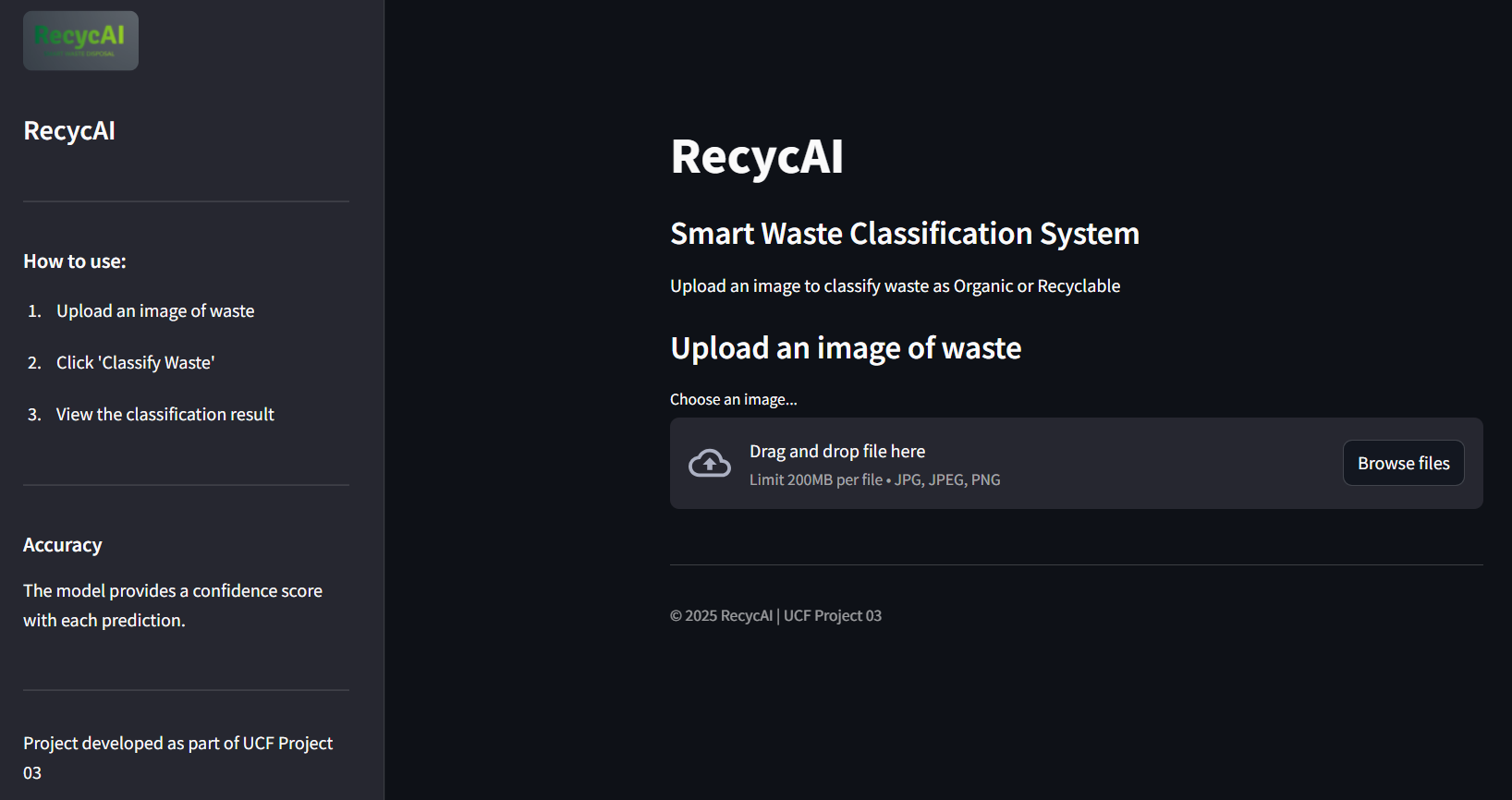
UI
Inspiration
The inspiration for RecycAI stemmed from the global waste management crisis. With landfills reaching capacity and improper waste sorting causing significant environmental harm, we saw an opportunity to leverage artificial intelligence to address this challenge. We were particularly motivated by statistics showing that up to 30% of recyclable items end up in landfills due to improper sorting, and how this contributes to pollution and resource depletion. By creating an accessible tool that could help individuals correctly classify waste, we believed we could make a meaningful environmental impact.
What it does
RecycAI is an intelligent waste classification system that uses machine learning to identify whether an item should be recycled or disposed of as organic waste. Users simply upload an image of their waste item through our intuitive Streamlit web application, and RecycAI processes the image using our trained neural network model to provide an instant classification. The application displays the result (Recyclable or Organic) along with the confidence level of the prediction and provides appropriate disposal tips based on the classification. This helps users make informed decisions about waste disposal, promoting better recycling practices and environmental stewardship.
How we built it
We built RecycAI using a multi-stage development process:
Data Collection: We compiled a comprehensive dataset of waste images, categorized into recyclable and organic waste. Model Development: We trained a convolutional neural network using TensorFlow and Keras. The model architecture was based on transfer learning techniques, adapting pre-trained networks for our specific classification task. Model Training and Optimization: We fine-tuned our model through multiple iterations, experimenting with various hyperparameters and data augmentation techniques to improve accuracy. Backend Development: We implemented the prediction functionality in Python, creating a robust pipeline for image processing and classification. Frontend Development: We built an intuitive user interface using Streamlit, focusing on simplicity and accessibility so that users of all technical levels could benefit from the application. Integration and Testing: We integrated the frontend and backend components, conducted extensive testing with a variety of waste images, and refined the model based on performance.
Challenges we ran into
Throughout the development of RecycAI, we encountered several challenges:
Data Quality and Diversity: Finding a balanced, high-quality dataset of waste images was difficult. Many available datasets were either too small or lacked diversity in terms of lighting conditions, angles, and waste types. Model Accuracy: Achieving high classification accuracy proved challenging, especially for ambiguous items or images with poor lighting. We had to experiment with various model architectures and training strategies to improve performance. Model Size vs. Performance: Balancing model size and performance was tricky. More complex models offered better accuracy but required more computational resources and had slower inference times. User Interface Design: Creating an intuitive interface that was both informative and simple to use required multiple iterations and user feedback sessions. Technical Integration: Integrating the TensorFlow model with Streamlit presented some technical challenges, particularly in handling different versions of TensorFlow and ensuring consistent performance across environments.
Accomplishments that we're proud of
Despite the challenges, we achieved several notable accomplishments:
High Classification Accuracy: Our model achieves over 85% accuracy on diverse waste images, including items it wasn't explicitly trained on. User-Friendly Interface: We created an intuitive application that requires no technical knowledge to use, making waste classification accessible to everyone. Efficient Processing: Our application processes images and provides classifications in just seconds, offering a seamless user experience. Educational Component: Beyond classification, RecycAI educates users about proper waste disposal through targeted tips and information. Scalable Architecture: We designed the system to be easily expandable to include more waste categories and features in the future.
What we learned
The RecycAI project provided valuable learning experiences:
Deep Learning Techniques: We gained practical experience in building and optimizing convolutional neural networks for image classification tasks. Data Processing: We learned effective techniques for data preprocessing, augmentation, and management for machine learning applications. Web Application Development: The project enhanced our skills in building interactive web applications using Streamlit and integrating them with machine learning models. Collaborative Development: Working as a team, we improved our collaboration skills, learned effective code management practices, and developed a deeper understanding of the software development lifecycle. Environmental Impact: Researching for this project deepened our understanding of waste management challenges and the potential impact of technology in addressing environmental issues.
What's next for RecycAI
We have ambitious plans for the future of RecycAI:
Expanded Classification Categories: We plan to enhance the model to classify more specific types of recyclables (e.g., plastic types, paper, metal, glass) and compostables. Mobile Application: Developing a mobile app version would make RecycAI even more accessible and convenient for daily use. Offline Functionality: Implementing model compression techniques to allow the application to run offline on mobile devices without requiring internet connectivity. Community Features: Adding features that allow users to contribute to the dataset, improving model accuracy over time through community participation. Integration with Smart Bins: Exploring partnerships with smart waste bin manufacturers to integrate our classification technology directly into waste disposal systems. Educational Campaigns: Developing educational content and campaigns around proper recycling practices, using RecycAI as an educational tool in schools and communities. API Development: Creating an API that allows developers to integrate RecycAI's classification capabilities into other applications and systems.


Log in or sign up for Devpost to join the conversation.