-
-
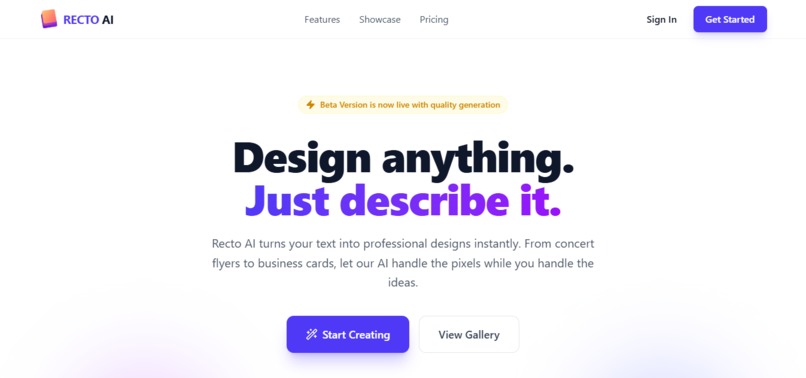
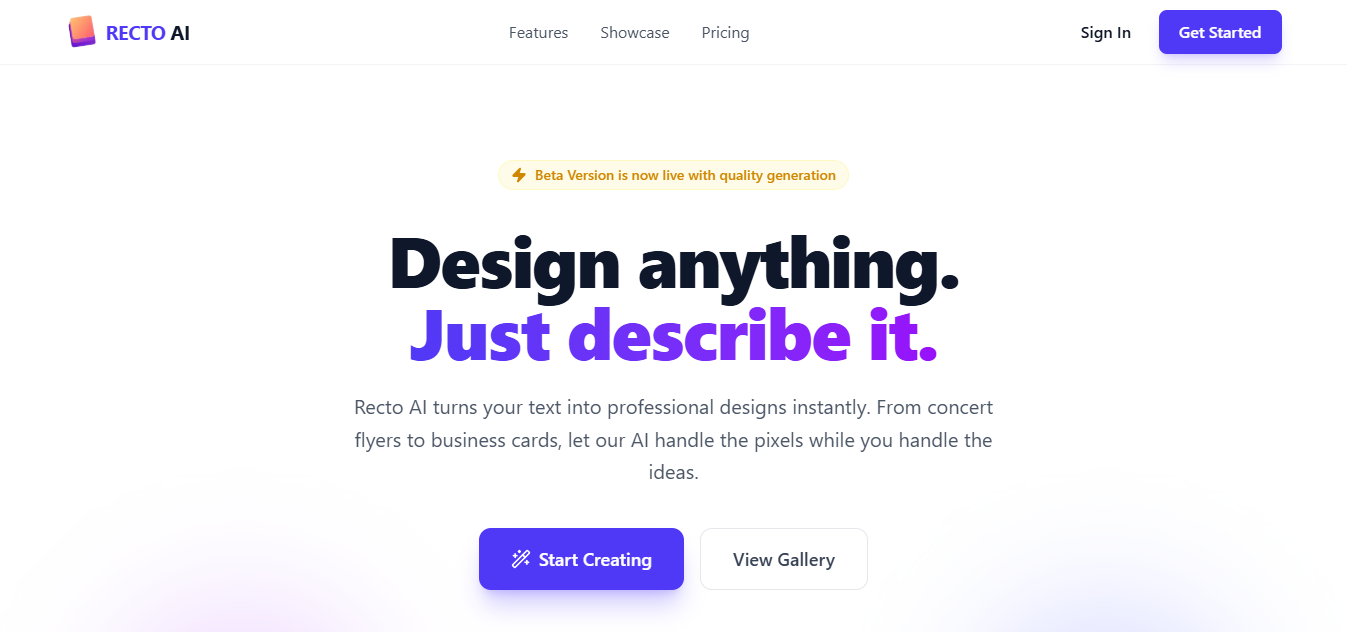
Hero section of recto ai landing page
-
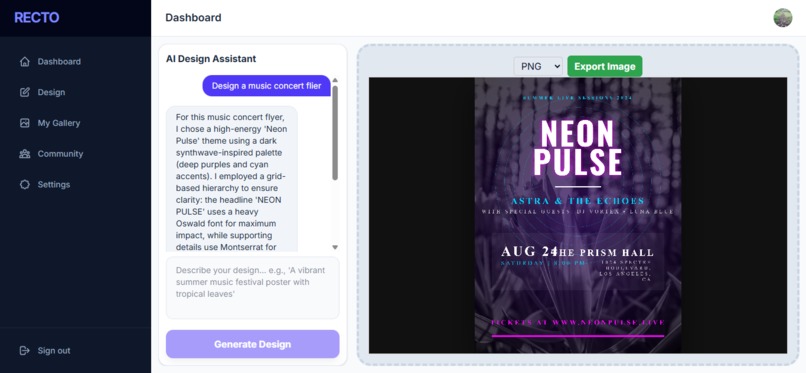
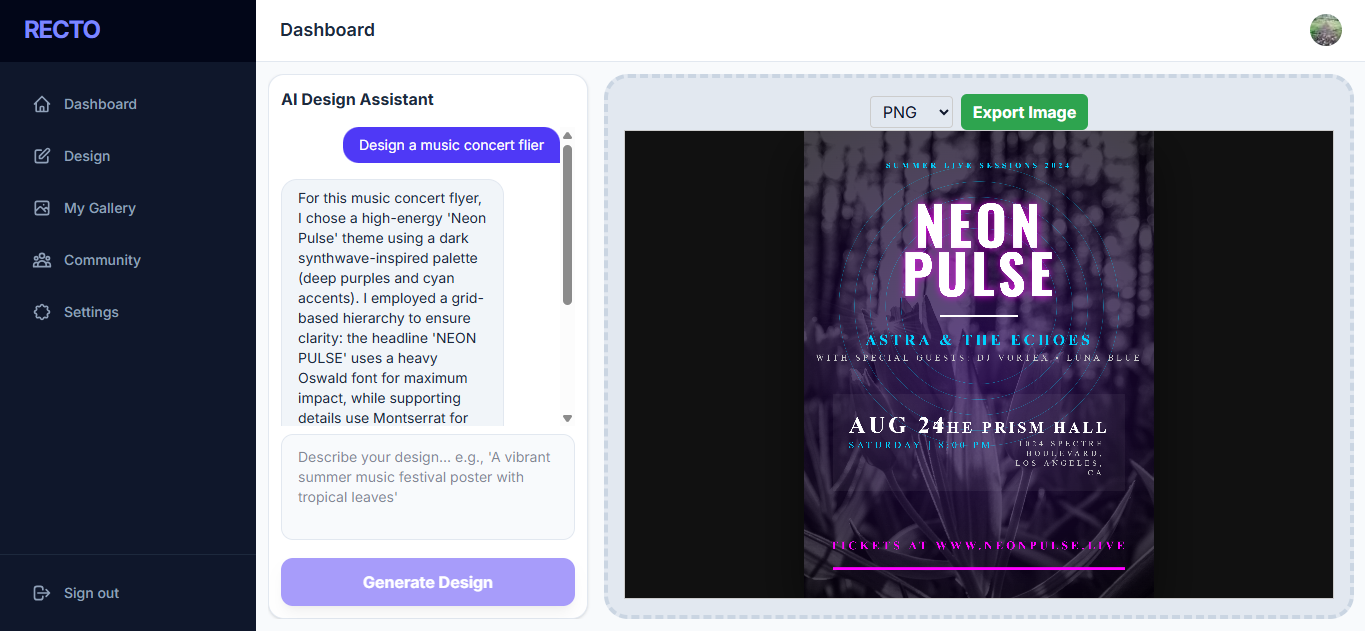
Design interface of recto ai
Inspiration
As a developer and creator, I often found myself stuck when I needed simple marketing assets like flyers or YouTube thumbnails. I didn't want to spend hours in complex design software just to announce a new feature or post a video. I realized that while there are many image generators, few are optimized specifically for layout-based designs like flyers. I wanted to build a bridge between text ideas and finished marketing assets, making design accessible to anyone who can type a prompt.
What it does
Recto AI is an intelligent design assistant that transforms text prompts into professional-grade visuals. Users simply describe what they need (e.g., "A tech conference flyer featuring a robot" or "A YouTube thumbnail for a coding tutorial"), and Recto AI generates a polished image ready for use. It handles the composition, typography, and imagery, allowing users to iterate quickly on their ideas.
How we built it
We built Recto AI using a modern, robust full-stack architecture:
- Frontend: We used React for a responsive and snappy user interface, styled with Tailwind CSS for rapid UI development.
- Backend & Auth: We leveraged Supabase for secure authentication and real-time database management, ensuring user data and generated history are stored safely.
- AI Engine: The core generation is powered by "gemini-3-flash-preview" model, which processes the natural language prompts and renders the final designs.
- Integration: We utilized Python and Fast API endpoints to bridge the frontend user inputs with the generative models.
Challenges we ran into
One of the biggest challenges was prompt engineering and consistency. Getting an AI to understand not just what to draw, but how to layout text and objects like a graphic designer was difficult. We spent a lot of time refining the system instructions to ensure the text generation (if applicable) or the visual composition didn't look cluttered. Additionally, handling the latency of image generation while keeping the user engaged on the frontend required implementing optimistic UI updates and loading states.
Accomplishments that we're proud of
We are incredibly proud of the "One-Click" experience. Seeing a user type a vague sentence and watching it turn into a usable flyer in seconds is magical. Successfully integrating the authentication flow with Supabase and creating a seamless gallery for users to view their past creations was also a major technical win for the team.
What we learned
Building Recto AI taught us the immense potential, and the current limitations of generative AI in design. We also deepened our understanding of integrating third-party AI APIs into a production-ready React.js environment.
What's next for Recto AI
We plan to introduce editable layers, allowing users to tweak specific parts of the generated image (like changing just the text or the background color) without regenerating the whole image. We are also looking into adding templates for specific use cases like Instagram Stories and LinkedIn banners. Finally to launch the product as a startup
Built With
- fastapi
- python
- react
- render
- tailwind
- typescript


Log in or sign up for Devpost to join the conversation.