RecruitMemory
Inspiration
I wanted to solve a problem I observed in hiring: interviewers forget. Candidate knowledge gets scattered across notes, spreadsheets, and multiple interview rounds, forcing recruiters to repeatedly ask the same questions and lose valuable context.
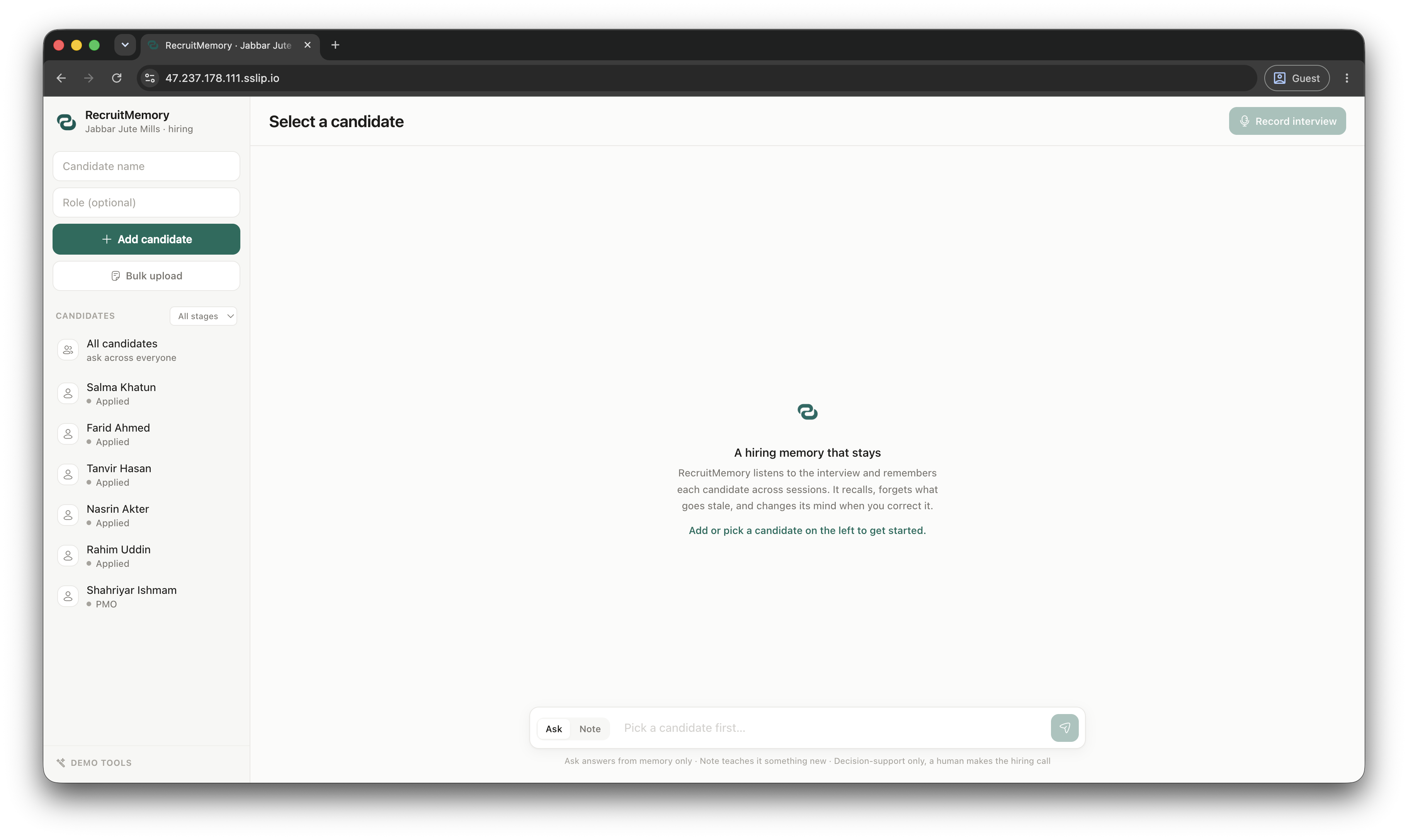
I built RecruitMemory to explore what an AI system could do if it didn't just generate responses, but actually remembered. Instead of being another chatbot, RecruitMemory acts as a persistent hiring memory that evolves over time.
This project was built as a solo submission for the MemoryAgent track of the Global AI Hackathon Series with Qwen Cloud.
What it does
RecruitMemory remembers candidates across interview sessions.
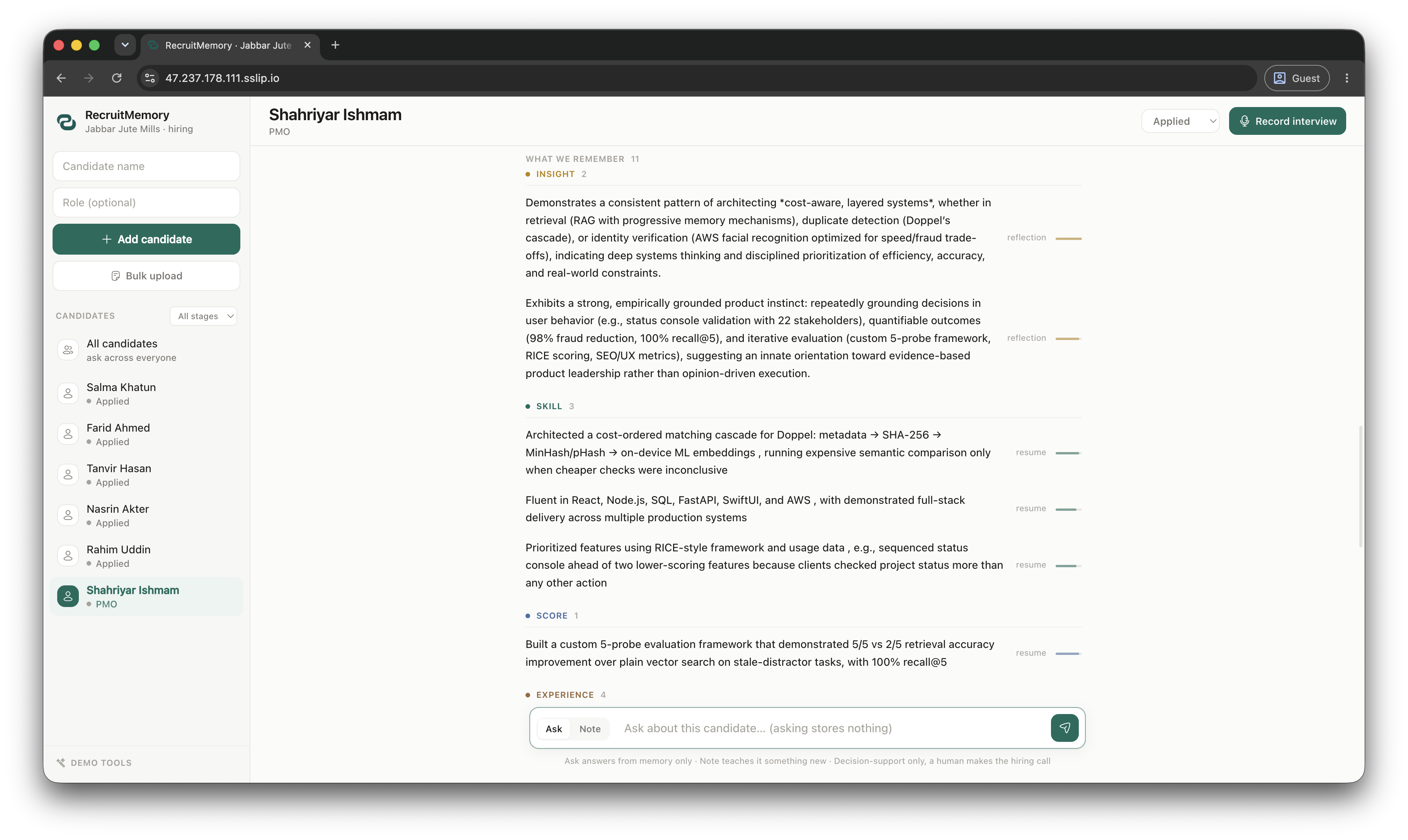
It continuously extracts important facts, retrieves the most relevant memories during future conversations, retires outdated beliefs when corrected, forgets low-value information over time, and automatically synthesizes higher-level insights from accumulated evidence.
The system also supports:
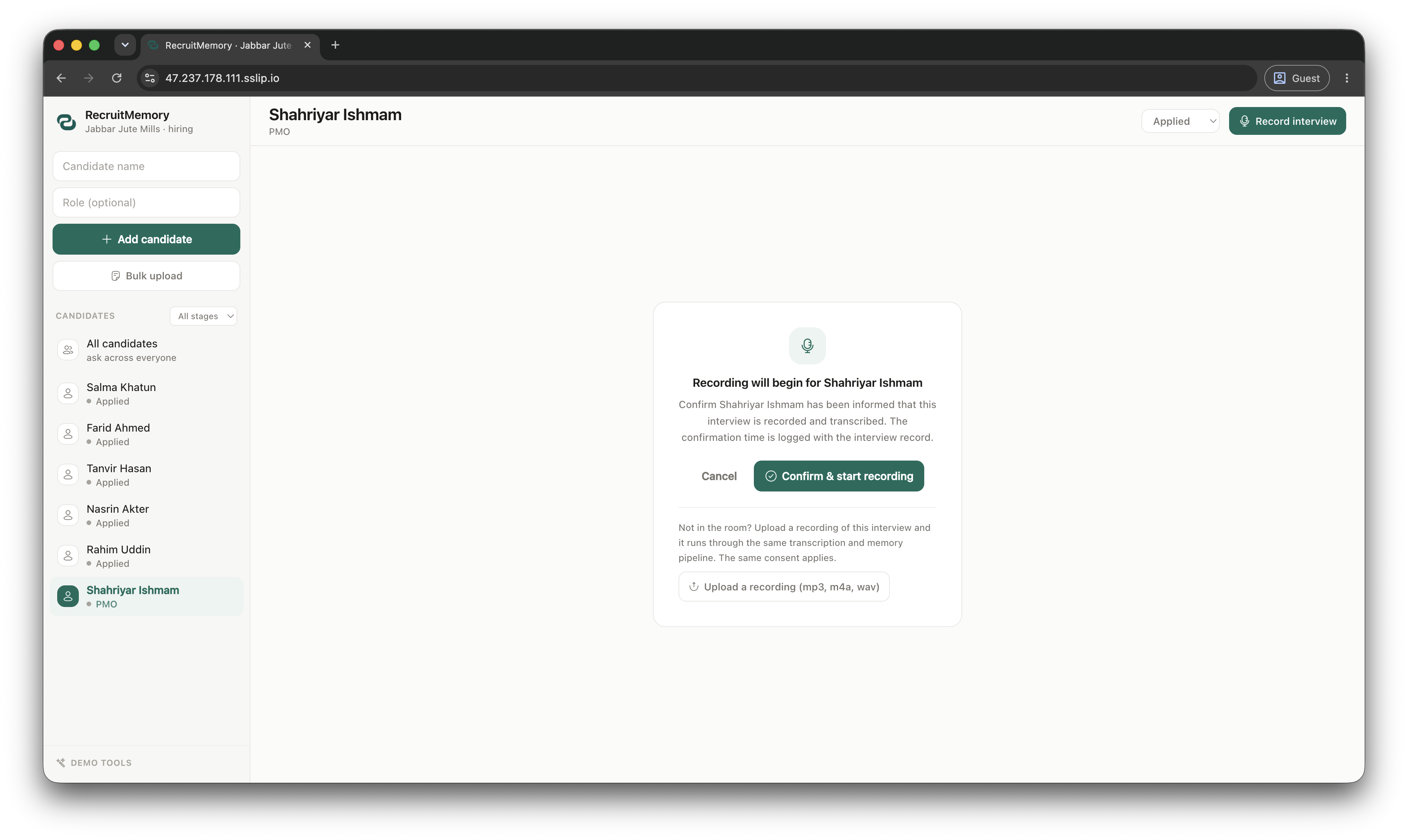
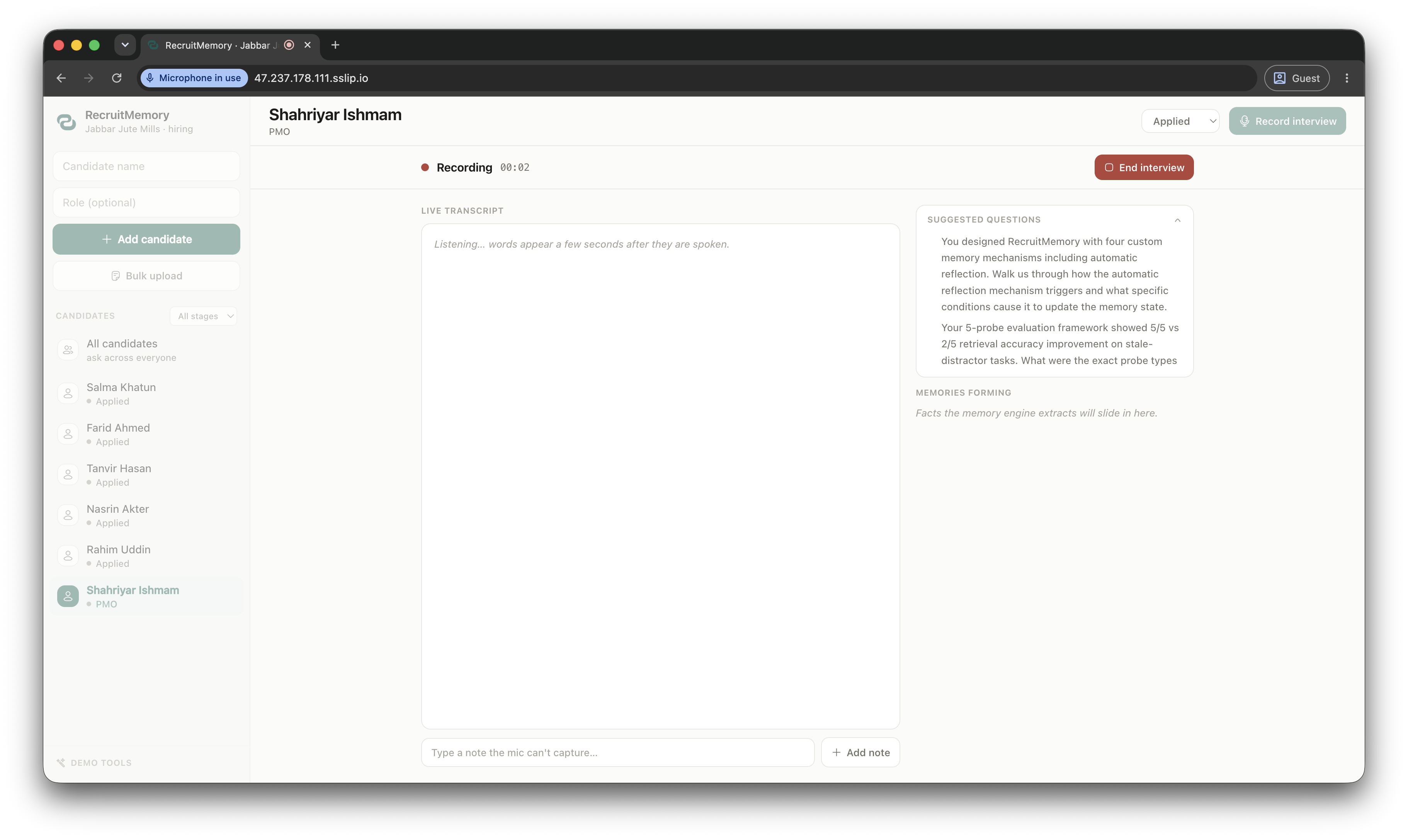
- Live interview transcription
- Resume ingestion
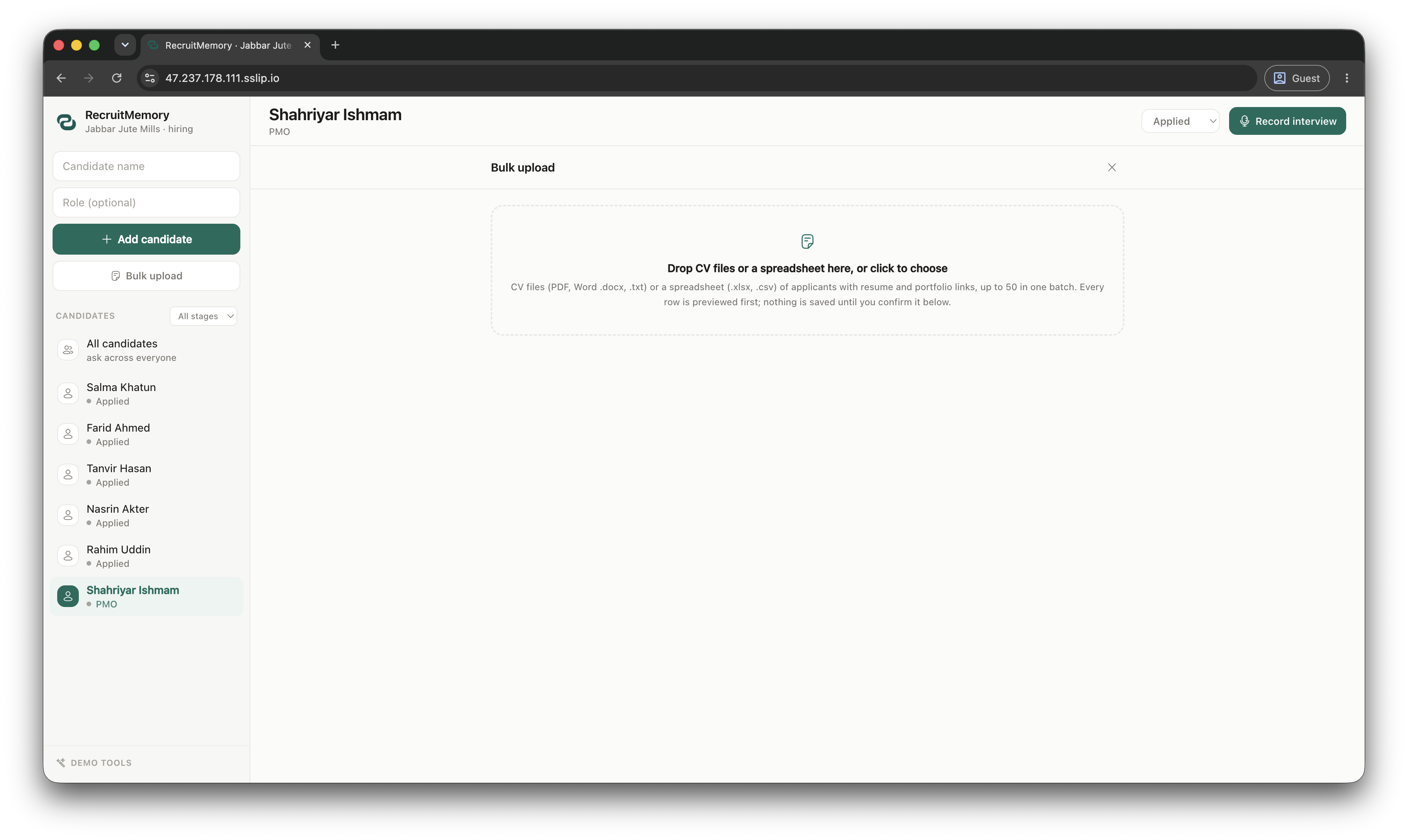
- Bulk CV upload
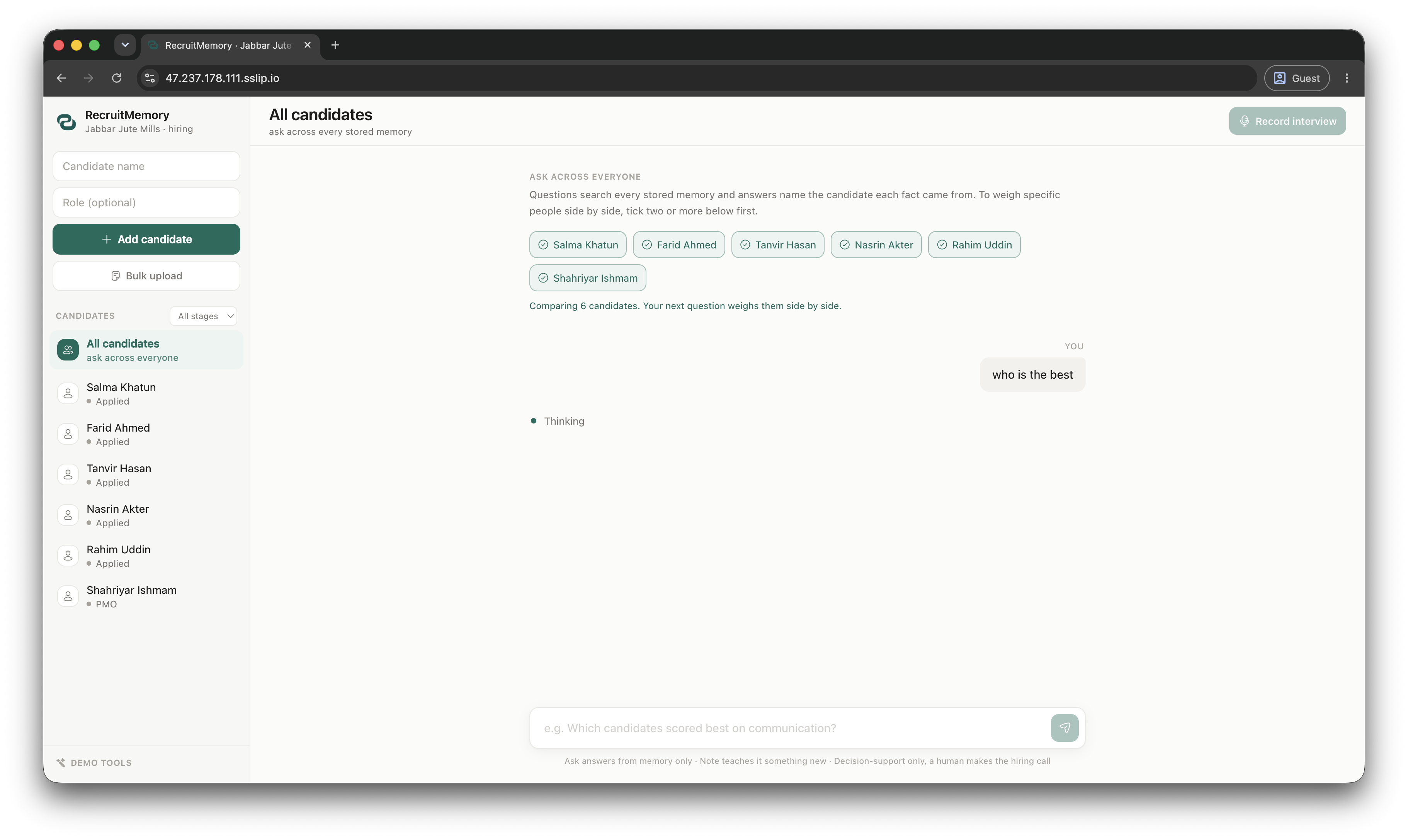
- Cross-candidate memory search
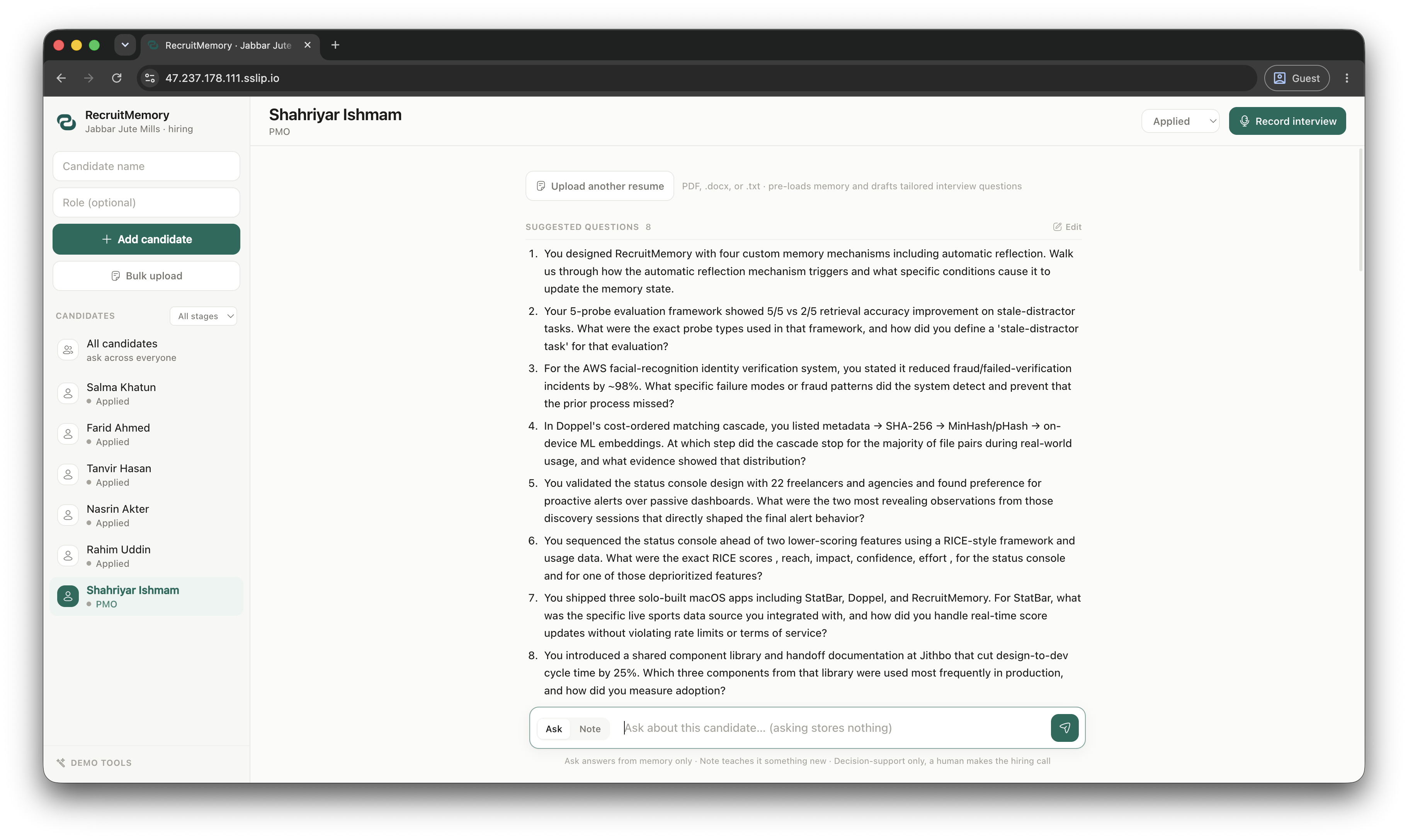
- AI-generated interview questions
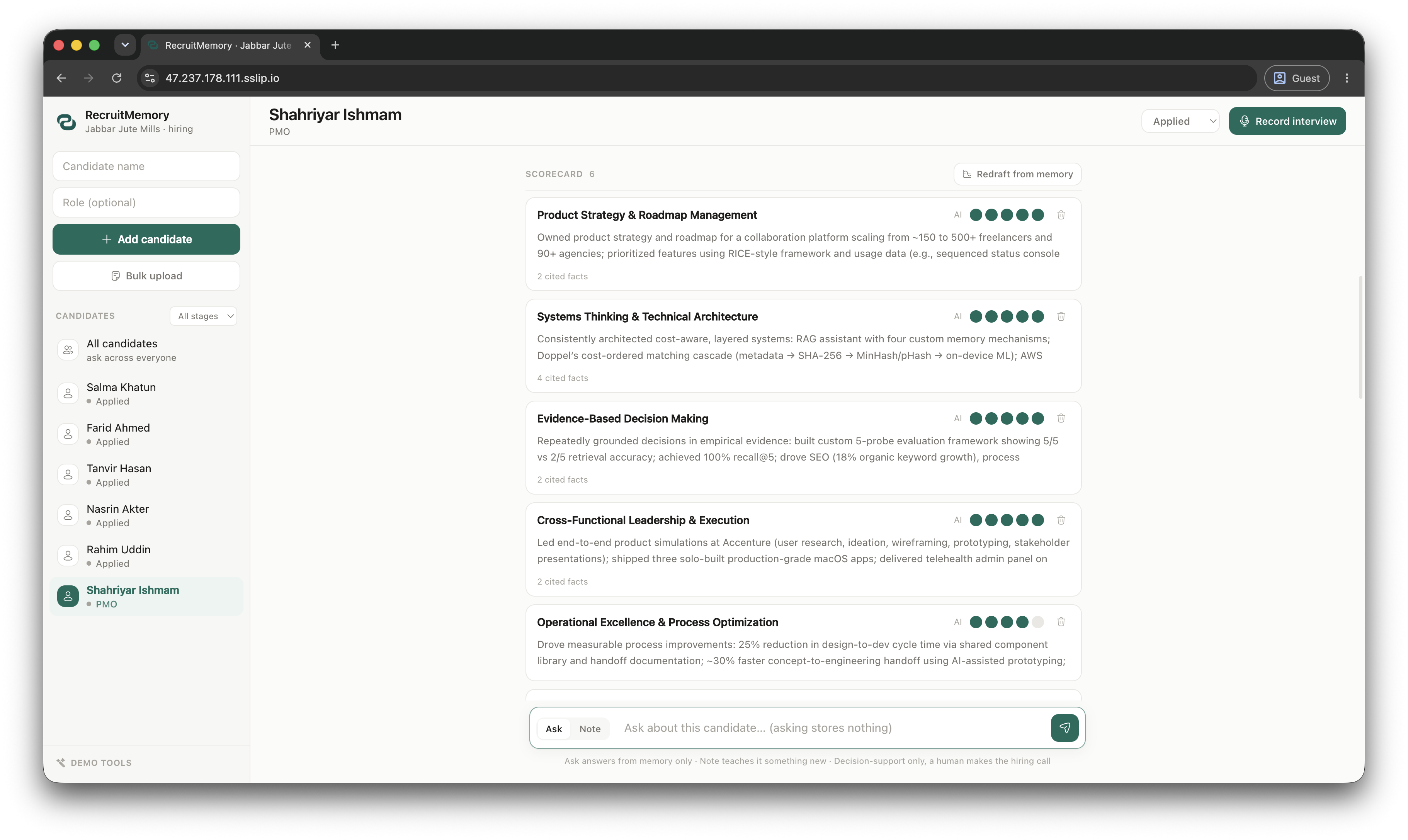
- Structured hiring scorecards
- Interview timelines
- Human-in-the-loop review before important actions
Rather than replacing recruiters, RecruitMemory helps them retain context and make better-informed hiring decisions.
How I built it
I built RecruitMemory using:
- Python
- FastAPI
- React
- SQLite
- Docker
- Qwen Cloud APIs
- Alibaba Cloud ECS
- Alibaba Cloud OSS
The core of the project is a custom memory engine implementing four independent memory mechanisms:
- Memory extraction and belief updates
- Context-aware retrieval
- Memory decay and consolidation
- Automatic reflection that generates higher-order insights
I also built an evaluation pipeline to measure retrieval quality, memory updates, forgetting behavior, and reflection performance instead of relying on subjective demonstrations.
Challenges I ran into
The hardest challenge was designing a memory system that behaves more like human memory than chat history.
Instead of endlessly accumulating information, the agent needed to decide:
- what to remember,
- what to forget,
- what to update,
- and when enough evidence existed to generate new insights.
Balancing retrieval quality, memory decay, reflection, and usability while keeping the interface simple was the most difficult engineering challenge.
Accomplishments that I'm proud of
- Built an end-to-end MemoryAgent from scratch
- Designed and implemented four independent memory mechanisms
- Added live interview transcription with persistent memory updates
- Created an evaluation framework to measure memory performance
- Successfully deployed the application on Alibaba Cloud
- Completed the entire project as a solo developer within the hackathon timeline
What I learned
This project changed how I think about AI systems.
Large language models are only one part of intelligent software. Long-term memory, retrieval, memory management, and reasoning over accumulated knowledge are equally important.
I also gained hands-on experience integrating Qwen Cloud APIs, deploying on Alibaba Cloud, and designing AI systems whose behavior can be evaluated rather than simply demonstrated.
What's next
I plan to continue developing RecruitMemory into a production-ready hiring memory platform.
Future work includes:
- ATS integrations
- Multi-user collaboration
- Better semantic memory ranking
- Resume parsing improvements
- Enterprise authentication
- Team knowledge sharing
- Analytics and hiring insights


Log in or sign up for Devpost to join the conversation.