-
-
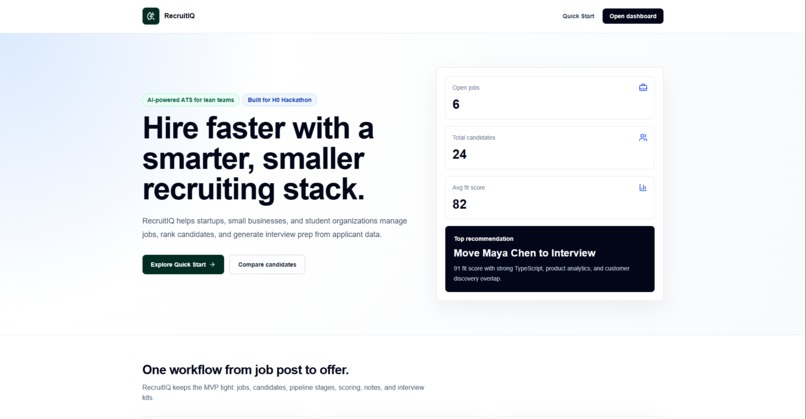
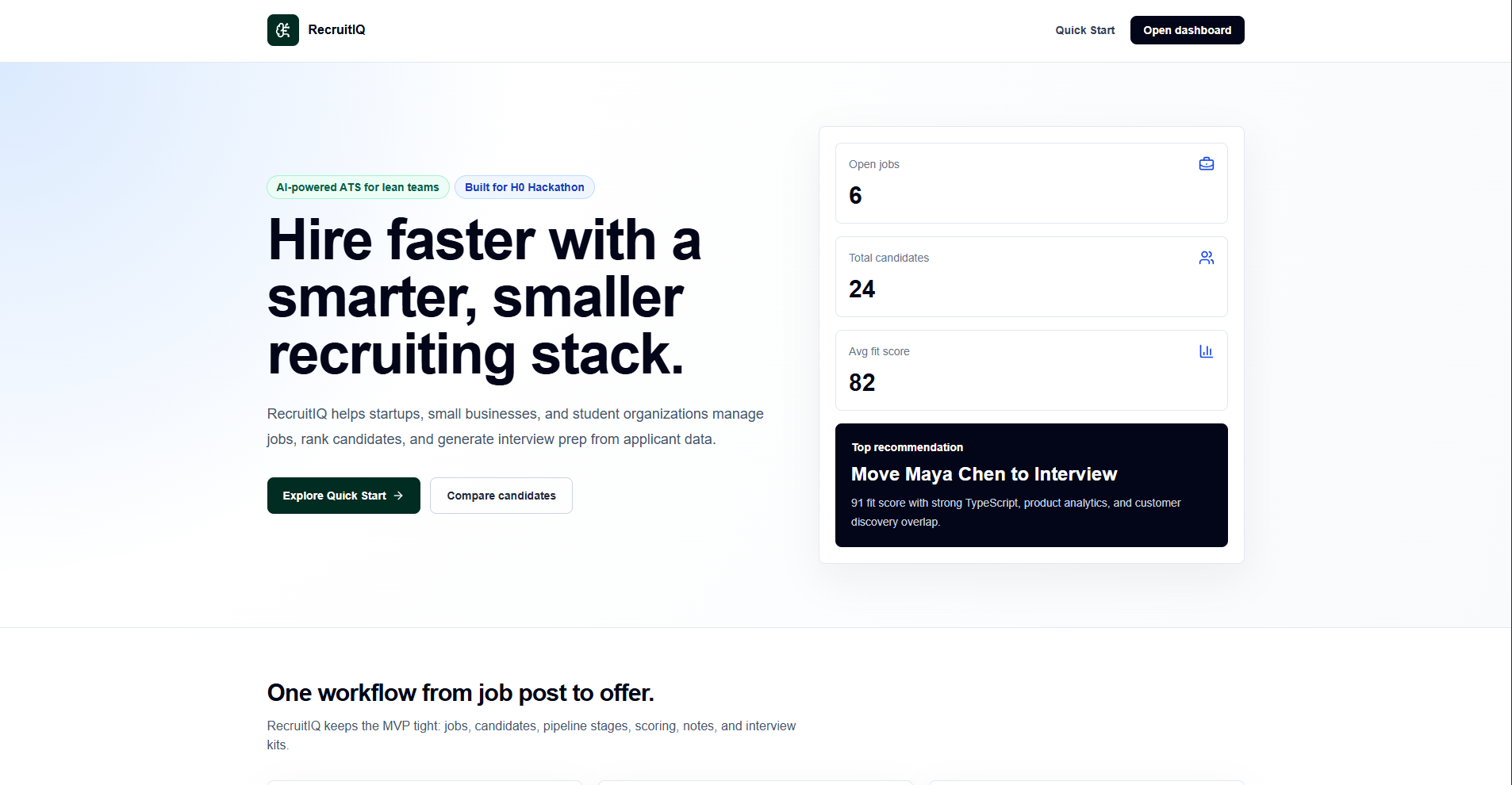
Homepage
-
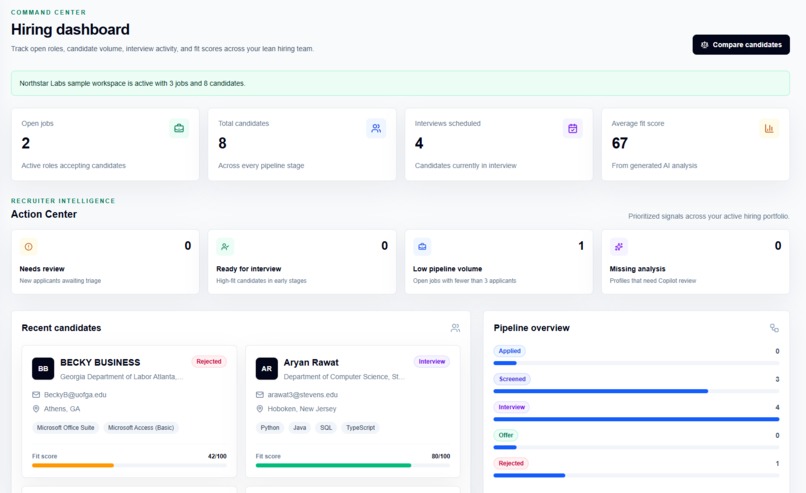
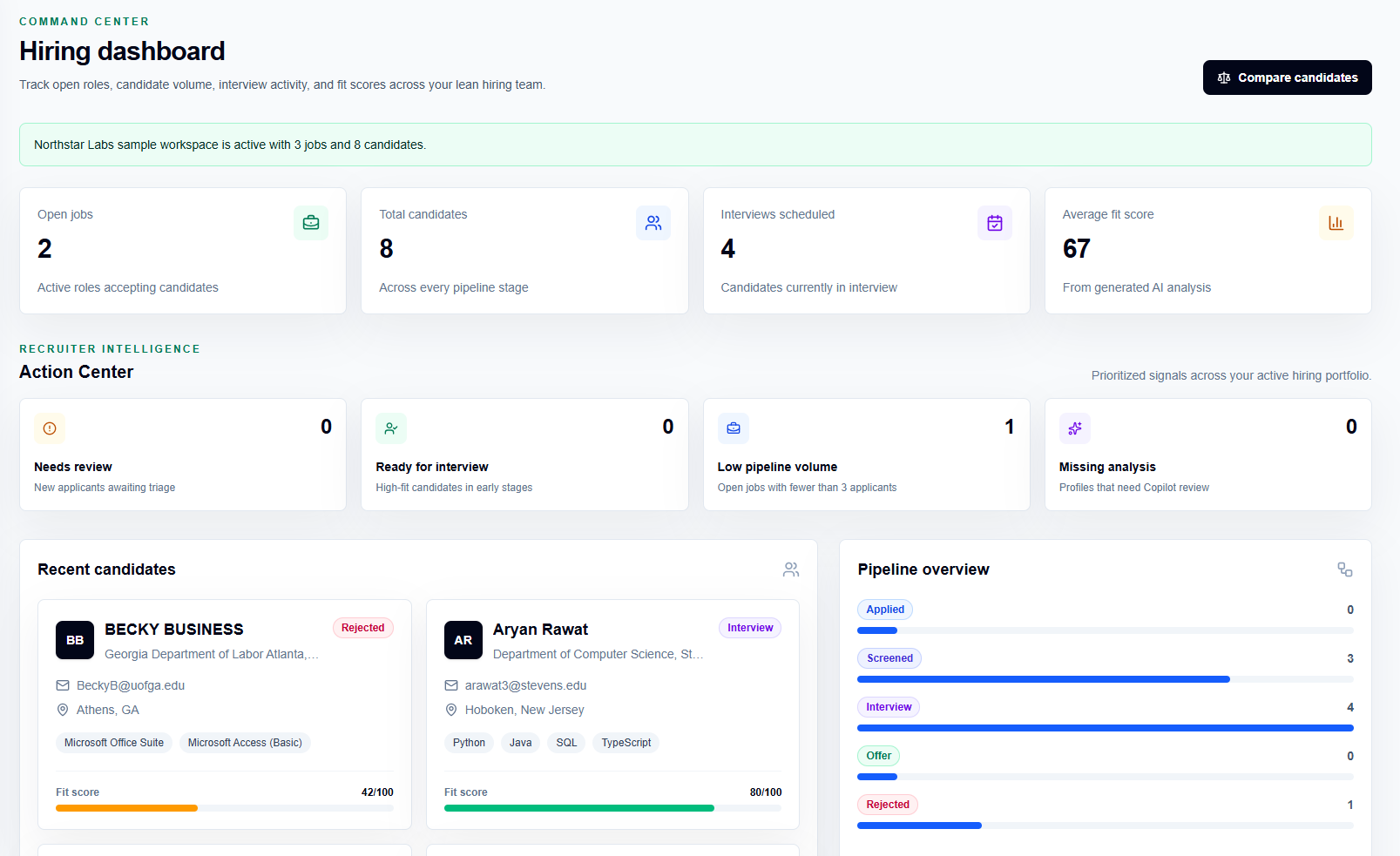
Dashboard
-
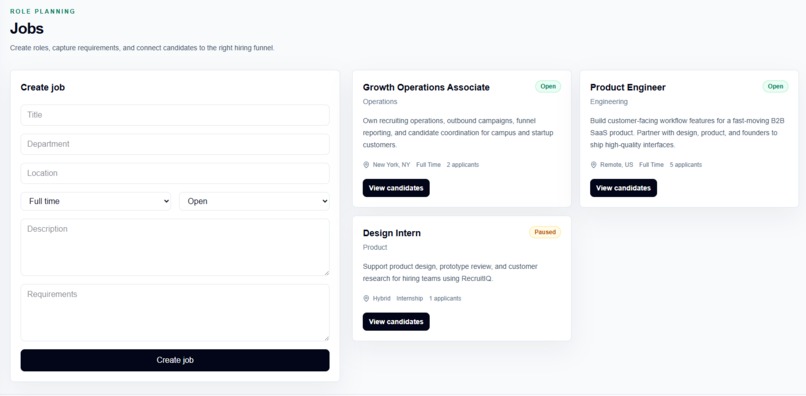
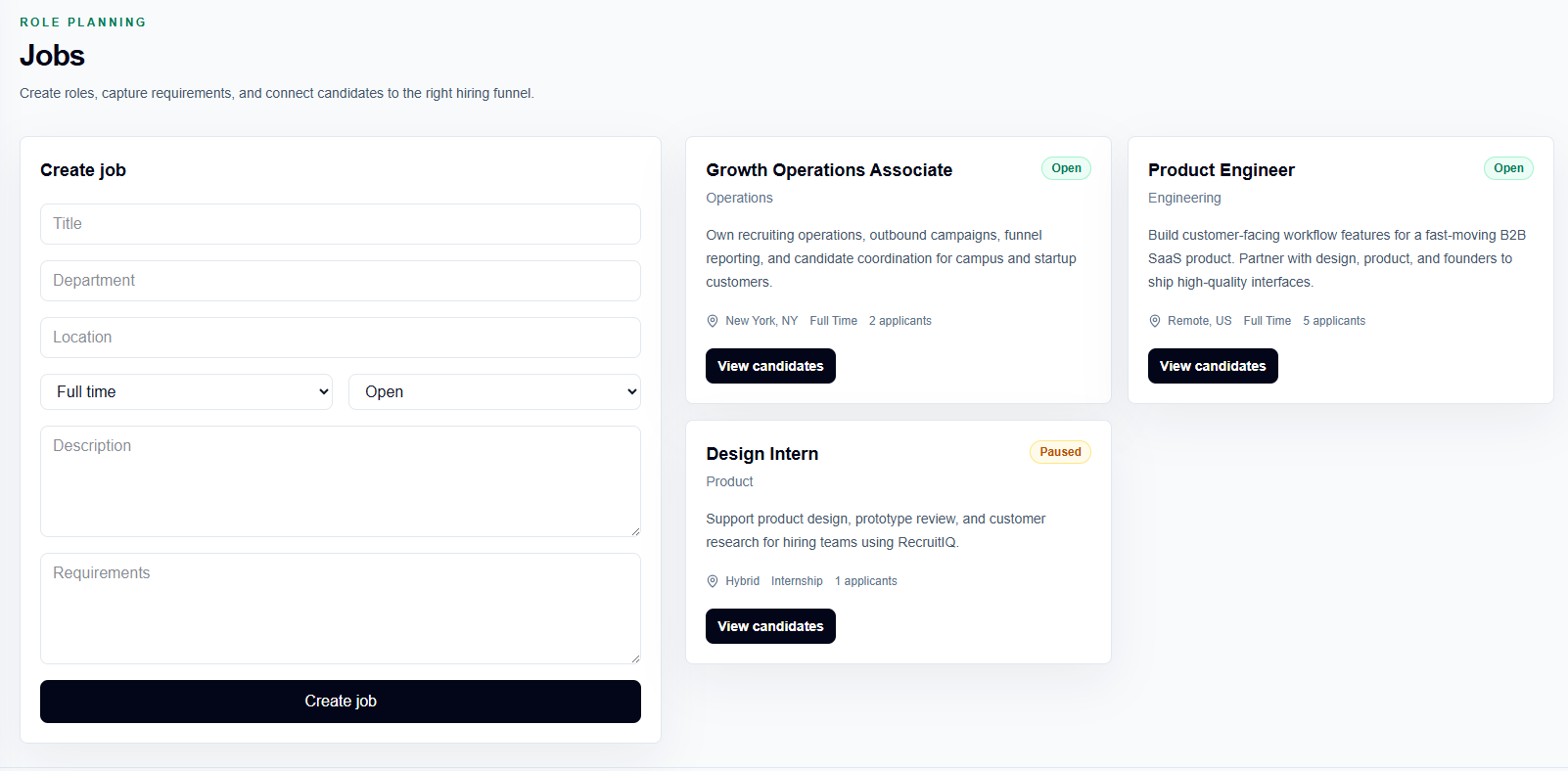
Jobs
-
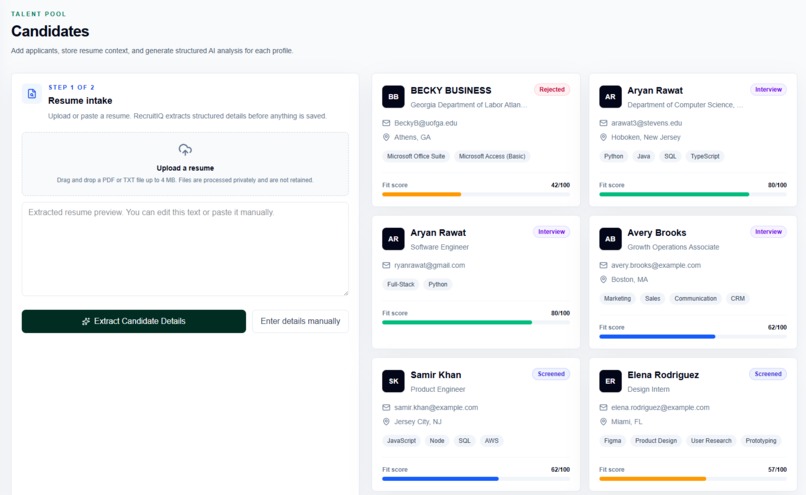
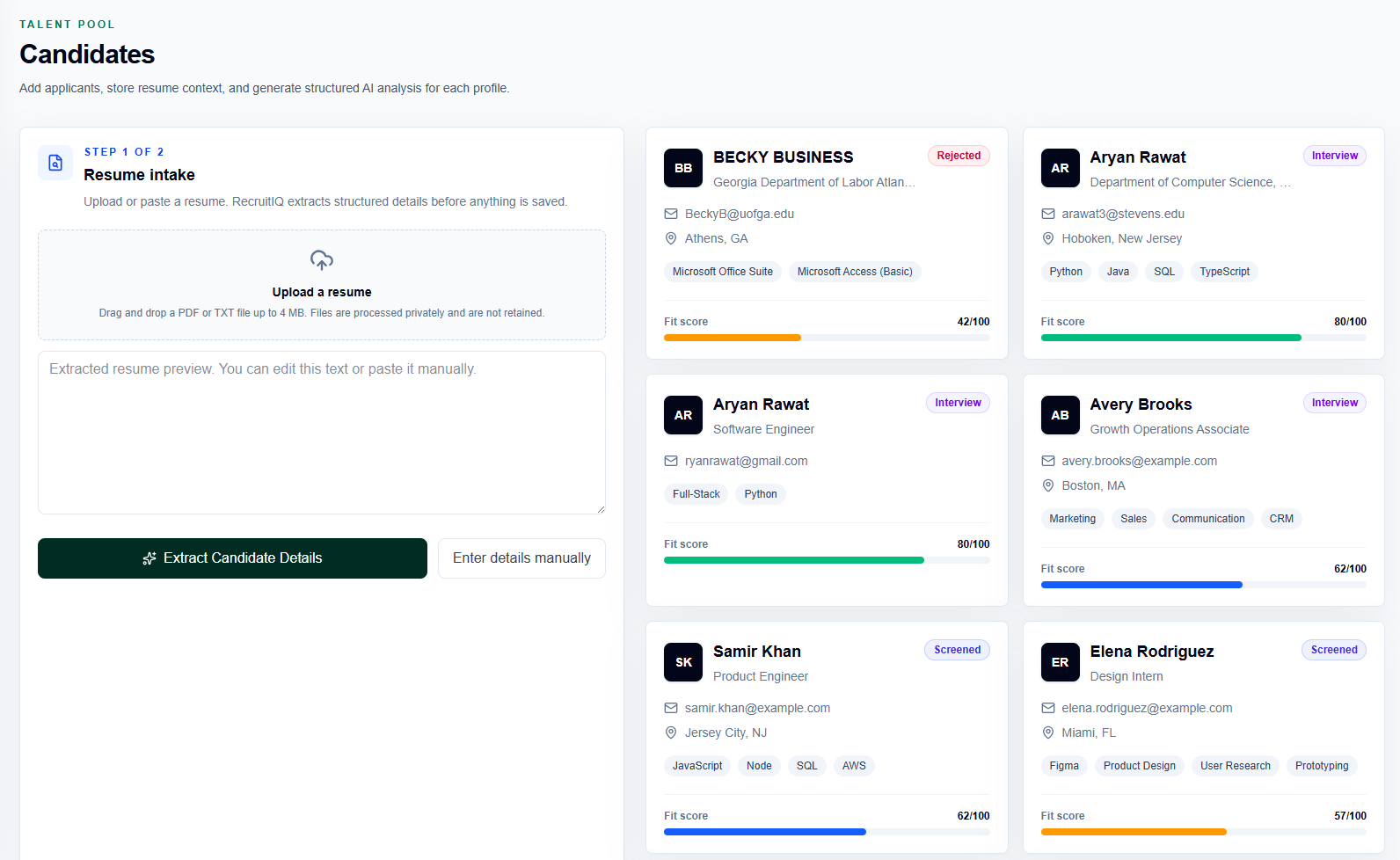
Candidates
-
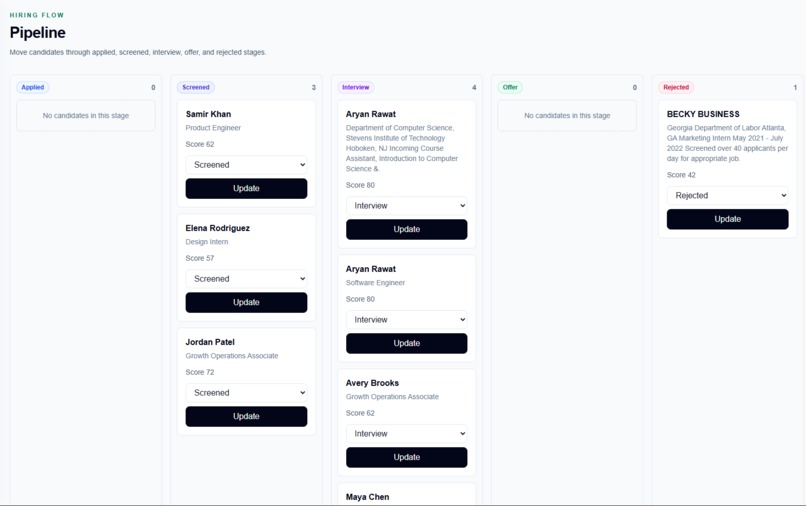
Pipeline
-
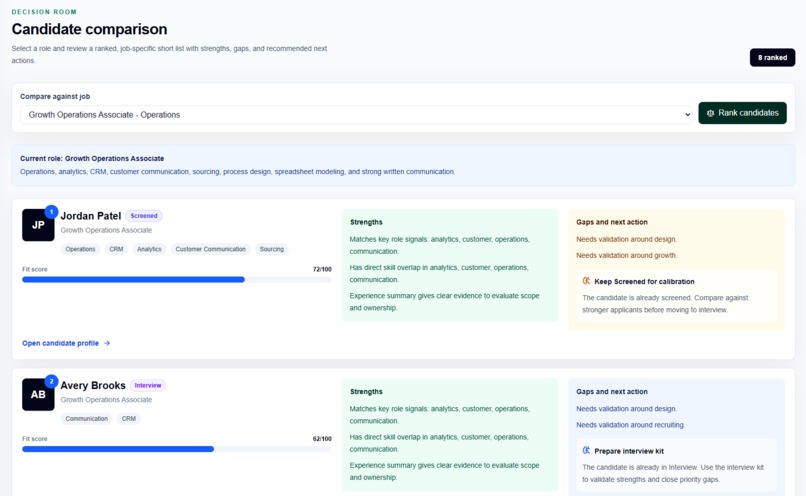
Compare
-
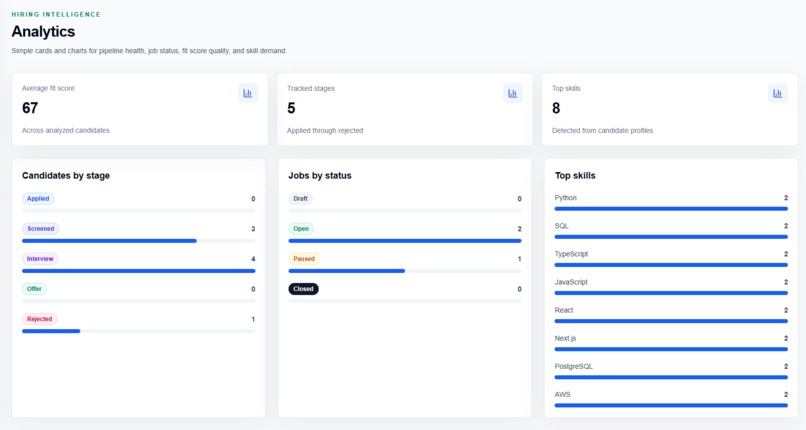
Analytics
-
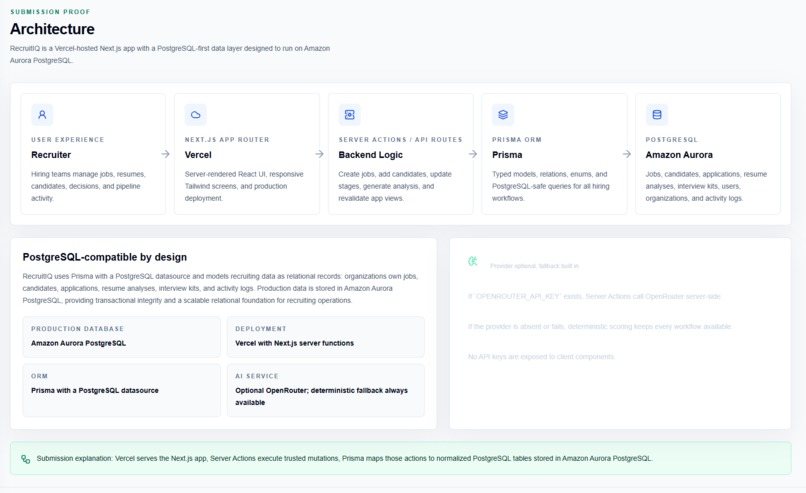
Architecture
Inspiration
Recruiters spend countless hours reviewing resumes, comparing applicants against job descriptions, and deciding who should move forward in the hiring process. Existing recruiting platforms often provide AI-generated recommendations, but many function as black boxes, leaving recruiters with little understanding of why a candidate received a particular score. I wanted to build a recruiting platform that combines the efficiency of AI with transparent, explainable decision-making. RecruitIQ was created to automate repetitive recruiting tasks while keeping humans in control of the final hiring decision.
What it does
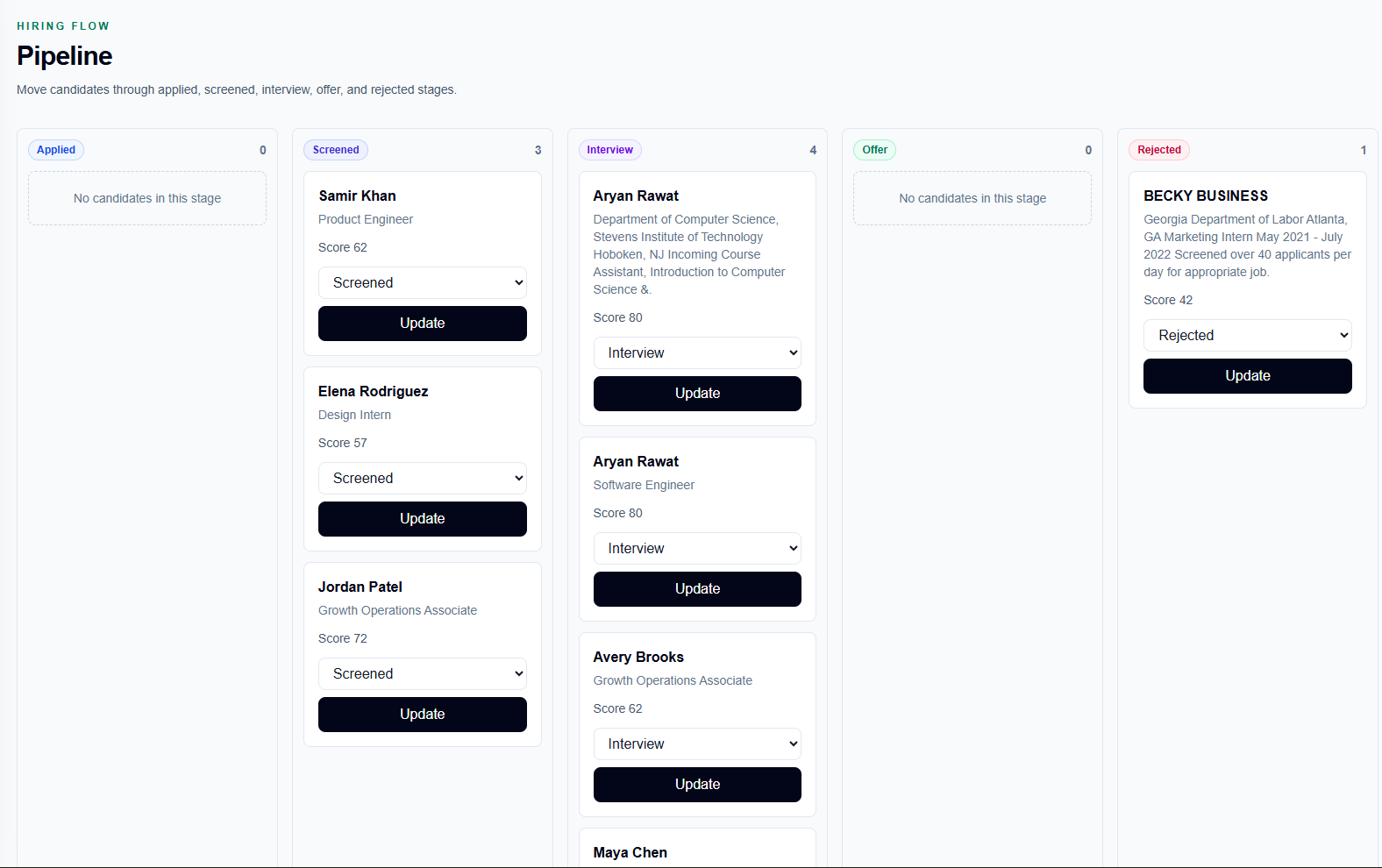
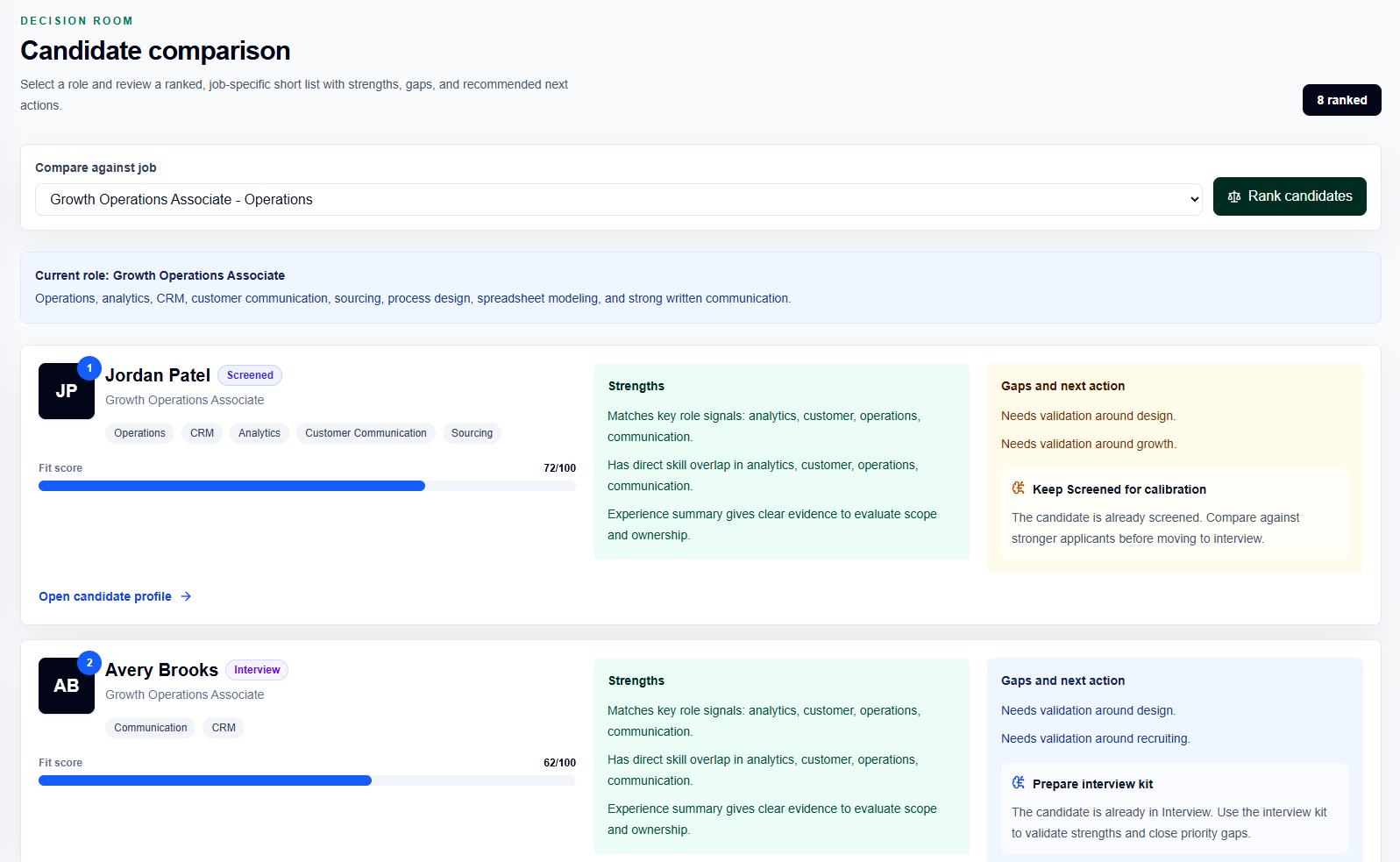
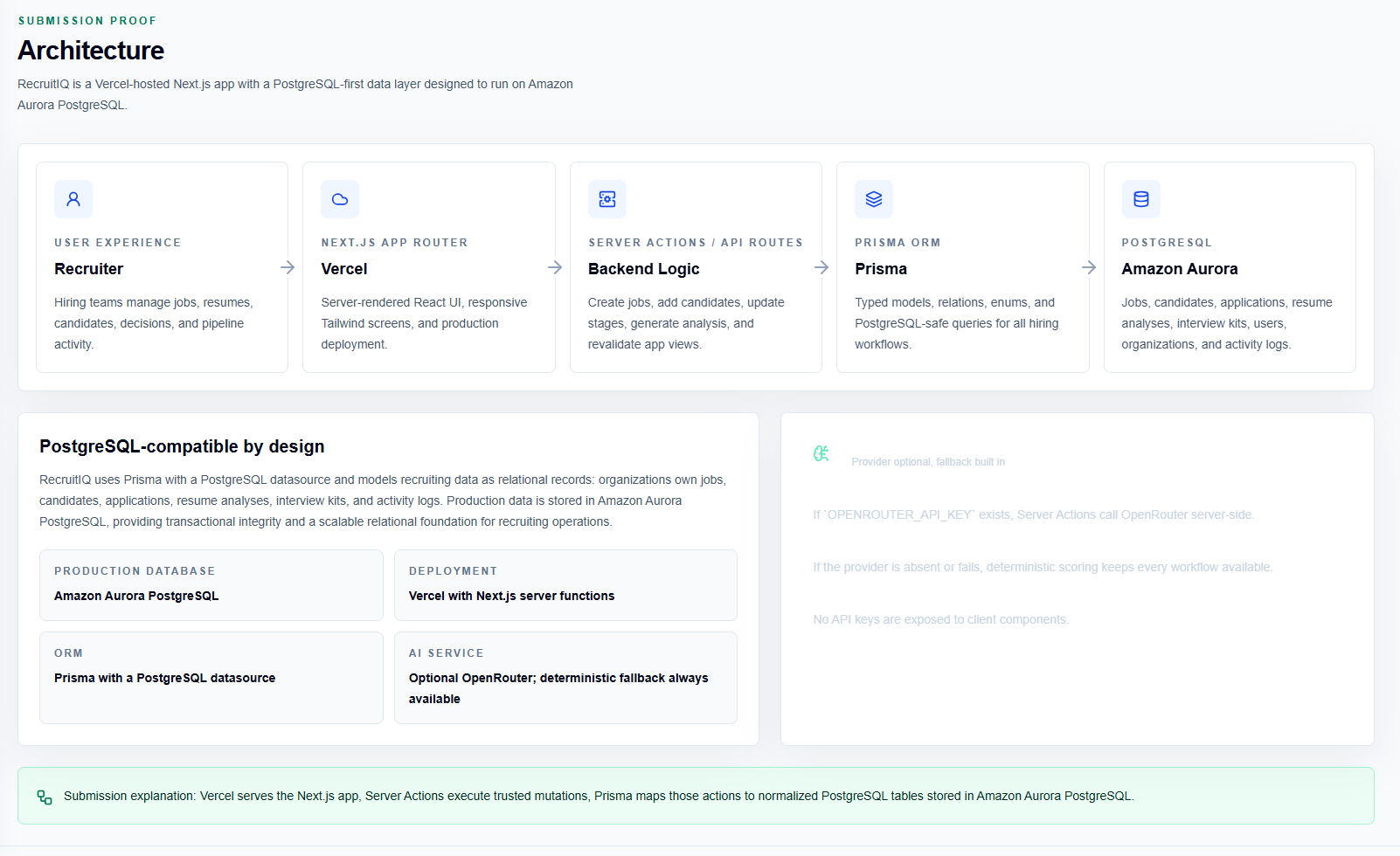
RecruitIQ is an AI-powered hiring copilot that streamlines the recruiting workflow from resume upload to hiring decision. Recruiters can upload PDF or text resumes, automatically extract candidate information, compare applicants against job descriptions, generate executive summaries, identify strengths and skill gaps, receive interview questions, and manage candidates through a hiring pipeline. RecruitIQ also allows recruiters to compare multiple candidates side-by-side, making it easier to identify the strongest fit for a role. The application uses Amazon Aurora PostgreSQL for persistent data storage and is deployed on Vercel for fast, production-ready delivery.
How I built it
RecruitIQ was built using Next.js, TypeScript, Tailwind CSS, Prisma ORM, and Amazon Aurora PostgreSQL. The frontend is deployed on Vercel, while Prisma manages communication with Aurora through a production-ready PostgreSQL schema. Resume uploads are parsed into structured candidate profiles before optional AI analysis is performed through OpenRouter using GPT-OSS-120B. To ensure reliability, deterministic scoring remains the foundation of every hiring recommendation, while AI enhances the recruiter experience by generating summaries, explanations, interview questions, and hiring insights.
Challenges I ran into
Migrating from a local PostgreSQL database to Amazon Aurora required configuring networking, database connectivity, Prisma migrations, and deployment environment variables. Another challenge was making AI outputs reliable enough for a recruiting workflow. Large language models occasionally return inconsistent or incomplete responses, so I implemented validation and deterministic fallback logic to ensure RecruitIQ continues working even if AI analysis fails. Designing a scoring system that remains transparent while still benefiting from AI-generated insights was another major engineering challenge.
Accomplishments that I'm proud of
I'm proud of building a complete production-style recruiting platform rather than a simple proof of concept. RecruitIQ supports automated resume parsing, AI-assisted candidate analysis, explainable fit scoring, side-by-side candidate comparisons, hiring pipeline management, and cloud deployment on Amazon Aurora PostgreSQL and Vercel. I'm especially proud that the application combines deterministic business logic with optional AI enhancements, allowing recruiters to trust the recommendations instead of relying on opaque black-box decisions.
What I learned
Building RecruitIQ taught me how to integrate production cloud infrastructure with modern full stack development. I gained hands on experience working with Amazon Aurora PostgreSQL, Prisma ORM, Vercel deployments, and AI inference through OpenRouter. More importantly, I learned that successful AI applications require much more than simply connecting to an LLM. They require reliable infrastructure, strong validation, thoughtful system design, and explainable outputs that users can trust.
What's next for RecruitIQ
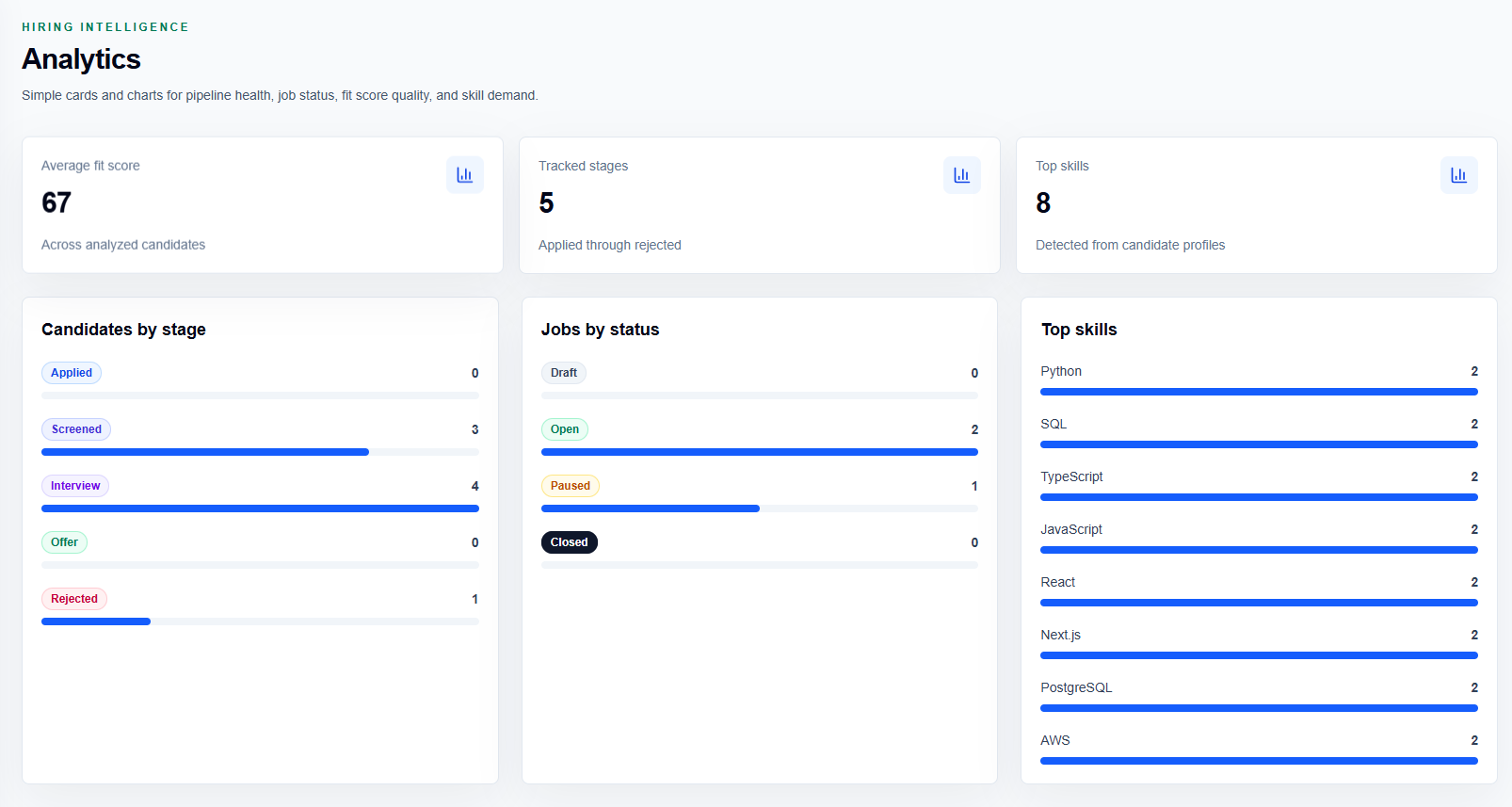
The next step is to evolve RecruitIQ into a complete recruiting platform. Planned features include support for additional resume formats, recruiter collaboration tools, interview scheduling, email automation, recruiter dashboards with hiring analytics, ATS integrations, and multi-organization workspaces. I also plan to expand the AI copilot with personalized interview plans, candidate ranking across multiple openings, and deeper hiring insights while continuing to use scalable AWS infrastructure as the platform grows.
Built With
- amazon-aurora-postgresql
- aws-aurora
- gbt-oss-120b
- github
- next.js
- next.js-server-actions
- openrouter
- prisma
- react
- rest-apis
- sql
- tailwind-css
- typescript
- vercel

Log in or sign up for Devpost to join the conversation.