-
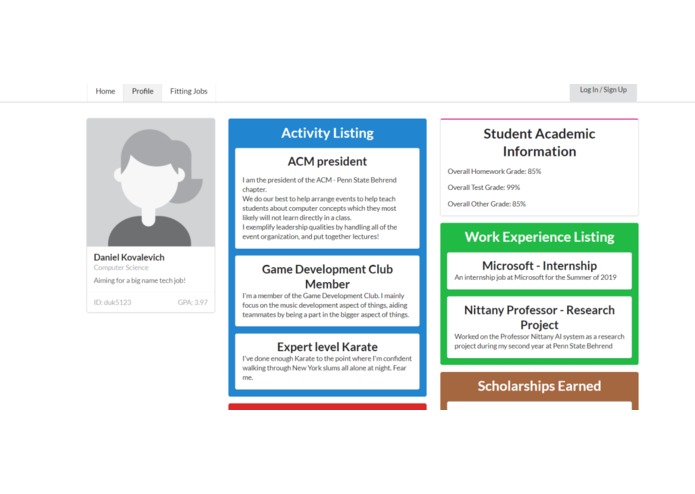
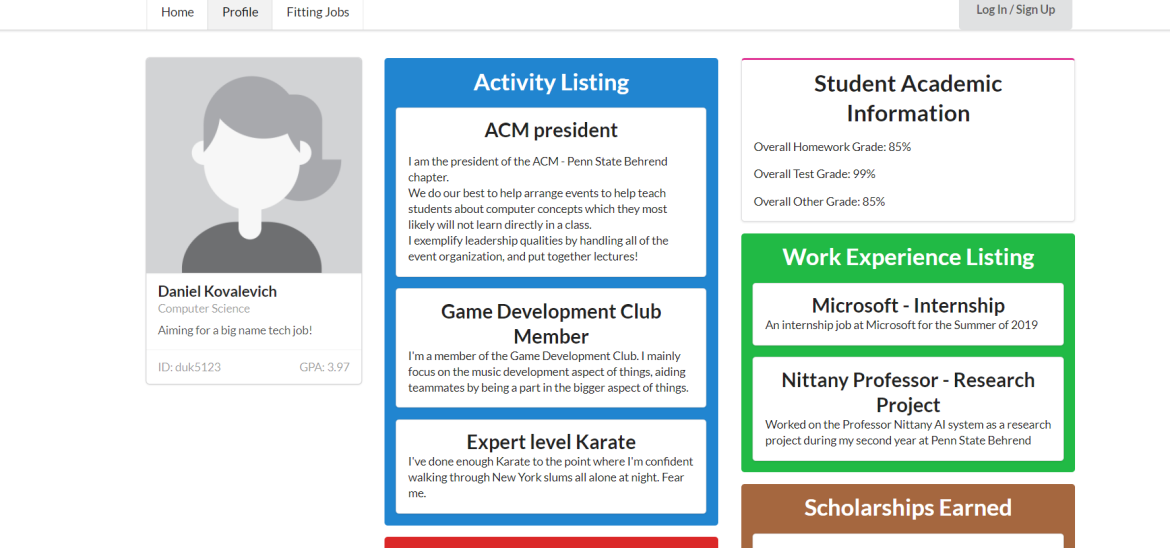
An example view of the Student Profile Page
-
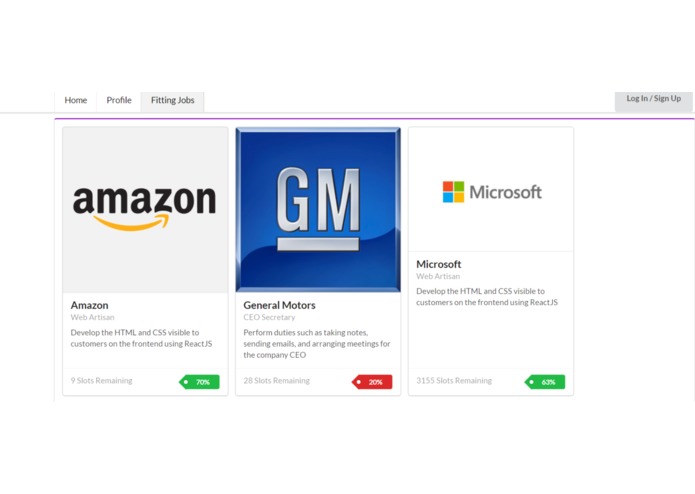
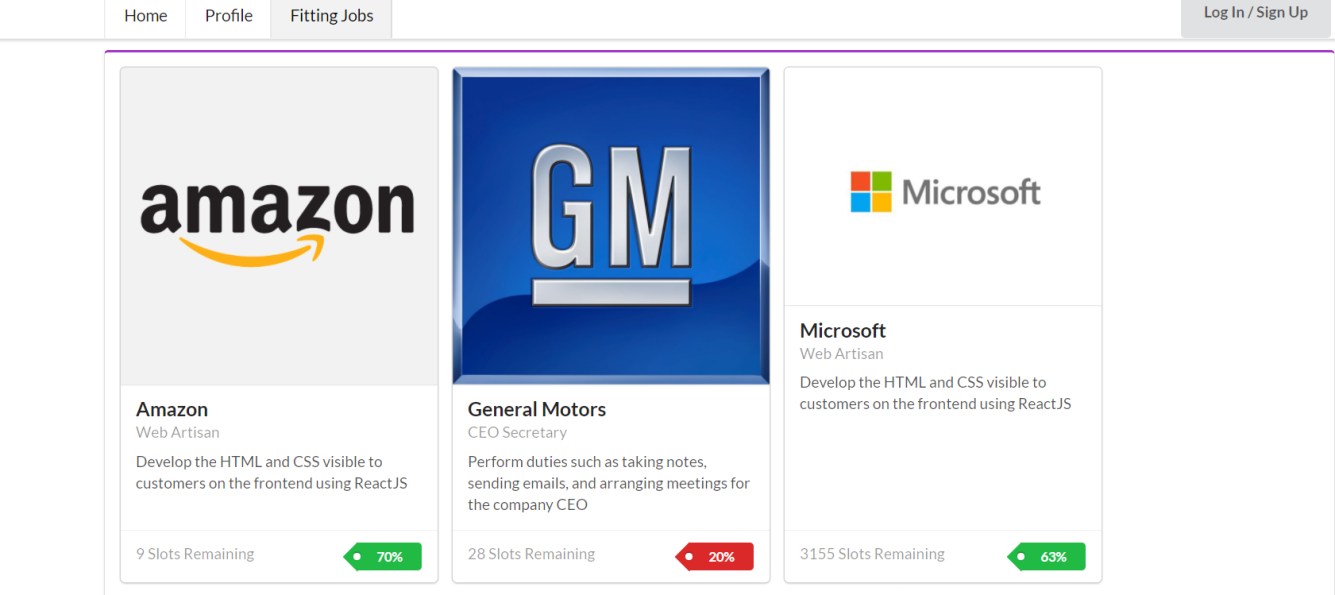
An example view of recommended pairings for a user. The percentages are determined based on how well a student's data matched the position.
-
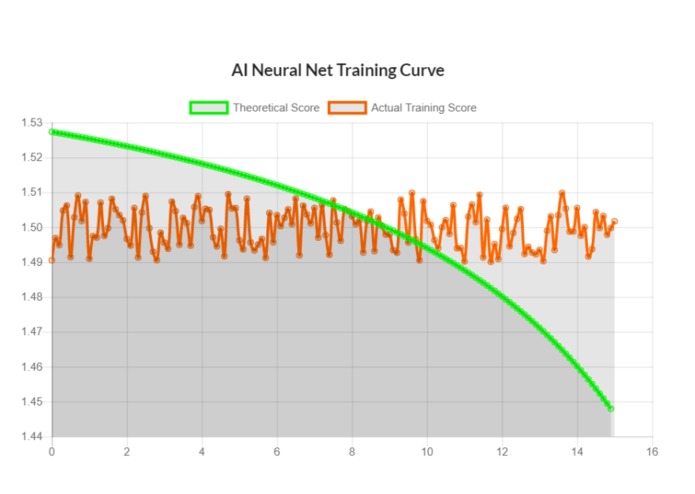
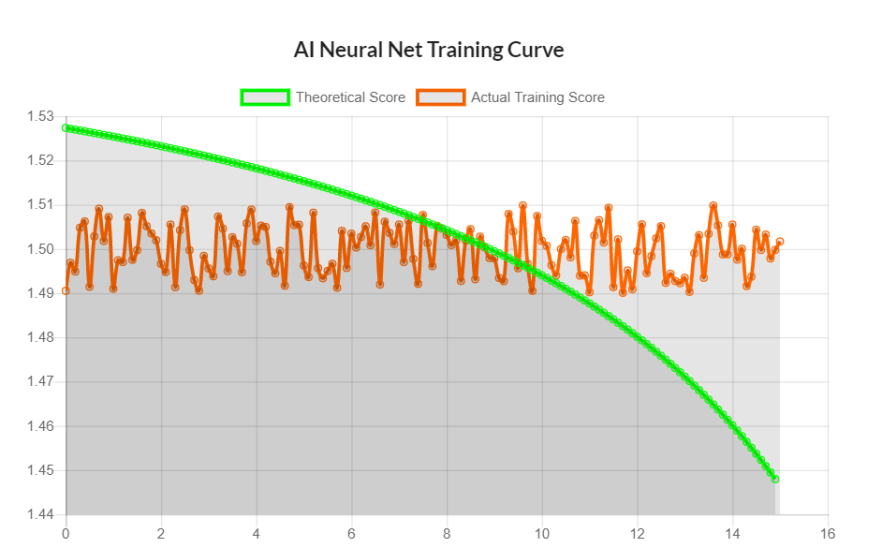
A graph of the live neural net training view, compared to the desired, optimal training score
Inspiration
The team working on this project has recently endured the pain of the job search process and wanted to create this project in order to completely streamline the process in a trustworthy and controlled way. The current method a majority of students hunt for jobs is by sporadically throwing an application at every company you can and expecting a 90% rejection rate or more and just seeing what sticks.
What it does
This process solves this issue by providing a trustworthy platform for companies so that they know every student application is accurate and genuine. It also eases the pain of the process for students because they only have to create one application to be used everywhere instead of having to create a new application per company they are applying to. Once a student is registered in the system using their university issued id, they are matched to job postings using a neural network that decides which student matches to what job posting using a supervised single dense layer neural network.
How we built it
The frontend of our service is built using semantic-ui for its appearance and also uses jQuery to handle http transactions from the backend to the frontend.
The backend is hosting on top of express.js which handles the database interactions such as storing and retrieving student and company data. The backend also interfaces with a java server using Spring Boot which houses a neural network written using the deeplearning4j library which trains the pairing AI based on if a student has successfully gotten a job that they were matched to. This neural network is further used also to make judgements and create recommended pairings between students and available job postings.
Challenges we ran into
The frontend team was inexperienced with semantic-ui and they quickly learned the documentation and implementation of the stylesheets. The backend team was initially uncertain of what data to track for both students and job postings but we decided upon a set of data that we felt was most accurate given the amount of time we had. An important part of Neural Networks is the information which is fed into the AI, usually requiring careful data normalization for the inputs. Given the time constraint, we were able to eventually create a reasonable set of data to be used by the neural network which will show some progress of learning over time, however we were not able to make a completely optimized function that would turn these values into optimal inputs.
Accomplishments that we're proud of
We feel as though our project idea is well thought out as it is generally desirable by both companies and students. Recruit'r also avoids a key issue of fake student data because it ties student information to the university and student ids. Another big accomplishment for the project is that we are drawing from a lot of student data that is not commonly tracked. This is critically important for the neural network because the AI is able to discover connections between data that humans are unable to see.
What we learned
The frontend team successfully learned the notation of semantic-ui. The development team overall feels as though we have sharpened our skills with javascript and gained confidence in our use of the language. The backend team also greatly appreciated the additional experience with mongodb and connecting to databases.
What's next for Recruit'r
If our team had more time to work on Recruit'r, we would have implemented a second AI that would normalize the input data which would then be used in our primary neural network. We would also increase the amount of customization of the project as it would allow for even more varied applicants to be successfully matched to job postings. Lastly, we would improve the appearance of the interface for companies in order to allow companies to specify what traits a company is looking for even more accurately.
Built With
- deeplearning4j
- express.js
- html5
- mongodb
- semantic-ui
- spring-framework
- typescript


Log in or sign up for Devpost to join the conversation.