💡 Inspiration
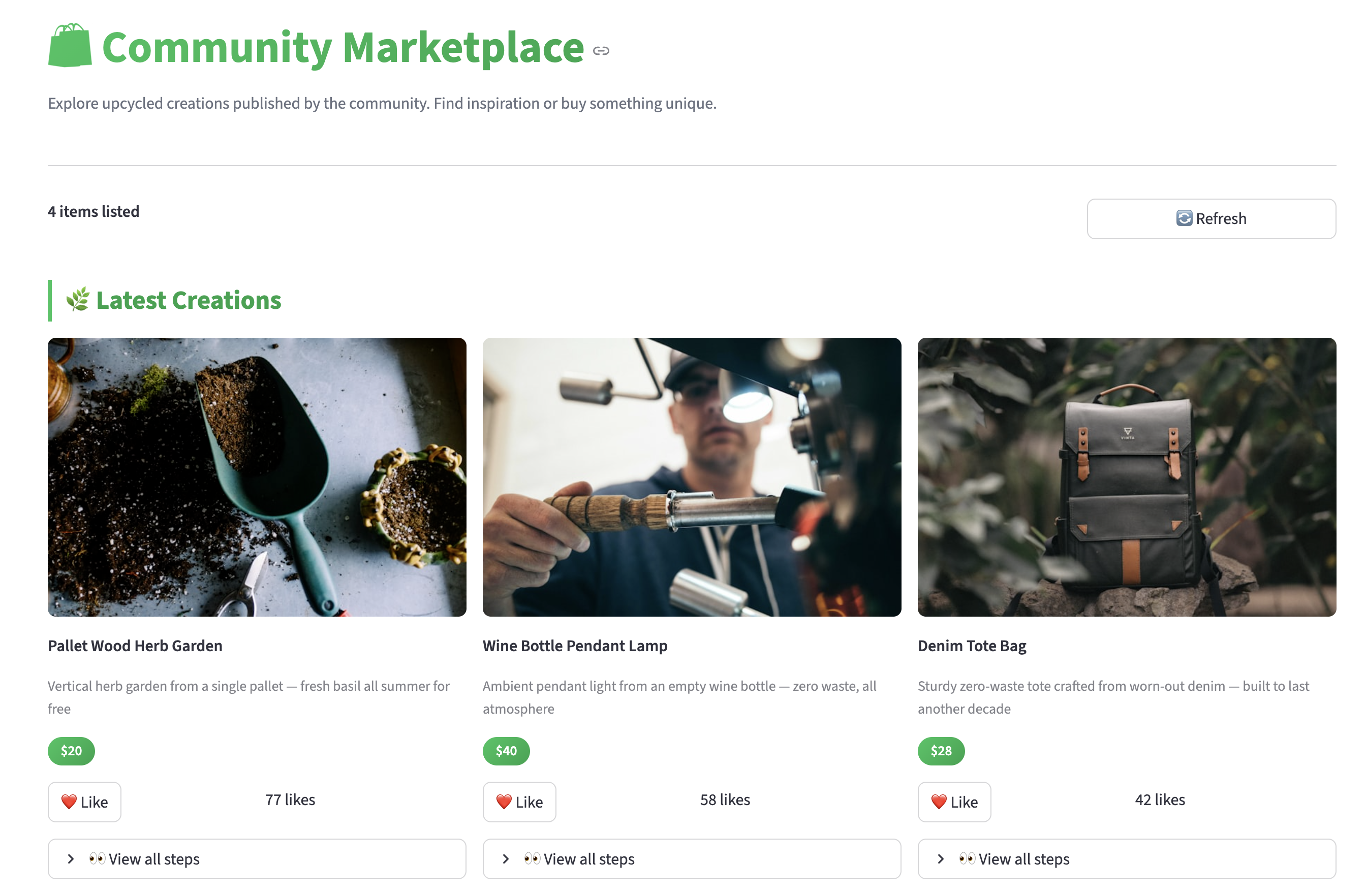
The world is drowning in waste: over 2.1 billion tonnes are generated annually, yet less than 20% is recycled. We realized the barrier to upcycling isn't a lack of will, but a lack of imagination. We built ReCraft AI to turn "trash" into a creative and economic opportunity using Multimodal Generative AI.
🛠️ How we built it
We developed a decoupled architecture for maximum performance:
- Frontend: Streamlit for a rapid, interactive UI.
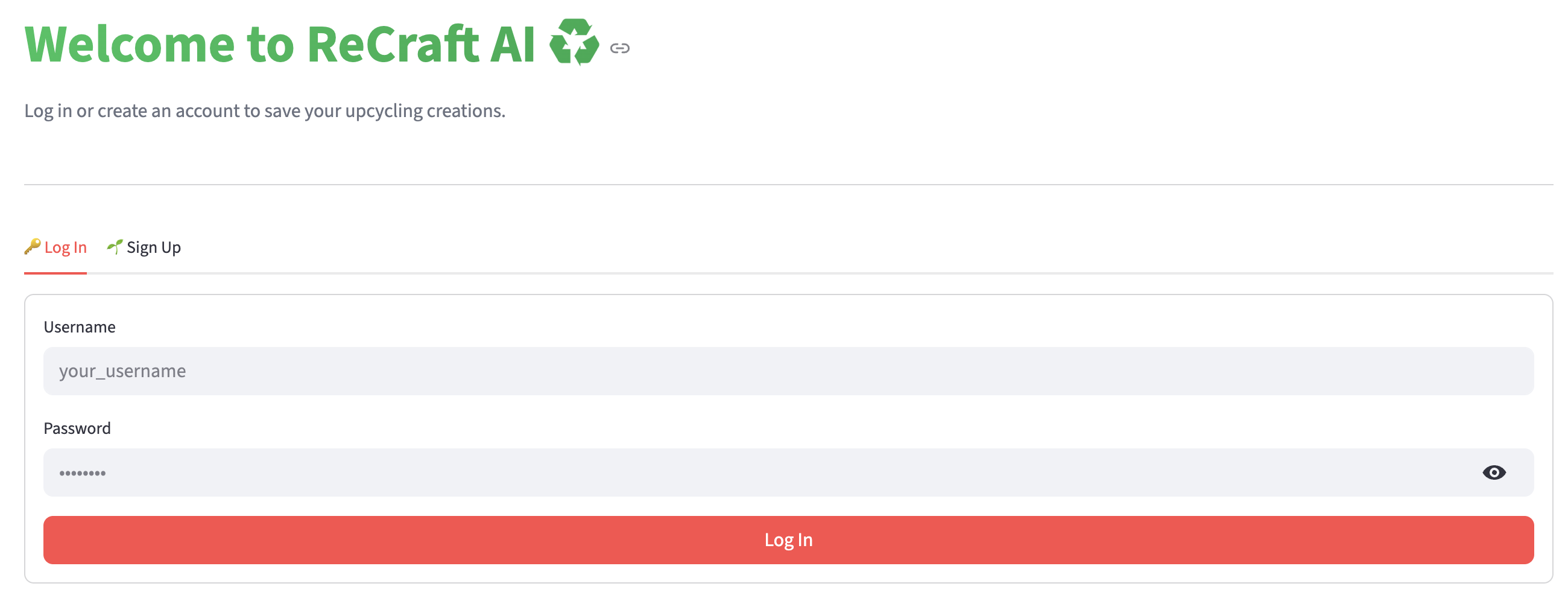
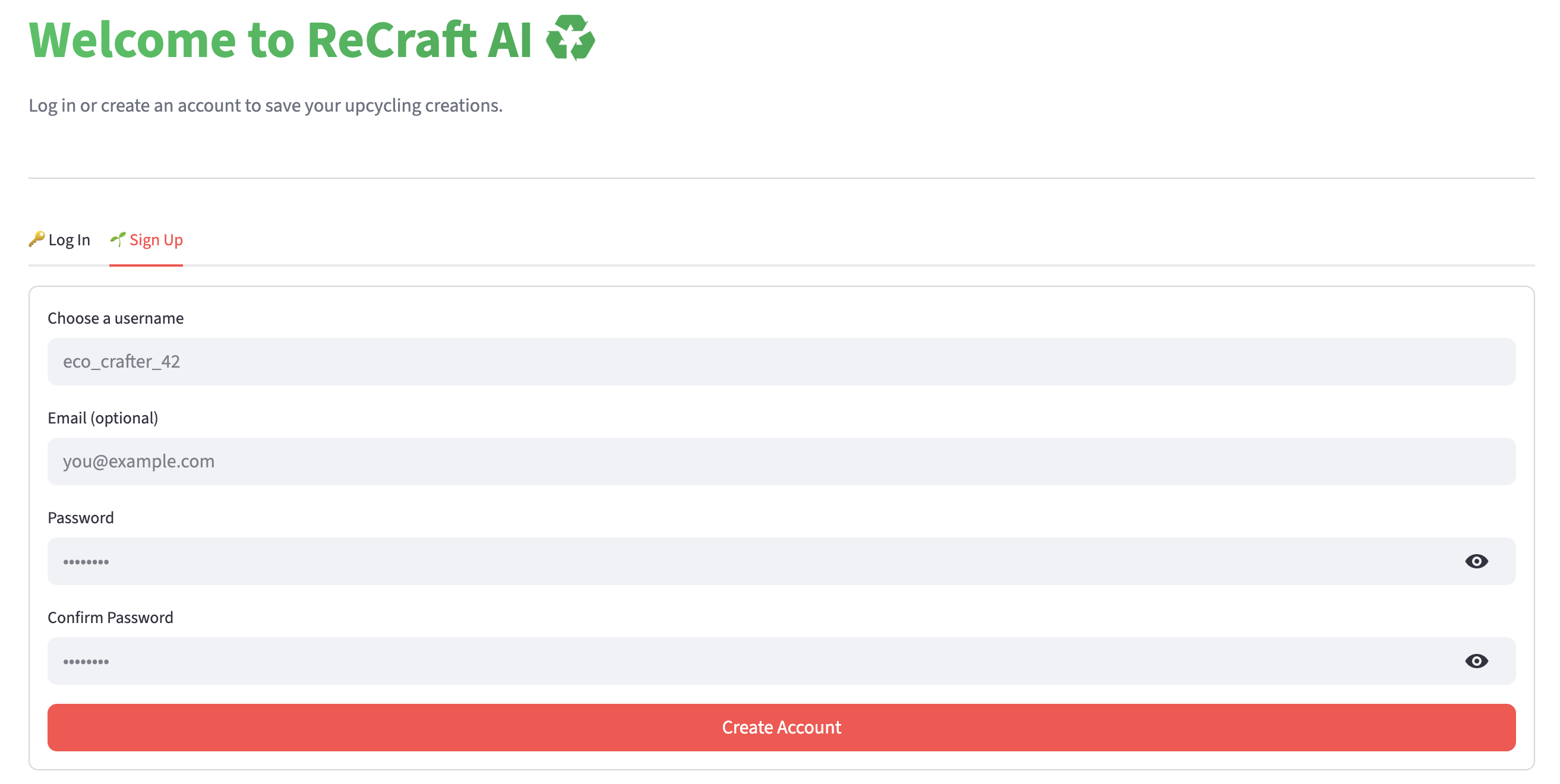
- Backend: FastAPI handling JWT auth and agent orchestration.
- AI Pipeline:
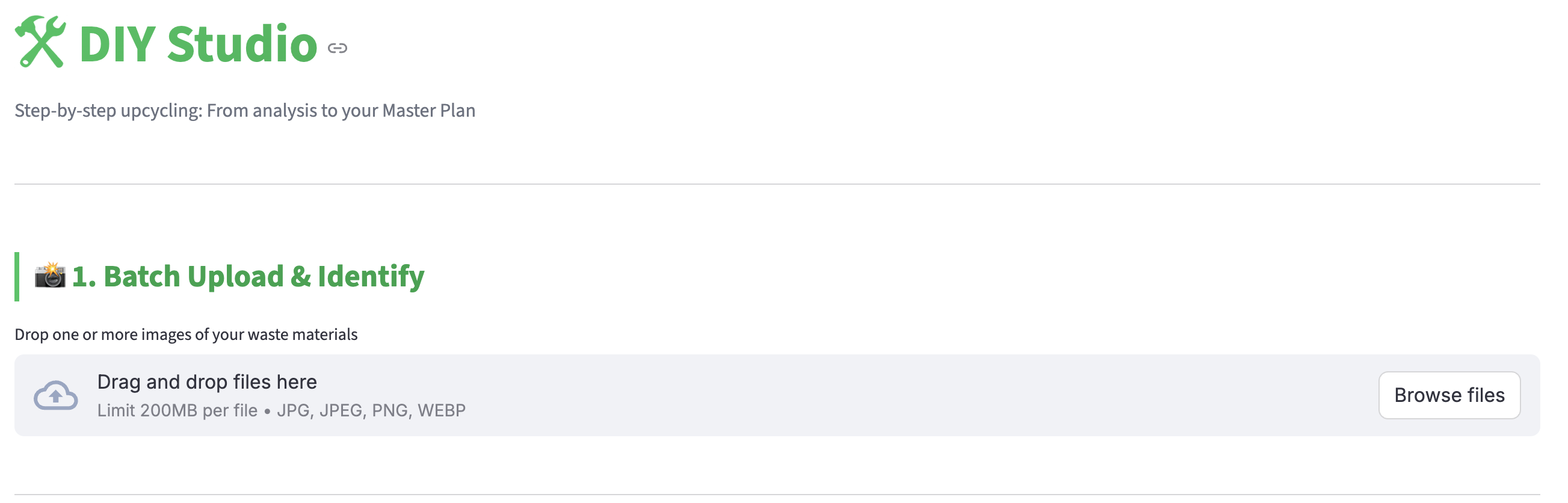
- Vision: Qwen2.5-VL-72B to identify materials.
- Instruction: gpt-oss-120b generating DIY steps.
- Visualization: FLUX-1 for photorealistic previews.
- Math Model: We use a conservative pricing algorithm: $$Price_{rec} = (Hours_{labor} \times Rate_{hourly} + Cost_{mat}) \times 1.15$$
🚧 Challenges we faced
- Physical Constraints: Ensuring AI didn't suggest "impossible" builds. We implemented dimension-grounding prompts to force the LLM to respect \(L \times W \times H\) limits.
- Latency: Chaining multiple large-scale models (Vision + LLM + Flux) created lag. We optimized this using asynchronous FastAPI endpoints and dedicated Hugging Face inference hardware.
📚 What we learned
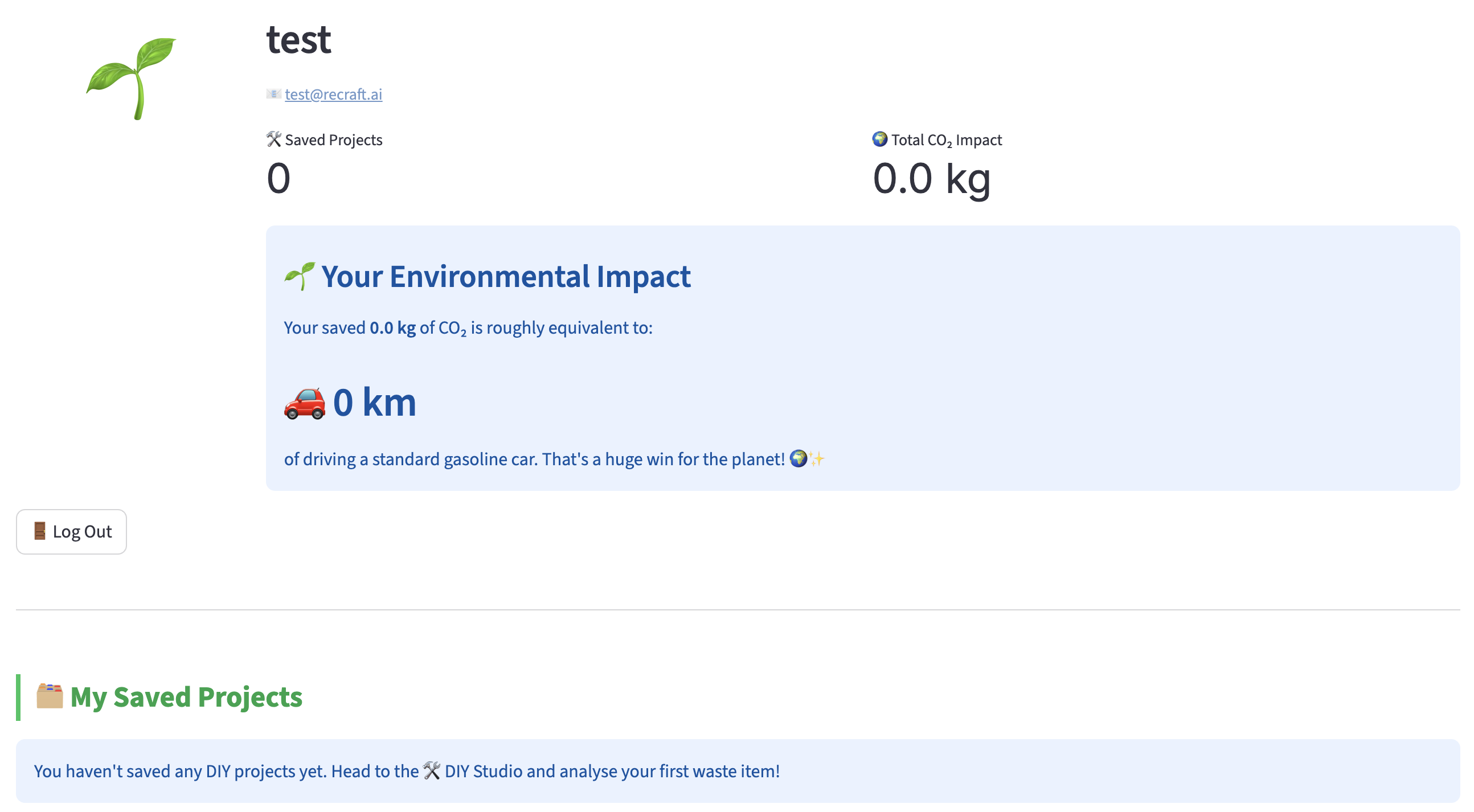
We discovered that the "circular economy" becomes far more engaging when users can visualize the outcome and quantify the value. We also mastered the orchestration of specialized agents, moving beyond simple chat interfaces to high-precision JSON-driven workflows.

Log in or sign up for Devpost to join the conversation.