-
-
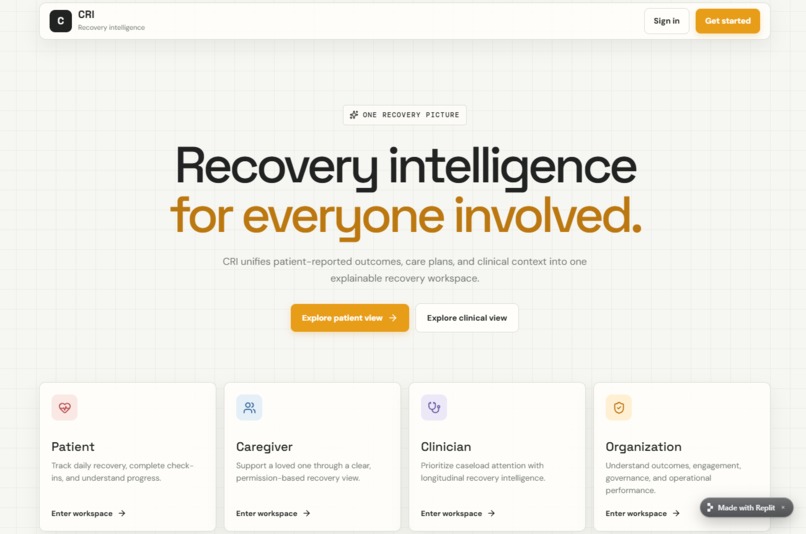
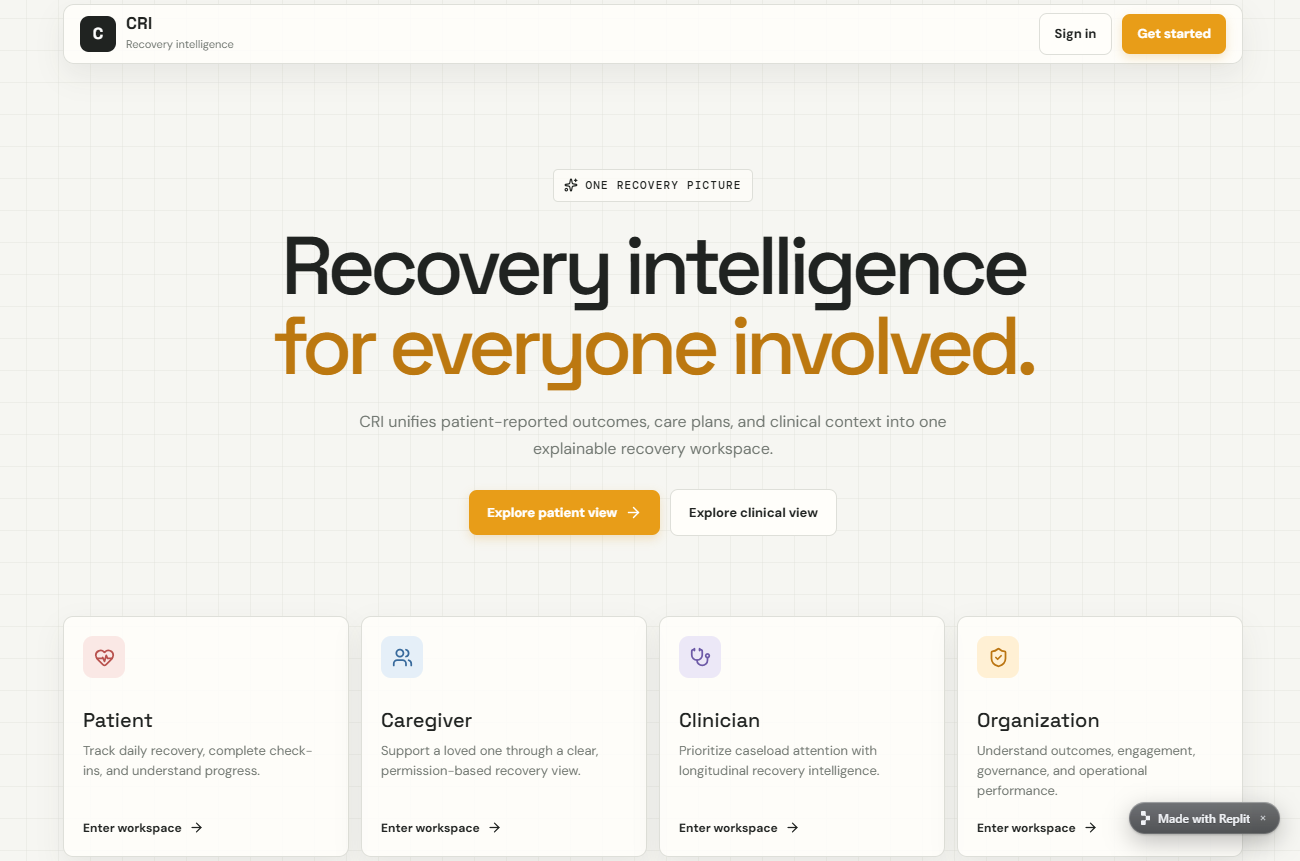
Landing page has all 4 roles at a glance
-
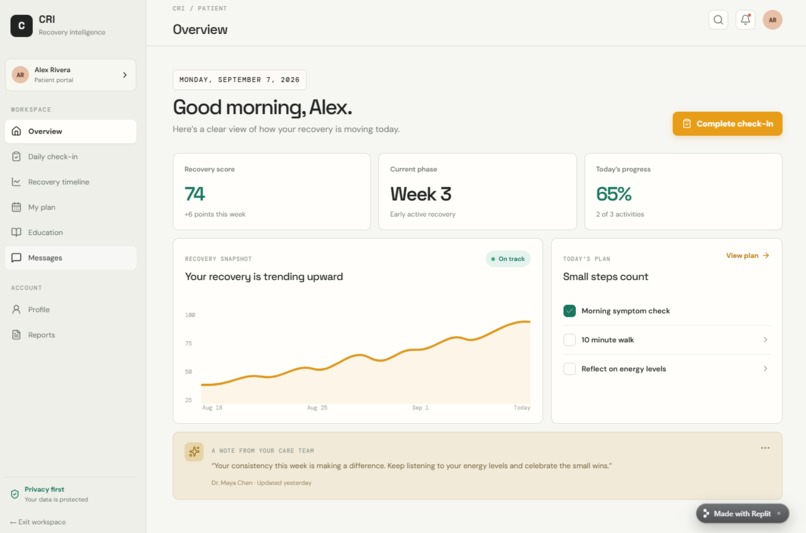
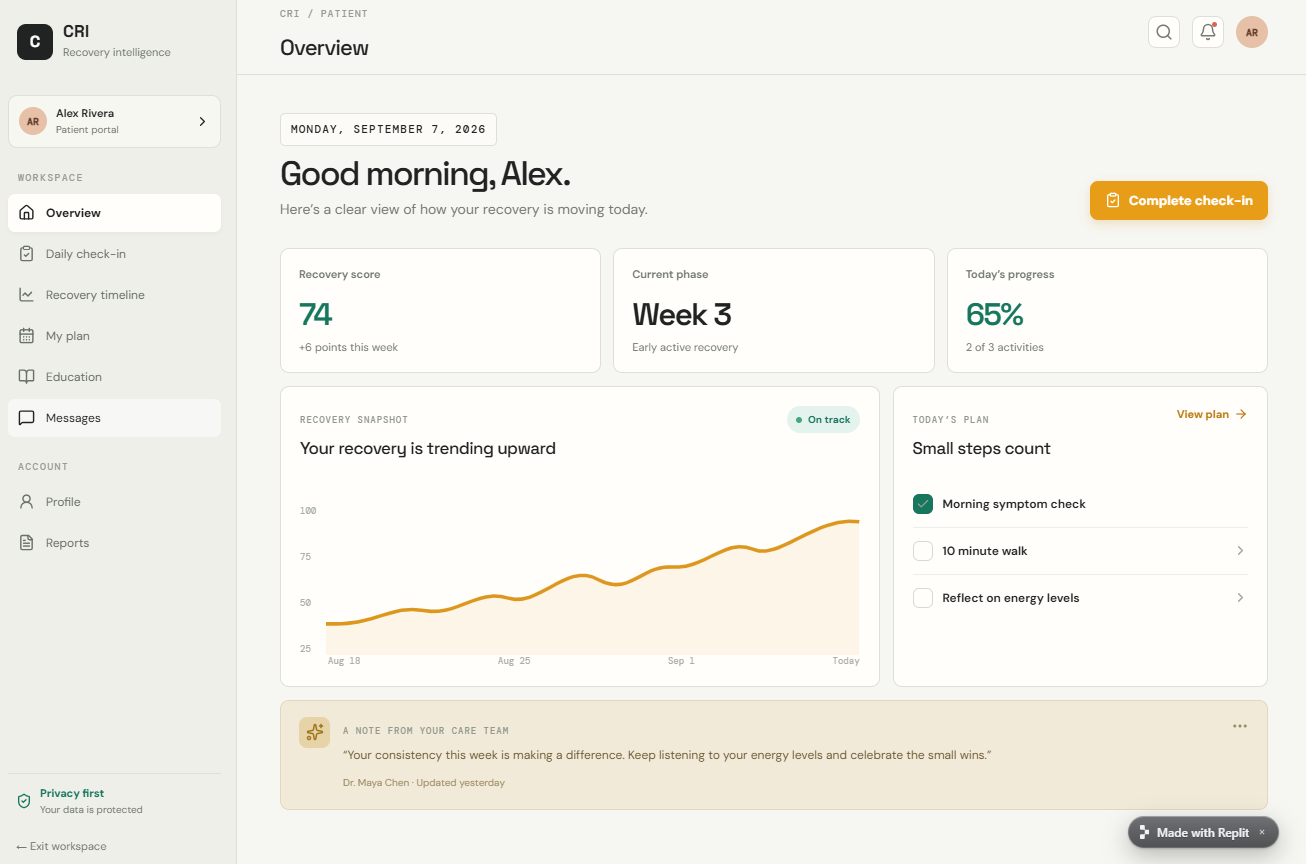
Patient portal for daily recovery tracking, progress, check-in button
-
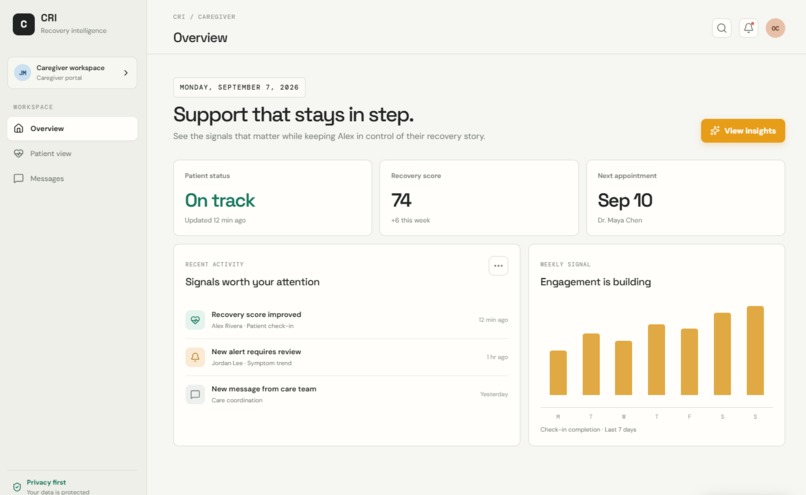
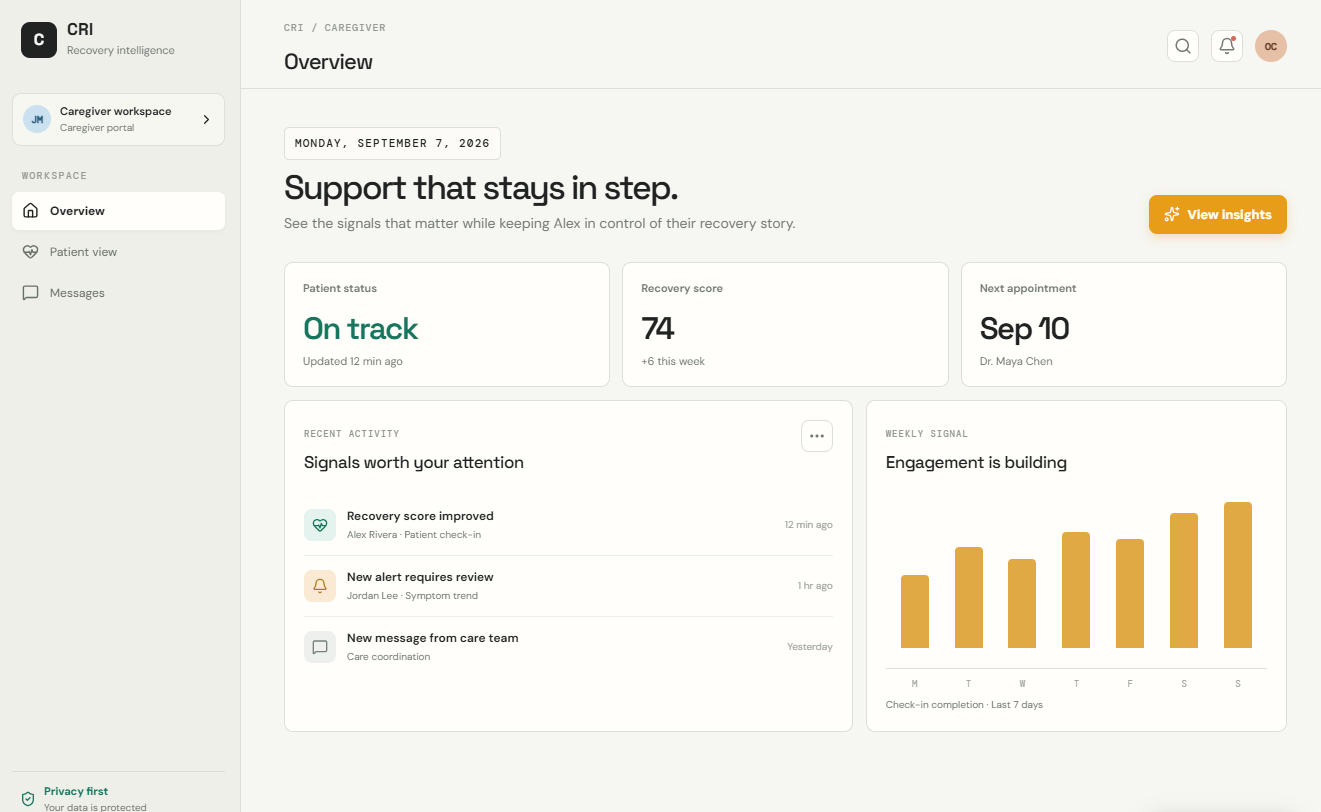
Caregiver portal with high-level trends without private data
-
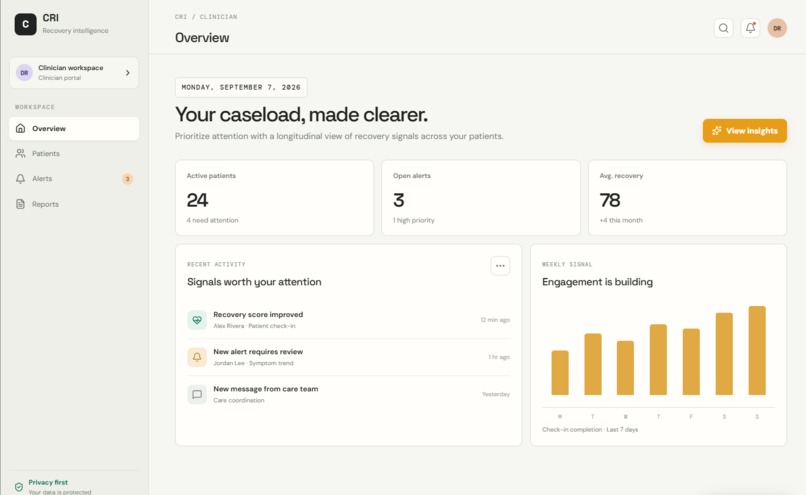
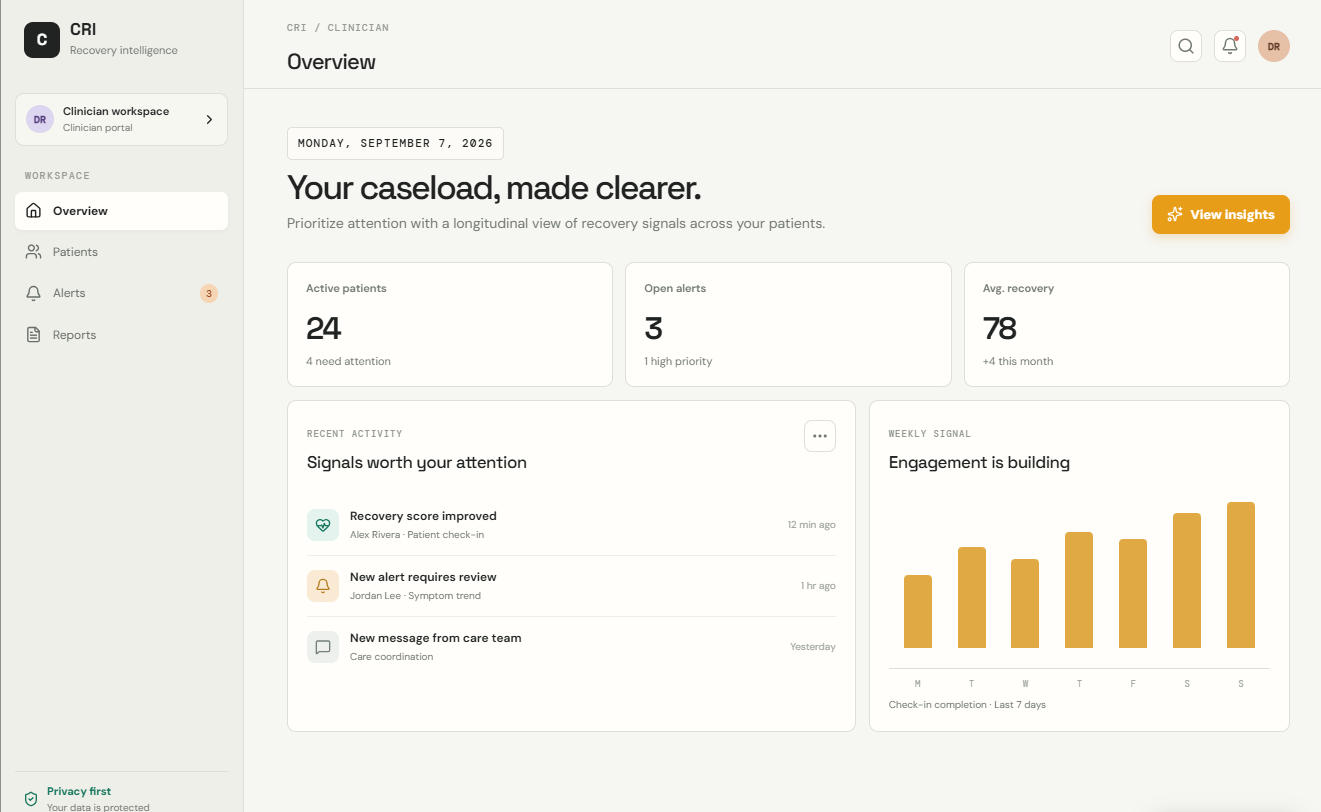
Clinician portal has caseload triage, alerts, "Needs Review" signals
-
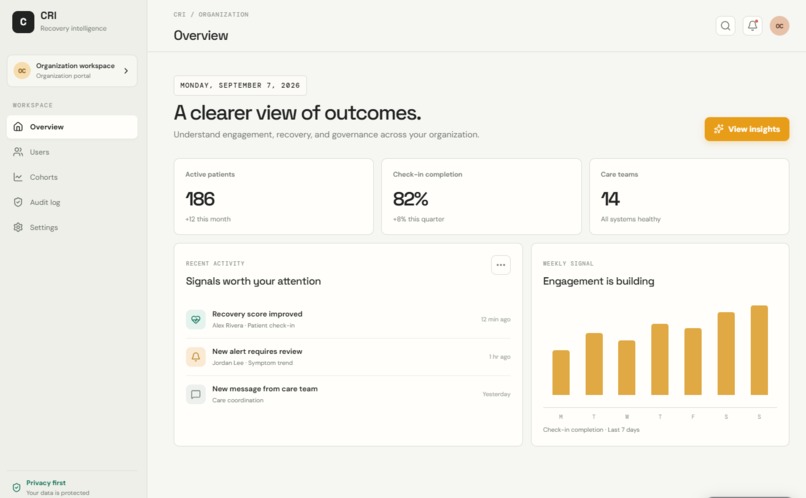
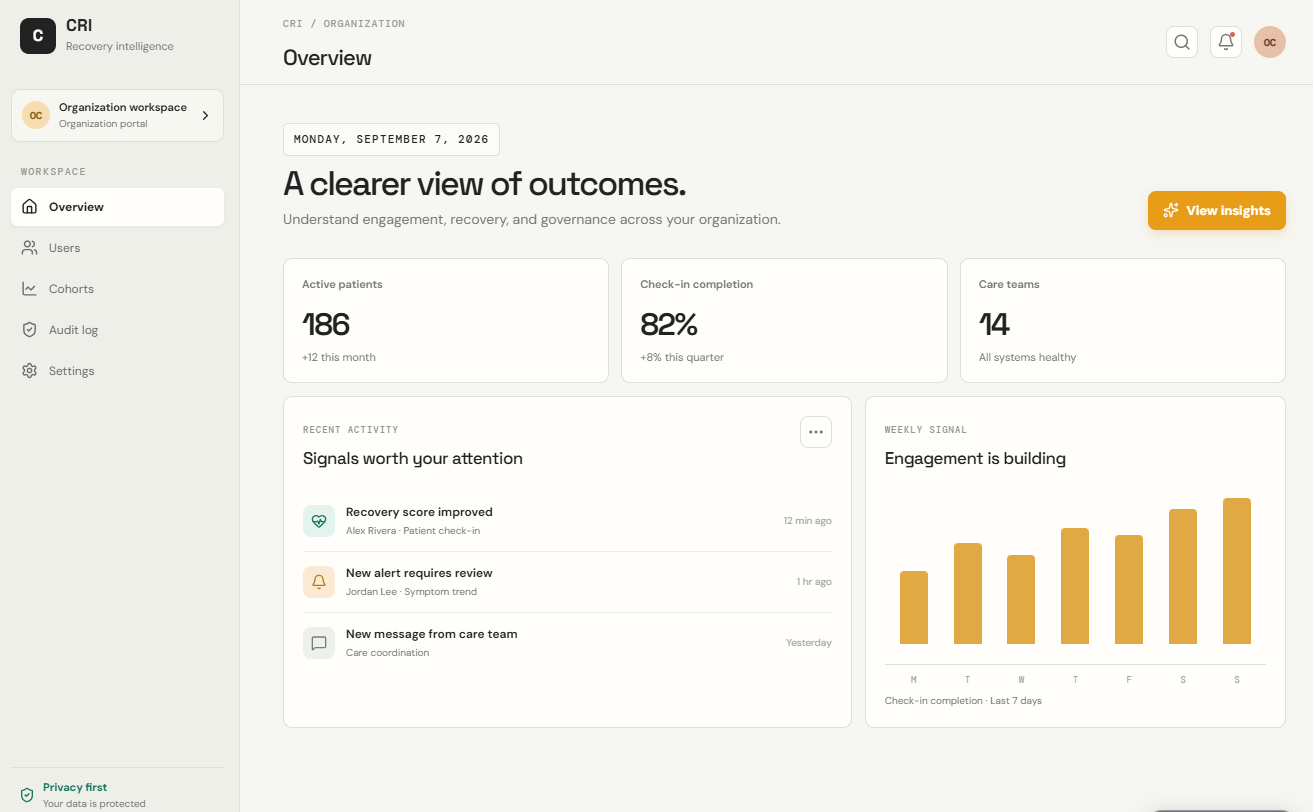
Admin/Organization
Inspiration
My roommate got a concussion last year, and watching her try to navigate recovery was brutal. At her doctor's appointments, she couldn't remember if her headache was worse on Monday or Tuesday. She couldn't tell if screen time actually triggered her dizziness or if she was just having an off day. When her mom asked, "Are you feeling any better?", her answer was always "...I think so?"
Recovery was a black box. Paper symptom journals got lost, subjective memory faded after 48 hours, and generic AI chatbots were far too risky to trust with brain injuries. She wanted clarity, but the tools simply didn't exist. We built Concussion Recovery Intelligence (CRI) to transform those fuzzy daily struggles into structured, clinical-grade baseline insights, giving patients clarity and doctors actionable data without the guesswork.
What it does
It acts as an EHR specifically for management across distinct user workspaces
Patient Portal: Features a 60-second check-in for brain fog rating 8 core symptoms (0–6 scale) plus sleep/activity context, displays descriptive 0–48 symptom totals without false recovery claims, and exports printable reports for school/work/clinic handoffs.
Caregiver Portal: Provides consent-gated monitoring allowing parents or supporters to view high-level recovery trends via configurable permissions without seeing private notes.
Clinician Portal: Enables caseload triage (Stable, Needs Review, Elevated), displays non-causal AI pattern insights (e.g., shorter sleep linked to higher headaches), and tracks immutable visit note amendments to prevent silent edits.
Admin Portal: Manages roles, views de-identified program metrics, enforces 7-year data retention, executes litigation legal holds, and logs all mutations in an append-only audit trail.
Safety First, Always: Scans check-ins against CDC red flags (repeated vomiting, progressive headaches, confusion) to trigger a sub-50ms UI lockout with inline 911 calling before saving data.
How we built it
- Frontend (User Interface): Built with Next.js 16, React 19, and Tailwind v4, using reusable form fields and special print styling for clean paper reports.
- Backend (Data Sync): Powered by Convex to deliver instant, real-time database updates across screens without manual SQL code.
- Security & Roles: Uses Clerk JWT auth and custom route guards to strictly restrict access between patient, caregiver, clinician, and admin portals.
- Data Governance: Implements HIPAA-style safeguards, including append-only audit logs, legal hold protections, and granular consent controls.
Challenges we ran into
- Designing for Brain Fog: Simplified form UX for patients with cognitive strain, requiring ratings for all 8 symptoms without complex steps or visual overload.
- Instant Safety Gates: Built a hard stop that scans for CDC danger signs in under 50ms, locking the app and displaying emergency info before saving data.
- Strict Consent Scoping: Created a granular permission system so patients can invite caregivers with auto-expiring scopes without leaking private medical notes.
Accomplishments that we're proud of
- Sub-50ms Danger Sign Detection: A rock-solid safety mechanism that detects CDC red flags immediately and routes users to emergency services.
- Comprehensive 4-Role Workspace: Fully implementing four specialised portals (Patient, Caregiver, Clinician, Admin) in a clean, production-ready codebase.
- Compliance-First Architecture: Building enterprise-grade HIPAA patterns from day one, including legal hold overrides, immutable audit logs, and soft-delete privacy workflows.
What we learned
- How to separate observational pattern insights from causal claims (e.g., showing that two events happened together without claiming one caused the other).
- Modern full-stack architecture using Next.js 16, Convex reactive queries, and Clerk JWT auth synchronization.
- How to design clinical-grade software that strictly obeys medical guidelines (CDC, Amsterdam Consensus) without making unsafe medical claims
What's next for RecoveryNest
- Passive Sensor Sync: Connecting wearable data (sleep duration, physical activity level) to further reduce manual check-in friction.
- Expanded Academic Accommodation Workflows: Adding automated return-to-learn progress reports for school nurses and counsellors.
- Multi-Language Accessibility: Translating daily check-ins and emergency safety modals into additional languages.
Built With
- accessibility
- ai
- clerk
- convex
- ehr
- full-stack
- health-tech
- healthcare
- hipaa-compliant-design
- next.js
- patient-safety
- react
- real-time
- safety-first
- tailwind-css
- typescript
- wcag-2.2

Log in or sign up for Devpost to join the conversation.