-
-
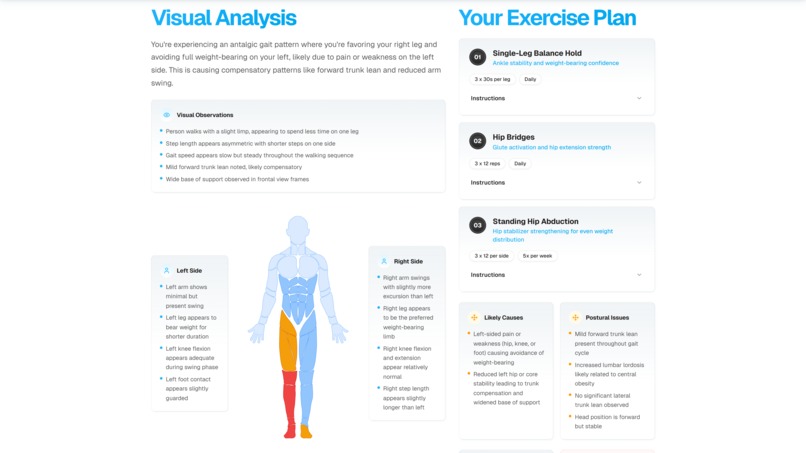
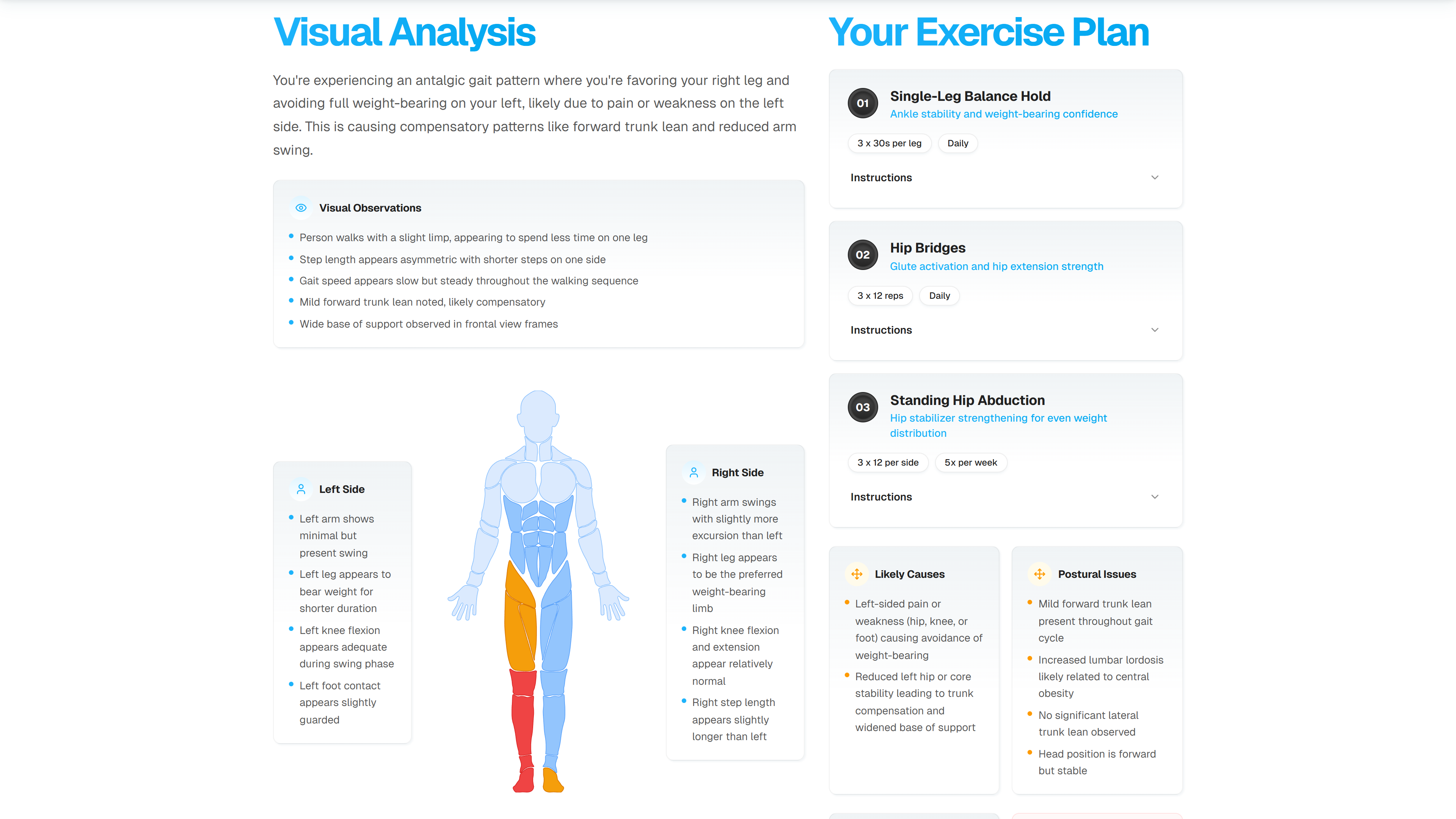
AI-powered movement breakdown with visual insights, severity scoring, and a personalized exercise plan built from your video.
-
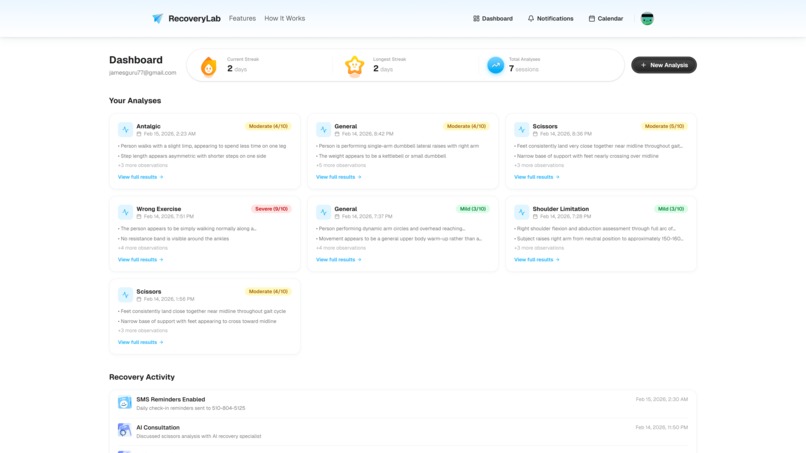
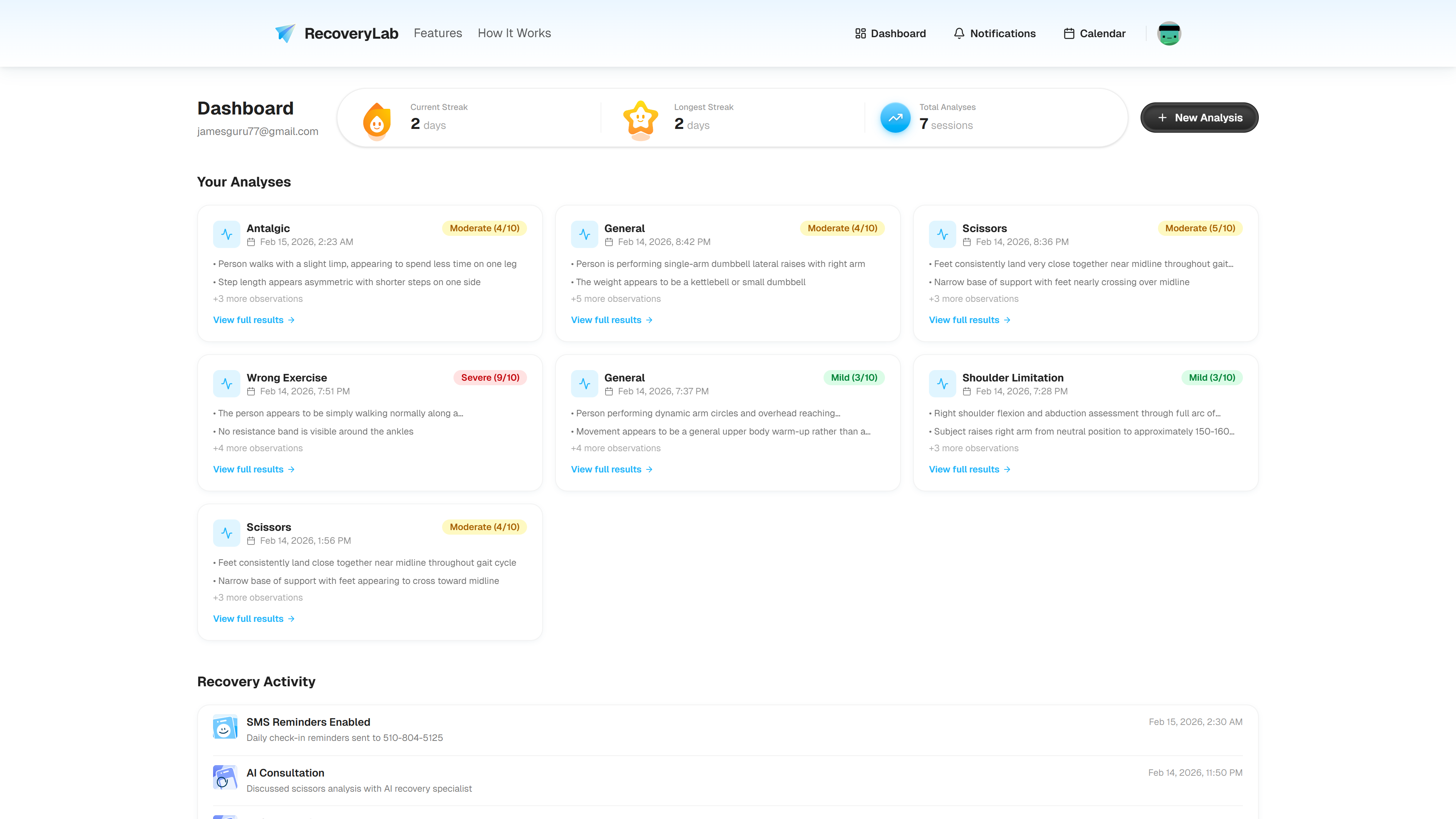
Your recovery dashboard tracking streaks, analyses, progress history, and activity updates in one centralized view.
-
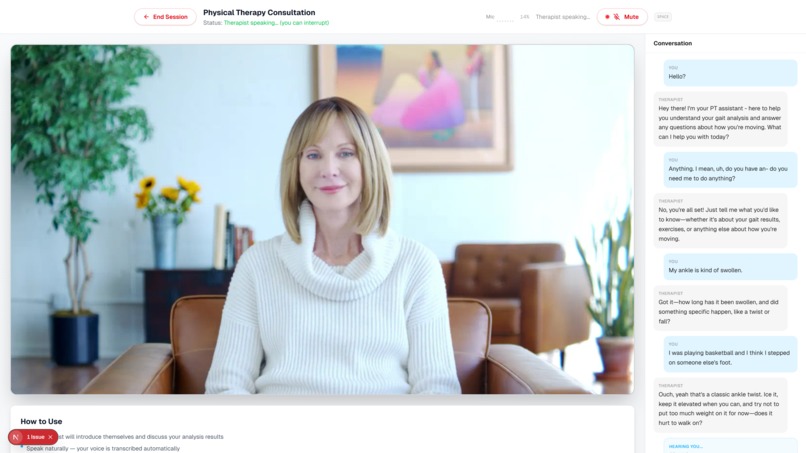
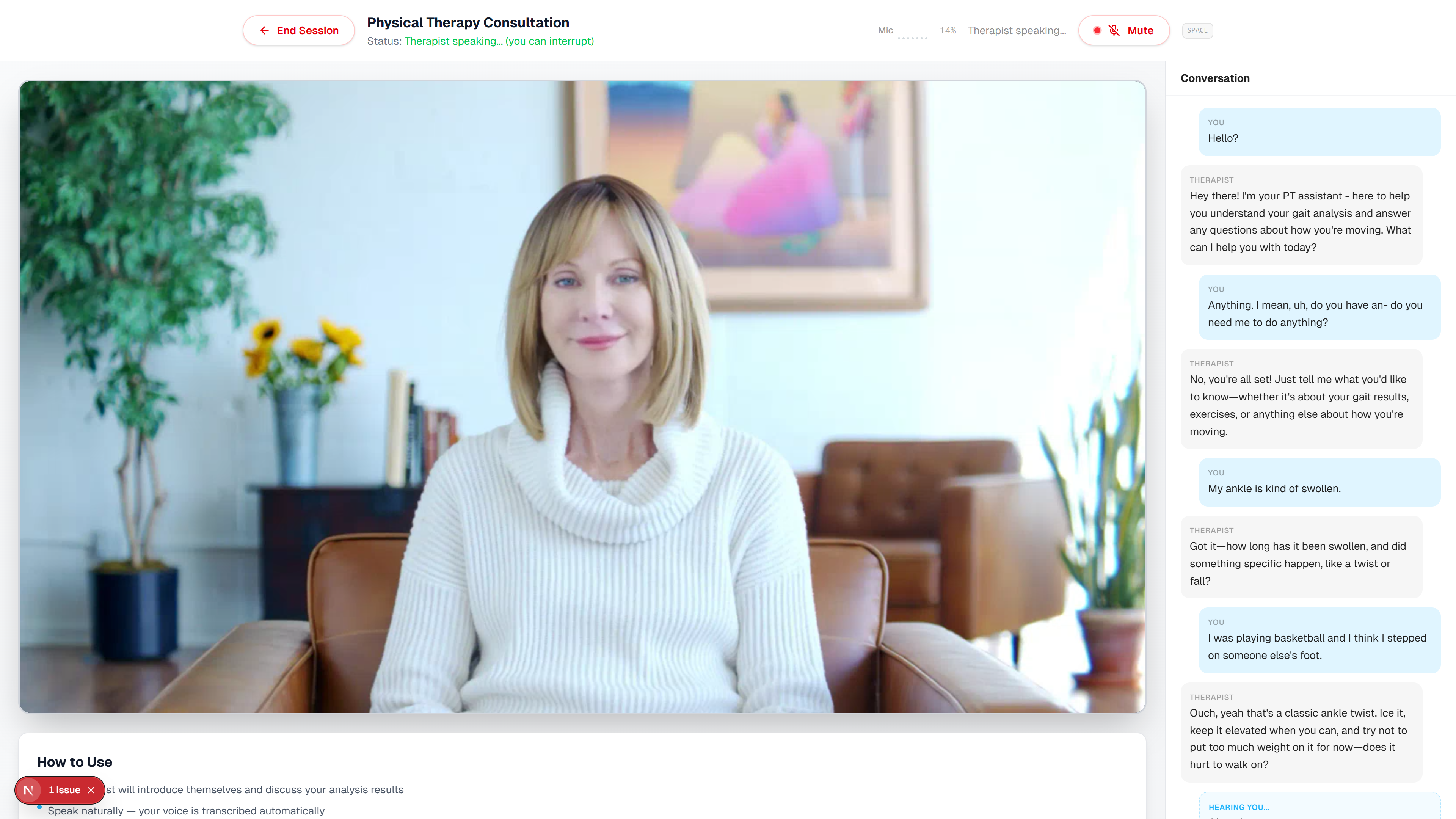
Live AI physical therapy consultation with a contextual avatar that understands your analysis and gives real-time guidance.
-
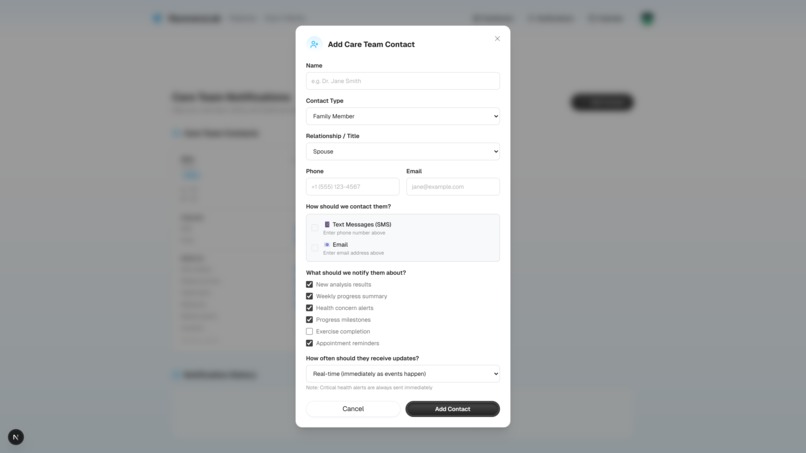
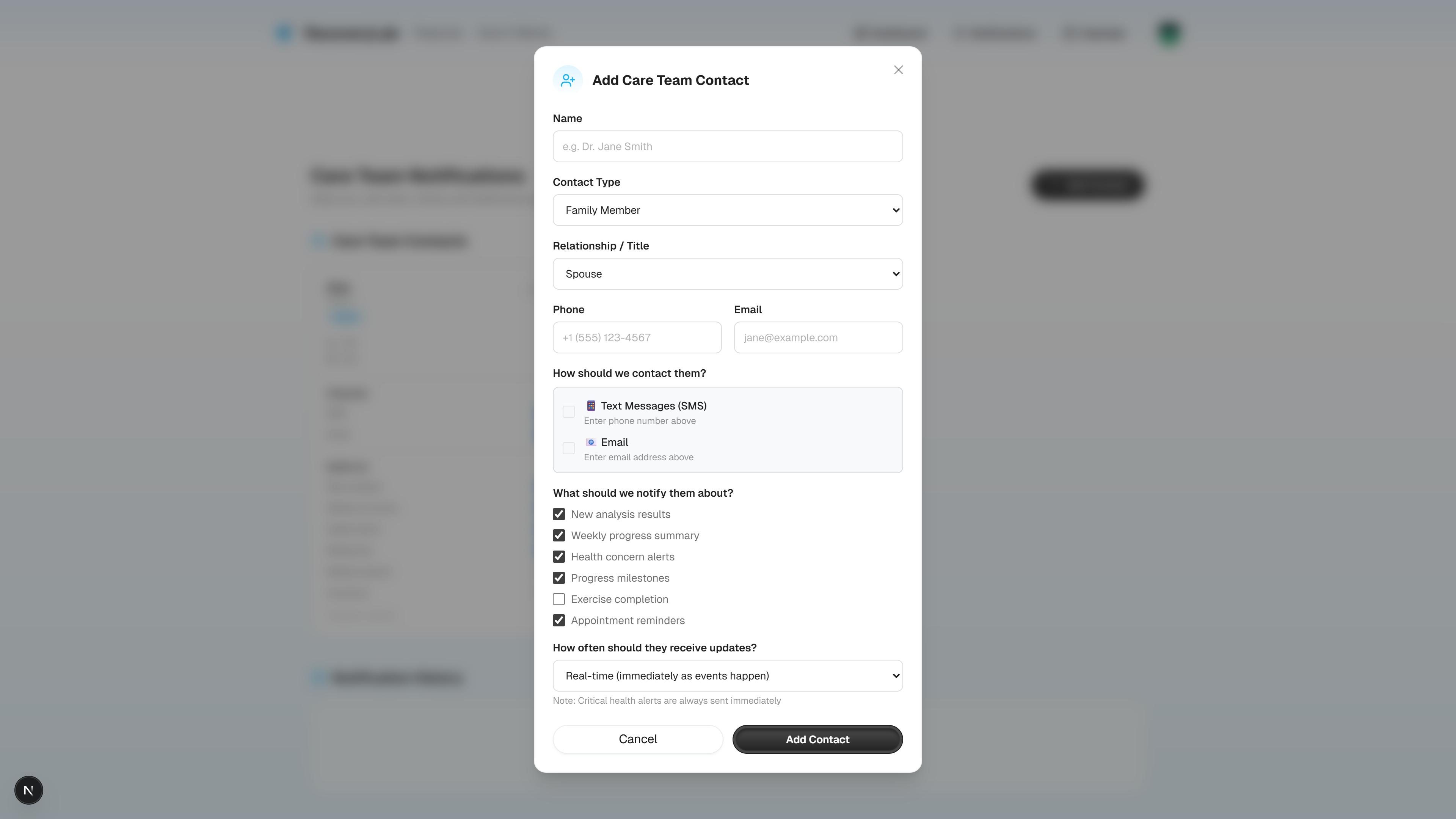
Care team setup to add providers or family and send real-time SMS and email recovery updates.
-
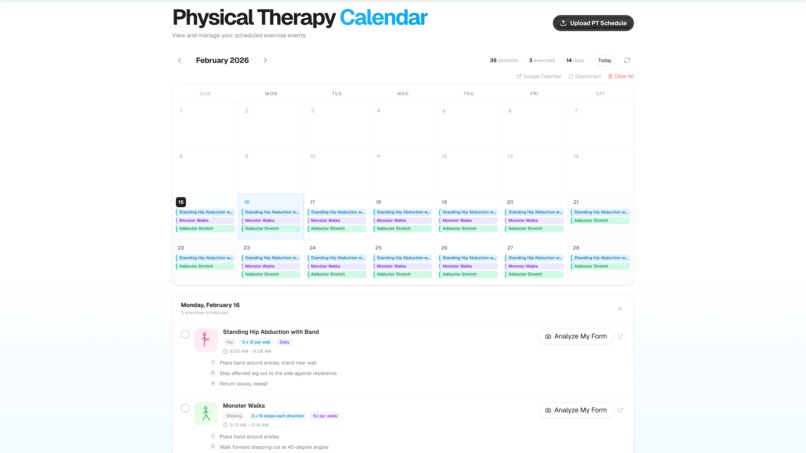
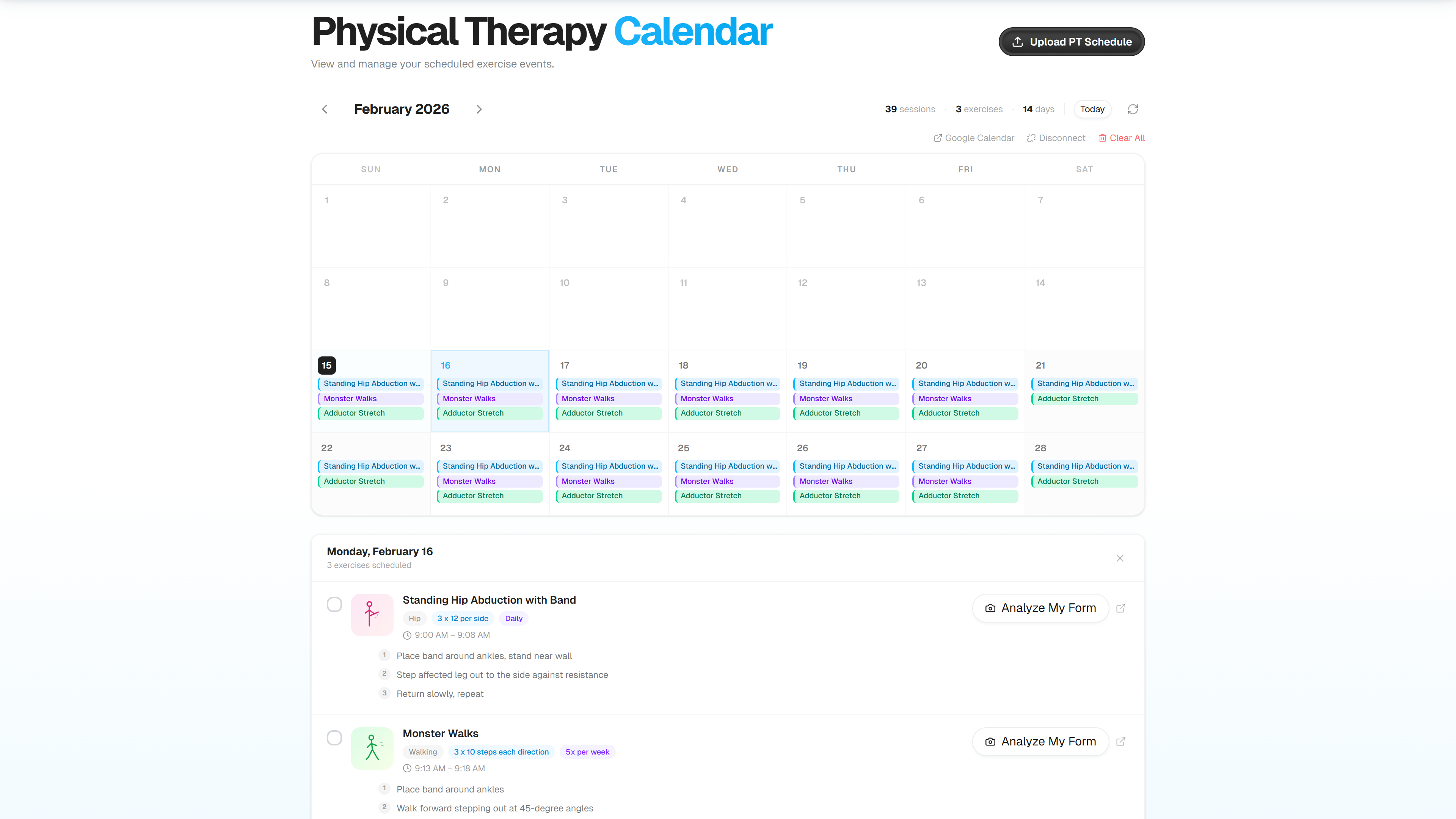
Smart physical therapy calendar with auto-generated exercise schedules, completion tracking, and one-click form analysis.
Inspiration
Physical therapy plays a critical role in recovery from injury, surgery, and chronic conditions. However, adherence remains a major challenge. Studies estimate that up to 70% of patients do not complete their prescribed physical therapy plan of care. In the United States alone, where tens of millions of PT visits occur annually, this translates to millions of patients each year who never finish the recovery process they started.
Our team has personally experienced long rehabilitation journeys through sports injuries and recovery setbacks. We built RecoveryLab to address this systemic problem by bringing structured feedback, intelligent guidance, and shared accountability into everyday recovery.
What We Do
RecoveryLab is an AI-powered movement and physical therapy platform that turns any camera into a clinical-grade motion analysis tool. It evaluates movement, generates tailored rehabilitation plans, and connects patients with their care teams to improve consistency, outcomes, and engagement.
Features
AI Movement Analysis: Uses any phone or laptop camera to record and analyze gait, balance, strength exercises, stretches, and mobility work. Vision-language models detect asymmetries, compensations, and movement breakdowns and produce structured movement reports.
Personalized Rehab Plans: Automatically generates exercise prescriptions with clear cues, sets, reps, and progression logic based on movement patterns. Plans are editable and evolve as recovery progresses.
Live AI Video Consultations: Offers real-time avatar-based sessions that contextualize the user’s most recent analysis. Speech transcription and AI reasoning provide responses that reflect individual recovery history.
Smart Plan Upload and Scheduling: Accepts uploaded PDFs or text therapy plans and uses AI to extract exercises and structure them into interactive schedules with calendar syncing and completion tracking.
Accountability and Notifications: Sends SMS alerts via Poke and email notifications to patients and their care networks for completed analyses, missed sessions, and progress summaries. Includes streak tracking and adherence metrics to reinforce consistency.
How We Built It
Frontend: Built with Next.js and TypeScript for a fast, responsive web experience. Tailwind CSS ensures a clean, accessible UI. Direct browser camera access enables seamless video capture without external apps.
Backend: Serverless API routes coordinate uploads, AI requests, scheduling logic, notifications, and third-party integrations. Handles authentication, business logic, and workflow orchestration.
Data & Storage: Vercel Blob Storage manages raw video files and extracted frame assets. Firestore stores structured analysis results, rehab plans, schedules, consultation transcripts, user notes, pain check-ins, and longitudinal recovery logs.
AI Processing: Vision-language models analyze sampled frames to evaluate gait, strength, balance, and mobility patterns. Language models generate personalized rehab plans, extract exercises from uploaded documents, and power contextual consultation responses.
Real-Time Communication: Avatar rendering and live speech transcription enable interactive consultations. Resend handles email notifications and summaries, while Poke delivers SMS alerts for reminders and accountability.
Medical Intelligence & Research: PubMed and MEDLINE provide comprehensive access to peer-reviewed studies, systematic reviews, and clinical literature. State-of-the-art form-skeleton architectures and medical knowledge graph networks enable structured data modeling and advanced clinical decision support across complex patient datasets.
Challenges We Faced
Video Analysis Performance: Balancing fast response times with clinically valuable insights required smart frame sampling and optimized inference pipelines.
Real-Time Consultations: Synchronizing speech transcription, AI reasoning, and avatar rendering without perceptible lag was technically challenging.
System Integration: Coordinating multiple third-party services reliably while maintaining performance and consistency required careful engineering.
Accomplishments
- Built a working camera-based movement analysis system that runs on consumer devices.
- Implemented instant, personalized rehab plan generation from movement data.
- Delivered a live AI consultation experience grounded in individual recovery context.
- Designed automatic therapy plan extraction from unstructured documents.
- Created a complete accountability loop connecting patients and their care networks.
What We Learned
- Advanced video processing techniques for real-world movement analysis.
- Real-time conversational AI integration with voice transcription and avatar rendering.
- AI model optimization for structured outputs in a healthcare-adjacent setting.
- Integration of multiple third-party services into a cohesive, seamless user experience.
What’s Next
Wearable and Sensor Integration:
We aim to integrate smartwatch and external motion sensors to complement camera-based analysis. By combining accelerometer, gyroscope, and biometric data, we can offer deeper insight into symmetry, fatigue, and long-term recovery trends, enabling richer tracking and predictive insights.Clinical Validation and Partnerships:
We plan to work with licensed physical therapists, sports medicine clinics, and rehabilitation centers to validate our movement analysis and scoring against expert assessments. This will include pilot programs with structured outcome data and refinement of our clinical models. Establishing RecoveryLab as a clinically trusted platform could unlock adoption across care networks and healthcare systems.Advanced Progress Analytics and Reporting:
We will build dashboards that visualize long-term outcomes like strength gains, range of motion improvements, and adherence patterns. These reports can be shared with providers or insurers to demonstrate measurable results and support value-based care.Mobile Expansion and Accessibility:
We plan to launch a dedicated mobile application to increase accessibility and daily engagement. Offline support and multi-language capabilities will help broaden RecoveryLab’s impact, particularly in underserved communities.
Our vision is to make RecoveryLab a comprehensive digital rehabilitation platform that extends expert physical therapy guidance beyond the clinic and into everyday life.


Log in or sign up for Devpost to join the conversation.