Inspiration
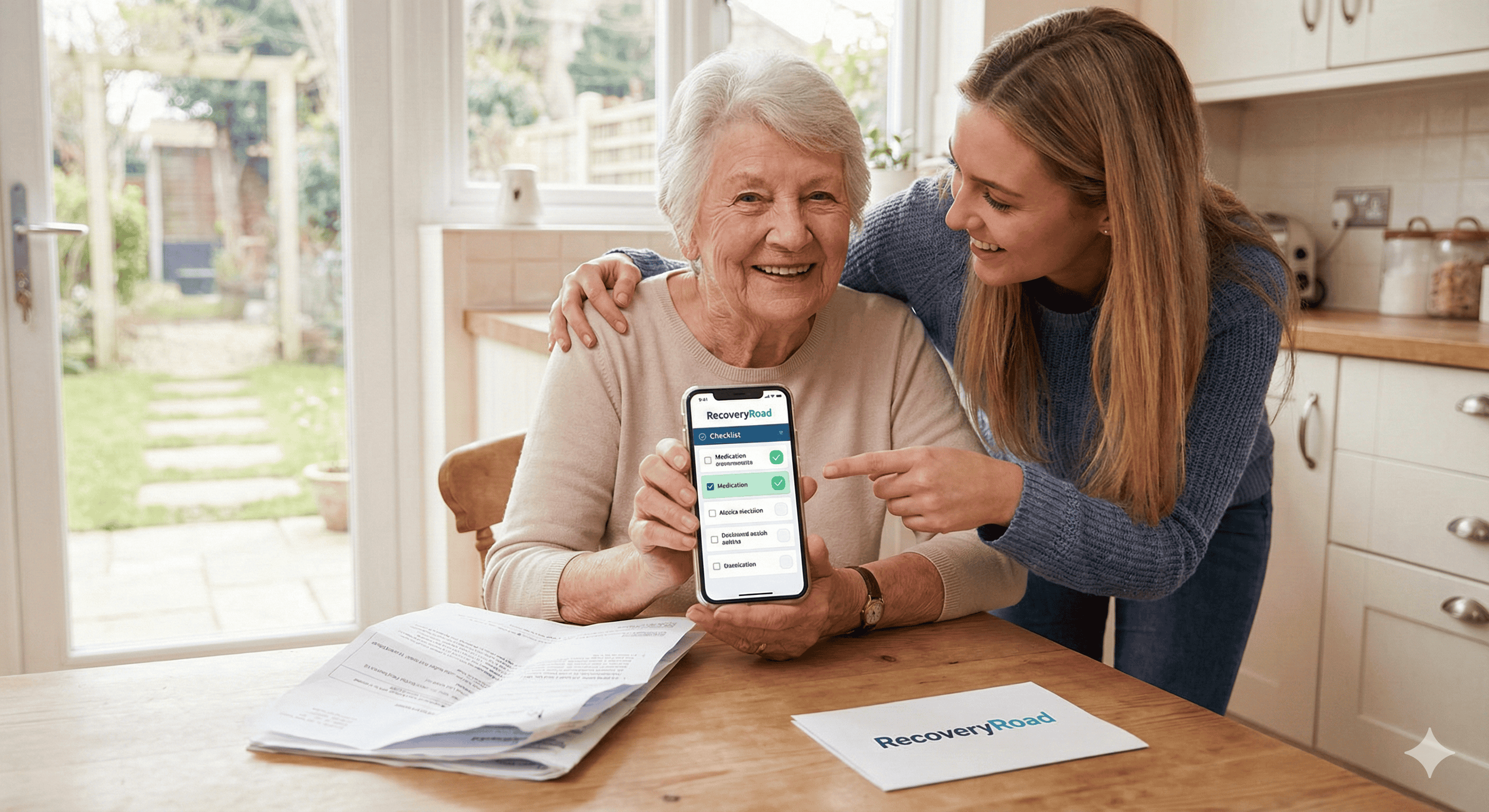
It started with a crumpled piece of paper. My grandma came home from knee surgery with a 5-page discharge summary full of medical jargon like "ambulate b.i.d" and "monitor for edema." She was in pain, confused, and overwhelmed.
We found out this isn't just her problem. $26 Billion is wasted annually on preventable hospital re admissions, largely because patients don't understand their discharge instructions. We realized that paperwork is a barrier to recovery. We wanted to build a bridge.
What it does
RecoveryRoad turns a messy hospital document into a clear, actionable game plan.
The Decoder: Scans discharge papers and instantly generates a 14-Day Recovery Timeline.
The Manager: Organizes tasks (meds, wound care, appointments) into a simple, tappable checklist.
The Lifesaver: Features an "Emergency Passport" mode, one red button that displays critical info (allergies, active meds) for paramedics.
The Connector: Allows patients to one-tap Share their entire schedule with family caregivers via WhatsApp.
How we built it
We prioritized speed and safety.
Frontend: Built with React and Tailwind CSS, focusing on high-contrast, "Grandma-proof" UI patterns.
AI Engine: We leveraged Google Gemini to parse complex medical text into structured JSON data.
Safety Layer: We wrote a custom "Logic Middleware" in JavaScript that verifies AI outputs against hardcoded safety rules (e.g., flagging fever warnings).
UX: Used Lucide React icons to make medical tasks visually distinct at a glance.
Challenges we ran into
The "Split-View" Trap: We initially tried a desktop-style split screen, but it was unreadable on mobile. We pivoted to an Accordion Pattern (Expandable Cards) to keep the cognitive load low for seniors.
AI Hallucinations: Large Language Models can be creative, which is dangerous in healthcare. We had to prompt-engineer strict constraints to stop the AI from "inventing" medications.
Balancing Simplicity: It was hard to resist adding "cool" features like push notifications. We stripped them out to ensure the app is 100% reliable without complex permissions.
Accomplishments that we're proud of
The Emergency Passport: We didn't just build a productivity tool; we built a safety feature that could genuinely save a life in an ER.
Zero-UI Design: There is no login. No typing. No "Sign Up" flow. You just scan and go.
Cognitive Accessibility: Turning a 5-page wall of text into a simple "Day 1" checklist feels like magic.
What we learned
Text is the Enemy: When you are sick, you don't want to read. You want to do.
Patients don't need a Chatbot: They need a Project Manager. A chat interface is too passive; a checklist is active and empowering.
Empathy > Code: The best feature wasn't the AI, it was the simple "Share" button that eased a caregiver's anxiety.
What's next for Recovery Road
Multilingual Support: Grandma doesn't always speak English. We want the AI to translate instructions into Hindi, Spanish, and Mandarin instantly.
EHR Integration: Partnering with hospitals to pull data directly from Epic/Cerner, removing the need to scan paper at all.
Medication Conflict Detection: Using the AI to warn if a new discharge med clashes with a patient's existing home prescriptions.
Built With
- javascript
- llm
- rag
- react
- tailwind


Log in or sign up for Devpost to join the conversation.