About RecoverAI
Inspiration
Failed payments are a major challenge for online businesses. They lead to lost revenue, frustrated customers, and additional manual work for merchants. We wanted to build a solution that goes beyond simply detecting failed transactions.
Our inspiration was to combine AI-powered payment intelligence with secure payment recovery while addressing an important question: How can we make AI-driven financial actions intelligent without allowing unsafe decisions to execute?
This led us to build RecoverAI.
What We Built
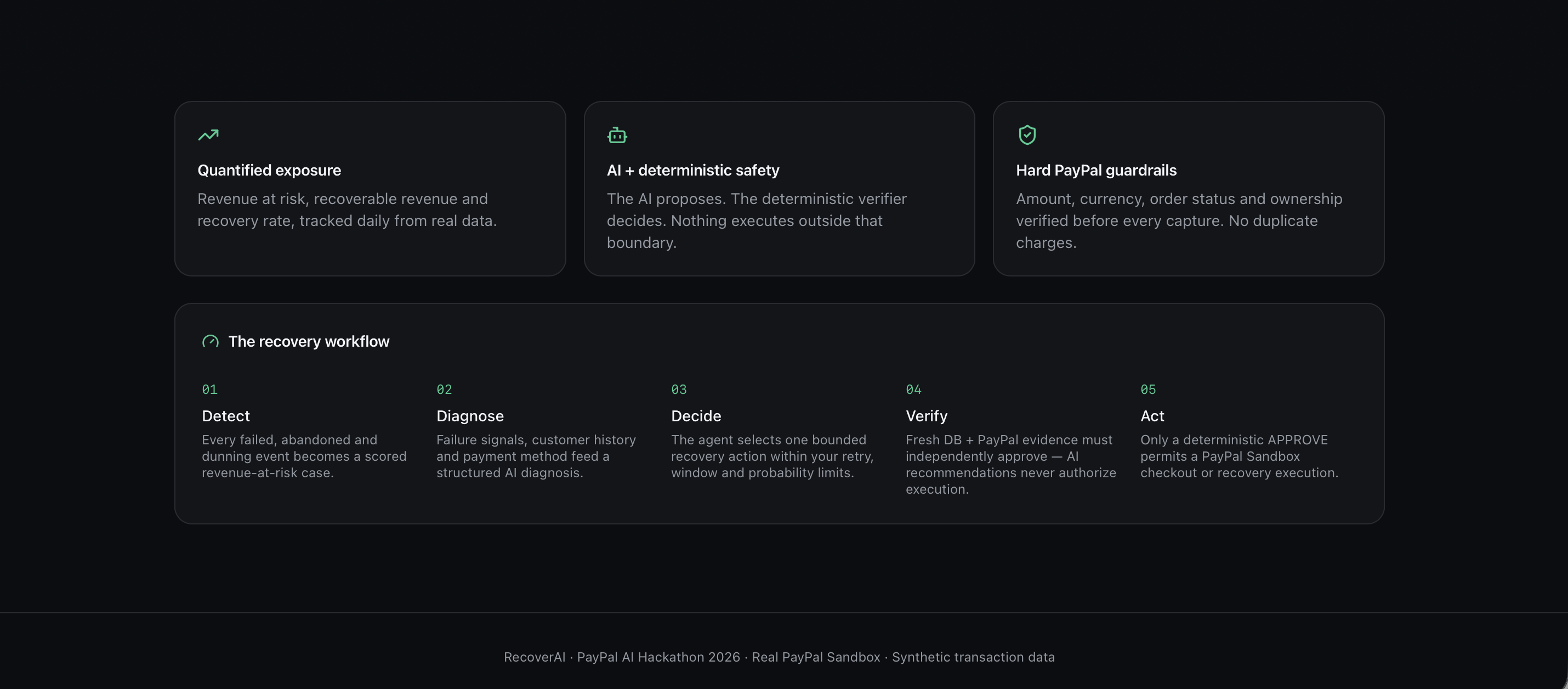
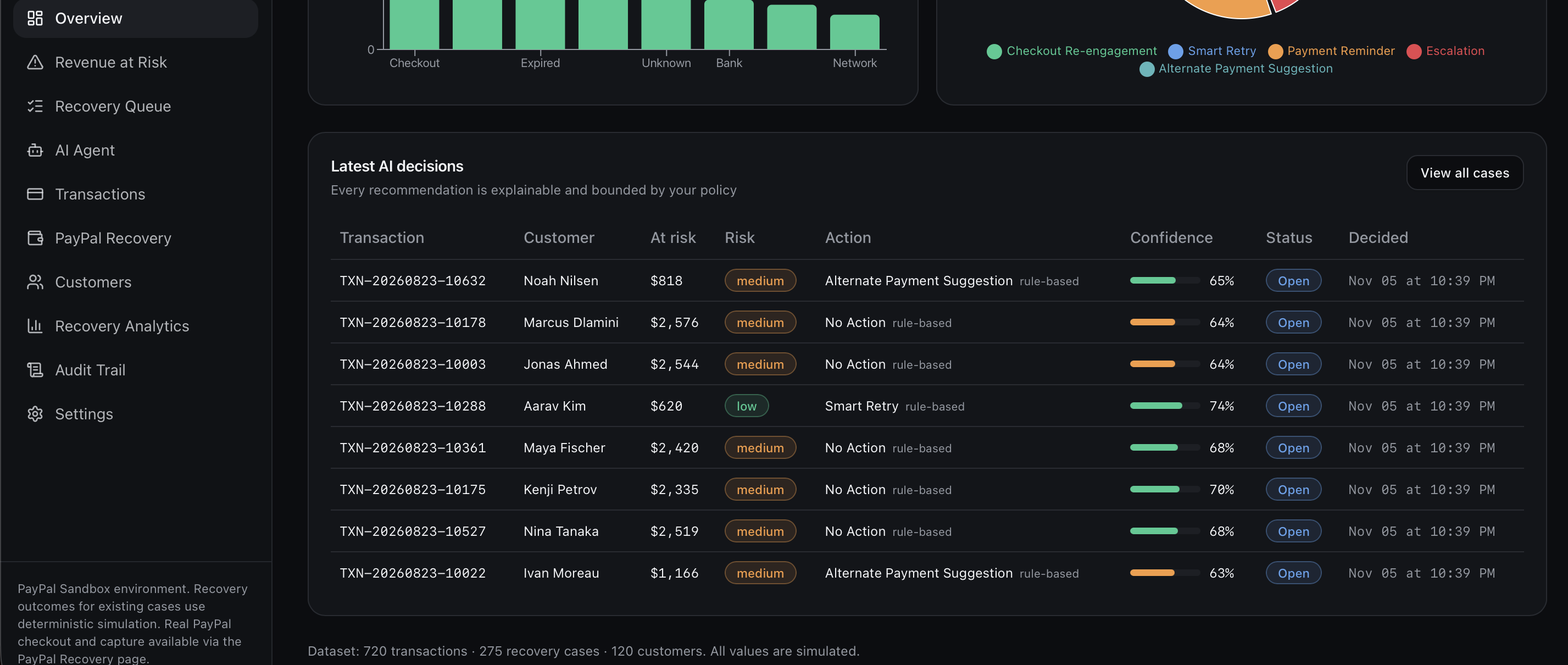
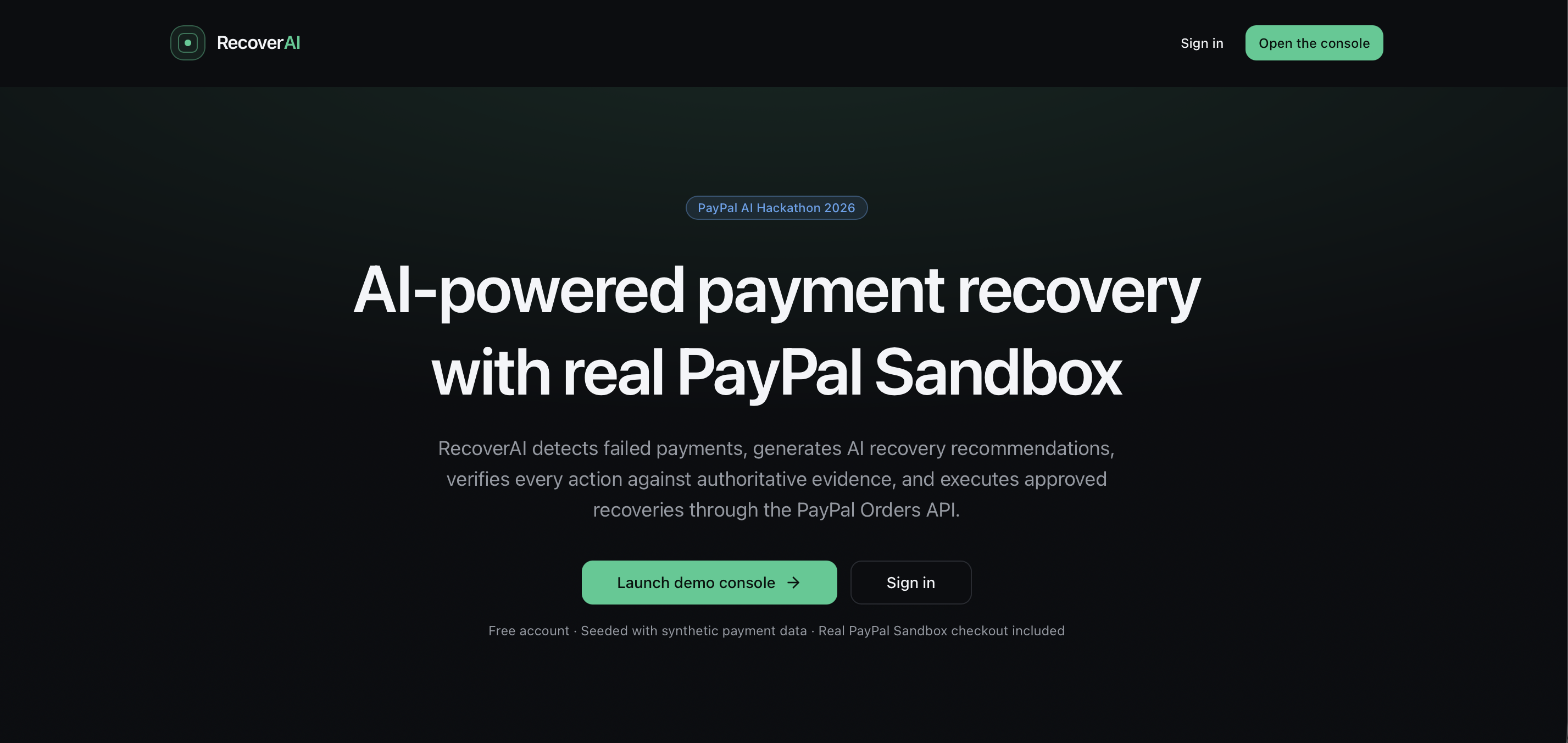
RecoverAI is an AI-powered payment recovery platform that helps merchants identify failed payment opportunities, understand transaction failures, and receive intelligent recovery recommendations.
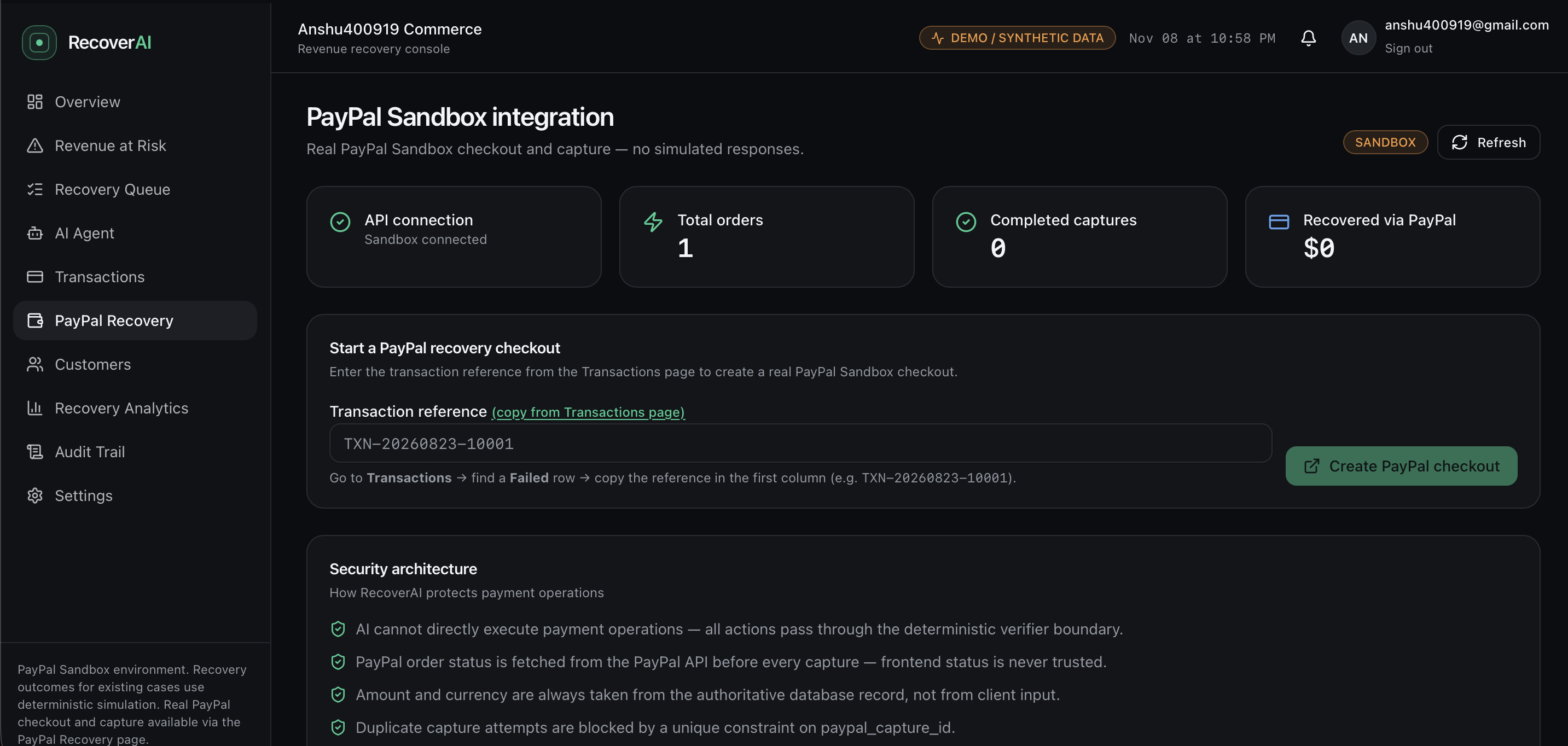
The platform integrates PayPal Sandbox to demonstrate customer-authorized payment recovery. Merchants can initiate a recovery checkout, customers can approve the payment through PayPal, and the backend processes the capture and updates the transaction status.
Our key features include:
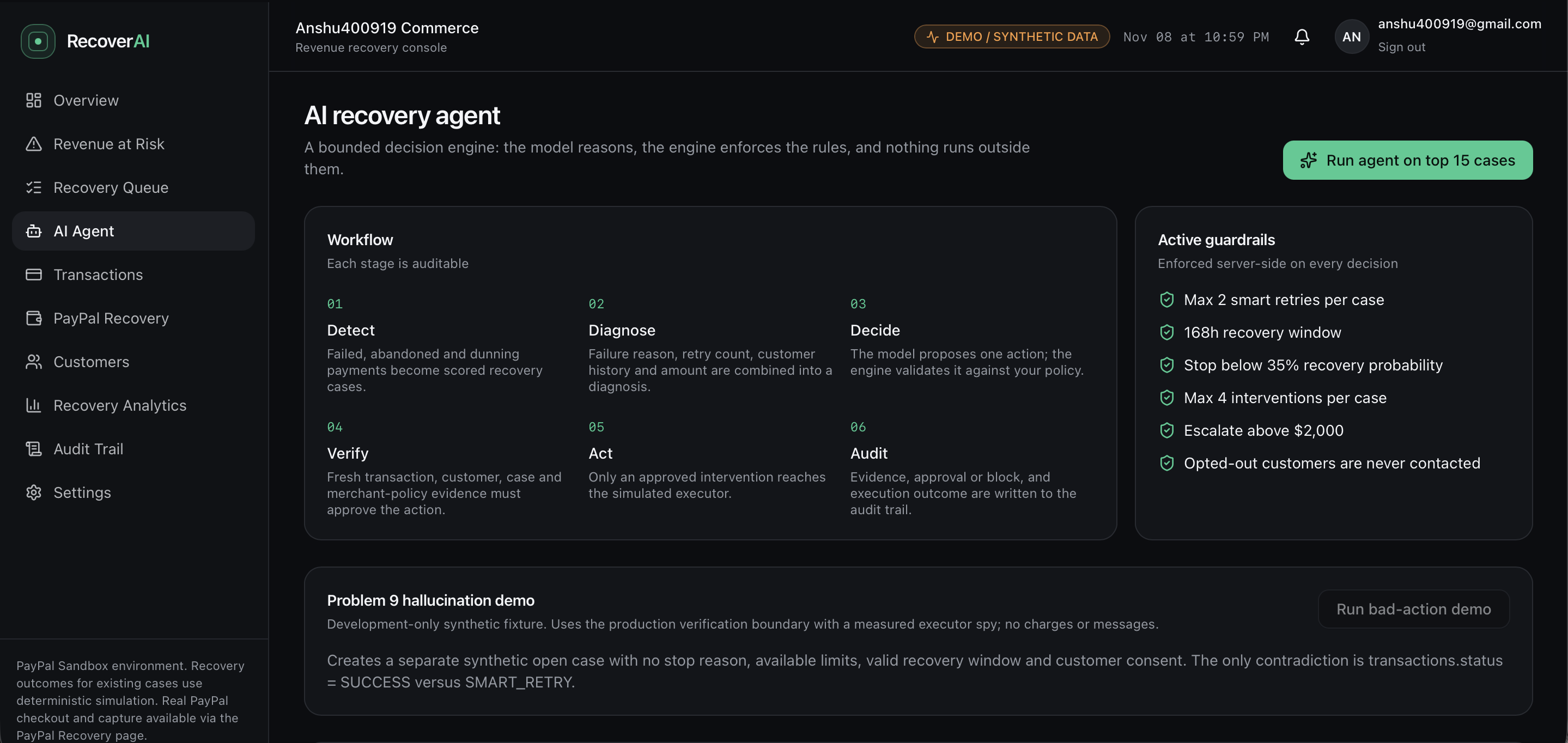
-AI-Powered Diagnosis: Analyzes transaction context and generates recovery recommendations.
- PayPal Integration: Demonstrates payment order creation, customer approval, and capture using PayPal Sandbox.
- Deterministic Execution Guardrails: Verifies proposed actions against transaction evidence and merchant policies before execution.
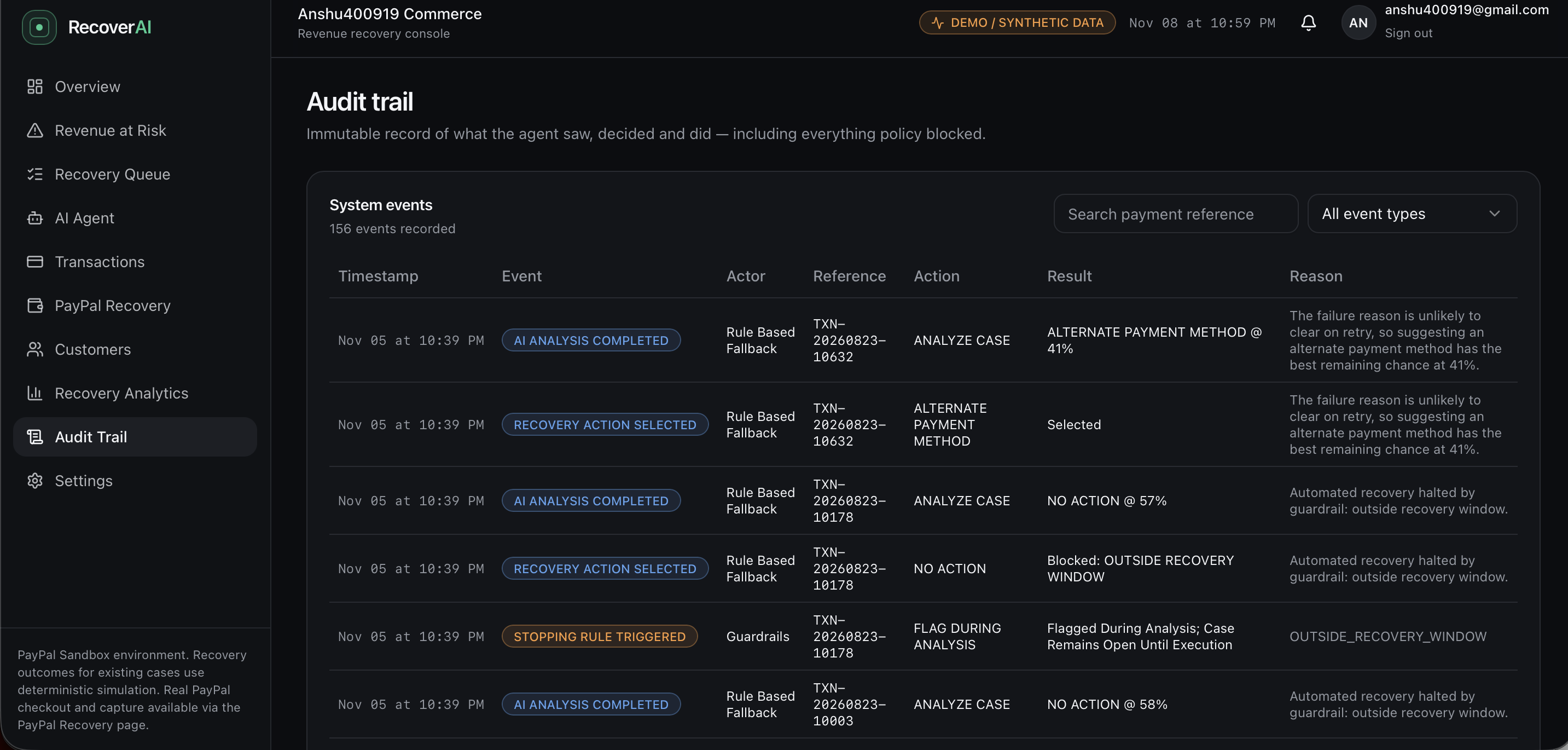
- Audit Trail: Records important recovery decisions and payment events for transparency and accountability.
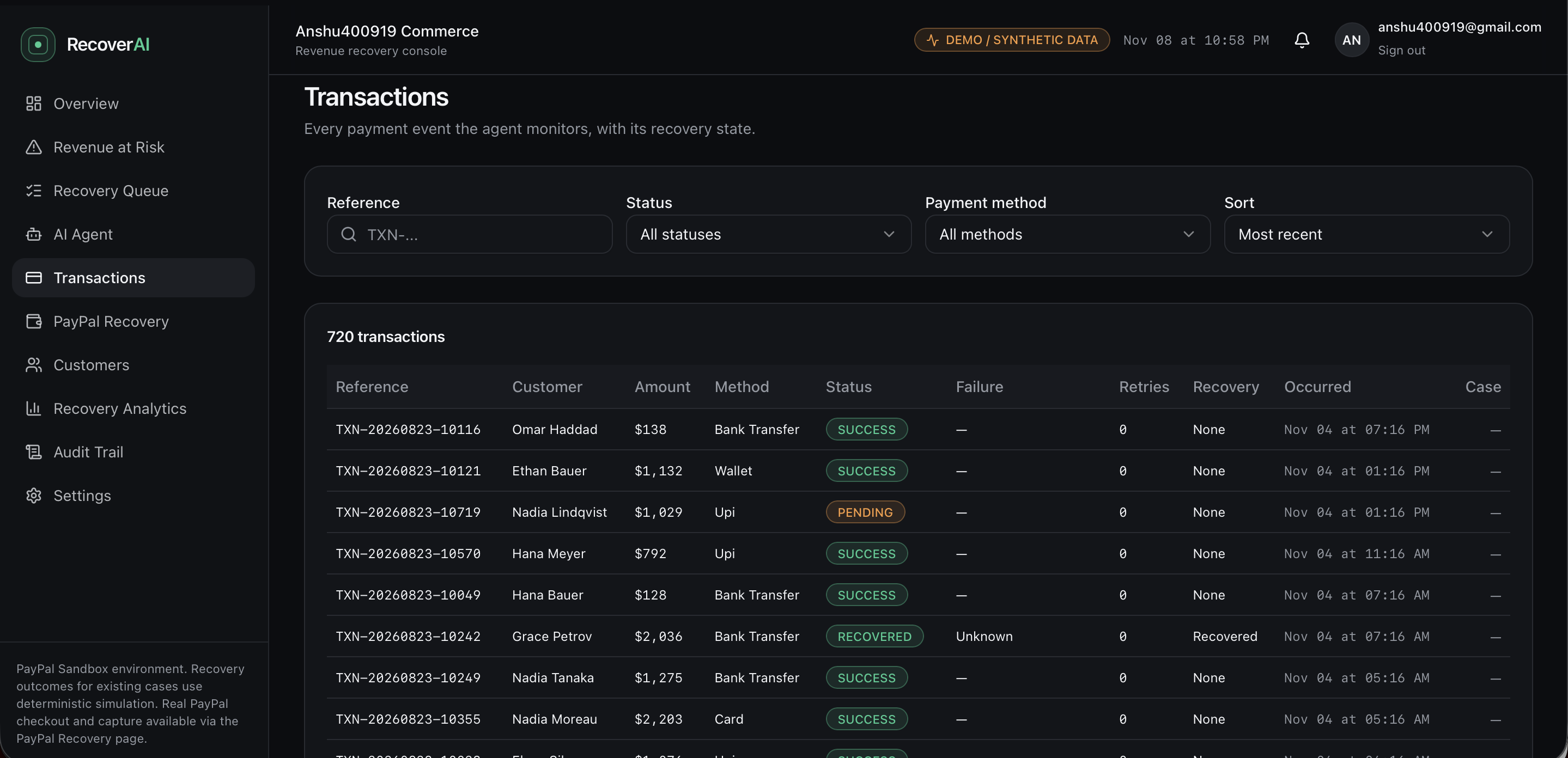
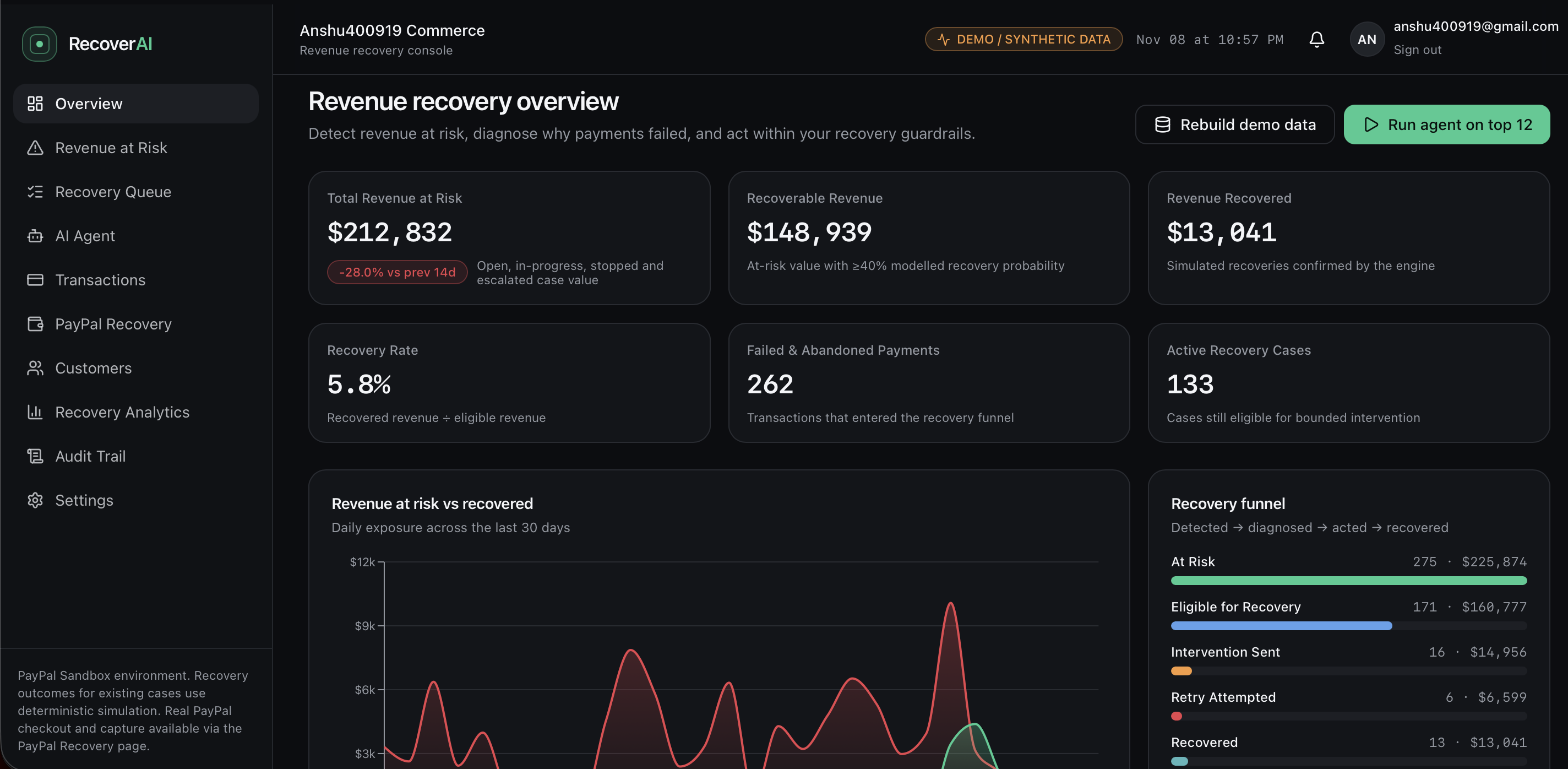
- Merchant Dashboard:Provides transaction insights, recovery metrics, and payment monitoring.
How We Built It
We developed RecoverAI using a modern full-stack architecture with React, TypeScript, and TanStack Start for the application interface and server-side functionality.
Supabase provides authentication and PostgreSQL data storage. PayPal Orders API v2 enables Sandbox payment order creation and capture. Our AI engine analyzes transaction information and proposes appropriate recovery actions.
A central part of our architecture is the deterministic verification layer. Instead of allowing an AI-generated recommendation to directly trigger a financial action, RecoverAI validates the proposed action using fresh evidence, transaction state, and merchant policies.
Only an explicitly approved action can proceed to execution. Blocked actions are prevented and recorded in the audit trail.
Challenges We Faced
One of our biggest challenges was integrating the complete PayPal payment lifecycle, including order creation, customer approval, return handling, and capture.
We also had to carefully handle transaction ownership, amount and currency validation, duplicate requests, and payment state consistency.
Another major challenge was designing reliable AI guardrails. AI systems can generate incorrect or unsupported actions, especially when transaction information is incomplete or outdated. We addressed this by separating AI recommendations from deterministic execution authorization.
Deployment, environment configuration, authentication, and maintaining consistency between the database and PayPal Sandbox were additional engineering challenges.
What We Learned
Building RecoverAI taught us that integrating AI into financial workflows requires more than generating intelligent recommendations.
We learned how to work with payment APIs, manage authentication and transaction states, design deterministic verification systems, implement auditability, and build safer AI-powered applications.
Most importantly, we learned a principle that defines RecoverAI:
AI can recommend an action, but verified evidence and deterministic rules must control its execution.
What's Next
Our vision is to evolve RecoverAI into a reliable payment recovery solution for merchants, with smarter recovery strategies, improved transaction intelligence, stronger fraud and risk checks, and broader payment platform support.
We aim to make payment recovery more intelligent, transparent, and secure.
Built With
- agents
- ai
- api
- artificial
- gemini
- generative
- integration
- intelligence
- node.js
- paypal
- postgresql
- react
- rest
- start
- supabase
- tanstack
- typescript
- vite
