-
-
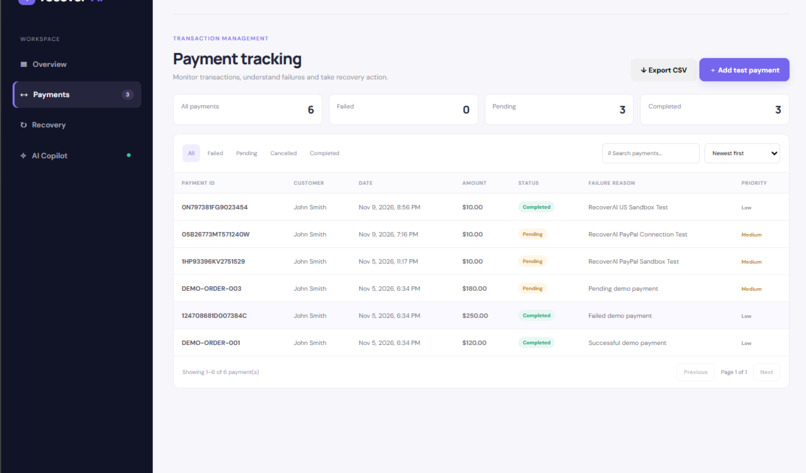
RecoverAI – AI-Powered Payment Recovery Agent
-
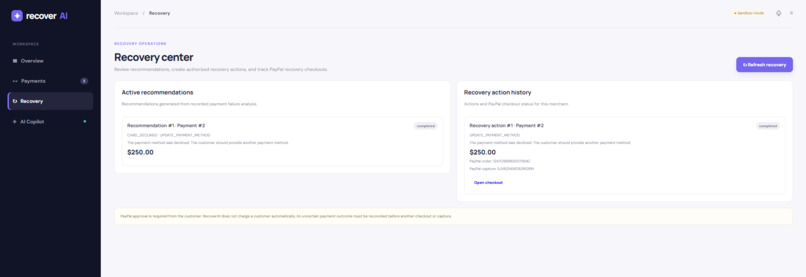
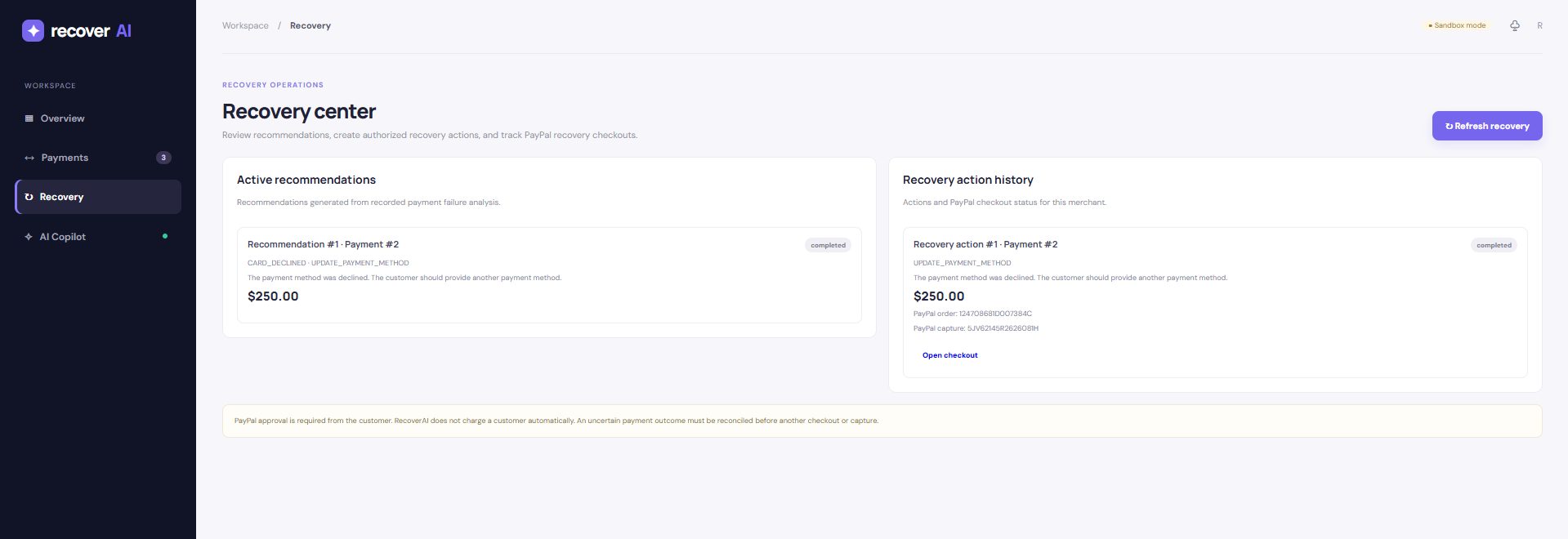
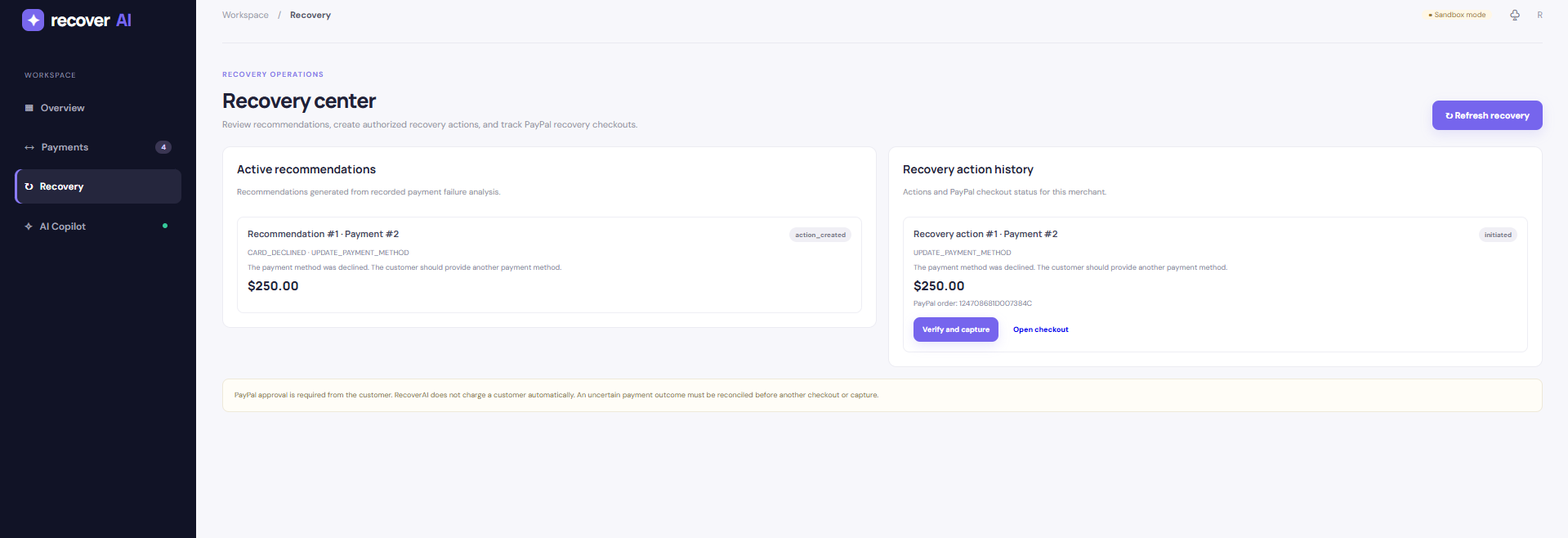
RecoverAI Recovery Center
-
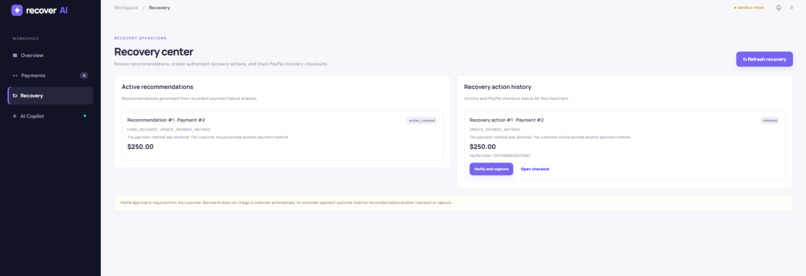
RecoverAI – Intelligent Payment Recovery in Action
-
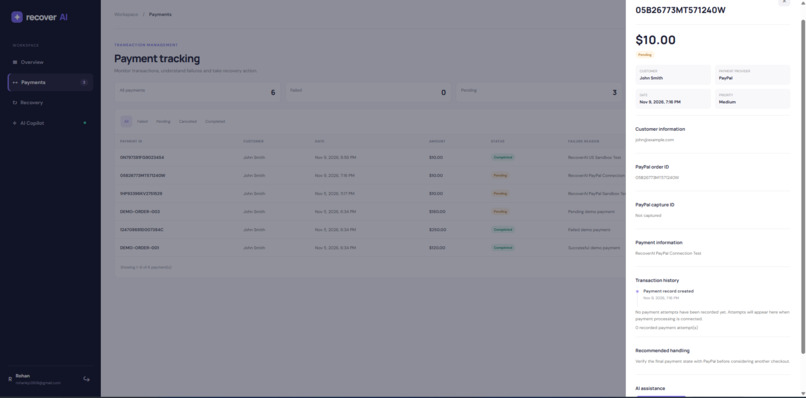
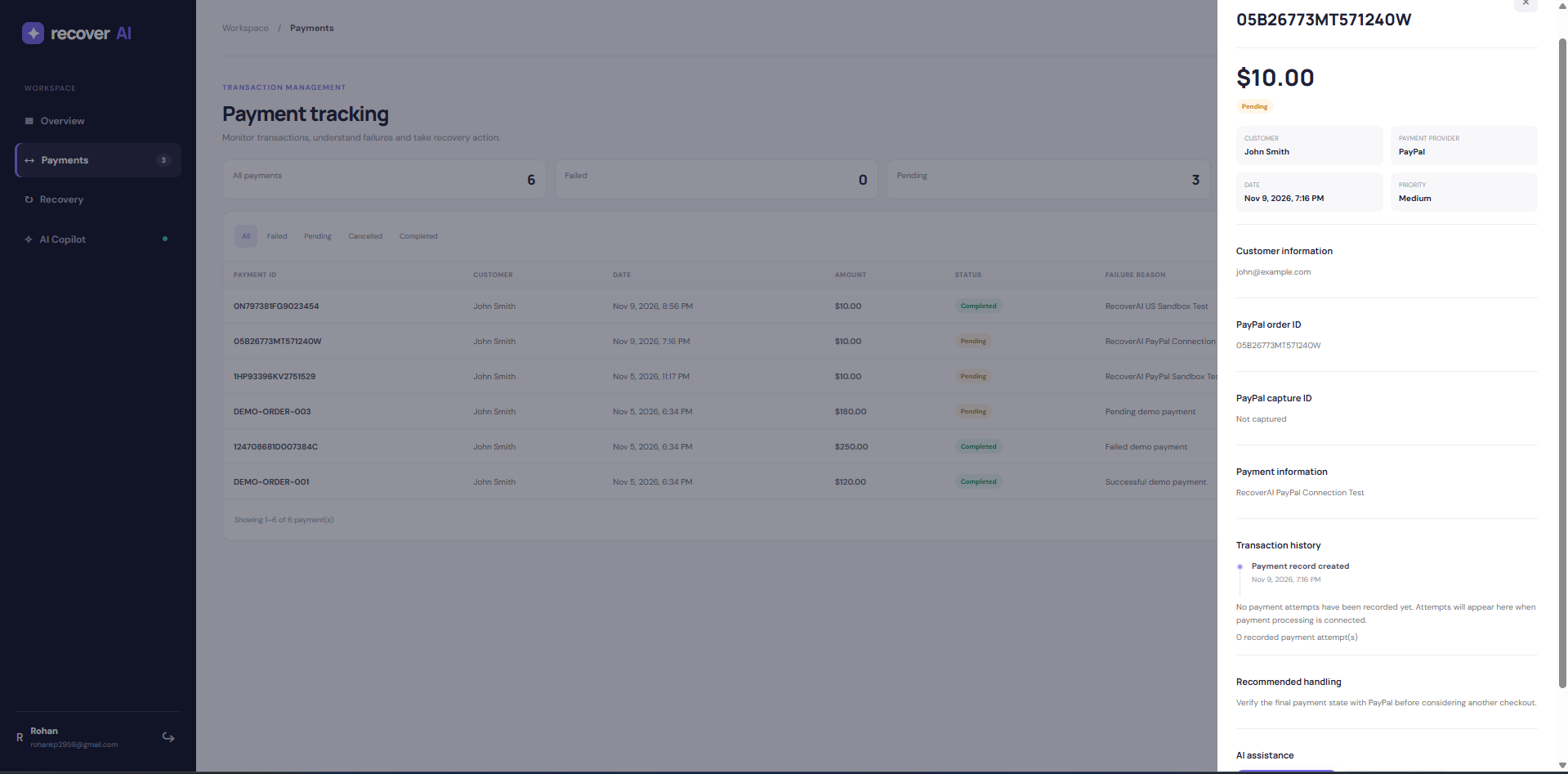
RecoverAI – Complete Payment Transparency
-
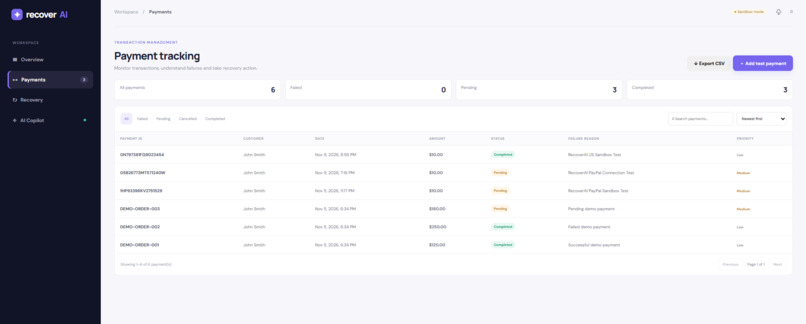
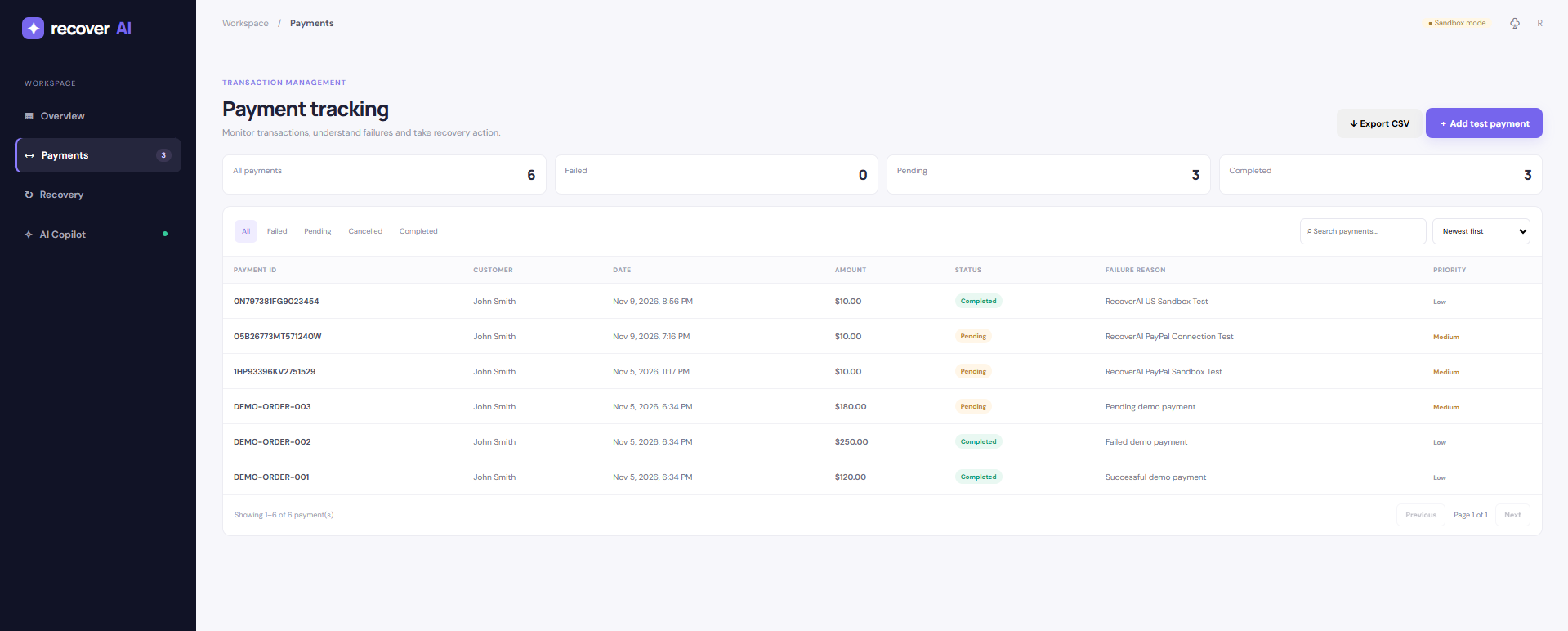
RecoverAI – Smart Payment Monitoring Dashboard
-
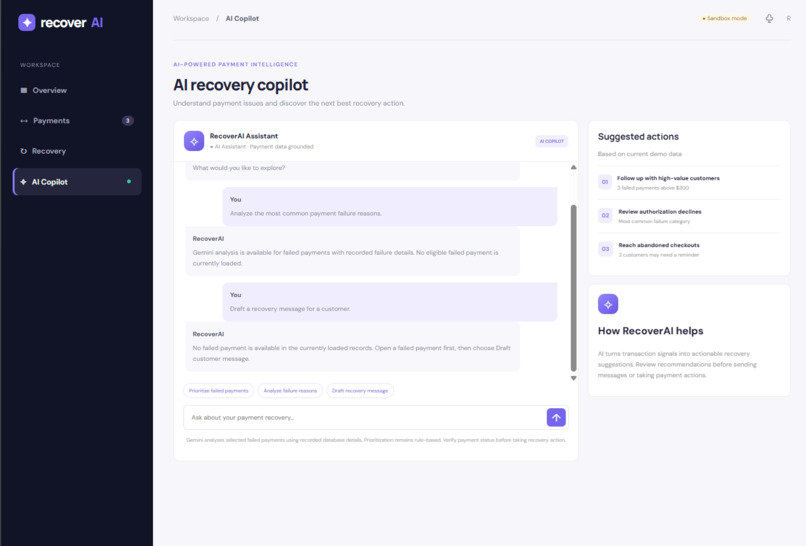
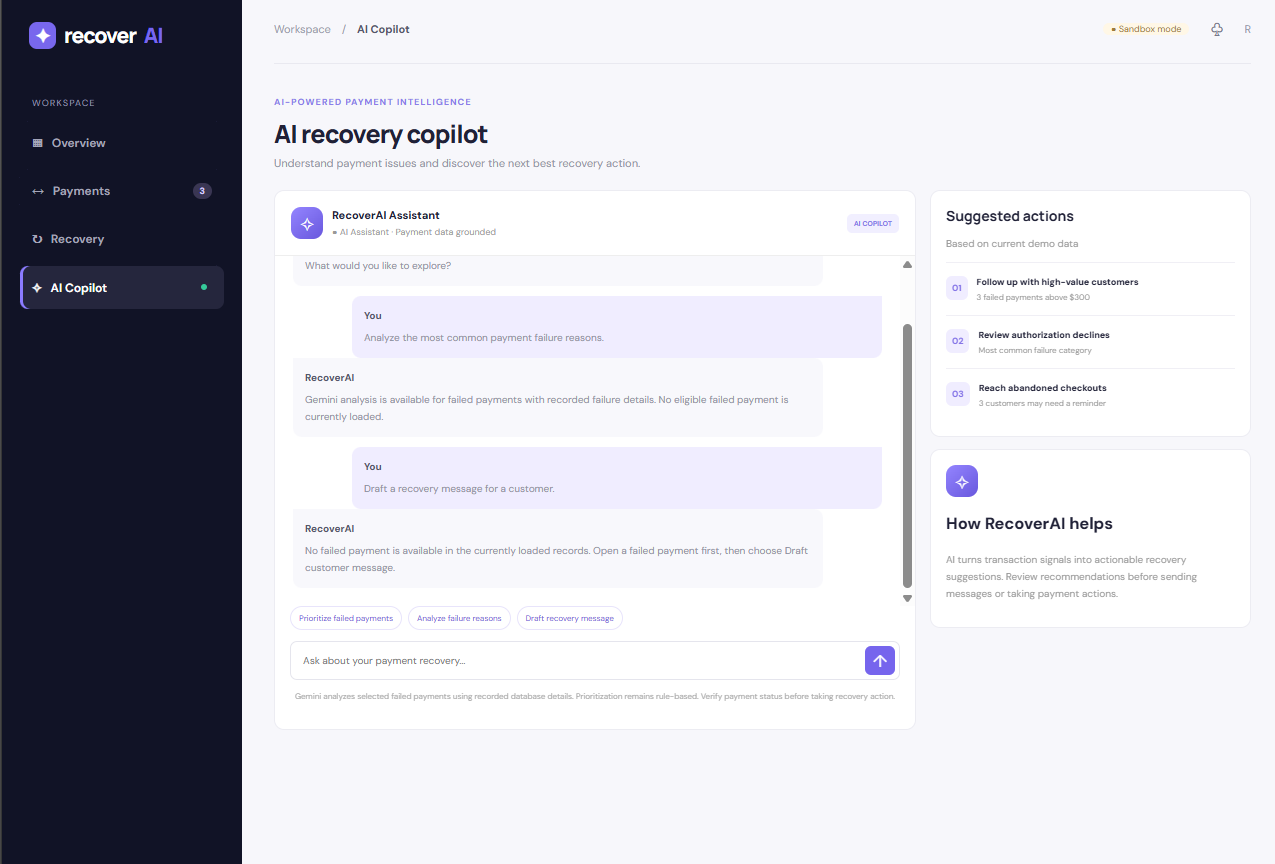
RecoverAI – Your AI-Powered Payment Recovery Copilot
-
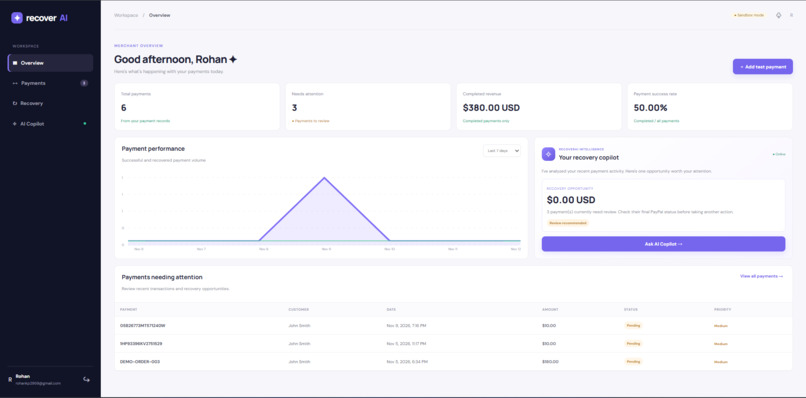
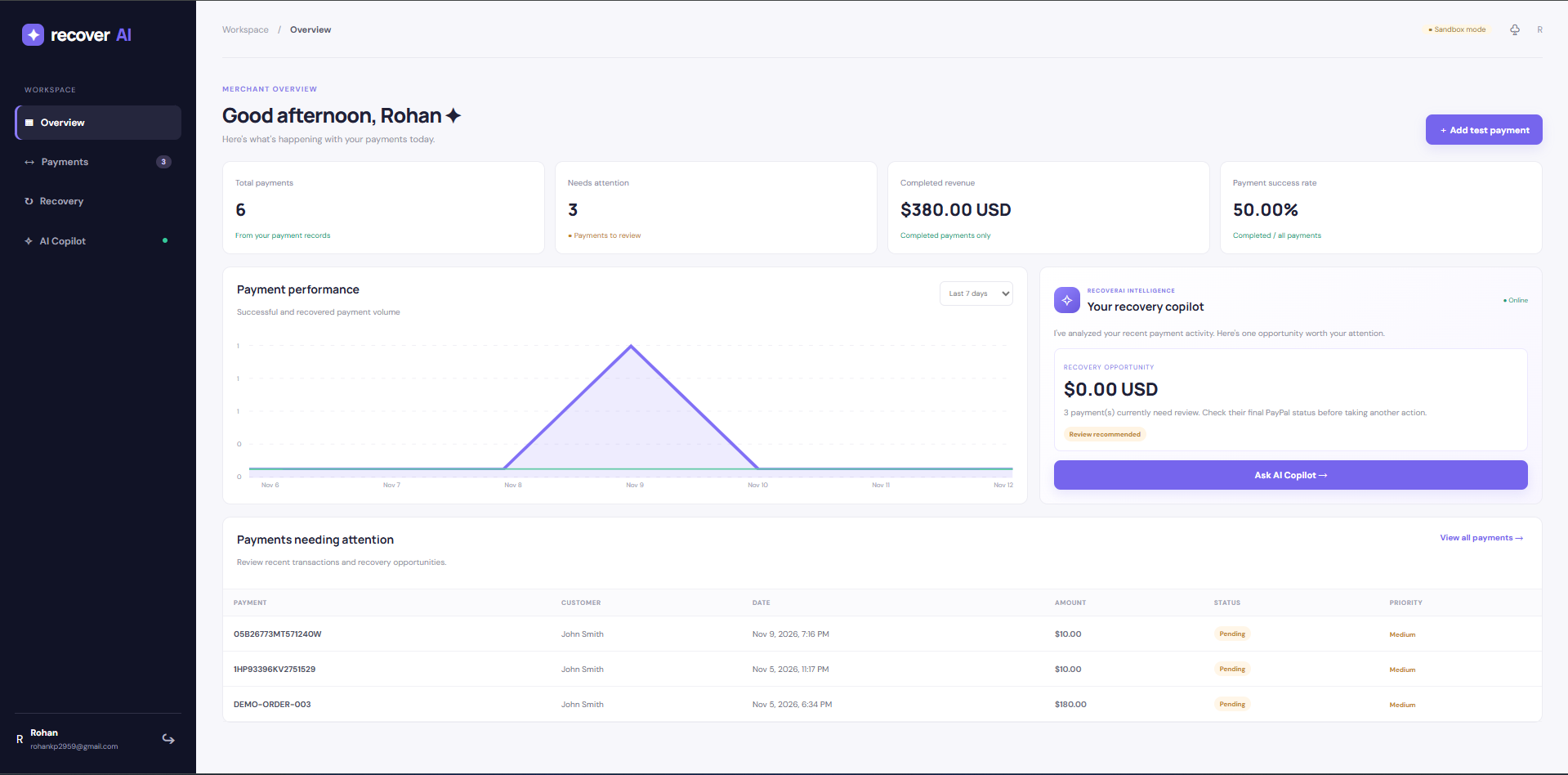
RecoverAI – Merchant Intelligence Dashboard
Inspiration
Small businesses often lose revenue when customer payments fail, remain pending, or are abandoned during checkout. Merchants may not know why a payment failed or what action to take next. Manually tracking every failed transaction and following up with customers can also consume valuable time.
This inspired us to build RecoverAI — an intelligent payment recovery platform that helps small businesses understand payment failures and take informed recovery actions.
What it does
RecoverAI combines payment monitoring, transaction tracking, and an AI-powered recovery copilot in one platform.
Its key capabilities include:
- Payment Monitoring Dashboard: Displays payment statistics, transaction status, completed revenue, success rates, and payments requiring attention.
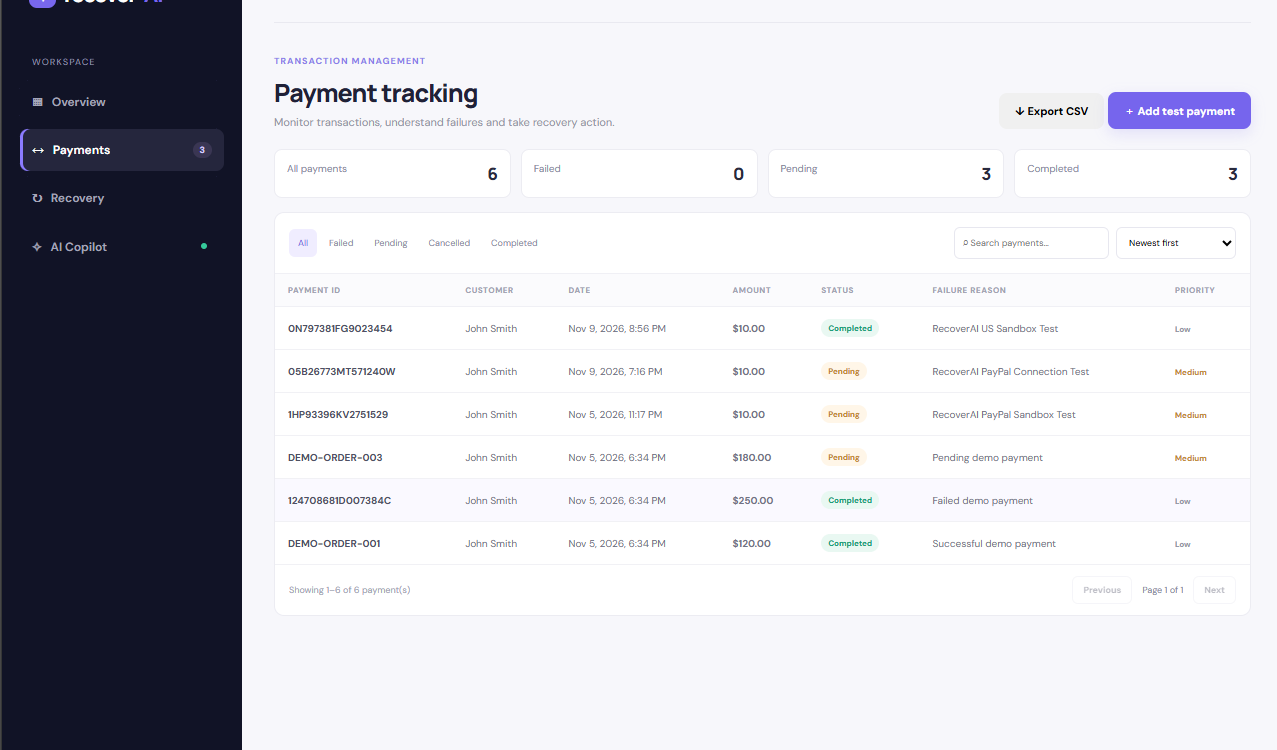
- Payment Tracking: Tracks transactions and provides details about payment attempts and recorded failure information.
- AI Recovery Copilot: Analyzes recorded payment information, explains possible failure causes, and recommends suitable recovery actions.
- Personalized Recovery Messages: Generates customer-friendly payment reminder drafts.
- PayPal Integration: Uses PayPal Sandbox to create checkout orders, verify payment status, and capture payments after customer approval.
- Recovery Tracking: Records recovery actions and tracks their progress through completion.
Our core principle is that payment information must come from verified payment-provider data, not AI-generated assumptions.
How we built it
We developed RecoverAI using a lightweight full-stack architecture.
Frontend:
- HTML
- CSS
- JavaScript
Backend:
- Node.js
- Express.js
- REST APIs
Database:
- PostgreSQL
Integrations:
- PayPal Sandbox
- Google Gemini API
The frontend communicates with the backend through REST APIs. The backend manages authentication, payment operations, recovery workflows, and database transactions.
PayPal Sandbox handles checkout and payment capture. The AI recovery copilot uses recorded payment information to generate explanations, recommendations, and recovery message drafts. We also implemented a rule-based fallback so that essential recovery assistance remains available when the AI service is unavailable.
Challenges we ran into
One of our biggest challenges was integrating the complete payment recovery lifecycle rather than simply displaying payment information.
Some of the challenges included:
- Integrating PayPal Sandbox authentication, order creation, customer approval, and payment capture.
- Handling payment states correctly, especially pending and failed transactions.
- Ensuring that recovery actions remain consistent with the actual payment status.
- Preventing duplicate recovery checkout creation.
- Handling API errors and external service limitations.
- Managing Gemini API quota limitations and implementing a fallback mechanism.
- Connecting the frontend, backend, and PostgreSQL database into one working application.
- Deploying the backend and configuring the production database and environment variables.
These challenges helped us understand the importance of reliable payment verification, secure backend operations, and consistent transaction handling.
Accomplishments that we're proud of
- Built a complete full-stack payment recovery application.
- Integrated PayPal Sandbox checkout and successfully completed a recovery payment.
- Implemented payment tracking and a monitoring dashboard.
- Developed an AI-assisted payment analysis and recovery message generation workflow.
- Implemented a rule-based fallback for AI service availability.
- Built a recovery action lifecycle that tracks actions from initiation to completion.
- Verified that payment and recovery records remain consistent after a successful capture.
- Successfully deployed the backend and established a PostgreSQL database connection using Render.
Most importantly, we moved beyond a simple AI chatbot and built a working application that connects payment data, recovery recommendations, and actual payment operations.
What we learned
Building RecoverAI taught us that developing an AI-powered financial application requires much more than connecting an AI API.
We learned about:
- Designing and implementing RESTful APIs.
- Integrating third-party payment services.
- Managing authentication and environment variables.
- Designing relational database schemas.
- Handling payment states and recovery workflows.
- Building reliable backend operations.
- Using AI responsibly with verified application data.
- Implementing fallback mechanisms when external services are unavailable.
- Deploying and configuring a full-stack application.
We also learned that AI should assist decision-making, while critical financial operations must remain controlled by verified backend logic and explicit user authorization.
What's next for RecoverAI
Our vision is to make RecoverAI a reliable payment recovery assistant for small businesses.
Future improvements include:
- Live AI analysis with improved contextual understanding.
- Automated payment failure pattern detection.
- Email and notification integrations for customer follow-ups.
- More advanced recovery prioritization.
- Enhanced payment analytics and recovery performance reports.
- Support for additional payment providers.
- Improved security, monitoring, and production scalability.
Our long-term goal is to help small businesses reduce preventable payment losses, save time, and recover more revenue through intelligent, transparent, and secure payment recovery workflows.
Built With
- aiagents
- apiintegration
- artificalintelligence
- automation
- backenddevelopment
- css
- databasemanagement
- express.js
- fintech
- frontenddevelopment
- fullstackdevelopment
- generativeai
- googlegeminiapi
- html
- javascript
- jwtauthentication
- node.js
- paymentanalytics
- paymentprocessing
- paymentrecovery
- paypal
- postgresql
- render
- restapi
- sandbox
