-
-
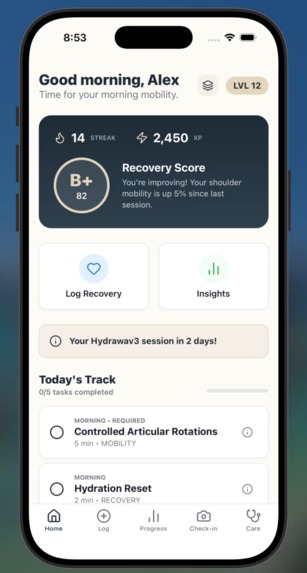
Recover3 Patient Dashboard
-
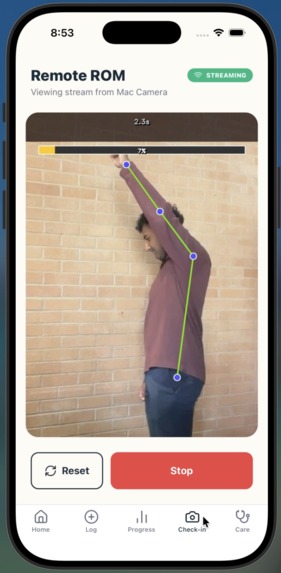
Daily ROM In-App Assessment
Inspiration
A practitioner has limited time to understand a client, makes decisions based on feel, runs a session, and then everything resets once the client walks out the door. There’s no continuity, no feedback loop, and no way to actually see if things are improving over time.
When we looked at the Hydrawav3 problem, it clicked immediately. The biggest gap wasn’t another feature, it was connecting the entire recovery journey. We wanted to build something that made recovery continuous instead of isolated.
What it does
recover3 turns recovery into an ongoing system instead of a one time session.
It helps practitioners understand a client quickly, guides session decisions with better data, and then continues the recovery process after the session ends.
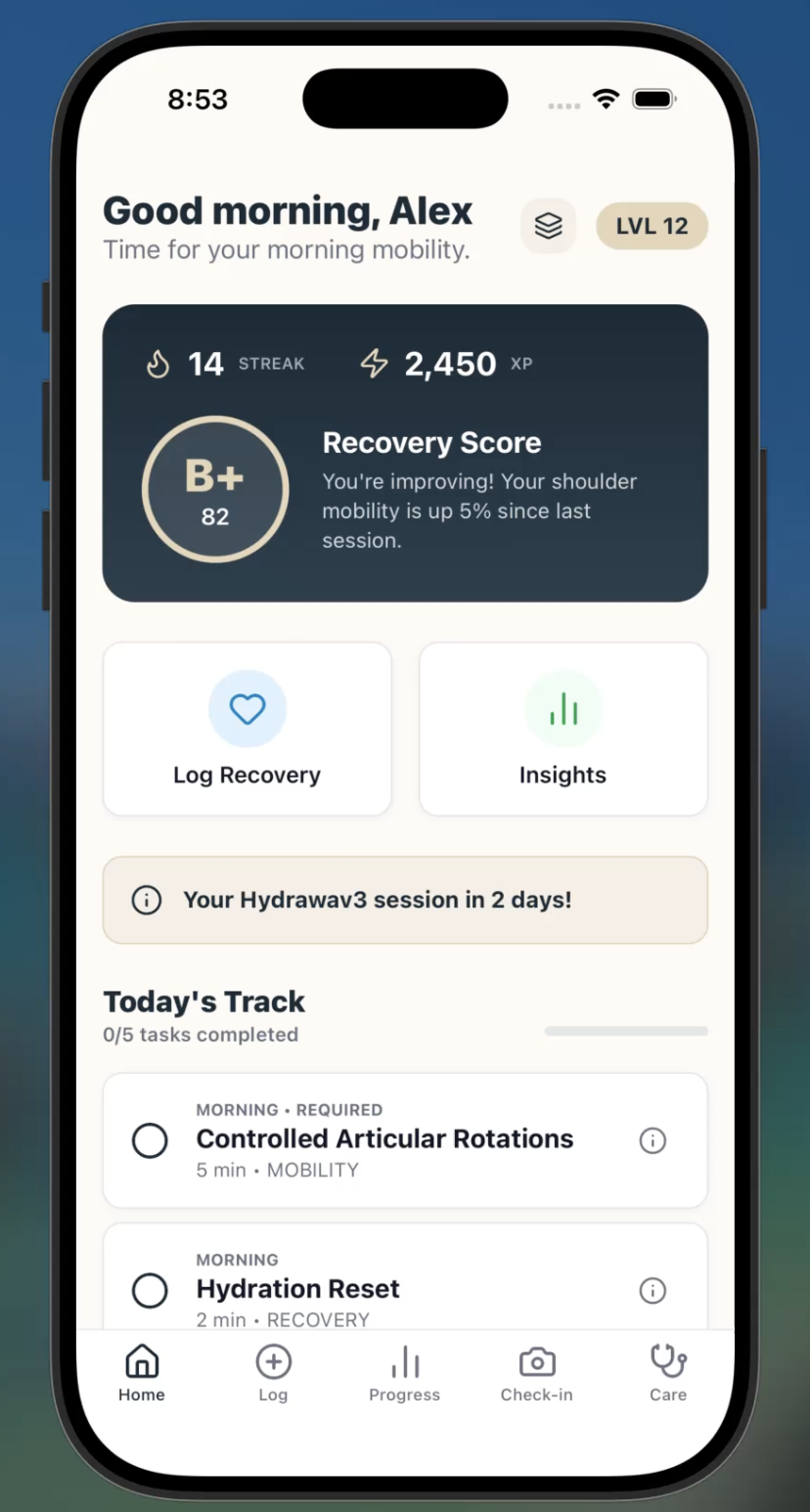
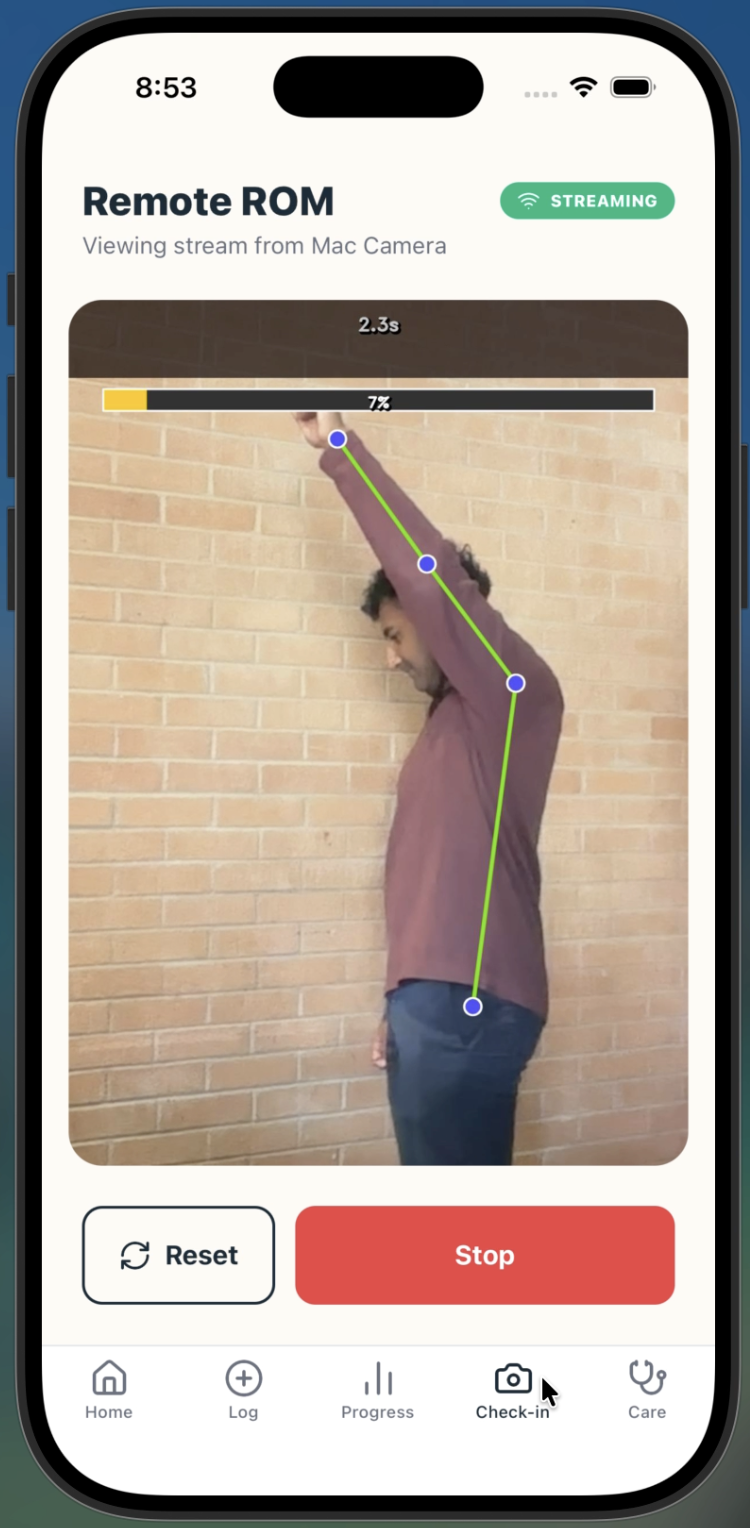
Users get a daily recovery plan with simple tasks like mobility work or recovery actions, along with a recovery score that reflects how their body is doing. At the same time, the app tracks range of motion using the camera, so progress is actually measurable instead of subjective.
Everything feeds back into the next session, so recovery compounds over time instead of restarting.
How we built it
We built recover3 as a full stack system connecting mobile, backend, and data inputs.
The mobile app is built with React Native and handles the daily recovery experience, task tracking, and notifications. We used Supabase for authentication, database, and real-time updates to keep everything simple and fast to build.
For mobility tracking, we used MediaPipe to measure range of motion for a specific movement (like raising your arm overhead). This gives us objective data we can send back to the practitioner.
We also designed the system to allow patients to log data (like HRV and sleep) and Hydrawav3 session data, so everything contributes to a single recovery score and feedback loop.
Challenges we ran into
One challenge was designing something that helps practitioners without getting in their way. Clinics are fast paced, so anything that takes too long to use is dead on arrival. We had to keep every interaction quick and simple.
On the technical side, getting clean and consistent data from camera tracking is harder than it looks, especially with different environments and user setups.
Accomplishments that we're proud of
We’re proud that we didn’t just build a feature, we built a full system.
Recover3 connects assessment, session, and daily recovery into one loop. That’s something that doesn’t really exist today.
We also built something that actually fits into a real workflow. It supports the practitioner instead of trying to replace them, which was a key requirement.
And we were able to combine computer vision, wearable-style data, and behavior tracking into a single experience that feels simple for the user.
What we learned
We learned that the real problem isn’t a lack of tools, it’s a lack of connection between them.
Data only matters if it leads to better decisions, and better decisions only matter if they’re used consistently. That’s where most systems break down.
We also learned how important it is to simplify. The more focused the system is, the more usable it becomes.
Finally, we saw how much behavior and engagement matter. Recovery isn’t just about what happens in a session — it’s about what people do every day.
What's next for recover3
Next, we want to expand the system while keeping it simple.
We plan to support more types of movements and improve the accuracy of mobility tracking. We also want to deepen integrations with wearable data to make the recovery score more meaningful.
On the practitioner side, we want to build smarter insights and recommendations based on trends across clients.
Long term, the goal is to make Recover3 a platform where recovery is continuously improving, fully personalized, and easy to manage for both practitioners and users.
Built With
- fastapi
- mediapipe
- ollama
- opencv
- postgresql
- python
- react
- react-native
- supabase
- typescript
- websockets

Log in or sign up for Devpost to join the conversation.