-
-
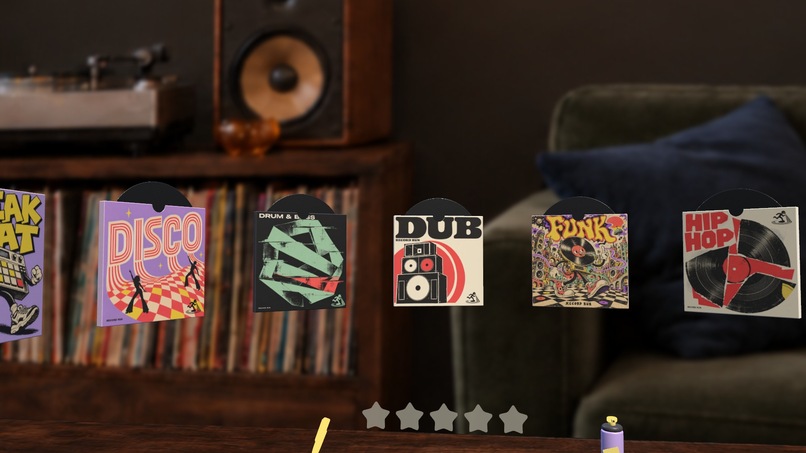
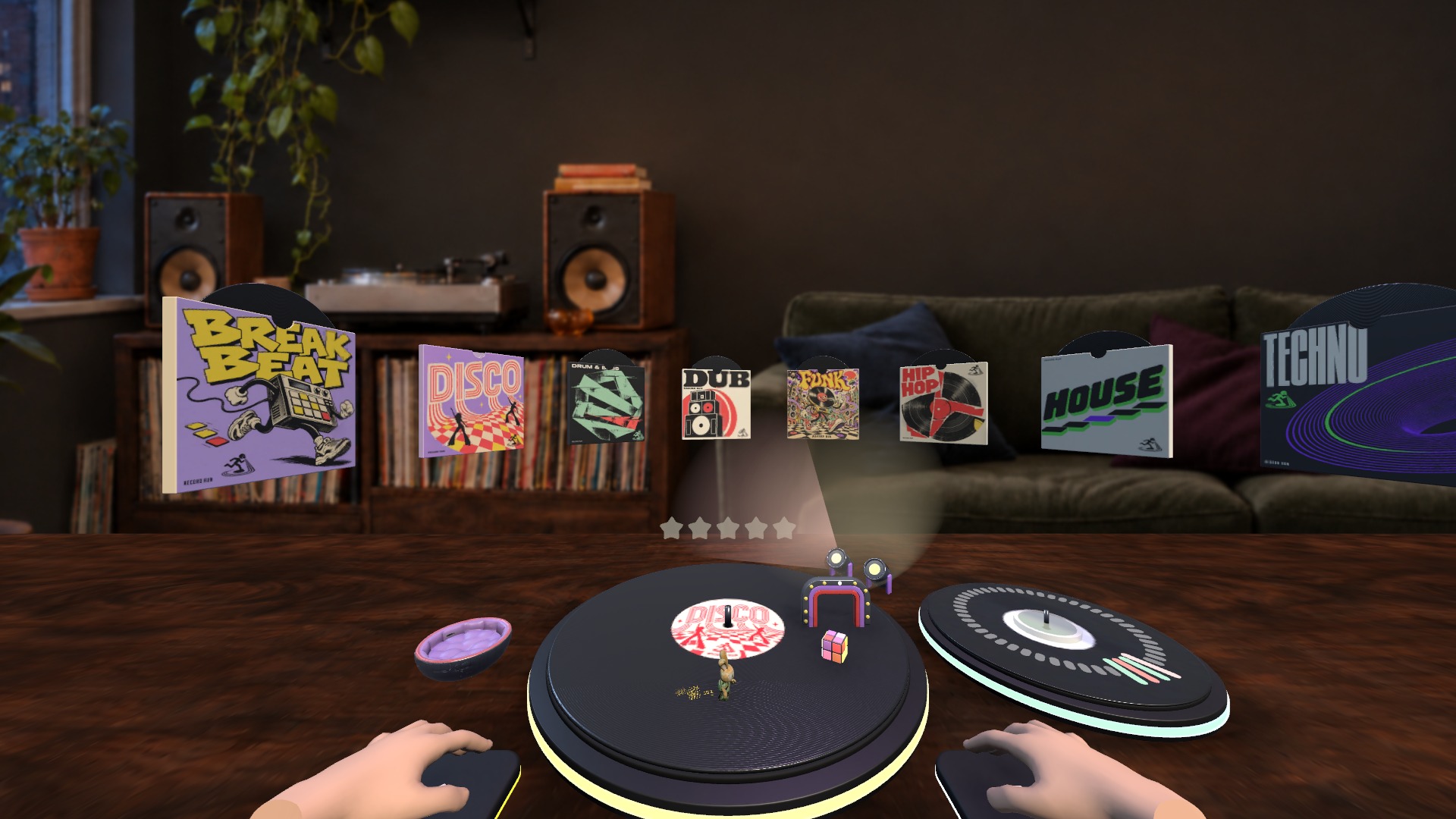
Sleeves
-
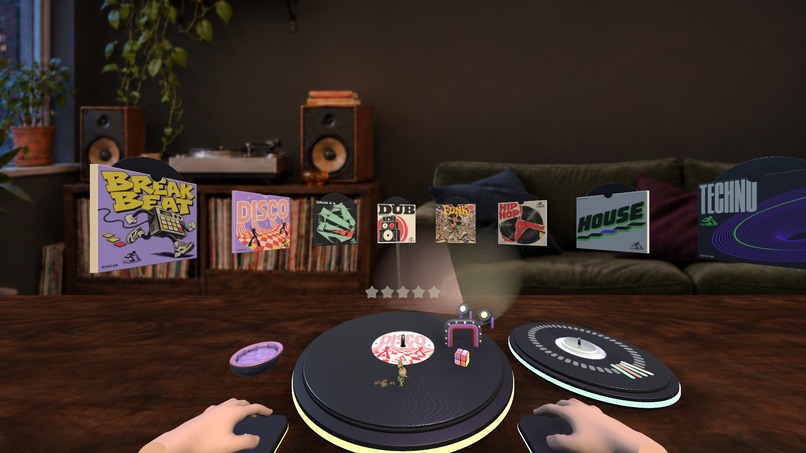
Disco Table
-
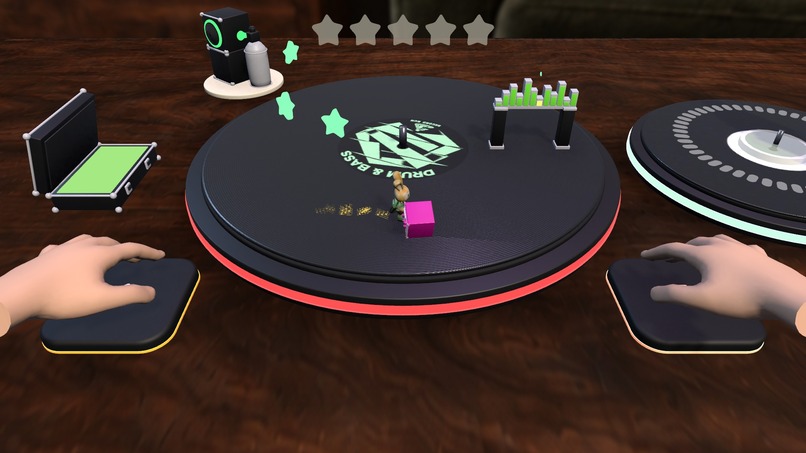
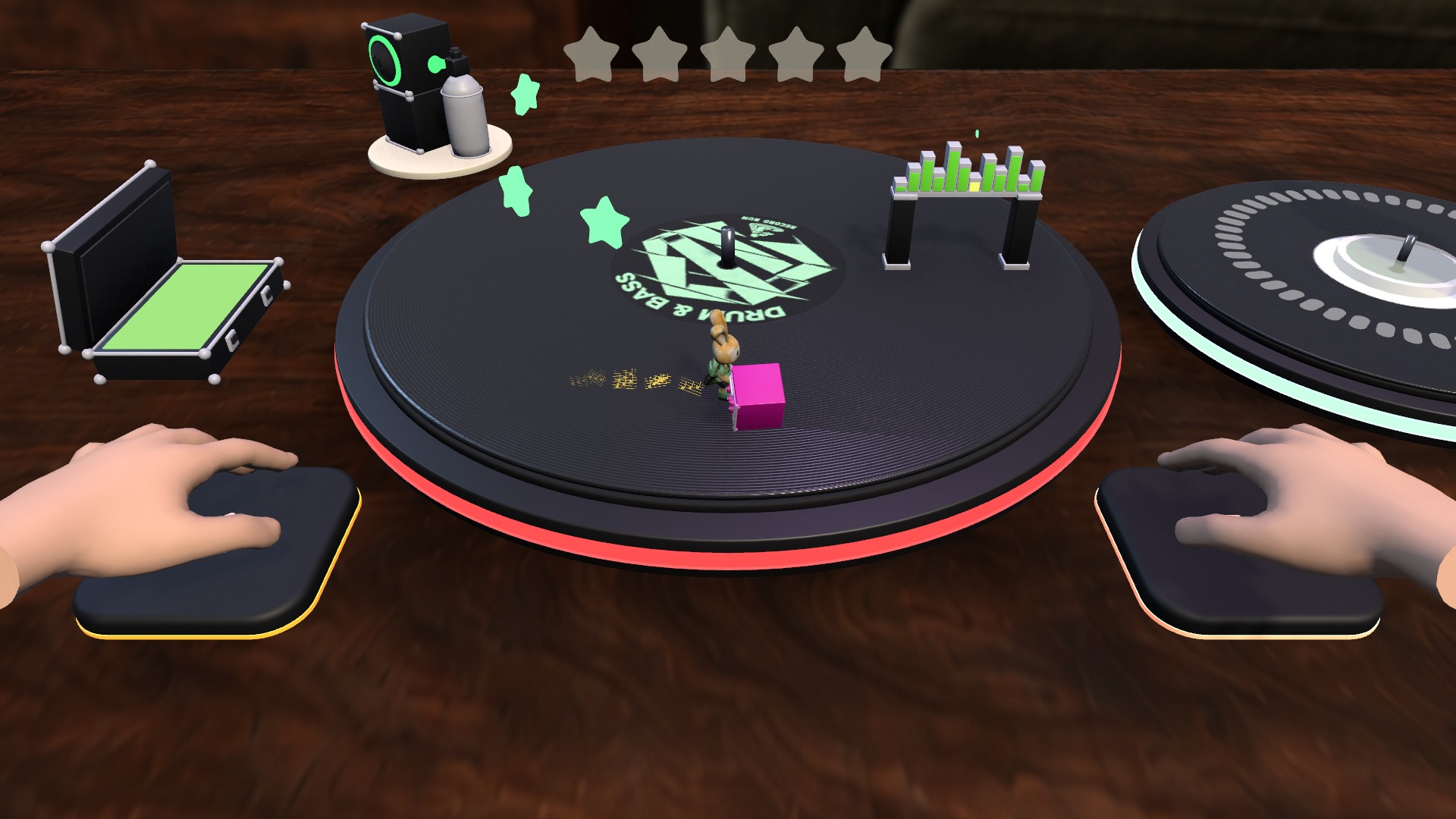
Drum & Bass pads
-
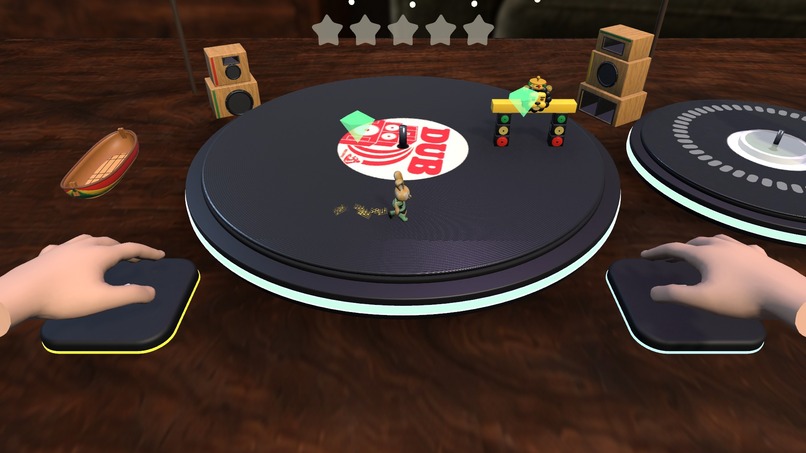
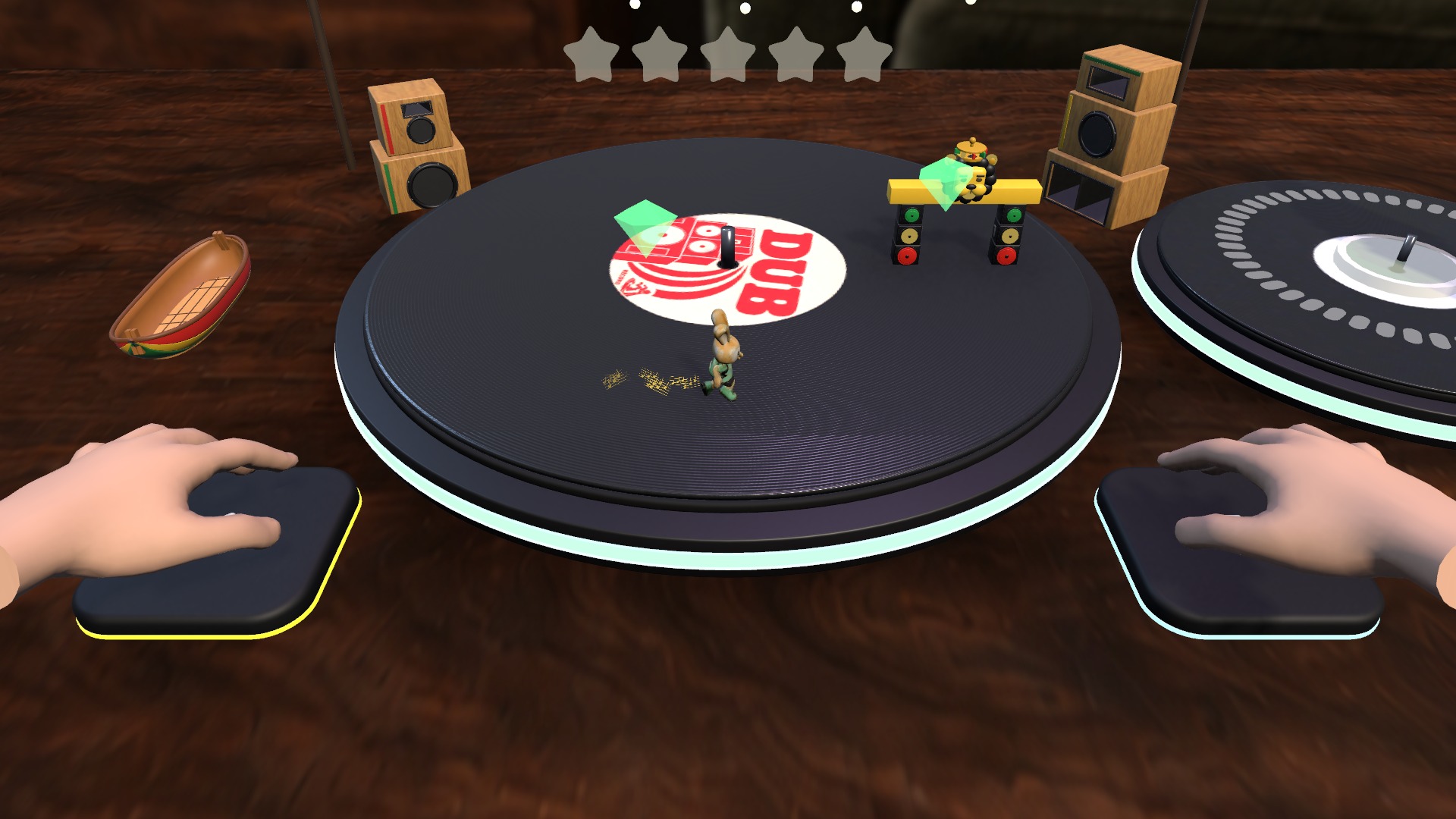
Dub Pads
-
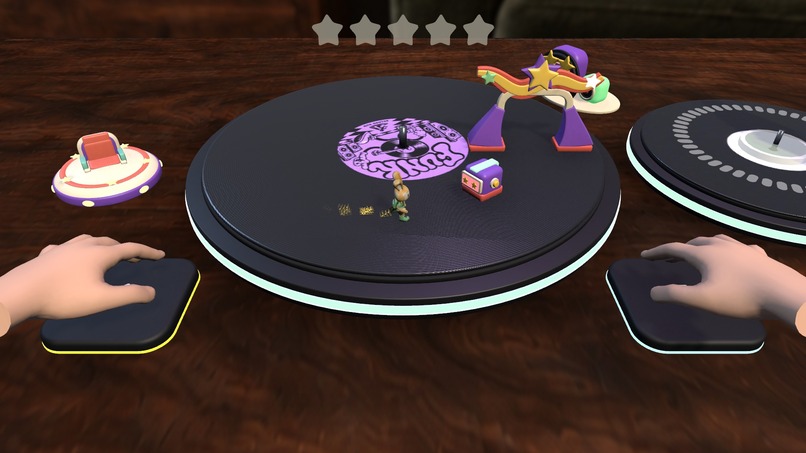
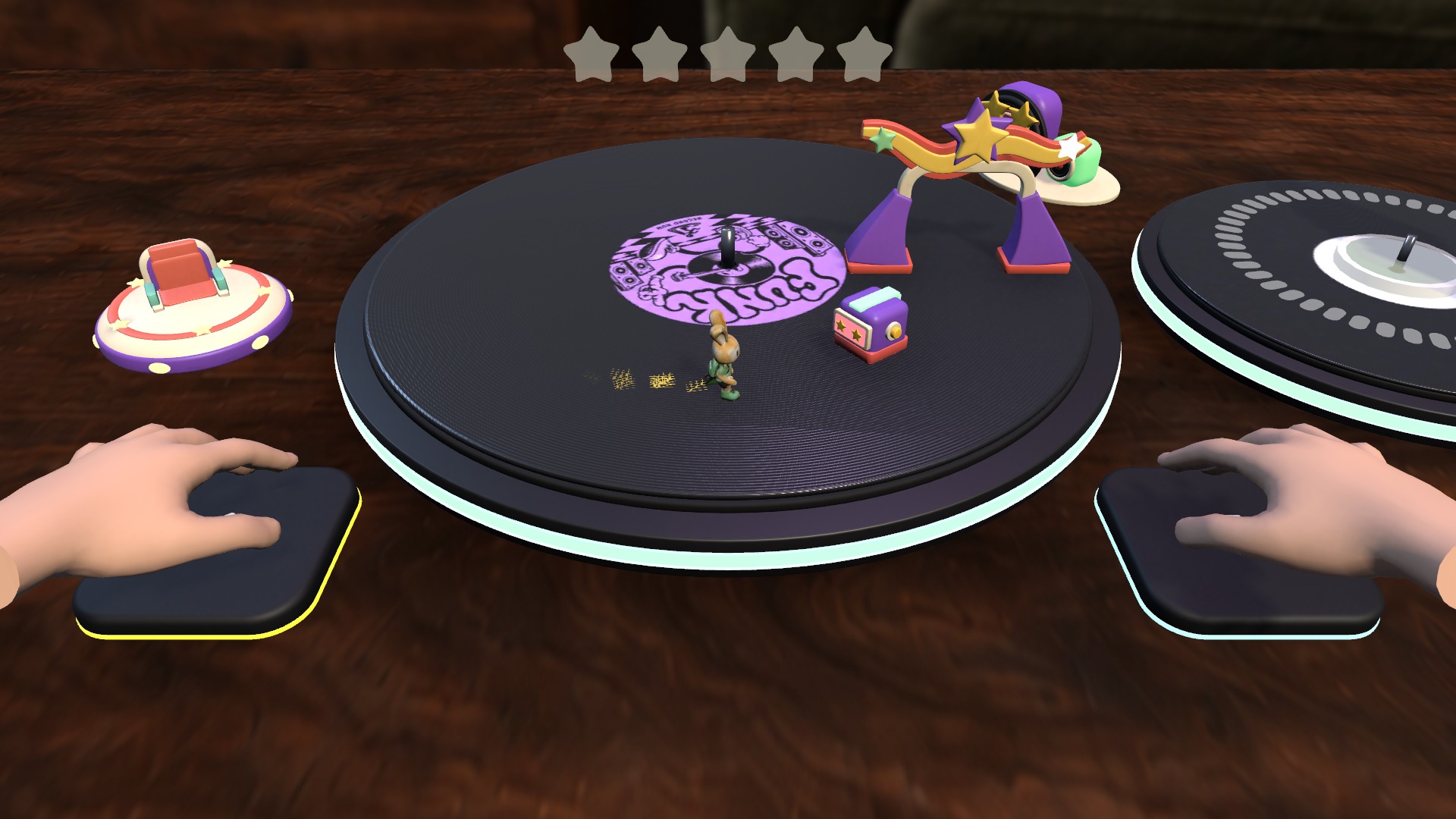
Funk Pads
-
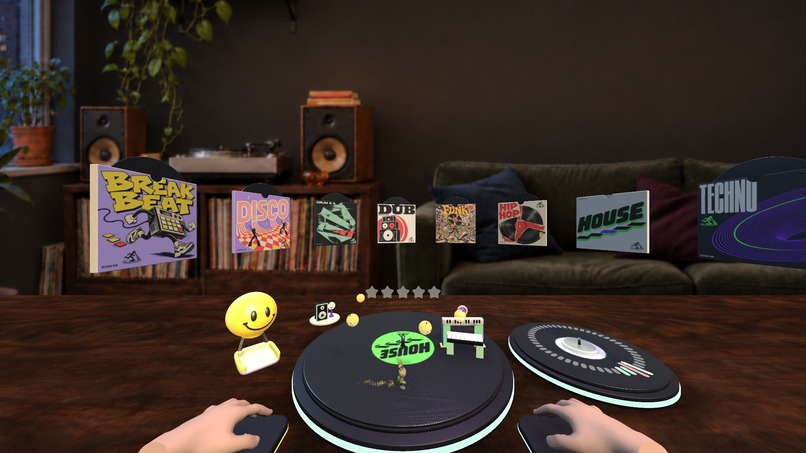
House table
-
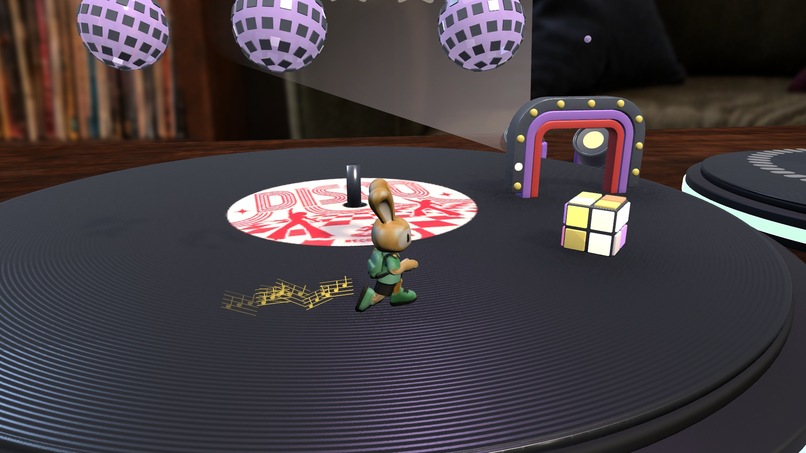
Disco wide
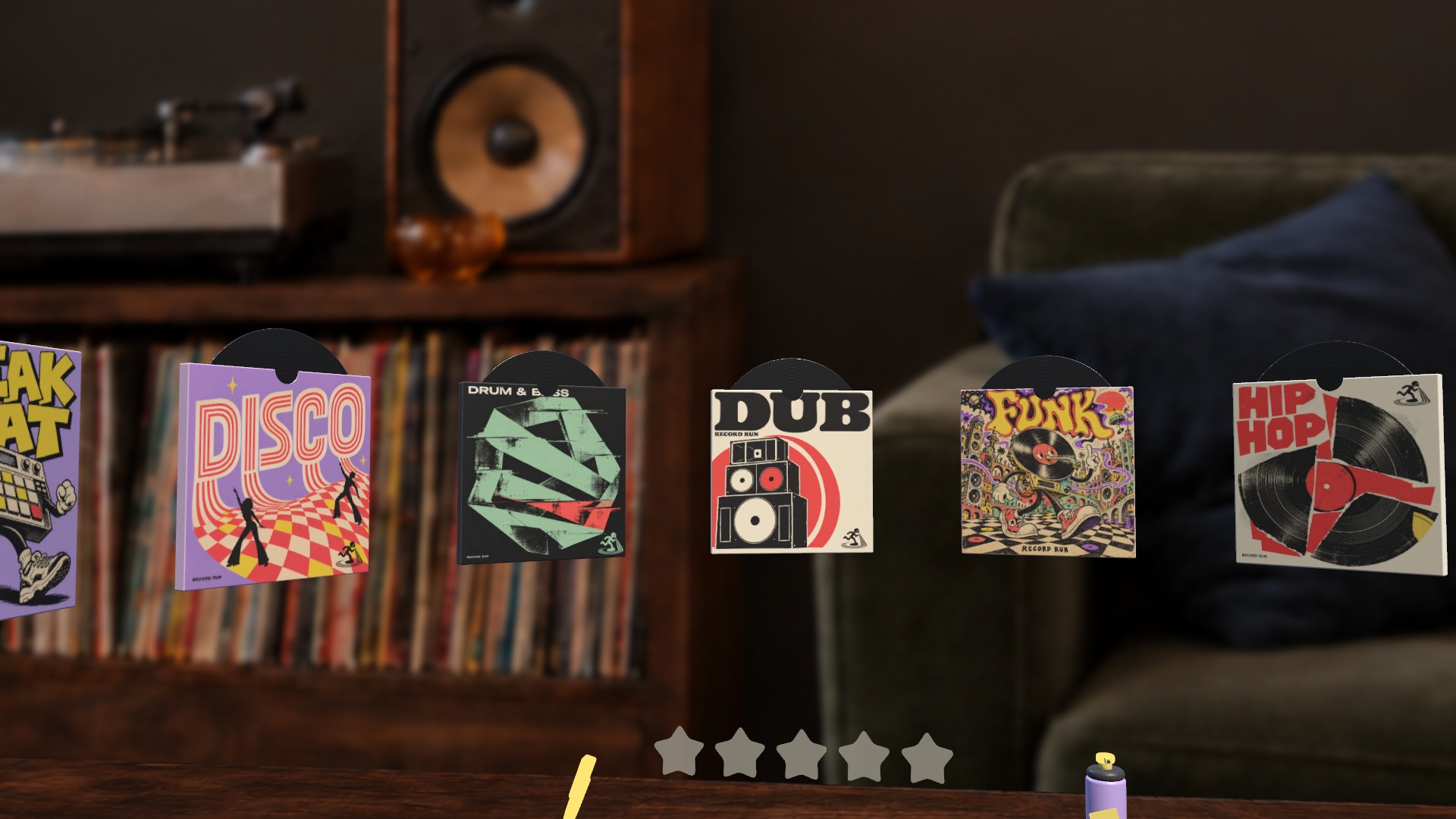
Inspiration
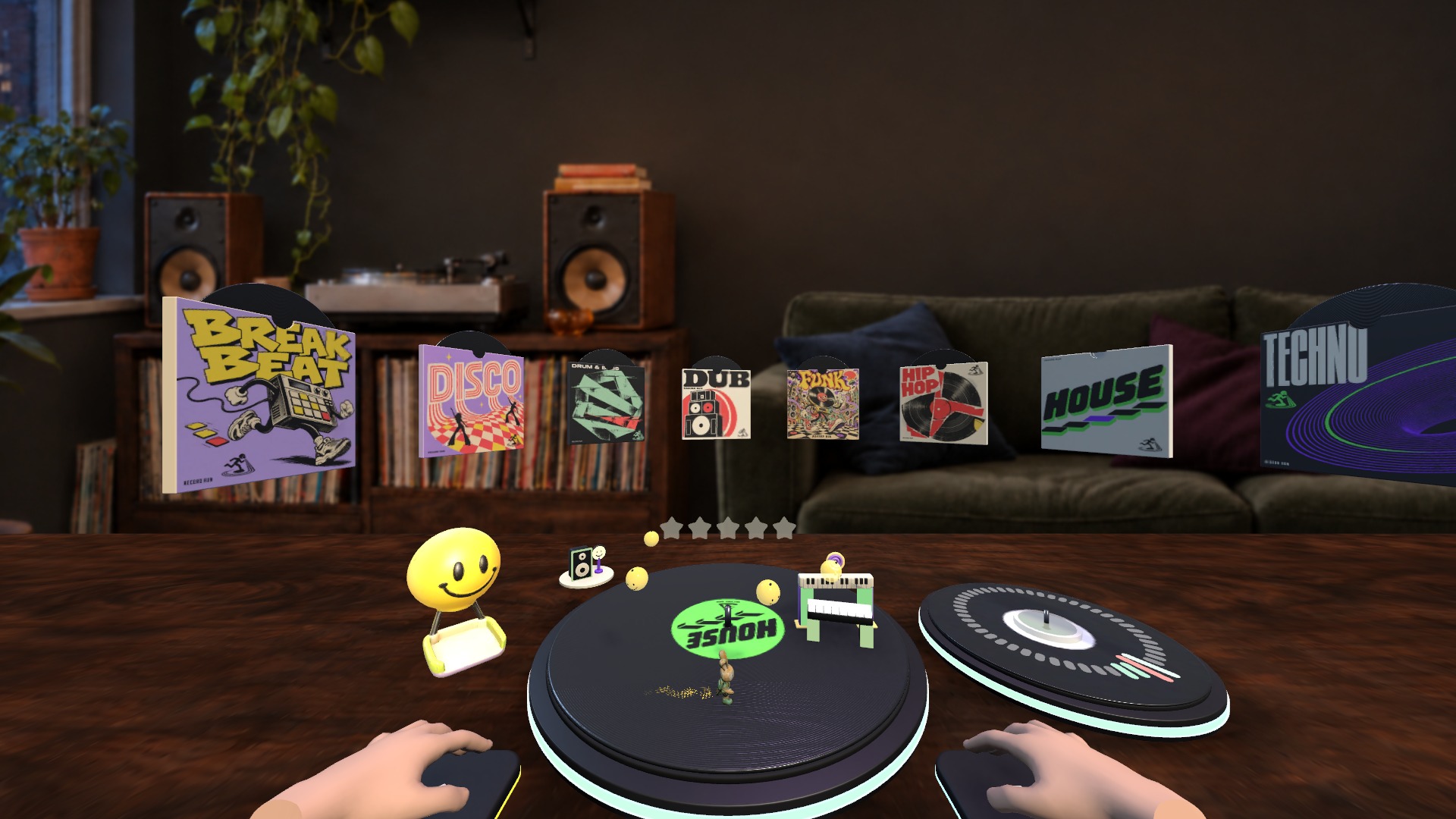
We grew up around record shops: pulling a sleeve out of a crate, sliding the vinyl out, dropping the needle and watching the label spin. We wanted to bring that physical ritual into a tabletop mixed-reality game, where the record itself becomes the level and the music becomes something you can play with. In Record Run, you pick a sleeve, pull out the vinyl, place it on the turntable and put a small golden bunny on it. The record turns, the bunny runs, and the obstacles come around with the groove.
What it does
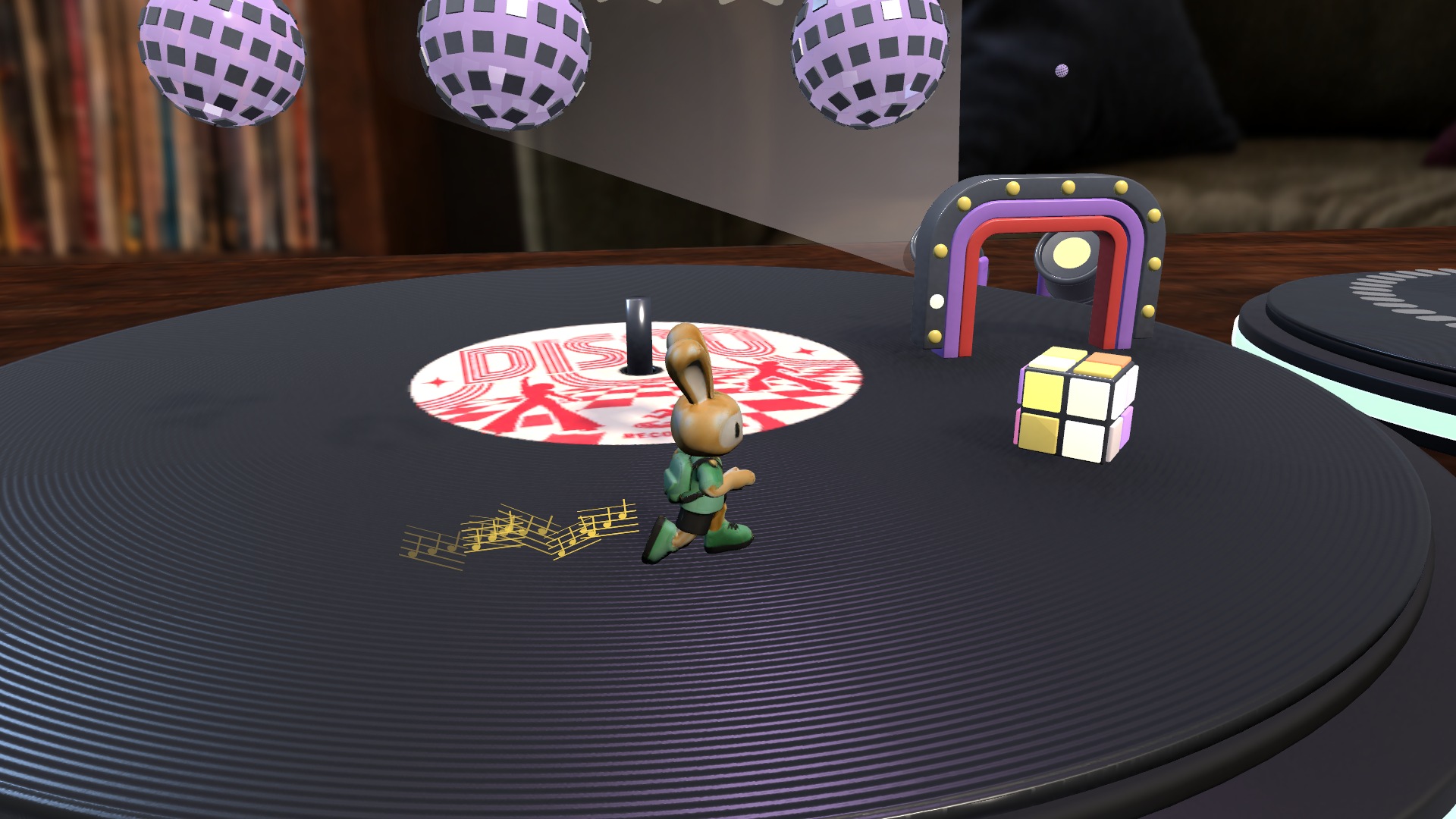
Choose a record, choose a world. Eight genres (dub, house, techno, hip hop, funk, breakbeat, drum & bass and disco) each have their own track, sleeve and miniature environment. Their objects draw inspiration from the culture and visual identity of each genre.
Run on the record. The bunny runs in place while the vinyl spins underneath. Two pads sit in front of you: touch the left one to jump and the right one to duck. Trampolines launch the bunny towards higher collectibles.
Collect gems to change the music. Gems sit at different heights: a low sphere, a diamond that requires a jump and a star reached using a trampoline. Collecting them triggers short effects on the song itself: an echo, a filter sweep or a rhythmic stutter. Effects start on the next beat and play one at a time. See your performance take shape. On the second turntable, a circular waveform fills with colour as you play: mint for completed sections, coral for misses and small markers for collected effects. One full circle represents the whole song.
Hear your mix. Place the bunny on the second turntable’s raised platform to replay the song with your recorded effects. A warm spotlight illuminates the bunny as he dances, and the waveform markers light up when their effects play.
Build your record collection. Return the vinyl to its sleeve after listening. A personal-best award shows the stars you have earned for that record, giving your collection a history of your performances.
The experience is designed for seated play at a table. In the tutorial; Ghost hands demonstrate the interactions, repeating each action until the player tries it. Physical objects and visual feedback guide the experience without conventional menus or numerical score counters.
How we built it
We built Record Run as a team in Unity 6 with URP, targeting Meta Quest. Our work brought together creative direction, 3D art, animation, audio and gameplay development, with AI tools supporting parts of the design and implementation process. We developed the tabletop props and genre environments through an iterative 3D workflow, bringing assets into Unity and testing their scale, readability and placement. The bunny uses a Mixamo-based animation rig for running, jumping, crouching, climbing and dancing. Music analysis and track timing inform the gameplay. Obstacles travel around the record towards the bunny, while the game checks whether the player successfully jumps, ducks or collects a gem. The second turntable’s waveform is generated from the song’s audio. Gameplay results and musical effects are mapped to positions along that waveform using song timestamps. Those saved events also drive the replay, connecting what the player sees with what they hear. Throughout development, we repeatedly tested and adjusted the experience: the size of the pads, the openings beneath bridges, the bunny’s proportions, the ghost-hand demonstrations and the lighting around the replay platform.
Challenges we ran into
Making the remix musical Our original ambition was to include a sequencer: players would collect sounds during their run and use them to build a personal remix. However, layering extra melodies over a finished track quickly became crowded and sometimes clashed harmonically. We learned that a satisfying musical reward needs careful arrangement as well as good timing. For this version, we focused on short, beat-synchronised effects applied to the original song. The sequencer remains a direction we want to develop further. Teaching through demonstration We wanted players to learn through their hands rather than read instructions. That required more than playing an animation: each demonstration needed to show one clear action, give the player time to try it and stop when they succeeded. The ghost hands became a consistent way to teach record selection, bunny placement, the two pads and returning the record to its sleeve. Making interactions intentional Grabbing a record, picking up the bunny and pressing a pad happen within a small tabletop area. Distinguishing those intentions and avoiding accidental grabs was an important interaction challenge.
Accomplishments that we're proud of
A connected experience built around pick, place, play, listen and put away. Eight music genres with distinct tracks, artwork and miniature worlds. A second turntable that turns a performance into something players can both see and hear. Musical effects that work with the original track. A tutorial that teaches through physical demonstrations and player participation.
What we learned
The clearest feedback often happens on the object the player is already looking at. A brief colour change on a pad or a small effect beneath the bunny can communicate more effectively than another floating instruction. We also learned that tutorials need to respond to the player’s pace. Showing, waiting and repeating is more useful than moving through a fixed sequence of demonstrations. Working with the song’s own sound helped us avoid harmonic clashes, but timing, restraint and listening tests still mattered. More effects did not automatically make a better mix. Above all, designing for hands encouraged us to make interactions tangible. Choosing a record and placing a character on it became part of the pleasure of starting a game.
What's next for Record Run
Refine hand interactions through more testing on Quest, Improve the balance of the musical effects and continue developing each genre’s world. A hands-on sequencer on the second turntable, where players can arrange collected sounds into patterns using samples prepared for each track’s tempo and key. That would let players actively shape their remix after completing a run. We would also like to explore custom record sleeves and audio export, so players can personalise their collection and share what they create.

