

Inspiration
ThinkForge was born out of a mix of curiosity, frustration, and ambition. As computer science students who love both philosophy and tech, we were tired of educational tools that felt more like glorified PDFs than immersive experiences. We wanted to create something wildly different—something that would make philosophy feel alive, spark curiosity, and entertain while educating.
The idea came from late-night debates about ethics and technology, often wondering how great minds of the past would weigh in on today's problems. What would Nietzsche say about Instagram? How would Confucius handle Twitter discourse? That curiosity led us to ask: What if we could make them talk again? With AI and the power of the Perplexity Sonar API, we decided to do just that.
What it does
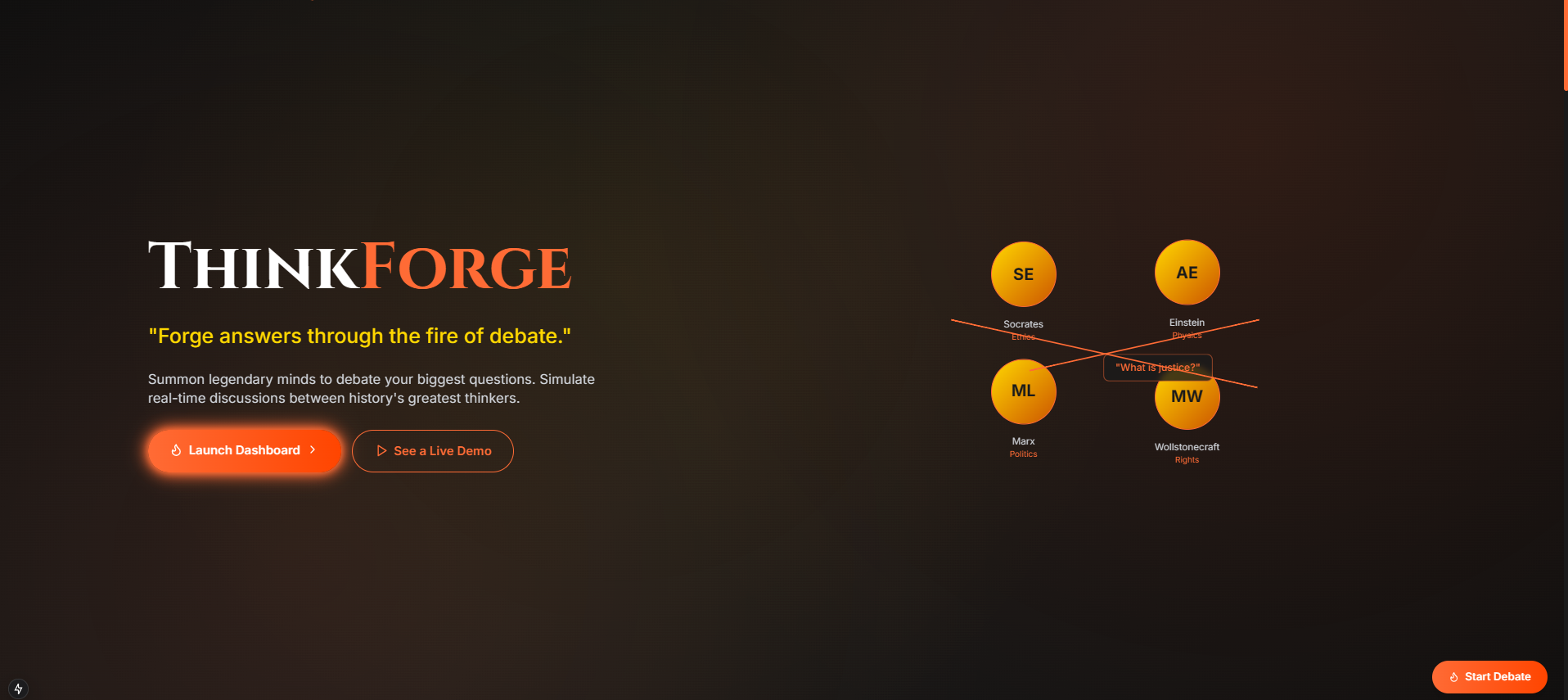
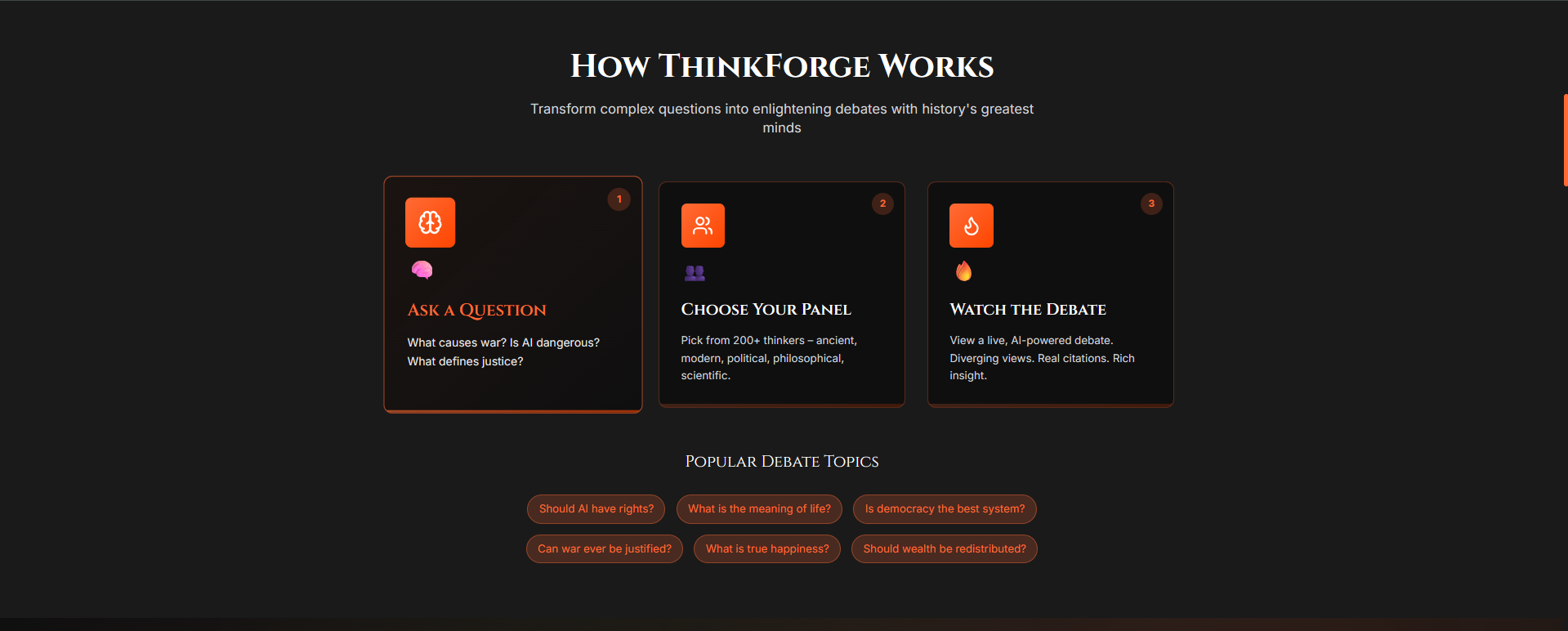
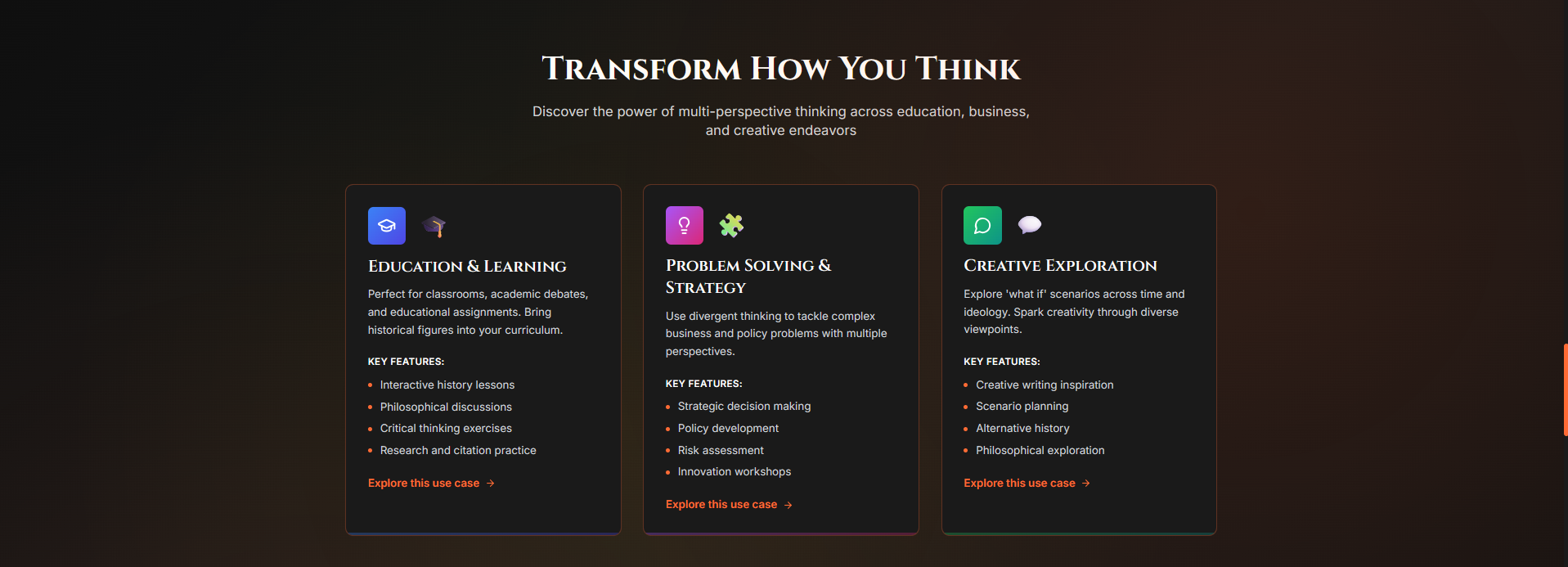
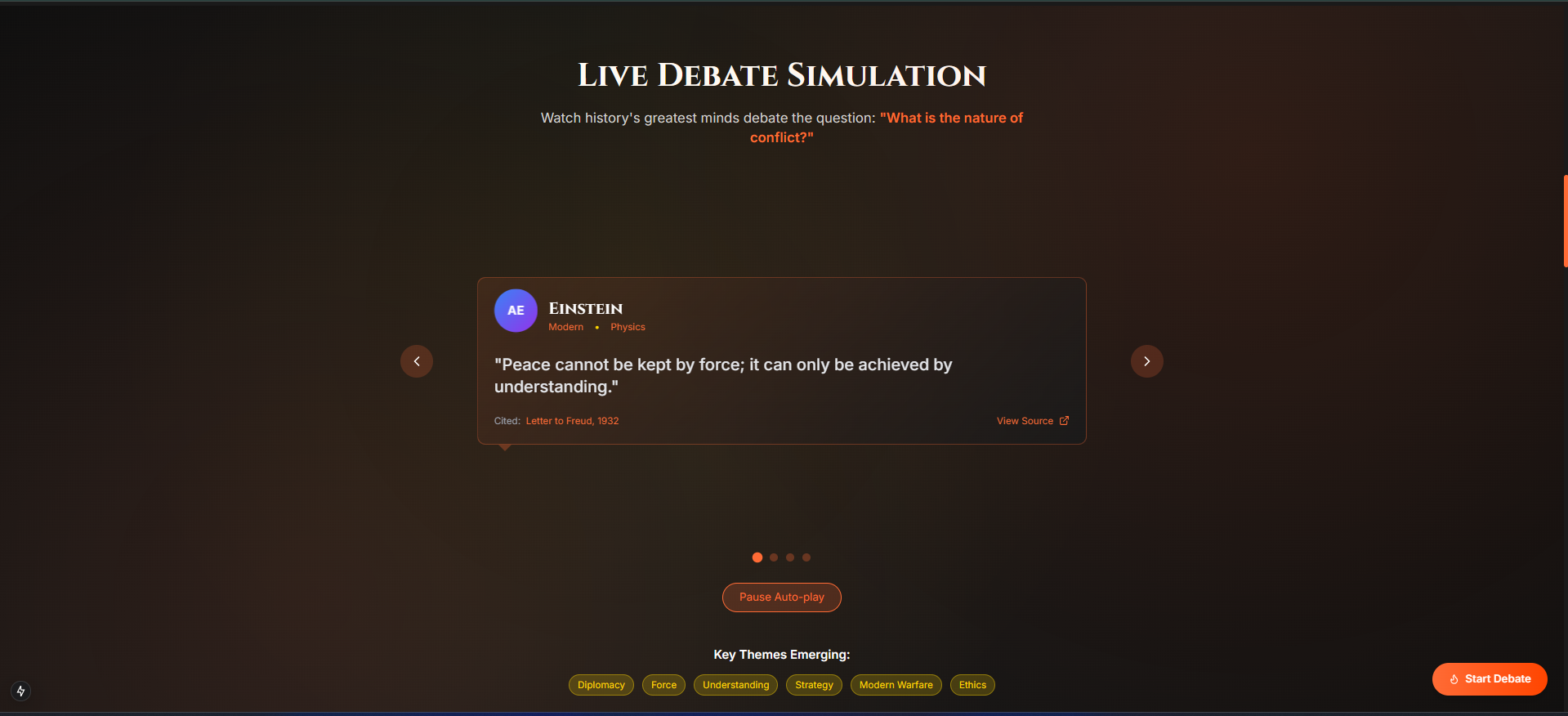
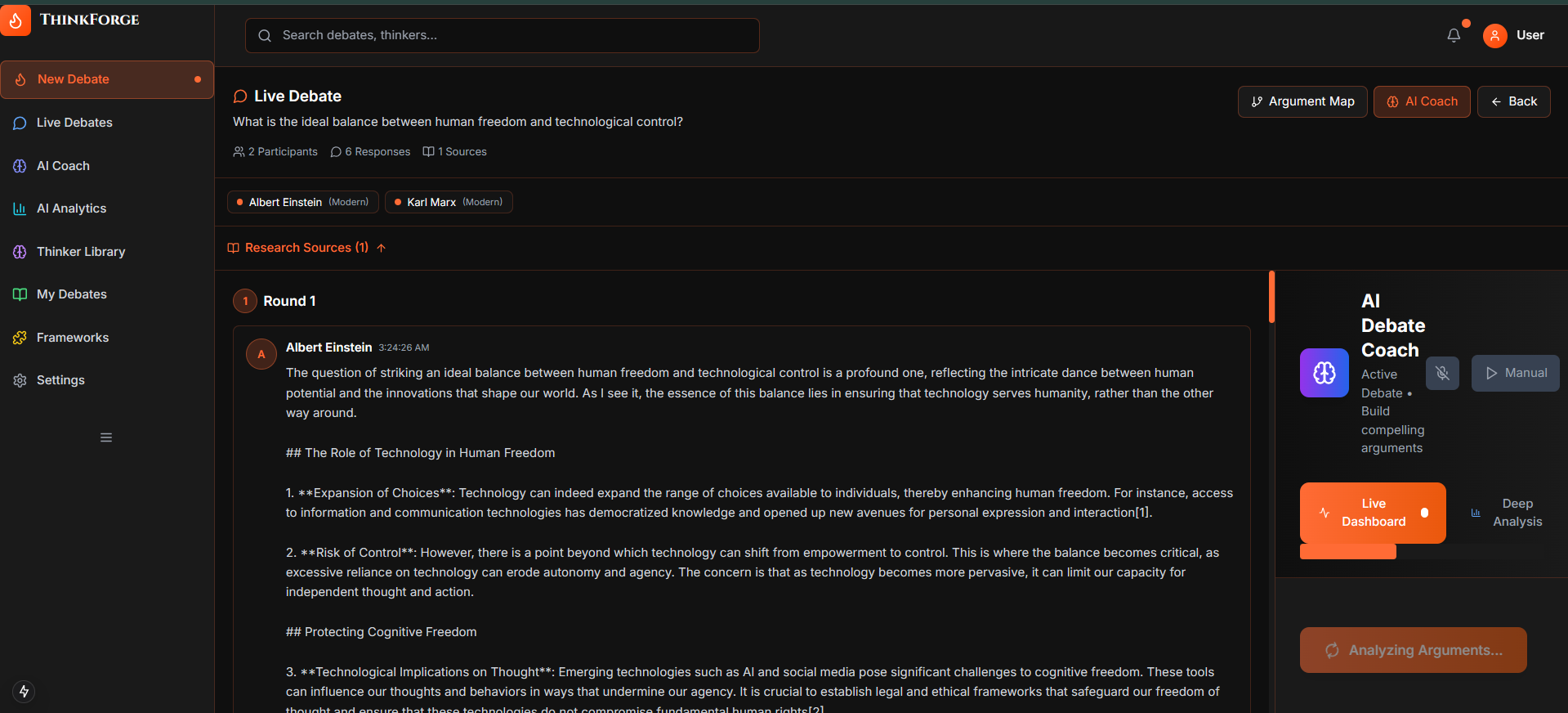
ThinkForge is an AI-powered debate simulator that brings historical thinkers to life. Users can:
- Watch realistic, multi-round debates between famous figures from history
- Explore different takes on modern questions—from AI ethics to pineapple on pizza
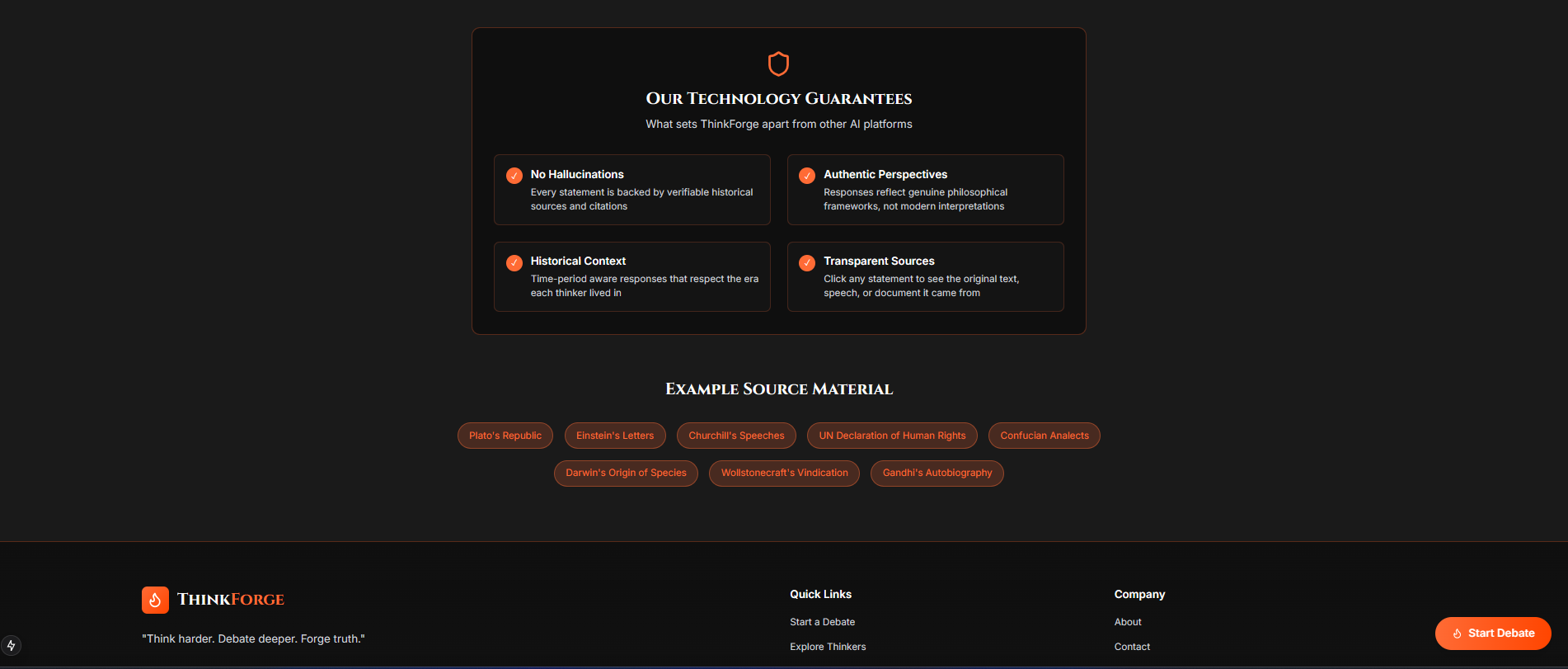
- Get arguments backed by real citations and historical context
- Interact with dynamic topic generators and receive smart thinker matchups
- Learn critical thinking and philosophy in a format that feels more like a podcast or video game than a textbook
From Socrates to Einstein, Confucius to Harari, ThinkForge creates a virtual think tank powered by the greatest minds in history.
How we built it
ThinkForge is a full-stack application that combines:
- Next.js for a fast, responsive frontend
- Express and Node.js for the backend logic
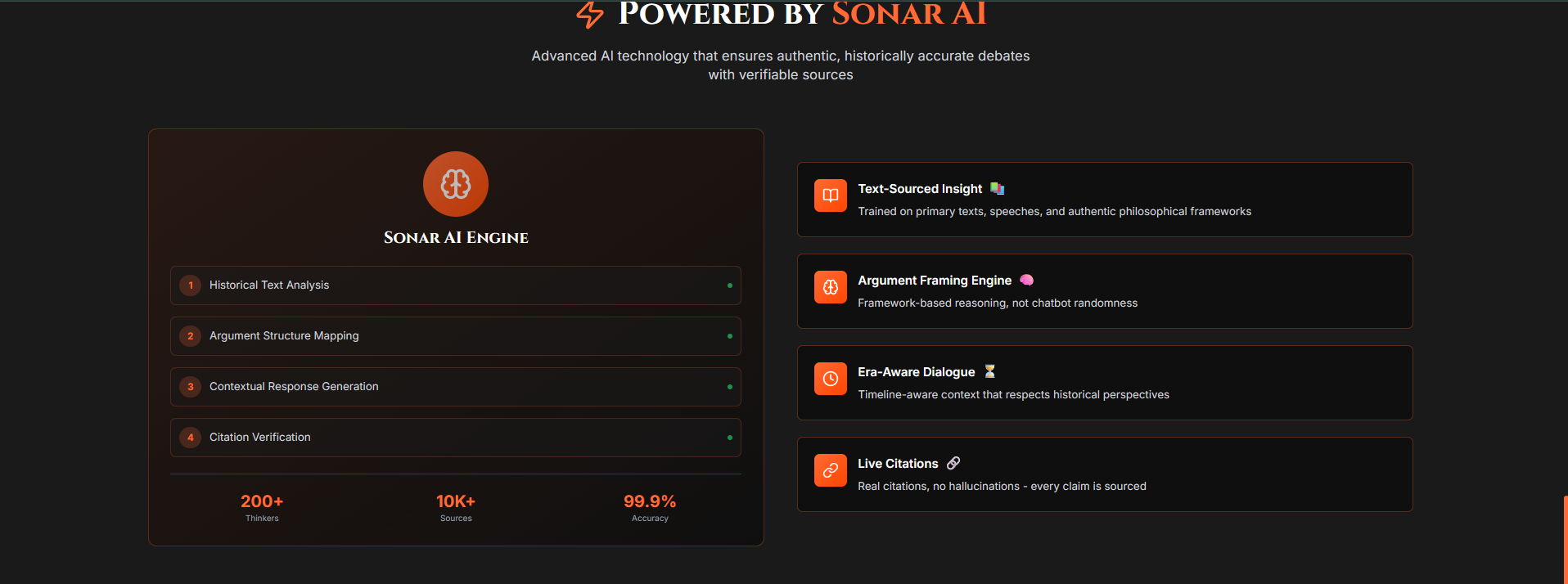
- Perplexity's Sonar API for deep topic research and dynamic thinker responses
- Async task queues for real-time debate generation without making users wait
- Custom prompt engineering to balance historical accuracy, engaging dialogue, and modern application
- Stateful thinker profiles that maintain consistent argumentation styles and viewpoints across debates
We use a dual-phase pipeline to ensure quality:
- Context gathering: Sonar provides verified facts and context on a topic.
- Personality simulation: These facts are filtered through philosopher-specific profiles to generate authentic, stylistic responses.
We also implemented robust fallback systems, moderation filters, and a lightweight analytics engine for tracking thinker performance and user engagement.
Challenges we ran into
- Historical Accuracy vs. Entertainment: Striking the right tone was tricky—too dry and it’s boring, too silly and it loses intellectual value.
- Prompt Complexity: Crafting multi-step prompts that could simulate personality, stay on-topic, and cite sources pushed prompt engineering to its limits.
- API Constraints: Rate limits and occasional disruptions meant we had to build smart retries, caching, and fallback flows to maintain conversation continuity.
- Thinker Consistency: Ensuring that each historical figure behaved consistently and accurately required tuning dozens of variables across different debate formats.
- Real-Time Generation: We had to architect an async system that felt seamless to the user, but still allowed for deep background processing.
Accomplishments that we're proud of
- Creating a fun, functioning AI debate engine that actually feels like you're watching Socrates talk to Harari
- Successfully integrating Perplexity Sonar to not just summarize, but contextualize and power nuanced debates
- Developing unique personalities for over 20 historical figures across philosophy, science, and politics
- Building an experience that users described as both "entertaining and surprisingly educational"
- Pushing the creative limits of what AI can do in education—not just answering questions, but embodying thinkers
What we learned
- Prompt engineering is an art form. It's not just about asking a question—it's about asking the right question the right way for the right thinker.
- AI debates can reveal deeper truths. Watching ideas clash in real time helped us understand the nuances of arguments we thought we already knew.
- Balancing education and fun is hard, but worth it. You don’t have to dumb things down to make them engaging—you just have to be clever about the format.
- AI has untapped potential for creativity. It can do more than write essays or generate code—it can simulate intellectual experiences that never existed before.
What's next for ThinkForge
We’re just getting started. Here’s what’s on the roadmap:
- 🎙️ Voice Synthesis: Bring debates to life with accurate, characterful voices
- 📱 Mobile App: Make ThinkForge portable for classroom or on-the-go exploration
- 🧩 Debate Builder: Let users create and moderate their own debates with custom prompts and thinker matchups
- 🌍 Multilingual Support: Make philosophy global by simulating thinkers in their native languages
- 🧠 Learning Mode: Add gamified learning paths, quizzes, and critical thinking exercises
- 🔗 Citation Deep Dive: Let users click into sources to read further and verify claims
ThinkForge is more than a project—it's our vision for the future of learning: dynamic, creative, and built on the wisdom of the past.
Built With
- aes-256
- api
- chromadb
- fast
- indexeddb
- langchain
- next.js
- node.js
- pdf.js
- perplexity
- plotly.js
- postgresql
- python
- react
- recharts
- sonar
- tailwindcss
- tesseract.js

Log in or sign up for Devpost to join the conversation.