-
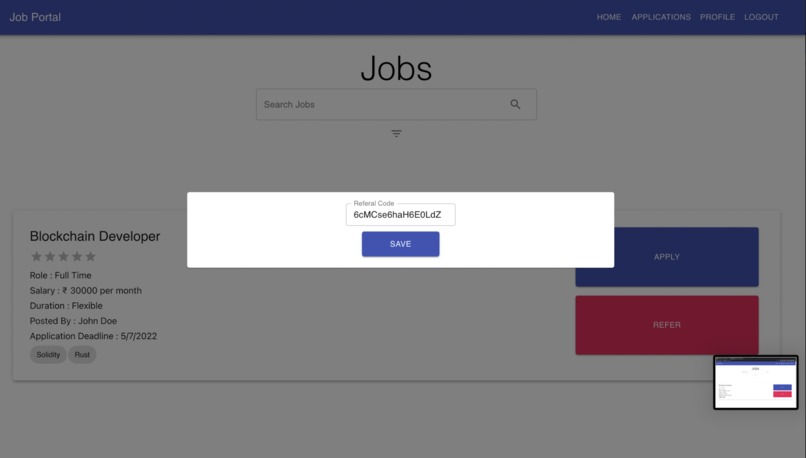
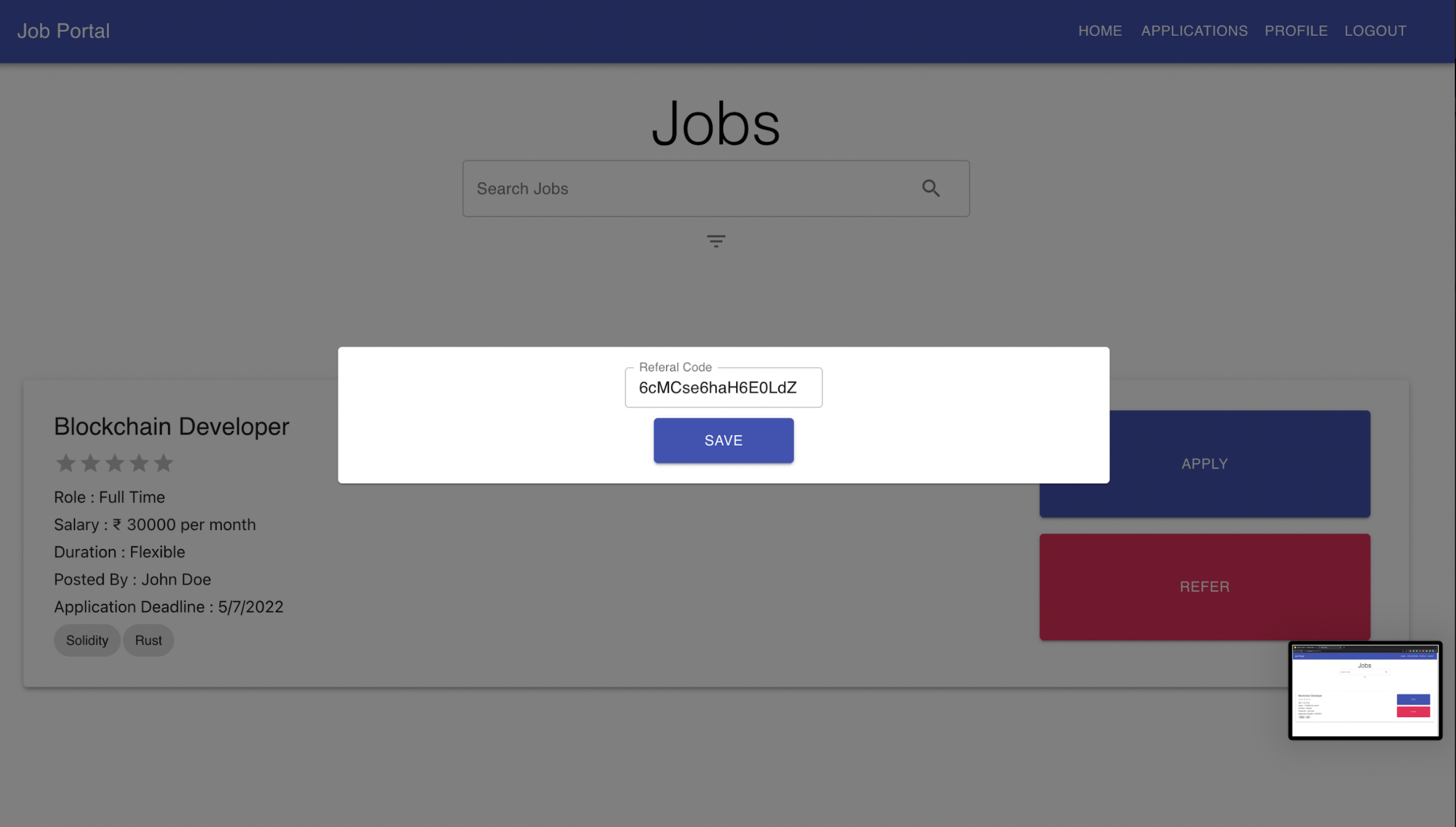
Generate Referral Code
-
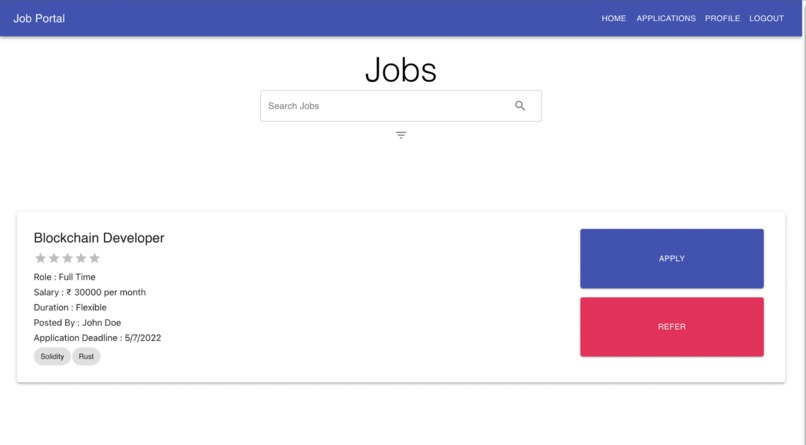
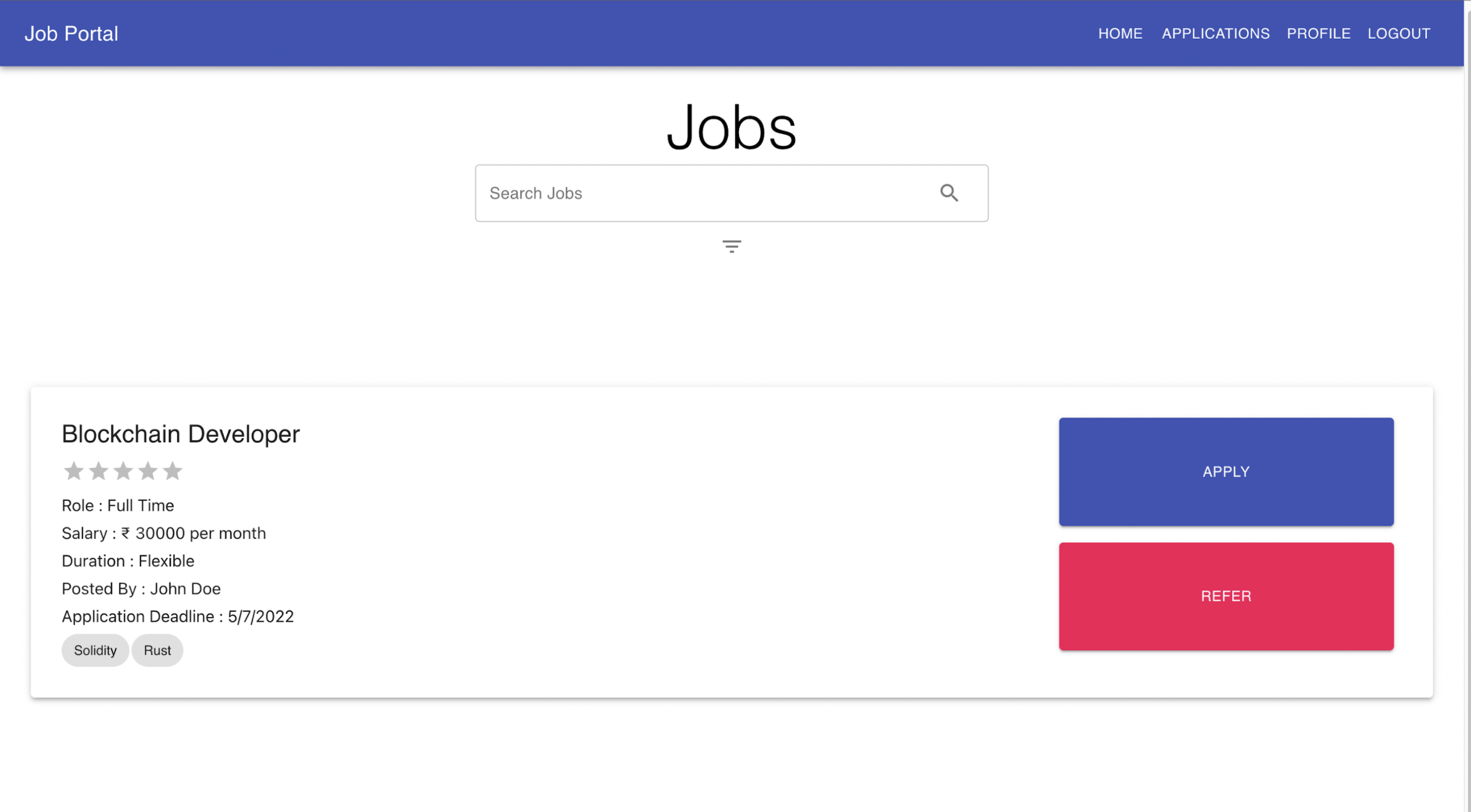
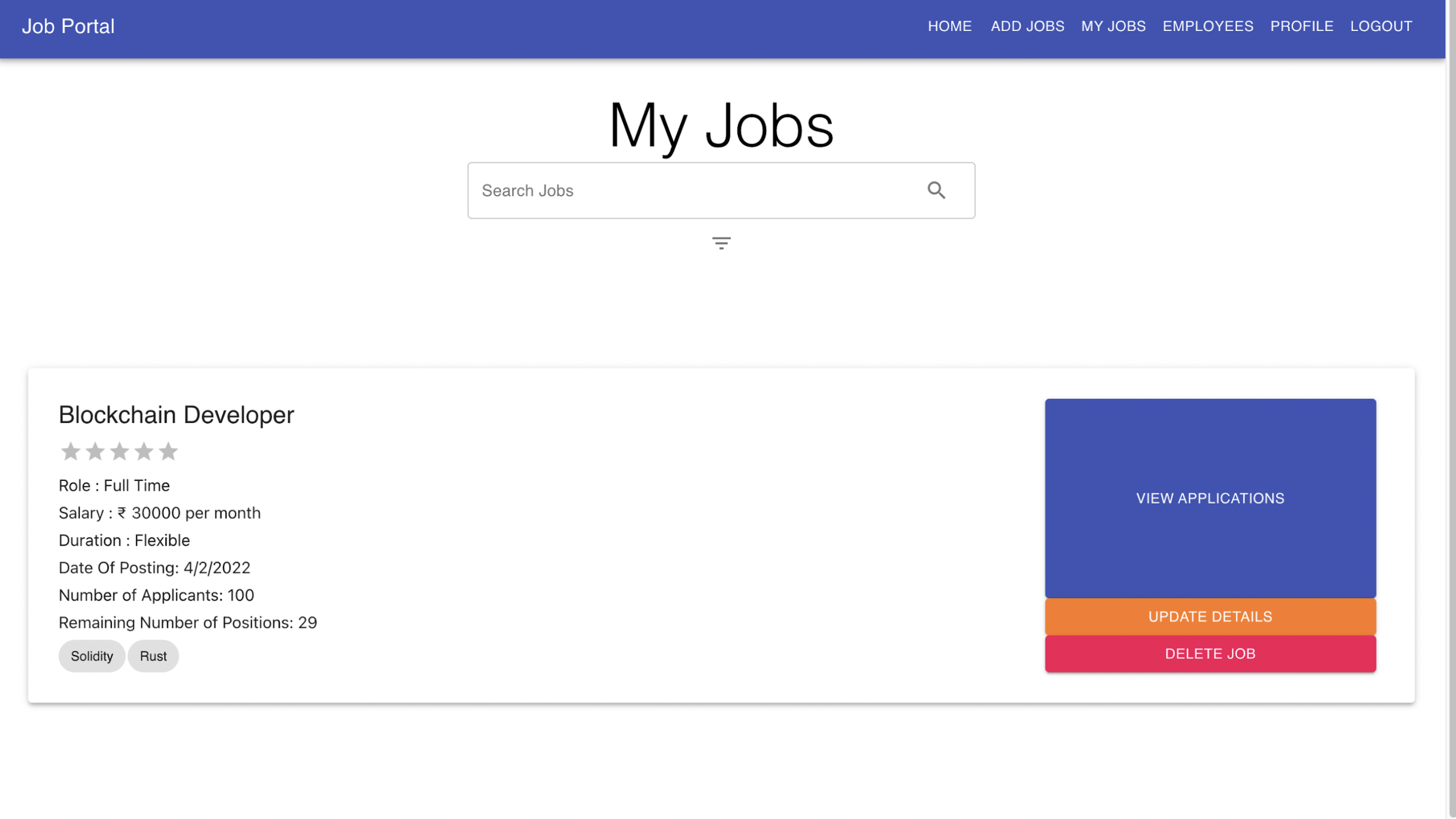
Job Openings
-
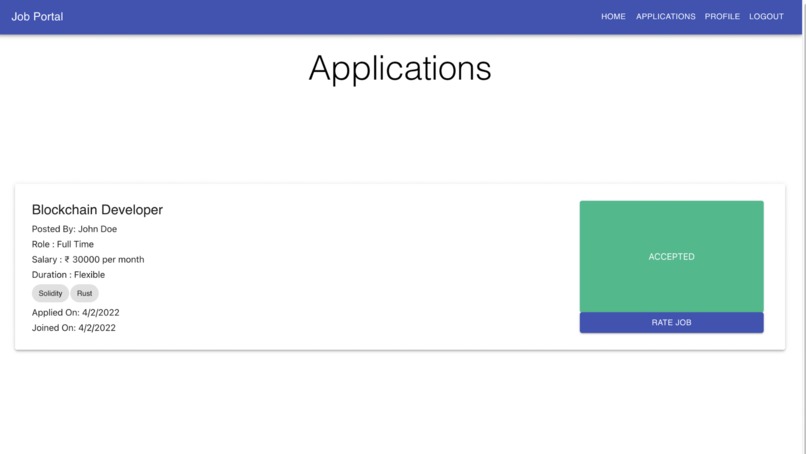
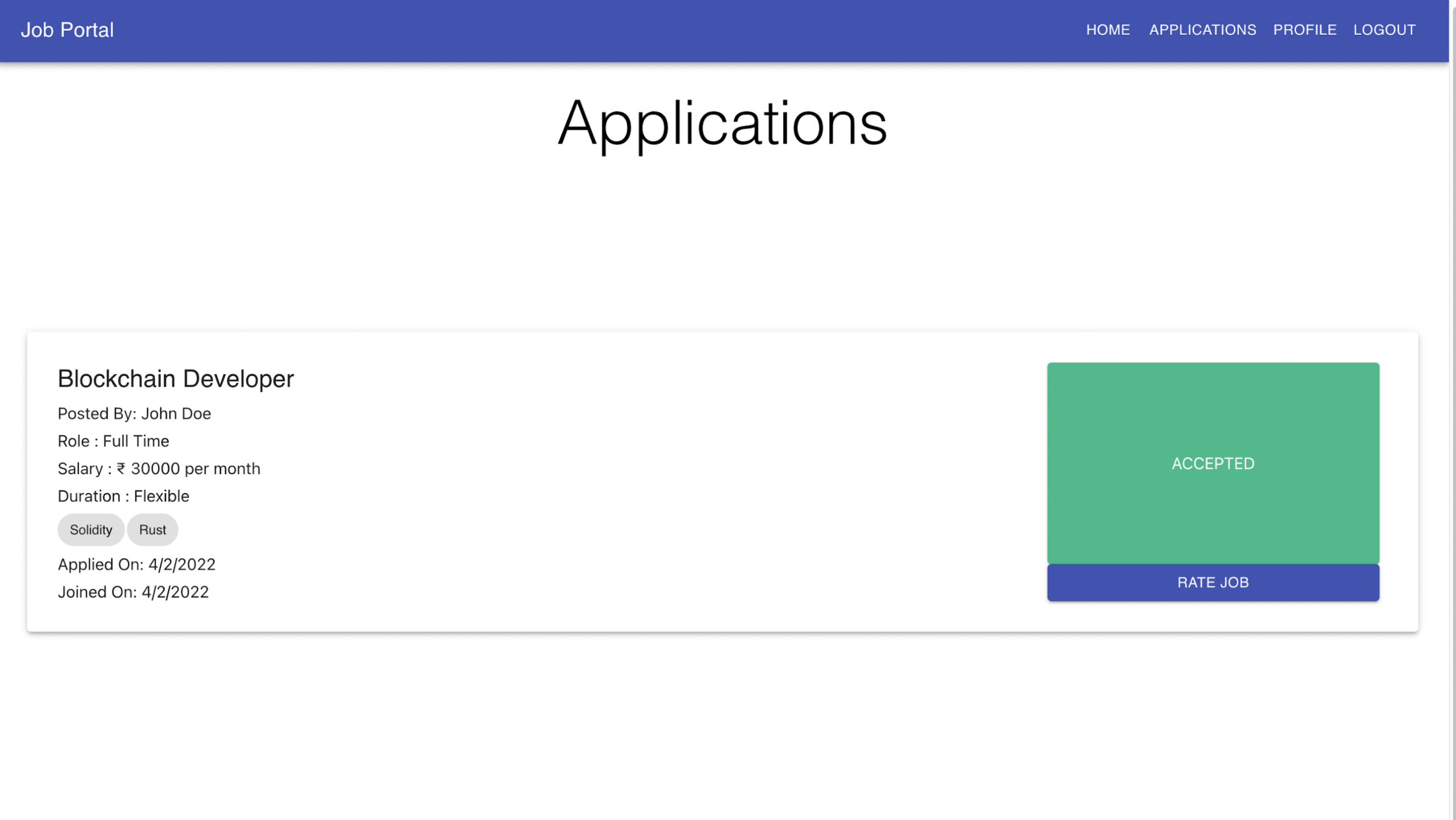
Application Accepted
-
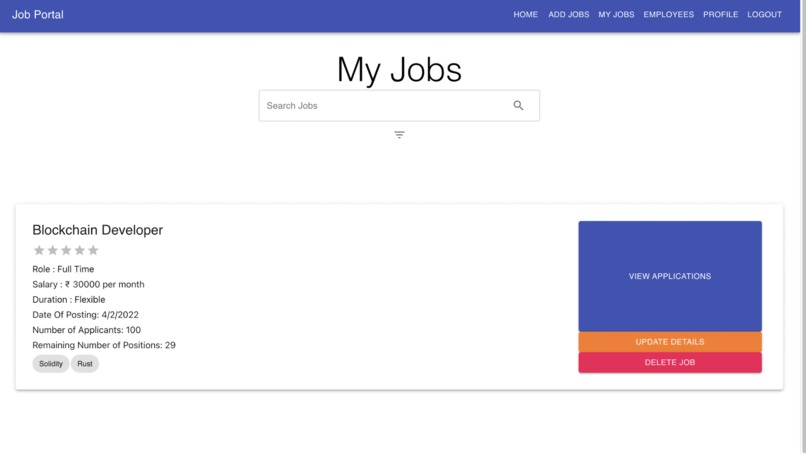
View Submitted Application
-
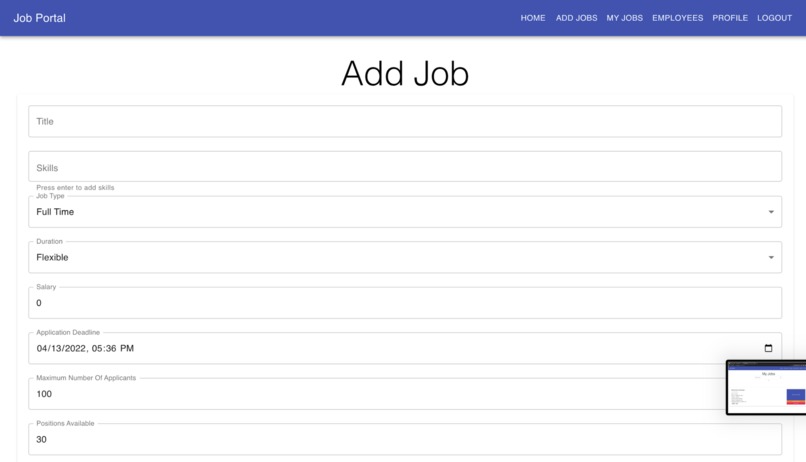
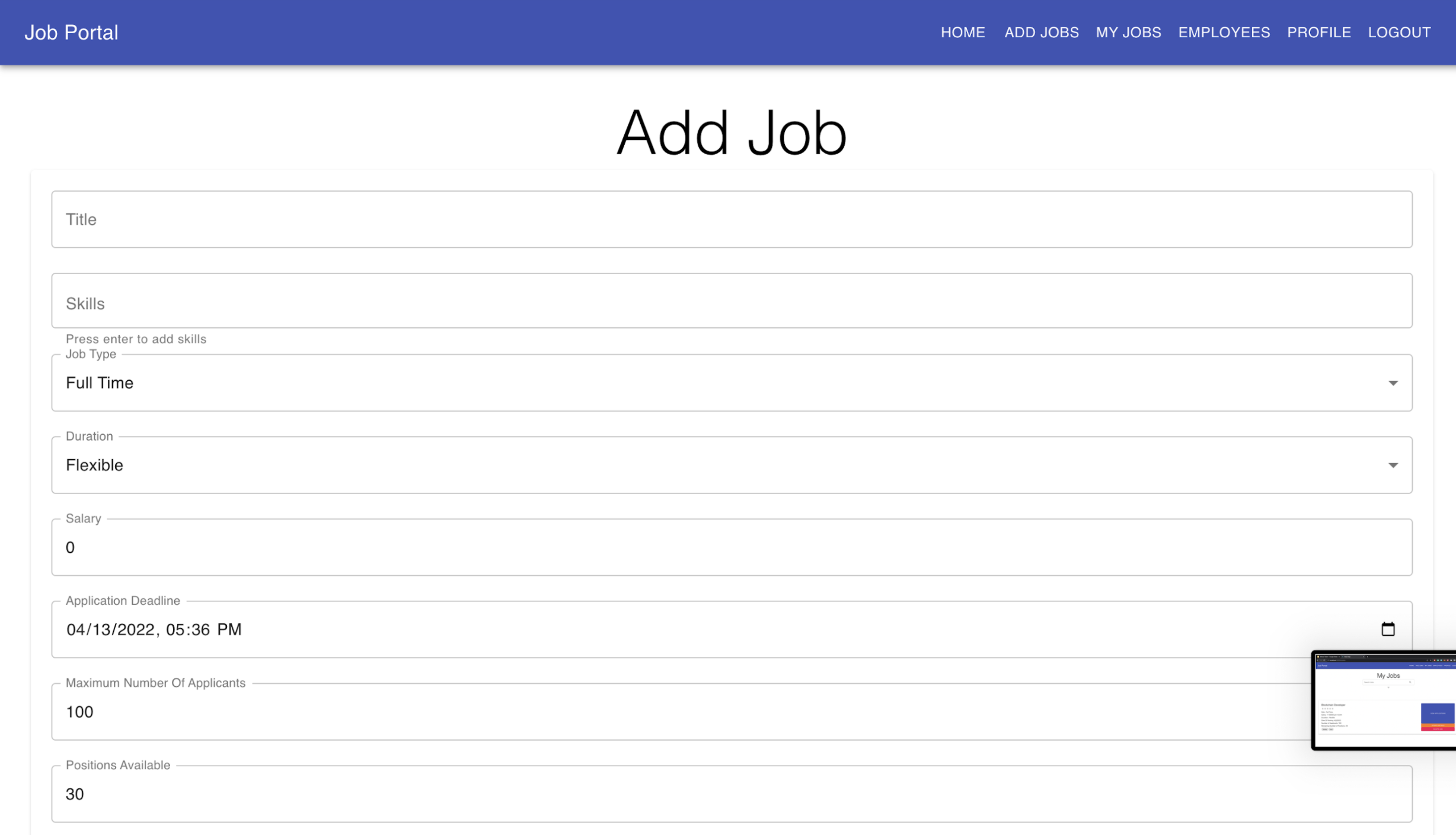
Add Job
-
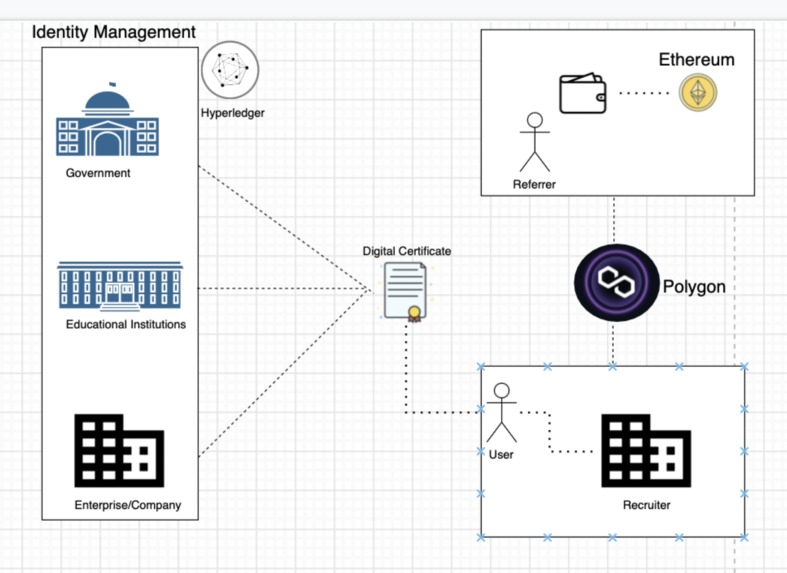
Tech Flow
Inspiration
Finding a job in crypto is hard from the outside. Every company is raising money and hiring roles of every kind. But most of these jobs never see the light of day because they are filled through referrals. Employees referring to colleagues get a bonus, and talent placement companies make 20% of starting salaries, but there is no way for a student's network to be monetized. Now students and people with a big network are incentivized to make better and more referrals to job openings so they can be rewarded.
What it does
It has three main functionalities:
- To reduce the time and effort that is put into due diligence after a person is moved to ready to hire status
- To reward people for referring a good hire to a matching job.
- Create a platform for the companies, with verified people and their credentials.
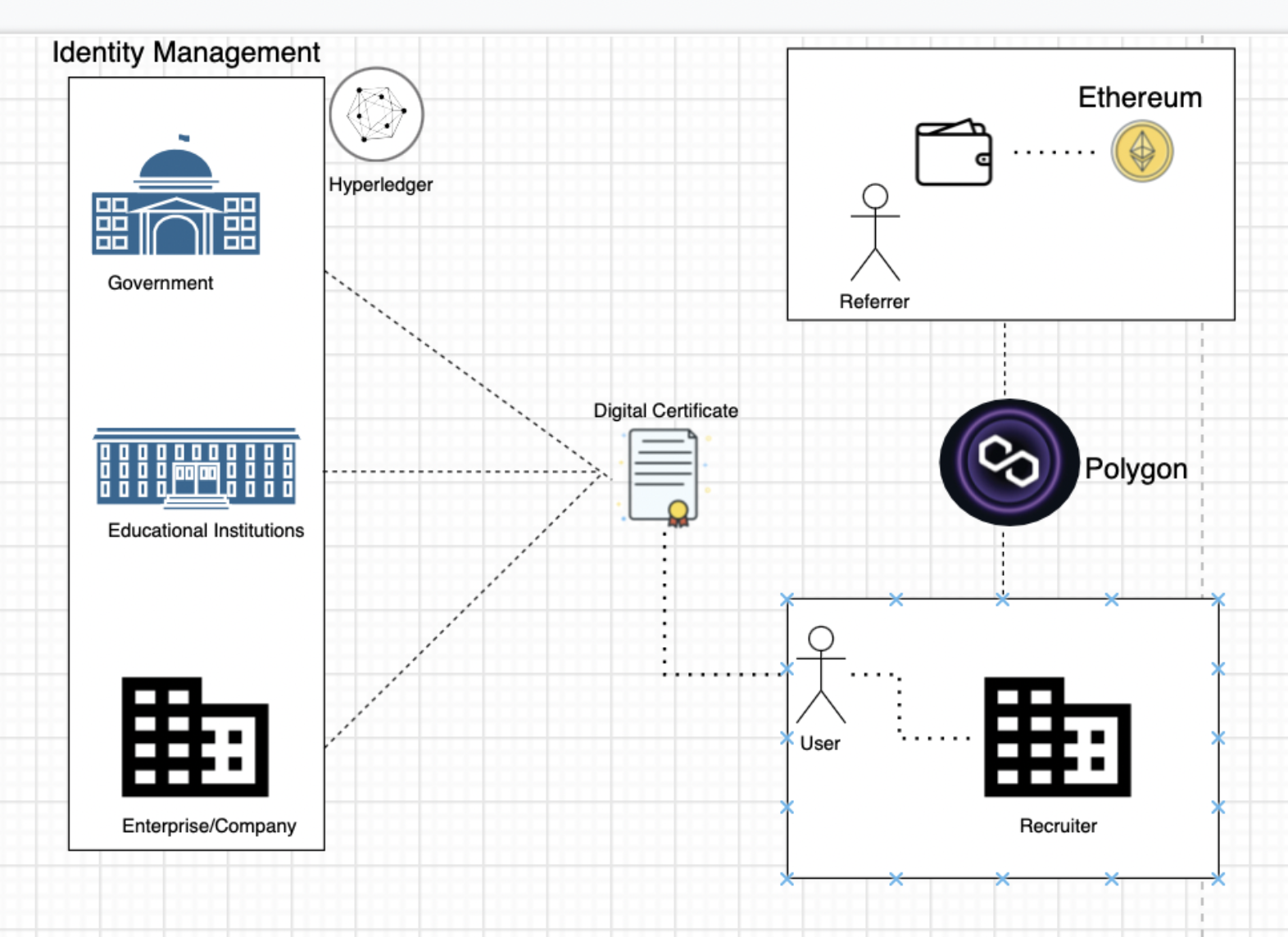
Hyperledger acts as an Identity Management system for the users. Using a private blockchain helps us to secure the user details masked from the public chain. We integrated the Hyperledger Private chain with our solidity contract on polygon to demonstrate cross-chain interoperability. When an organization want to do a background check on a person, an api call is made to hyperledger to check for his digital certificates. If the person is a legit candidate the api call returns a success message.
How we built it
On the frontend, we used React and Material UI. For the backend we used Express js and for the database we used MongoDB. To manage Identities of the users, we used kilt, to integrate the system with different organizations on Hyperledger fabric. Deployed Hyperledger Fabric locally on docker. Written API gateway for interacting with the public and . We used Metamask, Polygon and openZeppelin to create the referral bounty system and the Solidity smart contracts. Used Ngrok proxy tunnel to expose the local host api’s onto public network.
Challenges we ran into
We were not able to host our hyperledger on a server to expose the API. We used proxy tunneling as a work around. We had a major security risk that was involved as using Ngrok as we do not have security configuration in place.
- Had multiple issues deploying solidity contract on polygon initially.
- Integrating all the different modules running independently.
Accomplishments that we're proud of
Our team is all from Northeastern Blockchain. For one of our team members, this was his first hackathon. We were able to understand the importance of data privacy. How we can integrate solutions to make the process of hiring easier and also be able to reduce the cost as well as time that it requires to hire a person.
What we learned
The cross chain interoperability is not a straight forward integration as there are no tools in place to talk to private and public chains at the same time. We needed to create multiple integration layers in between to make it possible.
Deploying a solidity contract on polygon was quick and had a proper documentation. This is our first contract written in solidity and deploying it on the network.
What's next for Reconnect
Integrating different modules running independently. Adding the provision for the applicant to share their preferences in time, location and type of work Adding functionality to tailor the profile for different types of jobs on the platform. Integrating with HCM Saas
Built With
- fabric
- hyperledger
- kilt
- mern
- polygon
- solidity


Log in or sign up for Devpost to join the conversation.