Inspiration
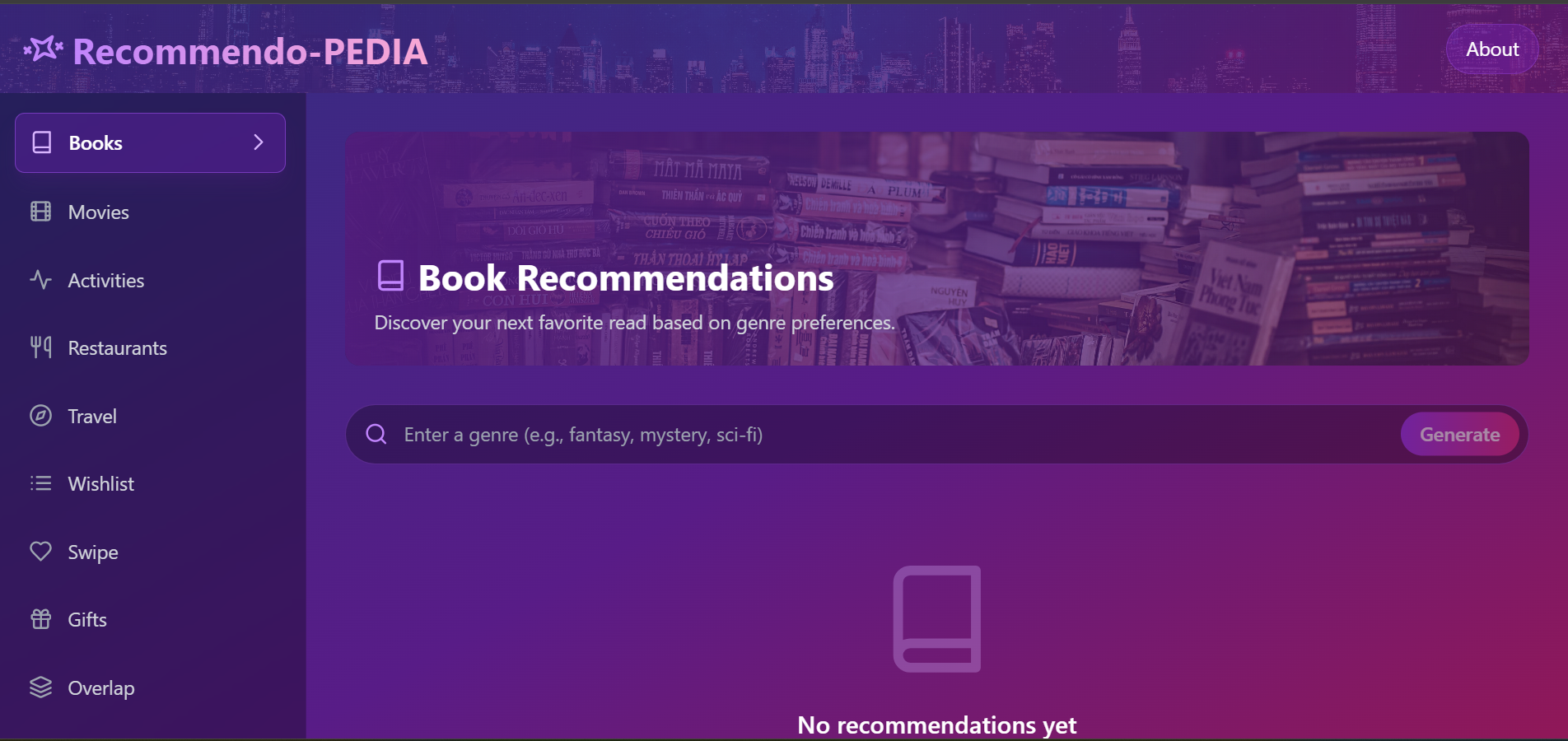
With the internet overflowing with choices—whether it's movies, books, or productivity tools—it’s easy to get overwhelmed. ReccommendoPedia was born out of a need for a clean, centralized space where users can explore curated recommendations across various categories without endless searching.
We wanted to build a platform that's not just functional but enjoyable to browse—a modern, minimal, and purposeful resource for anyone looking for quality suggestions.
What it does
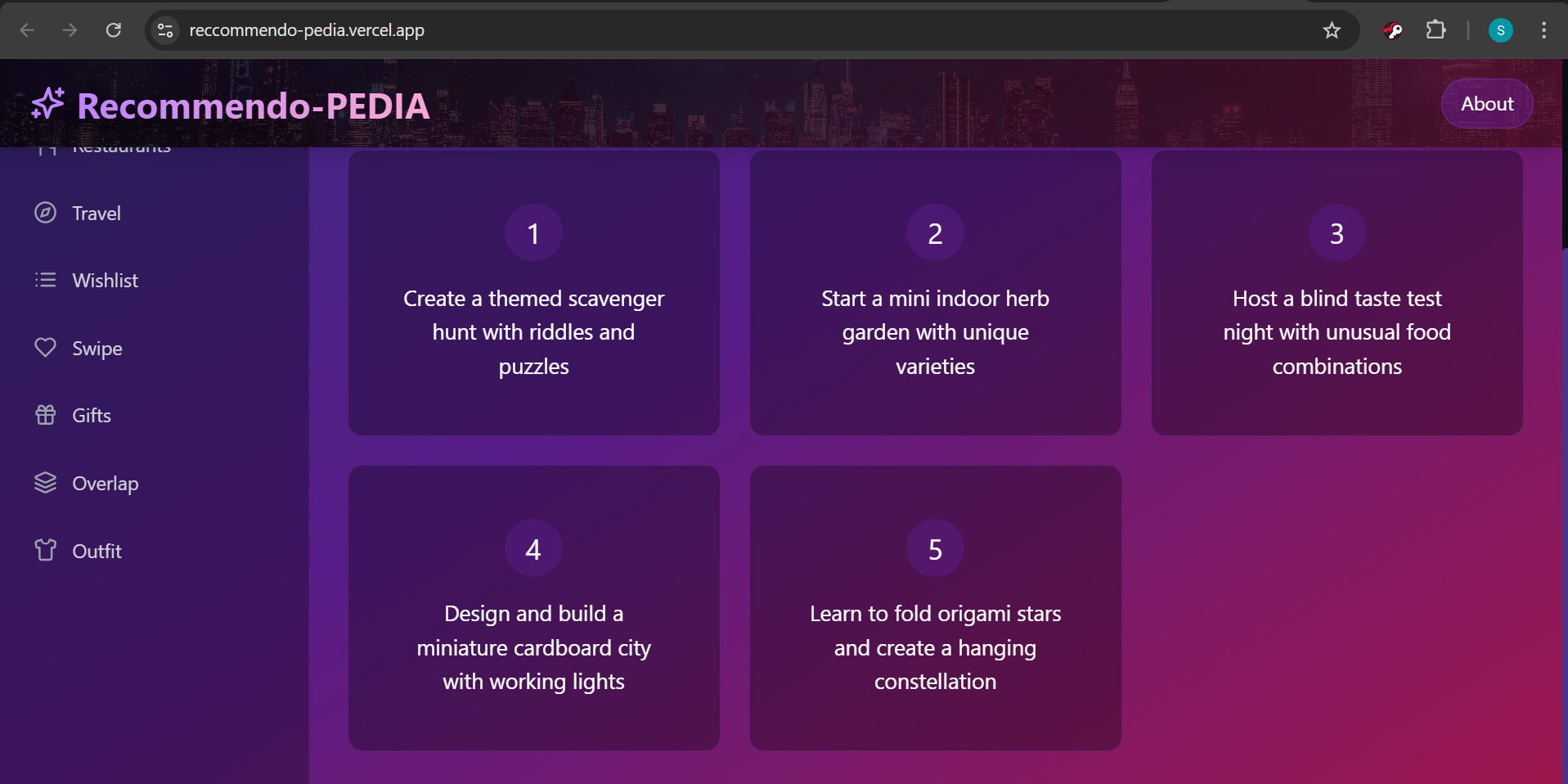
- Browse curated lists of high-quality recommendations.
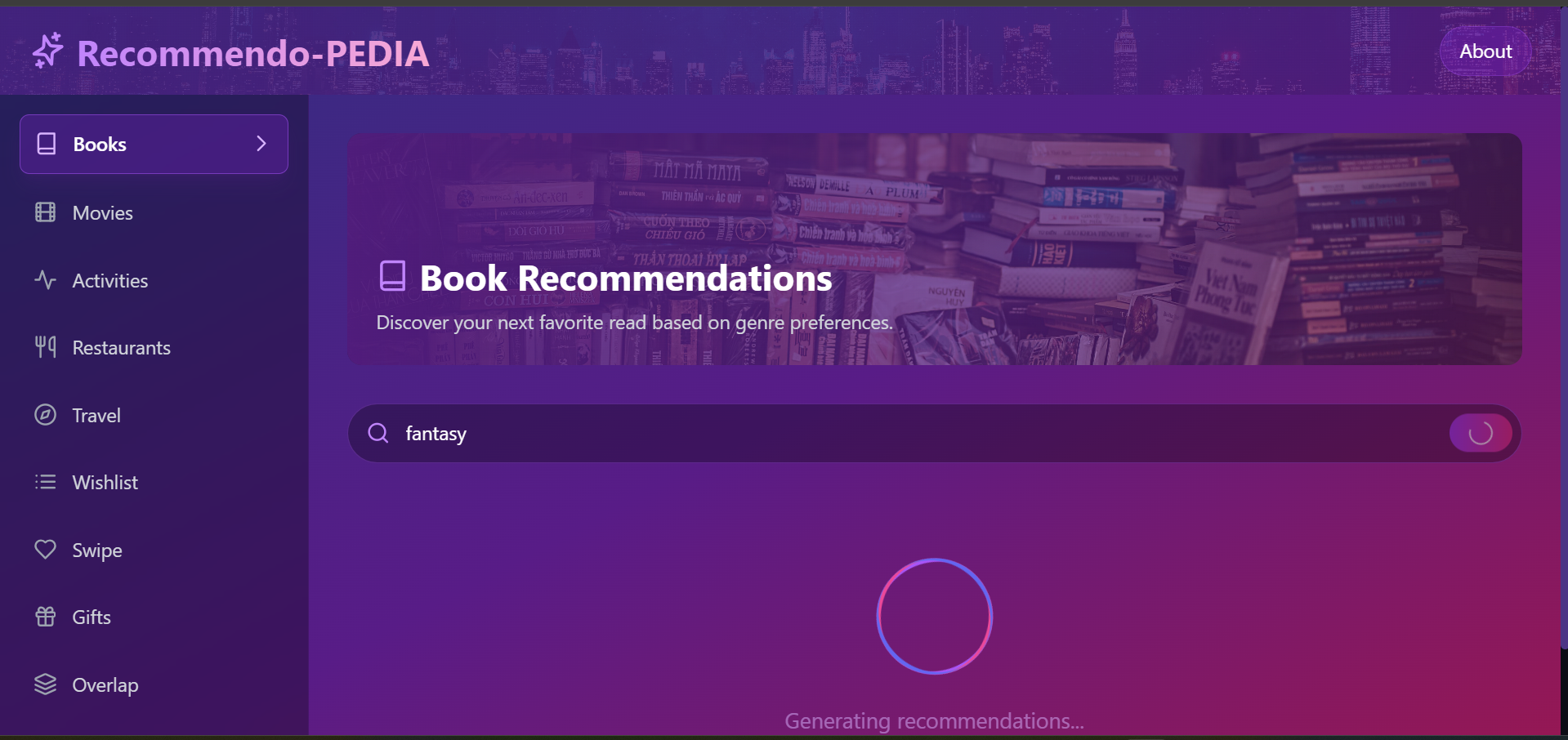
- Explore different categories through a clean, user-friendly interface.
- Discover new content without being overwhelmed by choice.
- Navigate seamlessly across topics with fast, responsive design.
How we built it
- React – The core framework for building a modular, scalable frontend using reusable components.
- Tailwind CSS – Enabled rapid development of a responsive and visually consistent UI with utility-first styling.
- React Router – Used for smooth client-side routing between various recommendation categories.
- Vercel – Chosen for its seamless integration with frontend projects and fast global deployment.
- JavaScript / TypeScript – Used for scripting and logic behind the UI interactions (depending on your actual usage).
- Git & GitHub – For version control, collaboration, and code deployment tracking.
Challenges we ran into
- Designing a flexible layout that scales well across different types of content and categories.
- Balancing visual appeal with simplicity to keep the interface engaging but not overwhelming.
- Ensuring the site is fully responsive and performs well on all devices, including mobile.
- Managing client-side routing and state smoothly without adding unnecessary complexity.
- Deploying on Vercel and configuring the project for seamless continuous deployment.
Accomplishments that we're proud of
- Successfully built a clean, intuitive platform that simplifies discovery across multiple content categories.
- Created a fully responsive design that works smoothly on desktops, tablets, and mobile devices.
- Leveraged React and Tailwind CSS to develop a scalable and maintainable codebase.
- Achieved seamless navigation with React Router for a smooth user experience.
- Deployed the project on Vercel, ensuring fast load times and global accessibility.
- Maintained a lightweight and fast-loading application despite handling diverse content.
What we learned
- How to design and structure a React-based Single Page Application (SPA) for scalability.
- Efficient UI/UX design using utility-first CSS with Tailwind.
- The importance of maintaining consistent layout and content presentation.
- Best practices for client-side routing using React Router.
- How to deploy and manage a frontend project on Vercel.
- Balancing performance with rich content to ensure fast loading times.
What's next for Recommendo -Pedia
- Add a backend to support community submissions and dynamic content updates.
- Implement user accounts to enable saving and personalizing recommendations.
- Introduce sorting and filtering options for easier content discovery.
- Explore integration of AI-driven personalization and recommendation algorithms.
- Expand categories to cover more areas like lifestyle, learning, and productivity tools.
- Improve accessibility and add multilingual support to reach a wider audience.
Built With
- css
- git
- github
- javascript
- react
- react-router
- tailwind
- typescript
- vercel

Log in or sign up for Devpost to join the conversation.