-
-
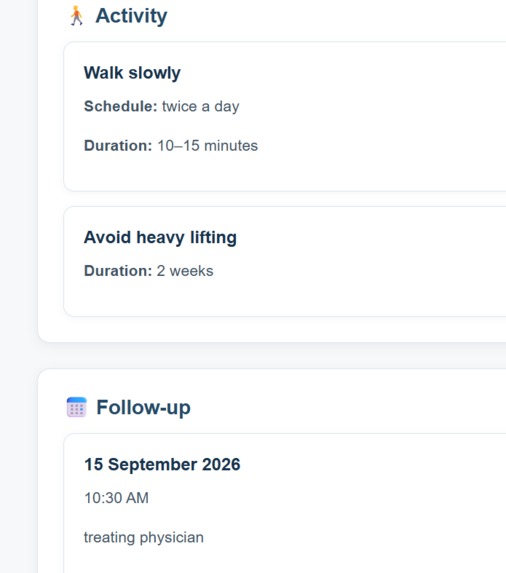
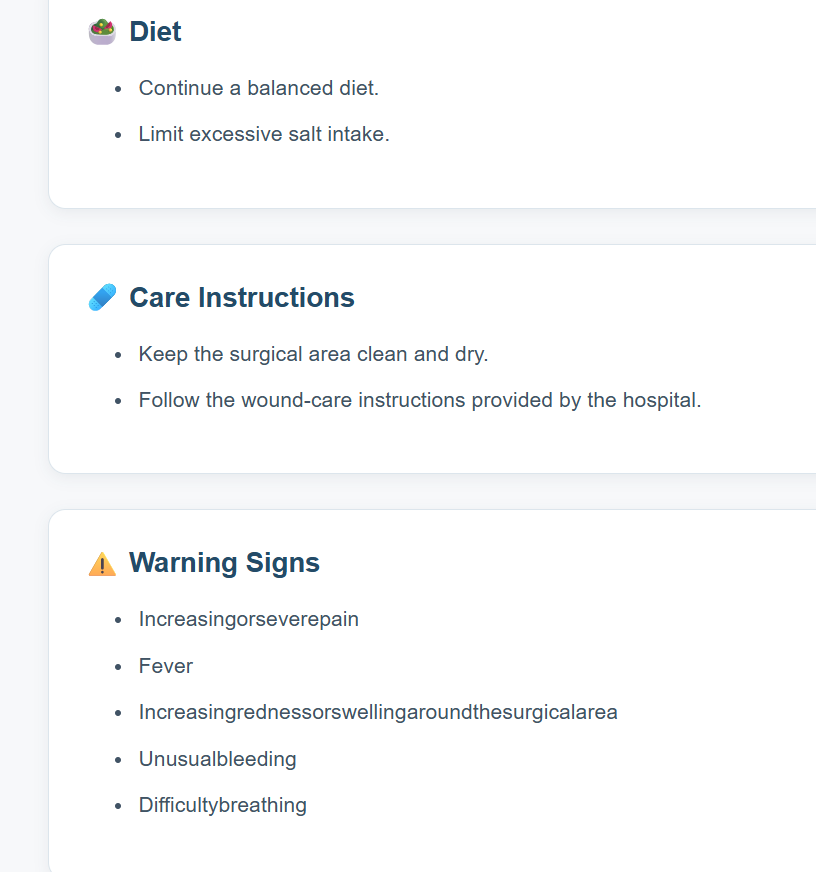
Analysed data according to report.
-
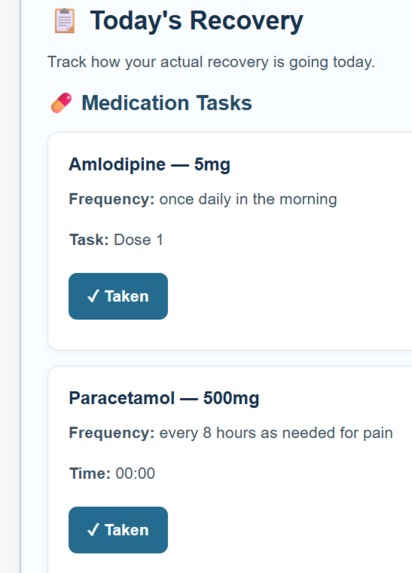
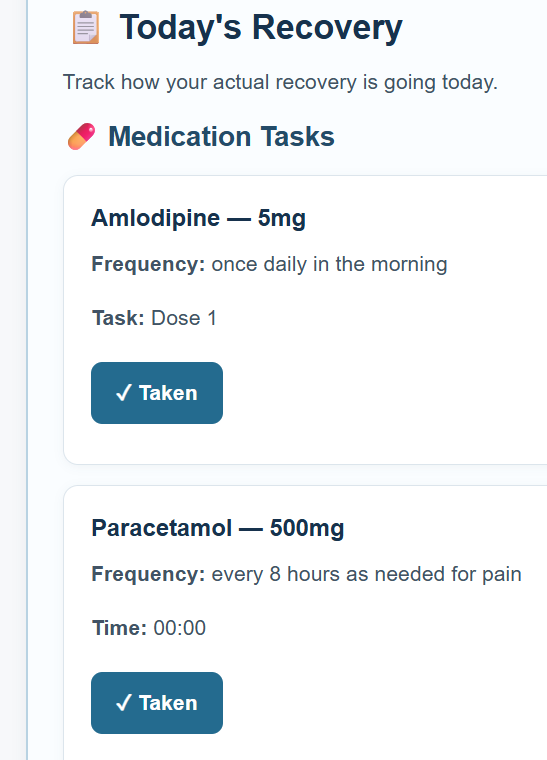
Tasks you need to complete according to report.
-
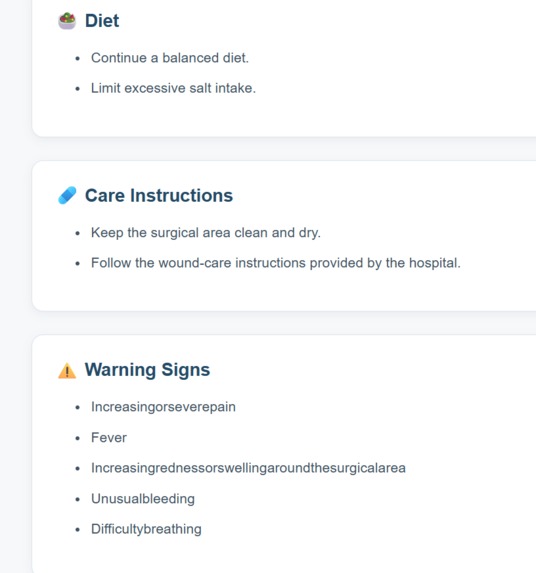
Analysed data according to report.
-
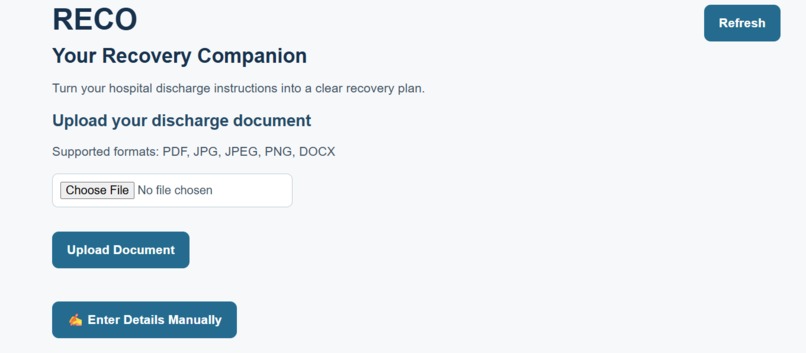
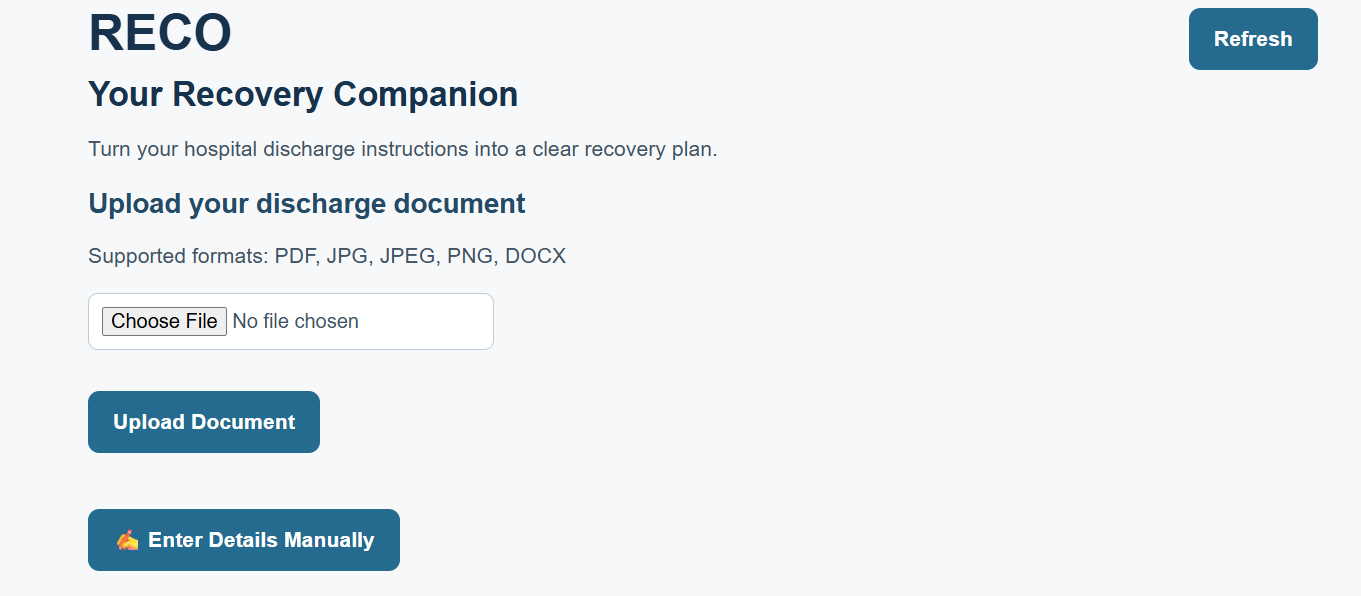
RECO front page add medical report or manually enter data for it.
-
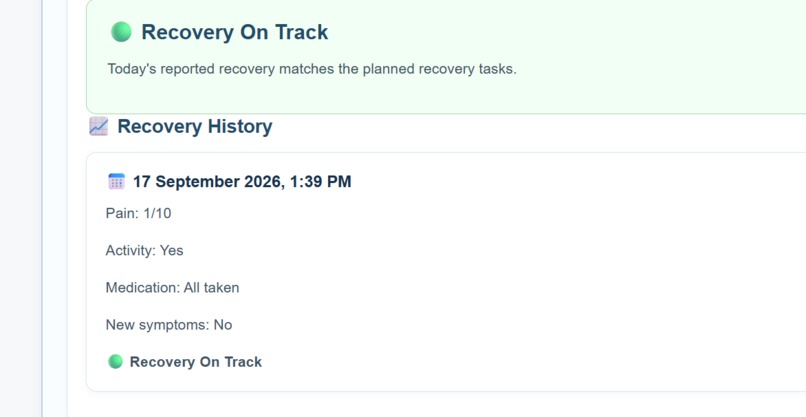
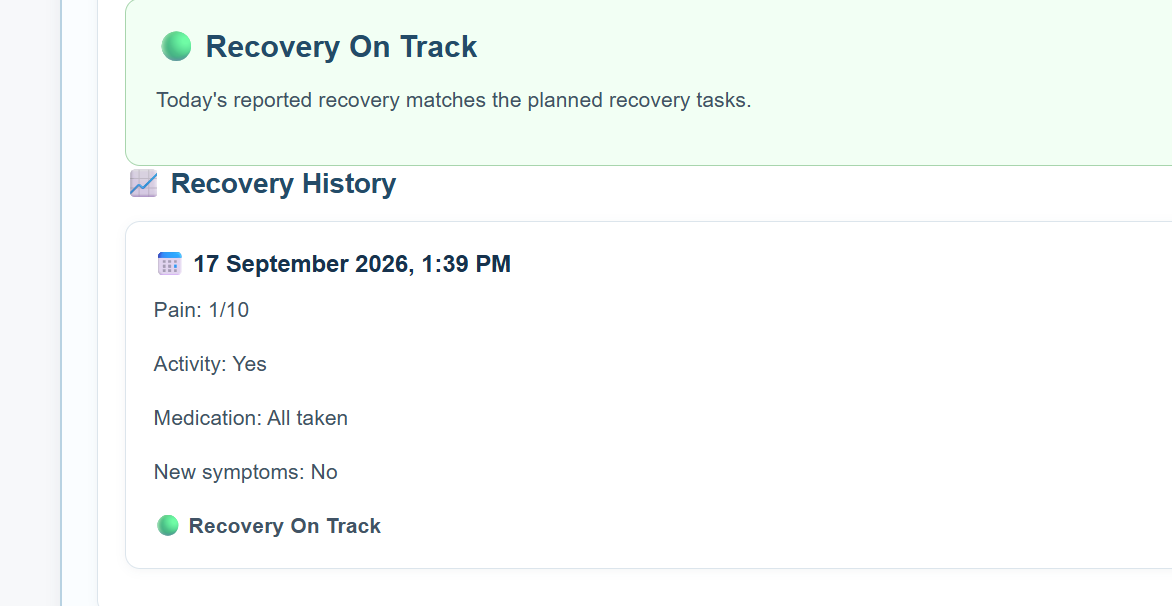
Review added as tracked data of that day.
-
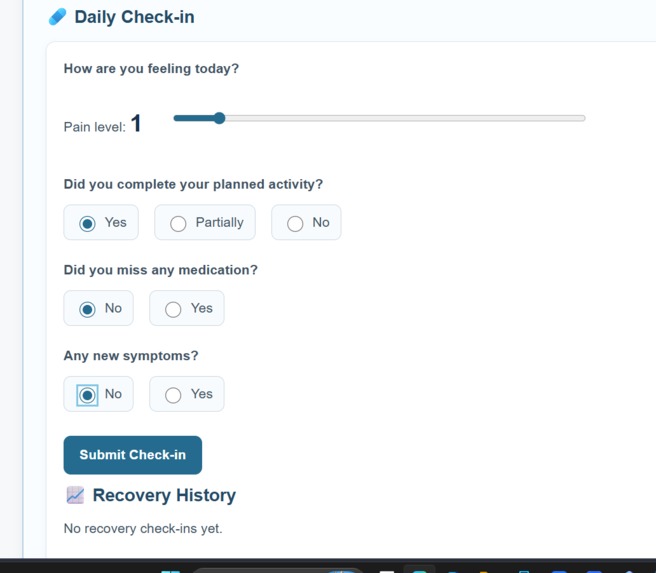
Recovery companion tracks your task what you complete.
-
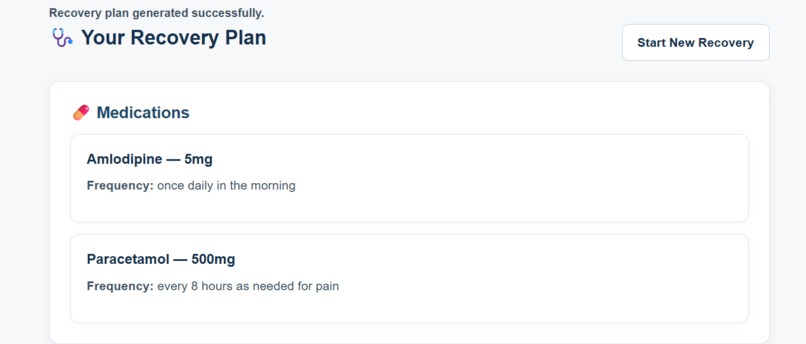
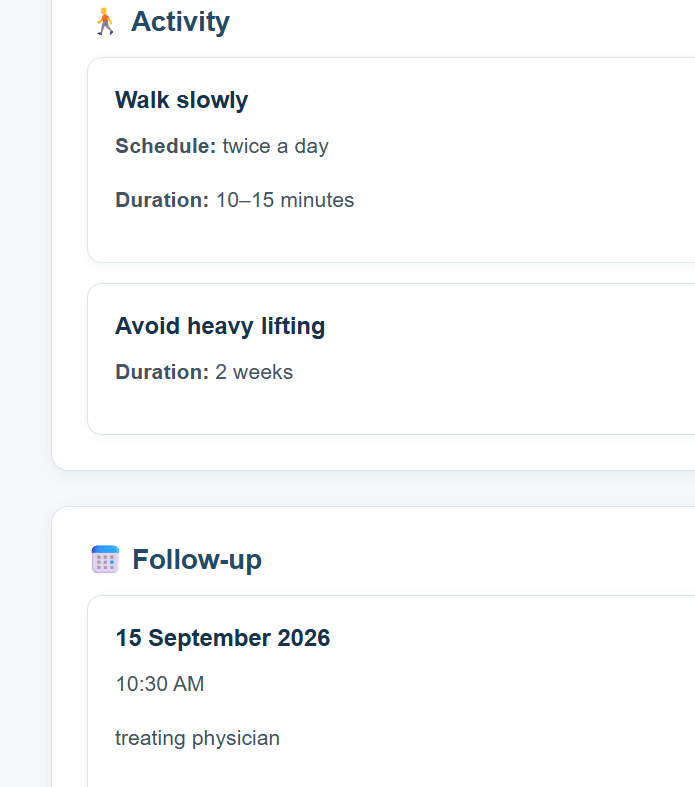
Analysed data according to report.
Inspiration
After leaving a hospital, patients often have to manage medications, activities, diet, follow-ups, and warning signs using complex discharge instructions. We wanted to build something that helps turn those instructions into simple daily actions and keeps the recovery process connected after discharge.
What it does
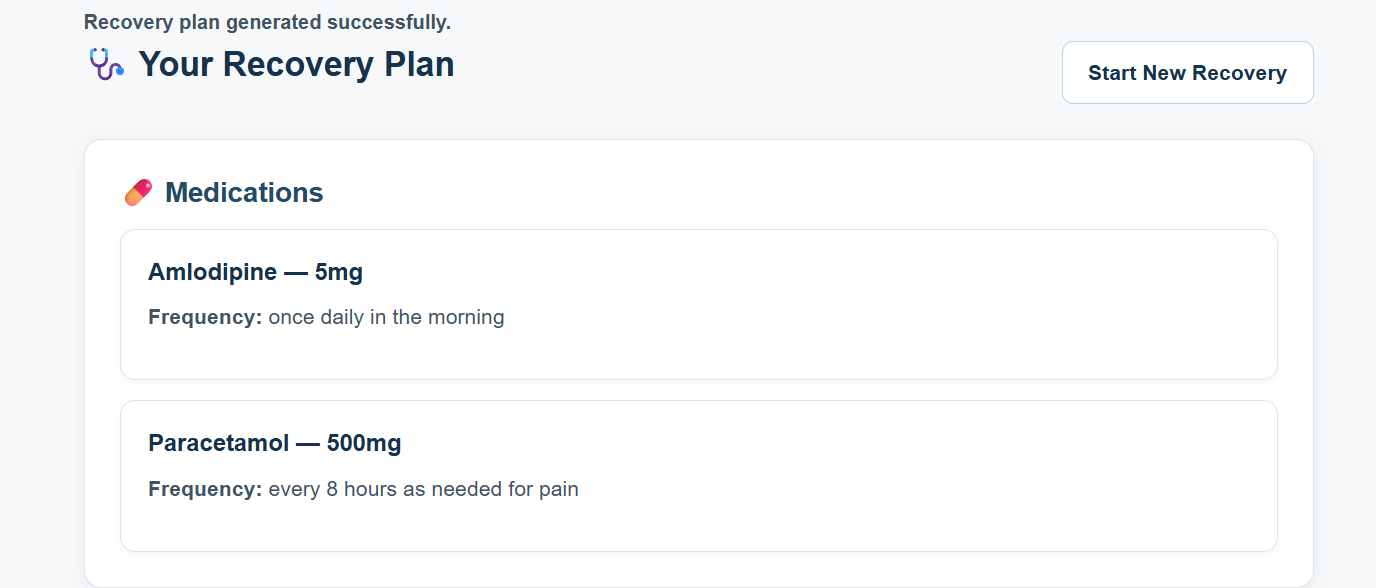
RECO (Recovery Companion) converts hospital discharge instructions from PDFs, images, and DOCX files, or manual input, into a structured recovery plan.
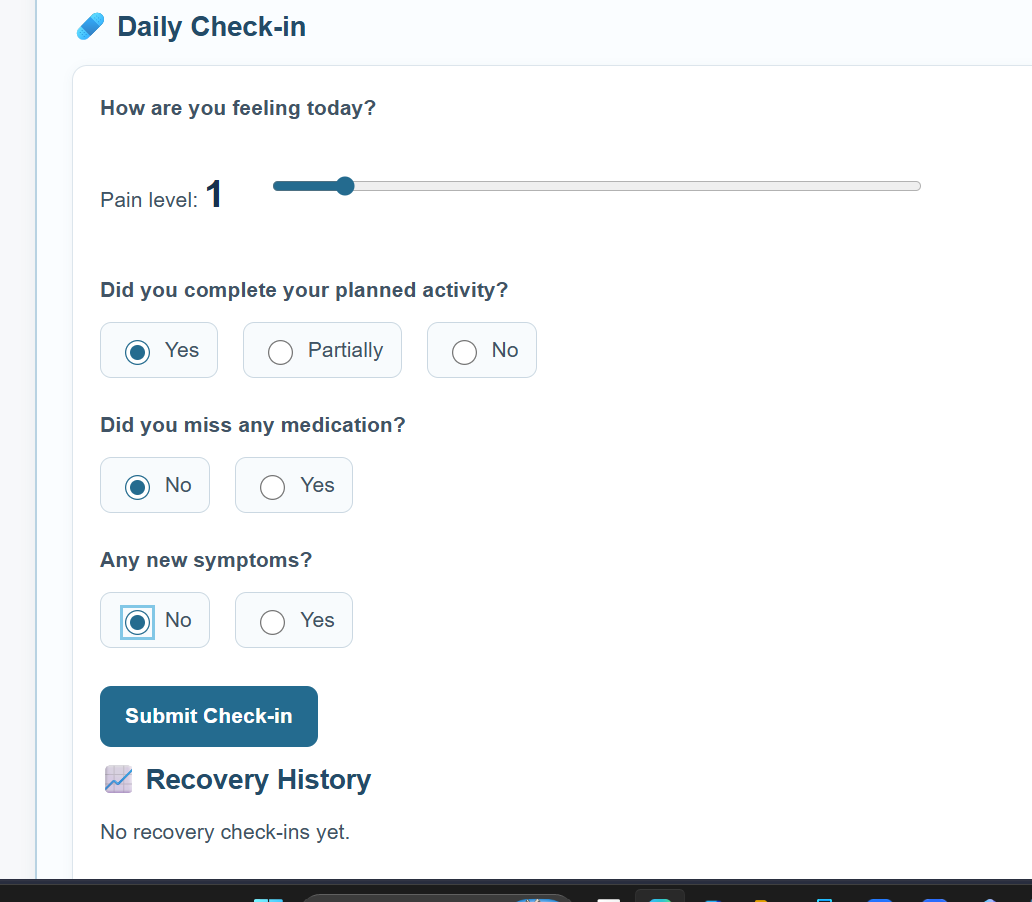
It organizes medications, activities, diet, follow-ups, care instructions, and warning signs. Patients can track daily recovery tasks and submit daily check-ins.
RECO then compares the planned recovery instructions with the patient's reported progress and identifies deviations that may require attention, helping patients and caregivers know when to contact the healthcare team.
RECO does not diagnose conditions, change medications, or replace healthcare professionals.
How we built it
RECO was built as a full-stack web application using Python and FastAPI for the backend and HTML, CSS, and JavaScript for the frontend.
Documents are processed using PDF extraction, Tesseract OCR for scanned documents/images, and DOCX parsing. AI structures the extracted discharge information into a standardized recovery plan.
During development we used Ollama with DeepSeek Coder locally. For deployment, RECO uses the Groq API. SQLite is used for recovery/check-in data, and the project is hosted using Render with the source code maintained on GitHub.
Challenges we ran into
One of the main challenges was reliably extracting information from different types of discharge documents, including scanned PDFs and images.
Another challenge was ensuring that the AI did not invent medical information or make treatment decisions. We addressed this with strict extraction rules that only allow information explicitly present in the source document.
We also had to design the deployment architecture so the application could use a local AI model during development while using a cloud AI provider in production.
Accomplishments that we're proud of
We built a working end-to-end prototype rather than only a concept.
RECO can accept multiple document formats, extract and structure discharge instructions, generate a recovery plan, create daily recovery tasks, collect check-ins, maintain recovery history, and detect deviations from the documented recovery plan.
We are especially proud of the closed-loop workflow:
PLAN → ACT → CHECK-IN → COMPARE → FOLLOW-UP
What we learned
We learned how to build and deploy a complete AI-powered application, including document processing, OCR, structured AI extraction, API development, frontend integration, database persistence, and cloud deployment.
We also learned that healthcare AI needs clear boundaries. Instead of allowing an AI system to make medical decisions, RECO focuses on organizing documented information, tracking recovery, and directing users toward their healthcare team when a deviation requires attention.
What's next for RECO
Future versions of RECO could support secure patient-caregiver-provider accounts, stronger privacy and authentication, multilingual and voice-based recovery guidance, configurable reminders and notifications, integration with hospital systems, and more advanced recovery analytics.
The long-term goal is to make RECO a reliable post-discharge companion that helps maintain continuity between hospital discharge and everyday recovery.


Log in or sign up for Devpost to join the conversation.