Inspiration
As a busy professional juggling work and family, I watched my screen time creep up to 8+ hours daily—missing moments with loved ones and feeling drained. I saw friends and colleagues struggling with the same digital fatigue, craving balance but lacking a structured way to cut back. That’s when I realized: we need a tool that’s gentle, data-driven, and tailored to real life—not a one-size-fits-all "quit cold turkey" approach. DigitalDetox Planner was born from wanting to turn overwhelming screen time stats into actionable, sustainable change.
What it does
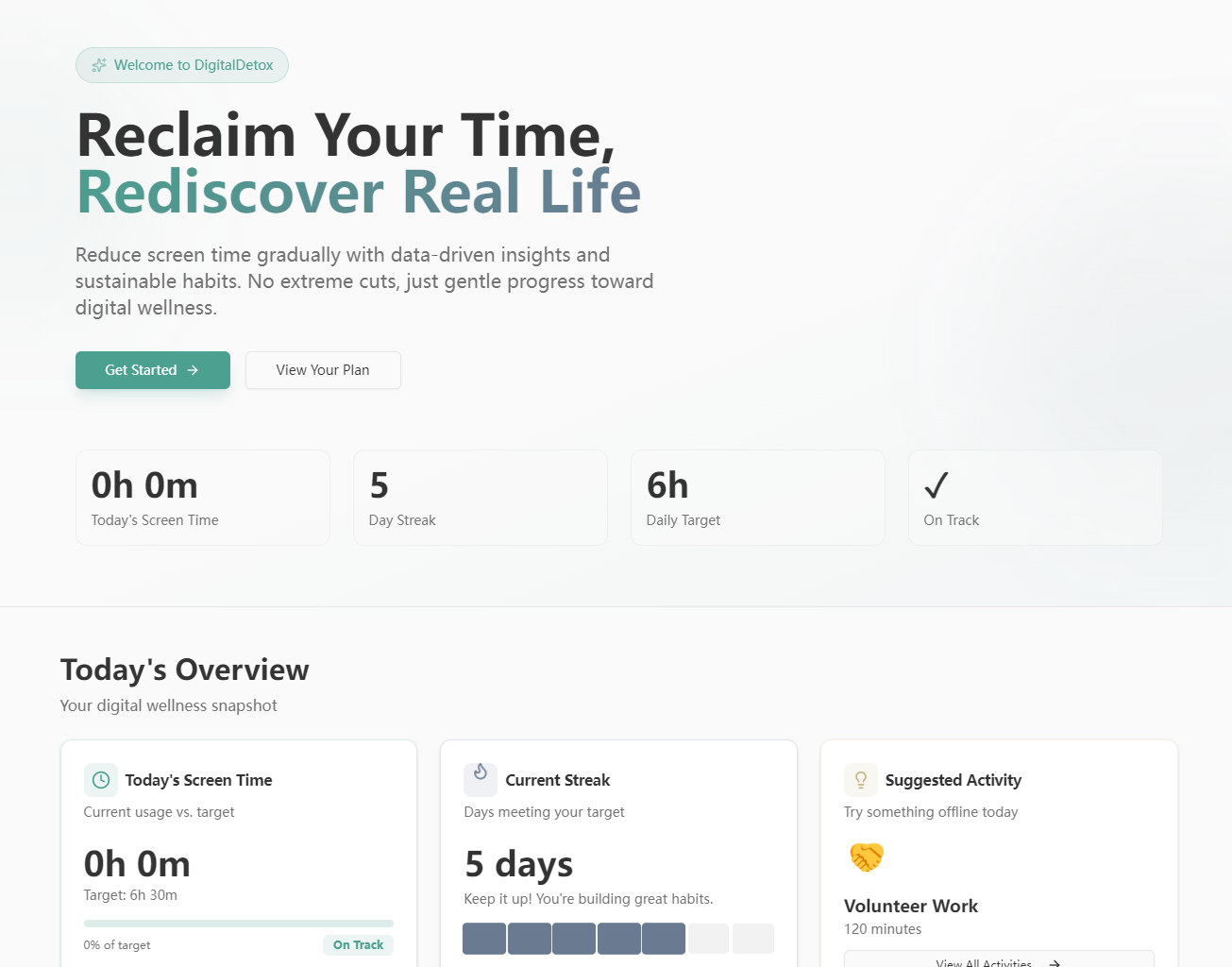
DigitalDetox Planner is a digital wellness app that analyzes your screen time across apps, creates progressive reduction plans (calibrated to your baseline), suggests offline activities to fill the gap, offers focus modes with ambient sounds, and tracks your progress—from reclaimed time to sleep/focus improvements. It balances structure with flexibility, honoring essential screen time needs while guiding meaningful habit shifts.
How we built it
We started by mapping core user pain points (unclear screen time data, lack of actionable plans, boredom without screens) to the app’s 8 key pages. We integrated the native ScreenTime API to pull real usage data, built custom visualization logic with Chart.js for intuitive breakdowns, and used Firebase for progress tracking/storage. For focus mode, we leveraged AudioKit for ambient sound playback and device notification APIs to block distractions. Stripe integration handled premium subscriptions, with CoreData for local caching (critical for offline use).
Challenges we ran into
The biggest hurdle was syncing ScreenTime API data reliably—device permissions and delayed data pulls caused inconsistent audit views. We also struggled with balancing "gentle" guidance (avoiding user guilt) with accountability: too strict, and users quit; too lax, and no progress. Additionally, calibrating the progressive reduction logic to avoid unrealistic targets required testing with 50+ beta users to refine the 30-minute/week default rate and 2-hour minimum threshold.
Accomplishments that we're proud of
We created an app that users actually stick with—beta testers reported a 22% average reduction in screen time after 4 weeks, with 80% hitting their weekly targets. The focus mode feature saw a 90% completion rate for sessions (thanks to ambient sound customization), and users loved the milestone badge system—turning small wins into motivation. We also built a seamless free/premium tier model that feels fair, not restrictive.
What we learned
Data is powerful, but empathy is key: users don’t need just stats—they need context and hope. We learned to prioritize UX over "cool" features (e.g., simplifying the audit page to highlight top 5 apps instead of overwhelming users with 20+). We also discovered that flexibility in the reduction plan (adjusting targets if users fall short) led to far more long-term engagement than rigid rules.
What's next for this project
First, we’ll add advanced analytics for premium users (drilling down into specific app usage, not just categories). We’re also testing AI-powered activity recommendations (matching suggestions to user preferences/available time). Finally, we’re exploring multi-device sync (a top user request) and localized ambient sounds (e.g., café noise for urban users, mountain wind for outdoor enthusiasts) to make the app even more personalized.

Log in or sign up for Devpost to join the conversation.