-
-
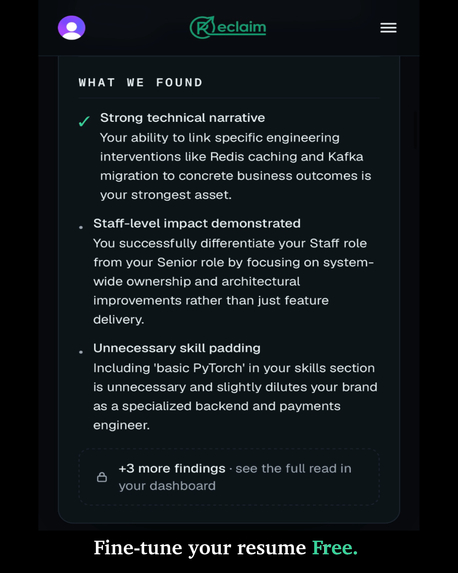
Resume Read Suggestions
-
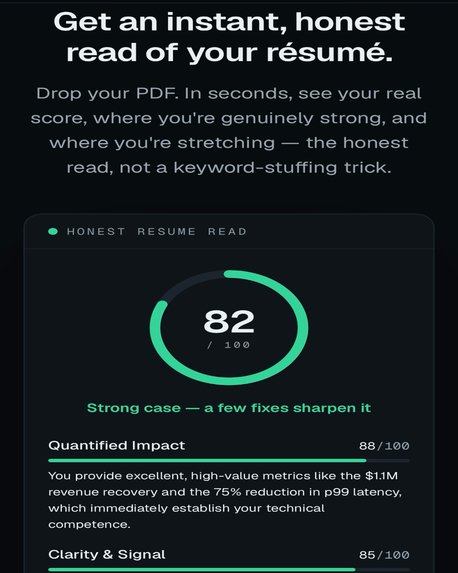
Free Resume Read
-
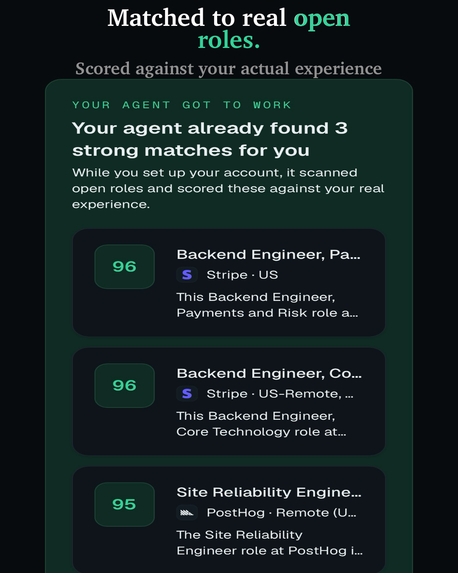
Matched Roles
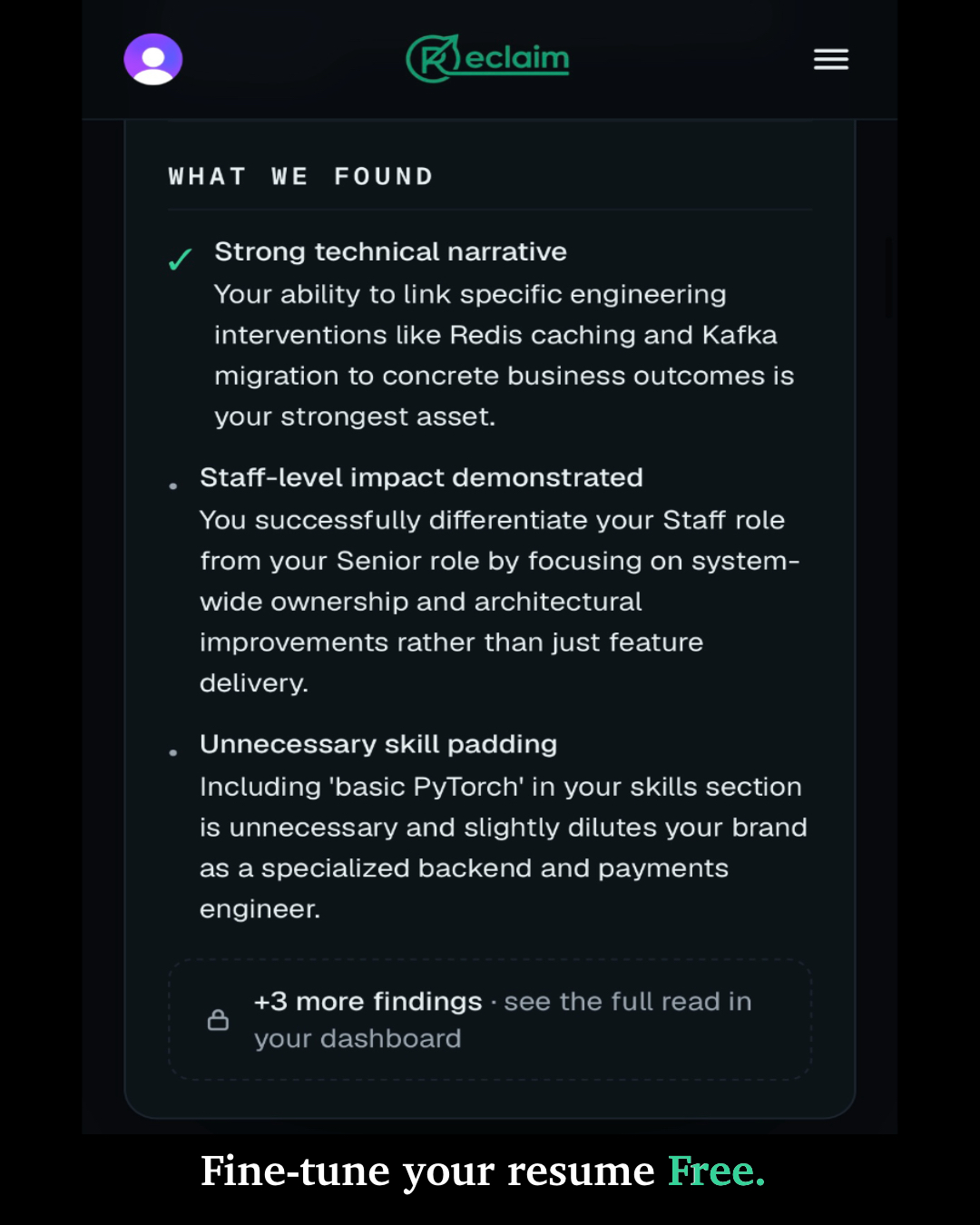
Inspiration
What it does
How we built it
Challenges we ran into
Accomplishments that we're proud of
What we learned
What's next for Reclaim
Reclaim — Written Narrative
Build with Gemini XPRIZE · Category: Entrepreneurship & Job Creation
Reclaim is an AI job-search agent for engineers, built solo over the 90-day window. It gives job seekers an honest read on their résumé and matches them to real open roles — and every one of those decisions is executed by Gemini in production.
The problem
The modern job search has quietly become its own full-time job. Strong, qualified engineers send out hundreds of applications and hear nothing back — not because they aren't good enough, but because automated filters reject their résumés before a human ever reads them. I watched this happen to people close to me, several of them far more experienced than I am, and it's what pushed me to build.
Most AI résumé tools "solve" this by stuffing keywords to beat the applicant-tracking system. That backfires the moment you're in an interview and can't back up your own résumé. I wanted the opposite: a tool that tells you the truth.
What the AI does (and what I do)
Reclaim runs on Gemini, and the AI executes the core product decisions autonomously in production:
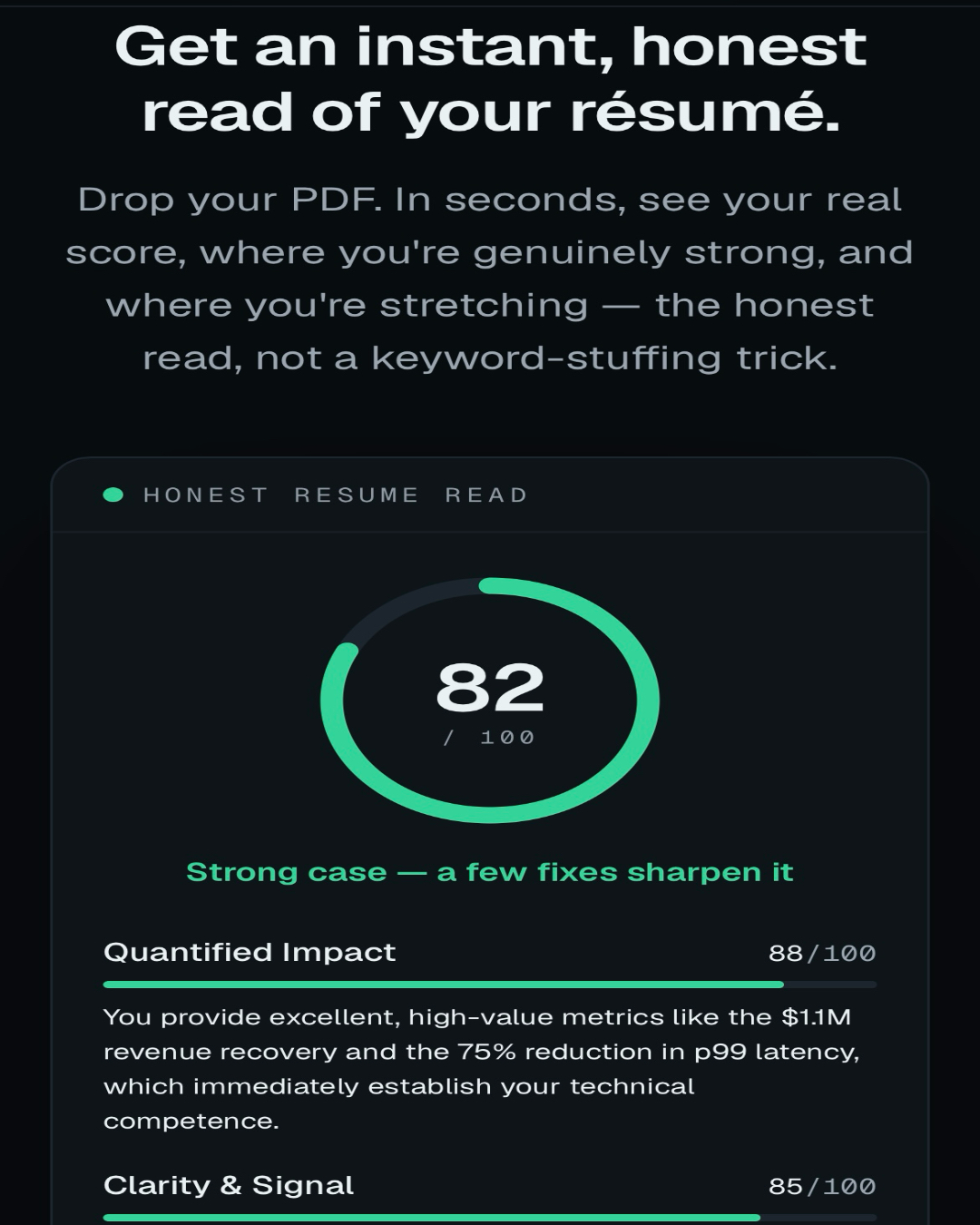
- Résumé reading and scoring. A user drops in a résumé and Gemini parses it, evaluates it against real hiring standards, and returns an honest read — a score, a breakdown by dimension, and specific findings on where the candidate is genuinely strong versus where they're overreaching. It does not invent skills. It flags where you're stretching, because that's what survives an interview.
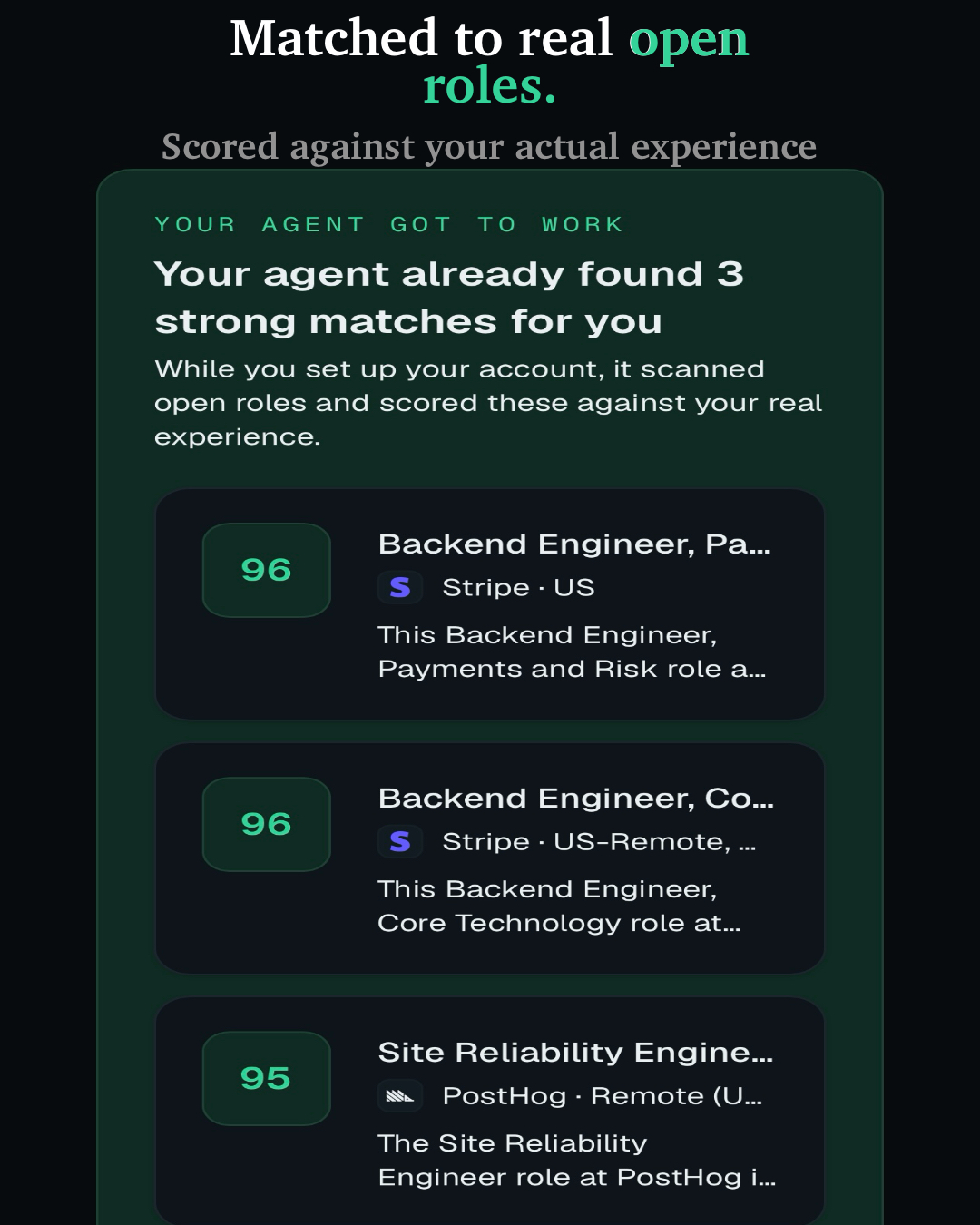
- Job matching. Gemini scores each résumé against a corpus of 3,000+ real open roles scraped across 112 companies (Greenhouse, Lever, Ashby, Workday), explaining the fit for each and flagging where a candidate's real experience lines up versus where they'd be overreaching.
This is not a chatbot bolted onto a form. Gemini is the operation — the judgment calls that a human recruiter or career coach would make are made by the model, continuously, in production. Over the window, Gemini processed 20 résumés and autonomously generated 5,561 job-match decisions for 10 real users, with a 100% API success rate on a paid (Tier 2) plan.
My role is the parts AI doesn't do: I designed the system, built the pipeline, curated the role corpus, set the product's ethical guardrails (the honesty-first design — never fabricate skills), and route work across two Gemini models by complexity — Gemini 2.5 Flash for heavy reasoning like parsing and matching, Gemini 3.1 Flash Lite for lighter calls — a deliberate cost decision that kept the entire 90-day AI bill to $62.39. A human sets the values and the architecture; the AI does the per-user work at a scale no solo founder could do by hand.
The jobs and economic opportunity this creates
Reclaim exists to help people get back to work. Its direct impact is on the job seeker: it compresses the black-box, weeks-long grind of fighting automated filters into an honest, minutes-long read plus a matched list of real openings — helping qualified people get past the filters and in front of the humans who hire. For an engineer between jobs, shortening a search by even a few weeks is real economic value: it's rent, it's runway, it's dignity.
The potential scale is what makes this a category fit. There are millions of software engineers, and the number is growing fast; the filtering problem affects all of them, and it disproportionately hurts the people who are qualified but not optimized for the ATS game. A tool that gives honest, individualized guidance and real matches — at near-zero marginal cost, because Gemini does the work — can reach that population in a way a human career-coaching industry never could. The economic opportunity is helping people find work faster, at scale, honestly.
The story of building it this way
I'm about a year and a half into my own career, and I built Reclaim solo — nights, weekends, and on my own hardware — using AI as both the product's engine and my development partner. The entire thing (frontend on Next.js/Vercel, a Python backend on Render, Supabase and Prisma for data, Clerk for auth, Stripe for payments, Gemini for every AI decision) was built and shipped to production by one person, for a total spend of roughly $112 across the full 90 days, including hosting, the domain, and every Gemini API call.
That number is the point of the "AI-native" thesis: operations that used to require an engineering team — reading résumés, scoring them, matching candidates to thousands of roles — now run in plain-English-defined pipelines executed by an AI agent, built and operated by one person for the cost of a nice dinner. Reclaim is a small, honest example of exactly what this competition is about: a real product, real users, real AI in production, built by someone who couldn't have built it any other way even two years ago.
On revenue
I'll be straight, because honesty is the whole premise of the product: Reclaim generated $0 in revenue during the window. It acquired real users organically and got them real value — 10 people used it, Gemini generated 5,561 matches for them, and I have direct feedback from users who found the honest read genuinely useful — but no one converted to a paid plan inside the 90 days. The infrastructure to charge is live (Stripe, subscription tiers, a founding plan), and the funnel is proven to acquire and engage; the remaining work is conversion. I'd rather submit a truthful zero with real users and real AI in production than a number I can't stand behind — which is, fittingly, the same standard the product holds its users to.
Built With
- clerk
- fastapi
- gemini
- google-ai-studio
- next.js
- prisma
- python
- render
- stripe
- supabase
- typescript
- vercel


Log in or sign up for Devpost to join the conversation.