Inspiration
The inspiration for Recircle came from a deep concern about the impact of greenhouse gases on the environment. The rapid growth of wastes such as plastic and metal waste is a major contributor to greenhouse gas emissions. We wanted to create a tool that could help people and businesses calculate the amount of greenhouse gases saved when they recycle their wastes to educate the public on the importance of recycling.
What it does
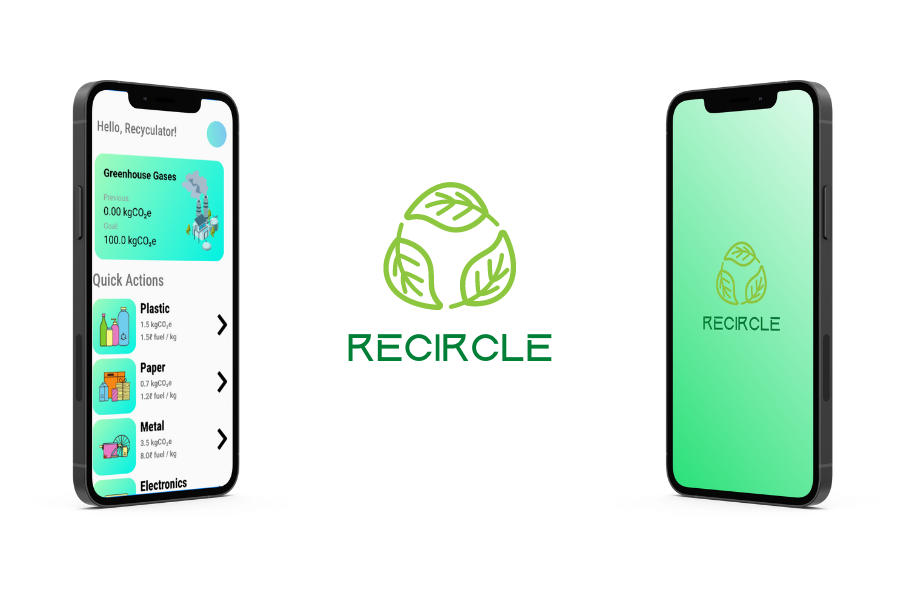
Recircle is an app that calculates the greenhouse gas emissions of plastic and metal waste. Users can input the type and amount of material they have, and the tool calculates the carbon footprint of that material. The tool is designed to help users understand the impact of their waste and make informed decisions about how to reduce it.
How we built it
Recircle was built using a combination of programming languages and tools, including Android Studio, Java, Kotlin, and XML. We used a database to store the material and emission data, and built a user interface that was intuitive and easy to use. We also took all data of each material from verified research papers to ensure that our emission calculations were accurate and up-to-date.
Challenges we ran into
One of the biggest challenges we faced was gathering accurate data on the emissions of plastic and metal waste. We had to sift through a lot of conflicting information and make sure that our calculations were based on the most current and reliable data available. We also had to ensure that our user interface was accessible and easy to use for a wide range of users, including those who may not be familiar with carbon footprint calculations.
Accomplishments that we're proud of
One of our proudest accomplishments was creating a tool that is accessible to a wide range of users. We designed the user interface to be intuitive and easy to use, with clear instructions and helpful feedback. Our approach has been able to educate the public on how their simple act of recycling could impact the world.
What we learned
We learned a lot about the impact of plastic and metal waste on the environment, and about the importance of accurate and up-to-date data in calculating carbon footprints. We also learned a lot about designing user interfaces that are accessible and easy to use, and about the challenges of creating a tool that can provide a comfortable user experience.
What's next for Recircle: The Ultimate Recyculator
In the future, we plan to expand the capabilities of Recircle to include other types of waste, such as paper and food waste. We also plan to integrate more features that can help users reduce their carbon footprint, such as recommendations for sustainable materials and disposal methods. Ultimately, our goal is to create a tool that can help people and businesses make more informed and sustainable choices, and to contribute to a more sustainable future for our planet.
Sources:
[1] "Aluminium Recycling in Europe." European Aluminium, www.european-aluminium.eu/policy-areas/sustainability/recycling/.
[2] "Environmental Benefits of Recycling." Paper Recycling, www.paperrecycles.org/benefits-of-recycling/environmental-benefits.
[3] "Plastic Recycling." Environment Agency, 2014, www.gov.uk/government/publications/plastic-waste.
[4] "Recycling Electronics." United States Environmental Protection Agency, 2021, www.epa.gov/recycle/recycling-electronics.
[5] "Greenhouse Gas Emissions from Waste Cooking Oil." Bioenergy Knowledge Centre, 2011, www.bioenergy.org.nz/wp-content/uploads/2013/04/131220-GHG-emissions-from-waste-cooking-oil_final.pdf.
[6] "Textile Recycling." The Council for Textile Recycling, www.weardonaterecycle.org/textile-recycling.
[7] "Tyre Recycling." European Tyre Recycling Association, www.etra-eu.org/tyre-recycling.
[8] "Plastic Bag Recycling." Australian Government Department of the Environment and Energy, 2017, www.environment.gov.au/protection/waste-resource-recovery/plastic-bag-recycling.
[9] "Recycling Toner and Ink Cartridges." Carbon Trust, www.carbontrust.com/resources/recycling-toner-and-ink-cartridges.

Log in or sign up for Devpost to join the conversation.