Inspiration
Living on my own turned me into someone who genuinely enjoys cooking. I often find myself trying new recipes — from TikTok, Instagram, YouTube, and even handwritten notes passed down from family. But keeping track of where I saved what has always been frustrating.
Sometimes it’s a saved video, other times a liked post, a browser bookmark, or even a photo of a page in a cookbook. The disorganization made something joyful — cooking — unnecessarily stressful.
Talking with friends, I realised I wasn’t alone. Many students, home cooks, and even food influencers store recipes across multiple apps and formats. Some use screenshots, some jot them down in Notes, others rely on memory. None of it is sustainable. That’s when I knew: we need one place to store every recipe, in any format — organised, searchable, and personal.
That’s how RecipeVault was born.
What it does
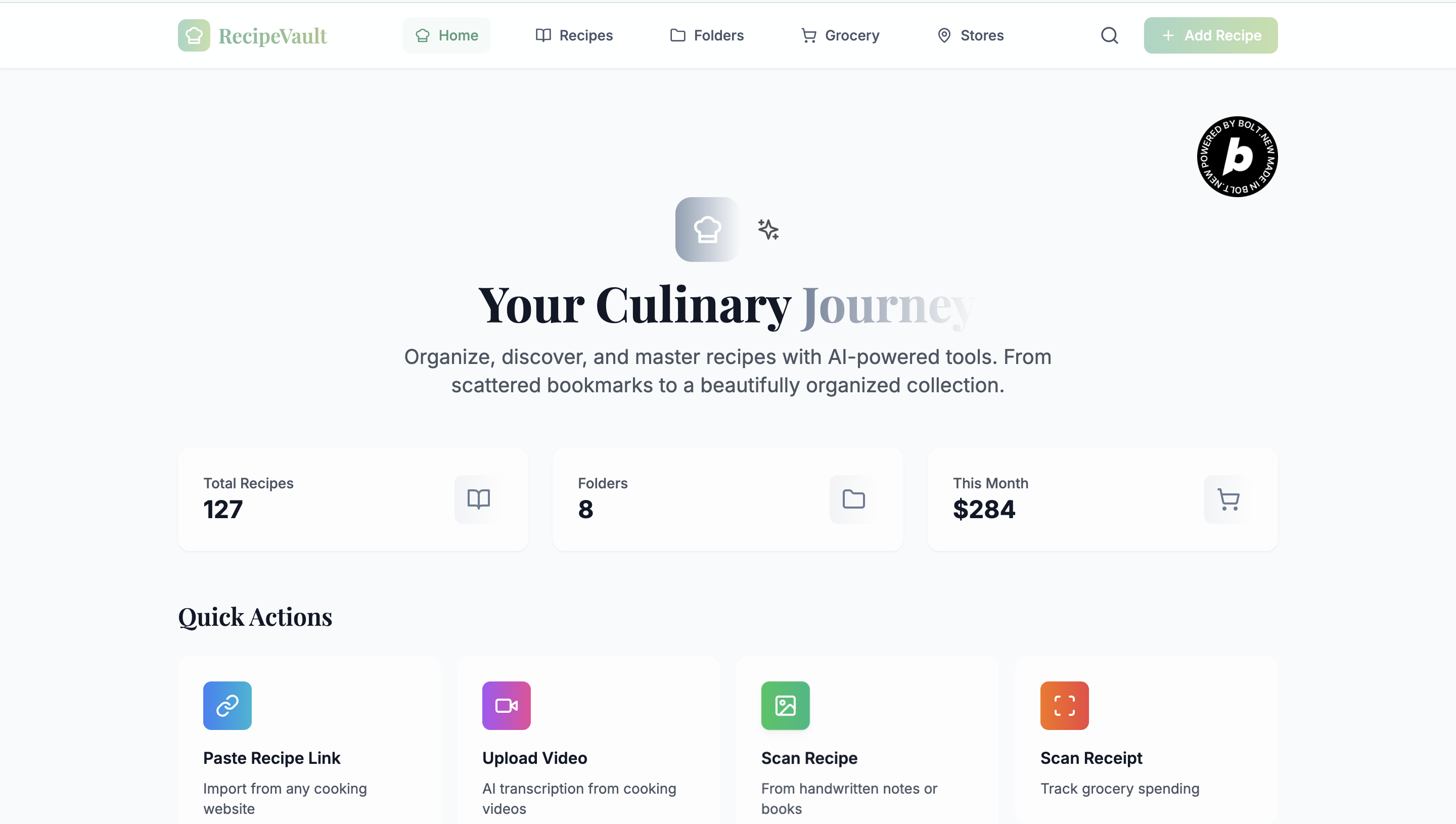
RecipeVault is a smart recipe organiser for the modern cook. It allows users to:
- Save recipes from URLs, typed input, scanned handwritten notes, or even video uploads
- Use OCR to convert images of written recipes into editable text
- Transcribe recipe videos into step-by-step instructions.
- Organize recipes in folders or collections (e.g., “Quick Dinners”, “Family Favorites”)
- Track grocery prices by scanning receipts
- Create, edit, and share recipes with friends or followers
- Plan meals and store pantry data (stretch goal)
Whether you're a student meal-prepping on a budget or a food content creator with dozens of videos — RecipeVault helps keep your culinary life in one clean, beautiful space.
How we built it
- Frontend: React with Tailwind CSS for responsive, modern UI
- Backend: Firebase for authentication, Firestore for structured recipe data, and Firebase Storage for media uploads
- Auth: Integrated Google sign-in, email/password, and Facebook login using Firebase Auth
- OCR: Google Cloud Vision API to scan and extract text from handwritten or printed recipes
- Media Handling: Uploads and renders images and videos from user devices or links
I also explored how AI could assist in video transcription and smart ingredient suggestions, which are being planned as stretch features.
Challenges we ran into
- Integrating Firebase services smoothly across auth, storage, and Firestore
- Implementing accurate OCR and managing user-friendly error handling
- Handling and storing different recipe formats (text, video, scanned images)
- Designing a unified UX that supports both casual users and power users
- Managing time constraints while trying to build and test multiple flows
Accomplishments that we're proud of
- Creating a clean, responsive UI that feels premium and intuitive using bolt AI
- Building a flexible data model that supports multiple recipe input types
- Making the app inclusive for all levels of cooks — from beginner to content creator
- Conducting real feedback research through Discord and Reddit to refine feature scope
What we learned
- The importance of user research in validating ideas (and realizing how widespread the problem is)
- How to break a big vision into small MVP milestones
- That sometimes, the simplest tools (OCR, a good folder system) can have the biggest impact
What's next for RecipeVault
- Make most of the features functional like transcription of a video into text using AI
- Add a smart grocery list generator that pulls from saved recipes and pricing data
- Create sharable recipe books and export options (PDF/print view)
- Introduce social discovery — see what friends or public food creators are cooking
- Improve offline access and sync support for low-connectivity environments
- Continue iterating on design for accessibility, clarity, and delight
RecipeVault is just getting started — but the foundation is here to make everyday cooking smarter, simpler, and more joyful for everyone.
Built With
- bolt
- firebase
- react
- tailwind
- typescript

Log in or sign up for Devpost to join the conversation.