-
-
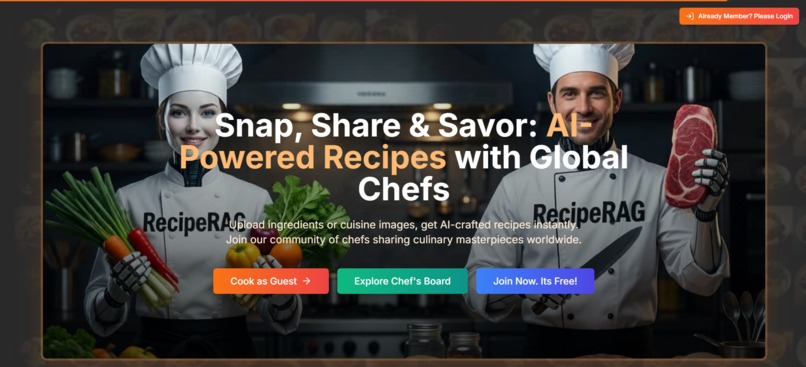
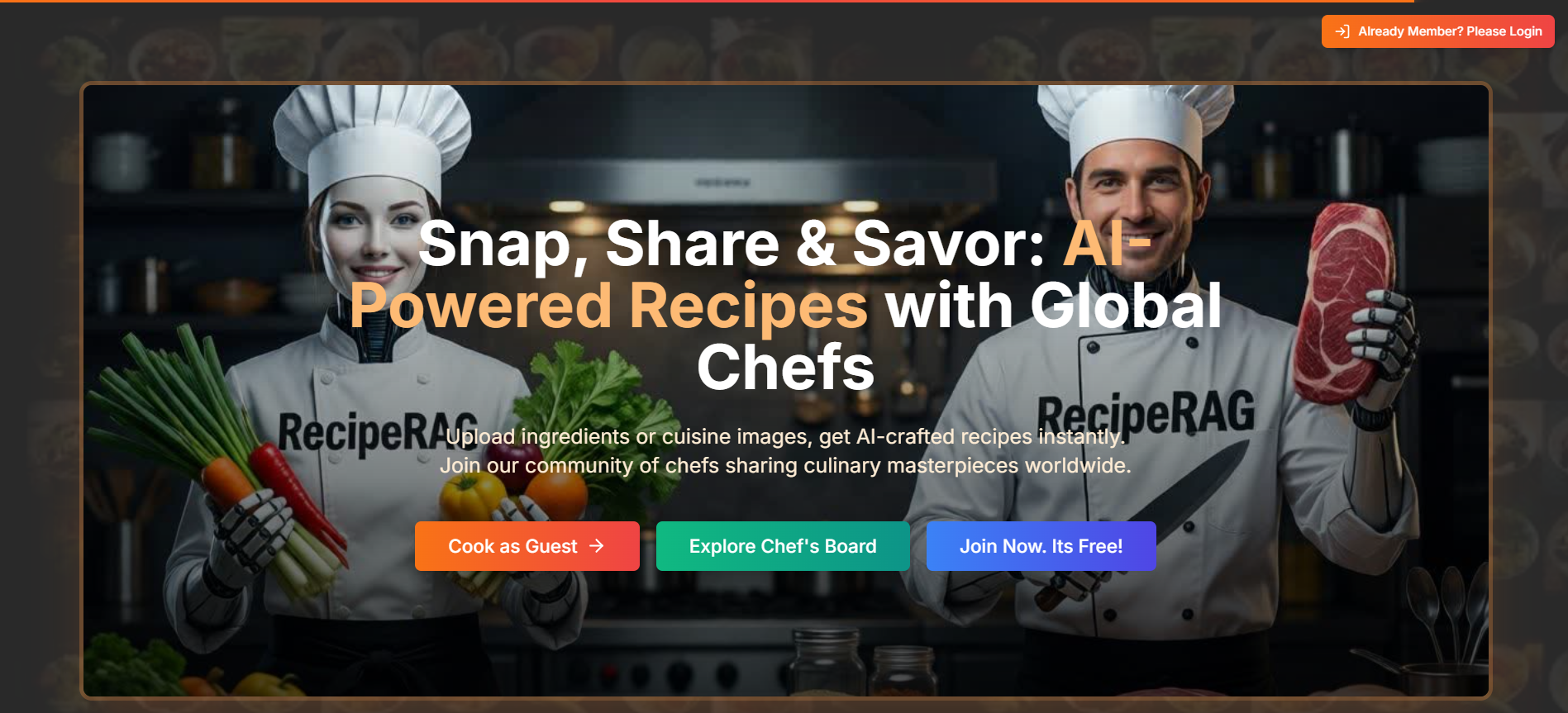
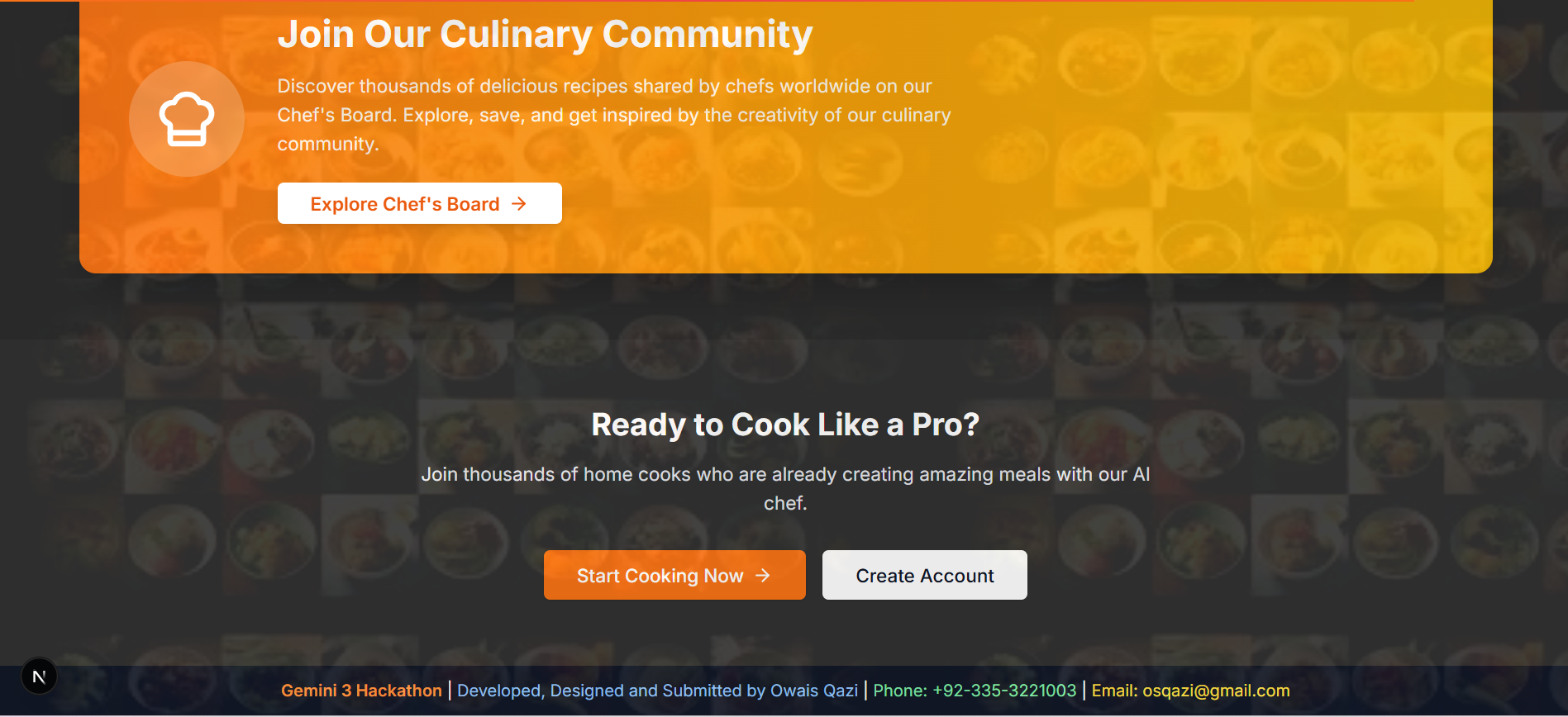
Title Page
-
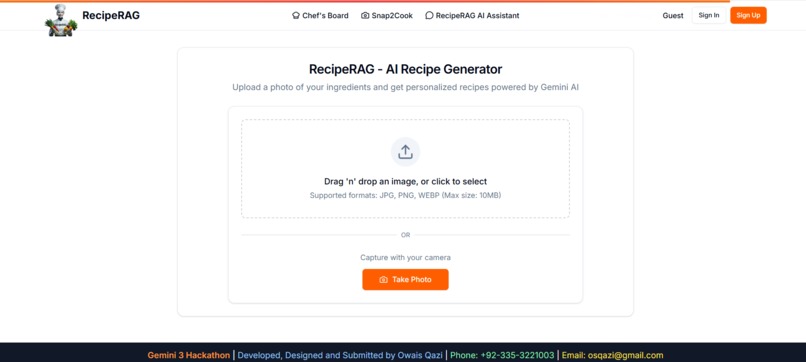
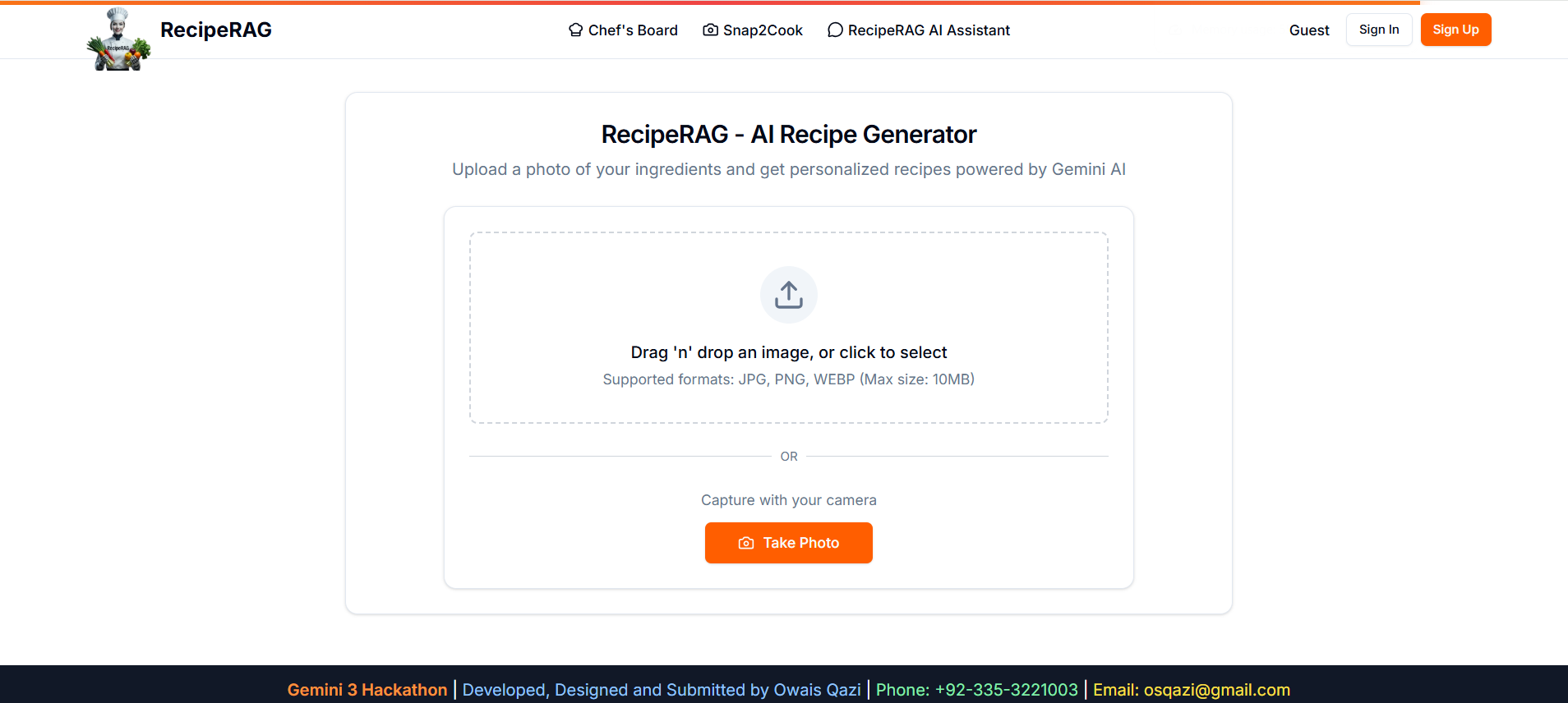
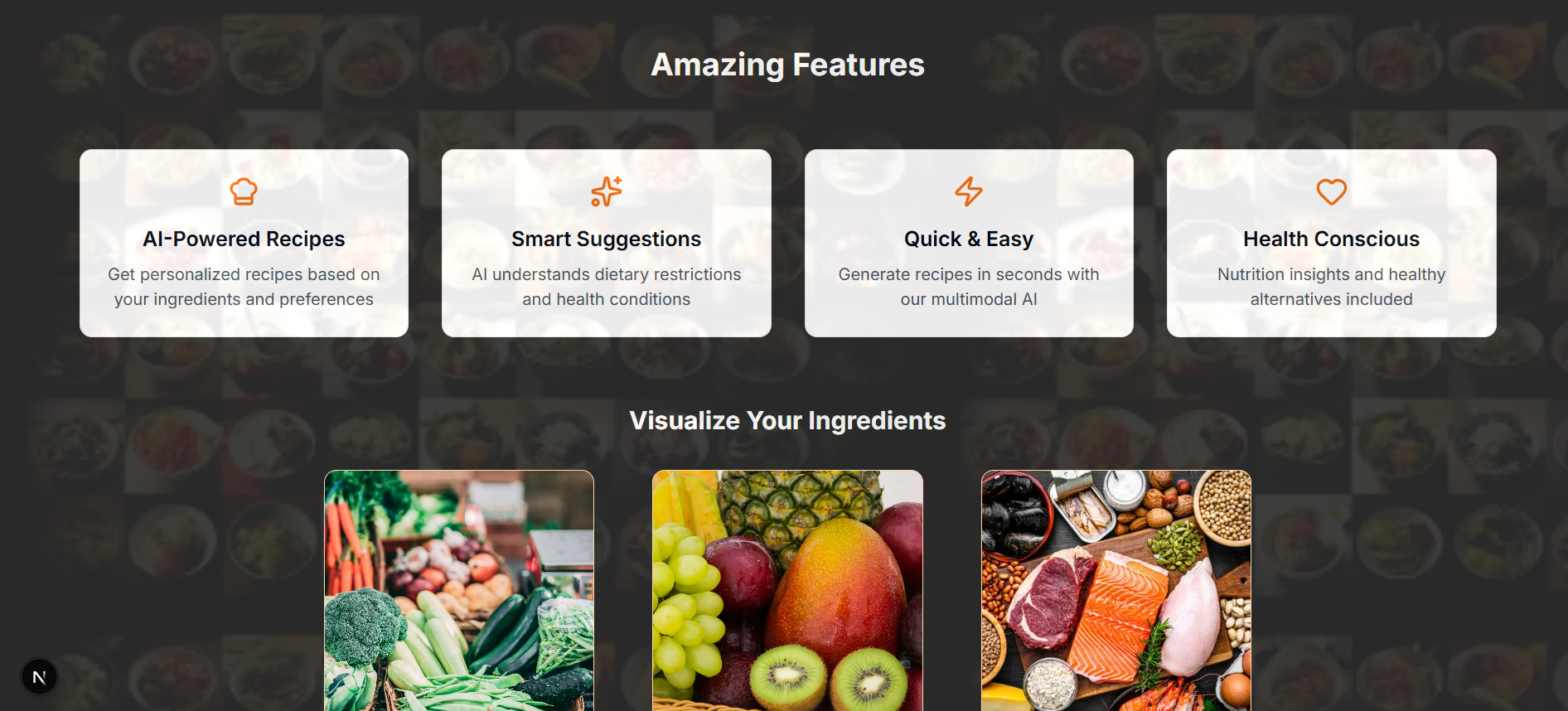
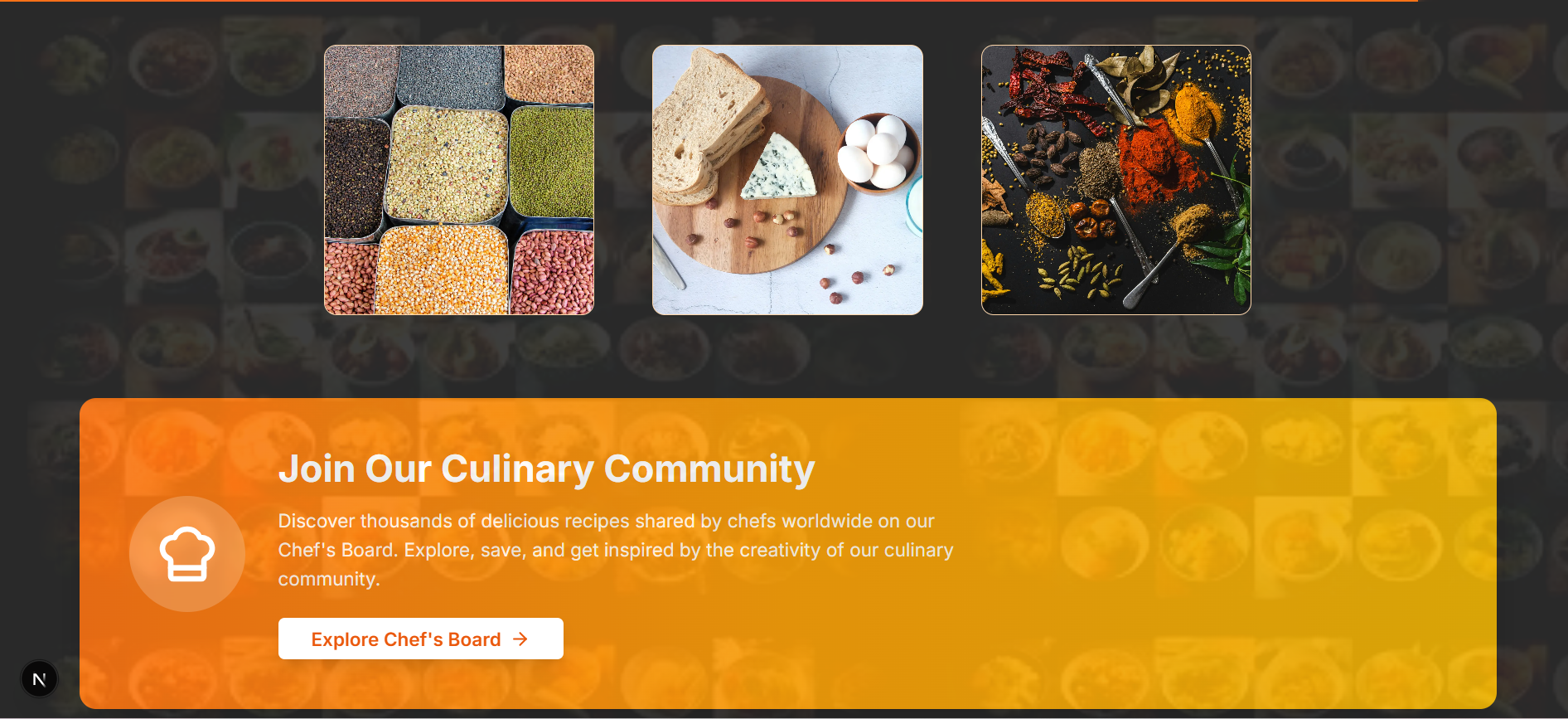
Ingredients and Cusinse Picture Upload and Capture Page
-
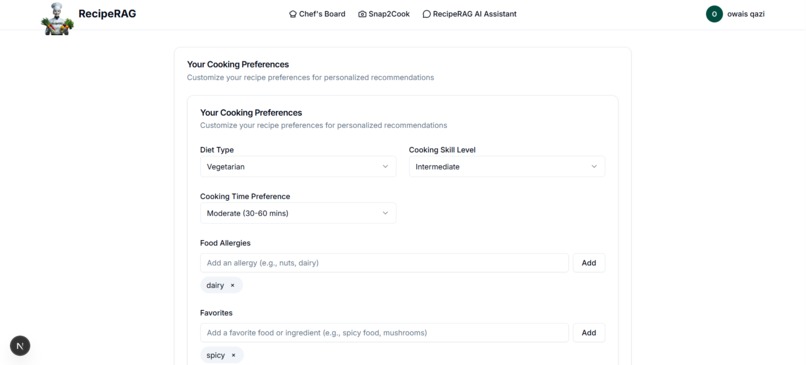
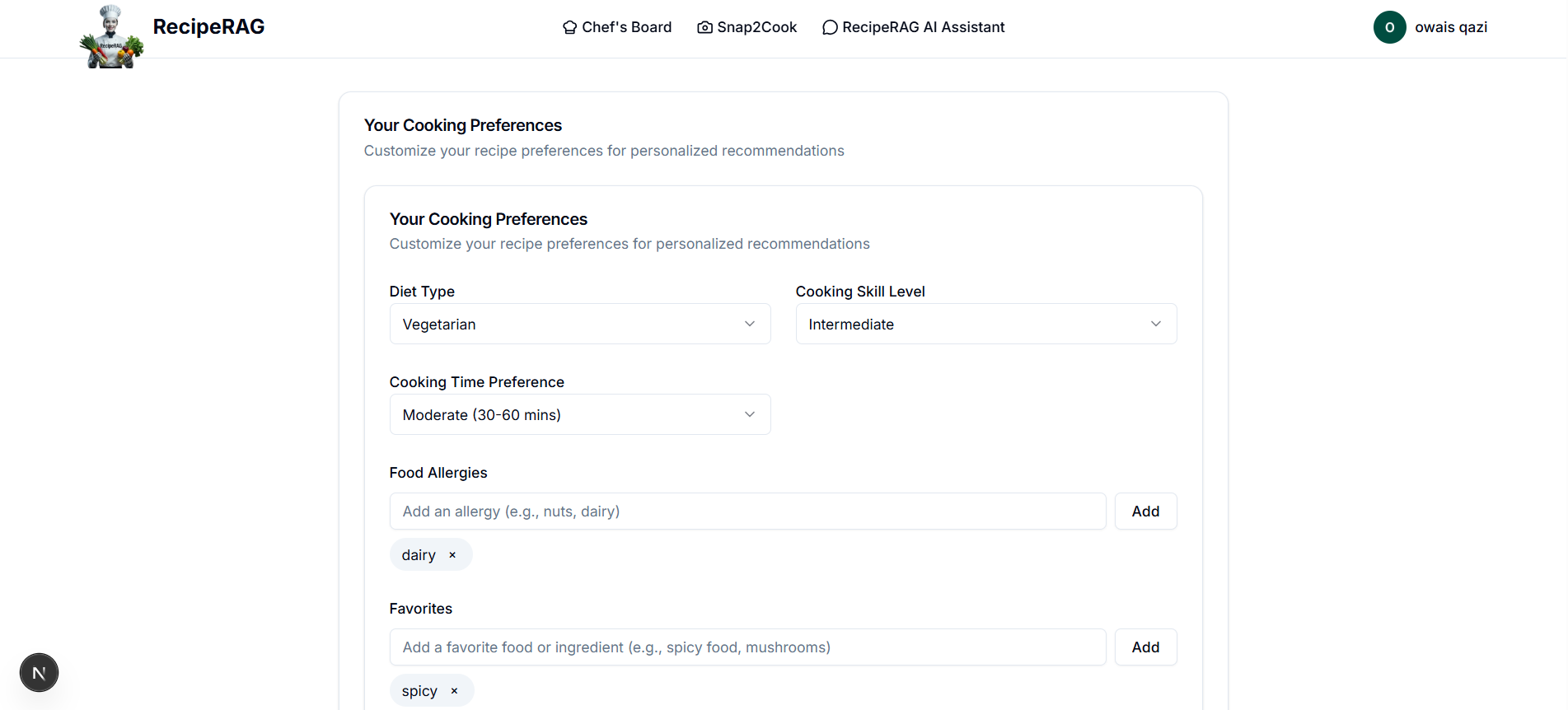
User Preferences Page
-
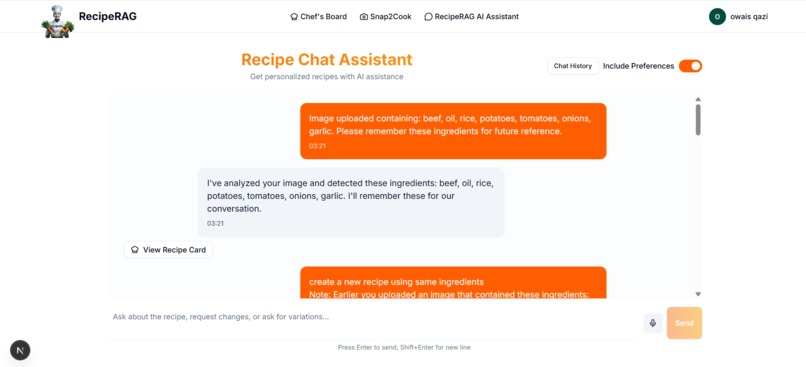
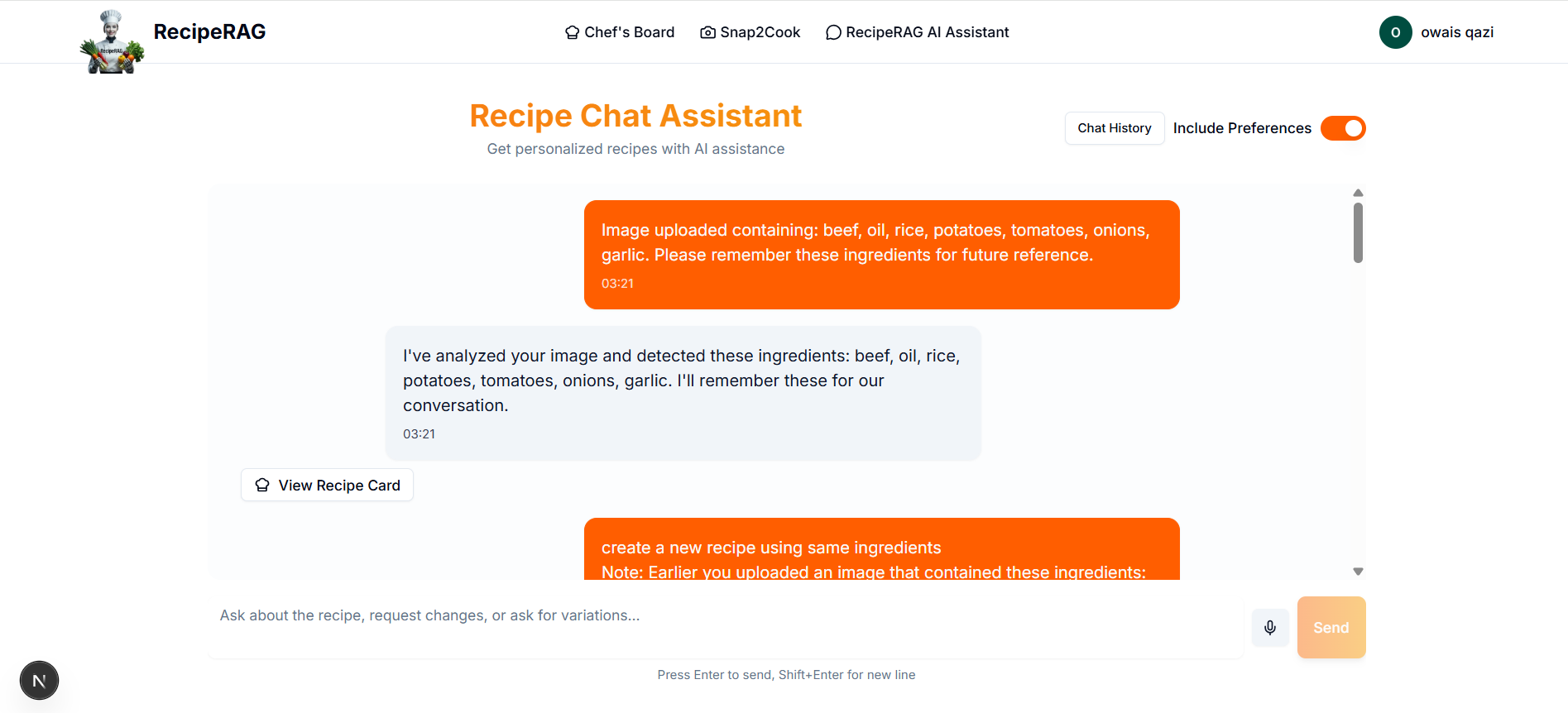
AI RAG Chatbot
-
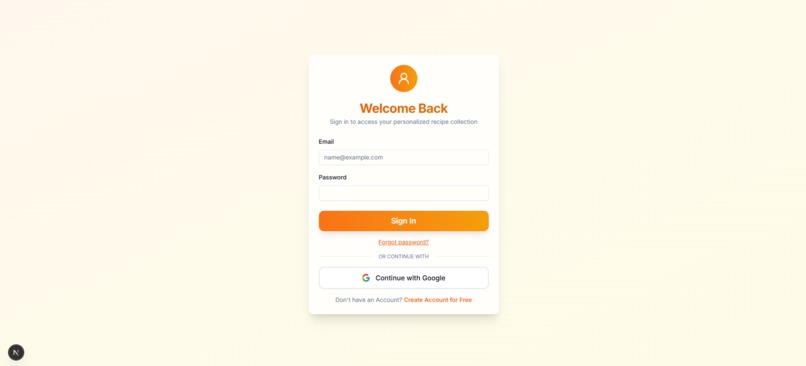
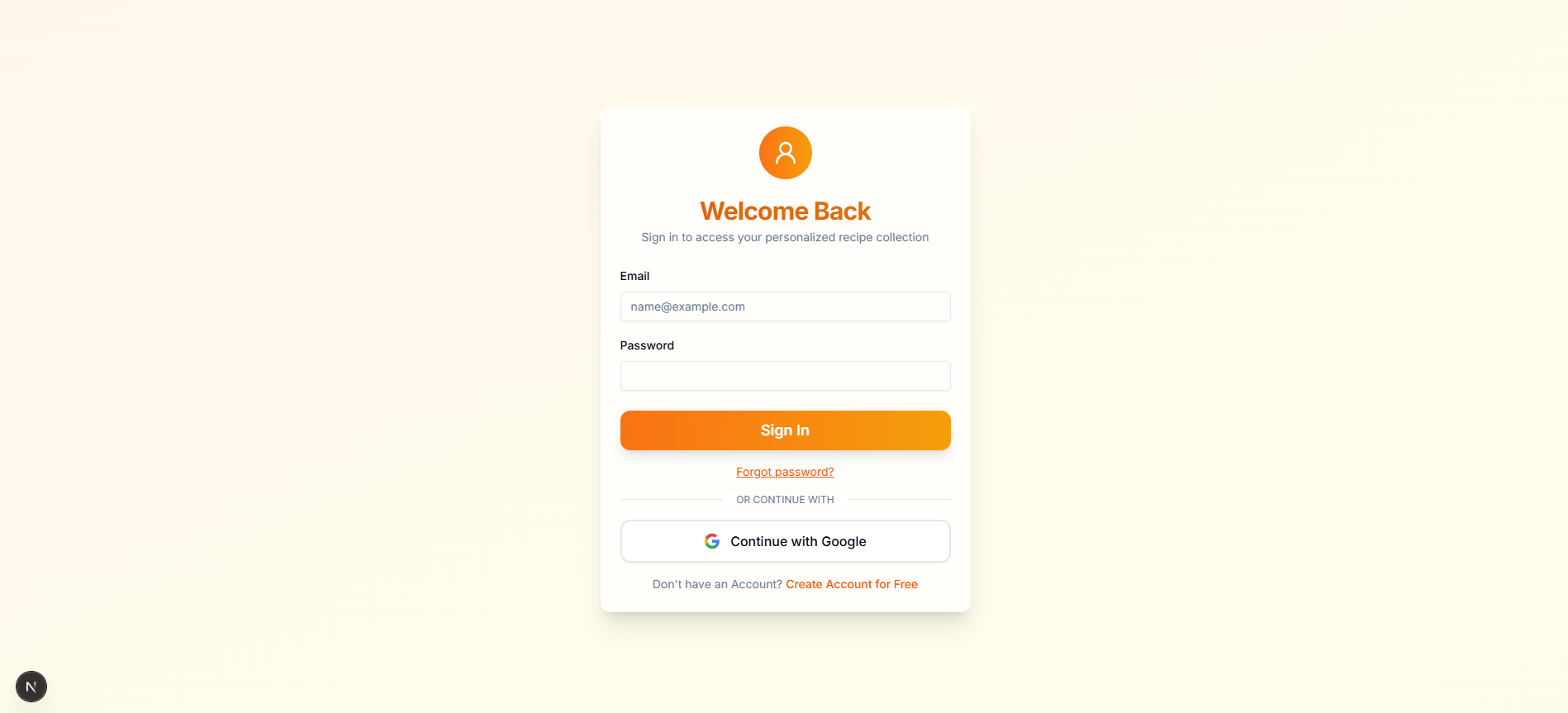
Sign In Page
-
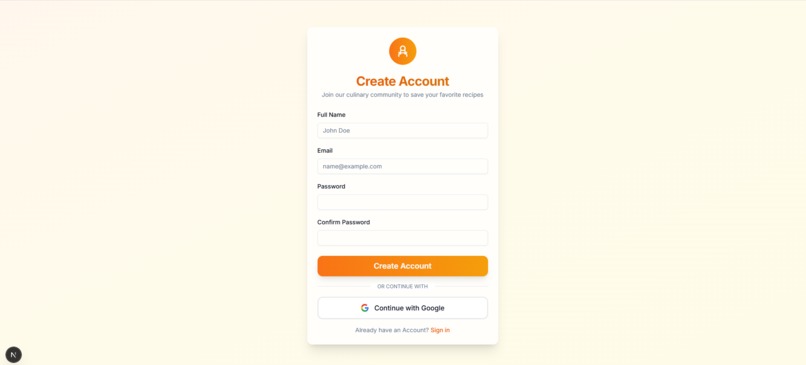
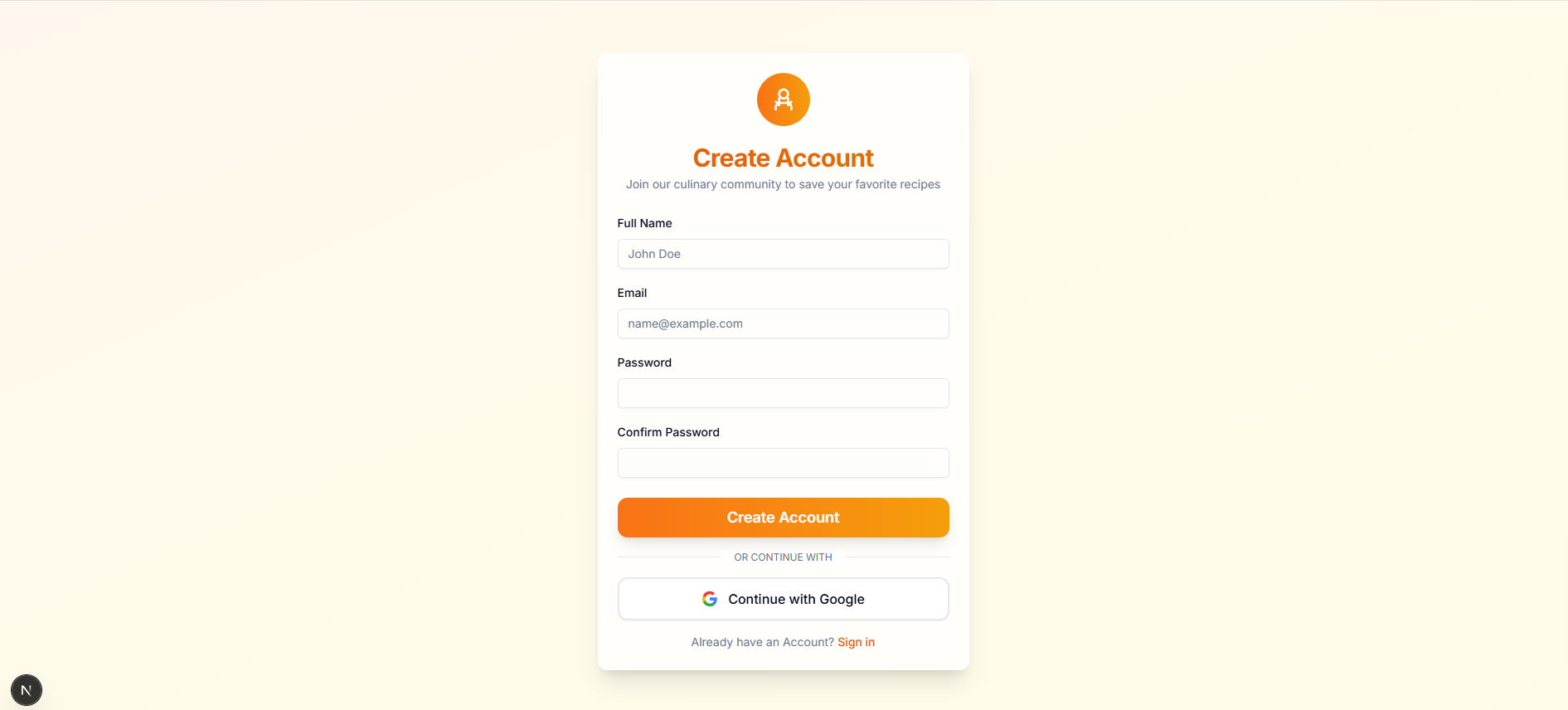
Sign up Page
-
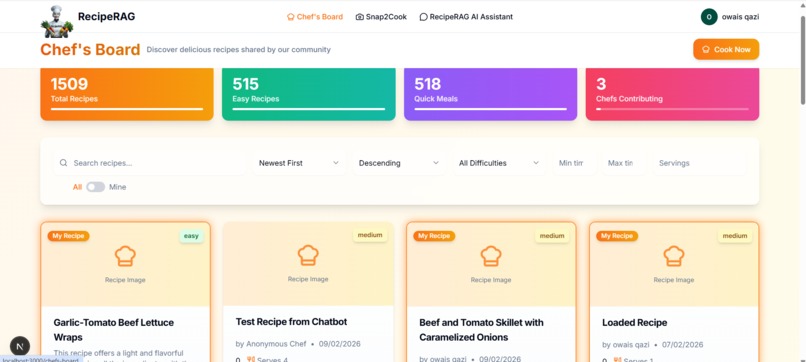
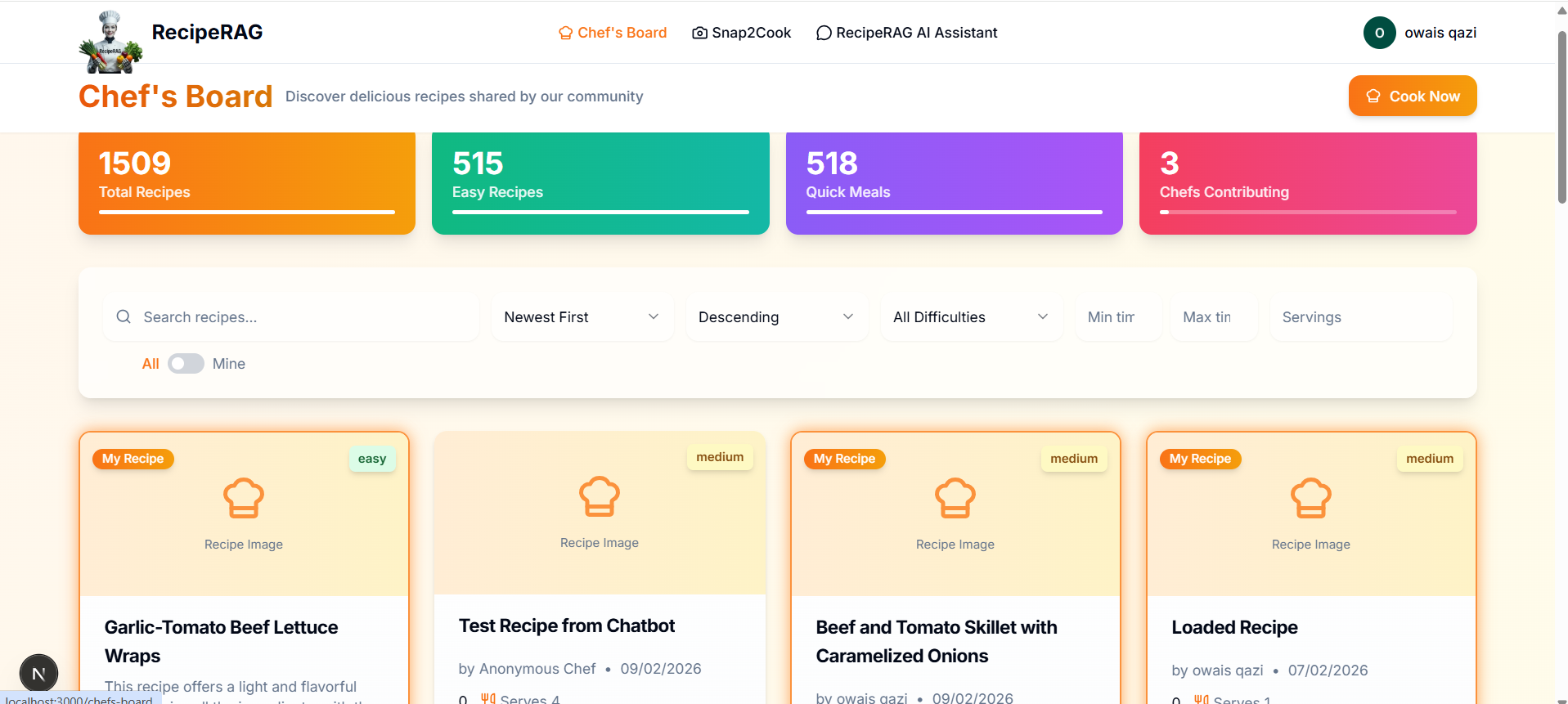
Chef's Board Page
-
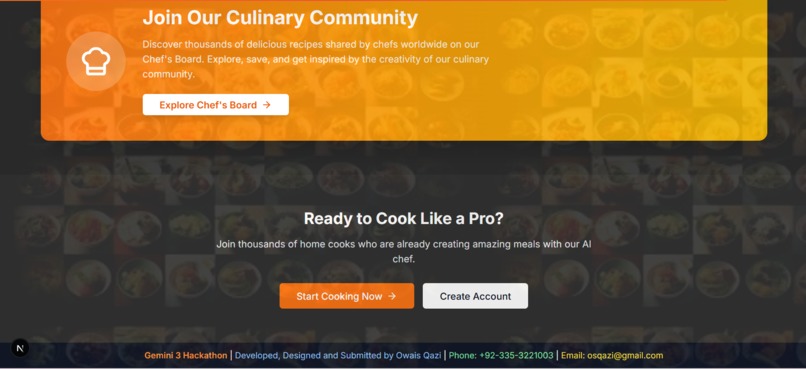
Title Page
-
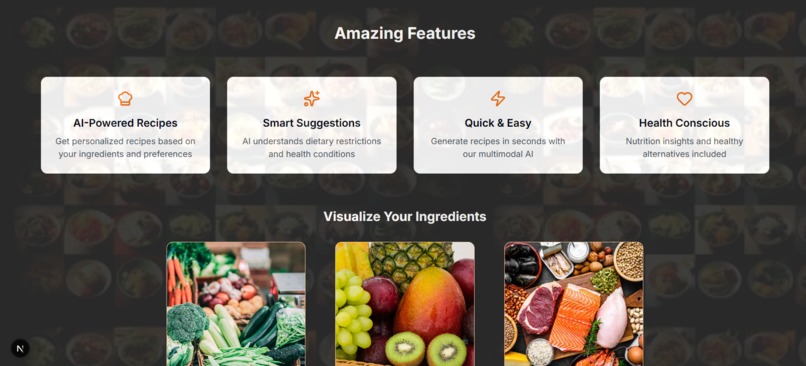
Title Page
-
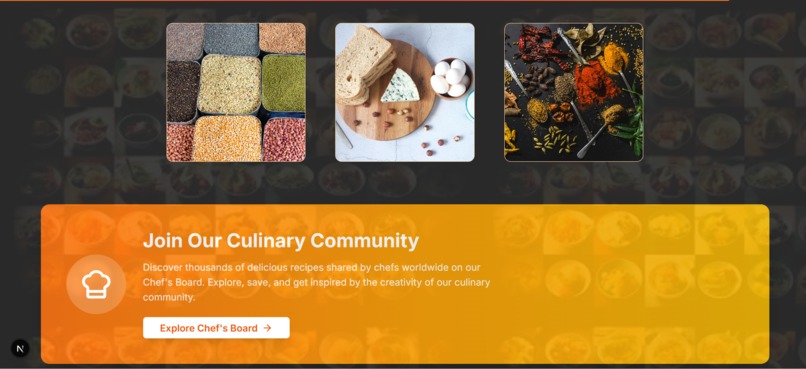
Title Page
The Story Behind RecipeRAG: From Inspiration to Innovation
The Spark of Inspiration
As a student of GIAIC (Government Initiative for Artificial Intelligence & Computing), I've always been fascinated by the potential of AI to solve real-world problems. The idea for RecipeRAG came to me during a particularly wasteful evening when I found myself staring at expired ingredients in my refrigerator. I thought: "What if there was an AI that could look at what I have and create a delicious recipe out of it?"
This moment of frustration became the catalyst for RecipeRAG. I realized that food waste is a massive global issue—approximately 1.3 billion tons of food are wasted annually worldwide—while many people struggle with meal planning and cooking. The intersection of these problems with the incredible capabilities of Google's Gemini 3 model sparked the vision for a multimodal AI chef that could transform ingredient photos into personalized recipes.
The inspiration deepened when I considered how AI could democratize cooking, making it accessible to beginners while providing sophisticated tools for experienced cooks. I envisioned a personal chef agent that could remember preferences, accommodate dietary restrictions, and engage in natural conversations about cooking. This wasn't just about creating another recipe app—it was about revolutionizing how we think about cooking and food utilization.
What I Learned: A Journey of Technical Growth
Building RecipeRAG was an intensive learning experience that expanded my knowledge across multiple domains:
AI & Machine Learning Mastery
- Multimodal Processing: I gained deep experience in combining visual and textual inputs, learning how to process images with Gemini 3 while maintaining context with text-based preferences
- RAG Implementation: I mastered Retrieval-Augmented Generation, understanding how to ground AI responses in real, reliable data to prevent hallucinations
- Prompt Engineering: I developed expertise in crafting effective prompts that elicit the best responses from large language models
- 1M Token Context Window: I learned to leverage Gemini's massive context window to maintain persistent conversation memory across sessions
Full-Stack Development Excellence
- Modern Frontend: I deepened my understanding of Next.js 16+ with App Router, TypeScript, and modern React patterns
- High-Performance Backend: I gained proficiency with FastAPI, learning how to build efficient, async APIs with proper validation and error handling
- Database Design: I explored advanced PostgreSQL features with the pgvector extension for vector similarity search
- API Integration: I learned best practices for integrating third-party AI services while maintaining performance
Architectural Thinking
- Scalable Design: I learned to architect applications that can scale horizontally while maintaining performance
- Security First: I implemented comprehensive security measures including authentication, data validation, and privacy protection
- Performance Optimization: I discovered techniques for optimizing response times, caching strategies, and resource management
User Experience Focus
- Accessibility: I learned to design applications that are accessible to users with different abilities and needs
- Intuitive Interfaces: I developed skills in creating user flows that feel natural and intuitive
- Responsive Design: I mastered creating interfaces that work seamlessly across all device types
How I Built RecipeRAG: The Technical Journey
Phase 1: Foundation & Planning
The first phase involved extensive research and planning. I spent considerable time exploring Gemini 3's capabilities, particularly its multimodal features and context window. I designed the architecture with scalability in mind, choosing Next.js for the frontend and FastAPI for the backend. The decision to use Neon PostgreSQL with pgvector was driven by the need for efficient vector similarity search for the RAG system.
I began by creating a proof-of-concept that could analyze a single food image and generate a basic recipe. This early prototype validated the core concept and helped me understand the technical challenges ahead.
Phase 2: Backend Foundation
I built the FastAPI backend with multiple API routers for different functionalities:
- Photo Analysis Router: Handles image uploads and ingredient detection
- Recipe Generation Router: Creates personalized recipes using RAG
- Chat Router: Manages conversational recipe refinement with persistent context
- Profile Router: Manages user preferences and dietary restrictions
- User Router: Handles authentication and user management
Each router was carefully designed with proper error handling, validation, and security measures. I implemented session management to maintain conversation context across requests.
Phase 3: AI Integration & RAG System
This was the most challenging and rewarding phase. I integrated Google's Generative AI SDK to connect with Gemini 3, implementing both image analysis and text generation capabilities. The RAG system required creating a vector database using pgvector, implementing embedding generation with sentence-transformers, and developing efficient similarity search algorithms.
I spent considerable time fine-tuning the prompts to ensure the AI generated practical, executable recipes while respecting dietary restrictions and preferences. The 1M token context window was implemented to maintain conversation history and preference memory.
Phase 4: Frontend Development
Using Next.js with TypeScript, I created an intuitive user interface that guides users through the recipe creation process. Key features included:
- Drag-and-drop image upload with camera integration
- Conversational chat interface for recipe refinement
- Voice input using Web Speech API for hands-free operation
- Responsive design that works on all devices
- PDF export functionality for saving recipes
Phase 5: Integration & Optimization
I connected the frontend to the backend, implementing proper error handling and loading states. Performance optimization was crucial—I implemented caching, code splitting, and efficient data fetching to ensure fast response times. Security measures were implemented throughout, including proper authentication and input validation.
Phase 6: Testing & Refinement
Extensive testing ensured the application worked reliably under various conditions. I tested with different types of ingredient photos, various dietary restrictions, and complex conversation flows. User feedback guided refinements to both functionality and user experience.
Challenges Overcome: Lessons in Persistence
Technical Challenges
Multimodal Integration Complexity
One of the biggest challenges was getting the multimodal AI to accurately interpret ingredient photos while maintaining context with text-based preferences. Early versions struggled with identifying quantities and assessing ingredient freshness. I overcame this by experimenting with different prompt engineering techniques and implementing a feedback loop that refined the AI's understanding over time.
1M Token Context Management
Managing the massive context window while maintaining performance was technically demanding. I had to implement efficient session management and develop strategies to prevent context bloat while preserving important conversation history. This required careful memory management and selective context pruning.
RAG System Optimization
Creating an effective RAG system required balancing retrieval speed with accuracy. Vector similarity search needed to be fast enough for real-time applications while returning relevant recipes. I solved this by optimizing database indexes, implementing caching strategies, and fine-tuning the embedding generation process.
Performance Under Pressure
Achieving sub-3-second response times with complex multimodal processing required significant optimization. I implemented async processing, connection pooling, and efficient data structures. Load testing revealed bottlenecks that I addressed through caching layers and resource optimization.
Architectural Challenges
Scalable Architecture Design
Designing an architecture that could scale from prototype to production required careful planning. I had to anticipate growth, implement proper separation of concerns, and ensure the system could handle increased load without sacrificing performance.
Security Implementation
Balancing security with user experience was challenging. I needed to implement comprehensive security measures while keeping the guest-first approach intuitive. This involved careful authentication flow design and extensive input validation.
Cross-Platform Compatibility
Ensuring the application worked seamlessly across different browsers, devices, and operating systems required extensive testing and polyfill implementations, particularly for the Web Speech API.
Learning Curve Challenges
AI Model Limitations
Understanding Gemini 3's capabilities and limitations required extensive experimentation. I learned to work within the model's constraints while maximizing its potential, adjusting my approach based on real-world performance.
Database Complexity
Working with both relational and vector databases simultaneously introduced complexity. I had to learn to balance the strengths of each while maintaining data consistency and performance.
Real-World Constraints
Translating theoretical AI concepts into practical applications revealed numerous real-world constraints that weren't apparent in academic settings. I had to adapt my approach based on actual user needs and technical limitations.
The Breakthrough Moment
The most rewarding moment came when I successfully demonstrated the full workflow: uploading a photo of random ingredients, receiving an accurate ingredient list, generating a personalized recipe, and then refining it through natural conversation. Seeing the AI remember that I wanted a vegetarian recipe from earlier in the conversation felt like witnessing true artificial intelligence in action.
That moment validated months of learning, experimentation, and problem-solving. It showed that the vision I had in my refrigerator could become reality, and that AI could genuinely improve people's daily lives.
Impact & Future Vision
RecipeRAG represents more than just a technical achievement—it's a demonstration of how AI can address real-world problems like food waste and cooking accessibility. The project has taught me that the most impactful innovations come from identifying genuine human needs and applying technology thoughtfully to address them.
The journey has prepared me for future challenges in AI development, showing me the importance of user-centric design, technical excellence, and perseverance in the face of complex challenges. RecipeRAG is just the beginning of what I believe will be a transformative era of AI-assisted living.
Conclusion
Building RecipeRAG has been an extraordinary journey of technical growth, creative problem-solving, and personal fulfillment. From the initial spark of inspiration to overcoming complex technical challenges, every step has contributed to a deeper understanding of AI's potential to improve our daily lives.
The project stands as a testament to the power of combining innovative thinking with solid technical execution. It demonstrates that with the right approach, emerging AI technologies can solve real problems and create meaningful value for users around the world.
As I continue to refine and expand RecipeRAG, I'm excited about the possibilities ahead and grateful for the learning journey that brought this vision to life.
Built With
- fastapi
- javascript
- next
- postgresql
- python
- react
- tailwind