-
-
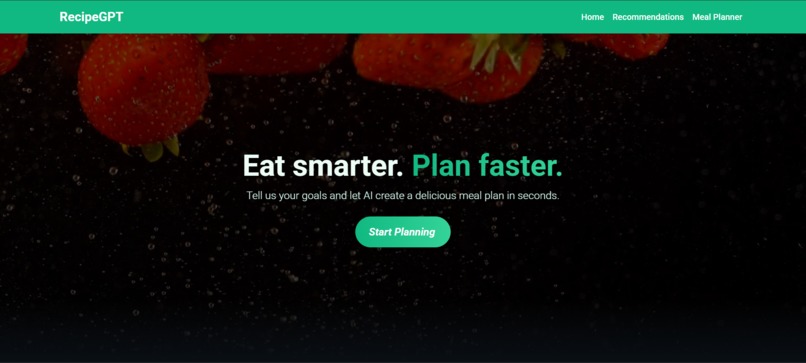
website
-
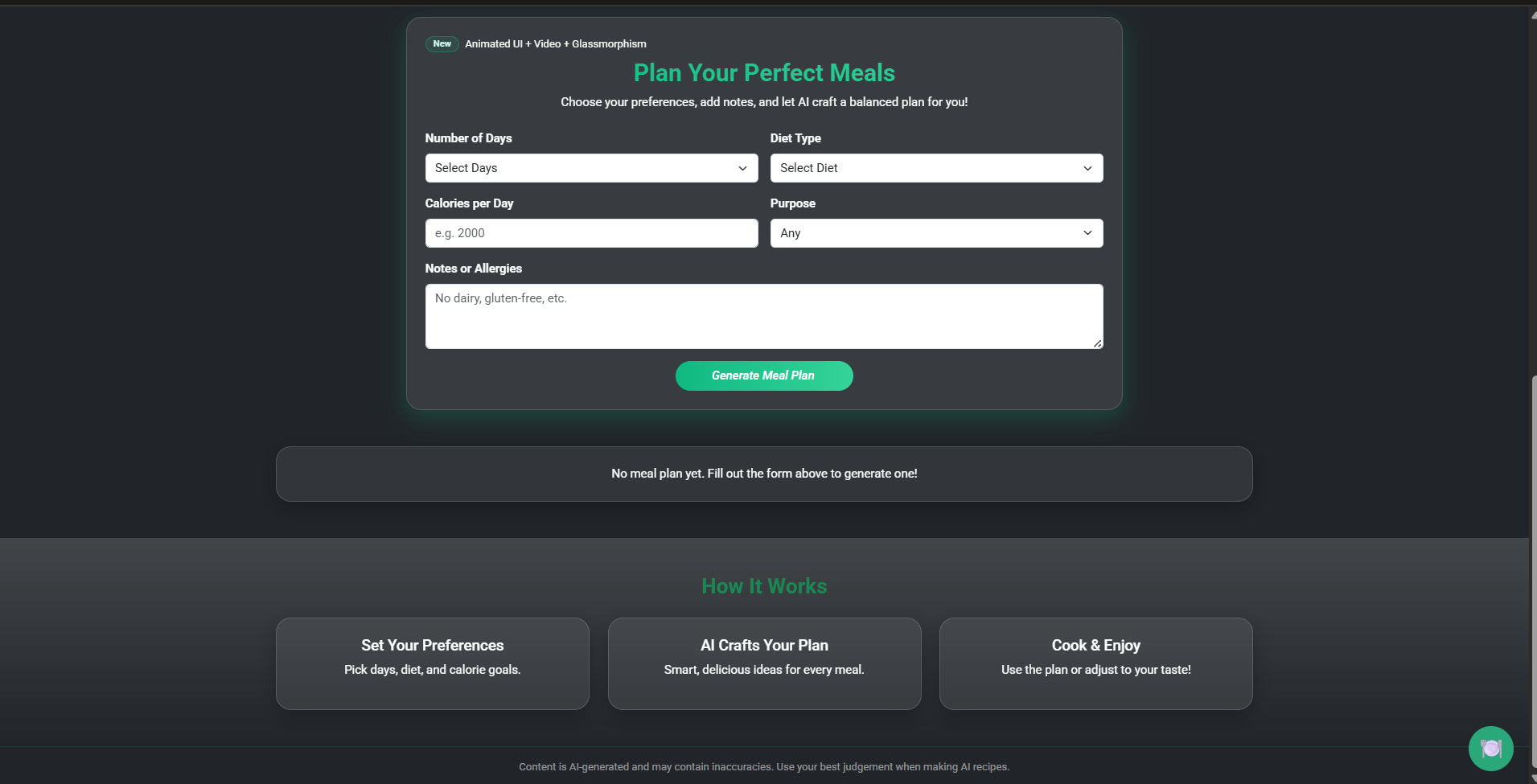
meal plan page
-
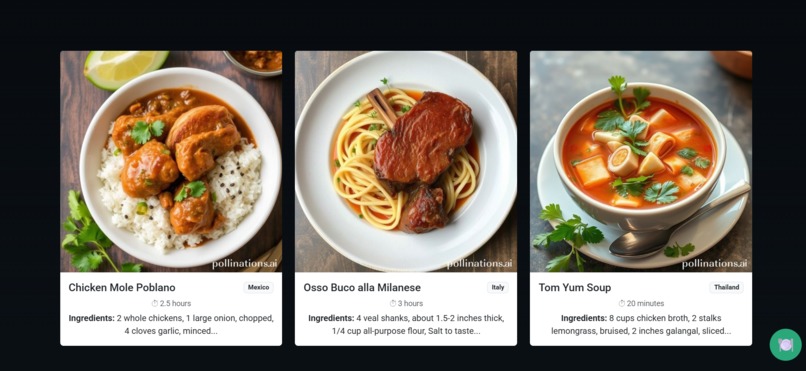
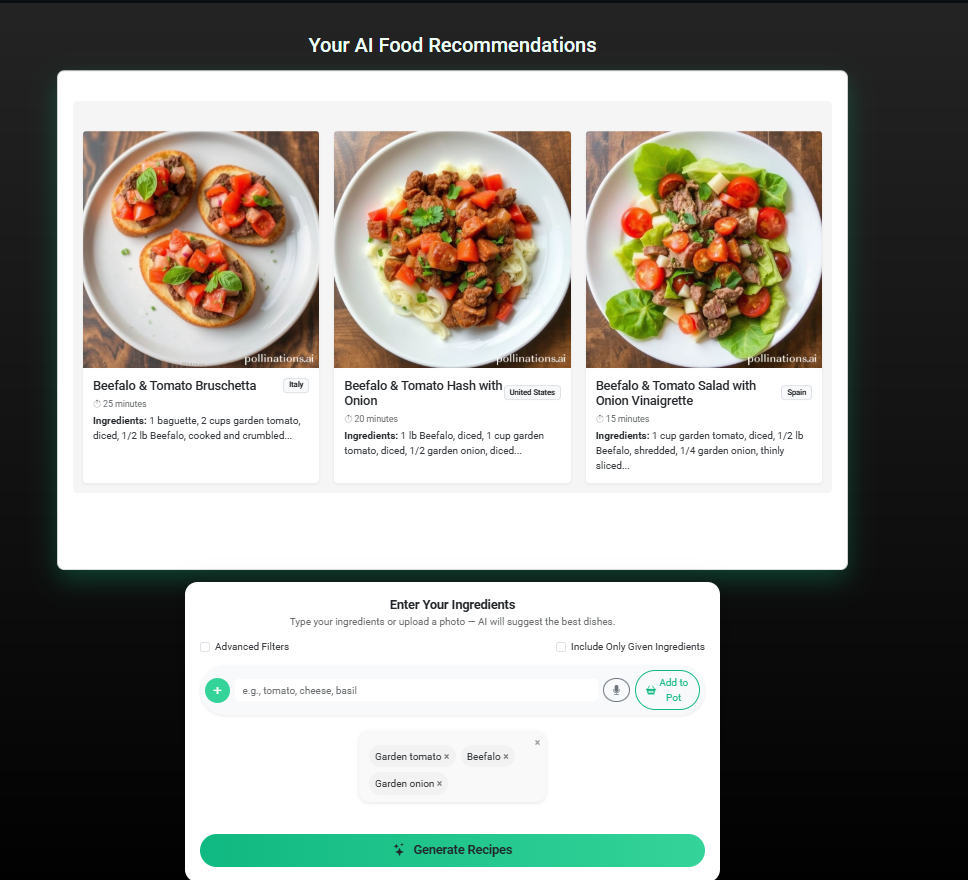
Recommendation system
-
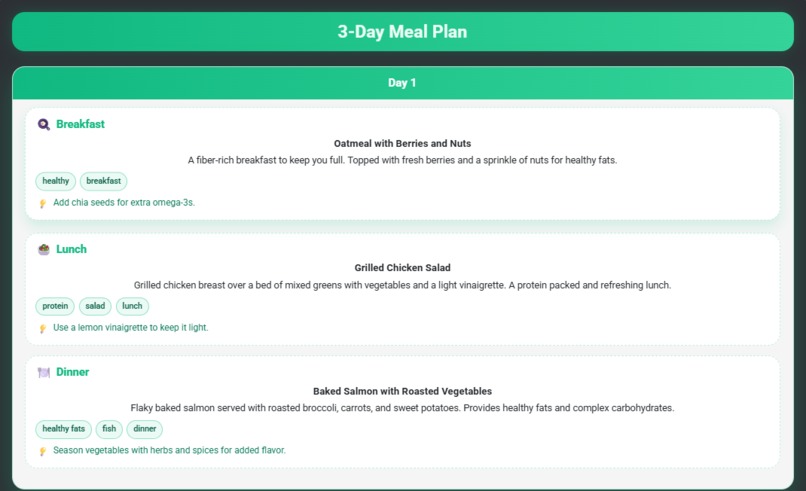
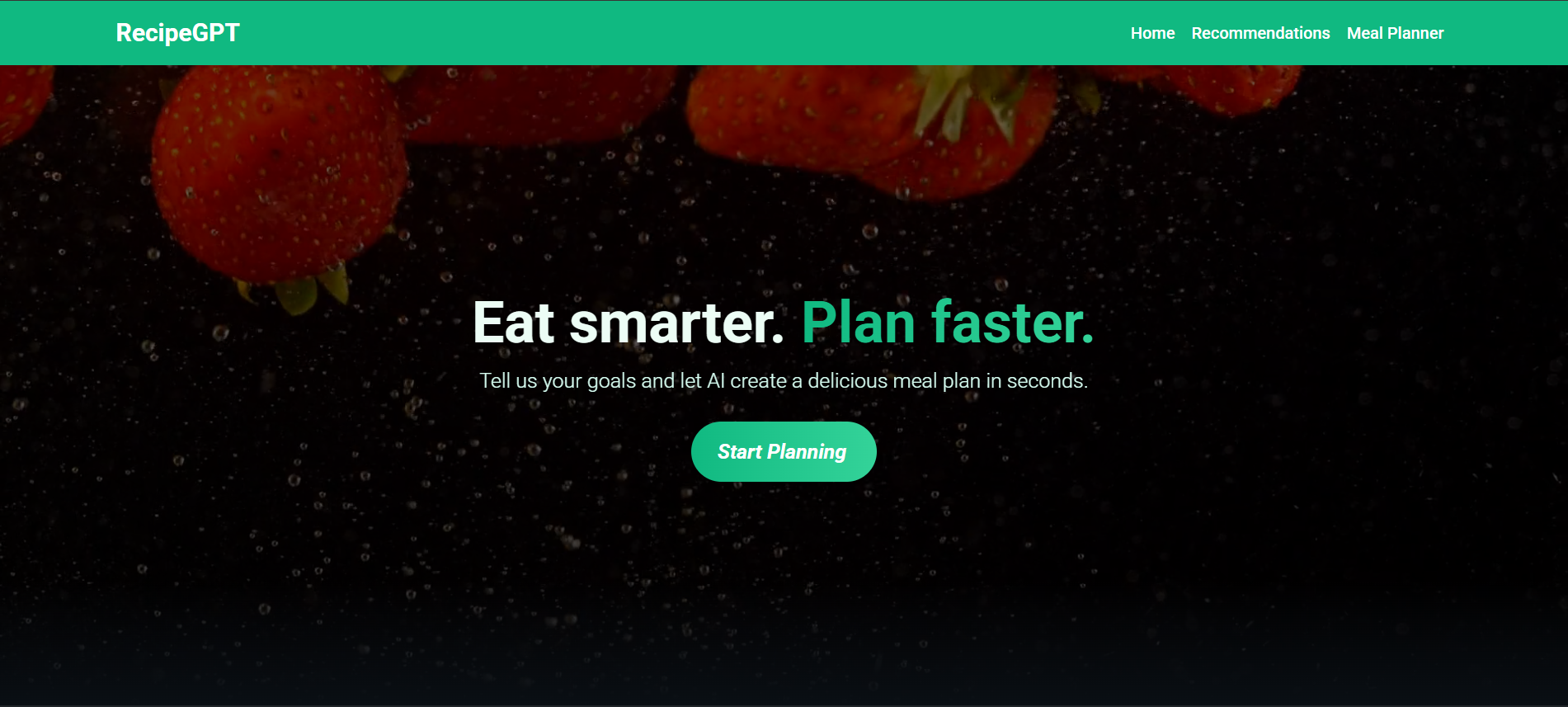
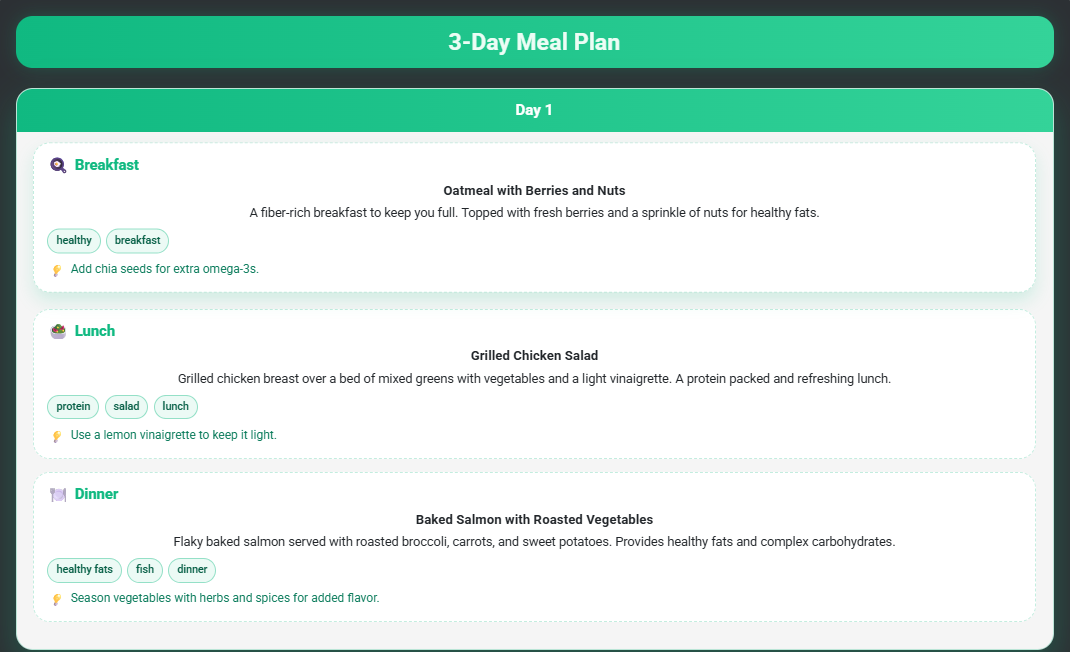
meal plan for one day
-
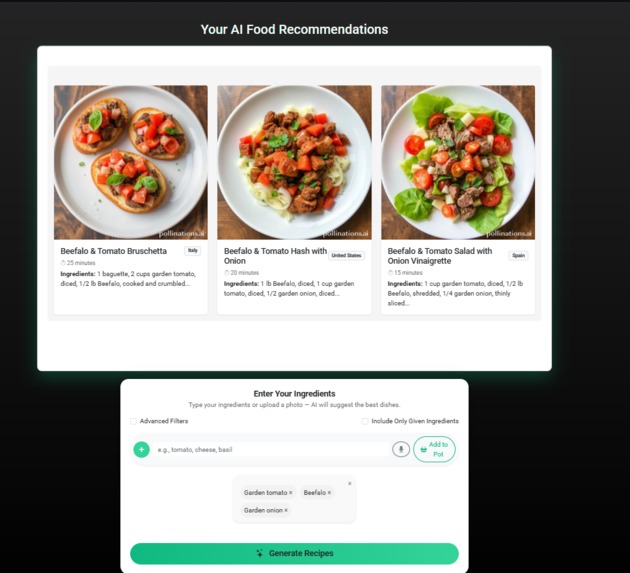
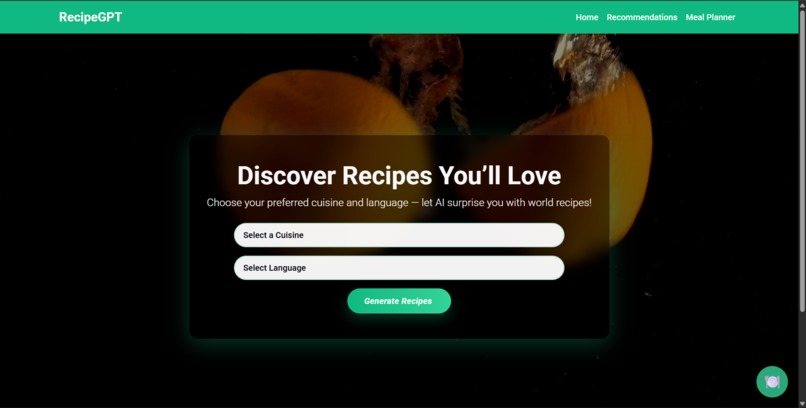
Recipe Generator
-
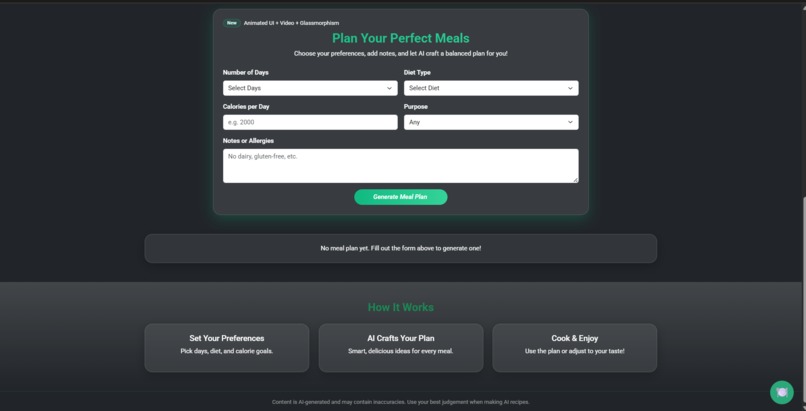
Options for the meal plan
-
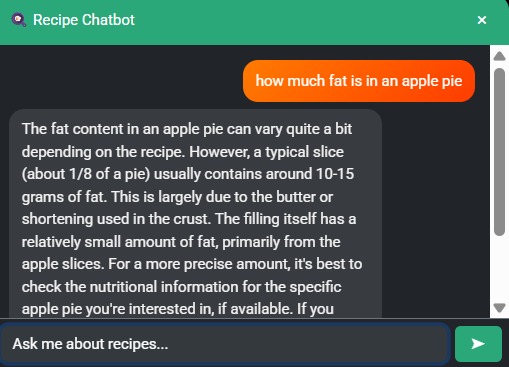
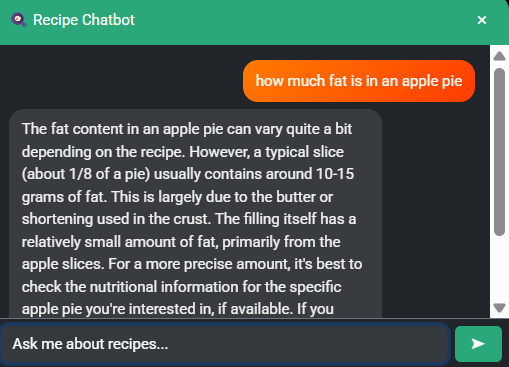
chat bot
-
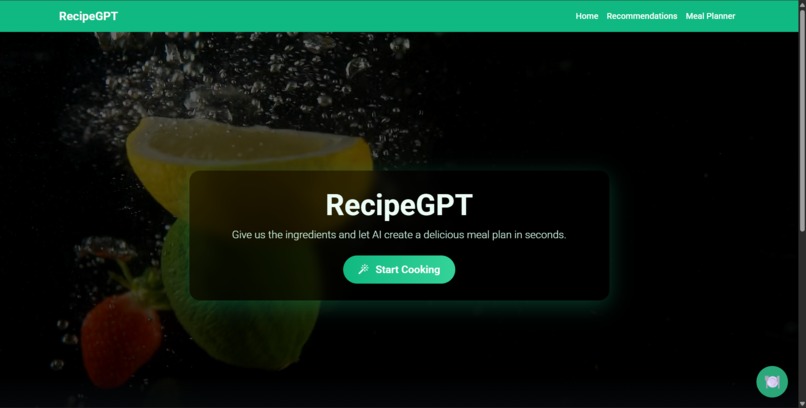
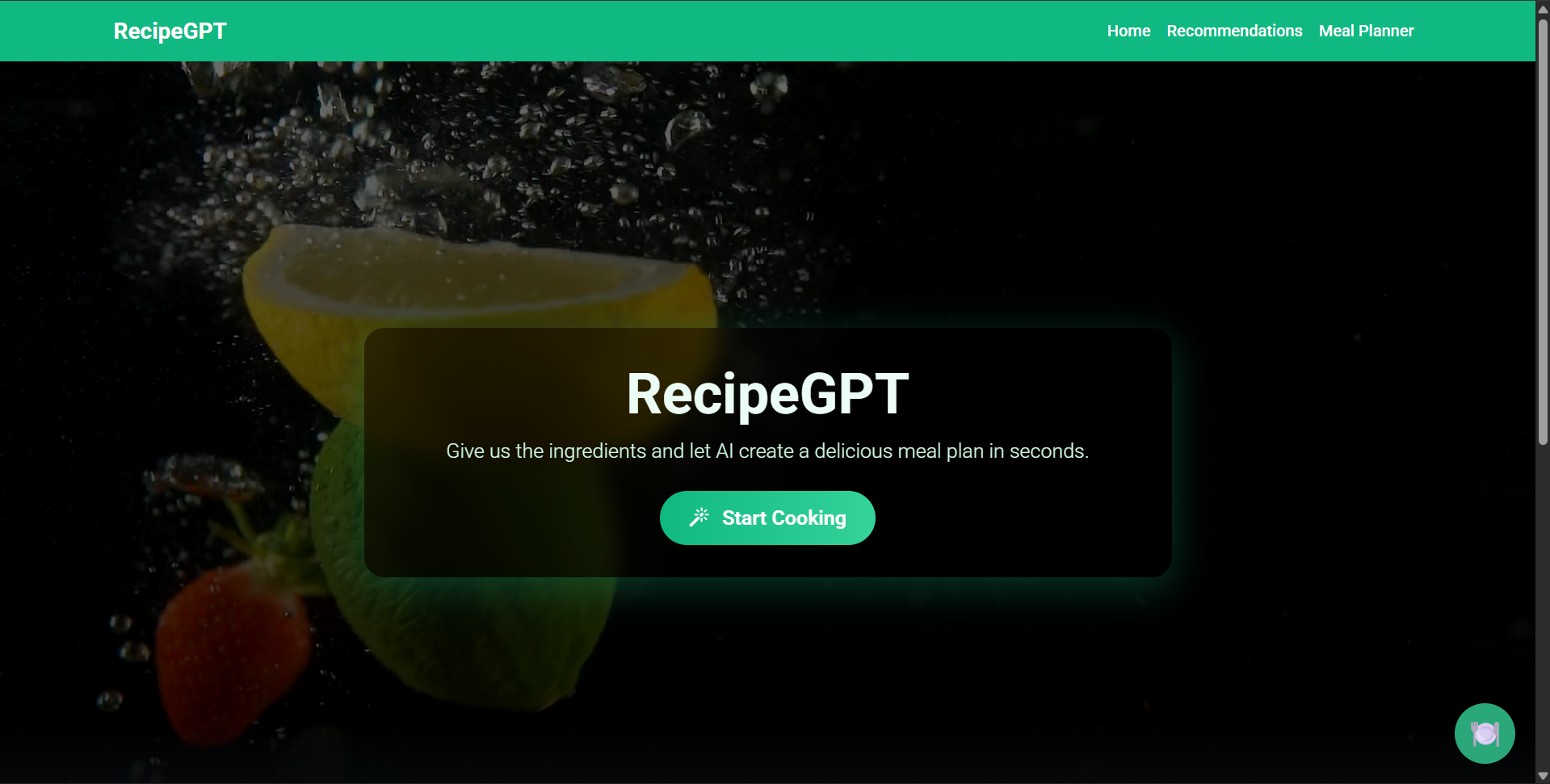
Home page
-
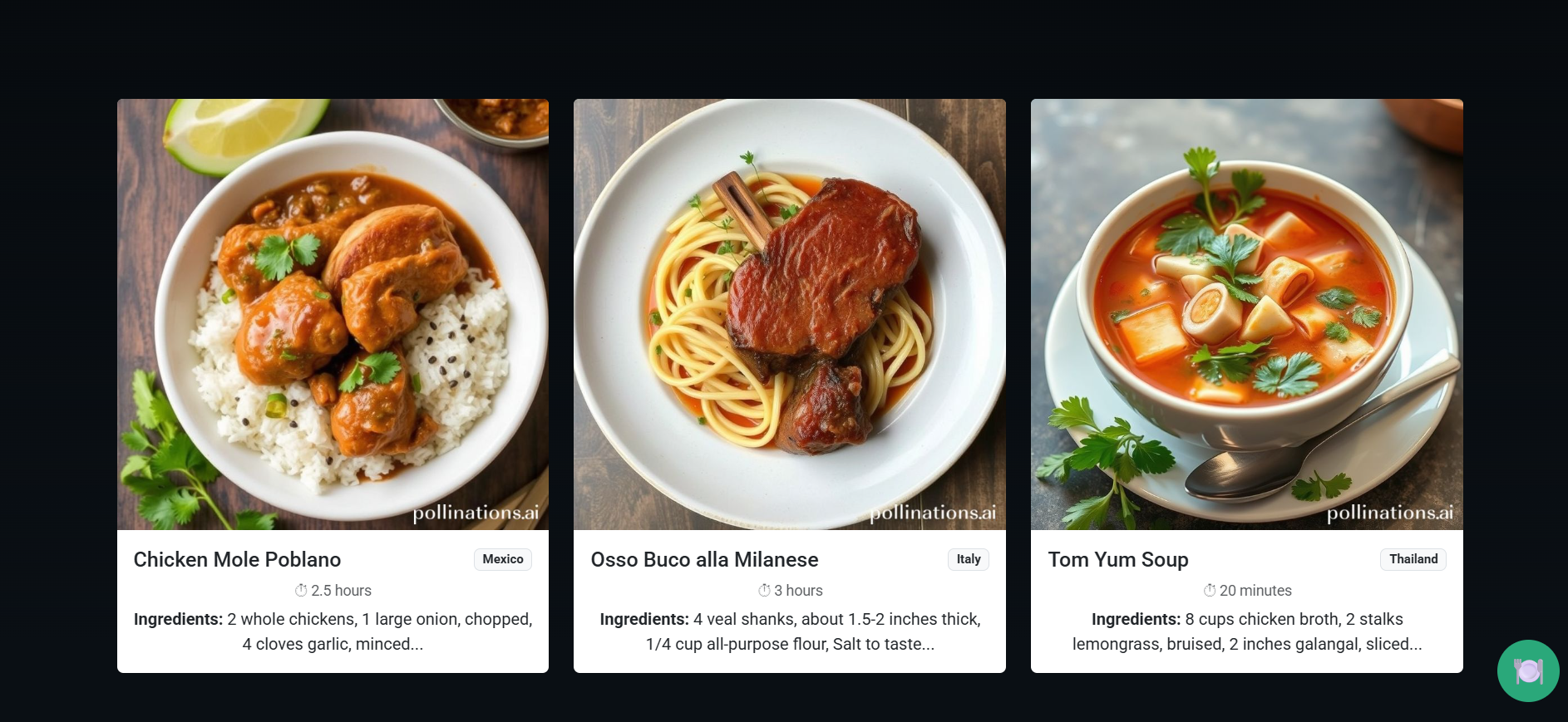
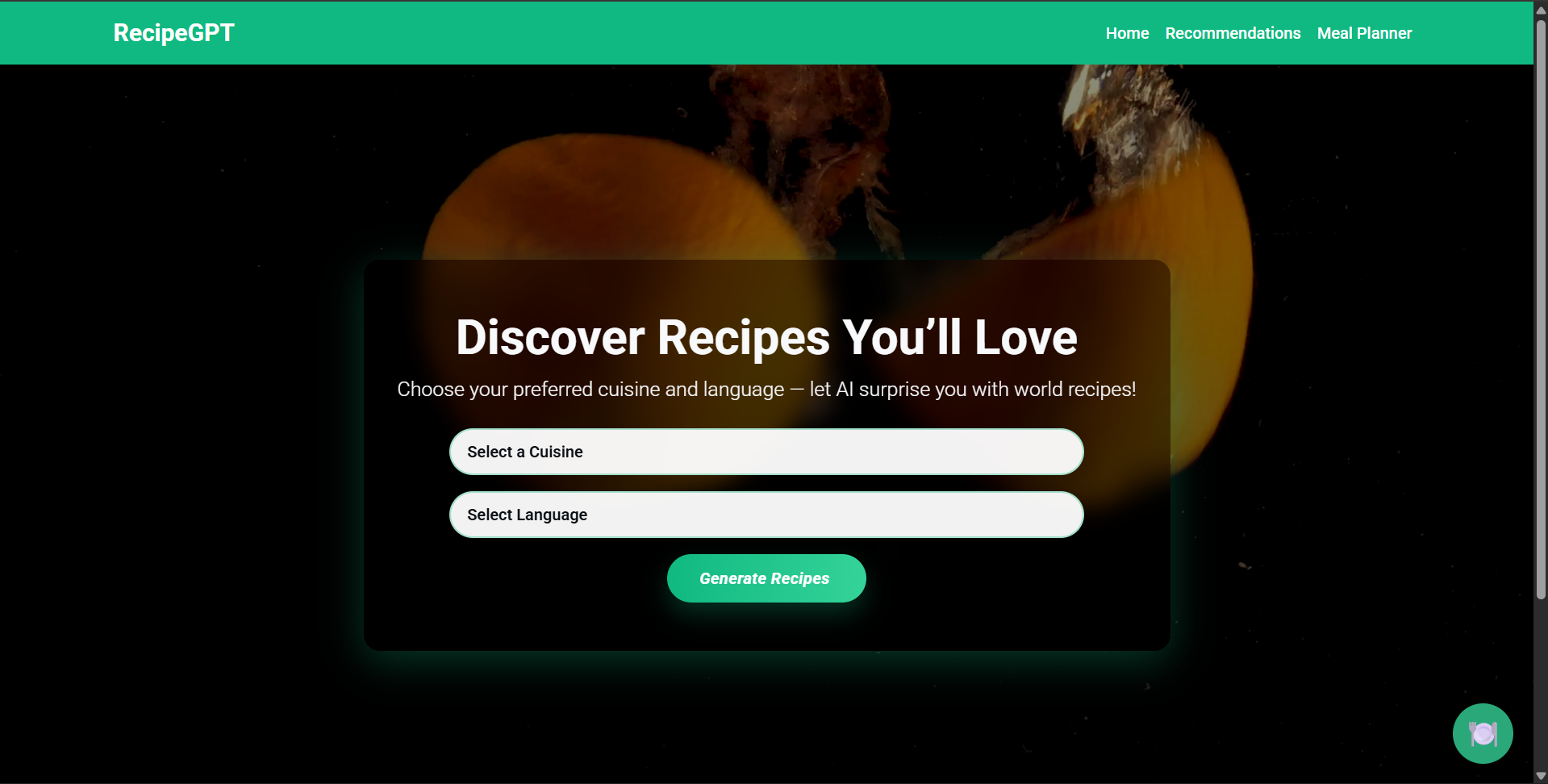
Recommendation page
Inspiration
Many people struggle with deciding what to cook, especially when they have limited ingredients, specific dietary goals, or lack cooking experience. We wanted to create a platform that makes cooking easier, smarter, and more personalized, similar to having a personal chef assistant available anytime. With the rise of new AI technologies from Google, we saw the opportunity to build an intelligent system that understands food, nutrition, and taste in a natural way.
What it does
Our platform allows users to generate and discover recipes in multiple ways. Users can:
-Speak a request using voice input.
-Take or upload a photo of ingredients.
-Type their preferences through text.
The system then generates complete recipes with ingredients, steps, serving notes, and preparation instructions.
We also provide:
-A recommendation system that suggests recipes based on personal taste.
-A meal planner that creates meal plans based on goals such as muscle gain, weight loss, or vegetarian diet.
-A chatbot that acts as a cooking assistant to answer questions, suggest ingredient substitutions, and offer real-time cooking help.
How we built it
-We used Google Prompt API to handle recipe generation, ingredient understanding, and conversational responses.
-The backend was built using Node.js.
-The frontend interface was developed using HTML, CSS, and JavaScript to create a clean, responsive, and user-friendly UI.
-Image input functionality was integrated so the AI can interpret food images and return relevant recipes.
-We designed a recommendation system and meal-planner logic to personalize results for each user.
Challenges we ran into
-Converting ingredient recognition from images into structured recipe data.
-Ensuring the generated recipes are realistic, accurate, and reproducible.
-Designing a meal planner algorithm that adapts to different profiles.
-Balancing simplicity of UI with advanced AI capabilities behind the scenes.
Accomplishments that we're proud of
-Successfully integrating voice, image, and text inputs into one unified system.
-Creating a personalized meal planner that not only suggests recipes but plans full weekly menus.
-Building a chatbot that can provide real-time cooking guidance like a kitchen assistant.
-Making the platform accessible and intuitive for everyday users.
What we learned
-How to effectively use Google’s Generative AI models for multimodal input.
-The importance of nutrition, ingredient formatting, and clarity when auto-generating recipes.
-How to balance recommendation accuracy with user preference flexibility.
-How users interact with AI assistants in real-time cooking environments.
What's next for RecipeGPT
-Voice-Guided Cooking Mode: Turning the chatbot into a real-time voice assistant that can read steps aloud, guide users hands-free while cooking, and respond to follow-up questions.
-Smart Shopping List Generator: Automatically creating shopping lists from selected recipes or full weekly meal plans.
-Personal User Profiles: Allowing users to save preferences, track nutrition goals, and receive more personalized recommendations over time.
-Multilingual Support: Enabling recipe generation and cooking instructions in multiple languages.
-Expanded Global Recipe Coverage: Continuously adding more international and cultural dishes to widen culinary diversity.
Built With
- bootstrap
- css
- ejs
- express.js
- html5
- javascript
- json
- node.js
- pollinations-ai


Log in or sign up for Devpost to join the conversation.