Inspiration
Revolutionizing the shopping industry was a real challenge because, as we talked more and more about the problems that are within the e-commerce experience, it seemed like there were really no problems at all. But then we thought about food!
Every college student is broke, and we are broke as well. We may know all the recipes in the world, but if we cannot buy the groceries within the budget, there is no point in knowing so many recipes. That's why we created Recipe Wallet.
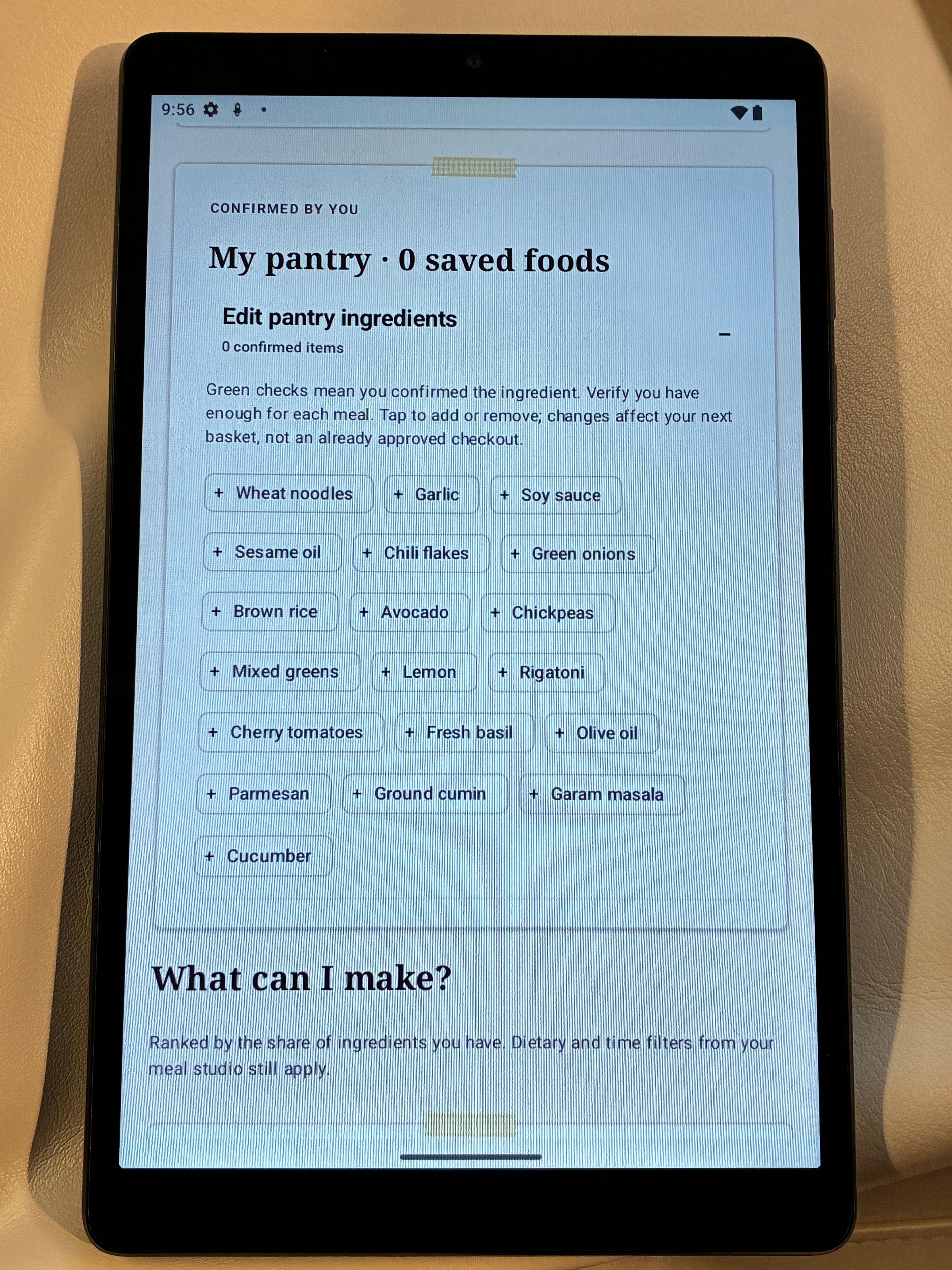
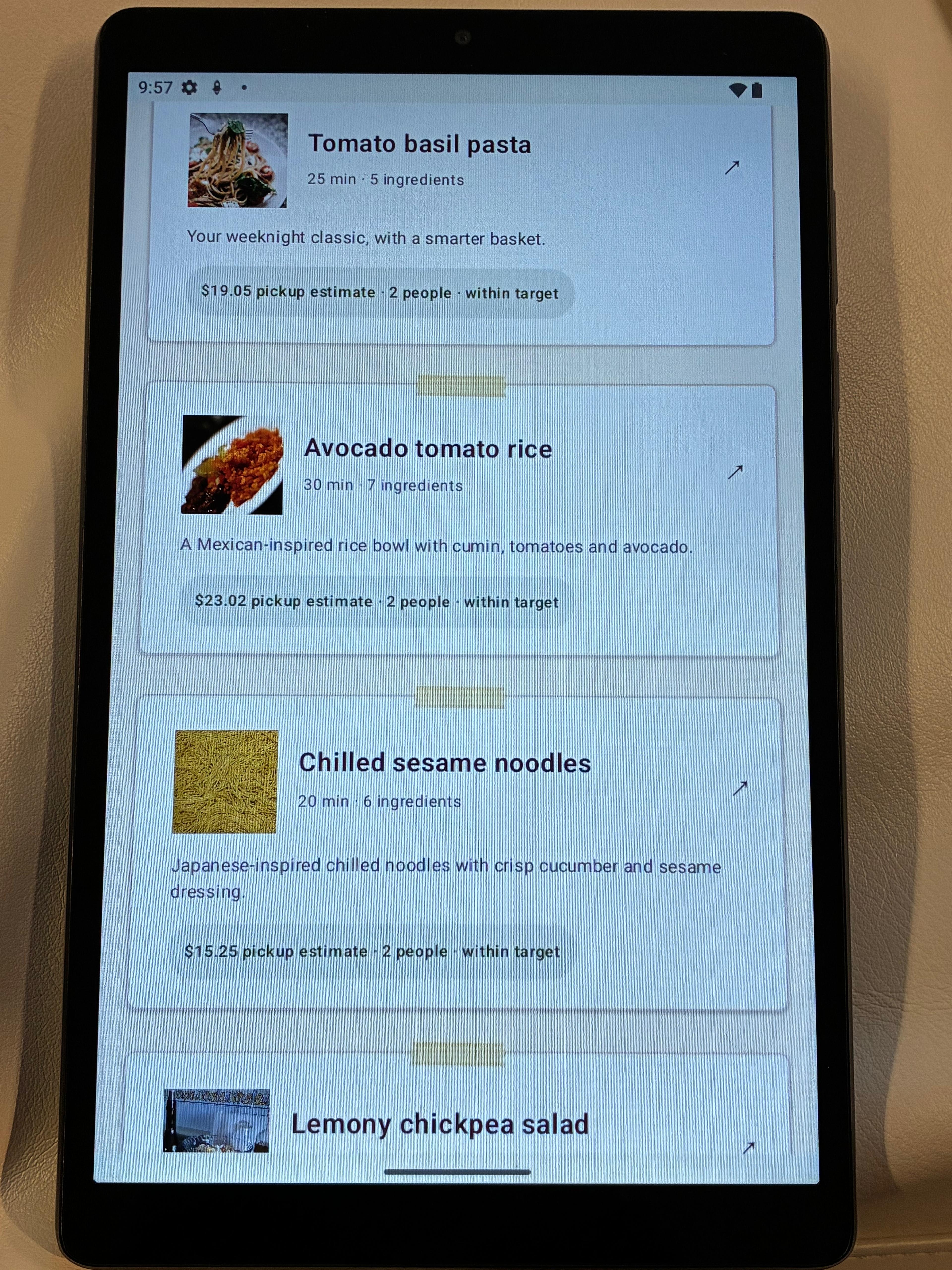
A recipe tells you what ingredients to use, but not what you’ll actually spend at the store. You may need to buy whole packages, and you may already have some ingredients at home. We wanted to make dinner planning account for the real shopping decisions: your budget, preferences, and pantry.
What it does
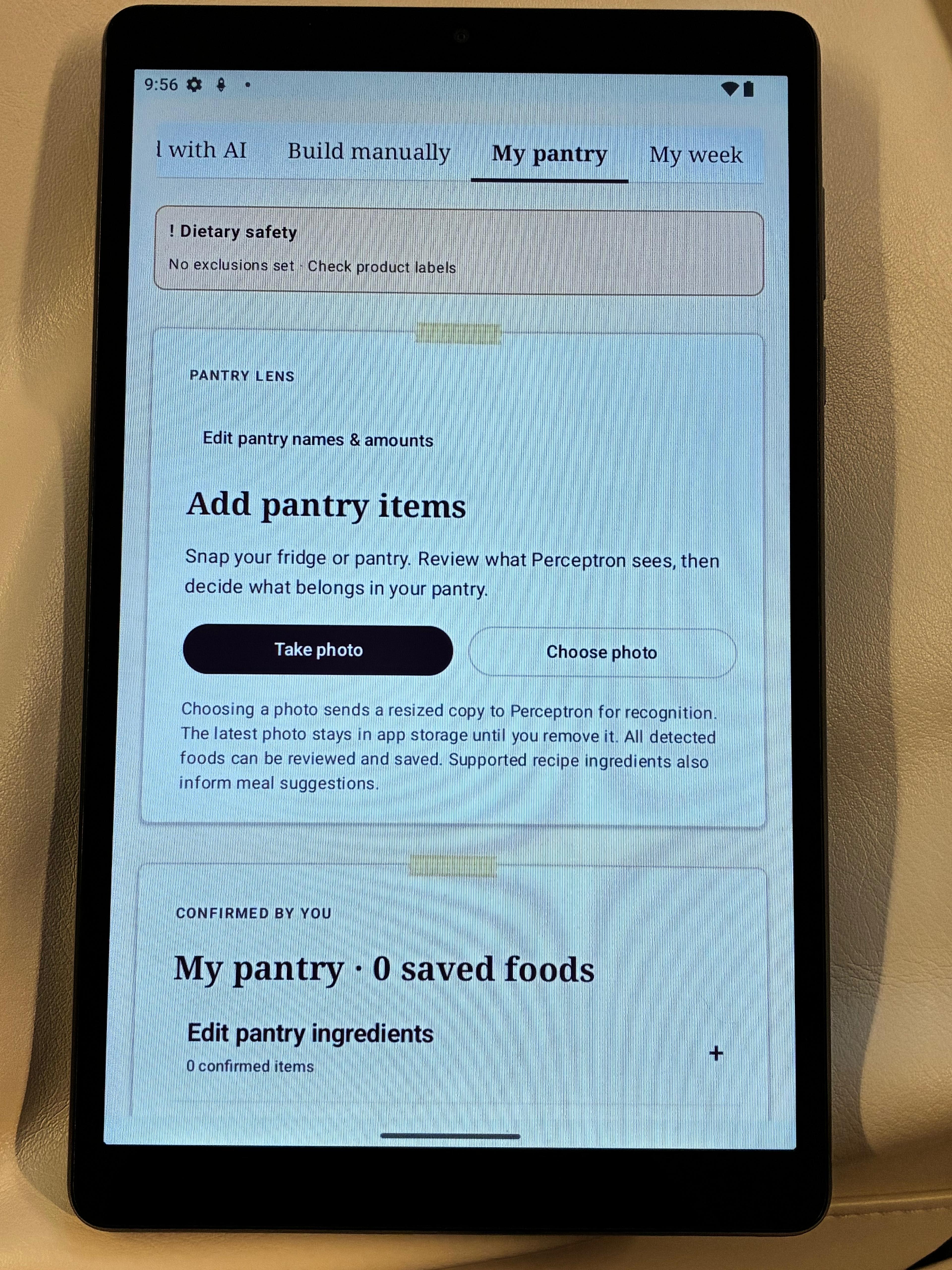
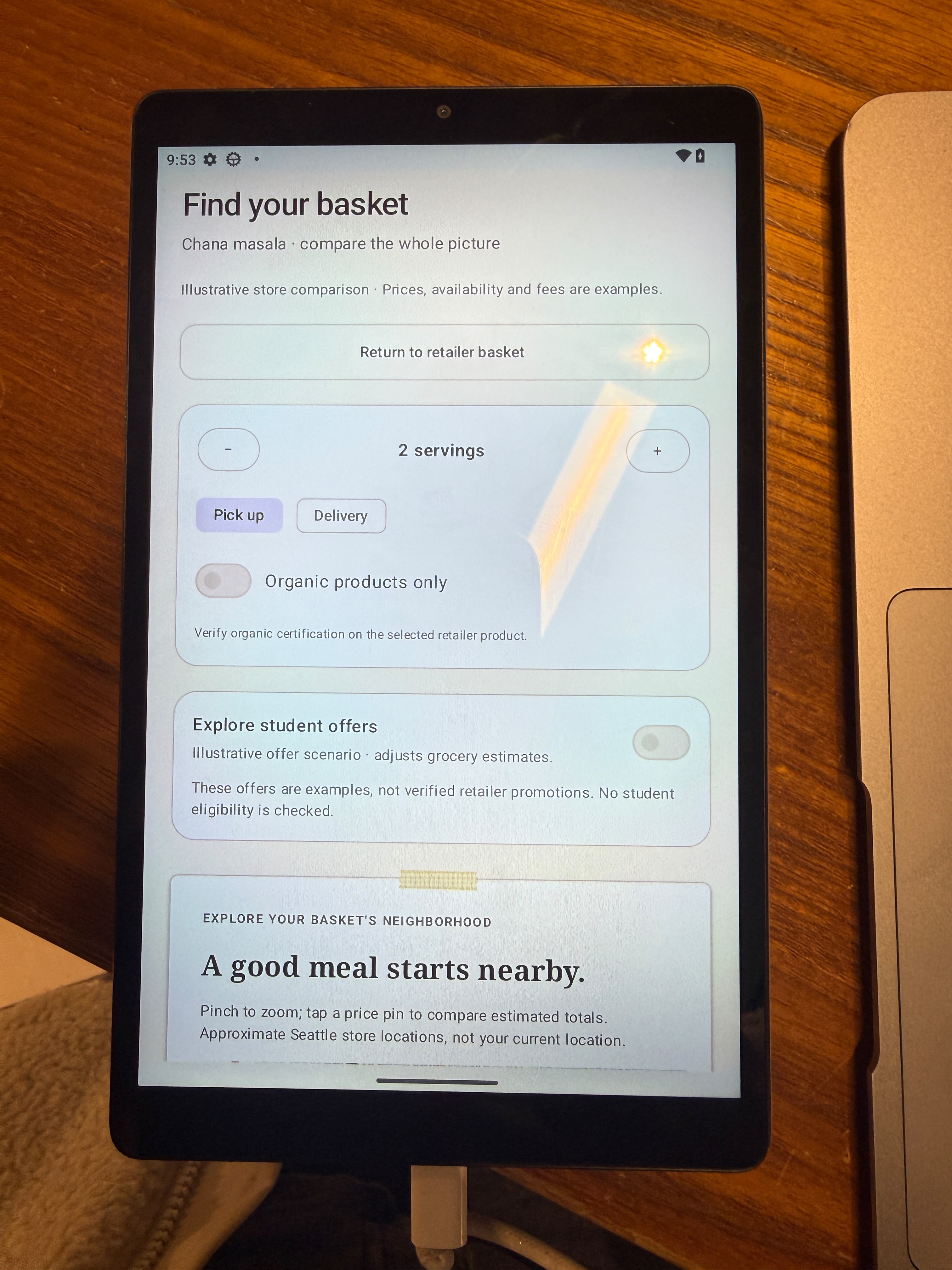
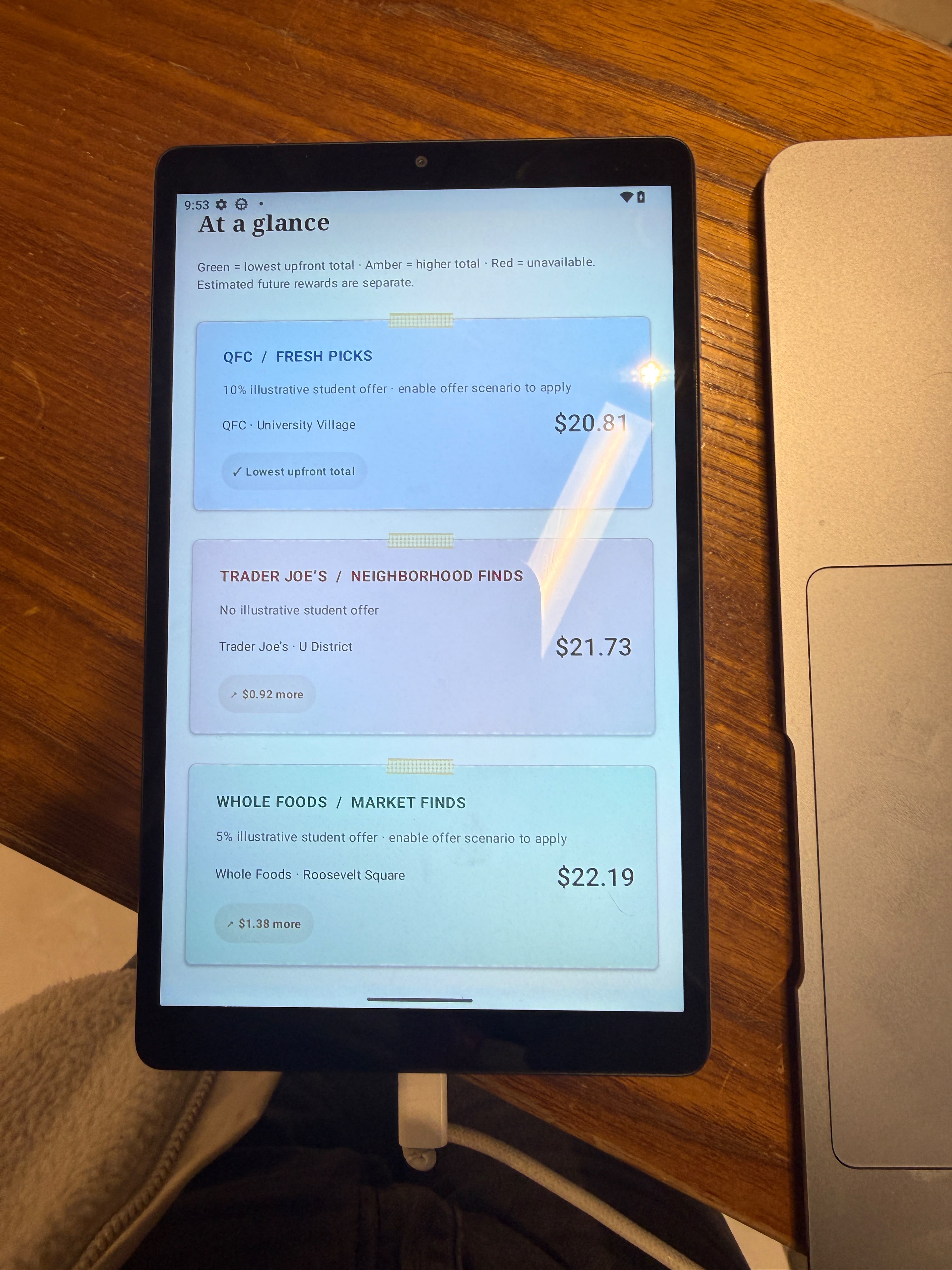
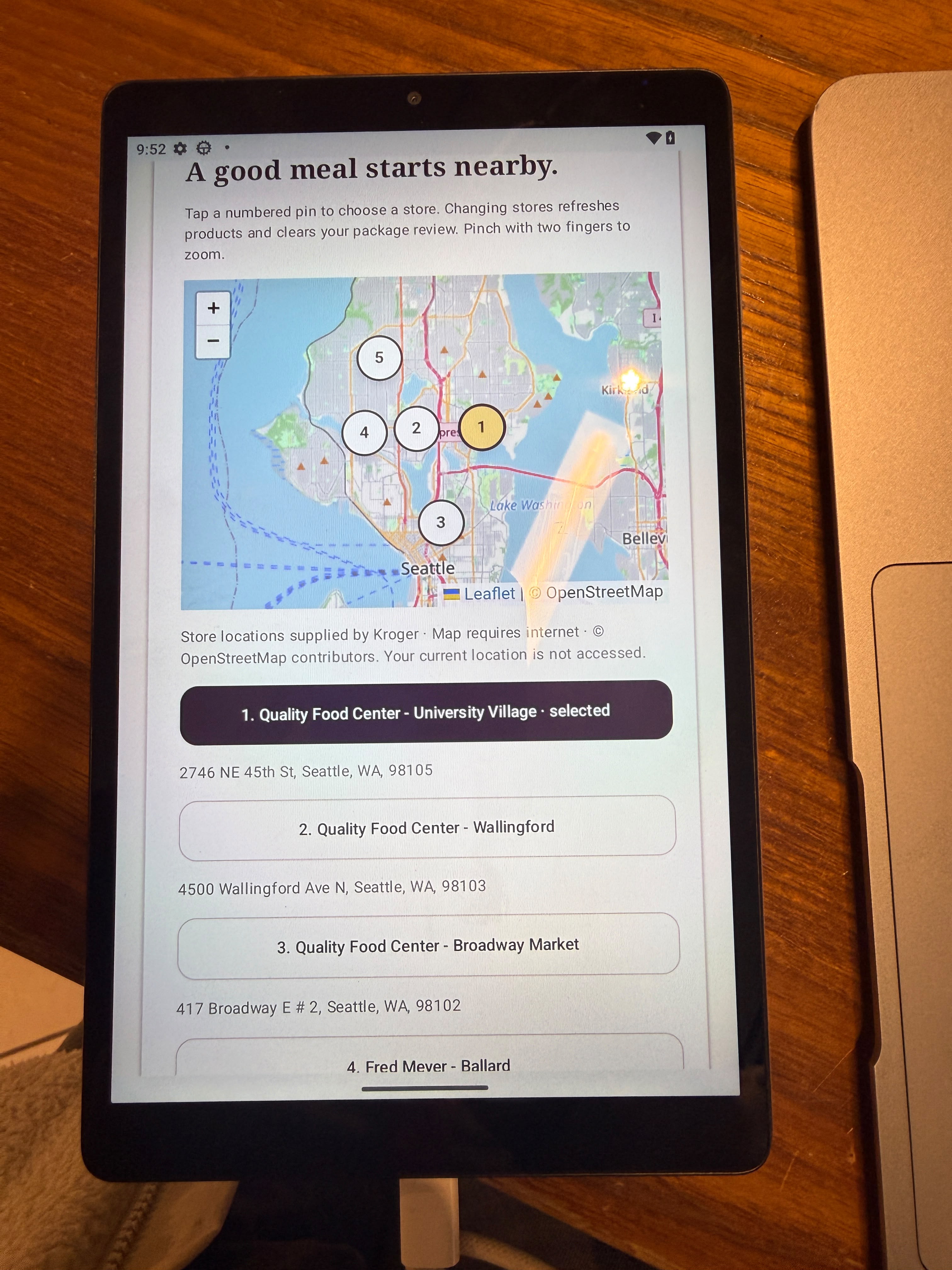
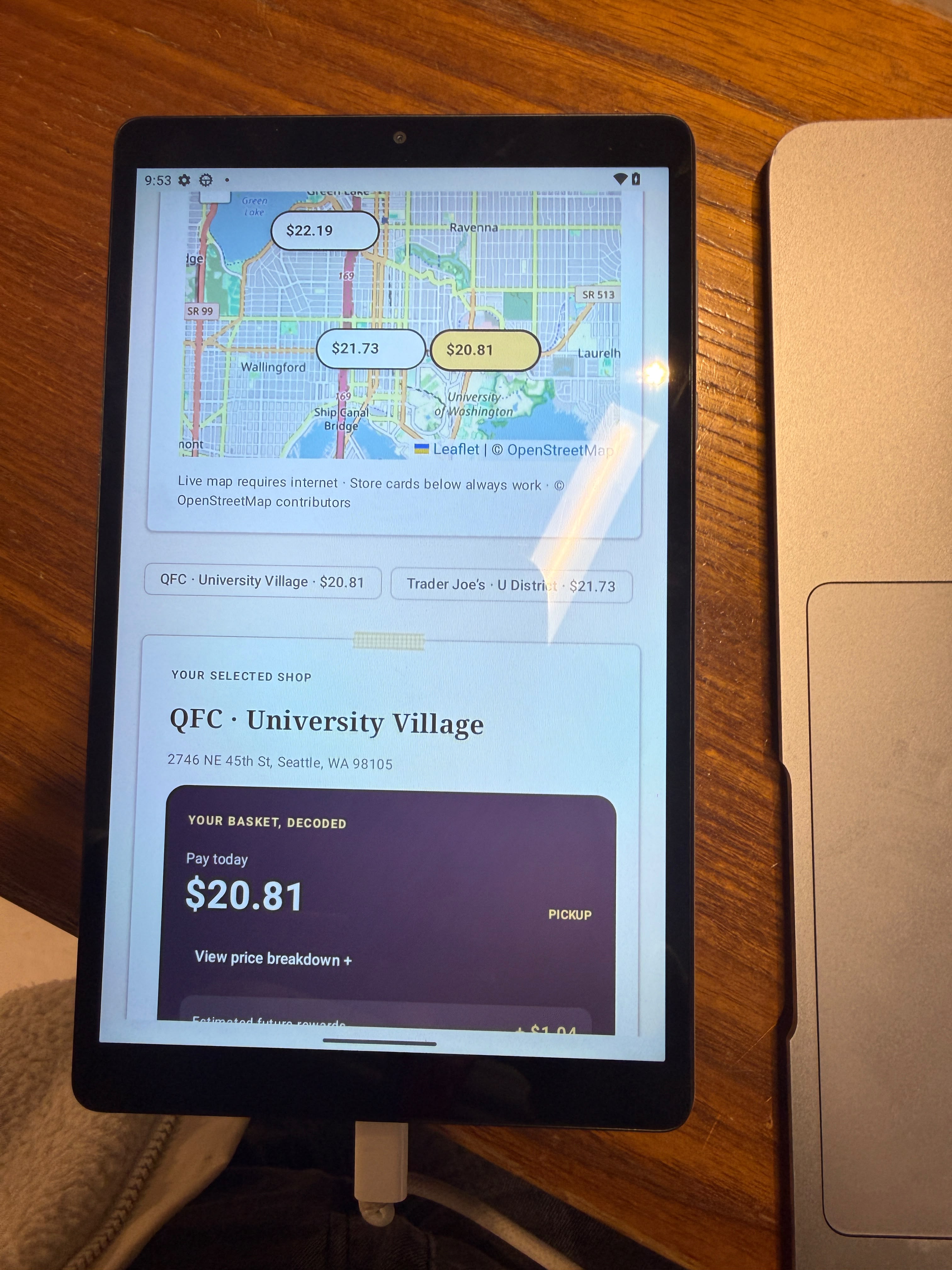
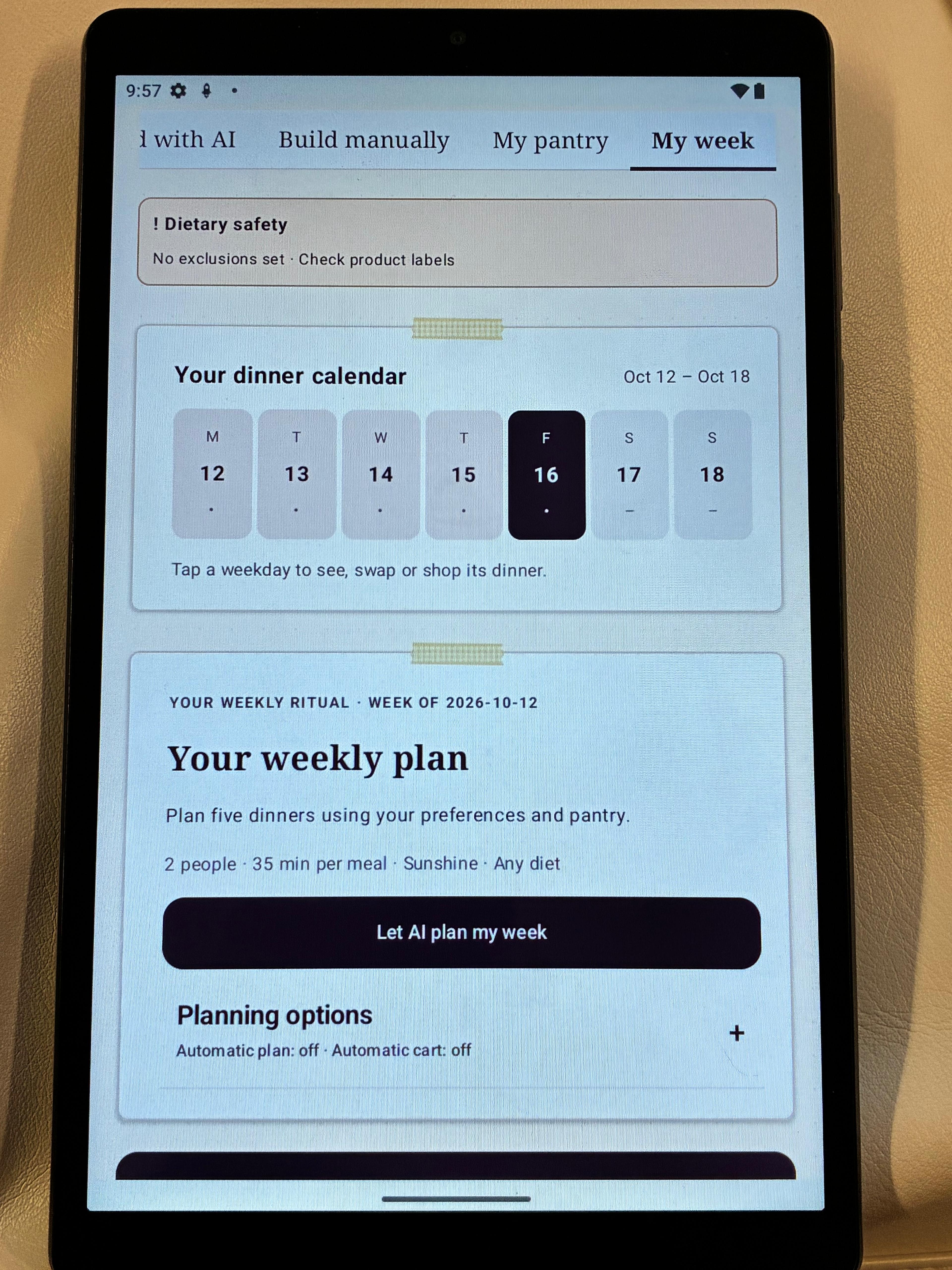
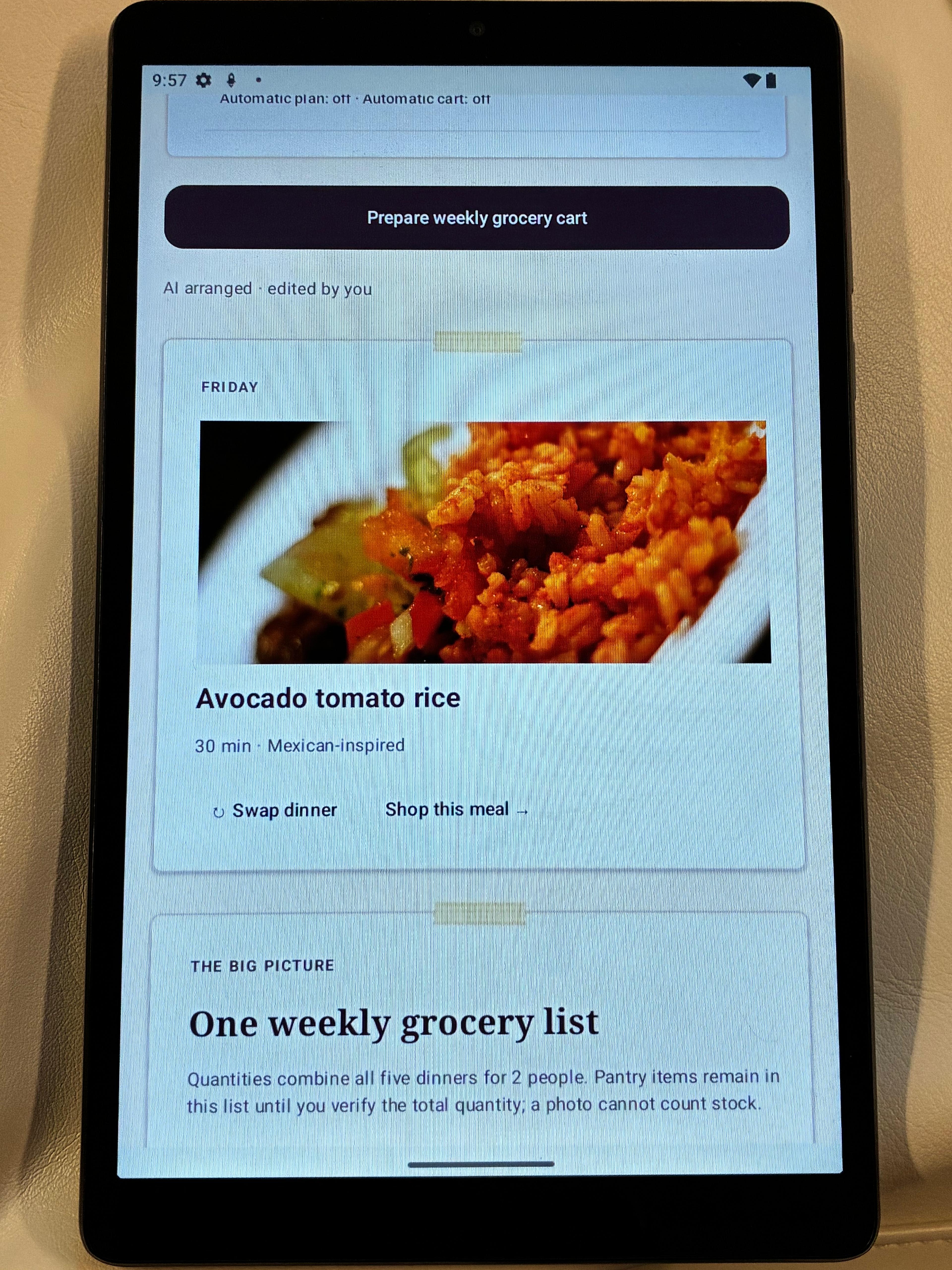
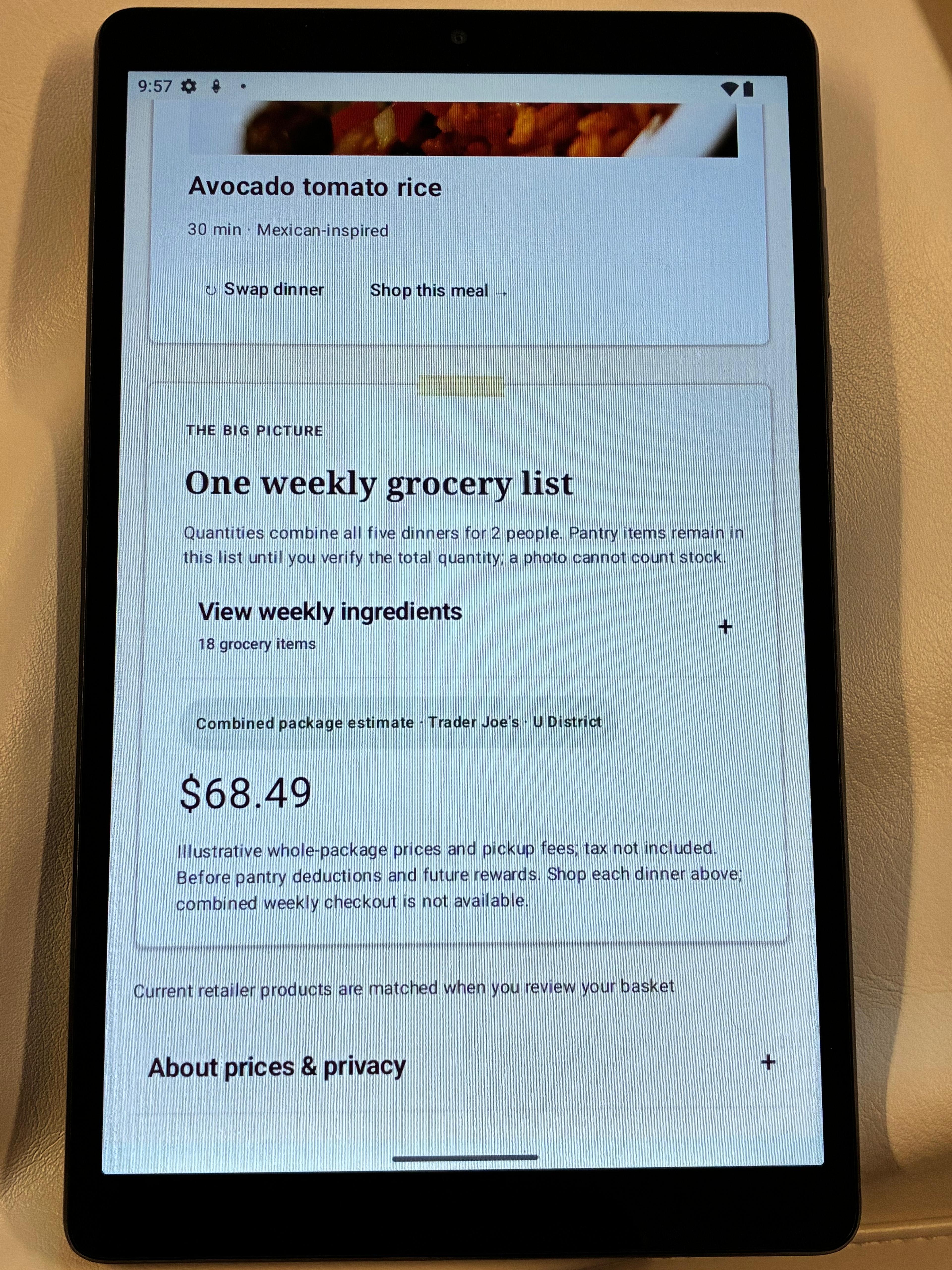
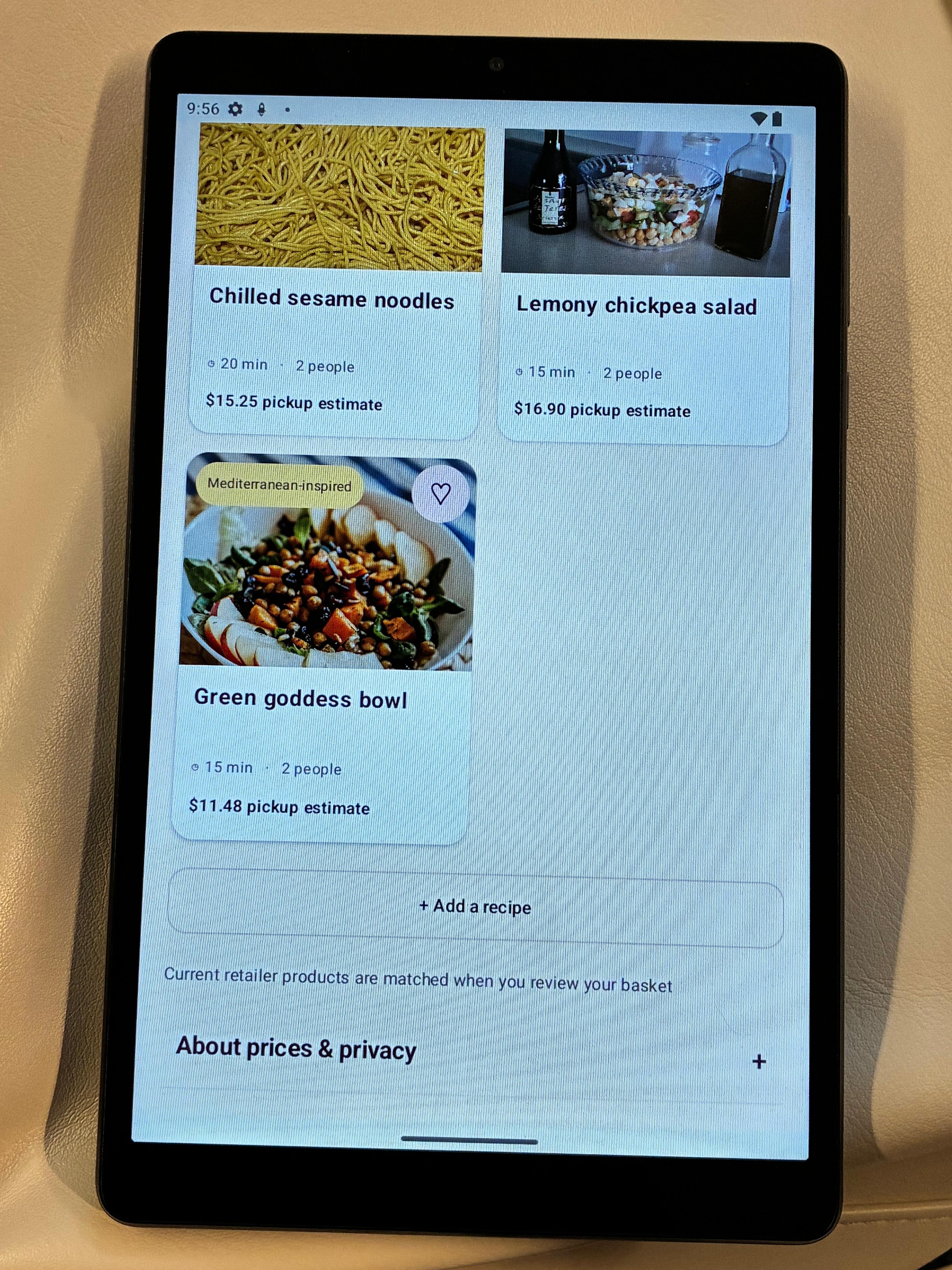
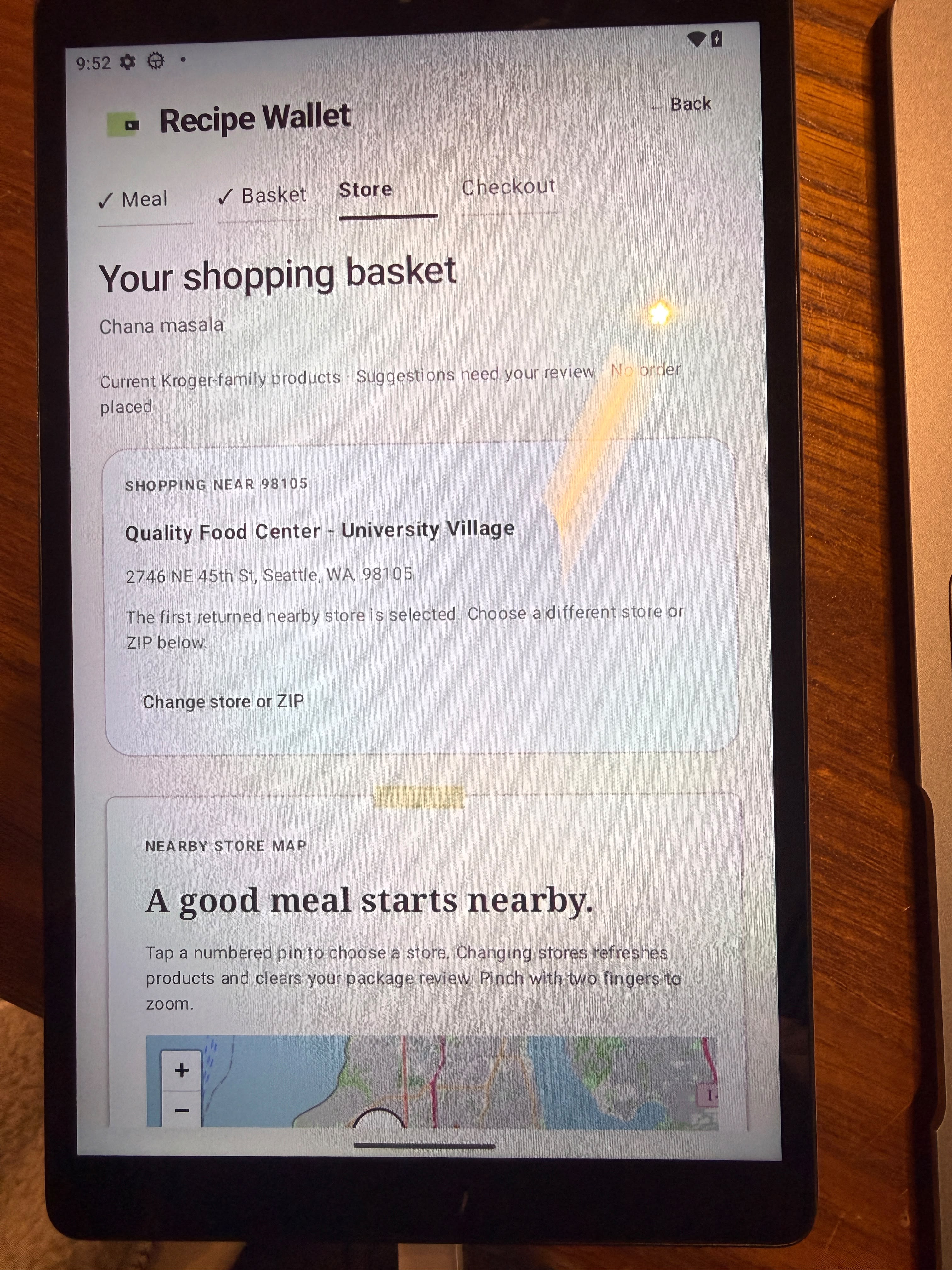
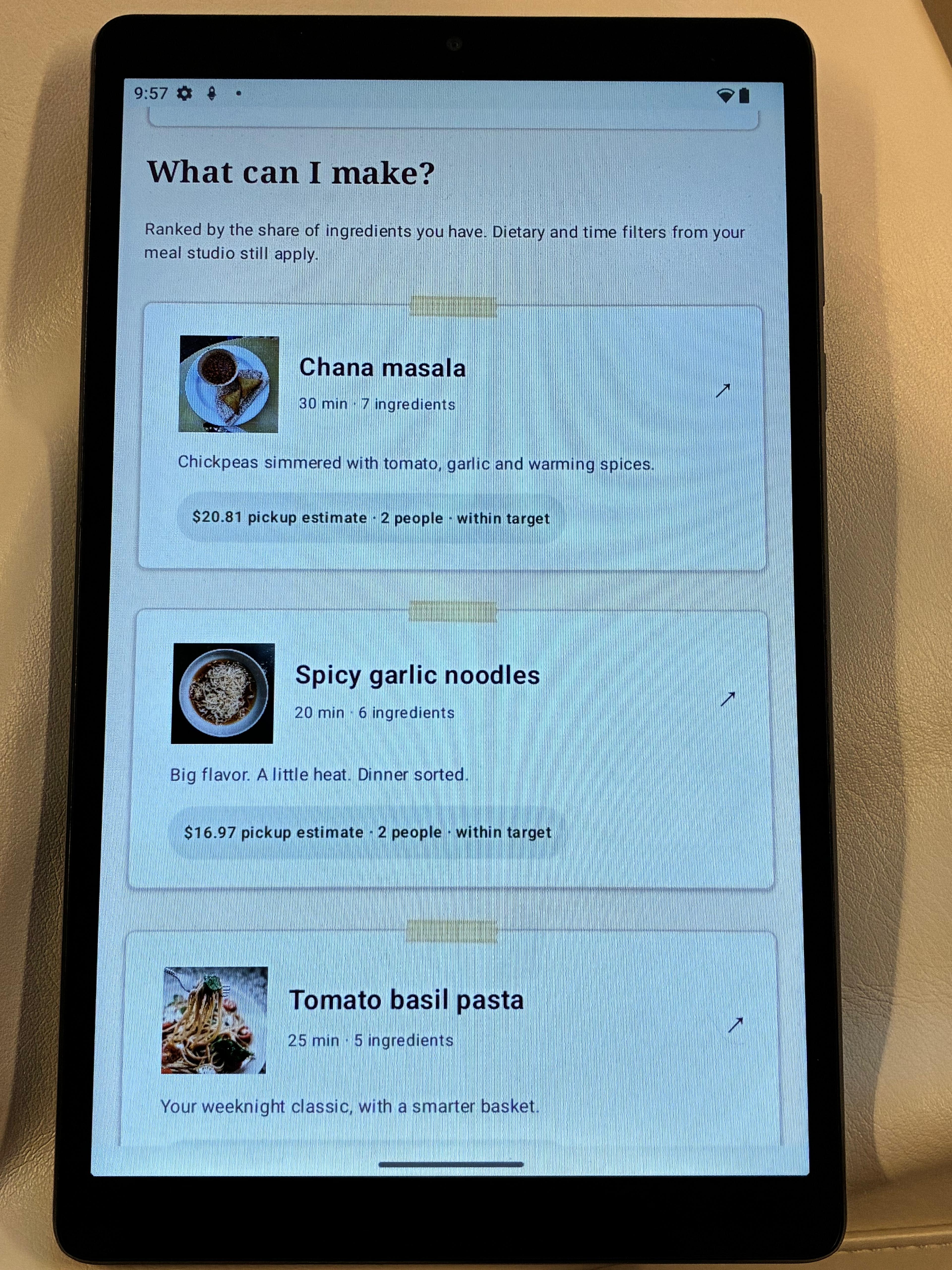
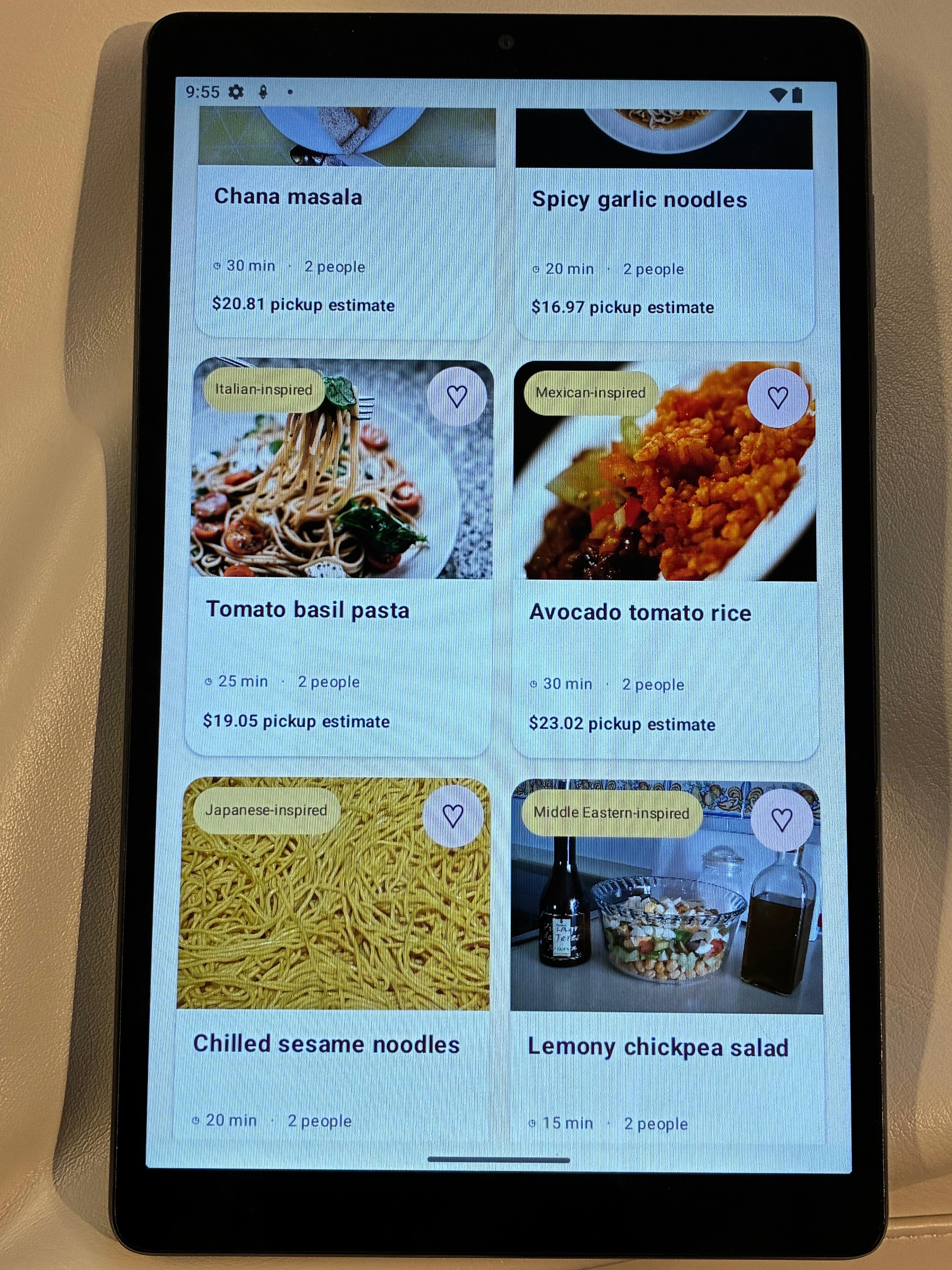
Recipe Wallet turns a dinner request into a grocery plan. Tell it what you want to make, your budget, what you previously bought, and what's already there in your pantry. Its AI searches all the stores near you to find the best catalog and compares store baskets using whole-package prices that we implemented using KrogerAPI.
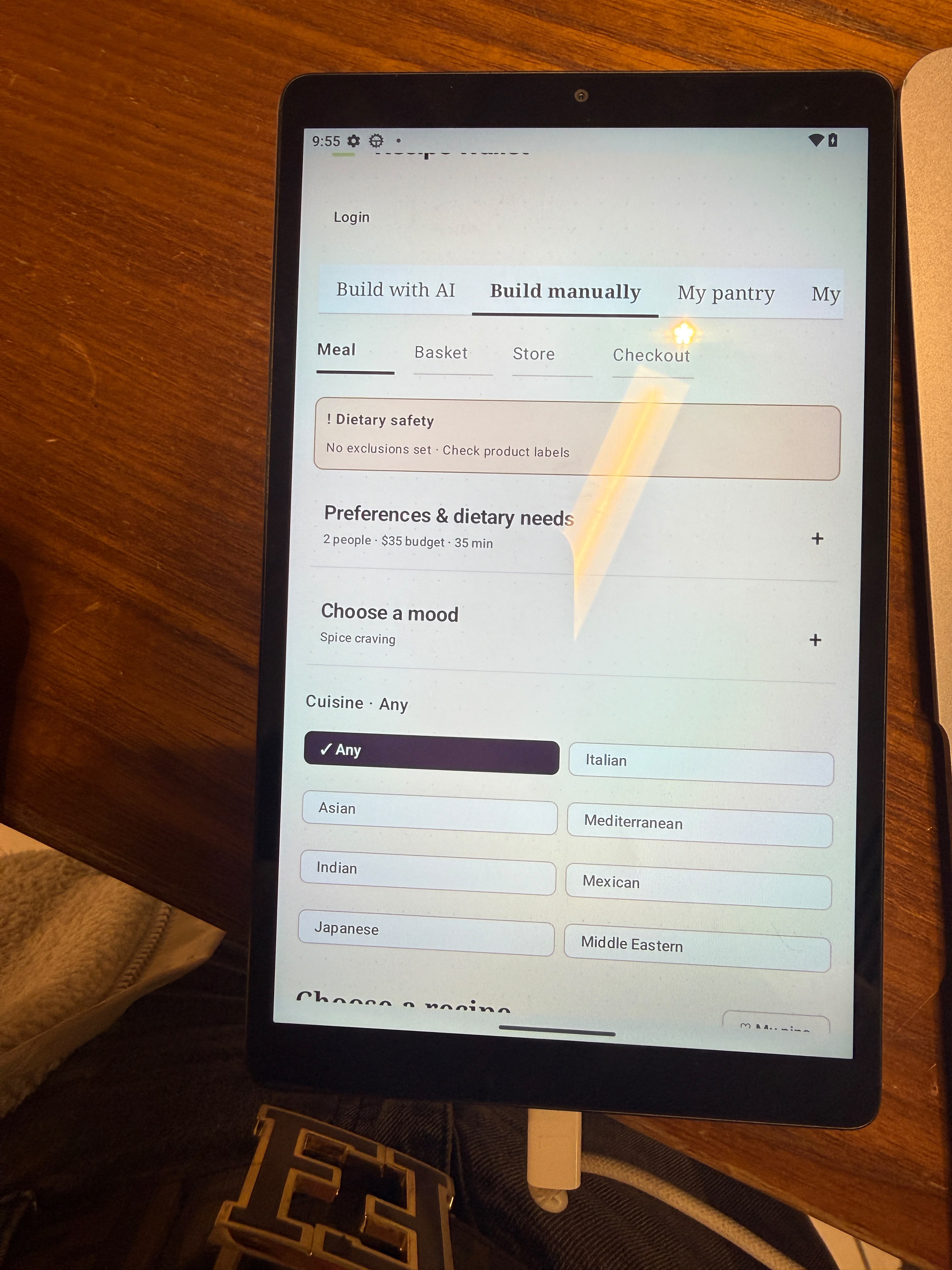
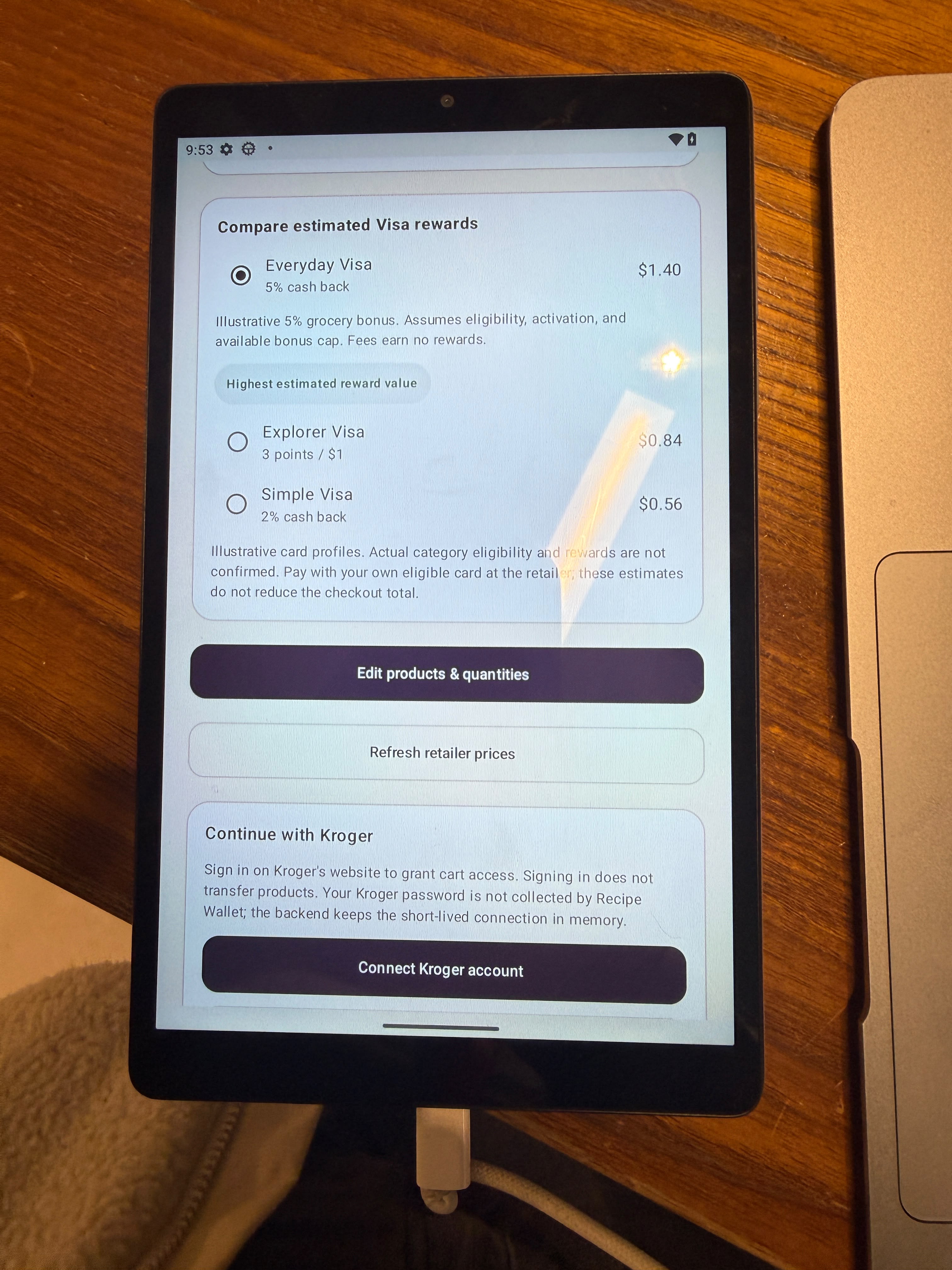
On Recipe Wallet, you can modify the recipe, add a brand new recipe, change the serving sizes, mark what's already there in your home fridge and pantry, choose preferences such as pickup or delivery, and it also helps you save a lot of money by telling you which VISA card will give you the most benefits!
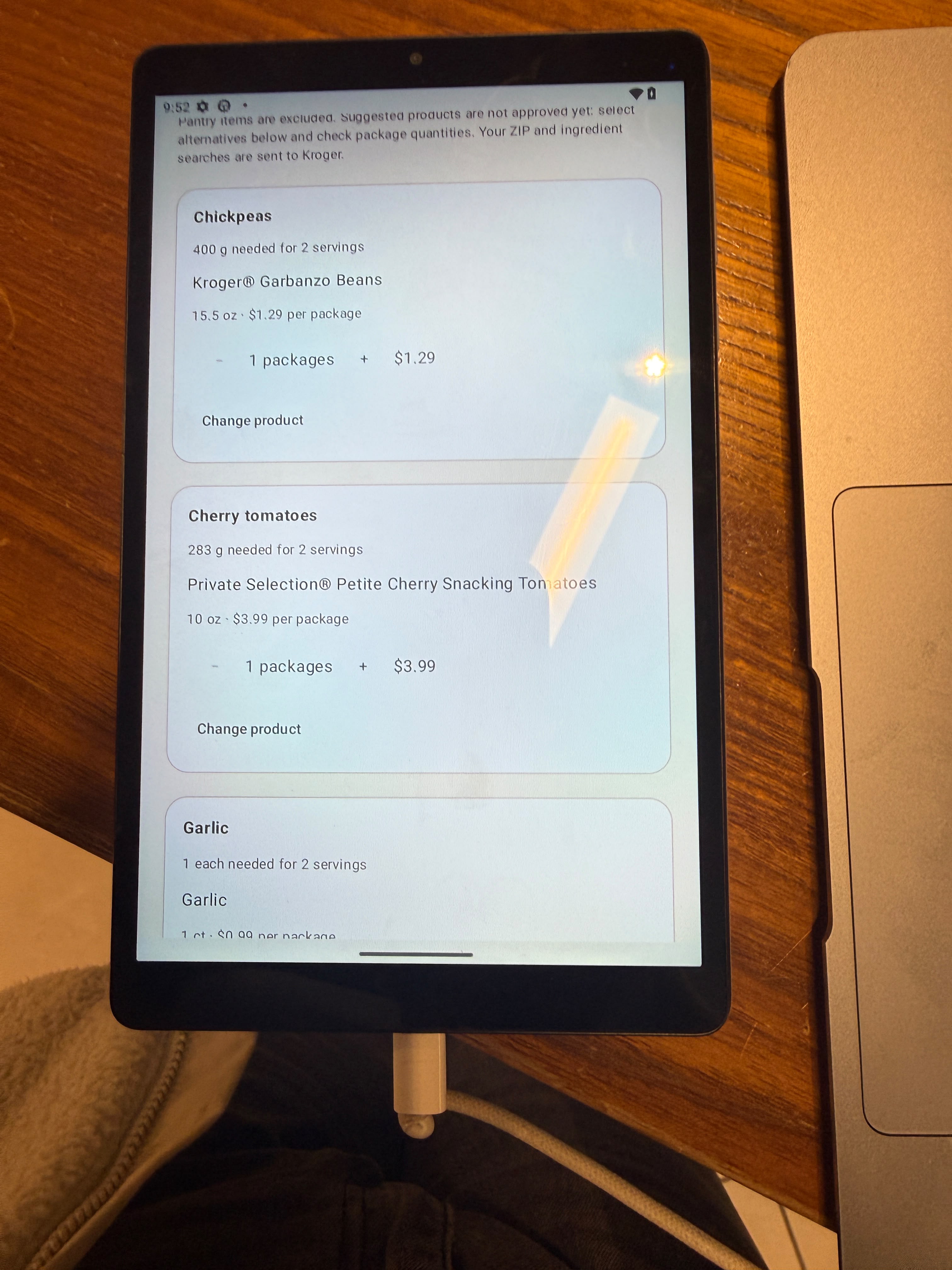
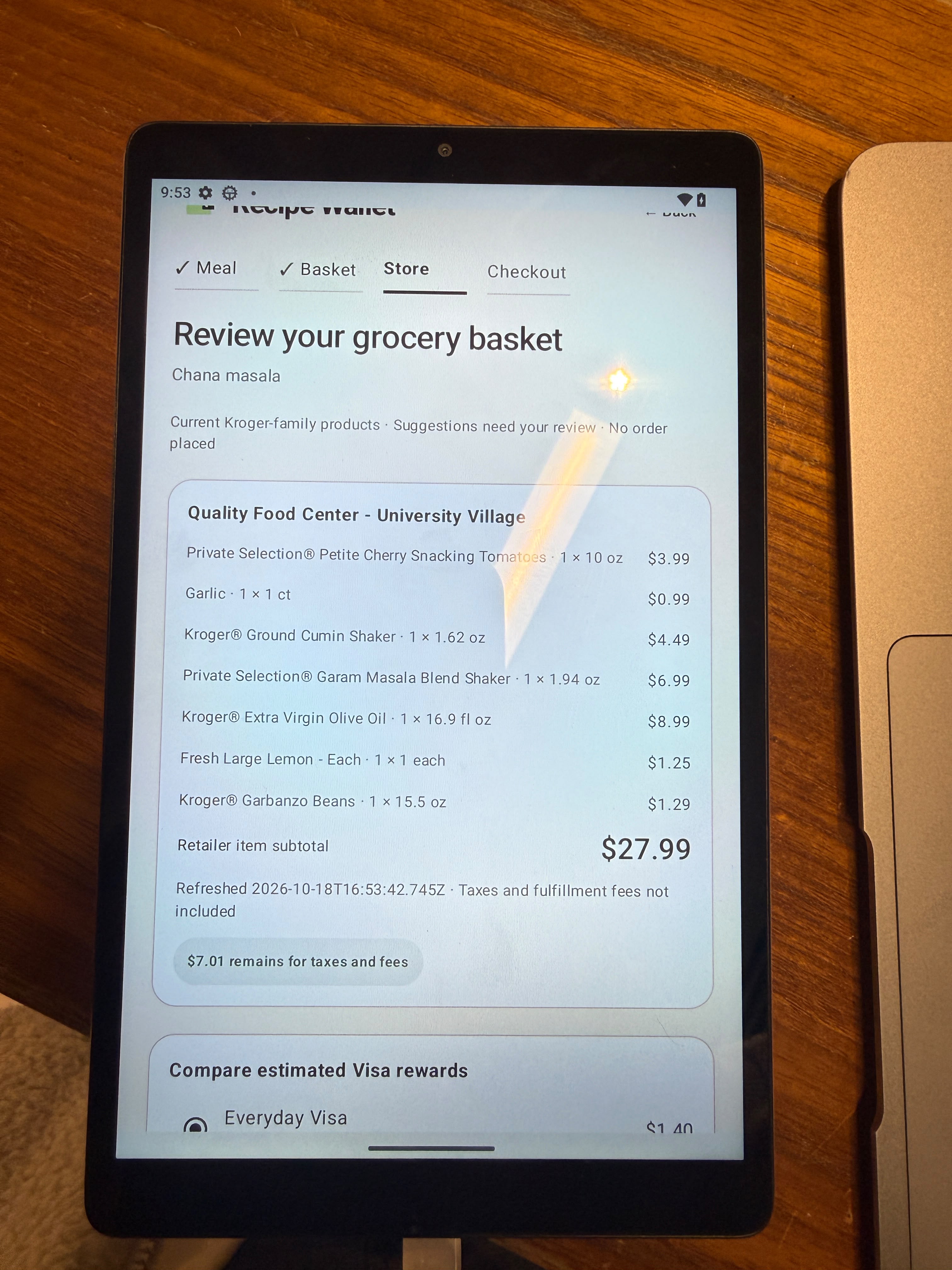
Recipe Wallet shows the selected products, package sizes, quantities, and current retailer item subtotal for your review when you are ready to check out. Recipe Wallet never places an order or makes a payment automatically until you authorize it to do so.
How we built it
We built Recipe Wallet as a native Android app using Kotlin and Jetpack Compose, backed by a Node.js server. Gemini turns meal requests, budgets, and pantry ingredients into recipe plans, while our code validates basket quantities and calculates estimated costs. Perceptron powers pantry photo scanning, Supabase supports accounts and saved recipes, and Kroger APIs provide current product prices and an approved cart handoff.
We tested checkout with Stripe in test mode and used VEYZL to audit our AI through GitHub pull requests. Its findings led us to fix response handling, add request pacing and retries, and strengthen safety responses, taking the audit from 2 passed and 7 errored to 9/9 passing.
Challenges we ran into
Some of the biggest challenges we faced were:
- Balancing real prices with reward estimates. We needed to distinguish what users pay today from potential future card rewards, without presenting those rewards as an immediate discount.
- Keeping users in control. The AI could suggest meals and prepare baskets, but every purchase-related action needed explicit user approval.
- Turning recipe quantities into shopping quantities. A recipe might need two tablespoons of an ingredient, while the store sells an entire bottle. We had to account for servings, pantry supplies, and package sizes.
- Making basket totals reliable. We had to calculate whole-package counts, flag stores missing required ingredients, and keep Android and backend calculations consistent.
Accomplishments that we're proud of
We built an end-to-end Android flow, from telling the AI, "Hey, I want to eat Tomato Pasta today, in under $15," to manually modifying recipes and scanning your refrigerator so the app knows what you already have. We also made sure to implement follow-up requests that can revise the basket, for example, "I don't want tomato pasta anymore, make it carbonara instead." The app has many cool features that add a lot to the user experience; we're proud of making that flow so seamless.
What we learned
We learned that building a great app takes more than adding features; it takes making them work together with a clear purpose. Balancing the main challenge with multiple side tracks sometimes felt overwhelming, but it pushed us to prioritize, simplify, and connect each integration to the same user journey. We became better at turning ambitious ideas into a cohesive experience where every feature earns its place.
What's next for Recipe Wallet
We’d like to connect verified retailer prices and inventory, support real card reward programs, and improve recipe syncing across devices. We’d also like to add verified nutrition and allergy information. For now, the catalog, prices, availability, fees, and rewards are demo data, and checkout is test-only.
Built With
- javascript
- kotlin
- sql


Log in or sign up for Devpost to join the conversation.