-
-
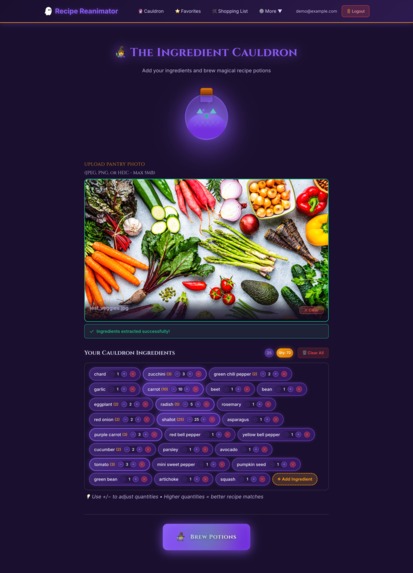
Home Page
-
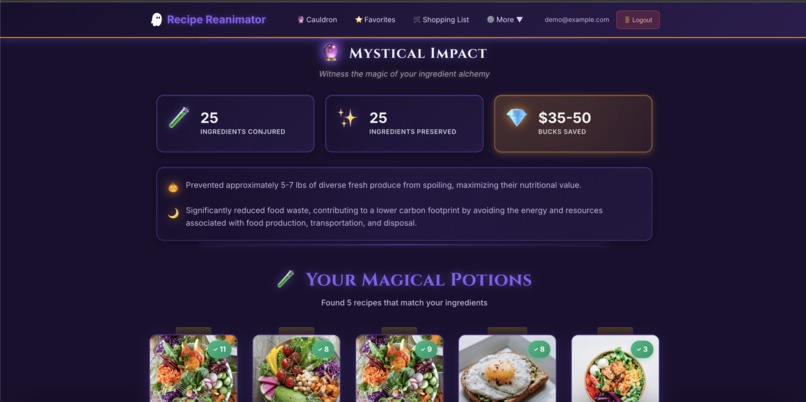
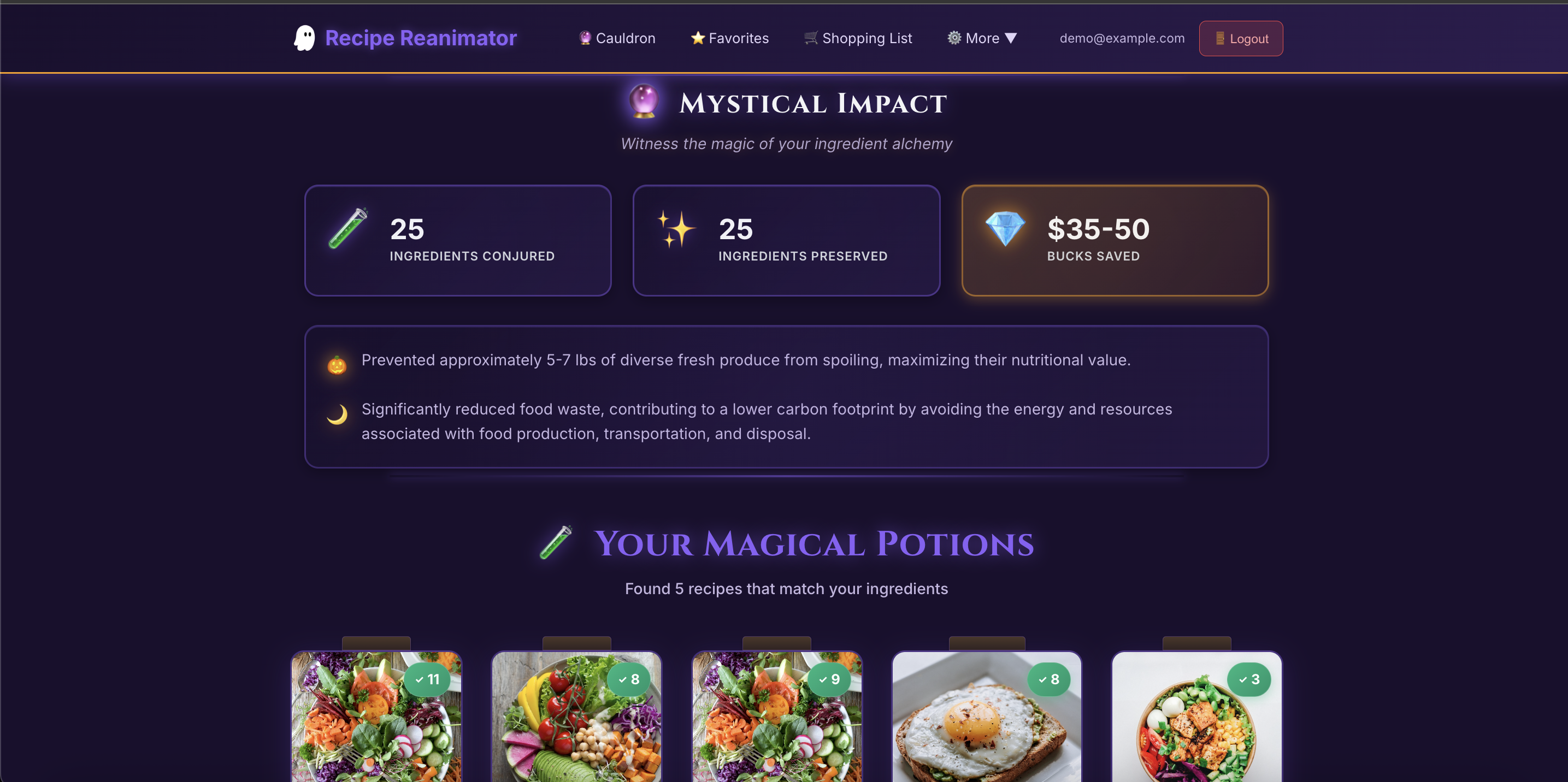
Recipe Generation
-
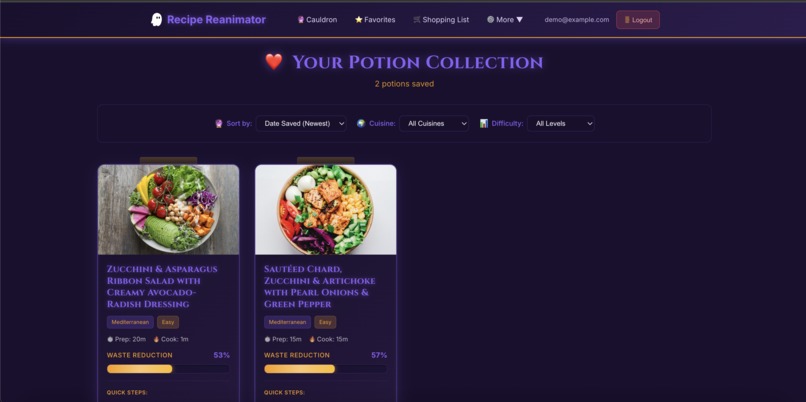
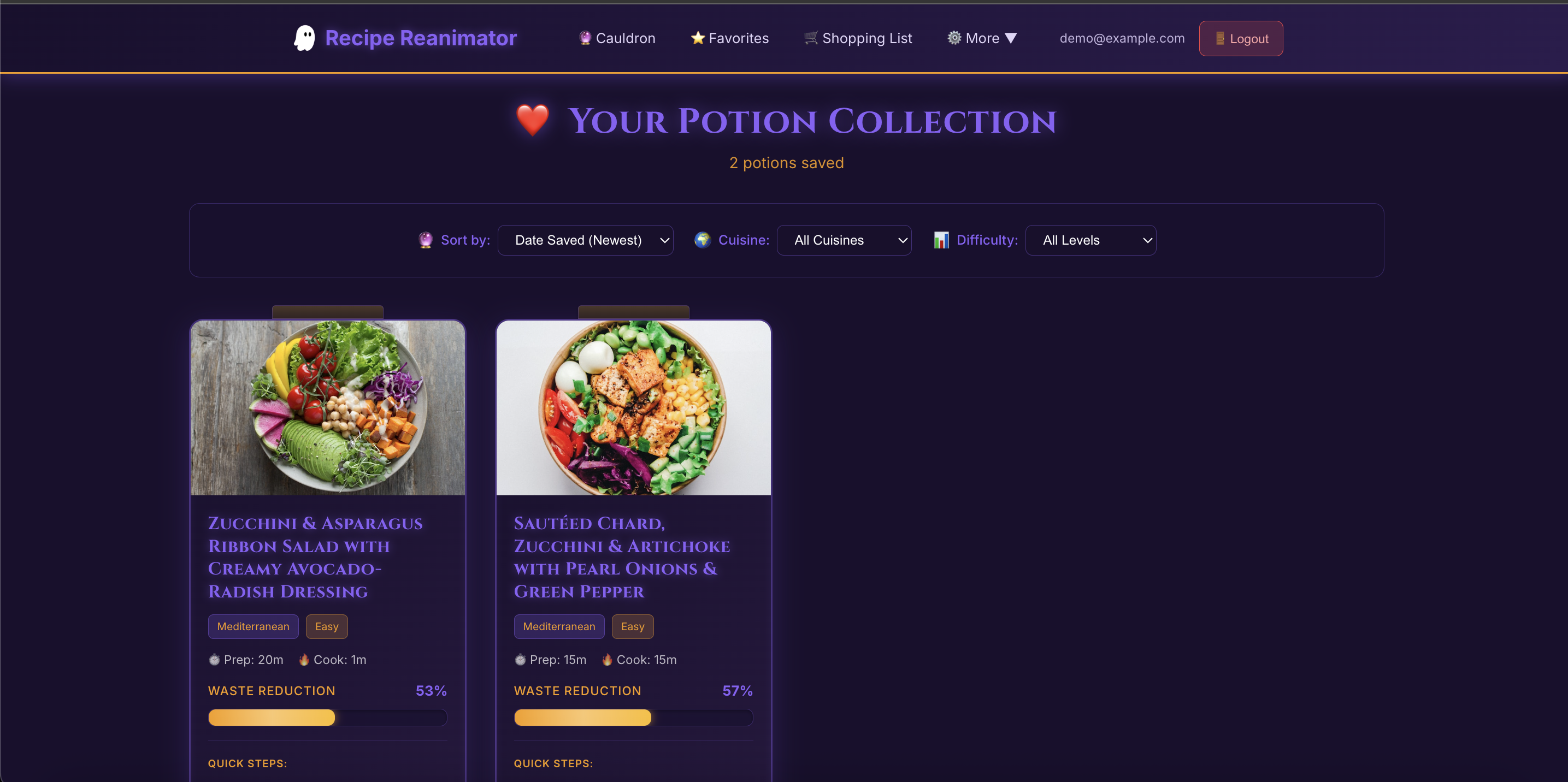
Favourites Page
-
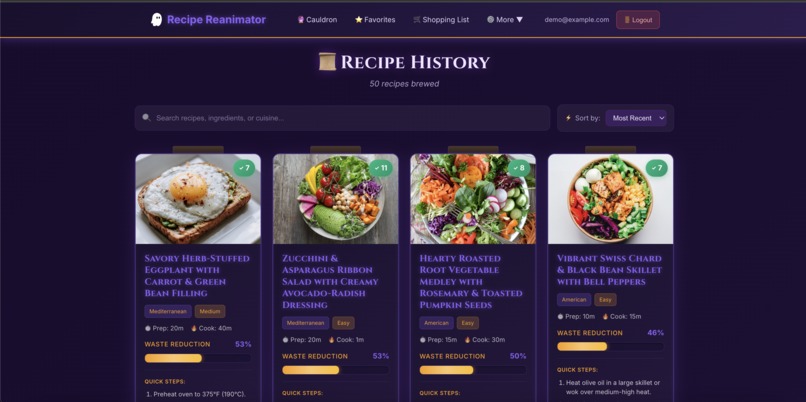
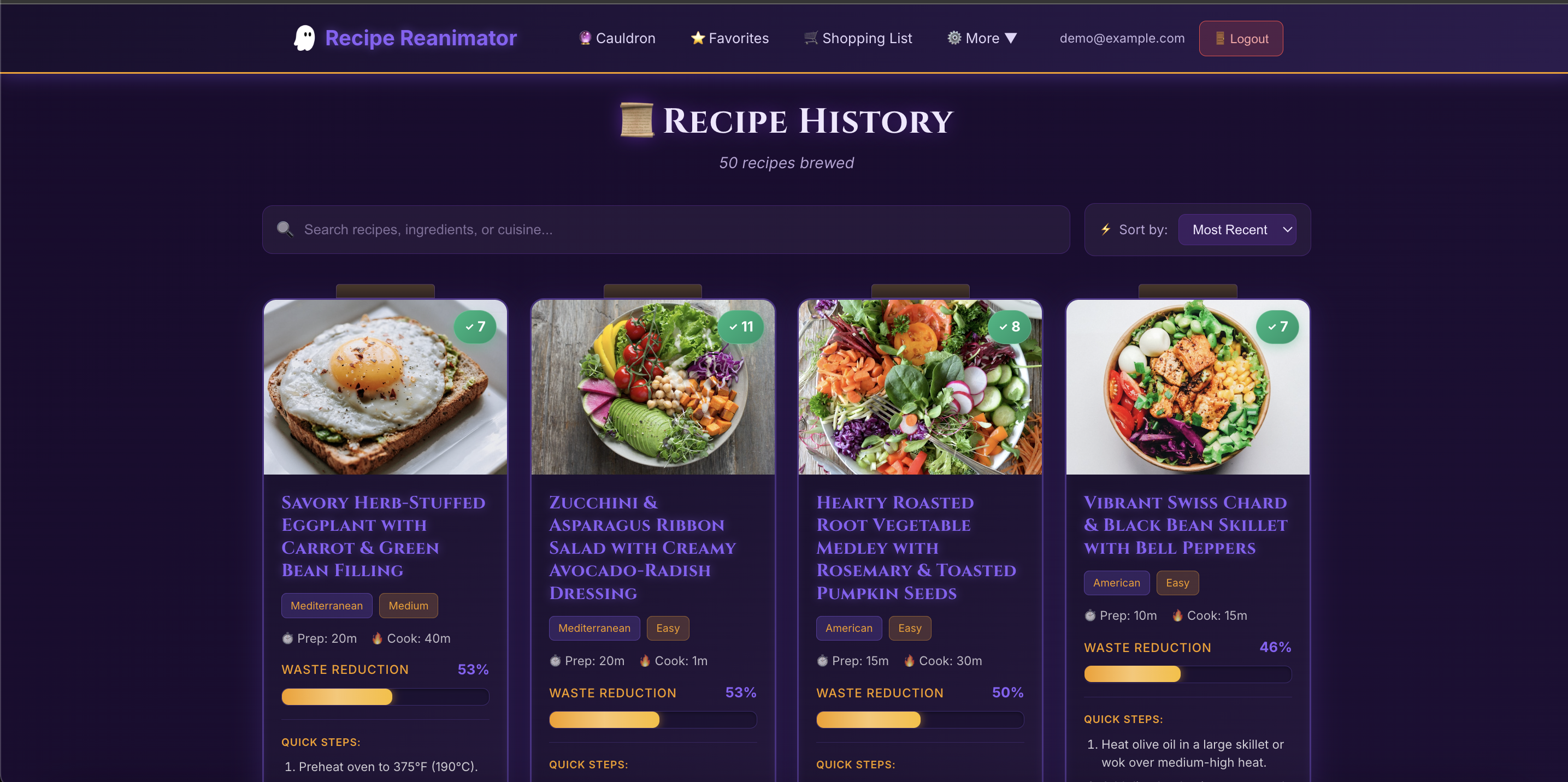
Recipe History Page
-
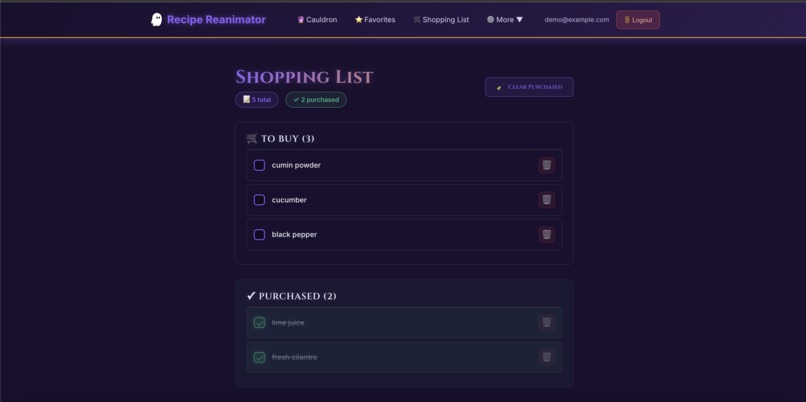
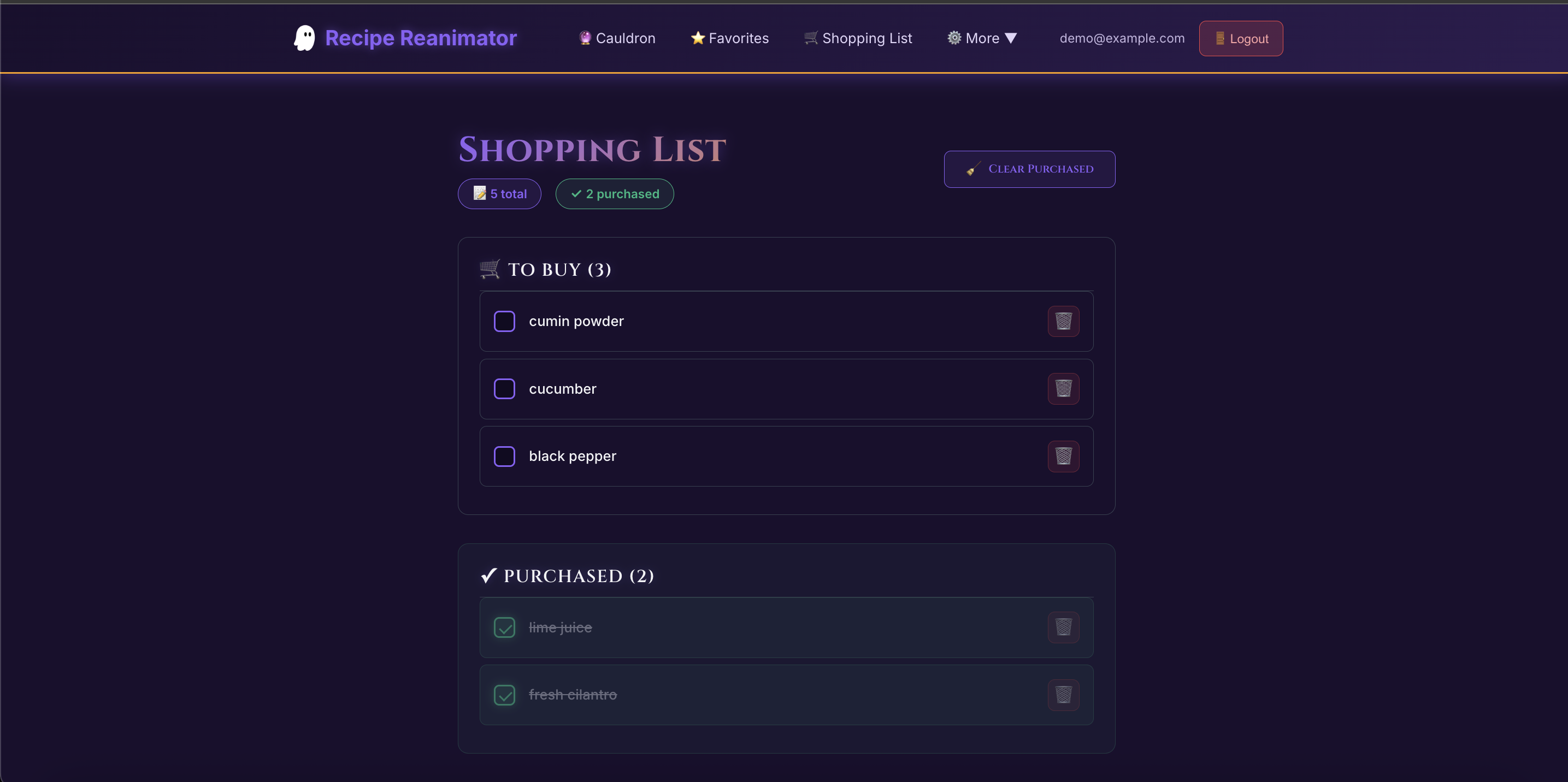
Shopping List Page
-
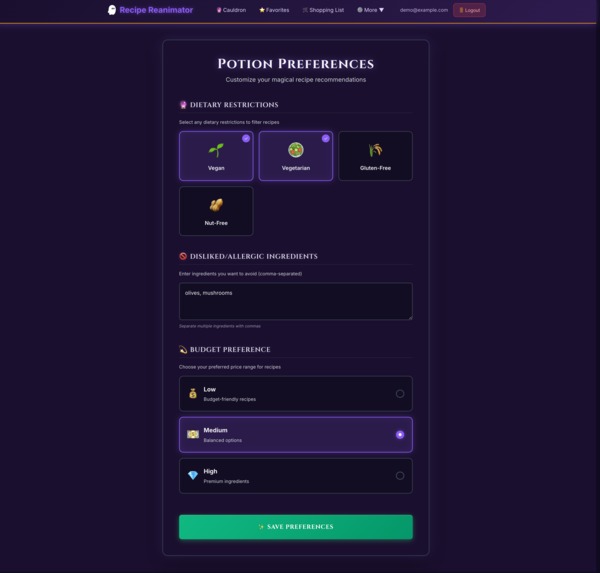
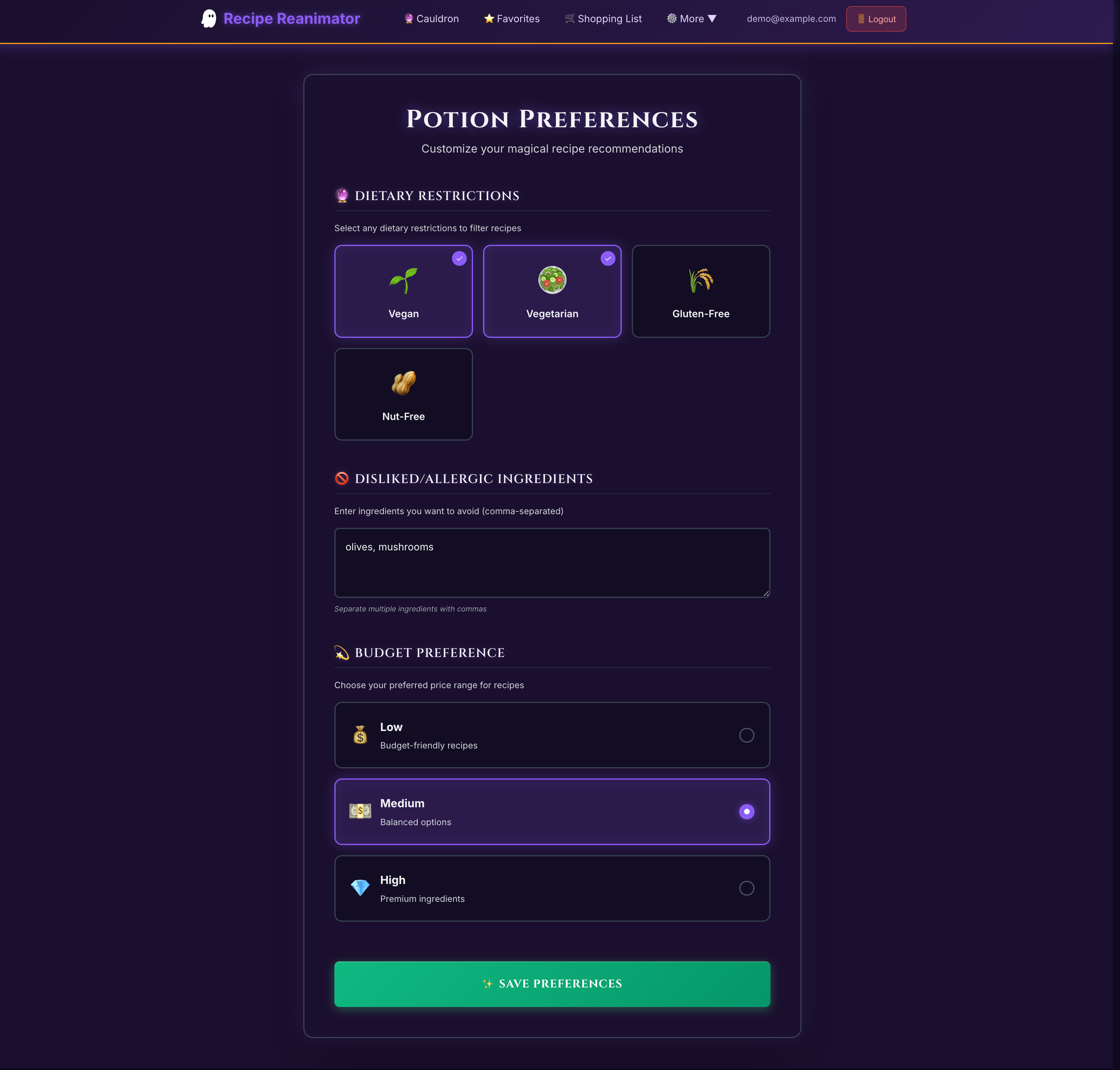
Preferences Page
-
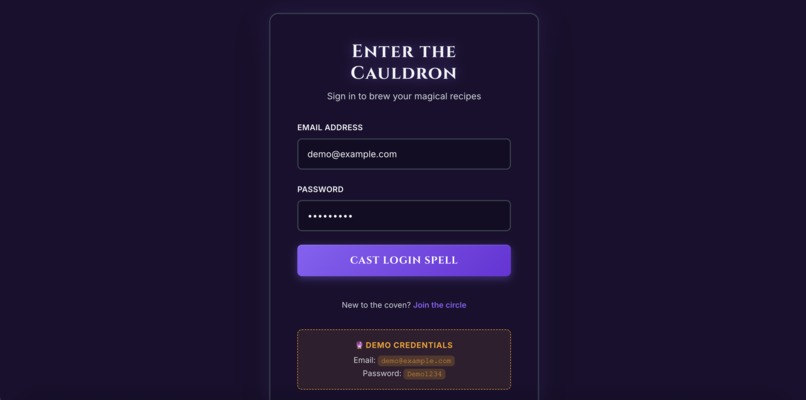
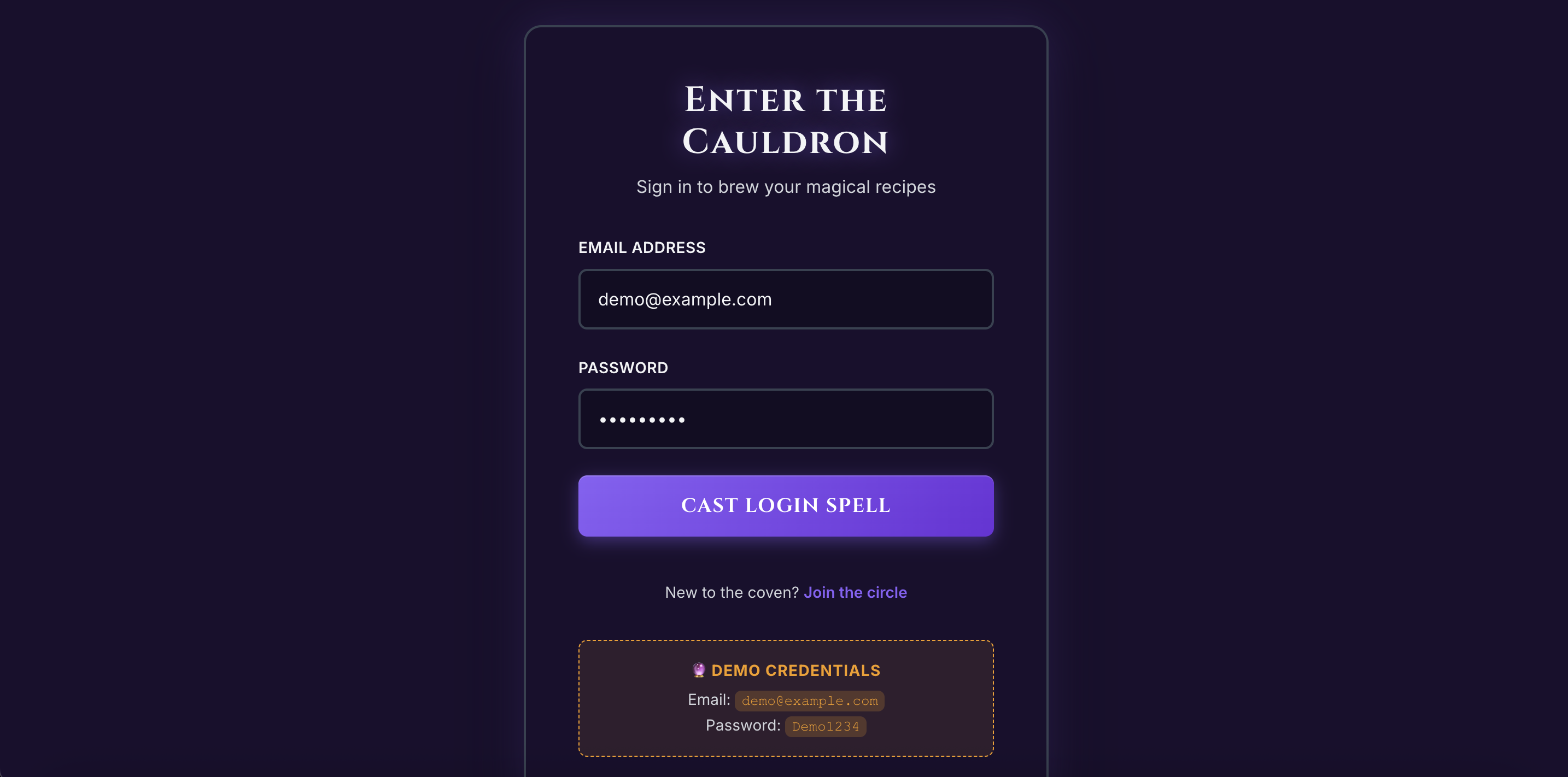
Login Signup Page
🎃 Inspiration
Like Dr. Frankenstein standing over his creation on a stormy night, we asked a dangerous question:
What if no ingredient ever truly had to die?
Food waste is the real monster haunting our world—1.3 billion tons of food wasted every year, feeding climate change while millions go hungry. Half-used onions. Lonely tomatoes. That forgotten bag of spinach in the back of the fridge. All abandoned… all wasted.
We envisioned an AI alchemist that could resurrect these “dead” ingredients, transforming them into flavorful new life while saving money and reducing environmental harm.
But here’s where the experiment turned truly mad.
We didn’t just build an app. We summoned Kiro—our AI-powered IDE lab assistant—to help us stitch together an unholy fusion of technologies. SQL and NoSQL. Python and React. AI models and cloud infrastructure. Individually powerful. Together? A technological chimera.
Against all odds… It lives.
🧪 What It Does
Recipe Reanimator is a Halloween-themed web application that transmutes leftover ingredients into personalized recipe potions through an enchanted cauldron interface.
Users can:
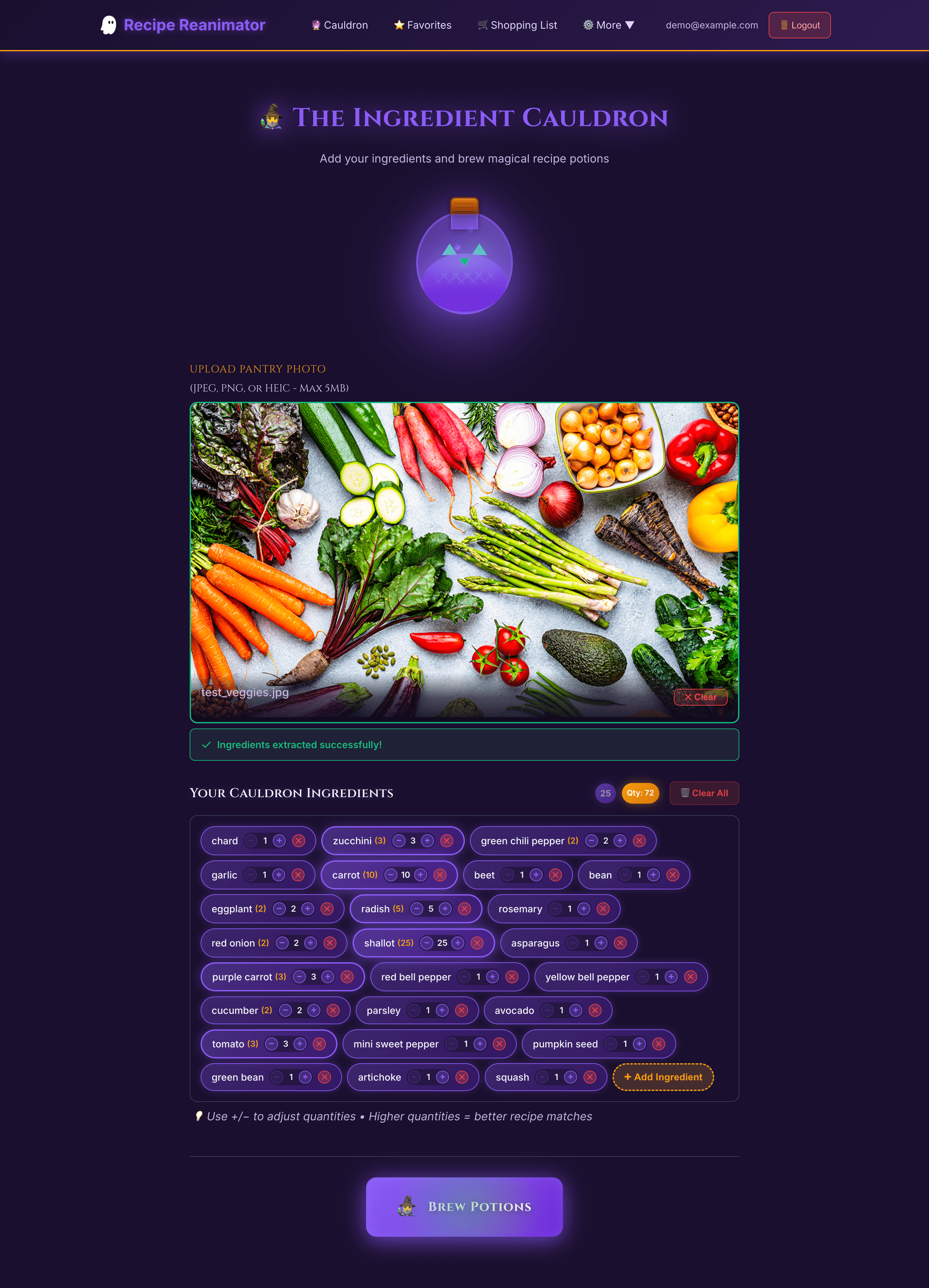
- 📸 Snap haunted pantry photos — AI extracts ingredients using Gemini Vision
- 🔮 Drop ingredients into the cauldron — Manual input with precise quantity tracking
- ⚗️ Brew recipe potions — Generates 5 personalized AI recipes, ranked by a proprietary Waste Score
- 💚 Witness your impact — Real-time sustainability metrics for food saved, money saved, and CO₂ reduced
- ⭐ Preserve the best spells — Save your favorite recipes
- 🛒 Summon shopping lists — Auto-generate missing ingredient lists
- 🔗 Share your experiments — Public URLs for friends and family
Every recipe is optimized to maximize what you already own, minimizing waste and unnecessary grocery spending—while fully respecting dietary restrictions and dislikes.
🗺️ The Reanimation Blueprint (Architecture)

🧟 How We Built It (With Kiro as Our Lab Assistant)
🧬 The Frankenstein Architecture
We intentionally fused incompatible technologies to push the limits:
- TiDB (SQL) + MongoDB (NoSQL) — Relational rigor meets document chaos
- Python FastAPI + React 19 — Backend meets frontend
- Google Gemini AI Generation + Image Analysis — Generative intelligence meets analytic memory
- Google Cloud Run + GitHub Actions — Serverless meets automated resurrection
Every part different. Every part essential. Together: a living system.
🤖 Kiro: Our AI Lab Assistant
Kiro wasn’t a tool. Kiro was our co-scientist in madness.
1. 🗨️ Conversational Development with Full Context
We used Kiro’s chat as our control panel:
#File,#Folder,#Codebasefor instant awareness#Problems+#Terminalfor live debugging#Git Difffor pre-commit sanity checks
Example We simply told Kiro:
“Add OCR-based pantry image analysis using Gemini Vision.”
Referenced:
#backend/app/api/#frontend/src/components/cauldron/
Kiro generated:
- ✅ FastAPI API endpoints
- ✅ Gemini Vision integration
- ✅ React UI changes —all with perfect architectural alignment.
2. 📜 Spec-Driven Development (Controlled Experiments)
For complex systems like backend implementation or CI/CD pipeline, we used Kiro Specs:
- Created structured requirements in
requirements.md - Designed the solution in
design.mdwith correctness properties - Let Kiro generate implementation tasks
- Worked through tasks incrementally with full context
No scope creep. No forgotten edge cases. Just disciplined mad science.
3. 🧵 MCP (Model Context Protocol): Direct Database Possession
The real magic happened with MCP servers. We configured:
TiDB MCP Server (.kiro/settings/mcp.json):
{
  "mcpServers": {
    "tidb": {
      "command": "uvx",
      "args": ["mcp-server-tidb"],
      "env": {
        "TIDB_HOST": "...",
        "TIDB_DATABASE": "recipe_reanimator"
      }
    }
  }
}
MongoDB MCP Server:
{
  "mcpServers": {
    "mongodb": {
      "command": "uvx",
      "args": ["mcp-server-mongodb"],
      "env": {
        "MONGODB_URI": "mongodb+srv://..."
      }
    }
  }
}
This gave Kiro direct database access during development. We could:
- Query TiDB tables to verify user authentication schemas
- Inspect MongoDB collections to understand recipe document structure
- Test database connections without leaving the IDE
- Debug data issues in real-time
Example: When implementing favorites, we asked Kiro to "check the TiDB schema for the favorites table" and it queried the database directly via MCP, then generated the correct SQL queries for our FastAPI endpoints.
4. 🧭 Steering Rules (Spellbooks for Consistency)
We forged custom grimoires inside .kiro/steering/:
tech.md— Tech stack enforcementstructure.md— Project layout & naming ritualsproduct.md— Halloween tone, waste score logic, UX philosophy
Once written, Kiro obeyed them forever. Every file, every component, every feature followed our laws of creation automatically.
5. 💀 Smart Diagnostics
Kiro constantly scanned our creation:
- TypeScript errors
- ESLint violations
- Python typing issues
- Build-time failures before execution
No blind experimentation. Only controlled necromancy.
⚙️ The Technical Stitching
Backend — FastAPI
- JWT authentication with bcrypt hashing
- MCP-powered TiDB + MongoDB connections
- Gemini 2.5 Flash for recipes + image understanding
- Structured prompts + fallback JSON parsing
- Centralized logging and exception handling
- OpenAPI docs (Swagger + ReDoc)
Frontend — React 19 + Vite
- Fully custom Gothic Halloween theme
- Cauldron animations & potion brewing UI
- JWT-protected routes
- Drag-and-drop pantry uploads
- Mobile-first responsive design
Databases
- TiDB → users, auth, shopping lists, favorites
- MongoDB → ingredients, recipes, history
AI Engine
- Recipe creation via Gemini
- Pantry vision via Gemini Vision
- Custom waste score algorithm
- AI-generated sustainability narratives
CI/CD (Automated Resurrection)
- Conditional GitHub Actions deployments
- Separate frontend/backend builds
- Automatic CORS sync
- Workload Identity Federation
- Multi-stage Docker builds
- Cloud Run auto-scaling
💀 Challenges we ran into
1. The Database Chimera
Connecting both TiDB (SQL) and MongoDB (NoSQL) in the same FastAPI app was like stitching together incompatible body parts. We had to:
- Manage two different connection patterns
- Handle different query syntaxes
- Decide which data belongs where
- Ensure transaction consistency
Kiro's Solution: We used MCP servers to test both databases interactively. Kiro helped us design the data split: relational data (users, auth) in TiDB, flexible documents (recipes, ingredients) in MongoDB.
2. Gemini's Unpredictable Responses
Getting consistent JSON from Gemini was like trying to control a reanimated corpse—it had a mind of its own. Sometimes it returned markdown, sometimes plain text, sometimes malformed JSON.
Kiro's Solution: We iterated on prompts with Kiro, testing different approaches. Kiro suggested adding explicit JSON formatting instructions and fallback parsing logic. We ended up with a robust parser that handles multiple response formats.
3. CORS Configuration Hell
The frontend and backend URLs changed with every deployment, breaking CORS. Manual updates were error-prone.
Kiro's Solution: We described the problem to Kiro, which designed a smart CI/CD pipeline using GitHub variables to store URLs and automatically update CORS configuration. It even generated the GitHub Actions workflow YAML.
4. Async/Blocking Issues
Gemini API calls were blocking the FastAPI event loop, causing timeouts under load.
Kiro's Solution: Kiro identified the issue by analyzing our code and suggested using asyncio.to_thread() to run blocking calls in a thread pool. It even updated all the affected endpoints.
5. Image Upload Size Limits
Users were uploading huge photos that crashed the backend.
Kiro's Solution: We asked Kiro to "add file size validation to the image upload endpoint" and it added validation, error handling, and user-friendly error messages—all in one go.
🏆 Accomplishments that we're proud of
1. The Ultimate Reanimation Champion
We truly built a chimera:
- ✅ SQL + NoSQL databases working in harmony
- ✅ Python + JavaScript in a cohesive system
- ✅ Multiple AI models (Gemini + vector search)
- ✅ Serverless + containerized deployment
2. Kiro-Powered Velocity
Using Kiro's features, we achieved:
- 10x faster development - Specs and steering rules eliminated repetitive work
- Zero context switching - MCP servers brought databases into the IDE
- Consistent code quality - Steering rules enforced patterns automatically
- Rapid iteration - Chat context and diagnostics caught issues early
3. Real-World Impact
Our app addresses genuine problems:
- 🌍 Environmental: Reduces food waste and carbon footprint
- 💰 Economic: Saves users $25-30 per week on groceries
- 🍽️ Social: Makes cooking accessible with what you have
4. Production-Ready Architecture
- Comprehensive API documentation (Swagger/ReDoc)
- Smart CI/CD with conditional deployment
- Proper error handling and logging
- Security best practices (JWT, bcrypt, CORS)
- Auto-scaling cloud infrastructure
5. Delightful UX
- Smooth brewing animations
- Real-time sustainability metrics
- Drag-and-drop image upload
- Mobile-responsive design
- Gothic Halloween theme throughout
🧠 What we learned
About Kiro
MCP is a game-changer: Direct database access in the IDE eliminated countless context switches. We could query, inspect, and debug data without leaving our development flow.
Specs scale complexity: For simple features, chat is enough. For complex features (like waste savings with AI-generated metrics), specs provided structure and prevented scope creep.
Steering rules are force multipliers: Writing conventions once and having Kiro follow them automatically saved hours of code review and refactoring.
Context is king: Using
#File,#Folder, and#Codebasemeant Kiro always had the right context. No more "here's the file again" copy-pasting.Diagnostics > Manual Testing: Catching errors with
getDiagnosticsbefore running code was faster than the traditional edit-run-debug cycle.
About Building Chimeras
Incompatible technologies can coexist: TiDB + MongoDB seemed crazy, but each database played to its strengths. SQL for relational integrity, NoSQL for flexible documents.
AI needs guardrails: Gemini is powerful but unpredictable. Structured prompts, response validation, and fallback logic are essential.
Smart CI/CD saves money: Conditional deployment reduced our build costs by 40% and deployment time by 50%.
User experience matters: The Halloween theme isn't just decoration—it makes food waste reduction fun and engaging.
🔮 What's next for Recipe Reanimator
Short-term (The Next Full Moon)
- Recipe ratings and reviews - Community feedback on generated recipes
- Meal planning - Weekly meal plans based on pantry contents
- Nutrition tracking - Calorie and macro information for recipes
- Voice input - "Hey Reanimator, I have chicken and tomatoes"
Medium-term (The Next Season)
- Mobile apps - Native iOS and Android apps
- Smart integrations - Connect to smart fridges and grocery delivery services
- Social features - Follow friends, share pantries, cooking challenges
- Recipe refinement - Learn from user feedback to improve AI suggestions
Long-term (The Next Year)
- Computer vision v2 - Real-time pantry scanning with AR
- Predictive waste prevention - Alert users before ingredients expire
- Community recipe database - User-contributed recipes with waste scores
- Sustainability gamification - Badges, streaks, and leaderboards for waste reduction
- B2B partnerships - Work with grocery stores and food banks
Kiro Evolution
- Custom MCP servers - Build domain-specific MCP servers for recipe data
- Agent hooks - Trigger recipe generation when new ingredients are added
- Advanced specs - Use specs for entire feature development cycles
- Team steering - Share steering rules across the development team
🎭 The Kiro Advantage
This project wouldn't exist without Kiro. Here's the honest truth:
Without Kiro: We'd still be wrestling with database connections, copying code between files, and manually testing API endpoints. The chimera of TiDB + MongoDB + Gemini + Cloud Run would have taken months.
With Kiro: We built a production-ready application in weeks. Kiro handled the tedious parts (boilerplate, configuration, debugging) while we focused on the creative parts (UX, AI prompts, waste scoring algorithms).
Key Kiro Features Used:
- ✅ Chat with
#File,#Folder,#Codebasecontext - ✅ MCP servers for TiDB and MongoDB
- ✅ Specs for complex feature development
- ✅ Steering rules for consistency
- ✅ Diagnostics for code quality
- ✅ Smart file operations (strReplace, grepSearch)
The Result: A Frankenstein's monster of technologies that actually works—and works well.
🧛 Built for Kiroween
This project embodies the Kiroween spirit:
- 🎃 Spooky theme: Gothic Halloween aesthetic throughout
- 🧟 Reanimation: Bringing "dead" ingredients back to life
- 🧪 Mad science: Stitching together incompatible technologies
- 🔮 AI magic: Gemini as our digital alchemist
- 💀 Kiro-powered: Leveraging every Kiro feature to push boundaries
We didn't just build an app—we conducted an experiment in AI-assisted development. And like Dr. Frankenstein, we're both terrified and thrilled by what we've created.
🛠️ Tech Stack
- Frontend: React 19, Vite, Axios, React Router
- Backend: Python, FastAPI, JWT, bcrypt, Pydantic
- Databases: TiDB, MongoDB Atlas
- AI: Google Gemini 2.5 Flash
- Cloud: Google Cloud Run, Artifact Registry
- CI/CD: GitHub Actions, Docker
- Development: Kiro IDE with MCP, Specs, Steering


Log in or sign up for Devpost to join the conversation.