Inspiration The idea for BringoChef AI was born from a common, weekly struggle: the "what should I make for dinner?" question. This simple question quickly spirals into a series of time-consuming tasks: finding an appealing recipe, figuring out the ingredients, making a shopping list, and trying to align it all with a weekly budget. We noticed that while grocery delivery services in Romania, like Bringo, had made shopping convenient, there was still a significant gap between the moment of meal inspiration and the moment of purchase.
We were inspired to close this gap by creating a truly intelligent culinary assistant. Instead of a passive tool that waits for you to do all the work, we envisioned an active partner that could take a simple, conversational request and handle the entire planning process. The goal was to eliminate the decision fatigue and administrative work of meal planning, making home cooking more spontaneous, enjoyable, and accessible for everyone in the Romanian market.
What it does BringoChef AI acts as a fully autonomous culinary assistant. It takes a high-level user request in natural language and transforms it into a complete, actionable cooking plan without requiring any further input.
Here is its core workflow:
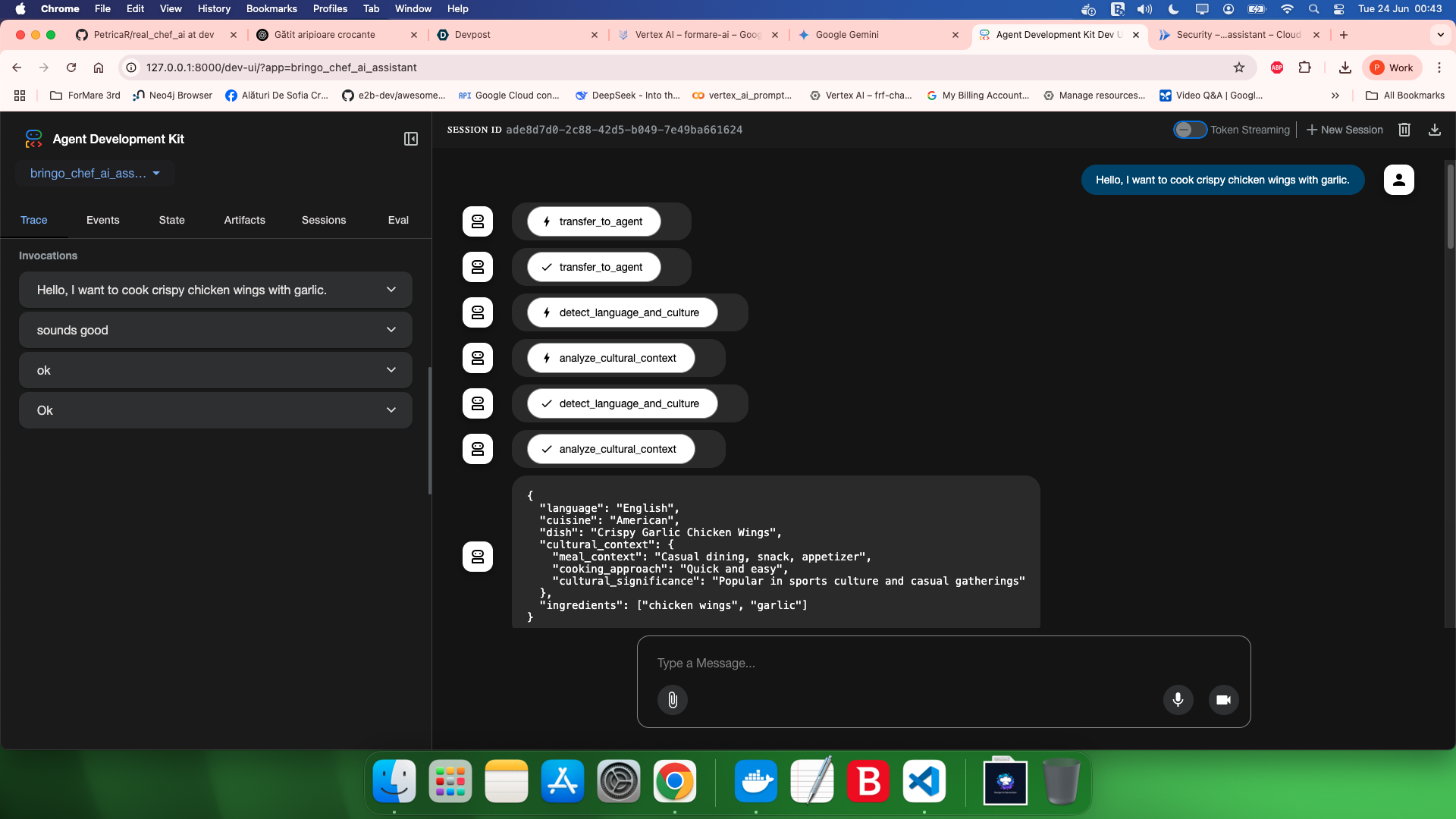
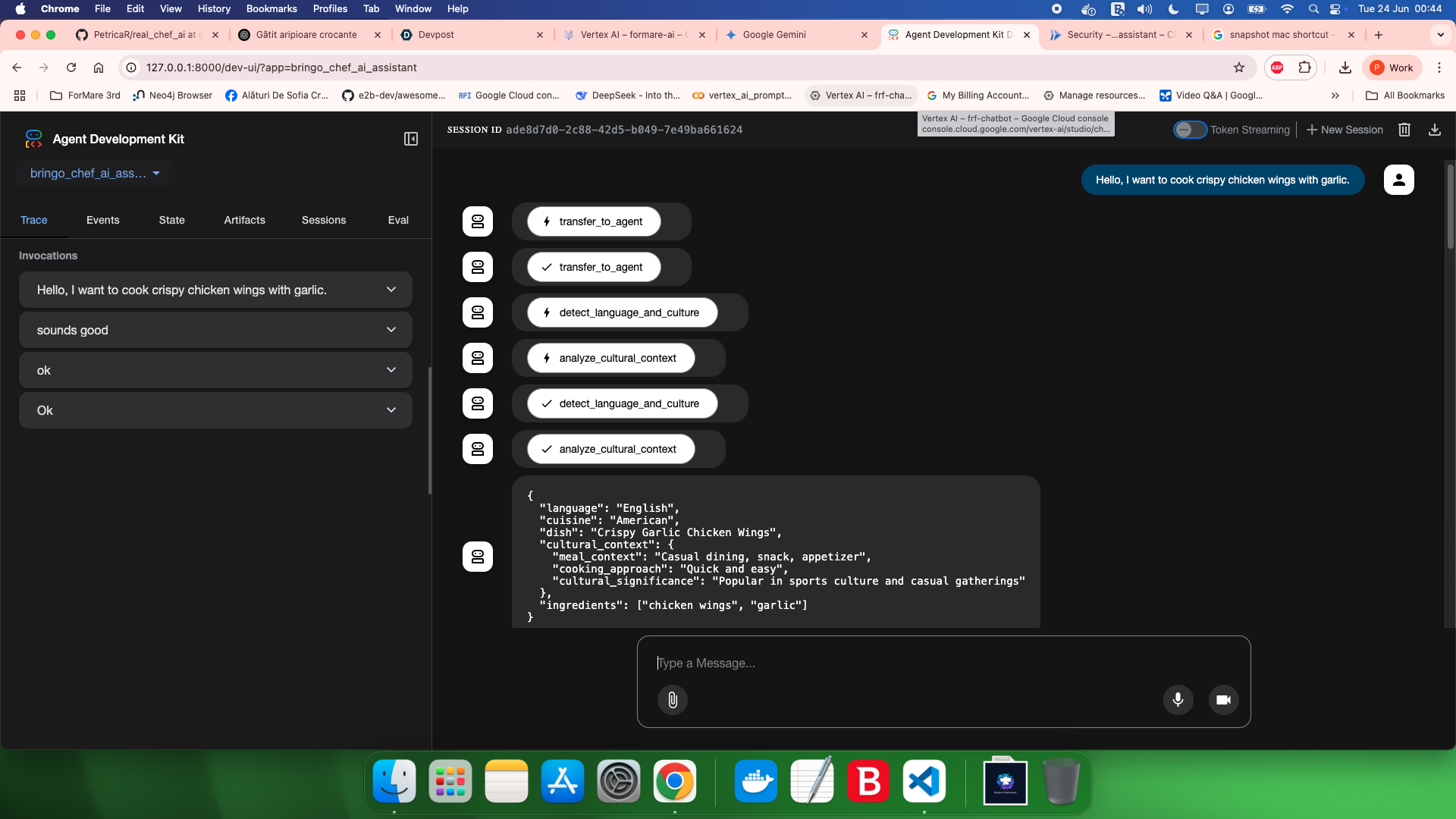
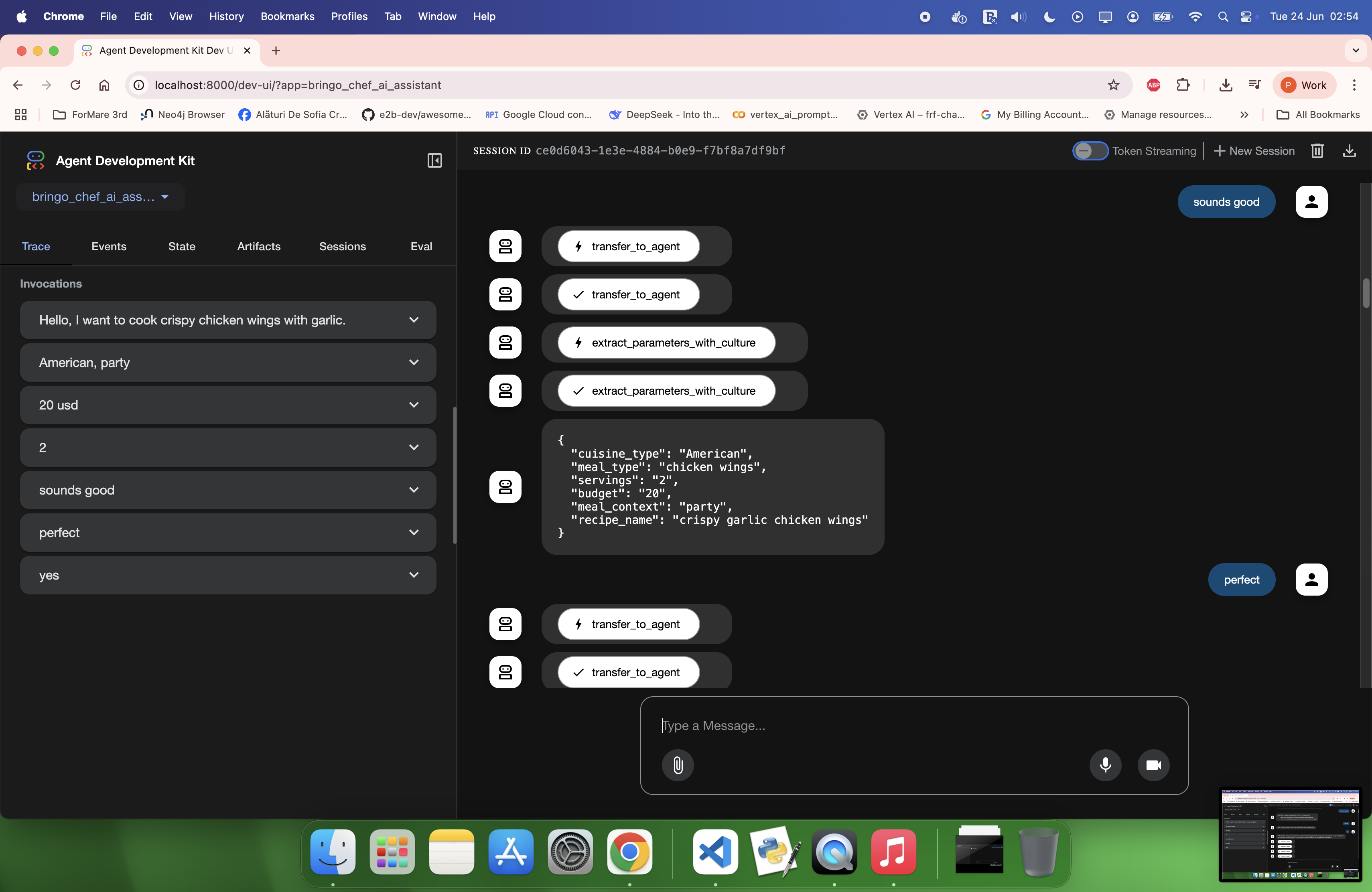
Understands the User's Intent: It processes a request like, "I want to make a traditional Romanian meal for 4 people on a budget of 150 lei," and its specialized agents identify the key parameters: cuisine, occasion, servings, and budget. Performs Intelligent Ingredient Selection: This is the heart of the project. The AI doesn't ask what ingredients you want. Based on the context—"traditional Romanian"—it autonomously selects ingredients for a suitable dish, such as sarmale cu mămăliguță or a hearty ciorbă. Conducts Real-Time Price Checks: The product_search_agent connects to the Bringo.ro platform to find currently available products matching the ingredients and fetches their real-time prices. Generates a Complete, Costed Recipe: It then creates a detailed, step-by-step recipe, including the total estimated cost based on the live Bringo prices, ensuring the meal fits within the user's budget. Offers Visual Tutorials: After delivering the recipe, it offers to generate a simple, 7-step visual tutorial to make the cooking process even smoother, which it creates upon user confirmation. How we built it We built BringoChef AI on the foundation of Google's Agent Development Kit (ADK), which enabled us to implement a sophisticated multi-agent architecture. The system operates as a team of collaborating specialists, all managed by a central coordinator.
The Coordinator Agent: The bringo_coordinator is the project's "brain." We meticulously engineered its global_instruction prompt to define the entire automated workflow, establish the critical rules (especially the "zero user input required" principle), and outline the roles of each sub-agent. Specialized Sub-Agents: Using the LlmAgent class from the ADK, we created a team of agents, each with a distinct responsibility: cultural_context_agent: Deciphers language and cultural nuances. parameter_extraction_agent: Extracts explicit details like budget and servings. ingredient_validation_agent: Performs the core intelligent inference to select ingredients. product_search_agent: Interfaces with the outside world (Bringo.ro). recipe_creation_agent & tutorial_agent: Generate the final user-facing content. conversation_agent: Manages the flow and ensures a polished presentation. Seamless Orchestration: The ADK framework was crucial for making these agents work together. By defining the hierarchy, the ADK handles the complex state management and communication, allowing the output of one agent to become the input for the next in a seamless chain. This let us focus on designing the intelligence of the system rather than the low-level mechanics. Challenges we ran into Enforcing True Automation: The biggest challenge was designing the prompts and logic to prevent the AI from asking clarifying questions. It required us to build a system that was confident enough to make intelligent assumptions based on context, which involved numerous cycles of testing and refinement. Intelligent and Culturally-Aware Inference: Making the automatic ingredient selection genuinely smart was difficult. The agent needed to go beyond simple keyword matching and understand the subtle context of an "anniversary dinner" versus a "quick weekday meal" within a Romanian cultural setting. Real-World Data Volatility: Interfacing with a live e-commerce platform like Bringo means dealing with constantly changing product availability, naming inconsistencies, and price fluctuations. We had to build resilience and smart fallback mechanisms into our product_search_agent. Debugging the Agent Chain: In a multi-agent system, a failure can cascade. Pinpointing where a piece of context was lost or misinterpreted between agents was a complex debugging challenge that required a holistic view of the entire workflow. Accomplishments that we're proud of We are immensely proud of successfully creating a fully automated recipe generation pipeline. The fact that a user can start with a simple, vague idea and end with a concrete, costed, and ready-to-cook recipe without any intermediate steps feels like a significant accomplishment.
The intelligent ingredient inference engine is the core achievement. The system doesn't just retrieve information; it makes creative, logical, and culturally-relevant decisions. Integrating this with real-time pricing from a local Romanian service makes BringoChef AI not just a novelty, but a genuinely practical tool that can help people save time and money.
What we learned This project was a deep dive into the power and complexity of multi-agent systems. We learned that decomposing a large problem into a series of smaller, specialized tasks is an incredibly effective way to build powerful AI applications.
Our biggest takeaway was the critical importance of meticulous prompt engineering. The success of the entire automated workflow rests on the clarity, precision, and foresight of the instructions given to the coordinator agent. We also learned invaluable lessons about bridging AI logic with messy, real-world data to create a tool that is both intelligent and practical.
What's next for Recipe Chef AI We believe this is just the beginning. The core architecture is highly scalable, and we have a clear vision for the future:
Personalization with User Profiles: Allowing users to create profiles to save dietary preferences (e.g., vegetarian, gluten-free), allergies, and favorite ingredients for even more tailored suggestions. Multi-Store Price Comparison: Expanding beyond Bringo to integrate with other major grocery retailers in Romania, allowing users to compare costs and choose their preferred store. Full-Week Meal Planning: Introducing a feature to generate a complete meal plan for a week, consolidating all ingredients into a single, optimized shopping list. Pantry-Aware Suggestions: Enabling users to input ingredients they already have at home, so the AI can generate recipes that use up what's on hand, reducing food waste. Smart Kitchen Integration: Exploring the potential for sending recipes and instructions directly to smart kitchen appliances, like preheating an oven or displaying steps on a smart fridge.
Built With
- gcp
- python

Log in or sign up for Devpost to join the conversation.