The problem
Confluence fills up with pages that were right once: runbooks for systems that changed, policies from two reorganisations ago, onboarding checklists nobody has opened since they were written. Readers cannot tell an accurate page from an abandoned one, so they either trust stale content or stop trusting the wiki. The apps that manage content lifecycles are suites priced like Confluence itself.
What Recheck does
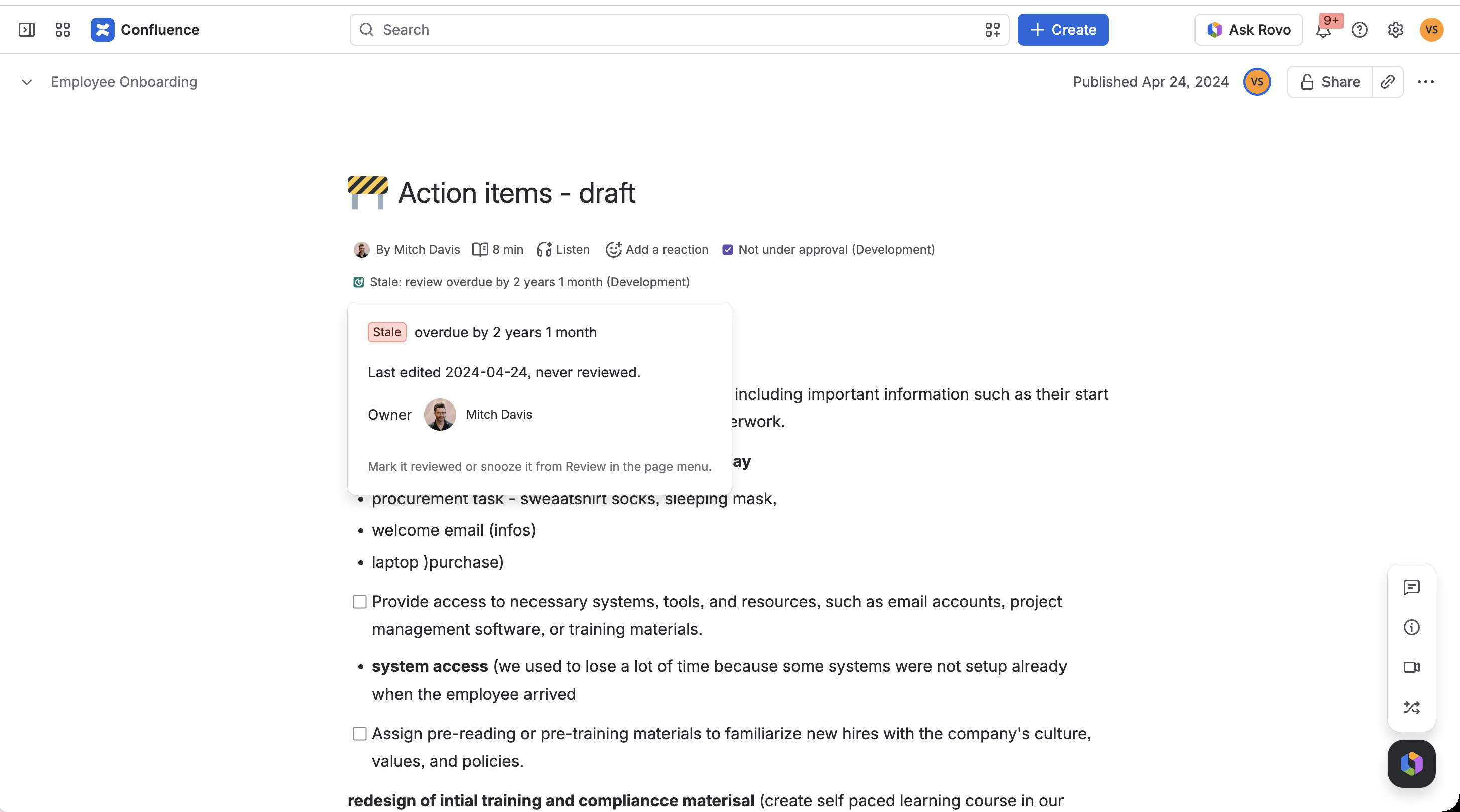
- Makes age visible. Every page shows its state under the title: Up to date, Reviewed on a date, Review due in 12 days, or Stale: review overdue by 7 months. A page counts as confirmed when it is edited or when someone marks it reviewed.
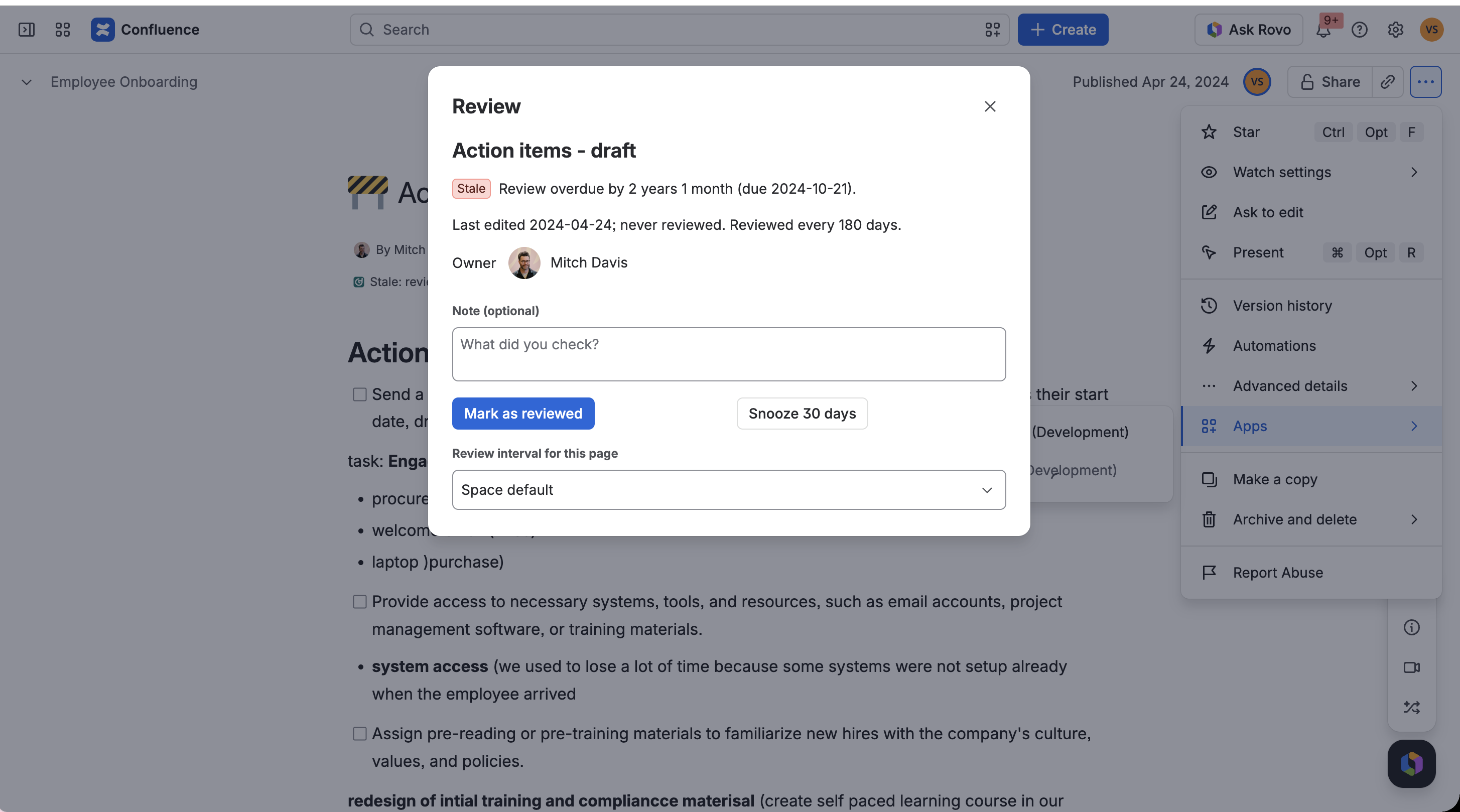
- Confirms a page in two clicks. Review in the page menu marks the page reviewed with a note about what was checked, snoozes it for 30 days, or gives it its own interval.
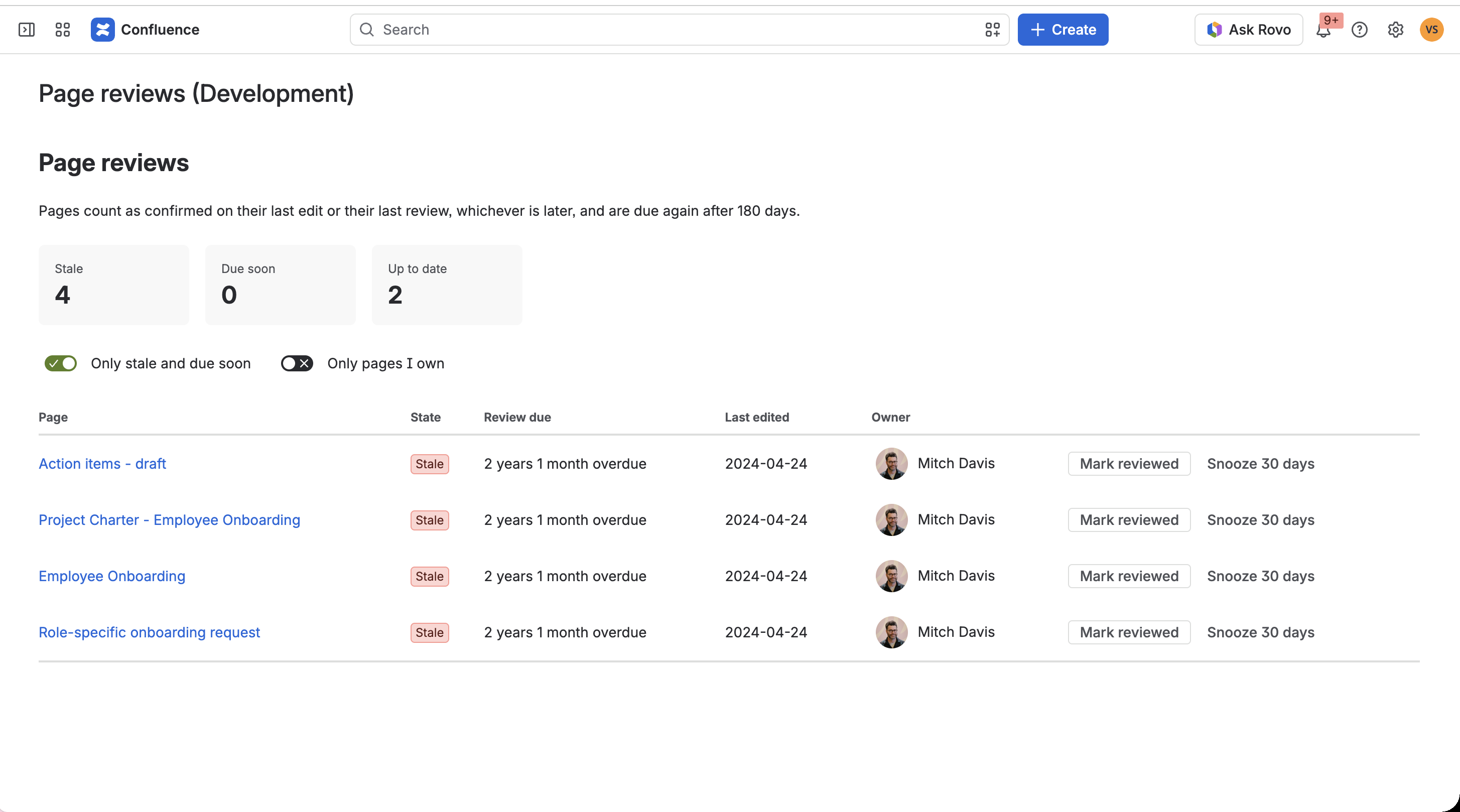
- Lists what needs attention. The space dashboard counts stale, due-soon and up-to-date pages and lists the most overdue first, with owner and last edit; pages can be reviewed or snoozed from the table, and a switch shows only the pages you own.
- Nudges owners. With weekly reminders on, Recheck comments once on each newly stale page and mentions its owner, at most 20 pages per space per week.
How it is built
Forge only, no egress and no page content stored. Confluence REST v2 lists a space's pages sorted by last edit, so the dashboard reads the 500 least recently edited pages directly; review records live in Forge KVS keyed by space and page and are read with key-prefix queries. A contentBylineItem with a dynamicProperties function renders the state on every page view; a contentAction opens the Review dialog; a spacePage and spaceSettings hold the dashboard and the defaults; a weekly scheduledTrigger sends reminders; page trashed and deleted events remove records. The freshness rules are pure functions covered by unit tests.
Built With
- confluence
- forge
- kvs
- react
- typescript
- ui-kit
