Inspiration
We are very curious whether there is any relationship between the consumption price at different stores and time points. As students, we always hope that there is a service that can help us find the necessities of life that we often buy and are relatively cheap. This will help us make better use of our limited living expenses.
What it does
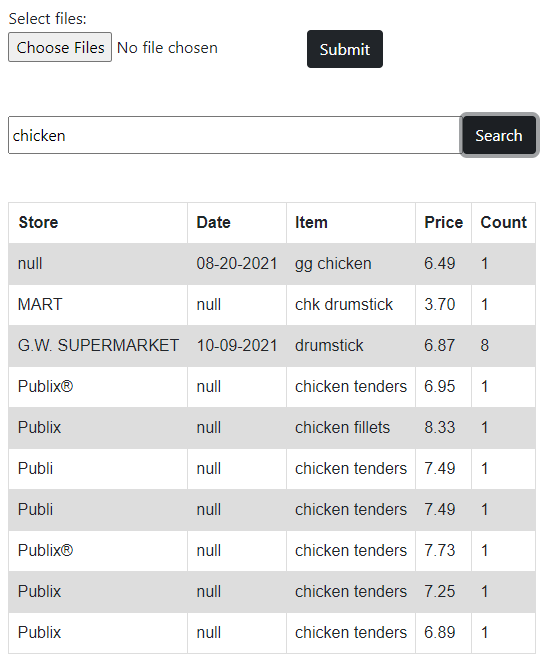
It can keep track of purchasing history for price comparison by scanning and recognizing receipts to find the most affordable price of a certain product and display it on the web.
How we built it
We built it with Flask, Jinja2 template, PostgresDB, Azure Form Recognizer, Docker, and AWS.
Challenges we ran into
We ran into several environmental issues when deploying on the AWS. Also, to best synchronize the developing environment between Mac OS and windows, we spent lots of time building up a docker with a database. Moreover, how backend and frontend cooperate to process, store and display the data on the cloud challenged us differently.
Accomplishments that we're proud of
We are proud of building up the whole tool from scratch in one day. We need to develop the backend and frontend, integrate with third-party API, set up the database and container, and finally deploy the service to the cloud. The completeness of the tool is more than we thought before.
What we learned
This is the first time we have set up services on Azure and AWS, so our technical skills in deploying the system have grown a lot. In addition, when we repeatedly use our system and improve it, we continue to discover how to design services more from users' perspectives and make it more user-friendly.
What's next for Receipts Price Tracker
We hope that our service can be used more widely and help more people. Therefore, the next step is to ensure the scalability of our services on the cloud. We need to ensure that our server can deal with nondeterministic client access efficiently.

Log in or sign up for Devpost to join the conversation.