-
-
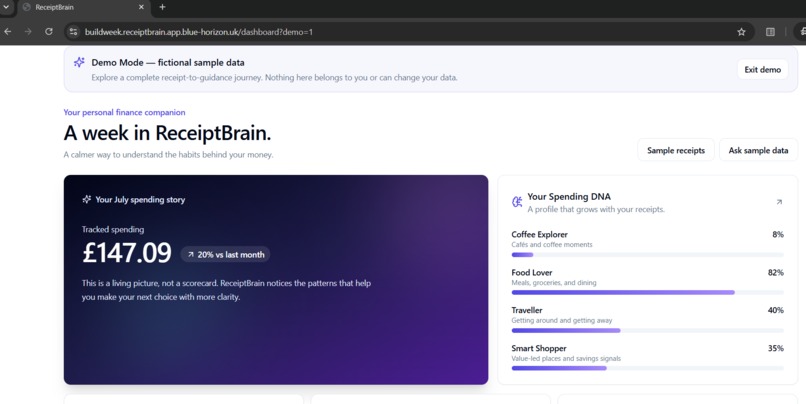
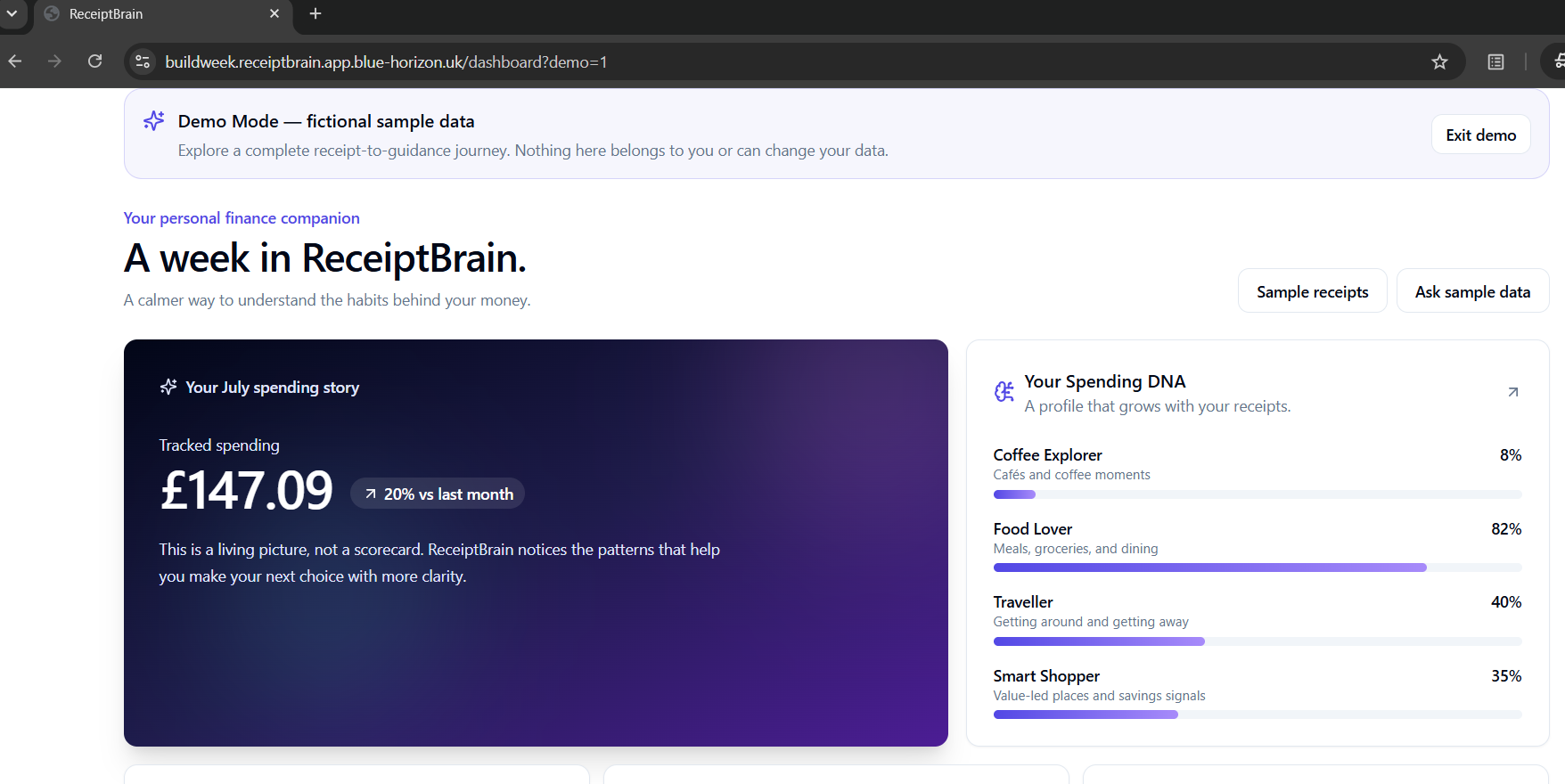
Demo_Dashboard
-
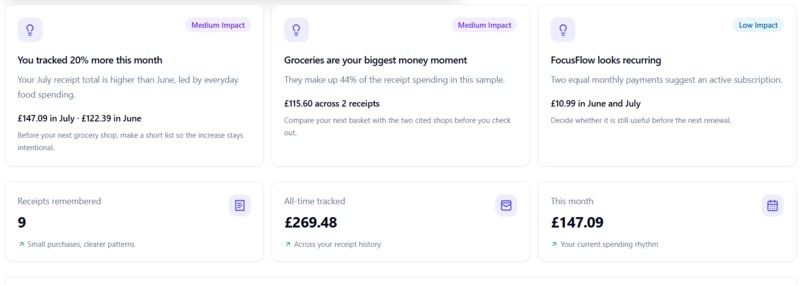
Demo_Dashboard
-
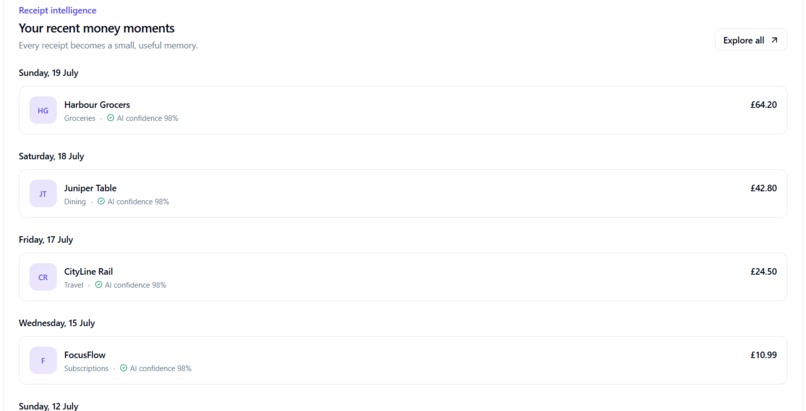
Demo_Dashboard
-
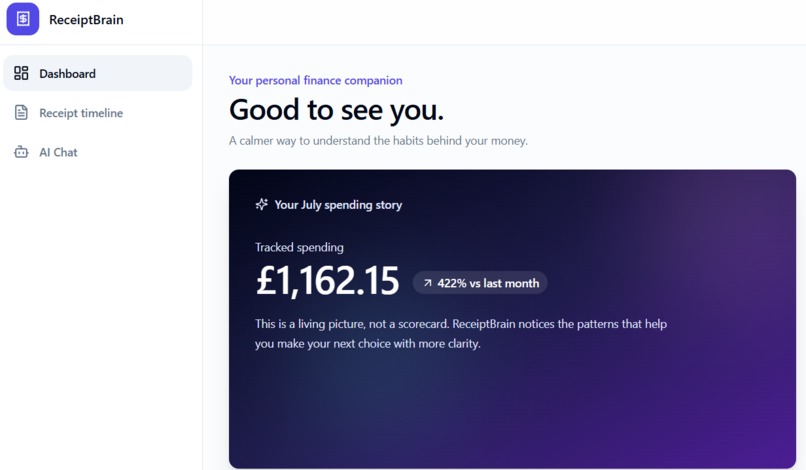
Spending_Story_card
-
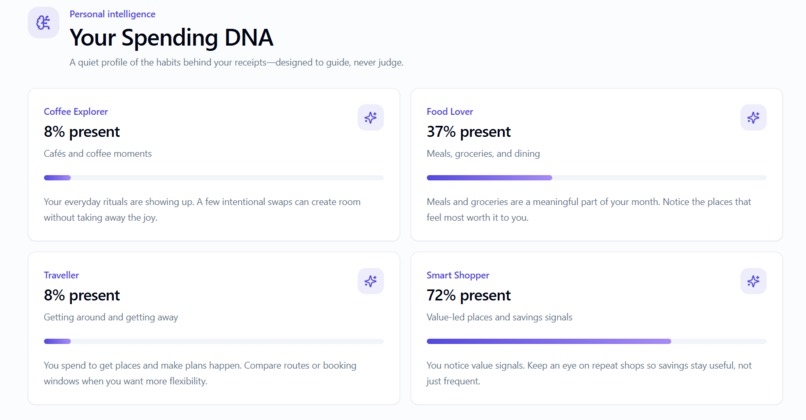
Spending_DNA_card
-
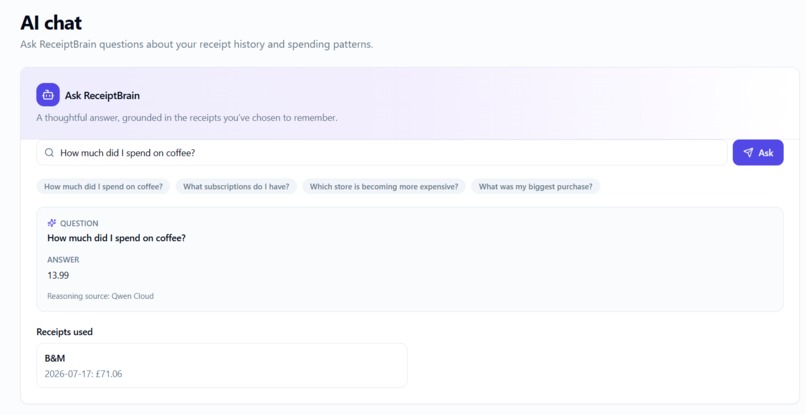
AI_chat
-
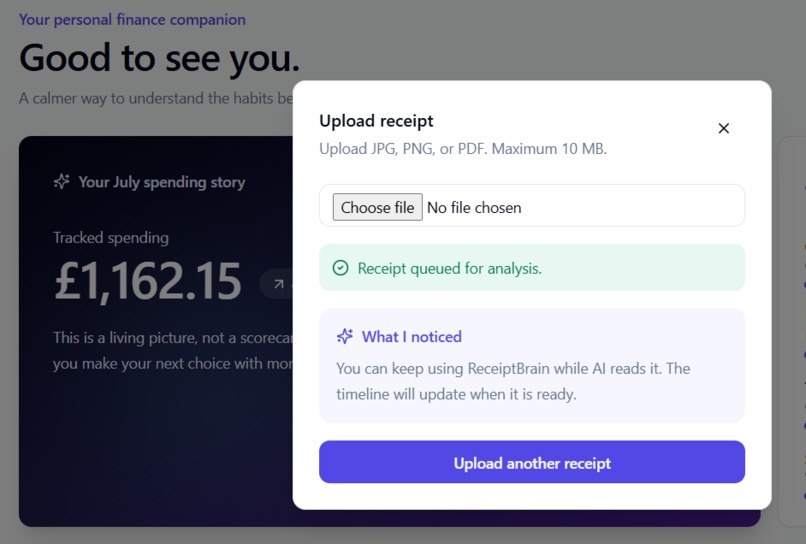
Receipt_Async_Processing
-

Receipt_async_processing_status

Inspiration
Receipts are everywhere, but their value disappears after purchase. I wanted to turn scattered paper trails into a calm, private financial memory - one that helps people understand habits, not just log expenses.
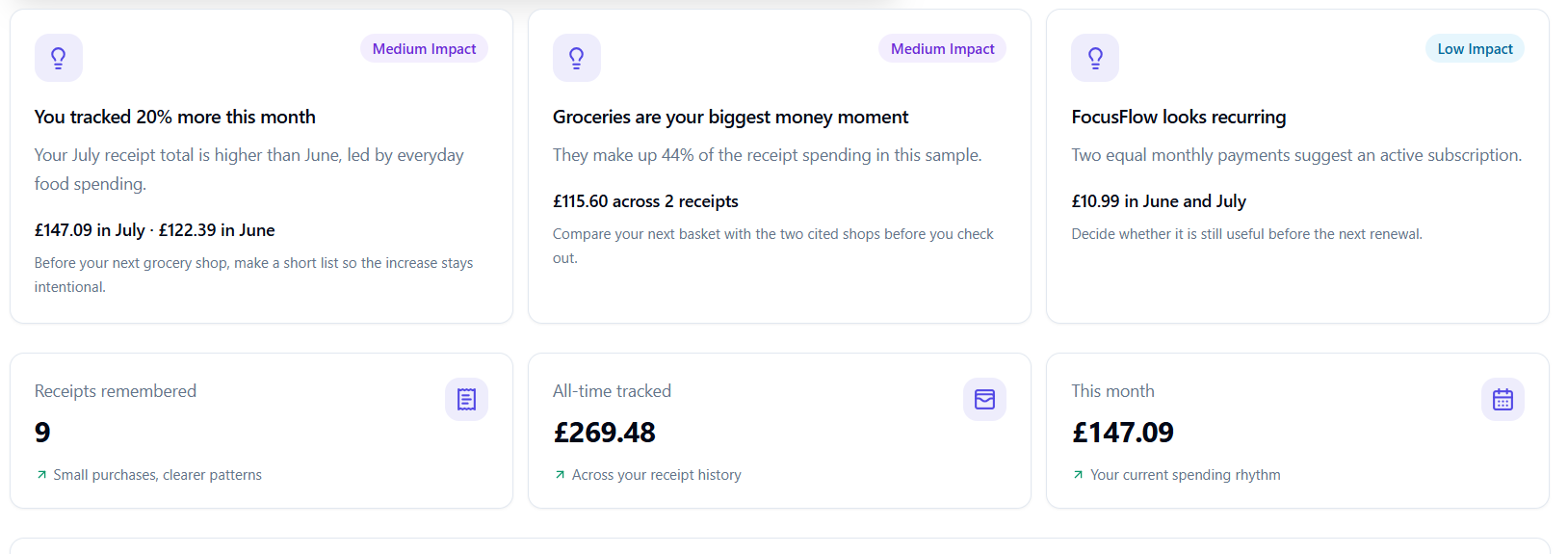
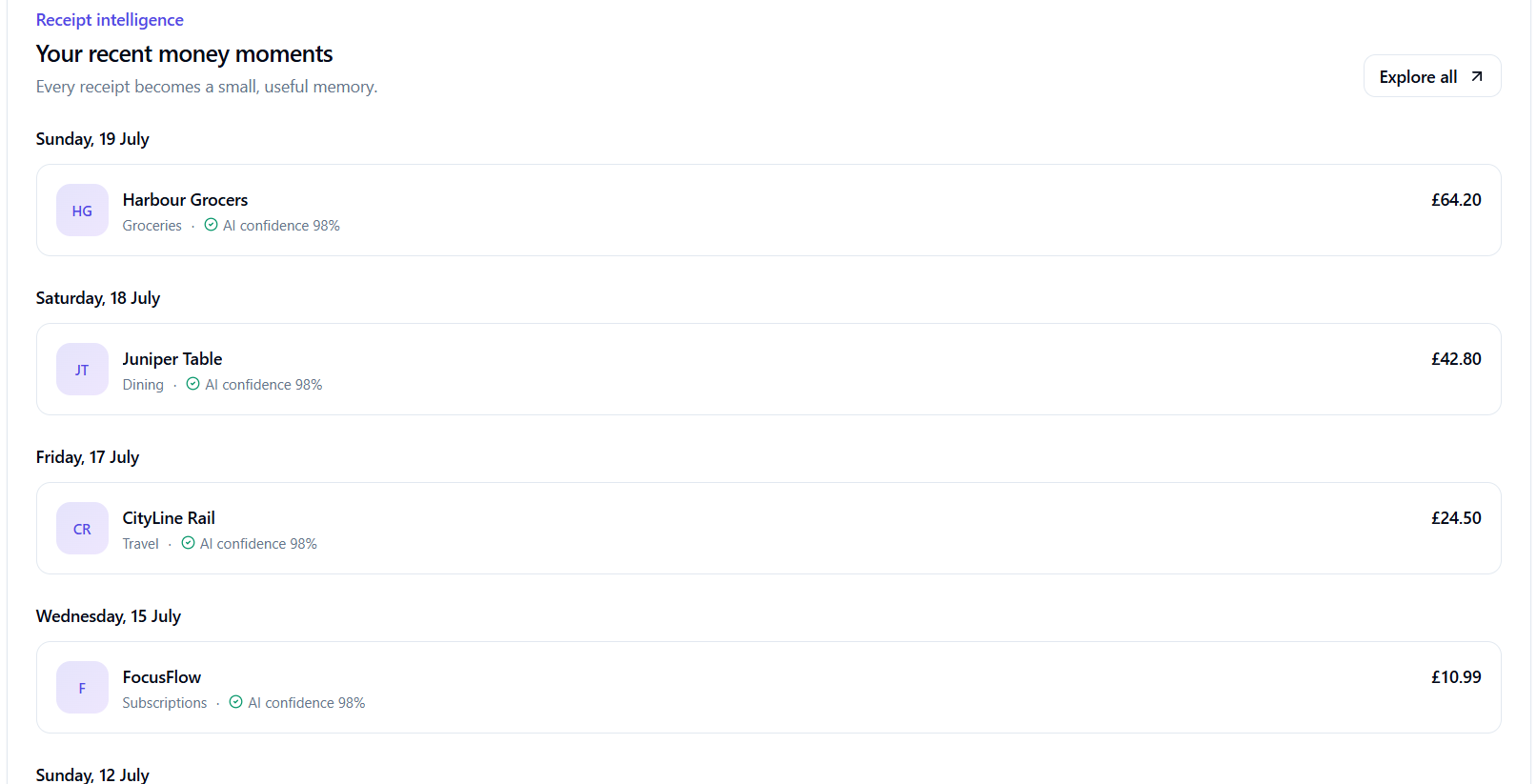
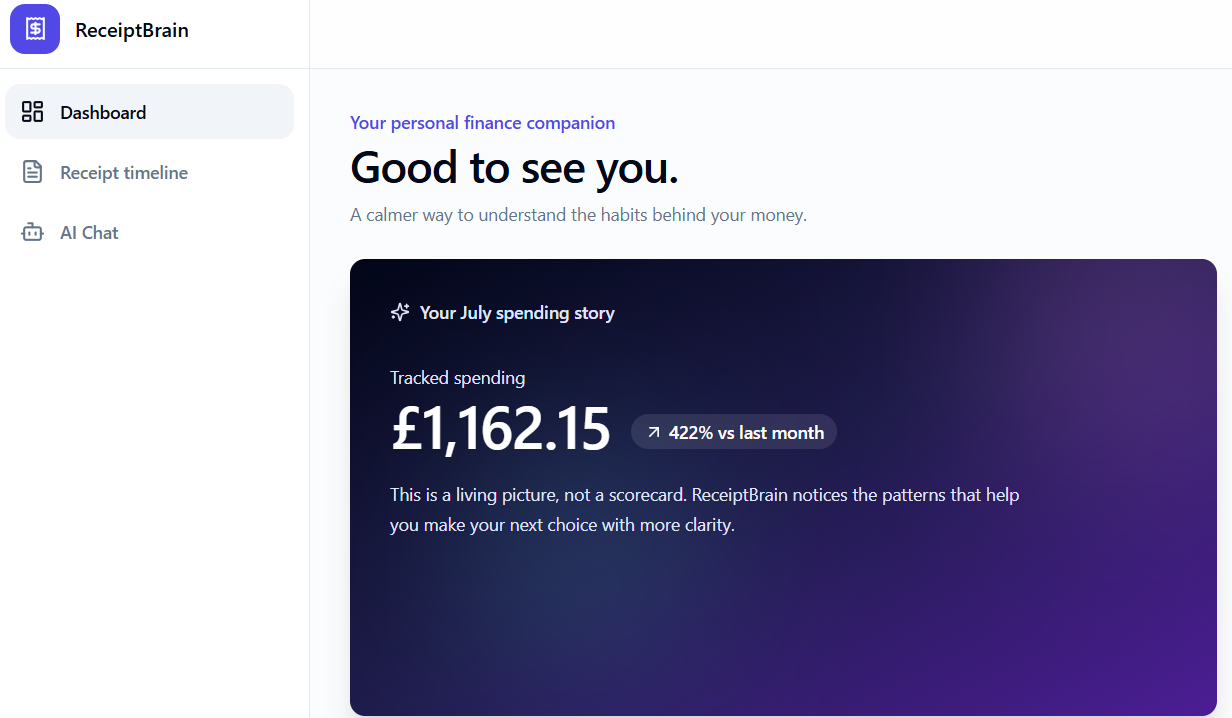
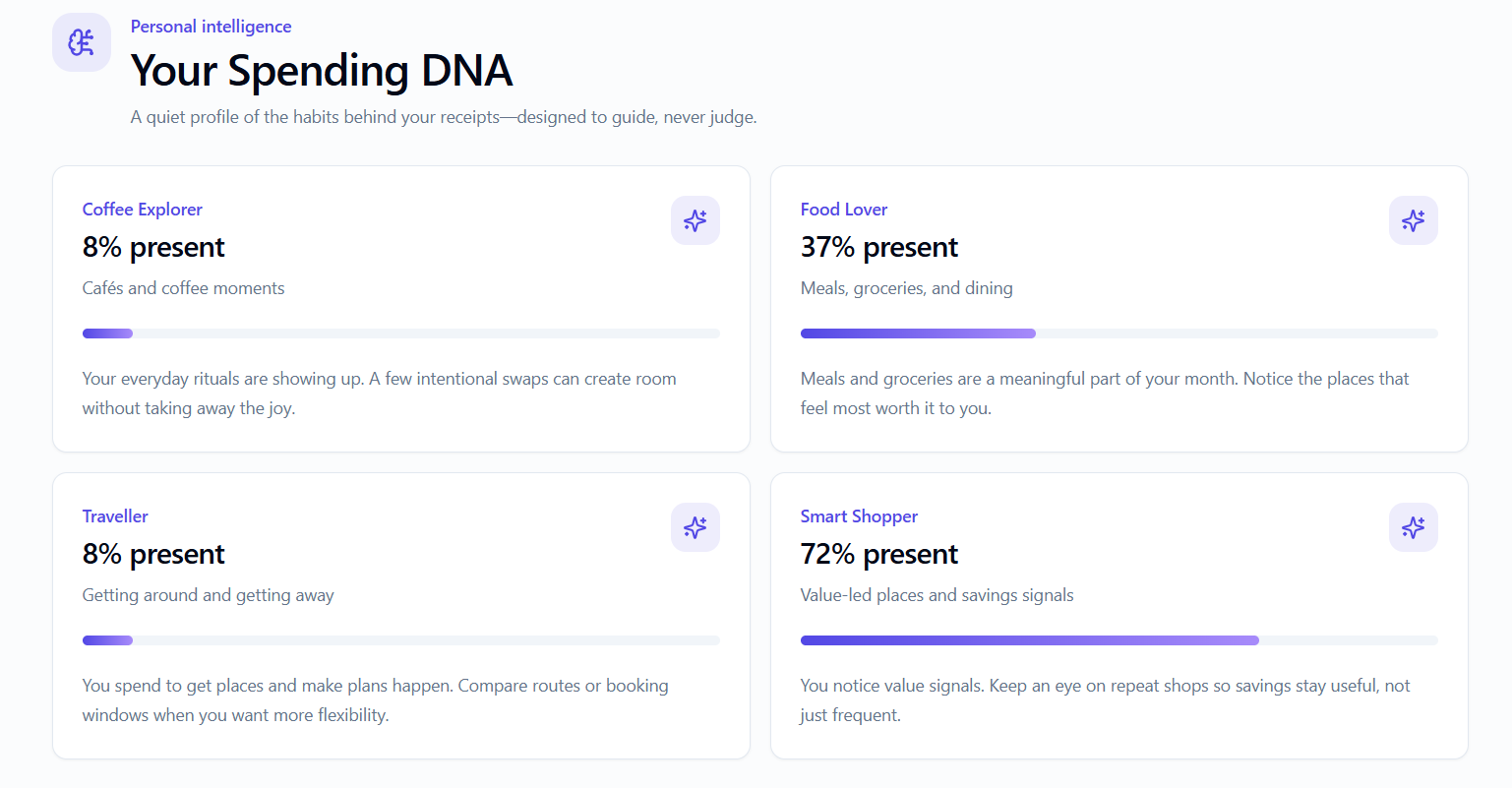
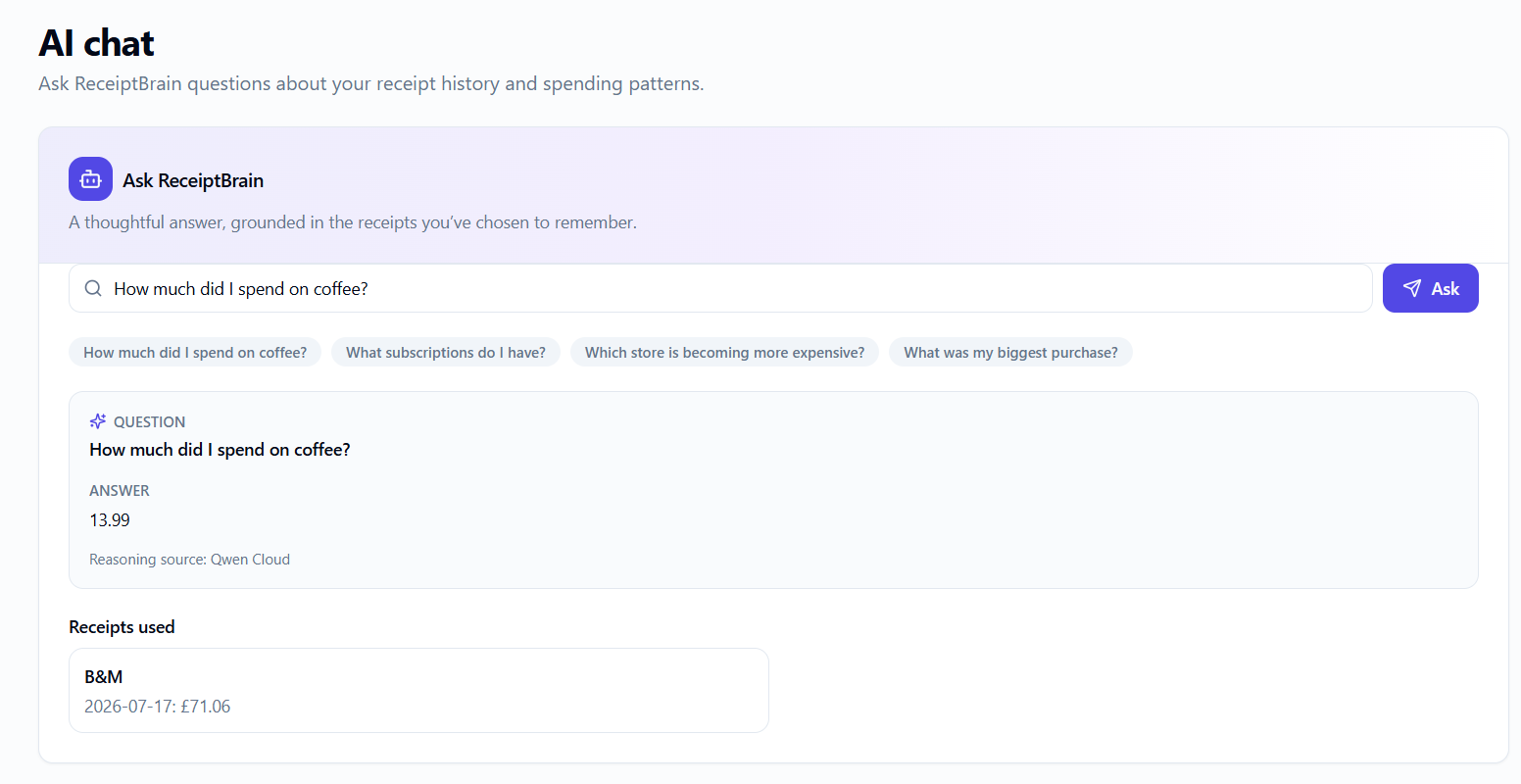
## What it does ReceiptBrain securely stores receipts, extracts merchant, date, totals, and line items, and turns them into useful financial context. It creates a Spending Story and Spending DNA, detects recurring patterns, and answers questions through cited AI chat.
Demo Mode lets judges explore fictional, non-branded grocery, dining, travel, subscription, and coffee receipts without an account or API key.
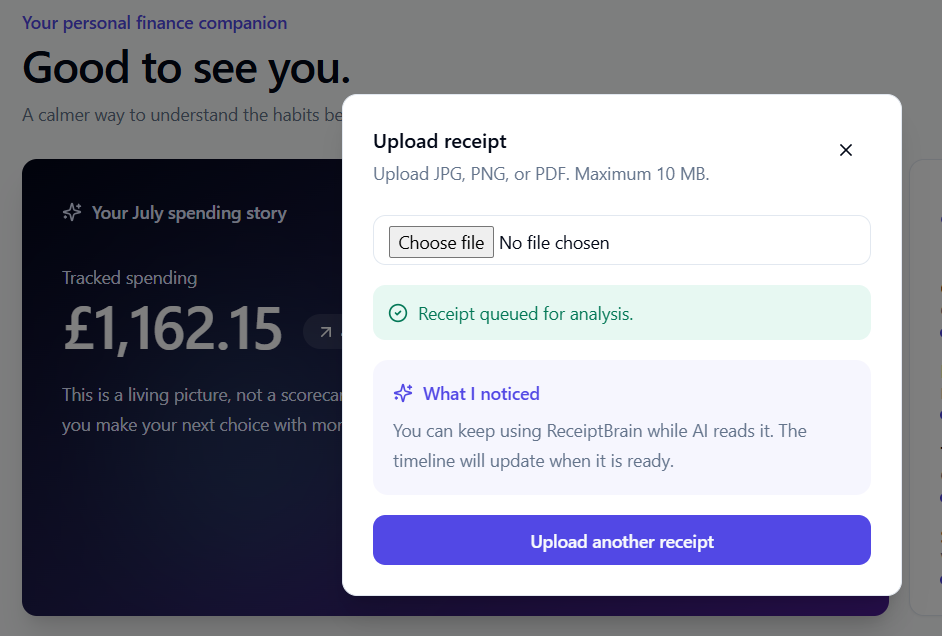
## How we built it I built ReceiptBrain with Next.js, TypeScript, FastAPI, Supabase Auth/Postgres/Storage, and Qwen Cloud. Qwen Vision handles receipt OCR, while Qwen reasoning supports grounded receipt chat. We use deterministic parsing, reconciliation, confidence signals, and review states to keep financial data trustworthy. Codex supported product design, implementation, testing, debugging, documentation, and the Build Week extension: Demo Mode and durable asynchronous receipt processing. The FastAPI processor persists jobs in Supabase, processes them in the background, retries failures, and updates receipt status without blocking the upload experience.
## Challenges we ran into Receipt OCR is inherently unreliable: totals, quantities, and merchant names can be ambiguous. I addressed this with deterministic validation, receipt-total reconciliation, editable fields, confidence indicators, and clear “needs review” states. I also needed a compelling demo without exposing personal financial data or third-party receipt brands. Demo Mode solves this with realistic fictional data and a complete public journey.
## Accomplishments that we're proud of
- A complete receipt-to-insight experience, not just OCR.
- AI answers grounded in receipt evidence rather than generic financial advice.
- Calm, premium product flow across Story, DNA, history, and chat.
- Durable async processing that keeps uploads responsive during OCR.
- Public Demo Mode that is reliable, privacy-safe, and judge-friendly.
- Qwen credentials and Supabase service credentials remain server-side.
## What we learned Trust matters more than flashy AI in personal finance. Users need to know what happened, why it matters, and what evidence supports it. We also learned that production-quality AI needs fallbacks, validation, visible processing states, and a review path, not just a model call.
## What’s next for ReceiptBrain
- Add an insight archive with user feedback controls.
- Improve parsing accuracy with a consent-safe evaluation set.
- Add observability for OCR latency, retries, and failures.
- Build deeper recurring-cost, price-history, and spending-rhythm intelligence.
Built With
- alibabacloudecs
- codex
- fastapi
- gpt-5.6
- next.js
- postgresql
- python
- qwen
- qwenplus
- qwenvl
- react
- supabase
- tailwindcss
- typescript

Log in or sign up for Devpost to join the conversation.