-
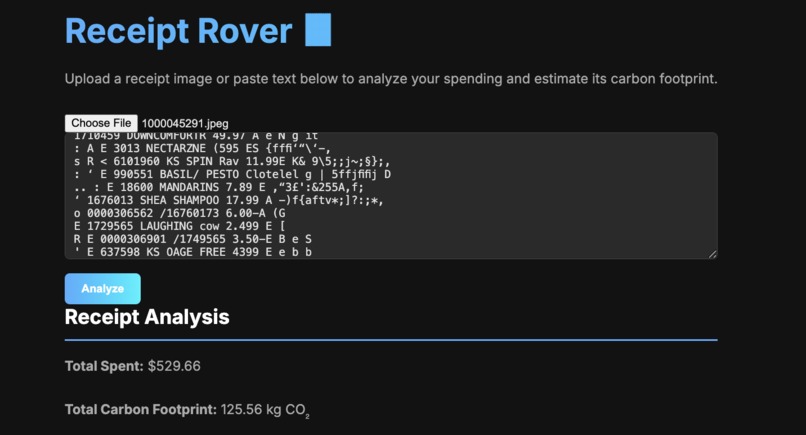
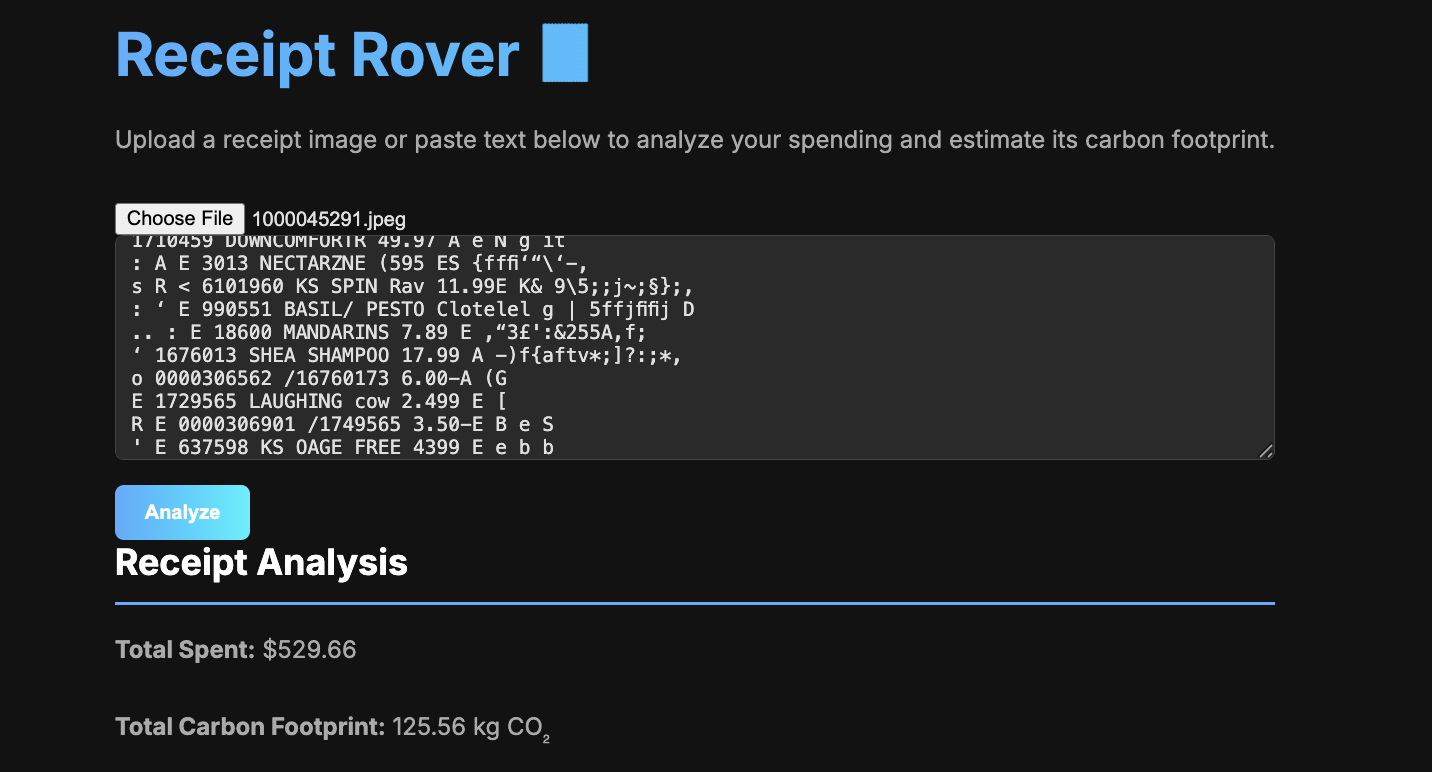
The app uses Tesseract.js OCR to instantly digitize any uploaded receipt image, preparing it for analysis.
-
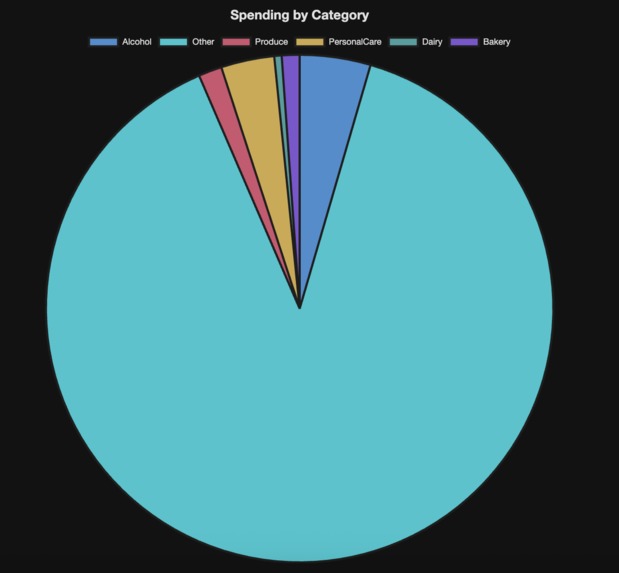
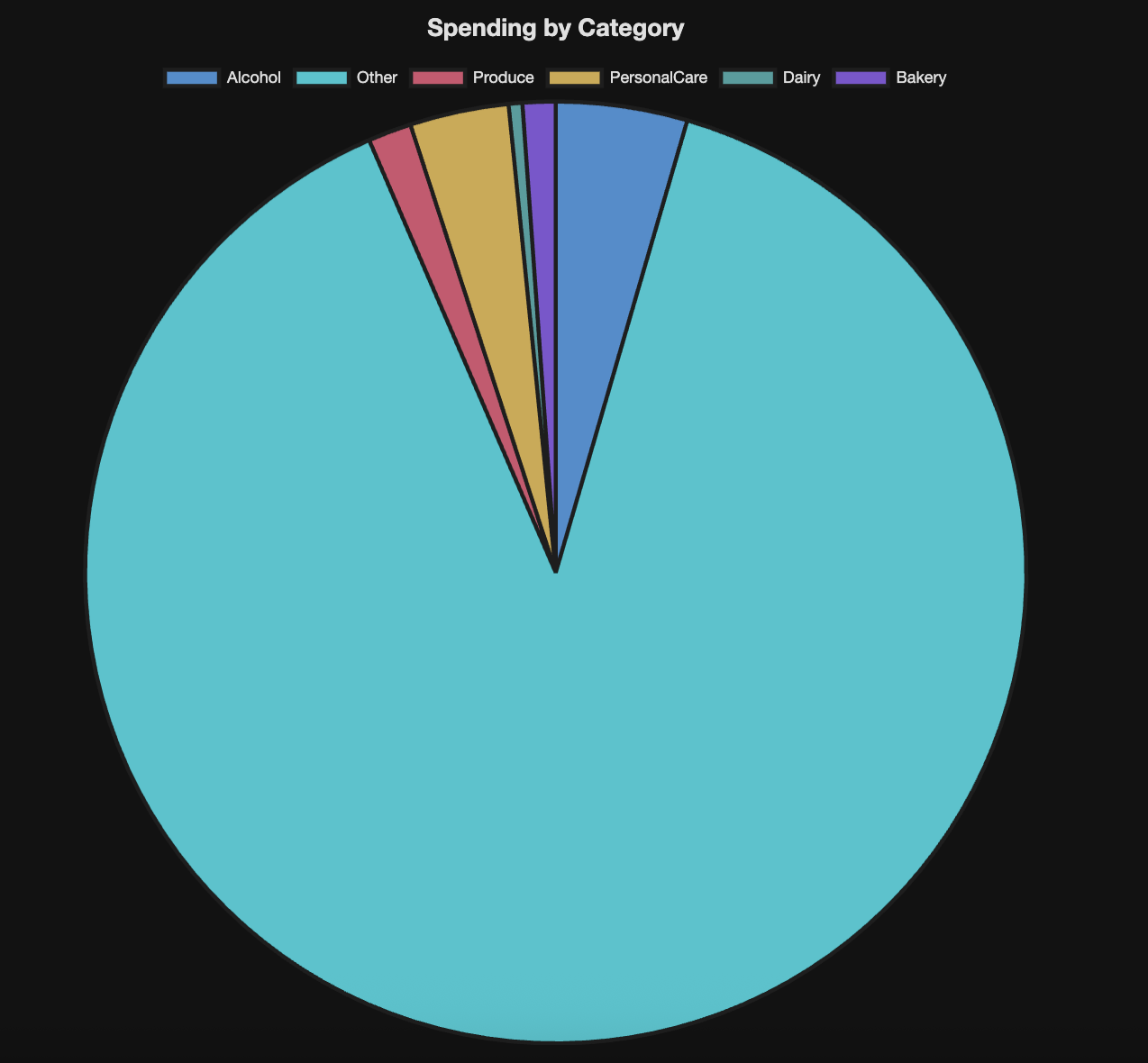
Receipt Rover instantly turns messy receipt data into a clean pie chart, visualizing your spending by category.
Inspiration
In a world of digital transactions, we are flooded with receipts—in our emails, in our apps, everywhere. This financial data is incredibly valuable, but it's trapped in a messy, unstructured format. Existing budgeting apps often require tedious manual entry, creating a barrier to financial awareness. We asked ourselves: what if we could get instant, meaningful insight from any receipt with zero friction? And what if we could go a step further, connecting our daily spending to its broader environmental impact? That's why we built Receipt Rover.
What it does
Receipt Rover is a sleek, intelligent web application that transforms messy receipts into clear, actionable insights.
Effortless Data Entry: Users can either upload an image of a receipt or paste the raw text. Using the powerful Tesseract.js OCR engine running directly in the browser, the app instantly digitizes the physical receipt.
Intelligent Analysis: Our custom-built analysis engine parses the text, extracts each line item and its price, and uses a smart keyword-based system to categorize every purchase into buckets like "Groceries," "Dining," and "Personal Care."
Instant Visualization: The results are immediately displayed in a clean, interactive pie chart, giving the user a visual breakdown of their spending.
Eco-Conscious Insight: Going beyond just finances, Receipt Rover provides an estimated carbon footprint for the entire purchase, complete with a relatable comparison (e.g., "equivalent to driving a car X miles"). This unique feature connects everyday spending to environmental awareness.
How we built it
We built Receipt Rover as a fast, private, and modern client-side application in just a few hours.
Frontend: The UI was built with HTML5 and CSS3, featuring a responsive, mobile-friendly dark theme with subtle animations and gradients to create a polished user experience.
Core Logic: All the analysis is handled by Vanilla JavaScript. This includes the text parsing, the keyword-based categorization engine, and the carbon footprint calculations.
OCR (Optical Character Recognition): We integrated the Tesseract.js library to run a powerful OCR engine directly in the user's browser. This is a key technical decision that makes the app faster and preserves user privacy, as no receipt images are ever uploaded to a server.
Data Visualization: We used the Chart.js library to create dynamic and interactive data visualizations.
Deployment: The entire application is deployed on Netlify for fast, global access.
Challenges we ran into
Our biggest challenge was building a reliable categorization system under extreme time pressure. Our initial plan was to use a financial API, but we quickly discovered that product-level data from receipts (e.g., "Whole Milk") doesn't map well to the API's merchant-based categories. Recognizing this, we rapidly pivoted our strategy to build our own robust, client-side keyword analysis engine. This experience taught us the importance of adapting our technical strategy to the specific nature of the data to ensure a functional and accurate result.
Accomplishments that we're proud of
Building a complete, end-to-end application with a polished UI in just a few hours.
Successfully integrating browser-based OCR with Tesseract.js into a seamless user experience.
Creating a unique feature that fuses a fintech tool with an environmental impact analysis.
Writing clean, modular, and well-structured JavaScript, even under a tight deadline.
What we learned
This project was a masterclass in rapid prototyping and agile development. We learned the importance of being able to pivot quickly when a technical approach isn't working. Most importantly, we learned how much can be accomplished on the client-side with modern libraries like Tesseract.js and Chart.js, allowing us to build powerful and private applications without the need for a complex backend.
What's next for Receipt Rover
This hackathon project is a powerful proof-of-concept. The next steps would be to:
Integrate machine learning to train the categorization model on user inputs, making it smarter over time.
Connect to financial APIs (like the Capital One Nessie API) to allow users to link their accounts and analyze spending automatically.
Build historical tracking and budgeting features to help users monitor their financial and environmental footprint over time.
Built With
- chart.js
- css3
- html5
- javascript
- netlify
- tesseract.js


Log in or sign up for Devpost to join the conversation.