-
-
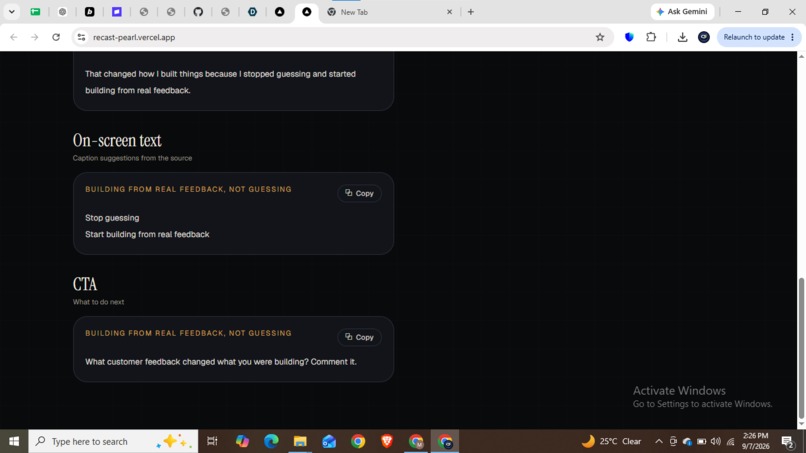
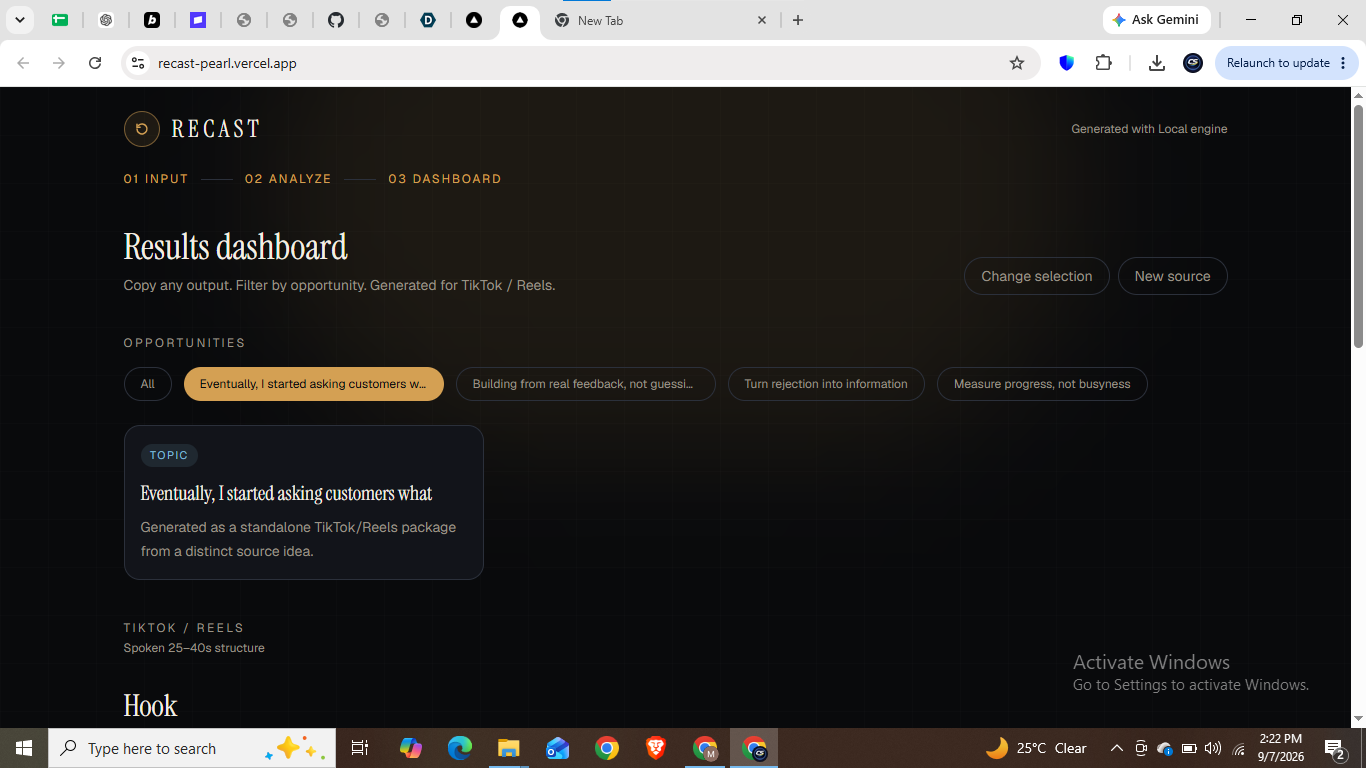
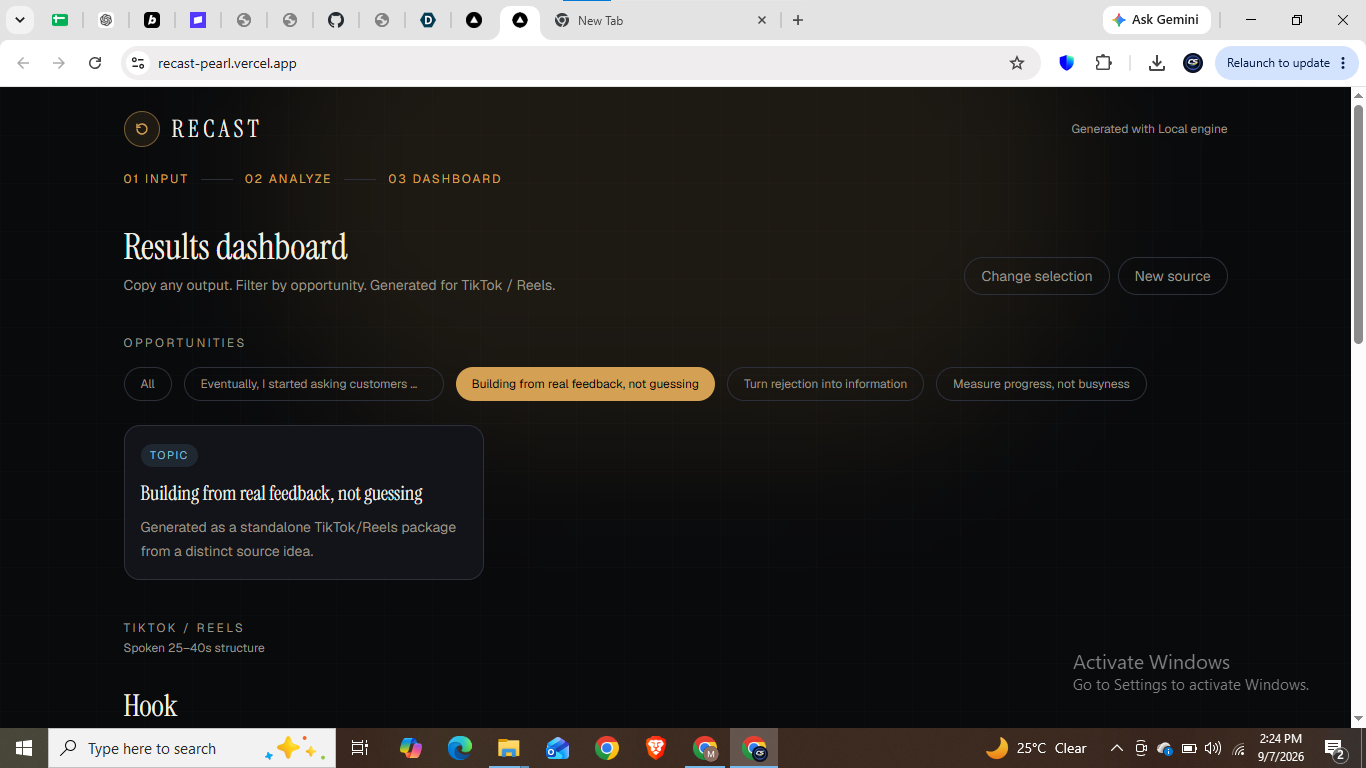
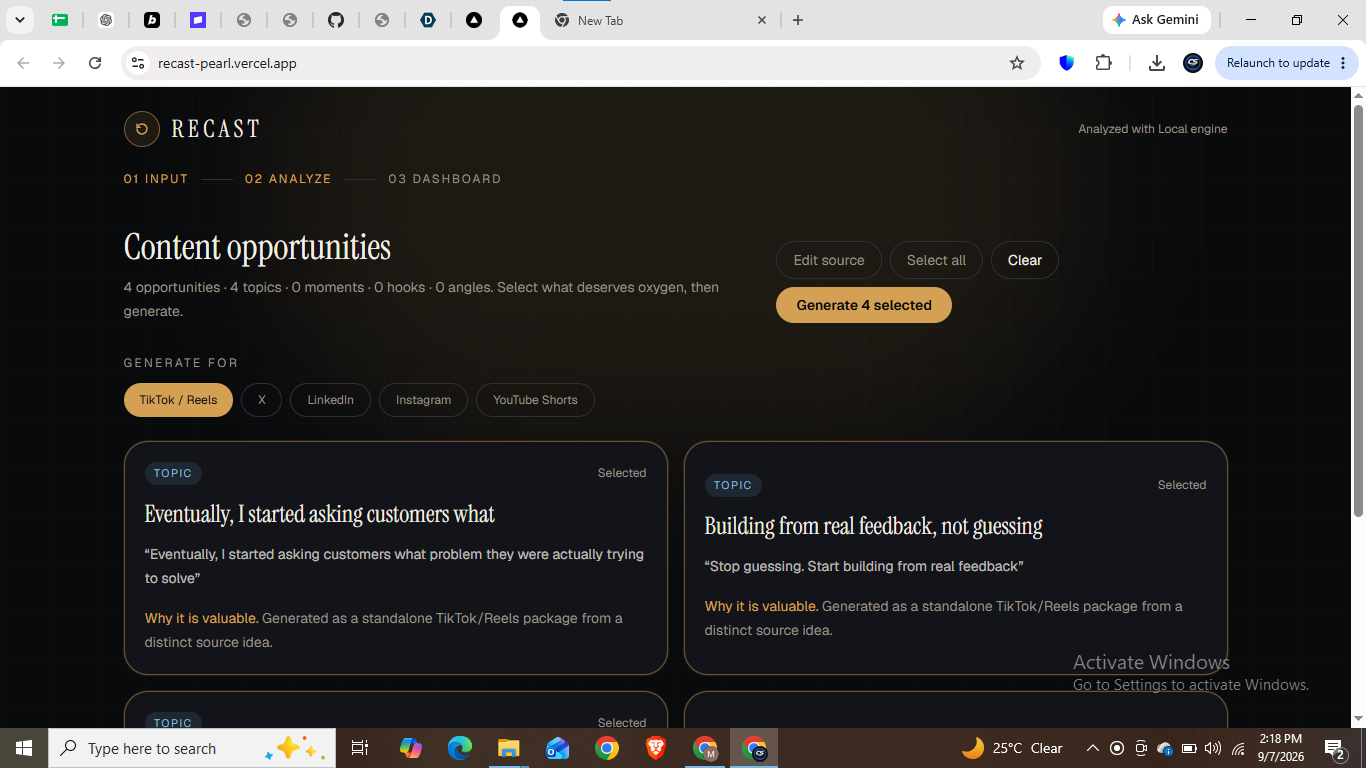
RECAST identifies multiple content opportunities from a single long-form source.
-
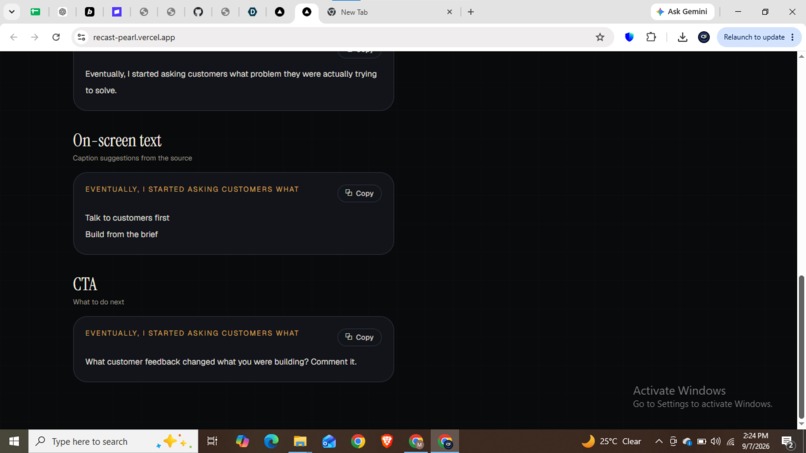
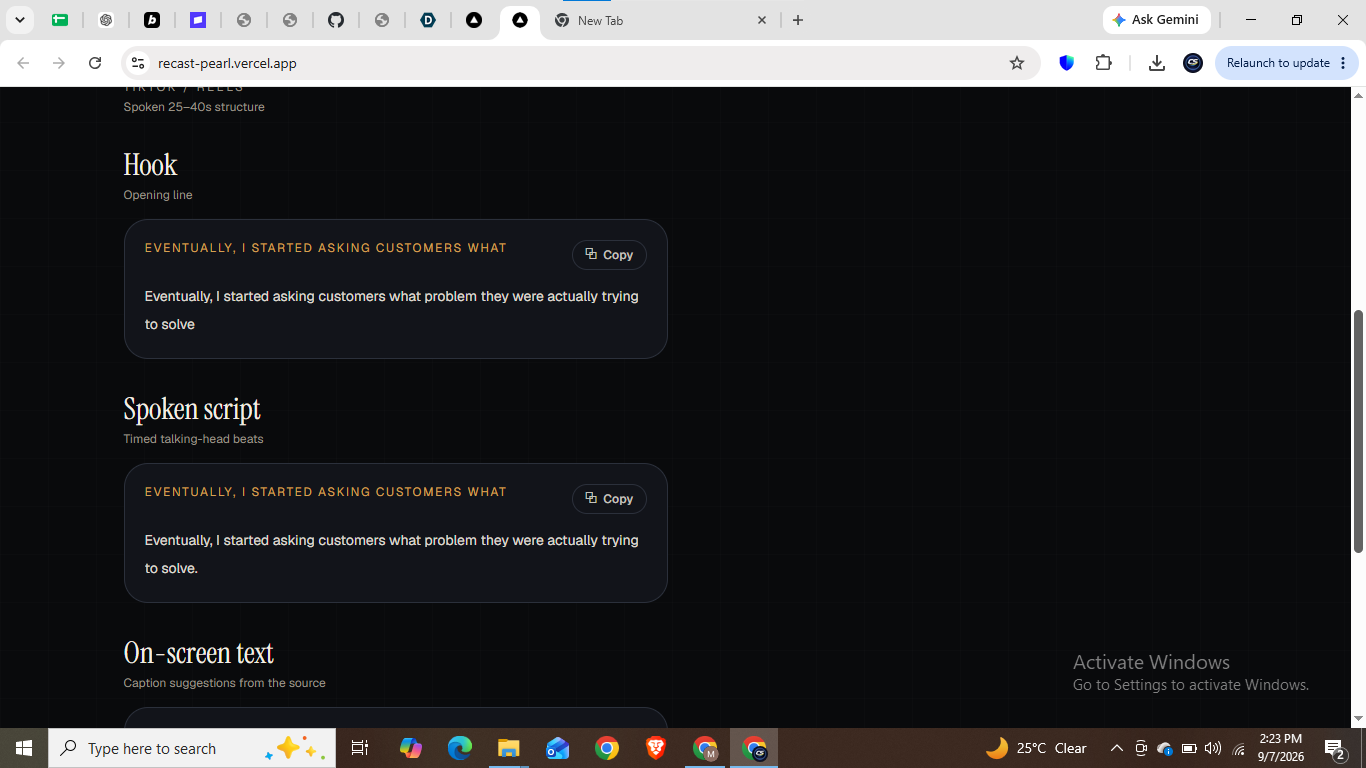
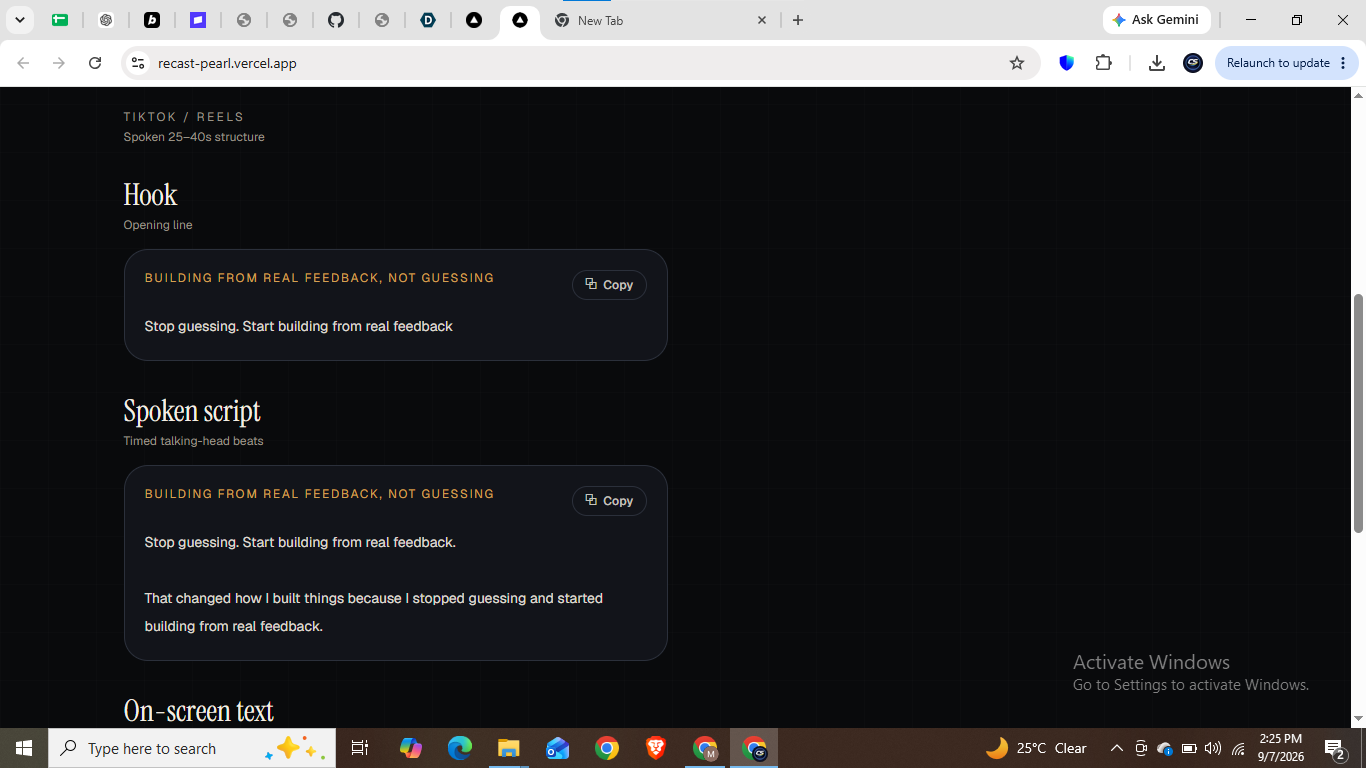
Different source ideas produce different content packages.
-
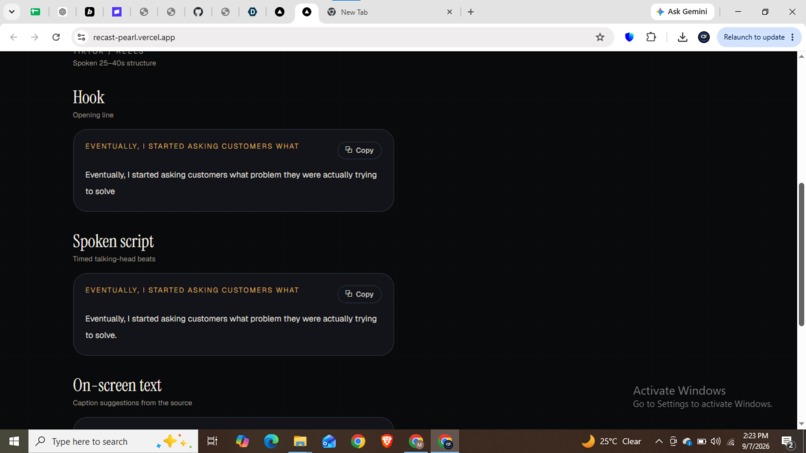
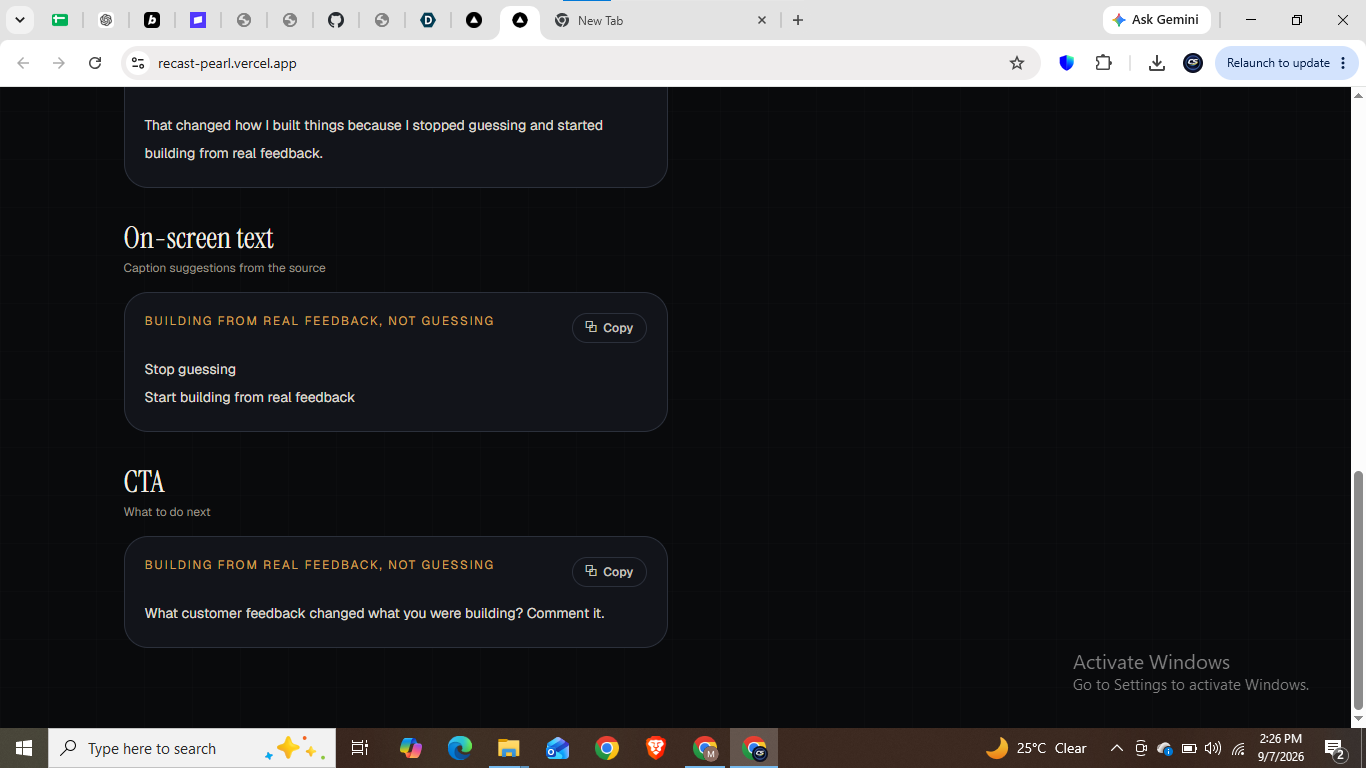
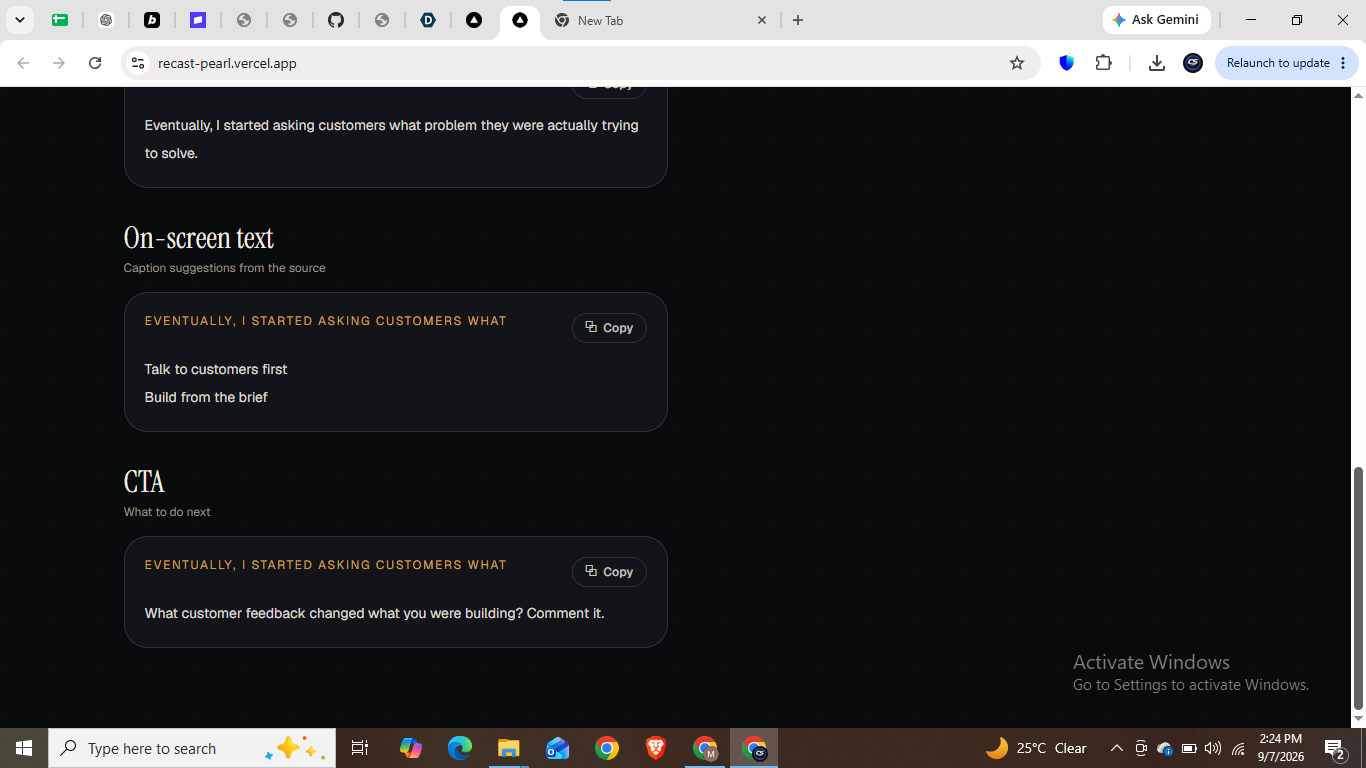
Each content package includes on-screen text and a topic-specific CTA.
-
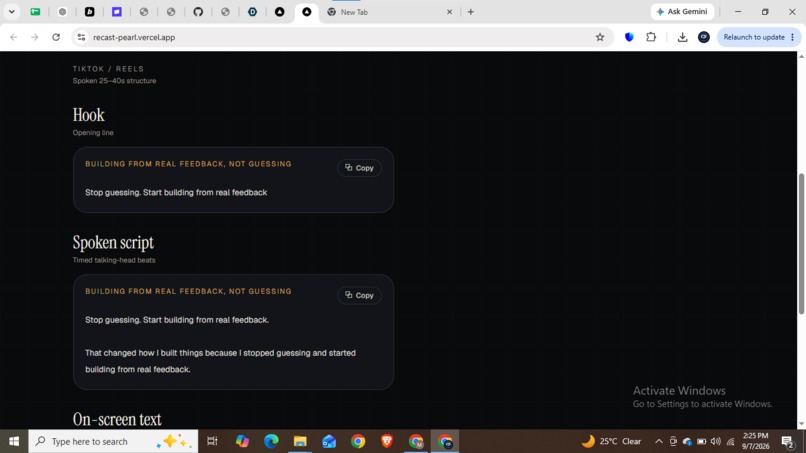
RECAST completes the package with supporting text and a relevant CTA.
-
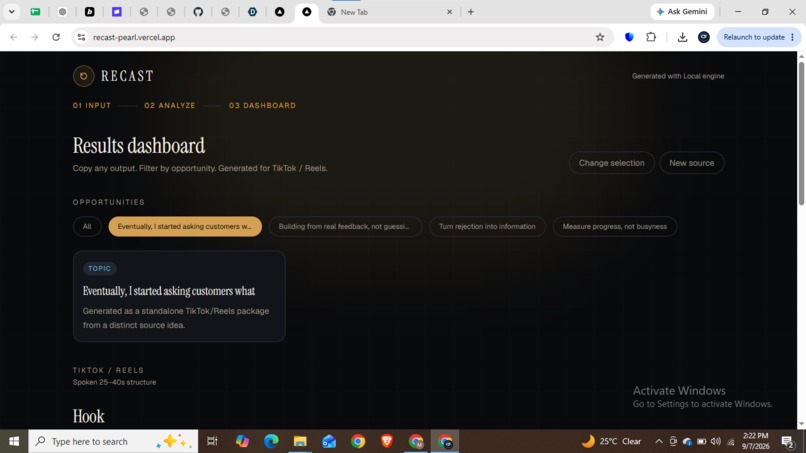
Creators can select a specific opportunity to generate content from
-
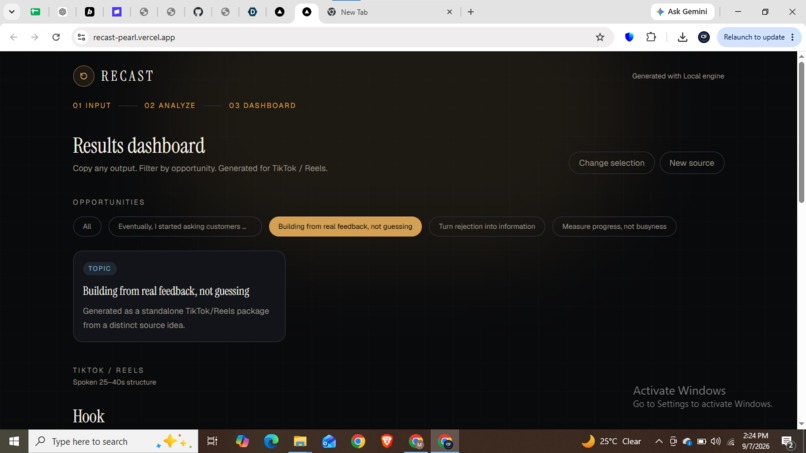
The generated script stays aligned with the selected opportunity.
-
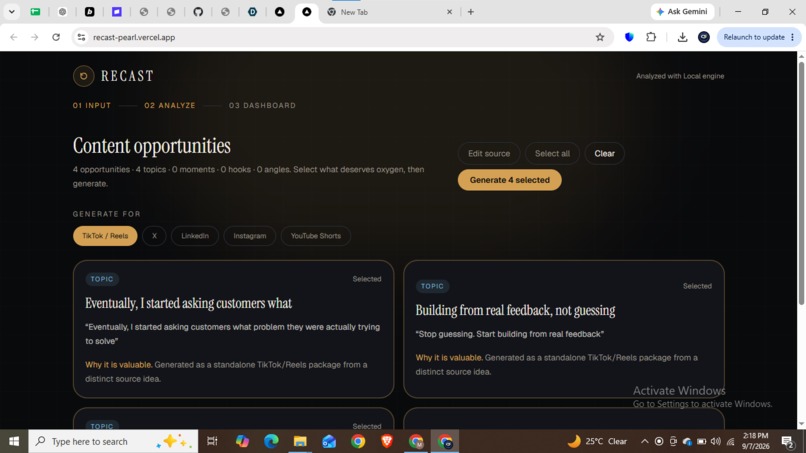
RECAST generates a platform-ready hook and spoken script.
Inspiration
Creators spend hours making long-form content such as podcasts, interviews, videos, livestreams, and educational content. But after publishing, a lot of valuable ideas inside that content are never reused.
Repurposing usually means manually reviewing the source, finding useful moments, deciding what could become a post, and rewriting it for different platforms.
I wanted to build a tool that starts with what creators already have instead of making them start from a blank page.
What it does
RECAST is an AI content engine that finds distinct content opportunities hidden inside long-form content and turns them into platform-ready content.
A creator provides a long-form source. RECAST analyzes it and identifies multiple reusable ideas. Each opportunity can then be transformed into a content package containing:
- A hook
- A spoken script
- On-screen text
- A call to action
The creator can generate content for different platforms, making it easier to turn one source into multiple pieces of content.
How we built it
RECAST was built as a Next.js web application with API routes and deployed on Vercel.
The system separates the workflow into two main stages:
- Opportunity extraction: RECAST analyzes the source and identifies distinct content ideas.
- Content generation: An individual opportunity is passed into the generation workflow to create its hook, script, on-screen text, and CTA.
Each opportunity is handled independently so that the generated content stays aligned with the specific idea it came from.
The project is available as a live web application and its source code is available on GitHub.
Challenges we ran into
One of the biggest challenges was making sure multiple opportunities extracted from the same source were actually distinct.
Early versions could produce overlapping ideas or generate content that belonged to a different opportunity. We improved the extraction and deduplication logic and separated generation by opportunity so each content package remains connected to its own idea.
Another challenge was making the generated content specific to the source instead of producing generic AI copy. We addressed this by grounding generation around the individual opportunity and using platform-specific output structures.
Accomplishments that we're proud of
We are proud that RECAST evolved from a simple content generator into a complete repurposing workflow.
The final application can:
- Analyze long-form content
- Extract multiple distinct opportunities
- Generate independent content packages
- Create hooks, scripts, on-screen text, and CTAs
- Adapt outputs for different platforms
- Run as a deployed production web application
Most importantly, RECAST demonstrates the full journey from one existing source to multiple pieces of usable content.
What we learned
We learned that building an AI application is not just about generating good text. The structure around the model matters just as much.
Separating opportunity discovery from content generation made the system more reliable and easier to reason about. We also learned the importance of testing AI outputs for semantic alignment, duplication, and consistency rather than judging the system from a single successful generation.
What's next for RECAST
The next step is to expand RECAST from content generation into a broader content repurposing workflow.
Future versions could support direct video and audio uploads, automatic transcription, timestamped clip suggestions, more platform formats, content calendars, analytics, and integrations with publishing platforms.
The long-term goal is simple:
Help creators get more content from the work they have already created.
Built With
- ai
- generativeai
- github
- javascript
- next.js
- react
- vercel


Log in or sign up for Devpost to join the conversation.