-
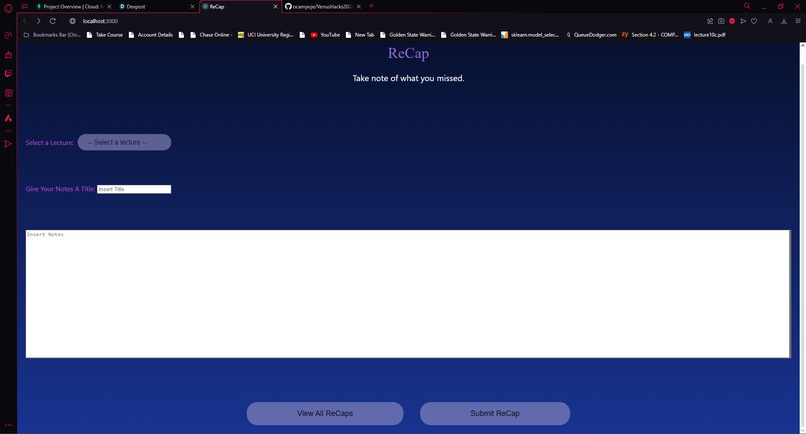
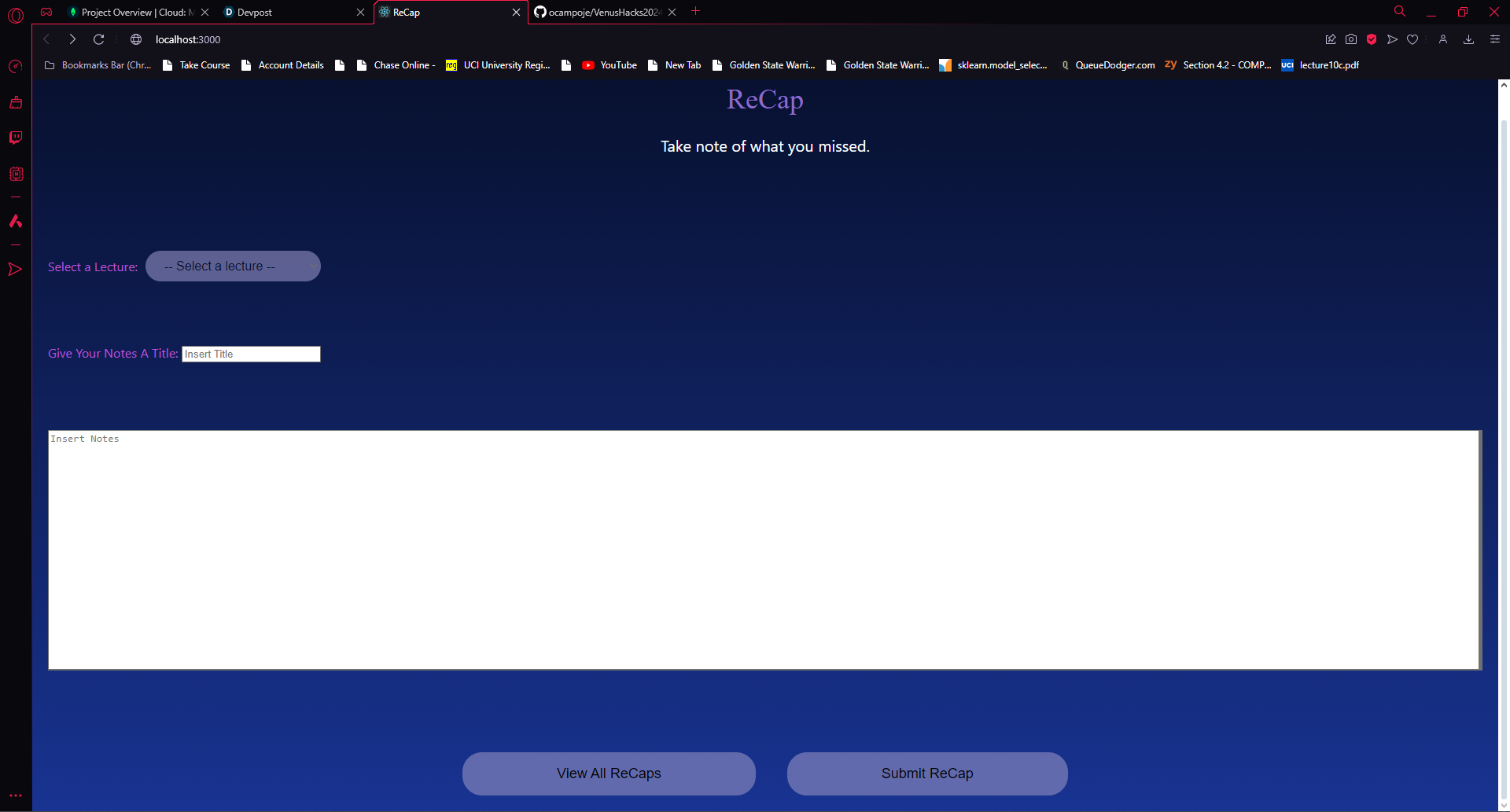
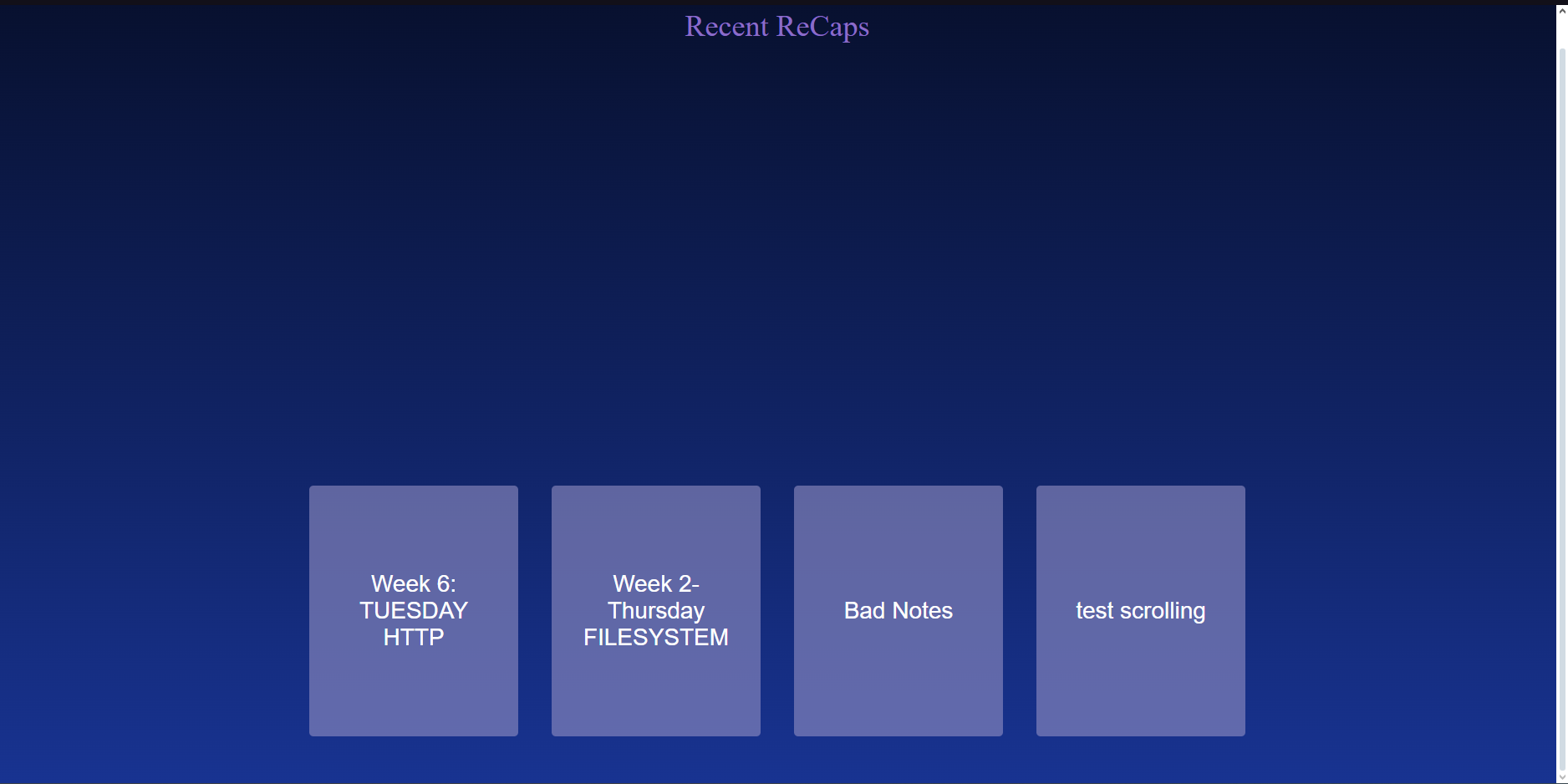
Home Screen
-
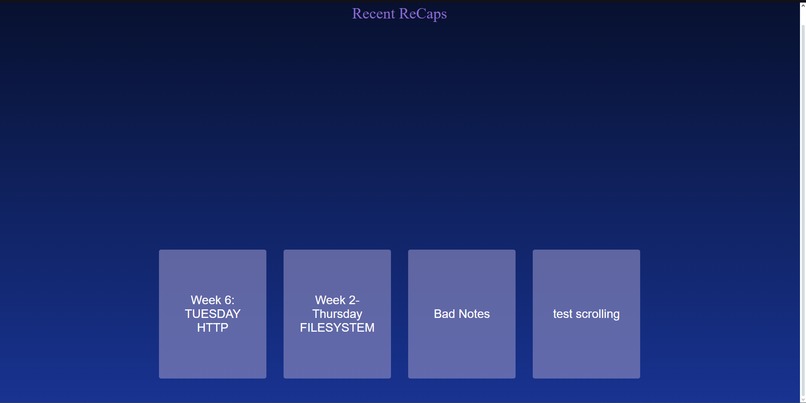
Note Selection
-
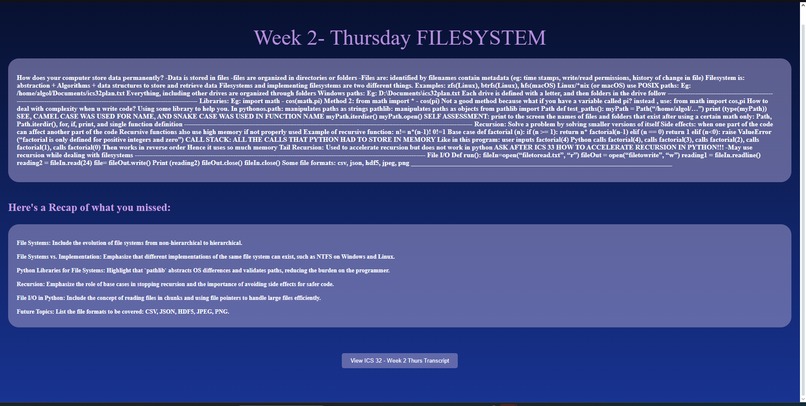
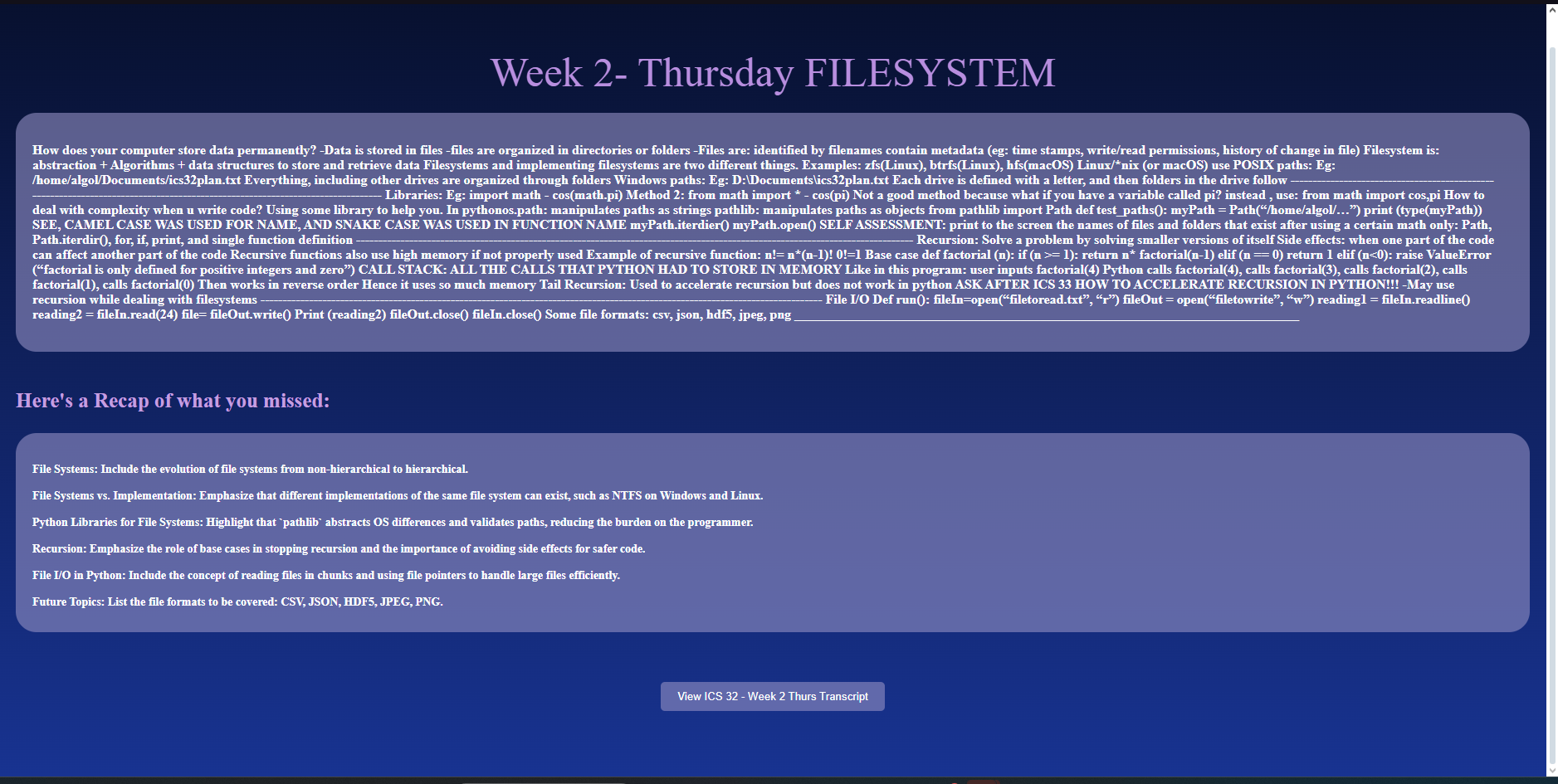
Feedback Page
Inspiration
As college students, taking notes can become a hassle, especially when you might have professors that lecture way too fast or have a hard time keeping up with your typing speed. As a result, your notes aren't as accurate as you would like them to be, leaving you to hope that the professors post their lecture slides in time for you to study or get caught up. Having experienced this prevalent issue first-hand with both online and in-person lectures, we at ReCap aim to recap a lecture using a recorded transcript, notifying you about all of the important information you might have missed while typing your initial notes. We hope that this allows for more accurate note-taking, regardless of lecture speed or slides, making the experience less of a struggle.
What it does
In theory, ReCap receives and/or makes a lecture transcript in real-time, which it then uses to compare your notes to the lecture material. If it notices discrepancies, it provides feedback regarding any key topics in your notes that you may have missed information on, allowing you to edit your notes based on what’s missing. By using these transcripts, ReCap aims to make the process of note-taking easier, eliminating the need to rewind or pause your lecture. Ideally, we would want to implement this further in a live lecture setting, to hopefully create a real-time lecture transcript during class.
How we built it
We collaborated as a team to create ReCap, using various types of software that we had little familiarity with prior to the creation of our program. We used CSS, HTML, Node JS, and React to create the front-end aspect of the program, while we used MongoDB and Axios for the back-end side of things. Additionally, before coding the graphics, we prototyped our interface using Figma to get a clear and concise idea of how we ideally wanted our website to look.
Challenges we ran into
Our team is composed of various developers with varying coding mastery levels, ranging from well-versed to beginner/intermediate. Regardless, this was a novel experience for almost all of us, as it was our first time participating in a code-related Hack-a-Thon. One of the biggest hoops we had to jump through was learning to work with completely new tools; for example, some of us had never used React to the extent of which we attempted to use it for ReCap. Similarly, some of us had absolutely zero experience coding in JavaScript, one of the main languages associated with front-end development, which made development a complicated process.
Another noticeable hurdle that we had to overcome was connecting the back-end software to the front-end. Individually these components—while taking some effort to assemble by themselves—were not difficult to construct; however, once we had to intertwine the two together, many problems arose and our unfamiliarity with such a confusing process led to many frustrating moments, wholly in part due to the sheer amount of moving parts in our program.
Accomplishments that we're proud of
We all worked very hard to create a product we are proud of, which is what we achieved through coding ReCap. One of our proudest achievements as a team is tackling and using so many new and unfamiliar systems, especially considering the time crunch we were under. Most of us have had limited experience with Axios, MongoDB, React, and even JavaScript, yet we were able to accomplish and learn so much during the duration of VenusHacks.
We are also extremely proud of our perseverance. Throughout the hackathon, we hit many walls where it felt like we had hit a dead end. Despite this, we decided not to give up, took a deep breath, and continued tackling our challenges head-on. This sense of perseverance and, in a way, pride, allowed us to implement and develop so much, which has made us extremely happy to see.
What we learned
We learned so much this past weekend, especially when looking at all the systems we worked with like React, MongoDB, and Axios. We’ve also learned so much about working together as a team, implementing patience, understanding, and genuine motivation to achieve our common goal. From wireframing to the actual coding and now the incoming product pitch, we learned to build off of each other's strengths and weaknesses to create a project we are deeply proud of.
What's next for ReCap
We have chosen to relax after ReCap, but we would be glad to be able to implement such a useful system for college students. Accessibility and inclusivity in education should always be a priority and by ideating ReCap, we wish to inspire others to think about the ways education can become an accomodating space.


Log in or sign up for Devpost to join the conversation.