-
-
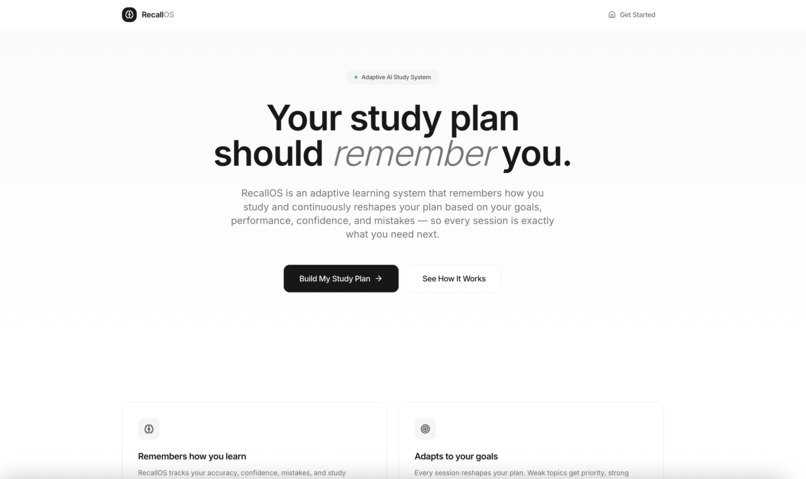
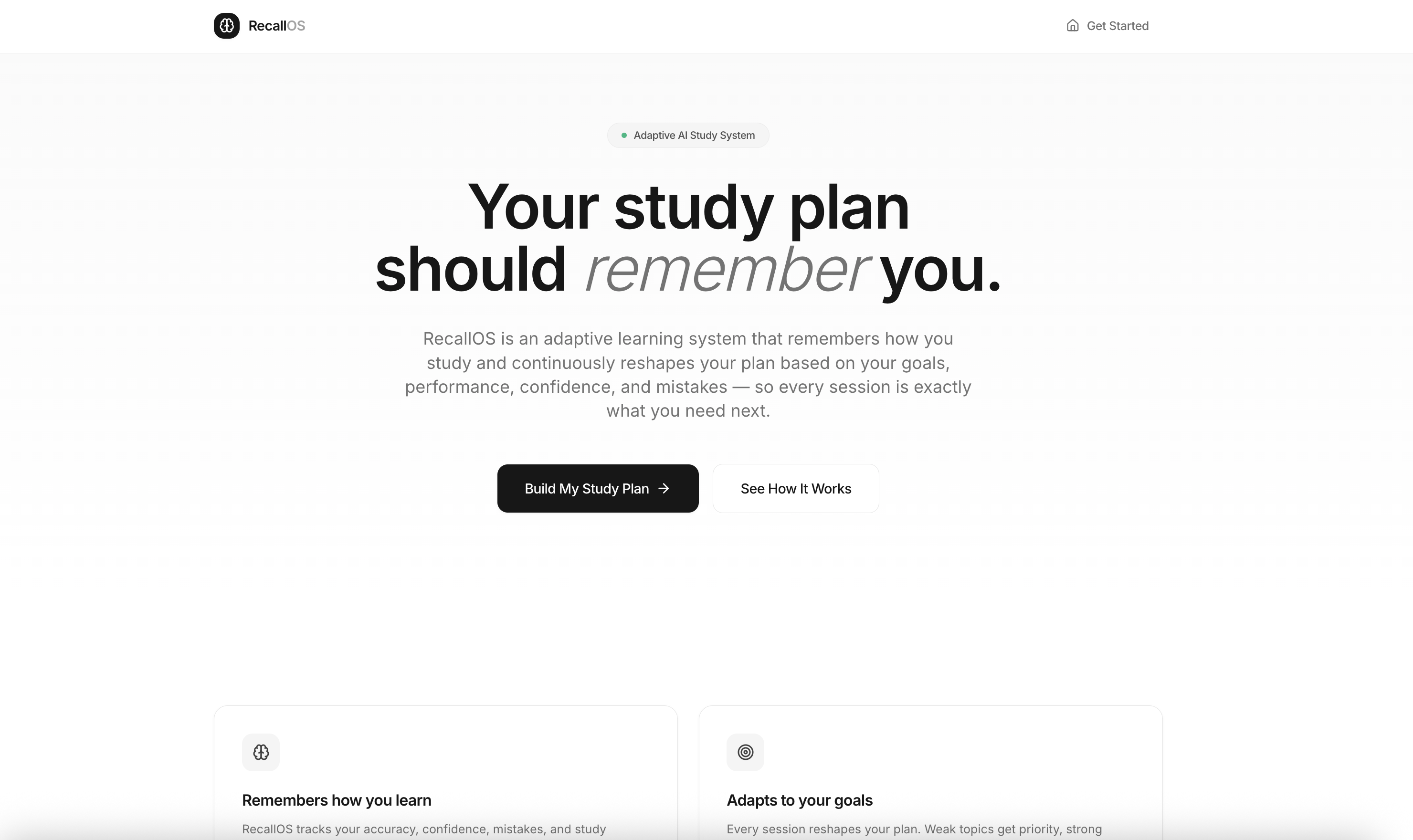
Hero / Landing
-
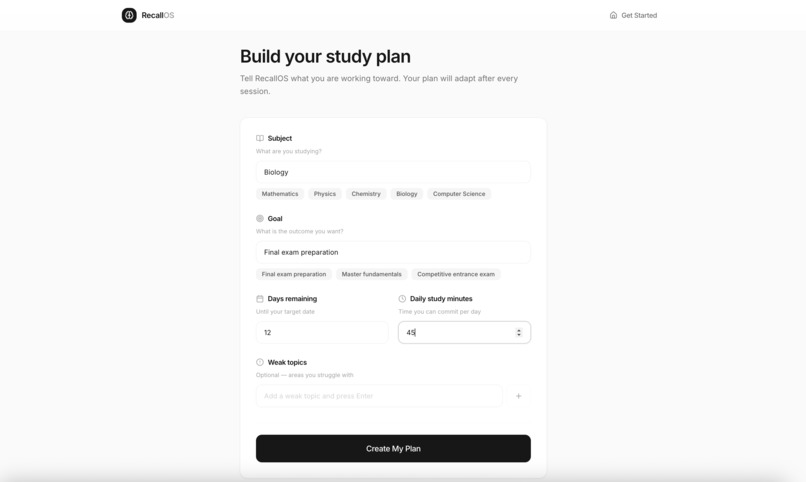
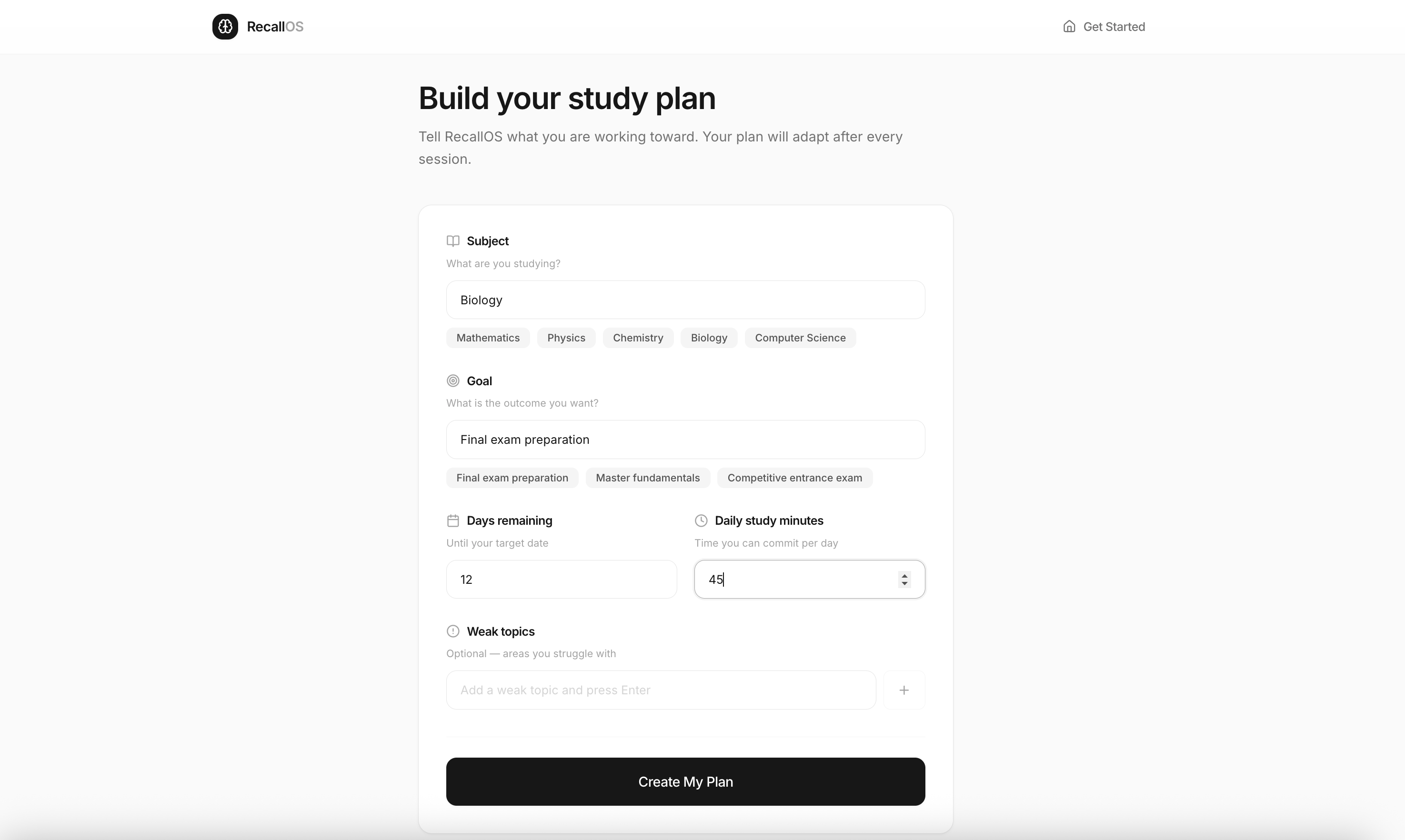
Setup
-
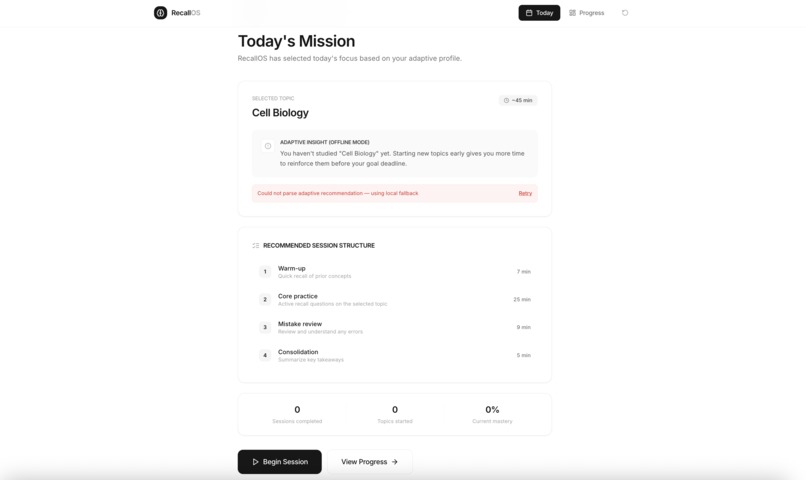
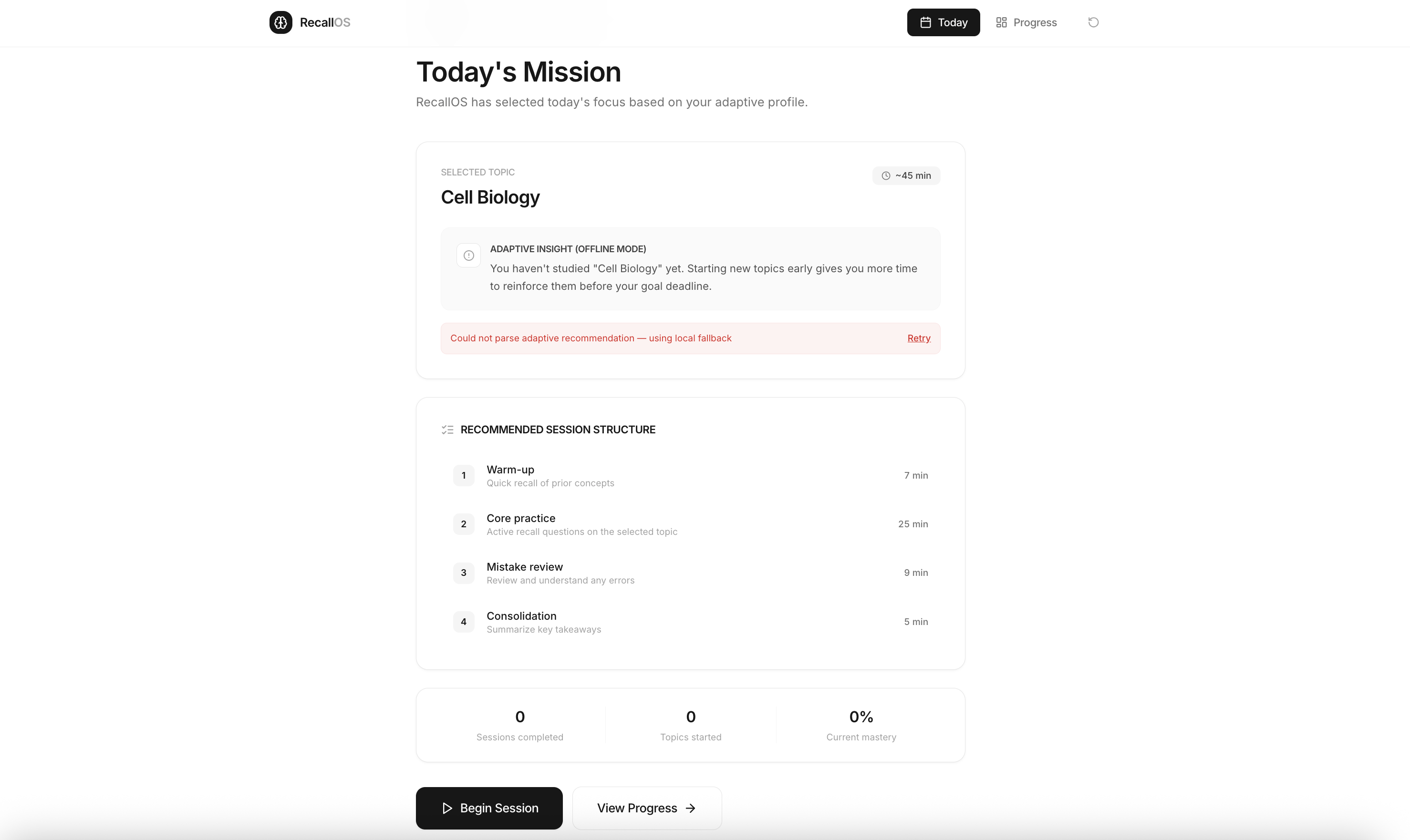
Today's Mission
-
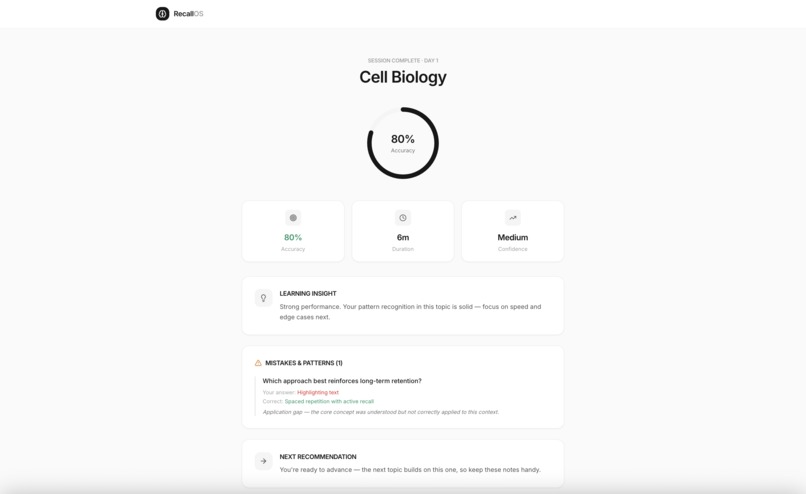
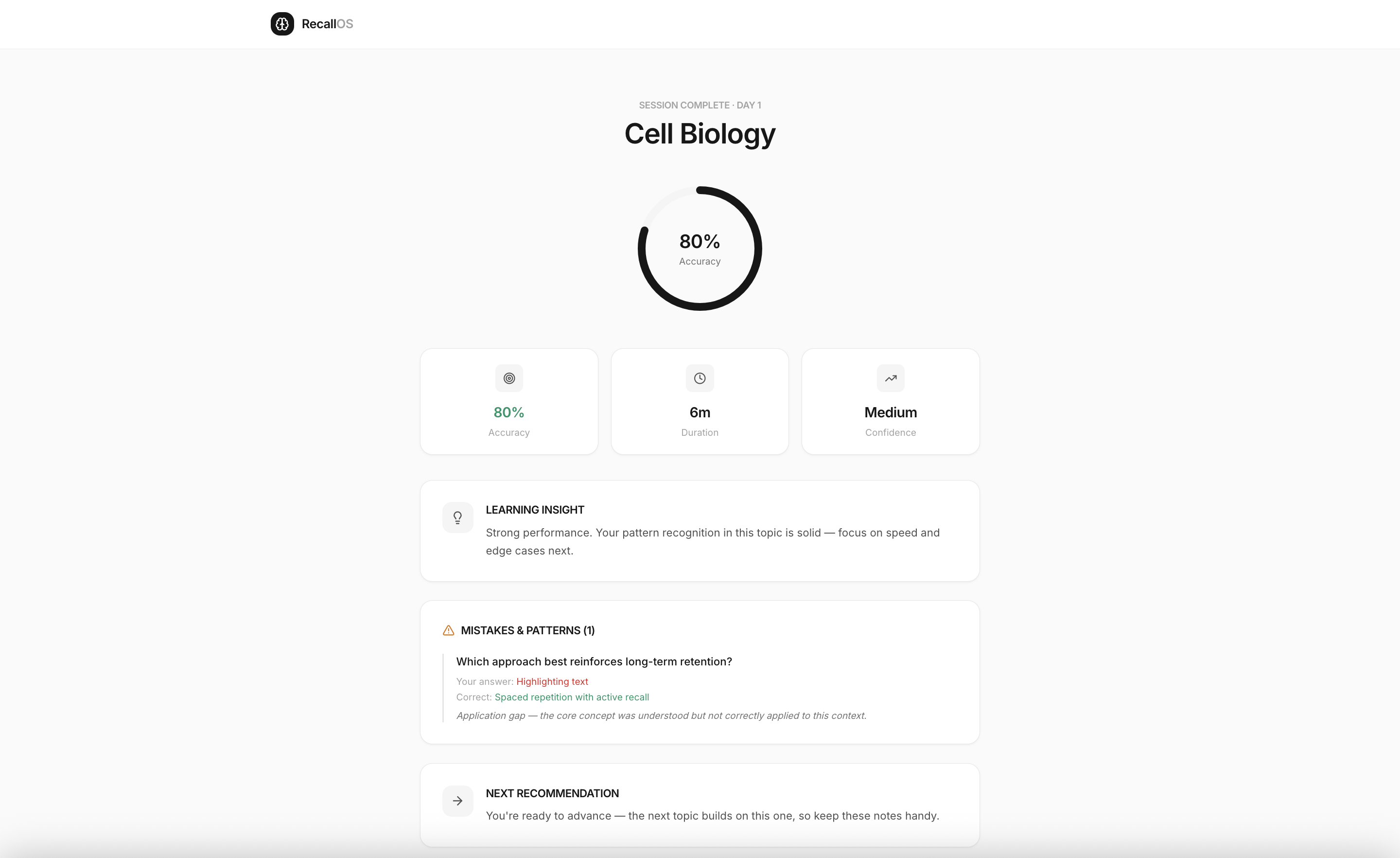
Adaptive Result
-
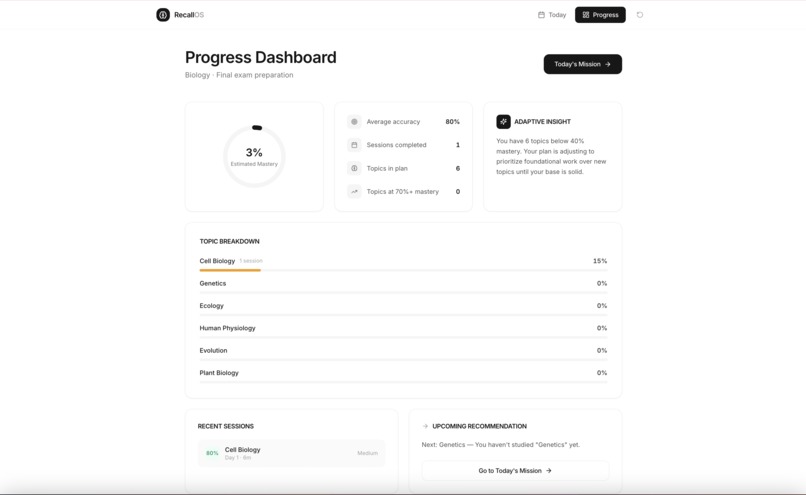
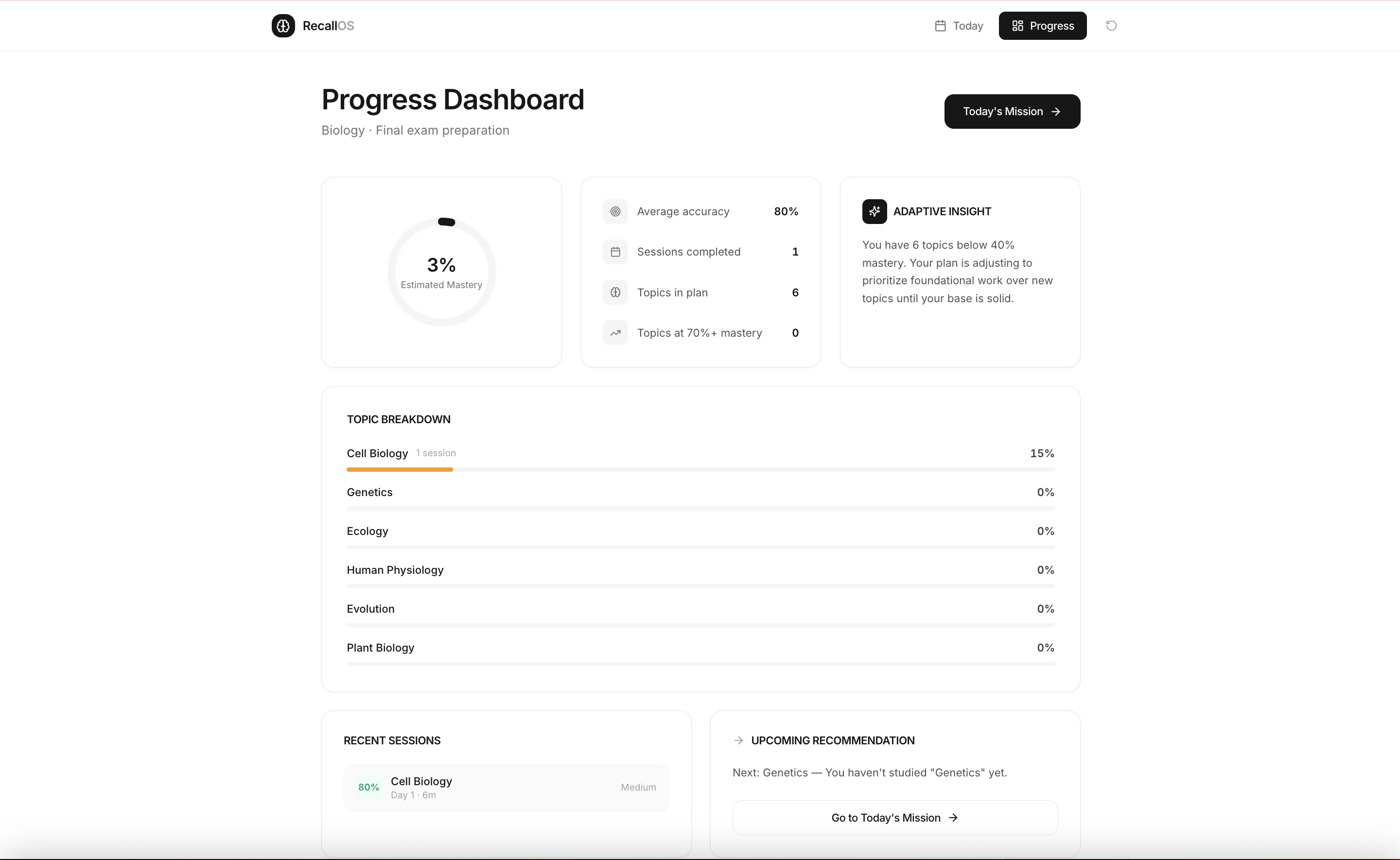
Progress Dashboard
-
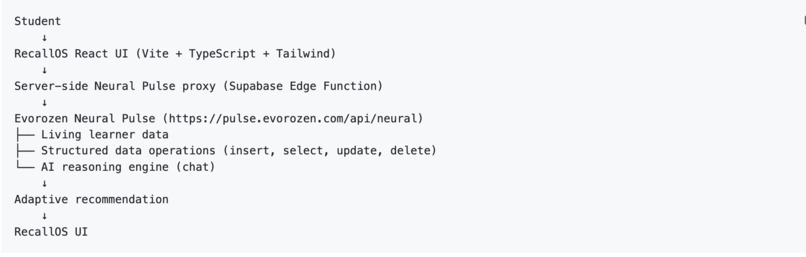
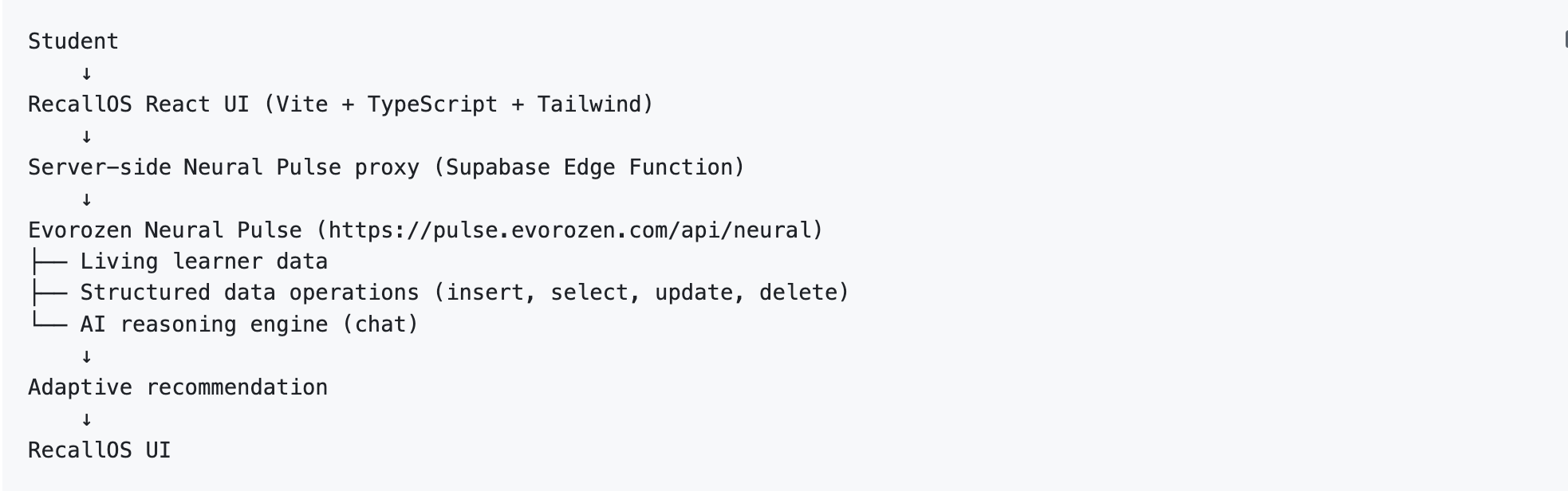
Architecture
RecallOS — Adaptive AI Study System
The Problem
Most AI study tools can generate a study plan, explain a topic, or create questions. But after the interaction ends, the system often loses the most important context: how the student is actually learning.
A student who repeatedly struggles with the same concept should not receive the same study plan as a student who has mastered it.
The Solution
RecallOS is an adaptive AI study system that remembers how you learn and continuously changes what you should study next.
Instead of generating a static plan, RecallOS maintains an evolving learner state using:
- performance and accuracy
- confidence
- recurring mistakes
- topic mastery
- study-session history
- exam goals
- time remaining
Every completed session becomes new evidence for the next decision.
How It Works
Student goal → learner state → AI reasoning → study mission → performance → updated learner state → next recommendation
A student can start with a goal such as:
Biology final in 12 days, 45 minutes per day.
RecallOS creates an initial mission, records the student's result, evaluates the new evidence, and generates the next recommendation from the updated learning state.
For example, repeated low performance in Genetics can increase its priority. Once performance improves substantially, RecallOS can shift attention toward another topic instead of continuing to repeat the same recommendation.
Why Neural Pulse
Evorozen Neural Pulse is the primary intelligence and learner-state layer of RecallOS.
RecallOS uses the Neural Pulse API for:
create_schemainsert_dataselect_dataupdate_datadelete_datachat
The application persists learner profiles, topic state, study sessions, and adaptive plans through Neural Pulse, then retrieves the relevant learning history before asking the Neural Pulse AI layer to determine the next study decision.
The result is an adaptive loop rather than a one-shot AI response:
New Evidence → Learner State → Neural Pulse Reasoning → Next Study Decision
Neural Pulse requests are routed through a server-side edge function so the API credential is never exposed to the browser.
What Makes RecallOS Different
The central idea is simple:
AI should not just answer the student. It should remember the student.
RecallOS turns every study session into new information that can change the next recommendation.
Go-To-Market
RecallOS is designed for students preparing for exams and intensive coursework.
The initial acquisition strategy is centered on:
Short-form study content → free personalized study plan → recurring usage → shareable progress → student referrals
Distribution can expand through student communities, study-focused Discord groups, ambassadors, and creator-led study content.
The product follows a freemium model:
Free
- one active study goal
- core adaptive planning
- basic progress tracking
Premium
- multiple subjects and goals
- deeper learner analytics
- extended learning history
- advanced adaptive scheduling
Technical Architecture
Student
   ↓
RecallOS React UI
   ↓
Server-side Neural Pulse Proxy
   ↓
Evorozen Neural Pulse
   ├── Persistent learner data
   ├── Structured data operations
   └── AI reasoning
   ↓
Adaptive Recommendation
   ↓
RecallOS UI
The application also maintains a lightweight compatibility/cache layer for the existing product experience while Neural Pulse remains the primary intelligence and learner-state layer.
Security
EVOROZEN_API_KEY is stored server-side and is never exposed through frontend code, Vite variables, local storage, or client logs.
The browser communicates with the application's server-side proxy rather than directly exposing the Neural Pulse credential.
Verification
RecallOS was verified with the live Neural Pulse API.
create_schema— PASSinsert_data— PASSselect_data— PASSupdate_data— PASSdelete_data— PASSchatendpoint — HTTP 200 with trace ID- Edge function deployment — PASS
- TypeScript typecheck — PASS
- Production build — PASS
During the final live smoke test, the Neural Pulse AI engine temporarily returned a provider-side availability message for chat despite the request itself succeeding with HTTP 200 and a valid trace ID. RecallOS handles this condition explicitly with a clearly labeled Offline Mode fallback rather than presenting fallback output as Neural Pulse output.
What's Next
Future versions can expand RecallOS into a broader adaptive learning platform with richer assessment signals, exam-specific optimization, additional subjects, educator tools, and student-community distribution.
RecallOS: your study plan should remember you.
Built With
- api
- artificial
- css
- evorozen
- github
- intelligence
- javascript
- neural
- postgresql
- pulse
- react
- rest
- serverless
- supabase
- tailwind
- typescript
- vite


Log in or sign up for Devpost to join the conversation.