-
-
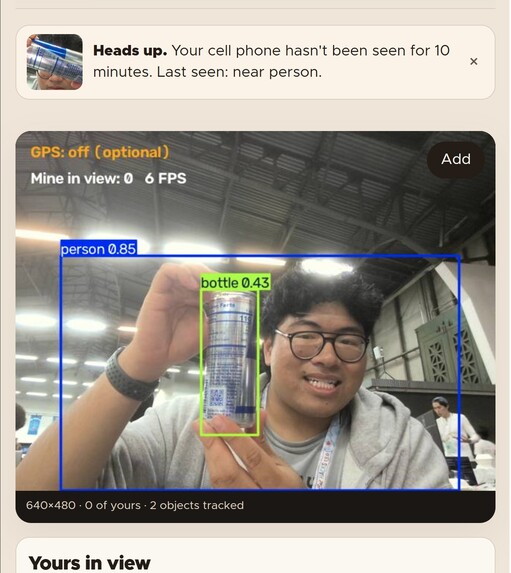
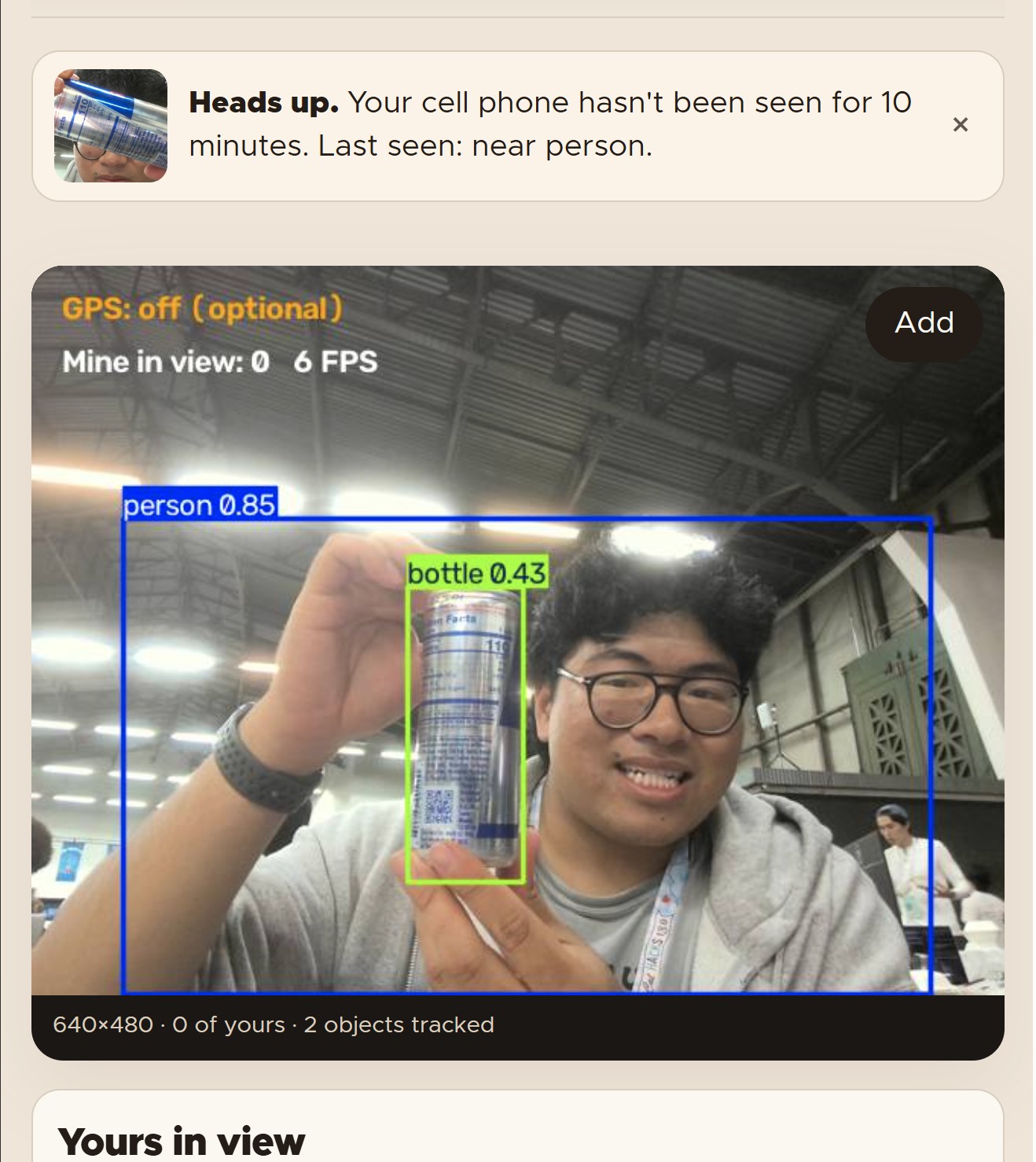
Computer vision model to identify objects from the user.
-
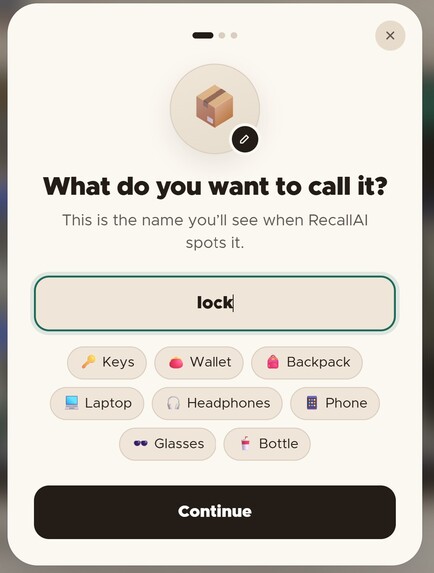
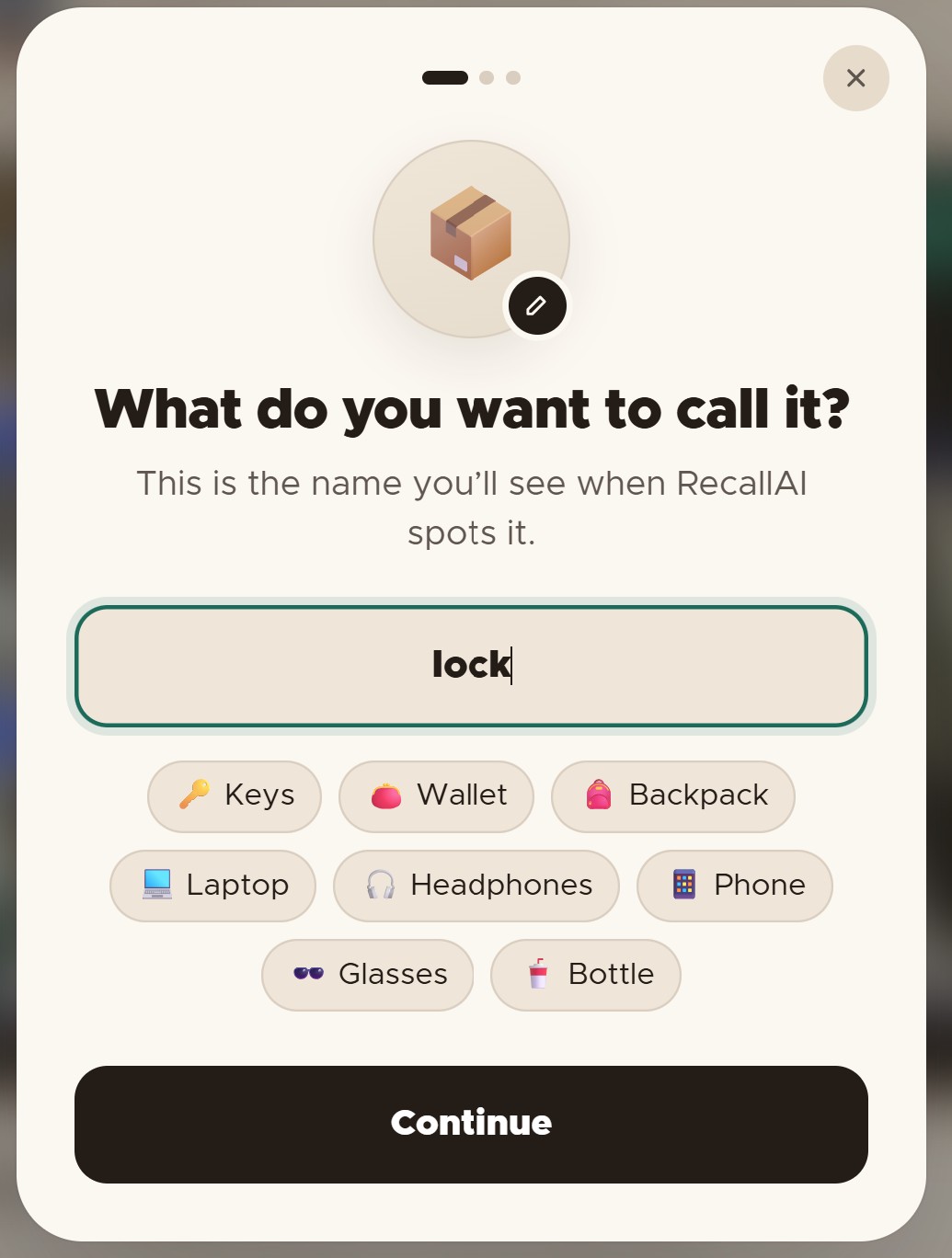
An menu icon that pops up when you scan an item that you want to add.
-
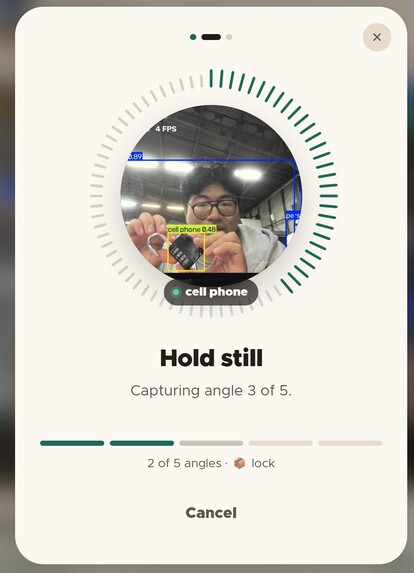
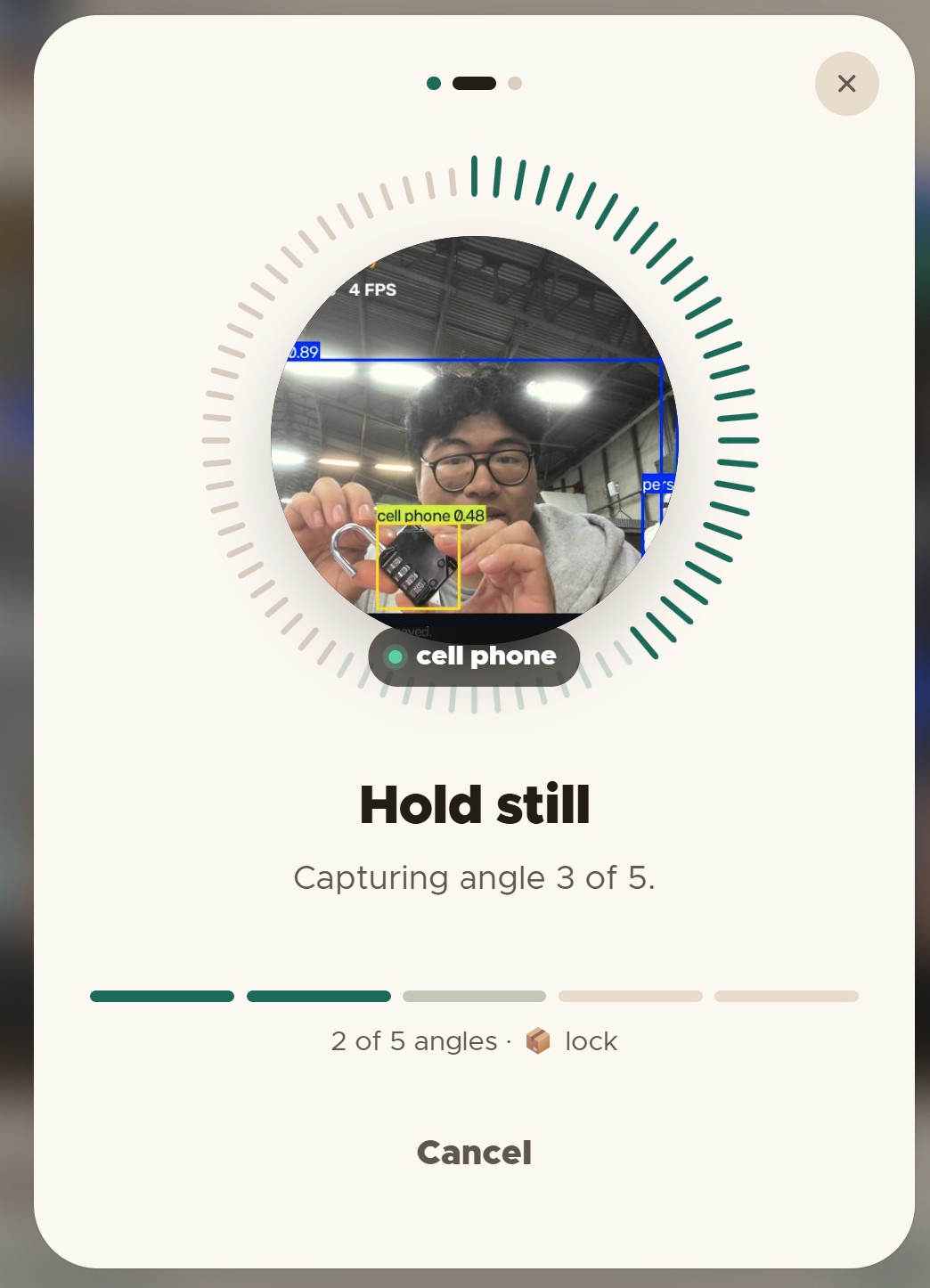
The scan menu guiding the user to angle their object for precise scanning.
-
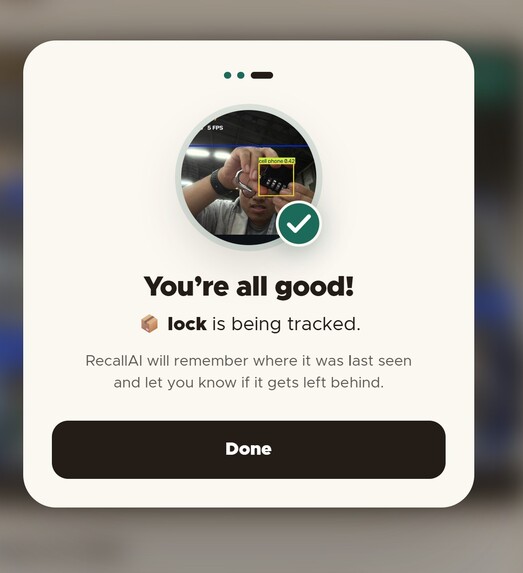
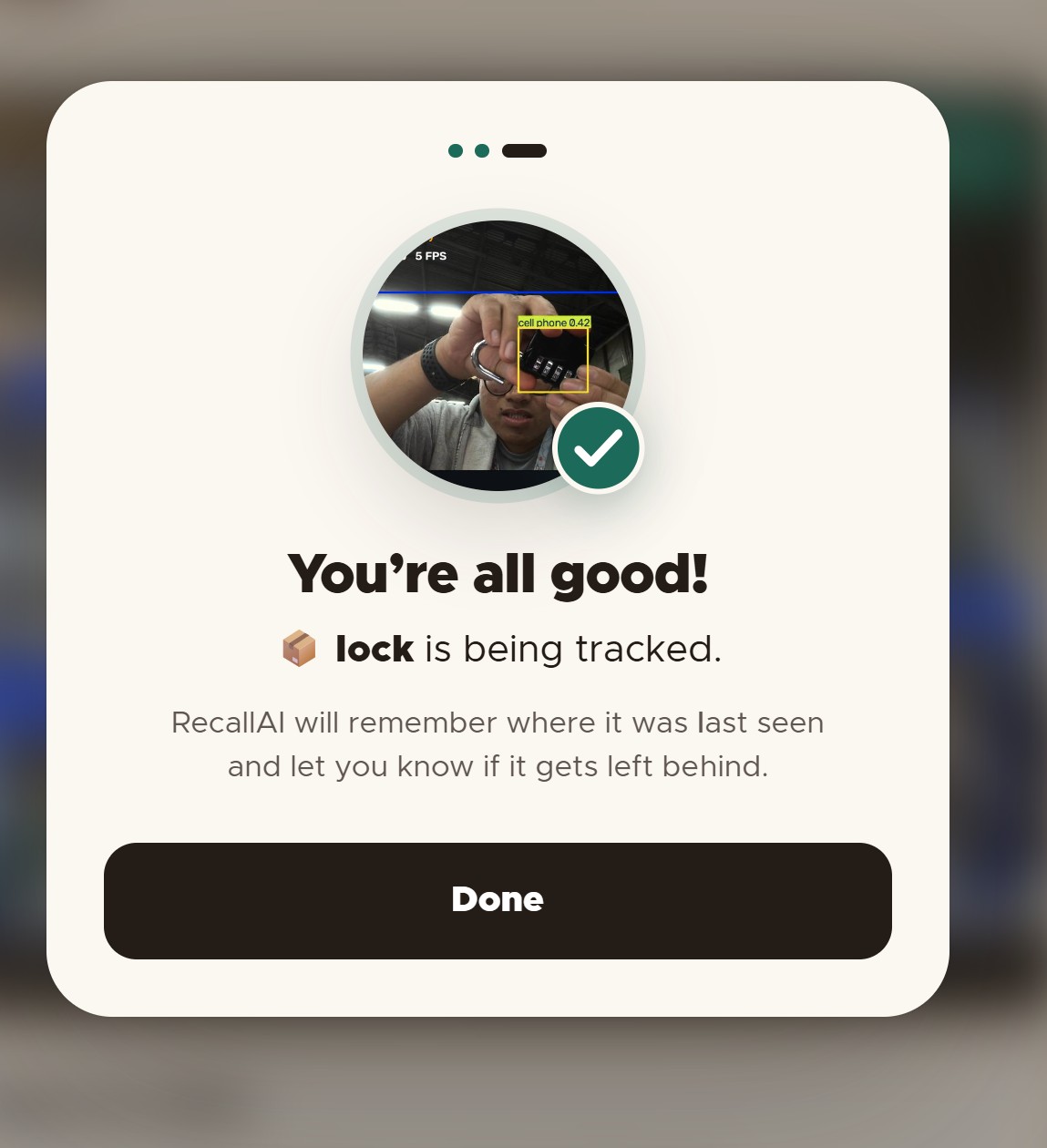
Success pop up when scanning is complete.
-
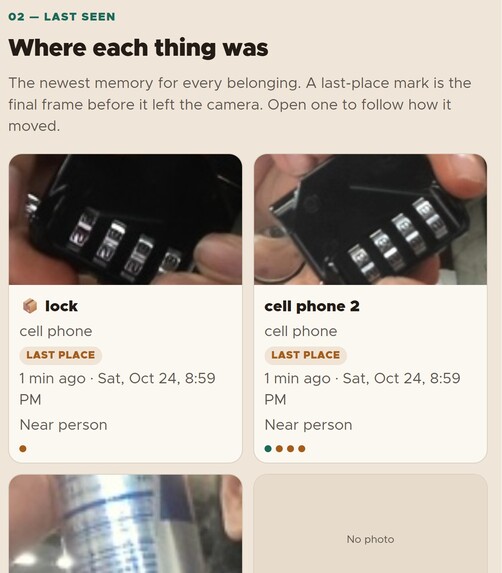
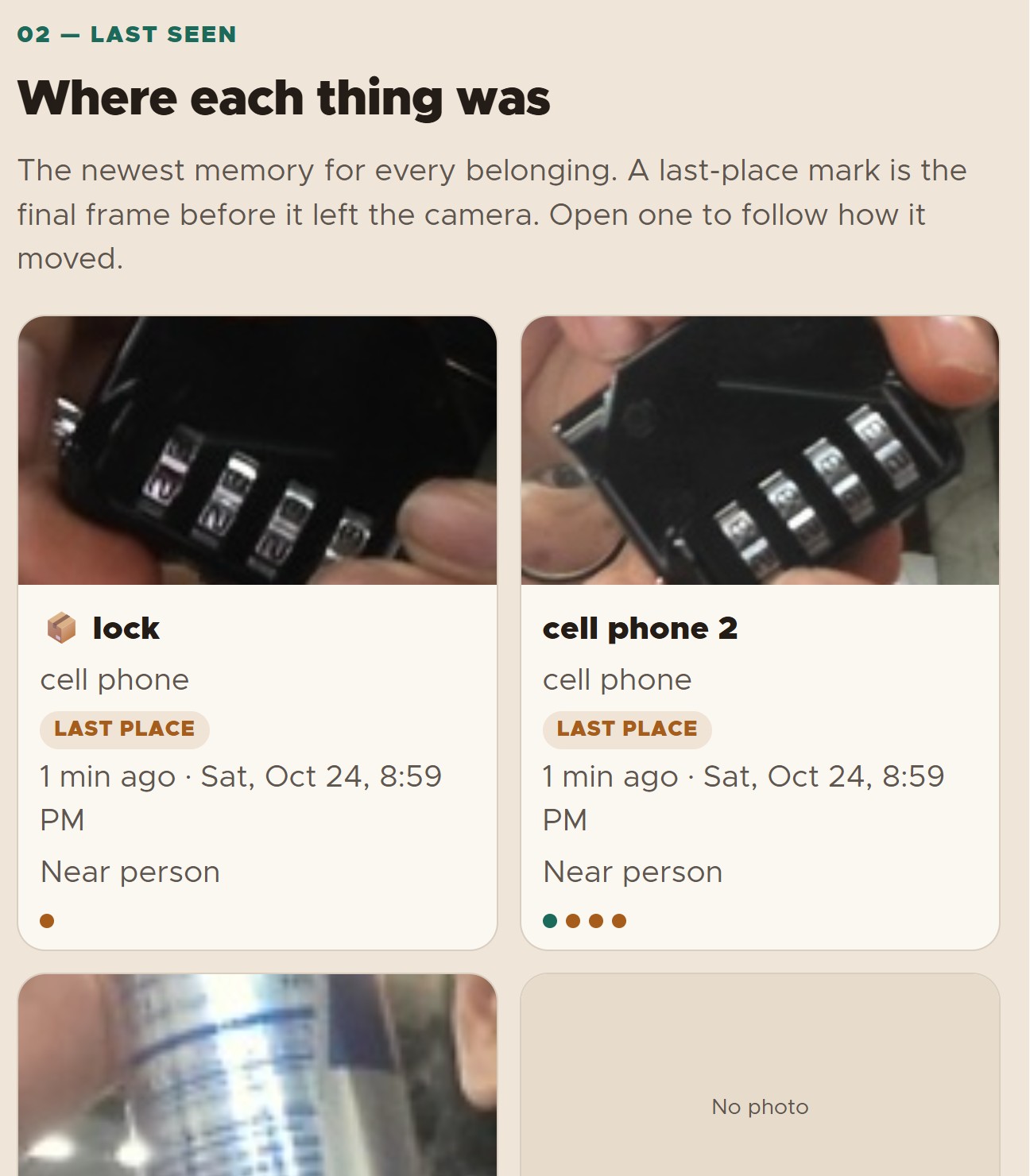
Previous scanned items and their last locations.
-
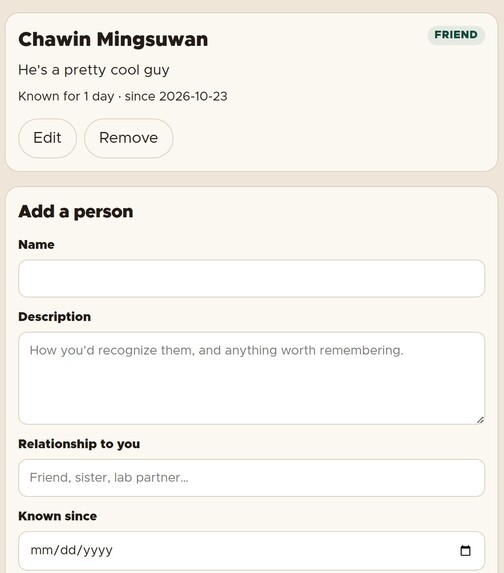
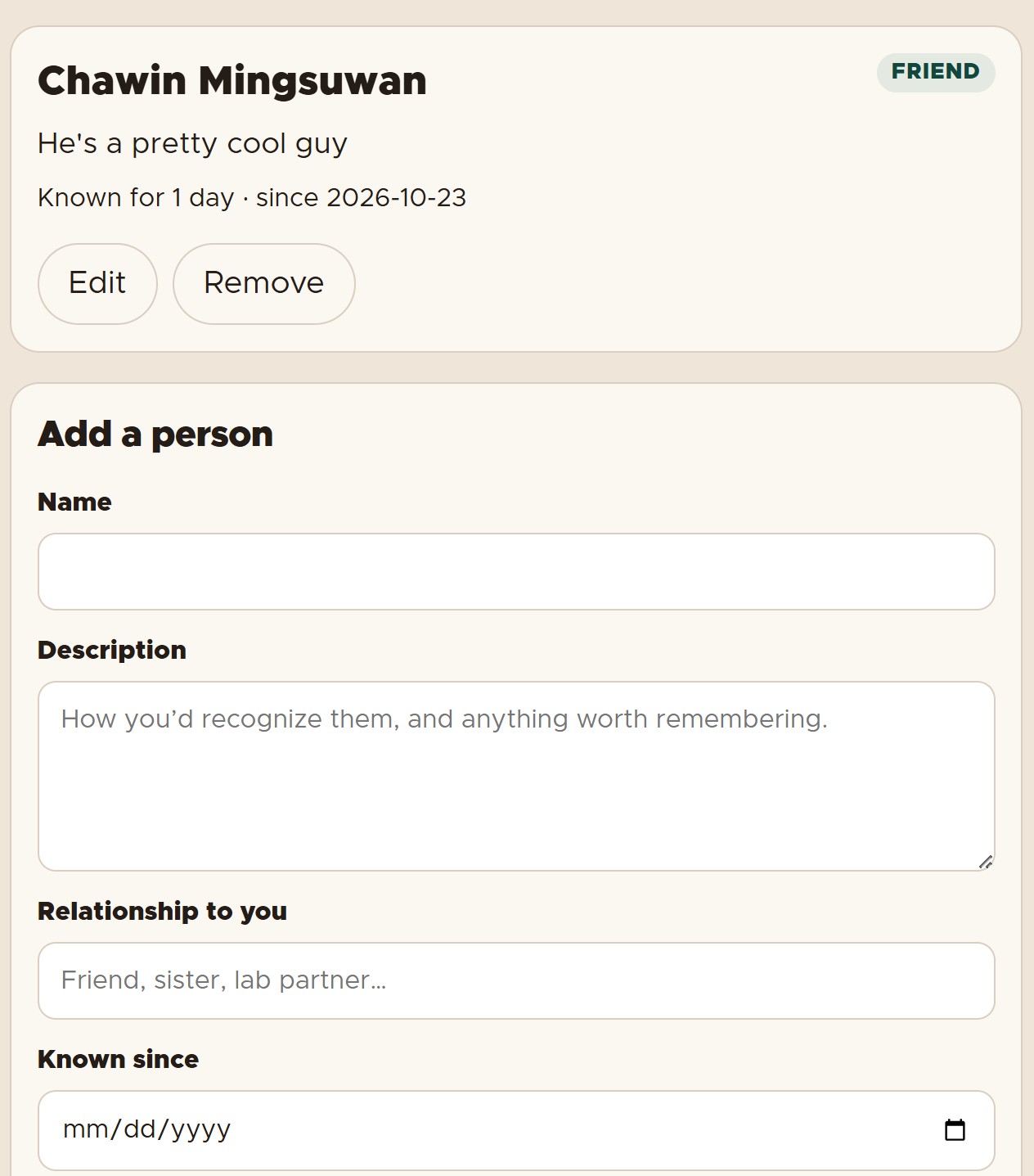
Store and add friends/families/love one within the application.
-
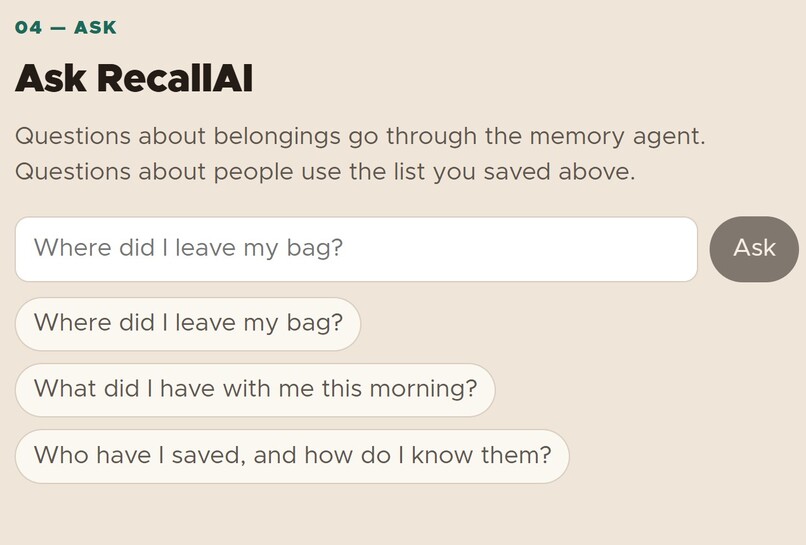
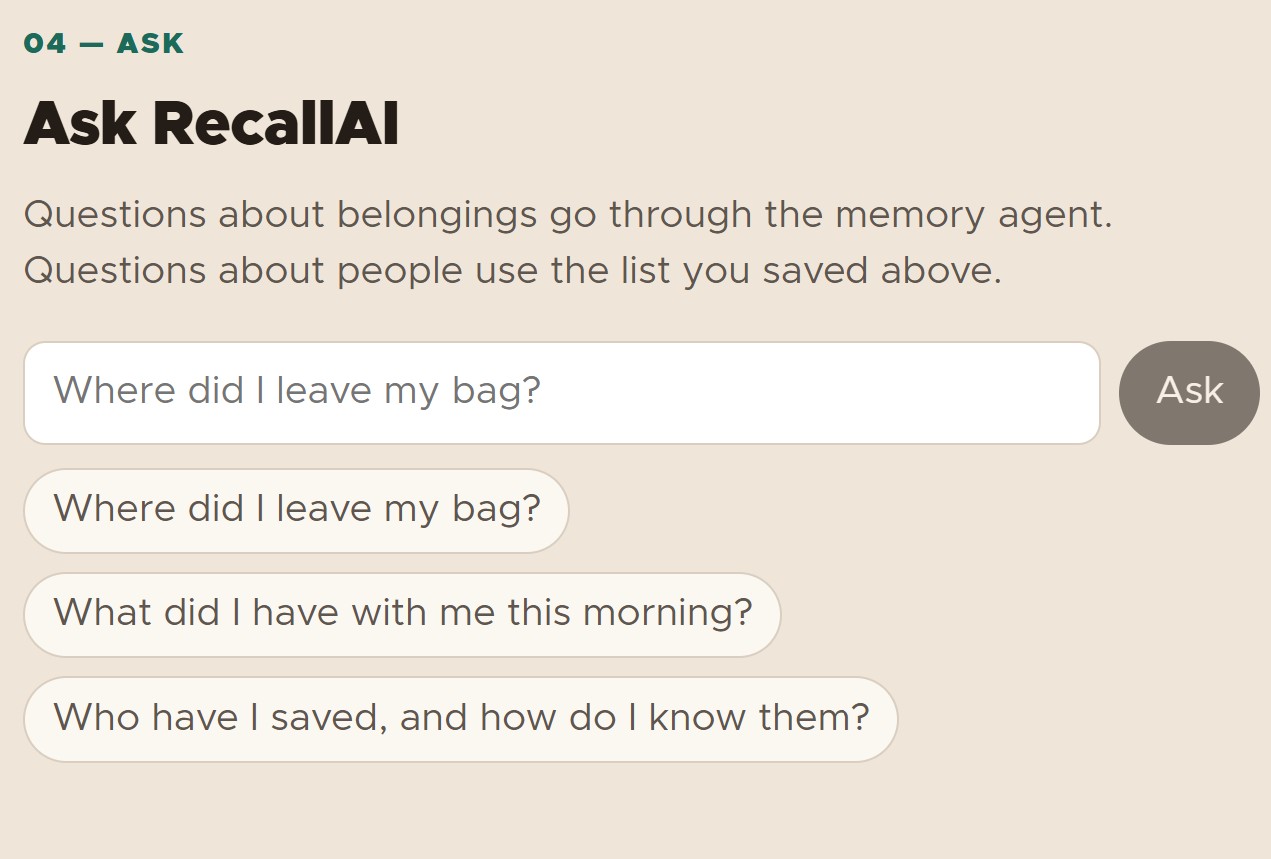
A chat feature to talk with RecallAI.
Inspiration
RecallAI came from two problems. The first is small and daily: we lose keys, headphones and phones all the time, and we wanted to fix that. Glasses are something many people already wear every day, so we decided to turn them into a tool that keeps track of the objects closest to us.
We planned to stop there. Then we extended the idea to people. In an increasingly lonely world, it has become easy to lose people from our lives. Friends and family drift away, and sometimes it happens only because we don’t know when to check in
What it does
RecallAI finds lost things. A camera on a pair of glasses watches what you see, saves your belongings and remembers where it last saw each one. If you’re about to leave without your keys, it alerts you on your lenses and your phone. Additionally, if you've lost a phone, key, or other important possession, the software will automatically pull the product from Amazon or another site, allowing for seamless recovery in the event that users lose an item for good.
It does the same "finding" for people. You can save someone from a photo, and RecallAI uses Bright Data to pull updates from their public LinkedIn and Facebook profiles. When it has been a while since you talked to a friend or family member, it sends a gentle reminder to reach out and see where they are in life.
How we built it
Because of hardware limits at the hackathon, we used a Logitech camera on a 3D-printed headband, with the feed displayed on a laptop, in place of smart glasses. The camera feed runs through YOLO for object detection and CLIP to recognize your specific belongings. Saved items and people go into a database along with where they were last seen. An AI agent watches for anything missing and sends the reminder to the interface. For people, Bright Data pulls public profile information for anyone the user has saved.
Challenges we ran into
We had another idea at first, but we couldn’t find a dataset for it and had to pivot completely. That pushed us toward more personal problems. Figuring out how to implement SpacetimeDB also took real time. We brought a lot of hardware we were excited to use, but much of it wasn’t feasible in the time we had.
Accomplishments that we're proud of
We’re proud that we didn’t get pulled into building something technically complex for its own sake. We built something that fixes real problems in our own lives, from small daily inconveniences to losing touch with the people who matter to us.
What we learned
Starting from a problem we actually have made every decision easier. When our first idea fell through, the pivot gave us a clearer product than the original plan. We also learned to scope hardware to what we could reliably demo in a weekend.
What's next for RecallAI
Moving from the headband prototype to real camera glasses, with alerts shown directly on the lenses. Running detection on-device for speed and privacy.
Making people features fully consent-based, limited to people you’ve saved and public information only. Smarter check-in timing based on how often you usually talk to someone.


Log in or sign up for Devpost to join the conversation.