-
-
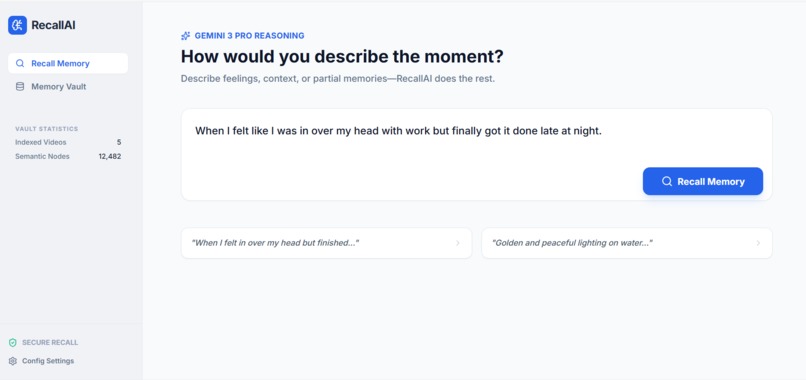
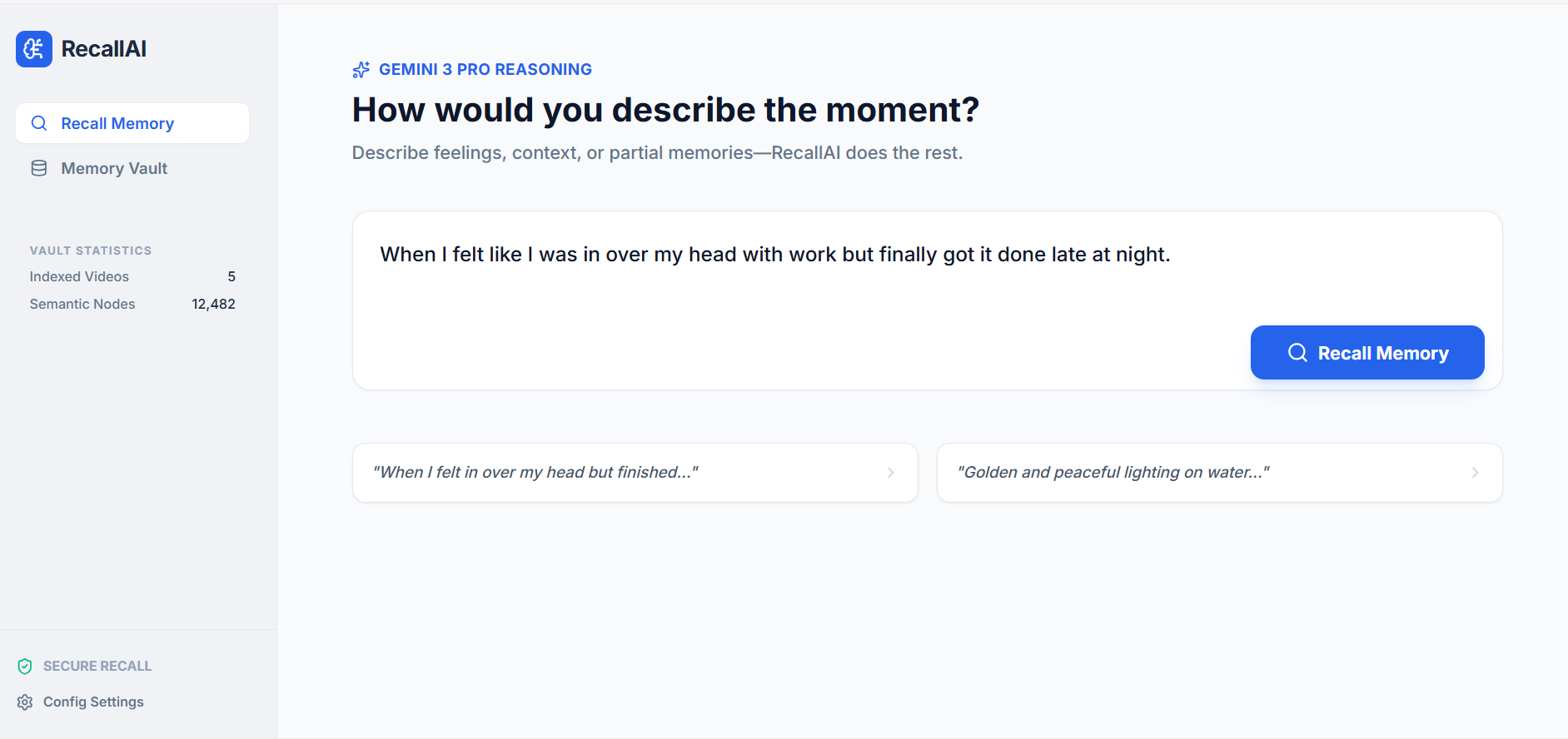
Human-centric video memory search powered by Gemini 3 — finding the video you remember in seconds.
Inspiration
I realized that humans don’t remember videos by exact titles or keywords — I remember moments. A vibe. A feeling. A small action. Yet every platform forces us to search with precise words. That gap between human memory and machine search inspired RecallAI.
What it does
RecallAI allows users to search their saved or uploaded videos using vague memories instead of exact keywords. You can type something like “that rainy video with a sad vibe” and the app uses Gemini 3 to understand emotion, context, and intent — then ranks the most relevant results and explains why they match.
How we built it
I built RecallAI as a web app powered by the Gemini 3 API. Gemini acts as the reasoning engine — analyzing user memory prompts and comparing them with video transcripts or descriptions using semantic understanding, not simple keyword matching. The system then returns ranked matches with explanations.
Challenges we ran into
One major challenge was moving beyond basic keyword search. We had to design prompts that truly leveraged Gemini’s contextual reasoning. Another challenge was structuring the output so the AI’s decision-making process was transparent and easy to understand for users.
What we learned
We learned that prompt design is just as important as coding. The way you communicate with an AI model directly impacts the intelligence of the output. We also gained hands-on experience integrating Gemini 3 into a real-world application workflow.
What's next for RecallAI
Next, I plan to integrate real-time video transcript extraction, browser extensions for platforms like Instagram and YouTube, and personalized memory indexing. Long term, RecallAI could evolve into a universal AI-powered memory search engine for digital content.


Log in or sign up for Devpost to join the conversation.