-
-
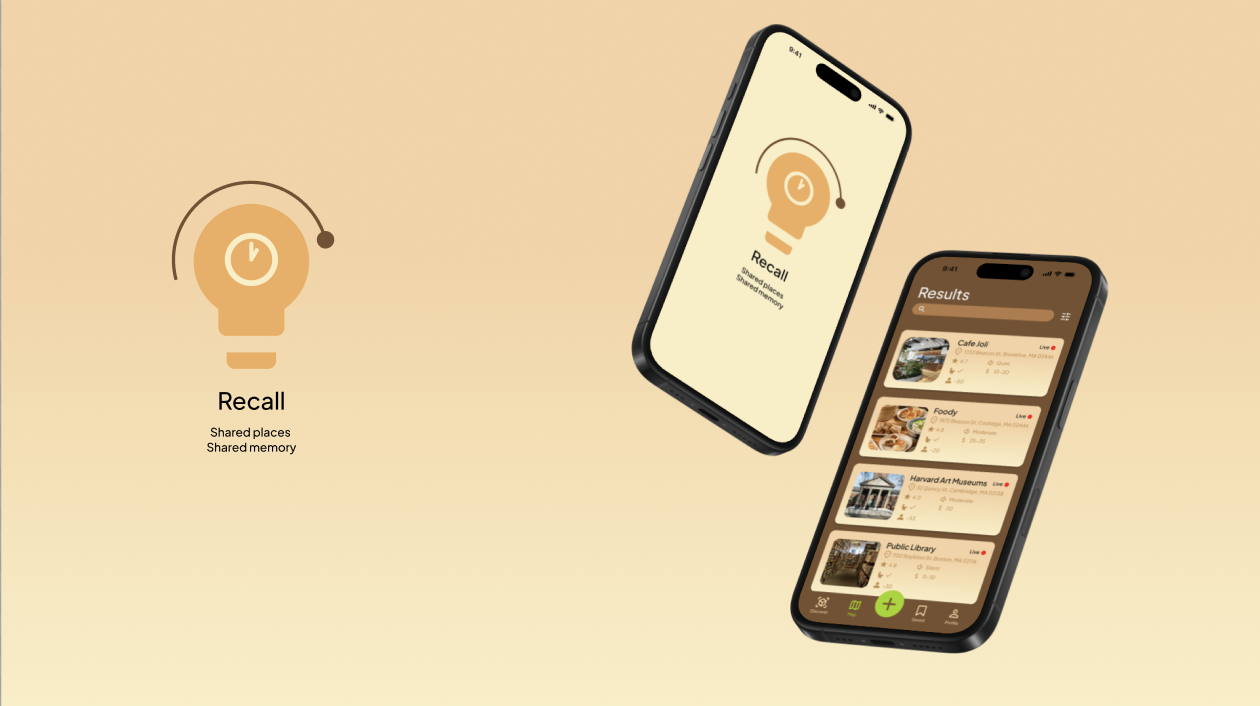
Recall_Splash
-
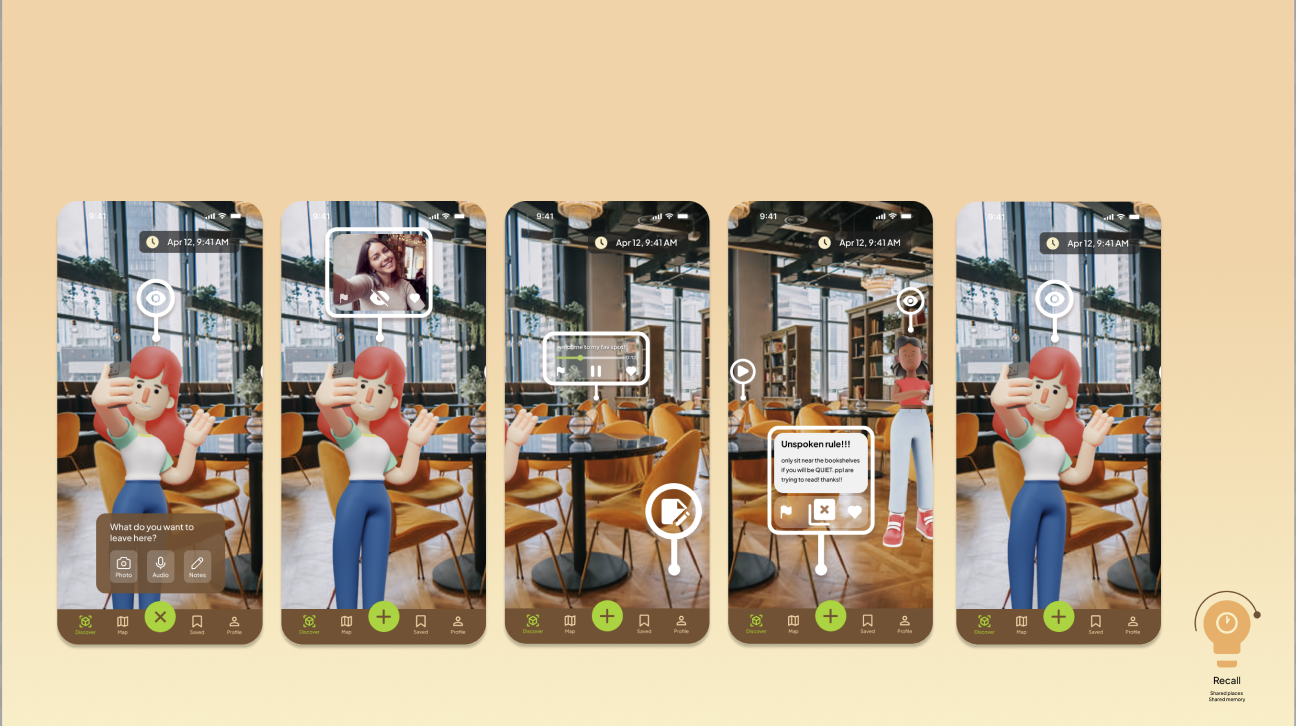
Recall_AR_Camera
-
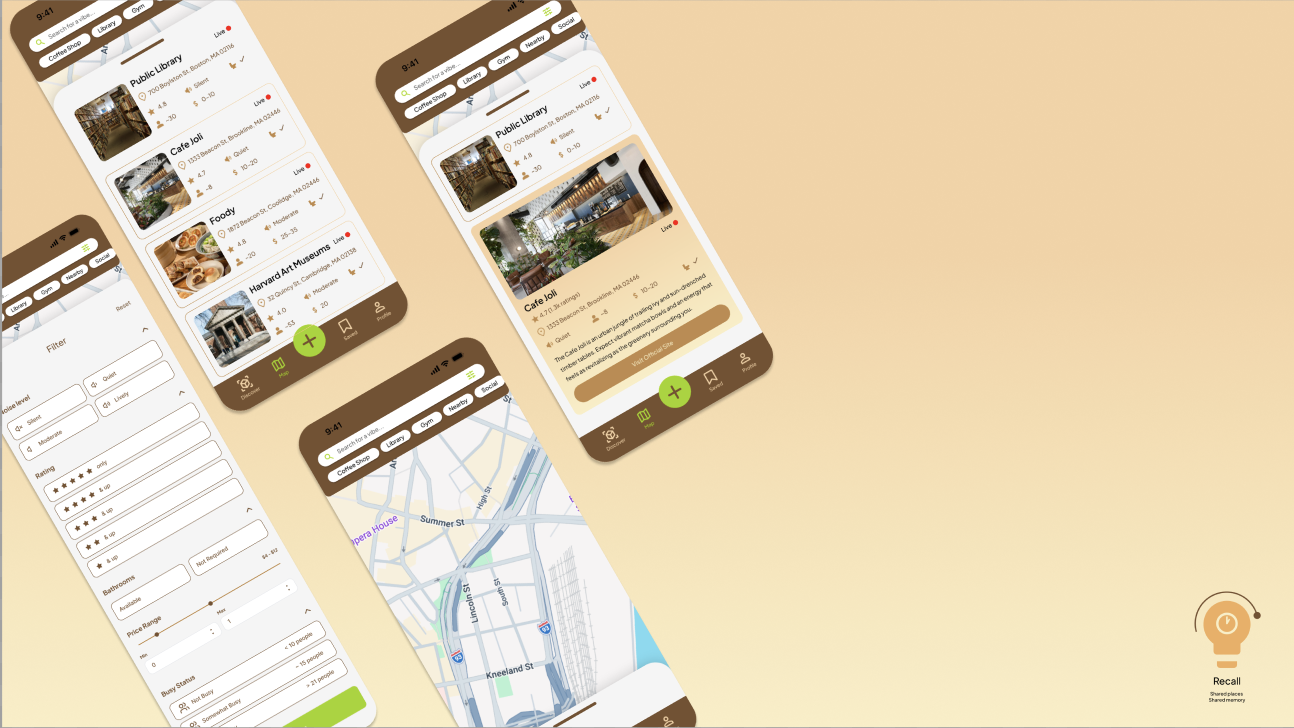
Recall_Screens
-
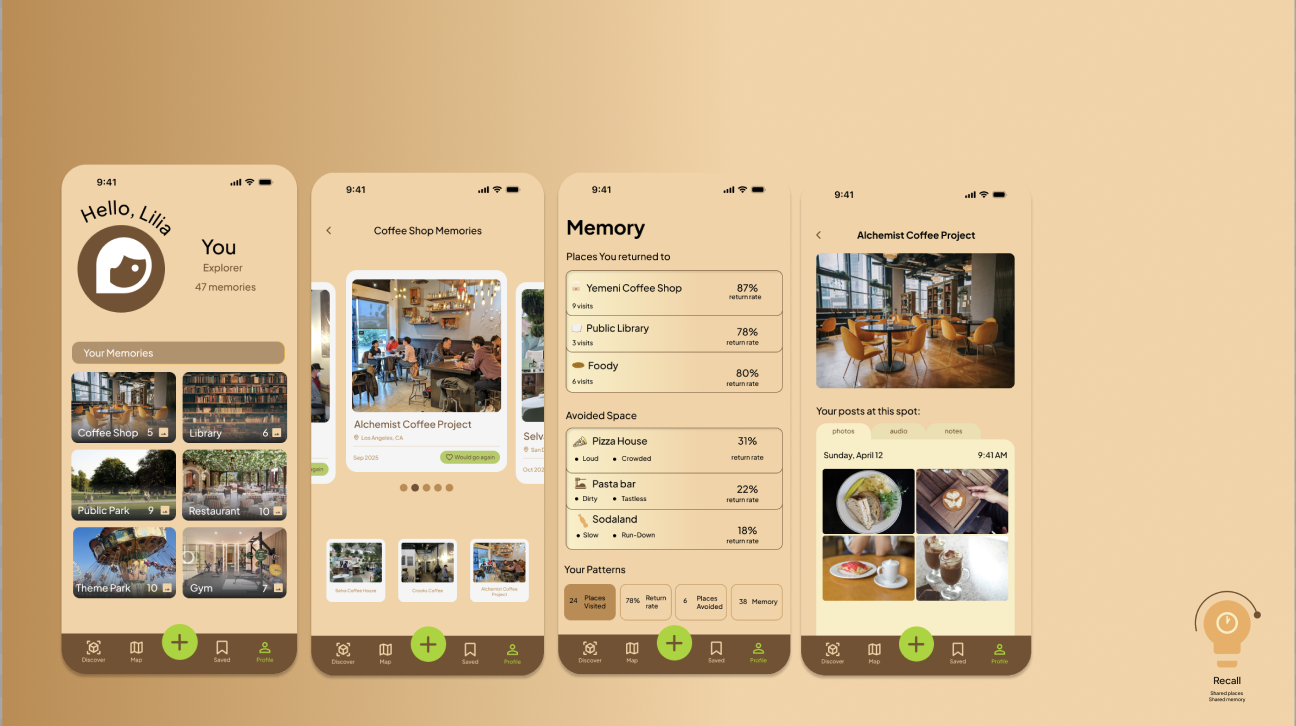
Recall_Profile
Inspiration
Recall was inspired by a simple but universal experience: searching for the right place to study, work, or socialize and realizing that location alone doesn’t guarantee the right environment. As students balancing academic pressure, meetings, and social life, we found ourselves repeatedly moving between cafés, libraries, and public spaces trying to find somewhere that matched our needs in the moment.
Through research, we discovered that people deeply value their “go-to” spots, yet frequently experience frustrations such as overcrowding, noise mismatches, limited seating, and unpredictable availability. We asked ourselves: what if discovering spaces felt intentional instead of stressful? Recall emerged from the desire to transform place discovery into an experience centered around mood, purpose, and community connection.
What it does
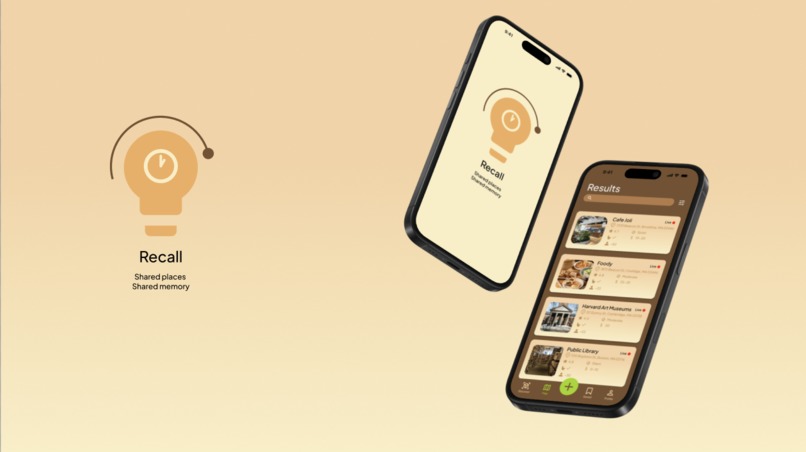
Recall is a real-time discovery application that helps users find cafés and community spaces aligned with their current needs; whether focusing, collaborating, or relaxing.
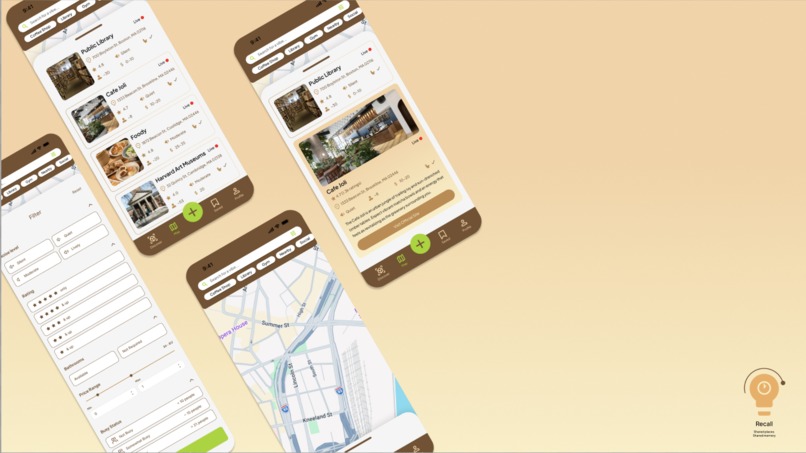
Using live environmental data and intuitive filtering, users can:
- Discover nearby locations based on energy level, productivity needs, or social intent
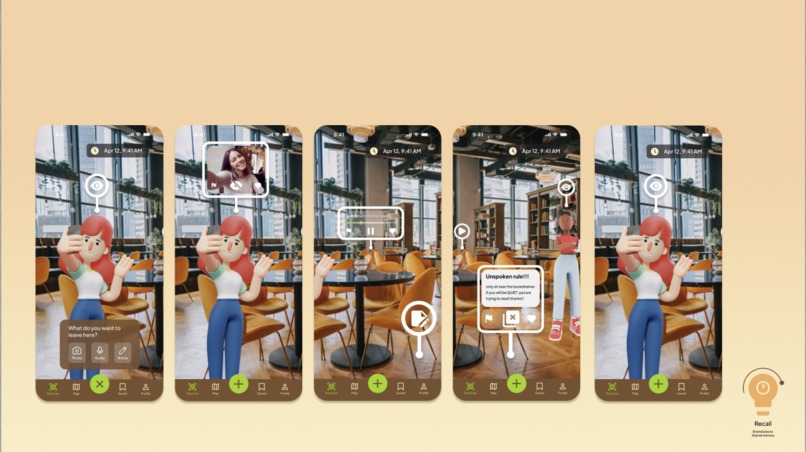
- Explore spaces through an AR Discover Camera that naturally onboards interaction
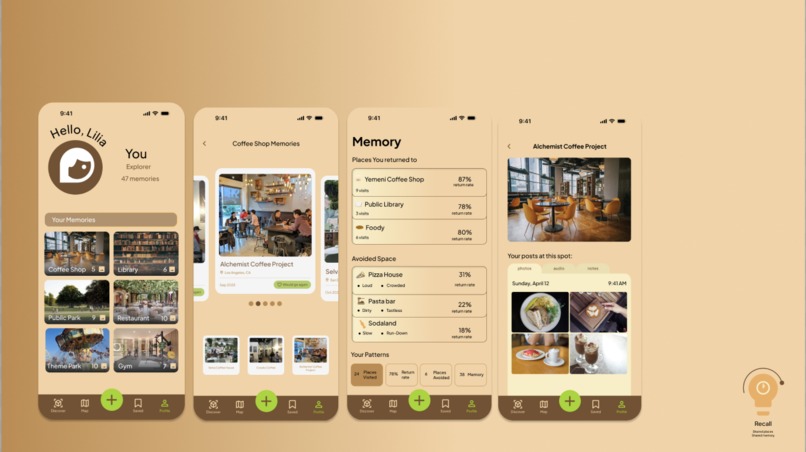
- Save favorite locations and build a personal “scrapbook” of meaningful experiences
- Transform everyday visits into shared community memories Rather than simply showing places, Recall helps users find environments that fit their needs at that moment.
How we built it
Our process combined research-driven design using Google Forms, with wireframing and rapid prototyping on Figma, and Google Gemini for guidance.
Our team conducted surveys with 40 participants to understand how people choose and experience their favorite locations.
After analyzing the data received from our respondents, we synthesized common pain points into core design opportunities, designed user flows prioritizing clarity, accessibility, and minimal cognitive load, developed interface concepts and interaction prototypes emphasizing intuitive onboarding, and integrated an AR-based discovery experience to make exploration visual and engaging. Every feature was directly informed by user insight and iterative design decisions.
Challenges we ran into
Some obstacles we faced throughout the creation of Recall included:
- Translating complex environmental factors (noise, crowding, comfort) into clear digital interactions - Balancing ambitious features like AR discovery while maintaining usability
- Narrowing broad research insights into a focused, achievable solution within a limited design-a-thon timeframe
- Designing an experience that felt innovative without overwhelming first-time users These challenges pushed us to prioritize simplicity, intentional design, and strong storytelling.
Accomplishments that we're proud of
After this weekend, we've learned how to:
- Transform research insights into a cohesive, human-centered product concept
- Design an AR onboarding experience that teaches users through exploration rather than instruction
- Create a system that connects discovery with memory and community storytelling
- Develop a project that blends UX design, psychology, and local culture into one unified experience
Additionally, our team is beyond proud of one another for bringing this idea to life. From three-hour time zone differences, final exams, to unexpected disruptions, we experienced first-hand throughout our design process how applications like Recall can be utilized to support and enhance our daily productivity and connection.
What we learned
This project reinforced that successful design begins with understanding people, not technology. We learned how powerful research synthesis can be in shaping meaningful solutions and how thoughtful UI decisions can reduce decision fatigue and improve user confidence.
We also learned the importance of collaboration, rapid ideation, and embracing ambiguity by turning scattered ideas into a clear and purposeful design vision.
What's next for Recall
Next steps for Recall include:
- Developing social features that allow users to share rituals and local traditions
- Conducting live usability testing to refine interaction flows
- Exploring partnerships with local businesses to strengthen community engagement
Our vision is for Recall to evolve into a platform that helps people not only discover places, but build lasting connections with their environments and communities.
Thank you!
Built With
- figma


Log in or sign up for Devpost to join the conversation.