-
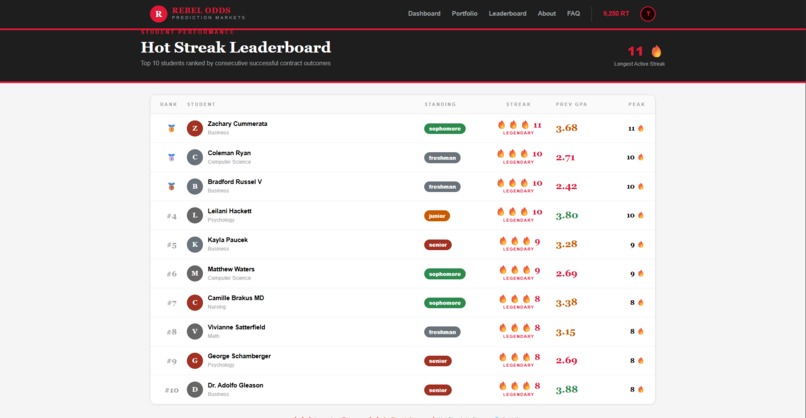
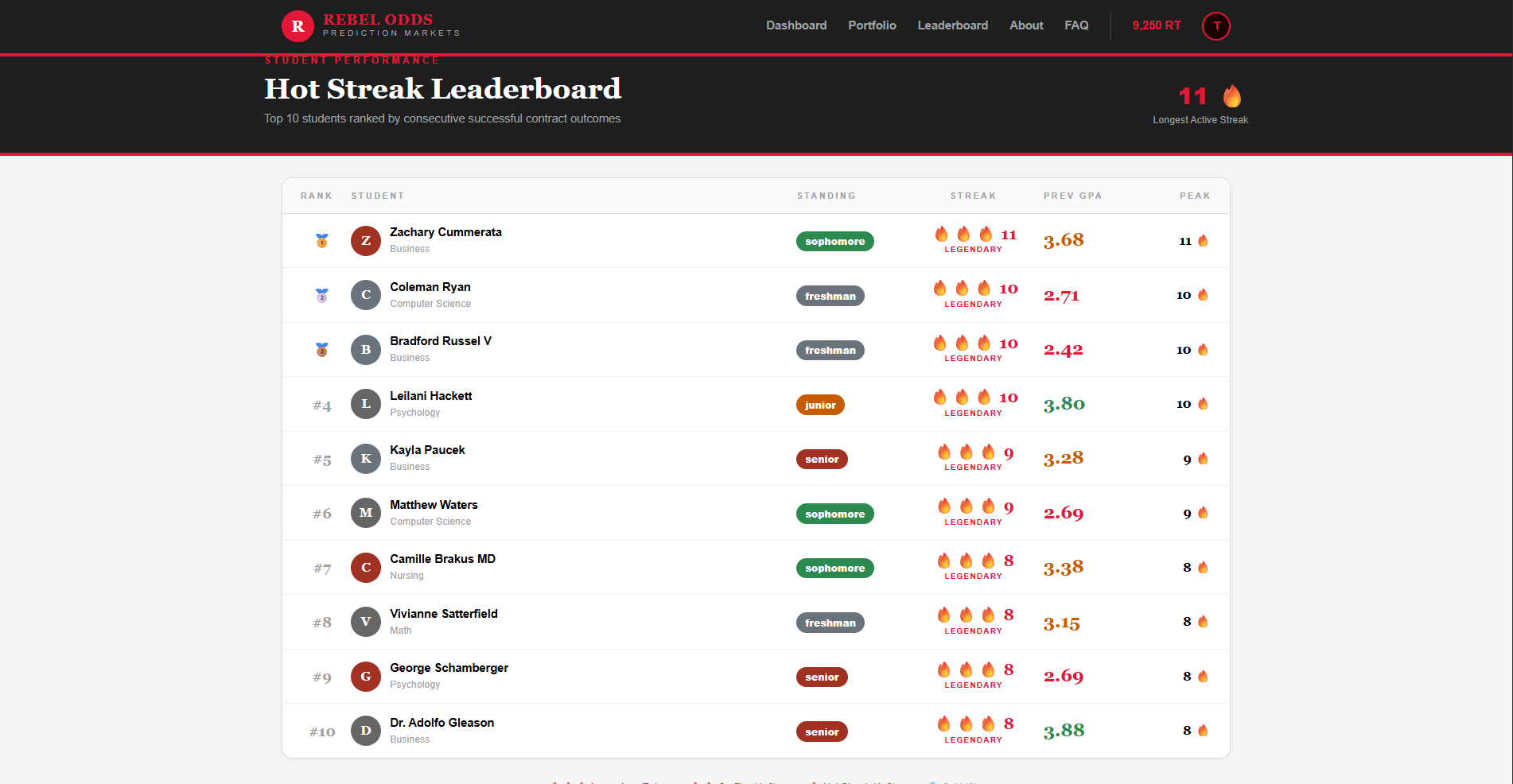
Leaderboard
-
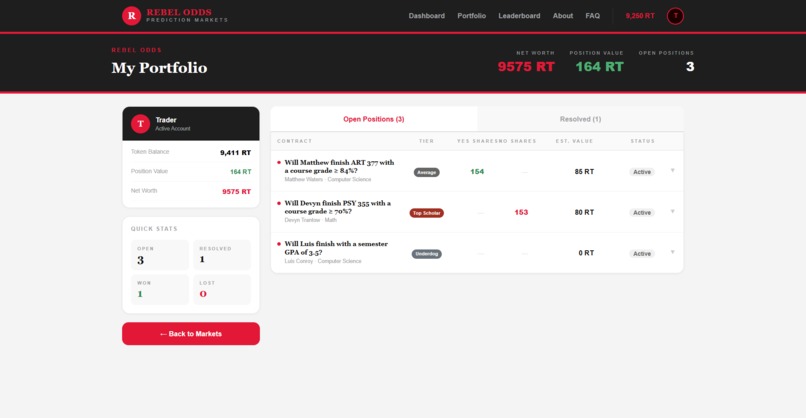
Portfolio
-
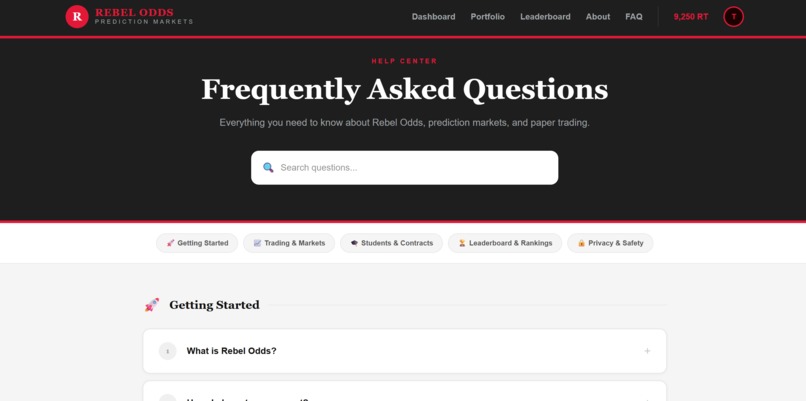
FAQ
-

About

Inspiration
College students constantly predict their own academic outcomes — “I’m getting an A,” “I might fail this midterm,” “I can hit a 3.5 GPA.” We wanted to turn that natural forecasting into a market. Inspired by prediction markets and automated market makers, RebelOdds gamifies academic confidence in a safe, paper-trading environment designed specifically for UNLV students.
What it does
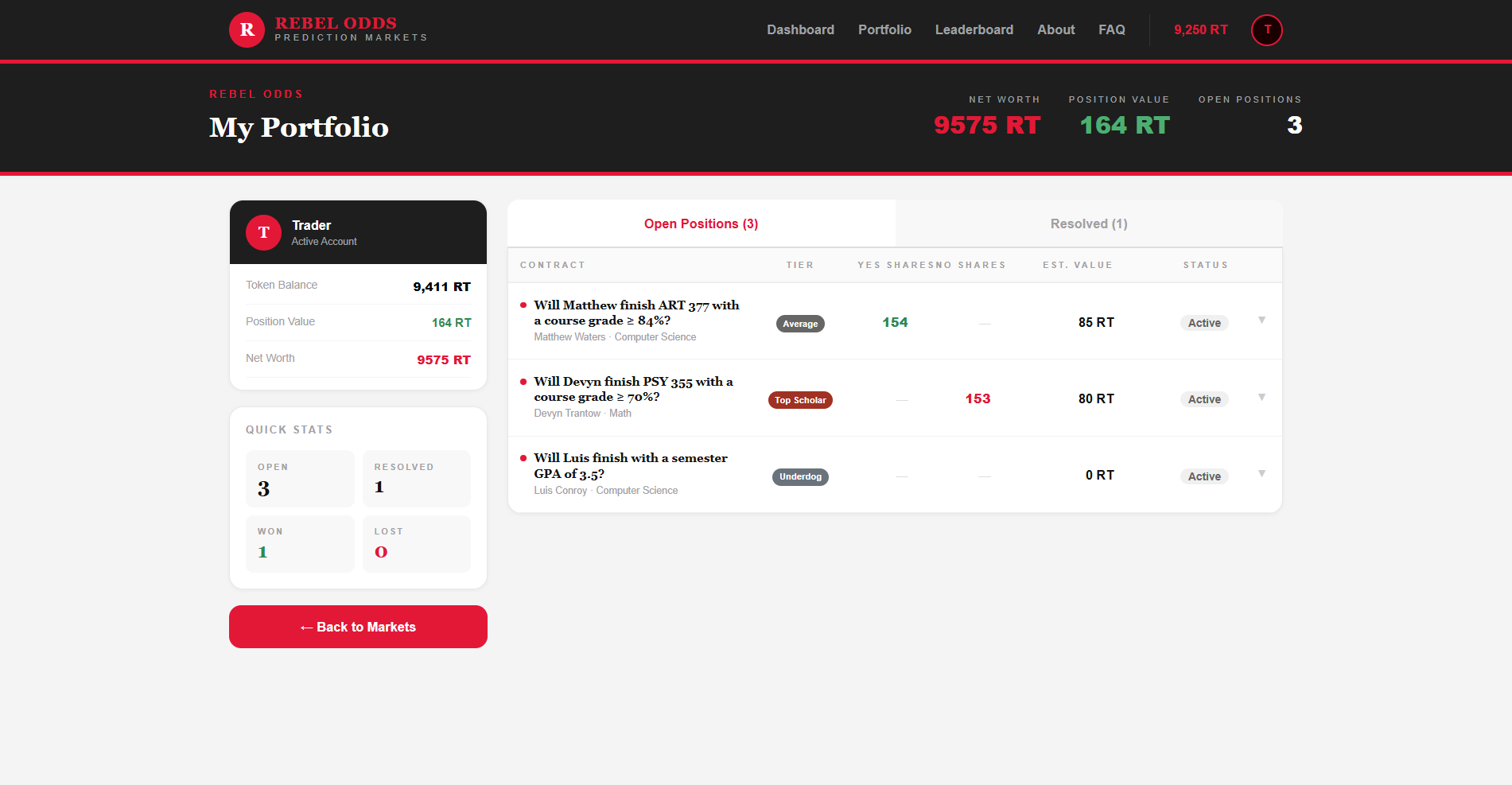
RebelOdds is a paper-trading academic futures exchange where users trade YES/NO contracts on academic outcomes using virtual Rebel Tokens.
Users can: Sign up and receive 10,000 starting tokens Trade contracts like “Will Alex finish with a GPA ≥ 3.5?” Watch prices dynamically adjust via an AMM Track portfolio performance and PnL
All trading is simulated — no real money, no withdrawals.
How we built it
We built RebelOdds using: Frontend: Next.js (App Router) Backend: Next.js API Routes Database: Supabase (Postgres) Deployment: Vercel
We implemented a simplified Automated Market Maker (AMM) model: Price = yes_pool / (yes_pool + no_pool) Buying YES increases the yes_pool Buying NO increases the no_pool 0.5% transaction fee per trade Atomic database transactions to ensure pool and wallet consistency
The system includes contracts, wallets, positions, trades, leaderboards, and admin resolution logic.
Challenges we ran into
Designing an AMM that was simple enough for MVP but still realistic Creating a fleshed-out database with all the necessary fields Routing the pages and database calls appropriately Balancing clean UI with tight hackathon time constraints
Accomplishments that we're proud of
Fully functional end-to-end trading flow Dynamic price movement based on token flow Real-time portfolio value calculation Leaderboard ranking by net worth Manual contract resolution with automated payouts Clean, structured architecture ready for scaling
Most importantly, we built a working academic prediction exchange from scratch in hackathon time.
What we learned
How AMMs function under the hood The importance of atomic database operations in financial systems How pricing psychology changes user behavior How to coordinate frontend, backend, and database design simultaneously That even a “simple” market system quickly becomes complex
What's next for RebelOdds
More advanced AMM math (e.g., constant product formula) Historical price charts per contract User reputation scoring Market categories (GPA, courses, credits, org involvement) Semester-based competitions Smarter contract seeding and automated resolution
Long term, RebelOdds could become a campus-wide forecasting game that promotes accountability, transparency, and motivation — all without real money risk.
Built With
- next.js
- supabase
- typescript

Log in or sign up for Devpost to join the conversation.