-
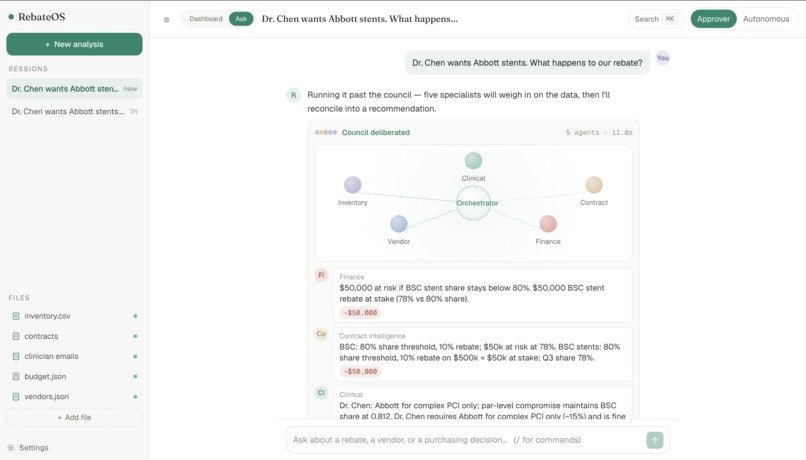
Product Screen
Problem: Hospitals lose rebate money constantly, not because the rebates don't exist, but because tracking the thresholds is still done by hand in spreadsheets and PDFs. With Medicaid cuts, rural hospital closures, and 340B just shifting to a rebate model that makes hospitals pay upfront, that manual tracking gap turns into a real financial risk. We wanted to see if a system could actually reason through the trade-offs a supply chain team makes every day, not just flag numbers, but weigh clinical need against contract thresholds against dollar cost, the way a person would.
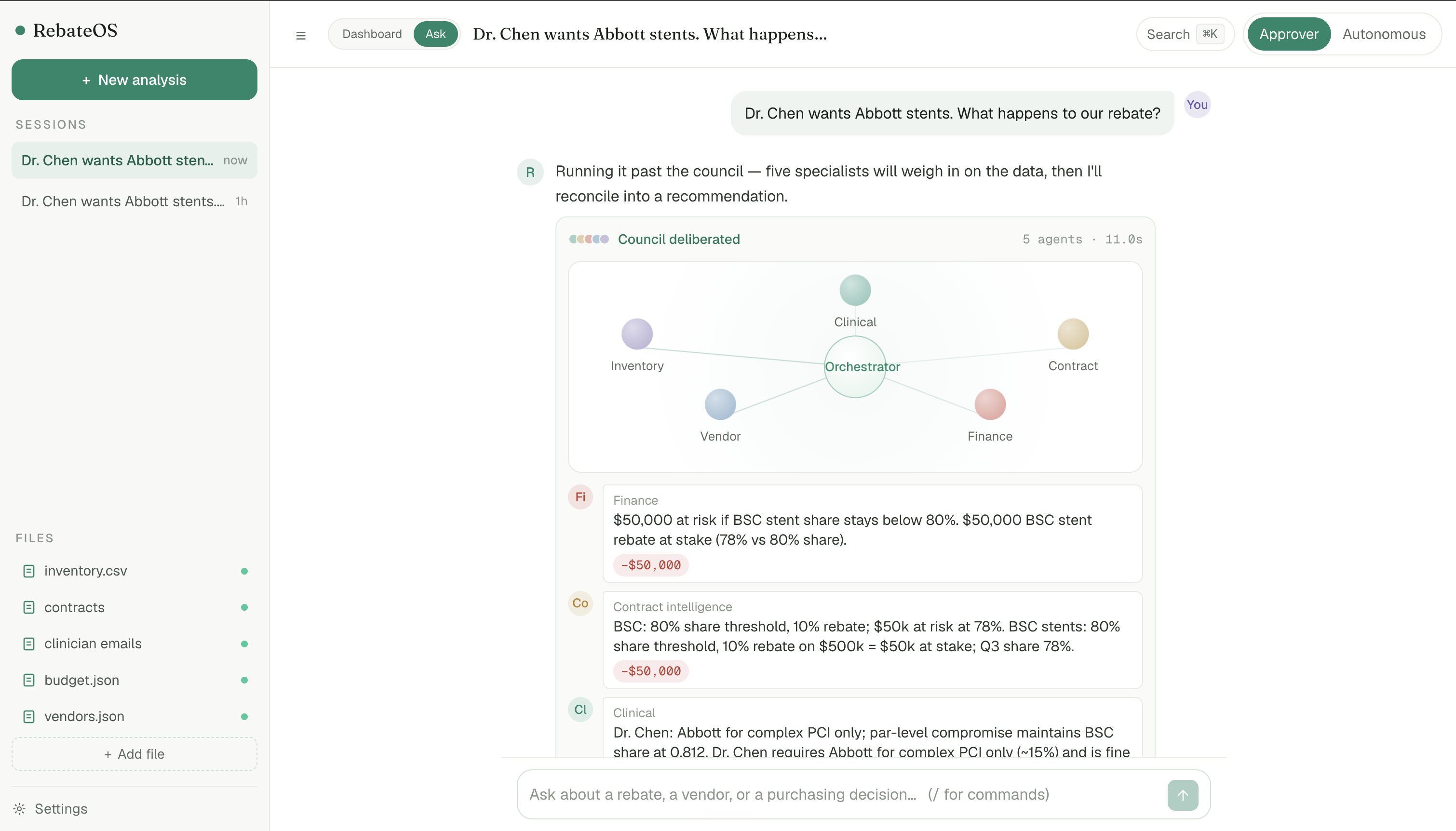
What's RebateOS? RebateOS is a multi-agent system that manages hospital rebate contracts. Five agents, inventory, clinical, finance, contracts, and vendor risk, each represent a different stakeholder in a purchasing decision, and an orchestrator resolves their disagreements into one recommendation with a dollar figure attached. It catches things like a doctor needing a specific device that would drop a vendor below a rebate threshold, prices out the options (honor the request, file an exception, or cap usage), and shows which one saves the most money. It also proactively flags stuff nobody asked about, like being 400 boxes short of the next volume tier. Everything runs through a chat interface or a live dashboard, with a full audit trail on every recommendation.
What's next for RebateOS? The wedge is med-surg rebates, since supply is up to 40% of a hospital's non-labor cost. The same engine extends directly to 340B, the drug discount program, which covers $66.3 billion in outpatient drug spend across 42,000 covered entities. Next step is replacing mock data with live GPO and contract feeds so it can run in production.
Built With
- agent
- next
- python

Log in or sign up for Devpost to join the conversation.