
Inspiration
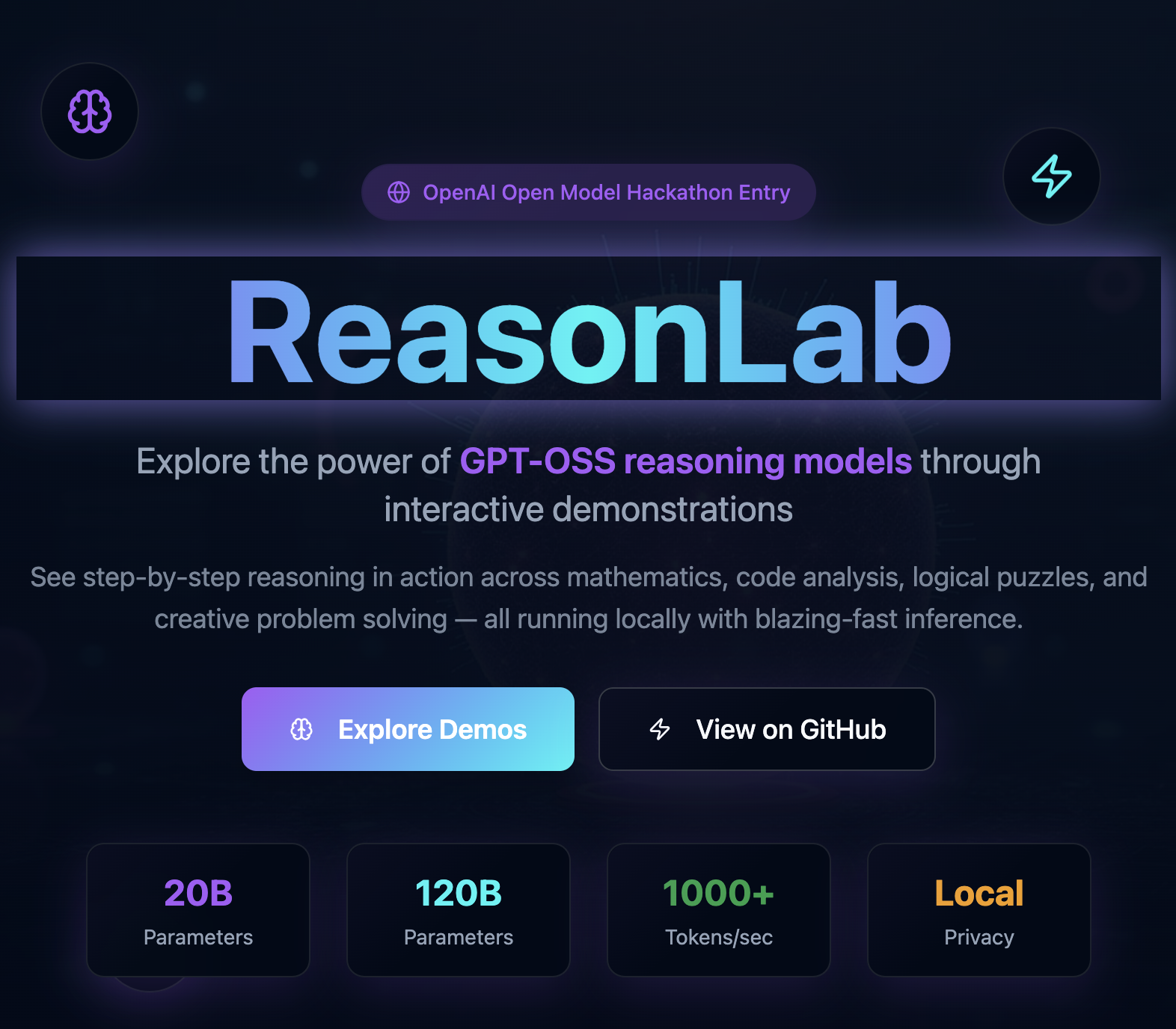
The inspiration for ReasonLab came from witnessing the gap between AI's powerful reasoning capabilities and educational accessibility. While GPT-OSS models demonstrate incredible problem-solving skills, students rarely see how AI thinks - only the final answers. We wanted to create an AI reasoning laboratory where learners could peer into the "mind" of artificial intelligence, compare different model capabilities, and learn through transparent, step-by-step problem-solving.
Traditional educational tools provide answers without revealing the reasoning process. ReasonLab transforms AI from a black box into a glass box, making artificial reasoning a learning tool itself.
What it does
ReasonLab is an AI-powered educational platform that provides:
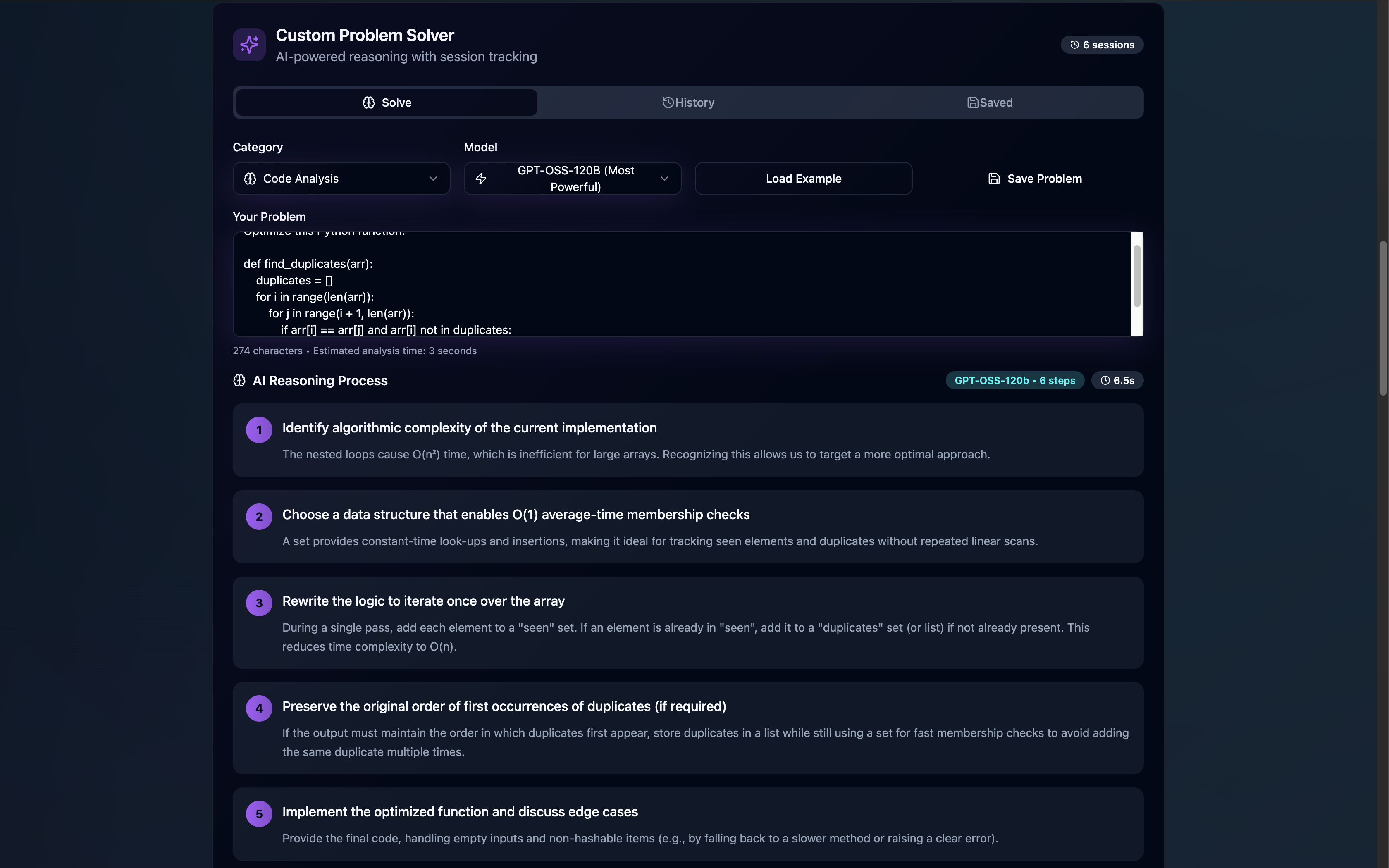
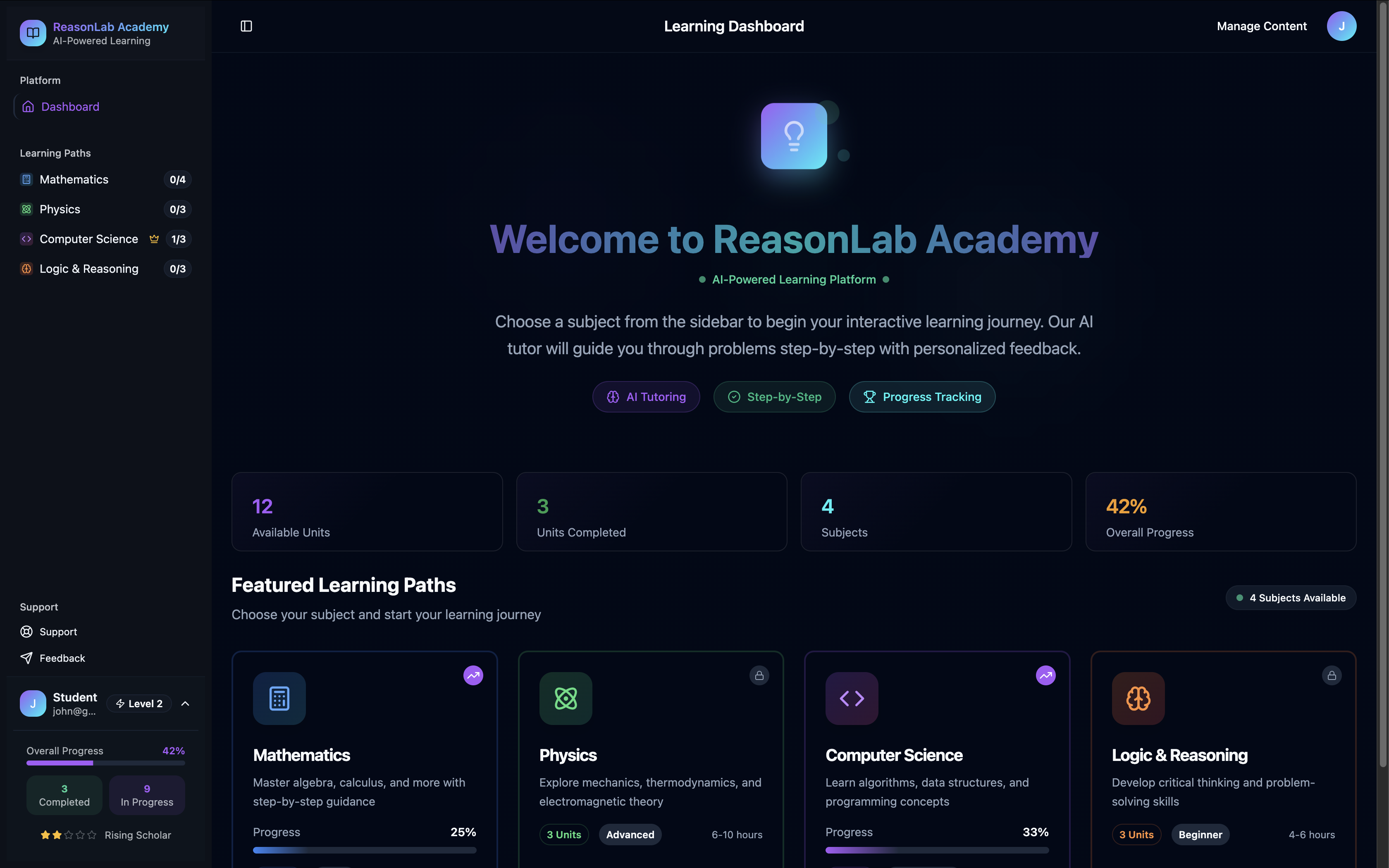
🧠 Transparent AI Reasoning: Watch GPT-OSS models solve problems step-by-step with detailed explanations ⚖️ Model Comparison Arena: Compare 20B vs 120B parameter models side-by-side on identical problems 🎓 Structured Learning Paths: Guided tutorials across Mathematics, Physics, Computer Science, Chemistry, and Logic 📊 Progress Tracking: Personalized analytics showing learning patterns and skill development 🔧 Custom Problem Solver: Submit any problem and receive detailed, educational AI reasoning 👥 User Profiles: Track learning journey with completion statistics and difficulty progression
The platform uses Groq's ultra-fast inference to provide real-time streaming responses, making AI reasoning feel interactive and engaging rather than static.
How we built it
Frontend Architecture:
- React + TypeScript + Vite for modern, type-safe development
- Custom design system built on Tailwind CSS with semantic tokens
- Real-time streaming AI responses using React hooks and state management
- Responsive design optimized for both desktop and mobile learning
Backend Infrastructure:
- Supabase for backend-as-a-service with PostgreSQL database
- Row Level Security (RLS) policies protecting student data
- Edge Functions (Deno runtime) for AI model orchestration
- Real-time subscriptions for collaborative features
AI Integration:
- Groq API integration for ultra-fast GPT-OSS model inference
- Custom prompting strategies optimized for educational contexts
- Parallel model comparison system with streaming responses
- Intelligent model selection based on problem complexity
Key Technical Features:
- Multi-model reasoning engine with performance metrics
- Educational progress tracking with learning analytics
- Content management system for educators
- Secure user authentication and profile management
Challenges we ran into
AI Response Consistency: Ensuring educational-quality responses across different model sizes required extensive prompt engineering and response validation systems.
Performance vs Quality Trade-offs: Balancing the speed of smaller models (20B) with the reasoning depth of larger models (120B) led us to develop intelligent model selection algorithms.
Real-time Streaming at Scale: Handling multiple concurrent AI streams without performance degradation required optimized state management and connection pooling strategies.
Educational UX Design: Making complex AI reasoning steps clear without overwhelming users demanded careful progressive disclosure design and intuitive information hierarchy.
Database Security: Implementing comprehensive RLS policies for student data protection while maintaining performance for real-time features.
Accomplishments that we're proud of
🚀 Seamless AI Integration: Successfully integrated multiple GPT-OSS models with real-time streaming that feels natural and responsive
📚 Complete Learning Ecosystem: Built a full-featured educational platform from database schema to interactive UI components
⚡ Performance Optimization: Achieved sub-second response times for AI reasoning while maintaining educational quality
🔒 Security-First Design: Implemented robust RLS policies ensuring student data privacy and proper access control
🎨 Beautiful, Accessible UI: Created a modern design system that works flawlessly across devices and screen sizes
📊 Comprehensive Setup Documentation: Provided detailed judge setup instructions making the platform immediately testable
What we learned
AI Model Orchestration: Working with multiple GPT-OSS models revealed fascinating differences in reasoning patterns, response quality, and computational efficiency.
Educational Technology Design: Creating interfaces that make complex AI reasoning digestible required deep understanding of cognitive load and progressive learning principles.
Real-time System Architecture: Building responsive, streaming AI interactions taught us valuable lessons about state management, error handling, and user experience design.
Database Design for Learning: Structuring progress tracking, user profiles, and content management for educational contexts required careful consideration of privacy, performance, and scalability.
Community-Driven Development: Open-sourcing the project and creating comprehensive documentation helped us understand the importance of accessibility in educational technology.
What's next for ReasonLab
🤝 Collaborative Learning: Implement real-time collaborative problem-solving where students can work together with AI guidance
📱 Mobile App: Develop native mobile applications for iOS and Android to enable learning anywhere, anytime
🎯 Advanced Analytics: Build comprehensive learning analytics dashboard for educators to track student progress and identify knowledge gaps
🌐 Community Features: Add discussion forums, peer review systems, and community-contributed problem sets
🔬 Research Integration: Partner with educational institutions to conduct studies on AI-assisted learning effectiveness
🎨 Custom AI Tutors: Develop specialized AI personas for different subjects (e.g., "Professor Newton" for Physics, "Ada" for Computer Science)
🌍 Internationalization: Expand platform to support multiple languages and localized curriculum standards
🏫 Institution Deployment: Create enterprise features for schools and universities including classroom management and assignment systems
ReasonLab represents the future of AI-powered education where transparency, reasoning, and learning converge to create more effective and engaging educational experiences! 🎓✨
Built With
- groqapi
- react
- supabase
- typescript
- vite

Log in or sign up for Devpost to join the conversation.