-
-

Landing Page
-
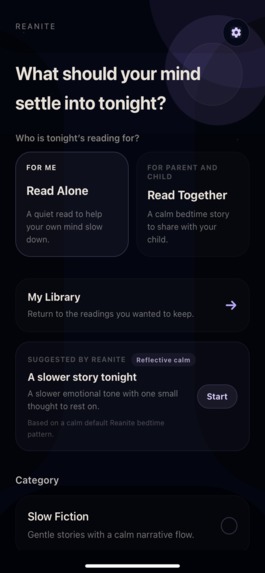
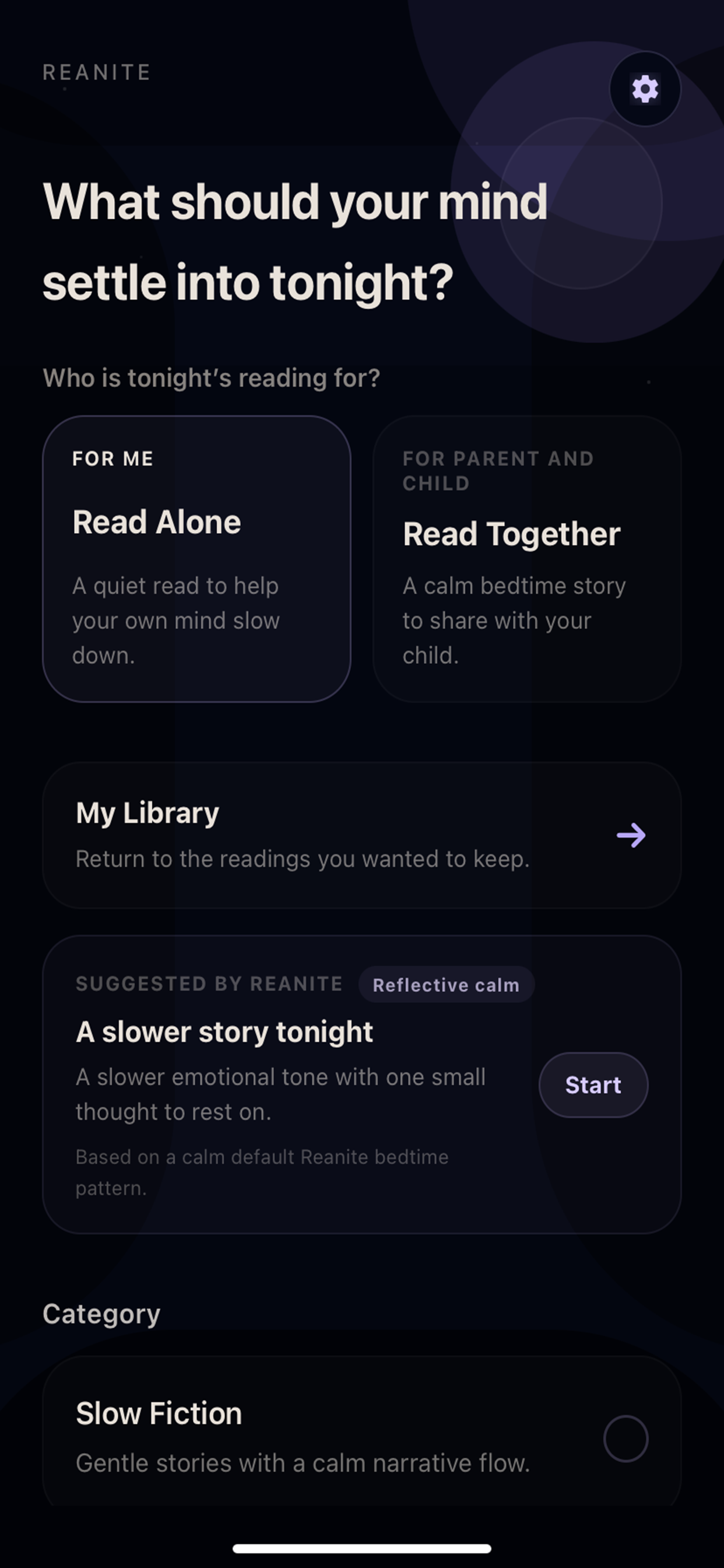
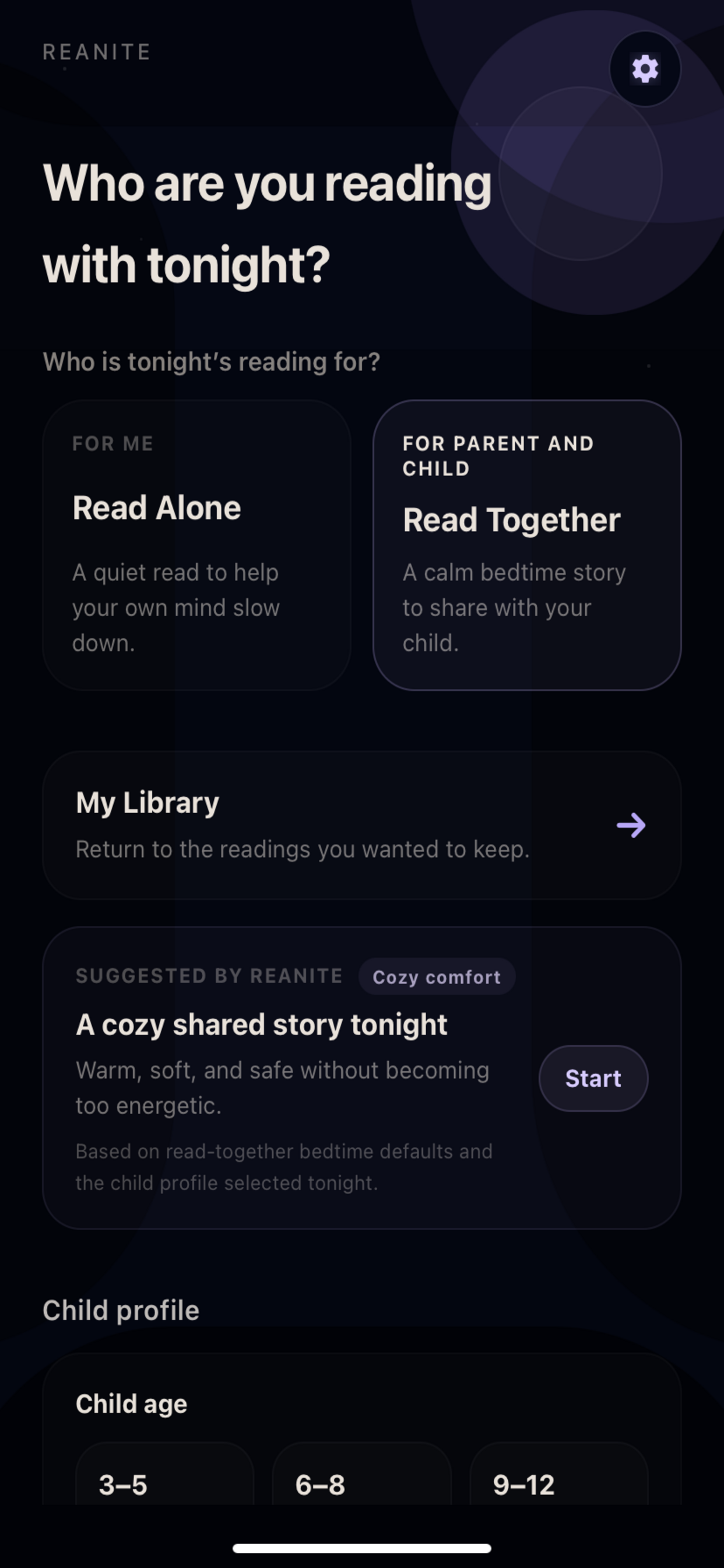
Read Alone Home Page
-
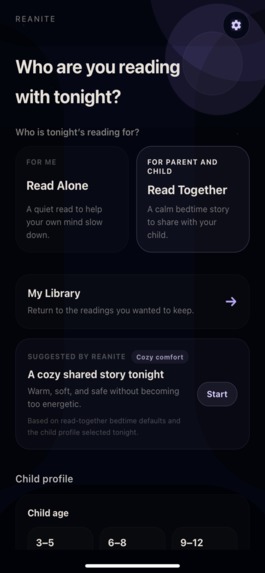
Read Together Home Page
-
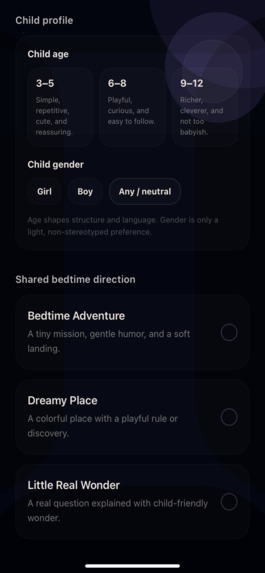
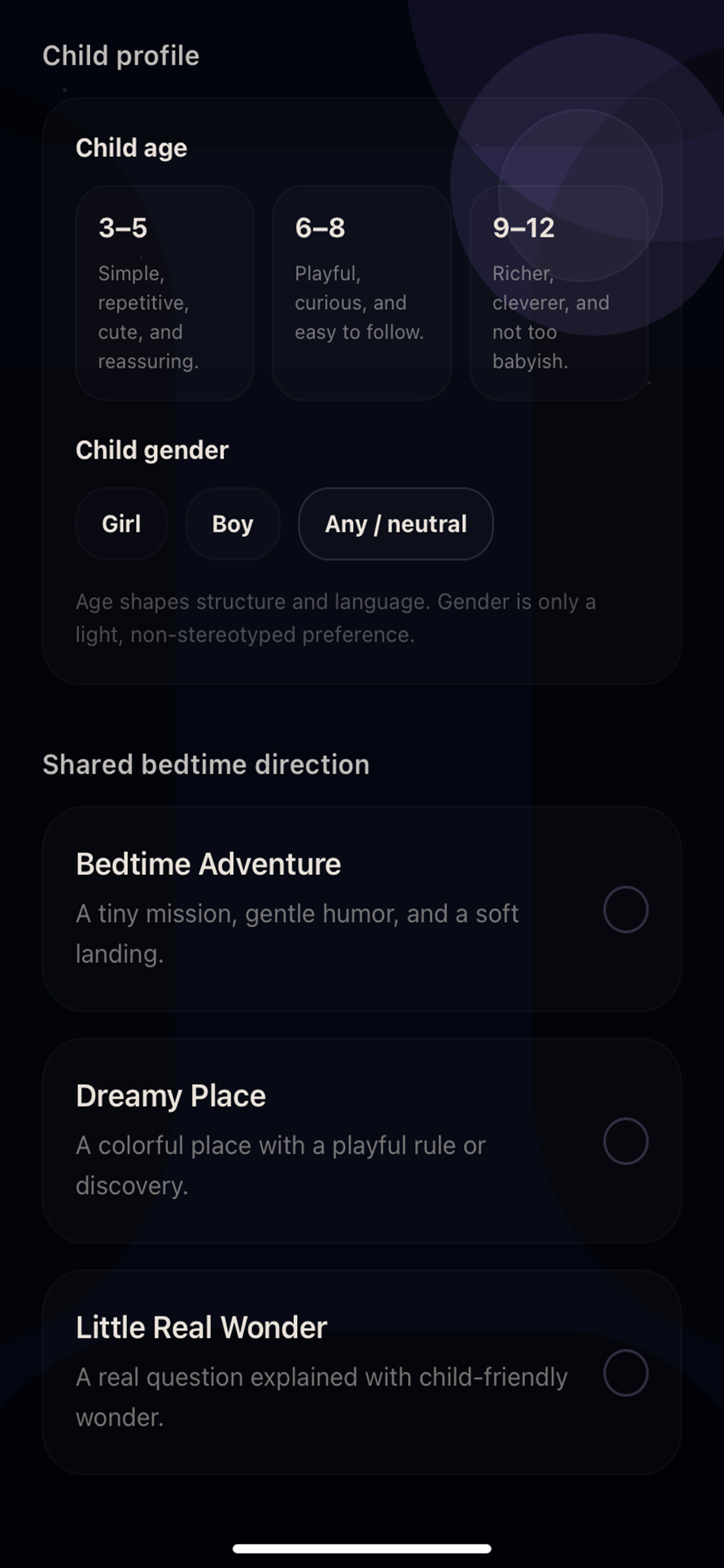
Read Together Child Profile / Category Page
-
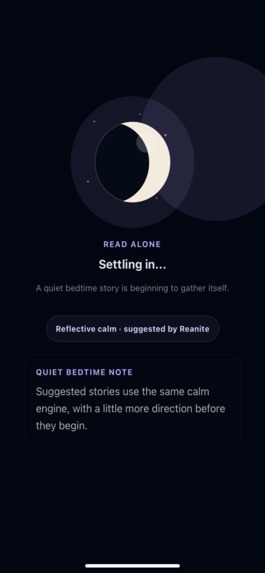
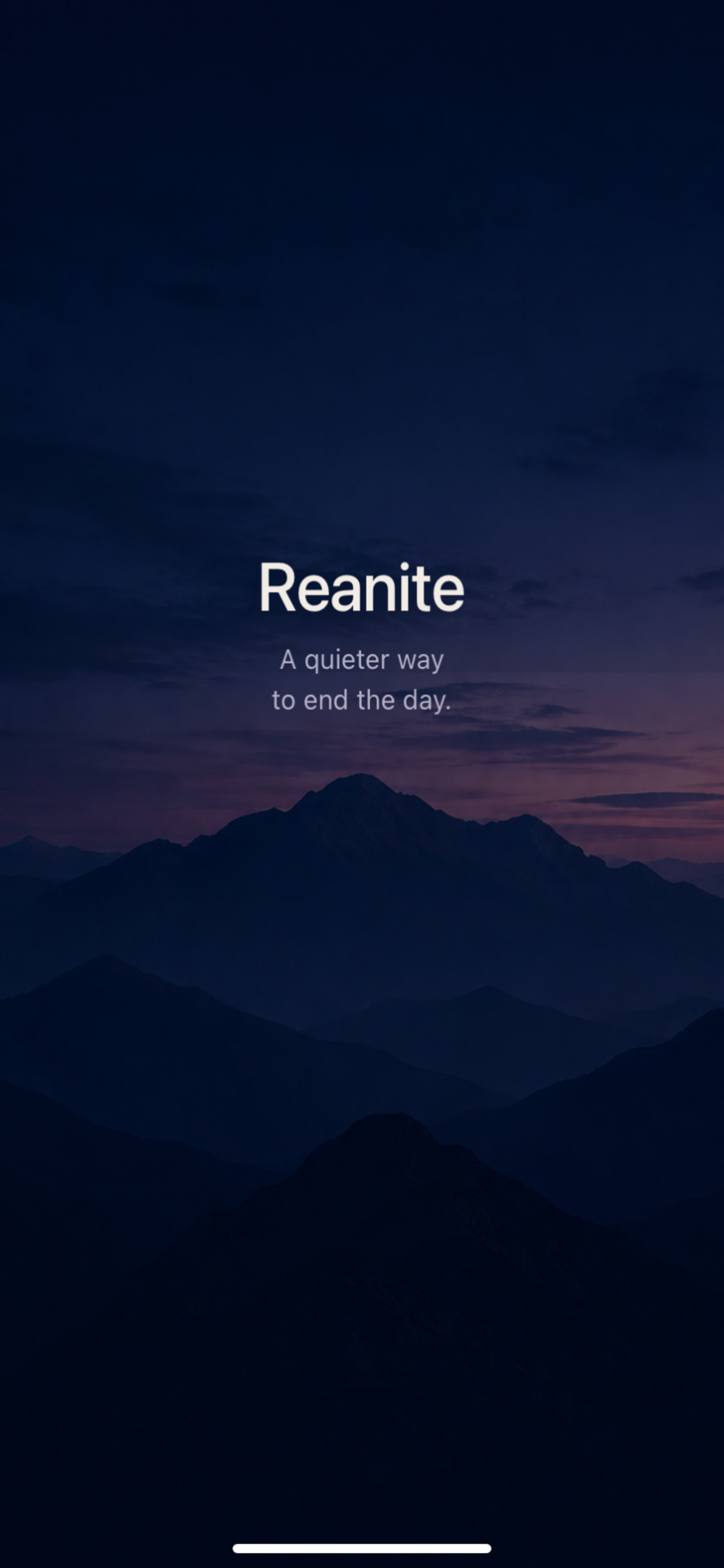
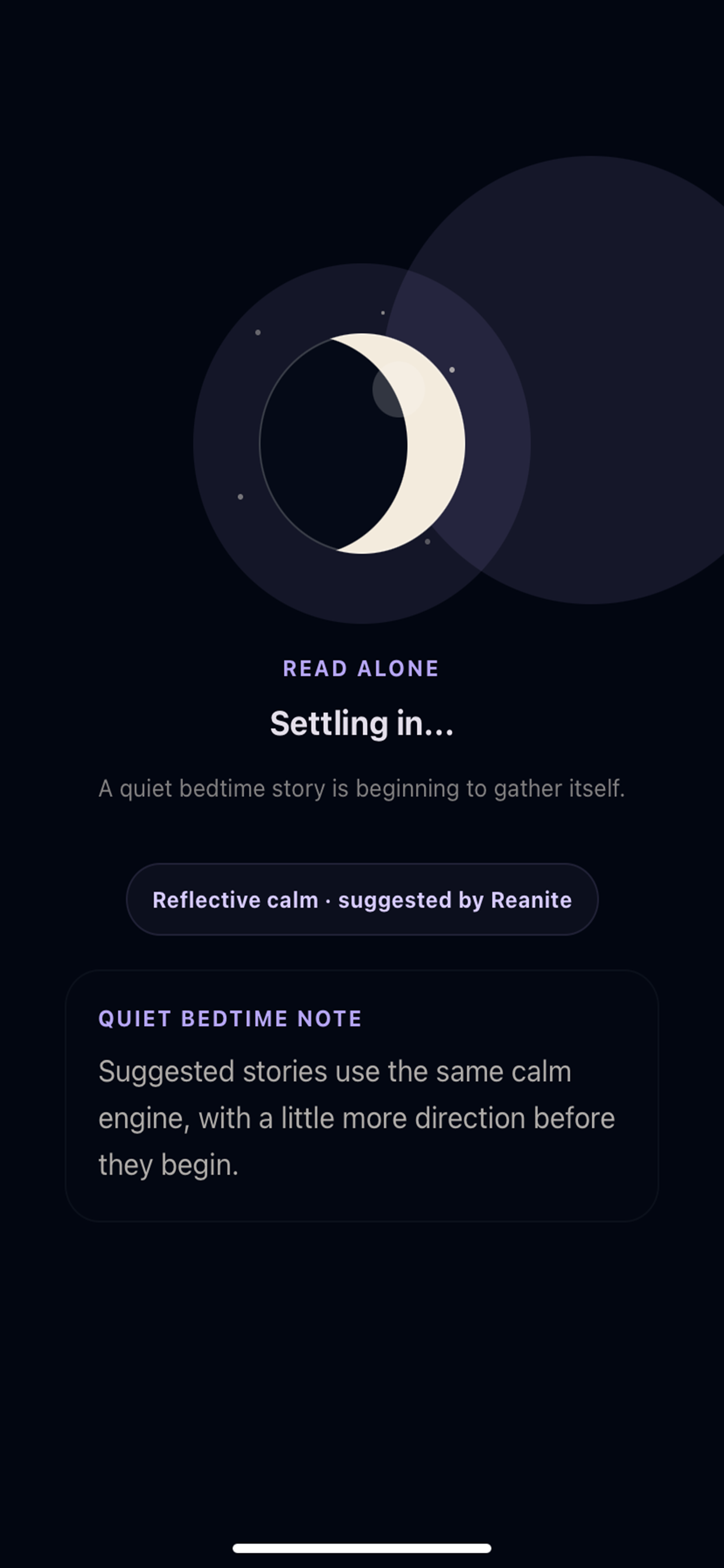
Loading Page
-
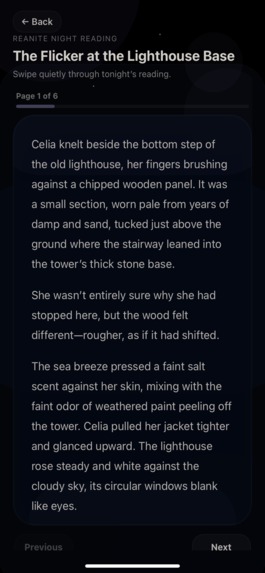
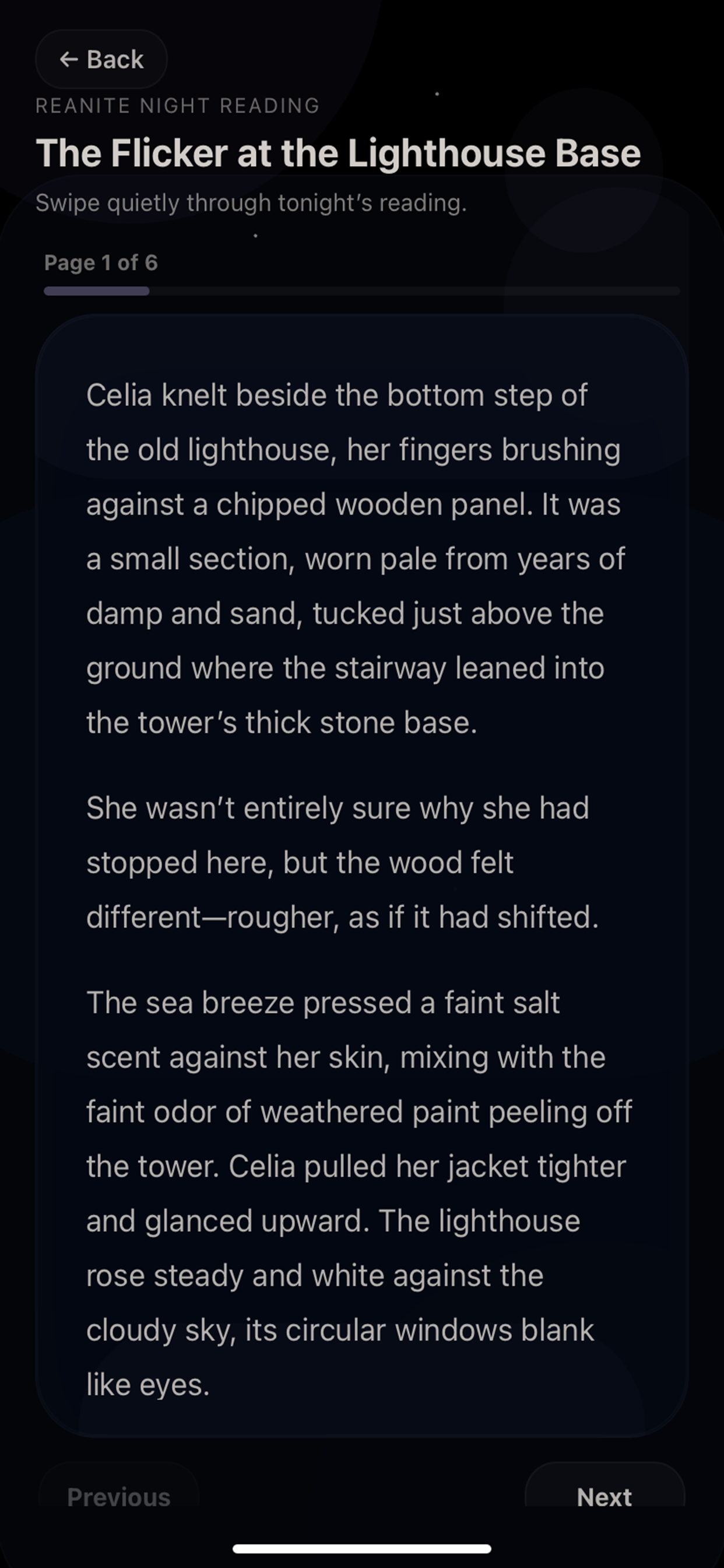
Story Page
-
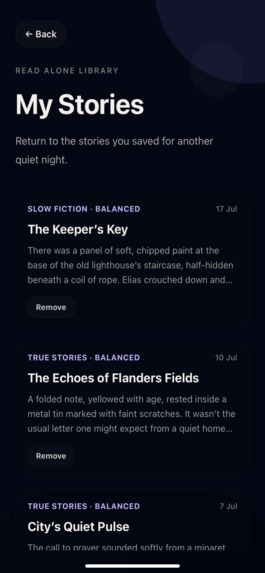
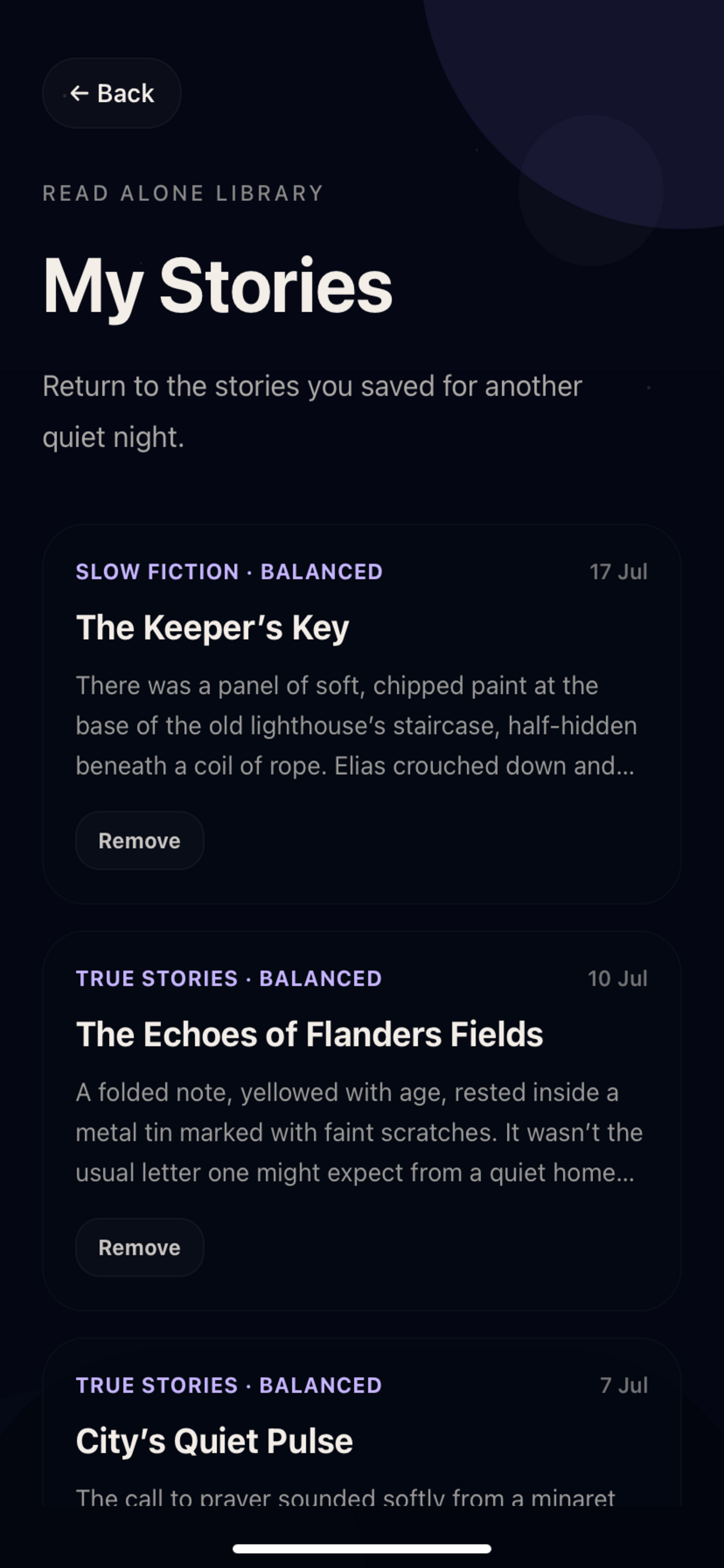
My Library Page
Reanite
Inspiration
For almost three years, one idea kept coming back to me every night before going to sleep.
Like millions of people, I often found myself endlessly scrolling through social media before bed. I wasn't looking for more notifications or more content—I wanted something that would help me slow down. I wanted to end my day by reading something calming, meaningful, and different every single night.
That simple thought eventually became Reanite.
What began as a personal frustration with bedtime doom scrolling gradually evolved into a much bigger mission: helping people reconnect with reading through experiences that feel personal, calming, and meaningful. Reanite wasn't created to replace books—it was created to help people fall in love with reading again.
For years, however, the idea remained just that—an idea.
I don't come from a traditional software engineering background, and I didn't have the financial resources to hire developers to build the product I envisioned.
Three years ago, I had the vision. Three months ago, I finally had the tools to build it.
Everything changed with the latest generation of OpenAI models.
Using GPT and Codex as development partners, I was able to learn, iterate, and build Reanite from scratch. What had lived only in notebooks and ideas for years slowly became a real application.
Around the same time, I transitioned out of my previous role as the sole Business Analyst at a technology company. That unexpected opportunity gave me the time to fully dedicate myself to building the product I had been dreaming about for years.
Reanite exists today because modern AI dramatically lowered the barrier between having an idea and being able to build it.
What it does
Reanite is an AI bedtime companion designed to help people end their day differently.
Instead of spending the last moments before sleep endlessly scrolling through social media, users can generate calming, personalized stories tailored to their interests, preferred reading length, age, and reading mode.
Every story is written specifically for that reader and designed to be relaxing, engaging, educational when appropriate, and comfortable to read before bedtime.
Whether someone wants to unwind after a long day, learn something new through storytelling, or share a bedtime reading experience with a child, Reanite creates a unique story every single night.
Current features include:
- Personalized AI-generated bedtime stories
- Read Alone mode
- Read Together mode
- Story continuation and memory
- Secure authentication
- Reliable background AI story generation
- Analytics and production-ready infrastructure
How I built it
Reanite is built using:
- React Native (Expo)
- TypeScript
- Supabase
- PostgreSQL
- OpenAI GPT models
- Codex
- PostHog Analytics
Although Reanite appears simple from the outside, every story passes through multiple layers of prompt engineering and personalization before reaching the reader.
Behind every generated story is a carefully designed pipeline that combines:
- Personalized prompts
- Story structure generation
- Age-aware storytelling
- Safety considerations
- Narrative consistency
- Prompt engineering
- Final refinement
Building Reanite wasn't simply about generating stories.
It was about creating a reading experience people genuinely look forward to every night.
Building Reanite with OpenAI
OpenAI models weren't simply used to generate code—they became an essential part of the entire product development journey.
From the earliest concept to a production-ready mobile application, GPT and Codex accelerated development while allowing me to stay in control of every architectural, product, and user experience decision.
Designing the Product
GPT became my brainstorming and product strategy partner throughout development.
It helped me:
- Refine product ideas
- Improve user journeys
- Challenge assumptions
- Design onboarding experiences
- Improve authentication flows
- Refine branding and product messaging
- Iterate on the overall user experience
Every product decision was ultimately mine, but GPT allowed me to explore ideas, evaluate alternatives, and iterate significantly faster.
Accelerating Development with Codex
Over the past three months, Codex fundamentally transformed how I build software.
Before integrating Codex into my workflow, implementing a single feature or solving a difficult bug could easily take several days. Much of that time was spent researching documentation, experimenting with different approaches, and troubleshooting issues.
With Codex, that workflow changed dramatically.
Tasks that previously required days of work could often be implemented, tested, reviewed, and refined within one or two hours.
The biggest impact wasn't simply writing code faster.
It was the ability to iterate faster.
Instead of spending most of my time searching for solutions, I could spend more time making product decisions, improving the user experience, refining architecture, and continuously polishing Reanite.
As someone without a traditional software engineering background, Codex dramatically lowered the barrier between having an idea and successfully implementing it.
Throughout development, I relied on Codex to:
- Build React Native components
- Develop Supabase Edge Functions
- Design database schemas
- Implement authentication
- Refactor existing code
- Debug complex issues
- Improve application performance
- Review architecture decisions
- Improve maintainability and code quality
Reanite was not built by accepting AI-generated code as-is.
Every feature was reviewed, tested, refined, and often rewritten through multiple iterations before becoming part of the production application.
Very little of Reanite was built in a single attempt.
Most features evolved through dozens of design discussions, engineering iterations, usability refinements, testing, and architectural improvements before reaching their current form.
Codex didn't replace software engineering.
It accelerated it.
My Development Workflow
Nearly every feature followed the same development cycle:
- Identify a real user problem.
- Design the desired user experience.
- Plan the application's architecture.
- Collaborate with GPT and Codex on implementation.
- Review, modify, and refine every solution.
- Test on real devices.
- Iterate repeatedly until the experience felt polished.
This workflow allowed me to continuously improve both Reanite and my own technical skills throughout development.
Engineering Challenges Solved with AI
Throughout development, GPT and Codex helped accelerate solutions for challenges including:
- Persistent AI story generation
- Recovery after interrupted story creation
- Reliable background processing
- Authentication and user management
- Story continuation and memory
- Prompt engineering for personalized storytelling
- Secure backend architecture
- Performance optimization
- Analytics integration
- App Store and Google Play preparation
- UI and UX refinement across the application
OpenAI didn't replace the engineering work—it accelerated every stage of building it while allowing me to remain the architect behind every major decision.
Challenges I Ran Into
One of the biggest challenges was balancing creativity with reliability.
Generating high-quality bedtime stories consistently required months of prompt engineering, experimentation, testing, and refinement.
Beyond AI generation itself, I also had to solve practical engineering challenges such as:
- Recovering interrupted story generations
- Managing long-running AI requests
- Building reliable backend infrastructure
- Designing an interface that feels peaceful rather than overwhelming
- Creating an experience people would genuinely want to return to every night
Every design decision came back to one simple question:
Does this make bedtime feel calmer?
If the answer was no, it didn't belong in Reanite.
Accomplishments That I'm Proud Of
Although Reanite has not officially launched yet, I'm proud that it has evolved from a three-year idea into a polished, production-ready mobile application.
Today, Reanite includes:
- A fully designed cross-platform mobile application
- AI-powered personalized bedtime storytelling
- Read Alone and Read Together experiences
- Story memory and continuation
- Reliable backend infrastructure
- Secure authentication
- Analytics and production-ready architecture
- A complete marketing website and brand identity
Reanite is currently under the process of submission on Apple App Store, and Google Play Store planned shortly.
Seeing an idea that lived only in notebooks for years become a real product preparing for public launch has been one of the most rewarding experiences of my career.
What I Learned
Building Reanite taught me that AI doesn't replace creativity—it amplifies it.
The biggest lesson wasn't learning how to generate stories.
It was learning how much iteration, thoughtful design, engineering discipline, and continuous refinement are required to transform AI into a product people genuinely enjoy using.
Most importantly, I learned that modern AI has dramatically lowered the barrier between having an idea and being able to build it.
What's Next for Reanite
With the Apple App Store review already underway and Google Play submission planned shortly, I see public launch as only the beginning.
My ambition extends far beyond bedtime storytelling.
I believe AI has the potential to fundamentally reshape how people read, write, discover, and share stories.
Over time, I want Reanite to evolve into an ecosystem where readers and writers come together.
Readers will discover meaningful stories beyond algorithm-driven feeds.
Aspiring writers will have access to AI-powered creative tools that help them brainstorm, write, improve, and publish their own short stories.
Instead of struggling to get noticed through traditional publishing, writers will be able to build portfolios, receive meaningful feedback from readers, grow an audience, and eventually monetize their creativity through future creator-support features.
My goal is for Reanite to become a trusted platform where talented storytellers can develop their craft while readers discover authentic stories created by both humans and AI.
I don't want Reanite to simply generate stories.
I want it to help people create stories, discover stories, share stories, and inspire the next generation of writers.
Why OpenAI Build Week Matters
Reanite is still at the beginning of its journey.
Recognition through OpenAI Build Week would accelerate the next stage of development by allowing me to continue improving the platform, expand its AI capabilities, and invest in marketing so Reanite can reach the people it was designed for.
Just as importantly, it would provide the opportunity to receive feedback from OpenAI's engineers, researchers, and product leaders while continuing to learn from the community that helped make this project possible.
Final Thoughts
Artificial intelligence is often discussed as a tool for replacing creativity.
I believe it can become one of the greatest tools for expanding creativity.
Three years ago, Reanite existed only as an idea in a notebook.
Today, it is a production-ready application preparing for public launch—something that simply would not have been possible for me without the incredible advances in OpenAI's models and Codex.
Reanite started with one person trying to replace a few minutes of nightly doom scrolling with a few minutes of meaningful reading.
Today, it is becoming a platform built to inspire readers.
Tomorrow, I hope it becomes a platform that inspires writers as well.
If even one person closes social media a little earlier because of Reanite and ends their day with a meaningful story instead, then this journey has already been worthwhile.
But my ambition reaches much further.
I don't simply want to build another AI application.
I want to build the future home of storytelling—where AI empowers people to read more, write more, create more, and ultimately revolutionizes how stories are discovered, shared, and brought to life in the age of AI.
Built With
- api
- asyncstorage
- build
- codex
- deno
- eas
- edge
- expo.io
- functions
- github
- gpt-5.5
- gpt-5.6
- javascript
- json
- native
- node.js
- npm
- openai
- postgresql
- posthog
- react
- rest
- sql
- supabase
- typescript

Log in or sign up for Devpost to join the conversation.