-
-
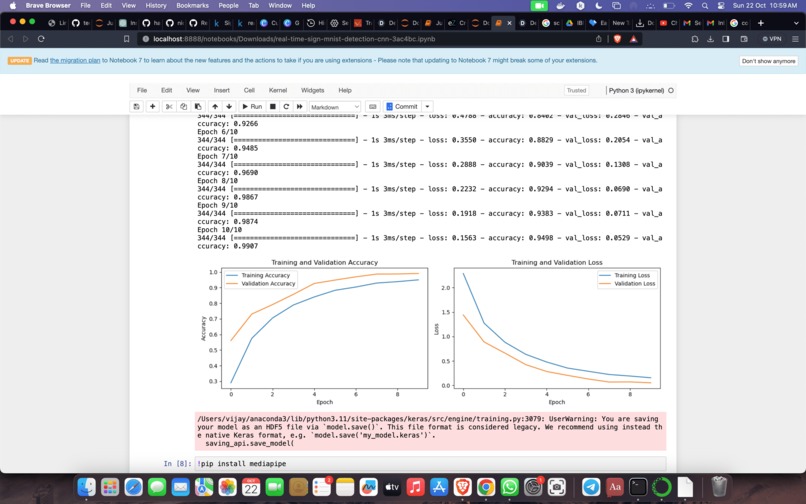
Sample code
-
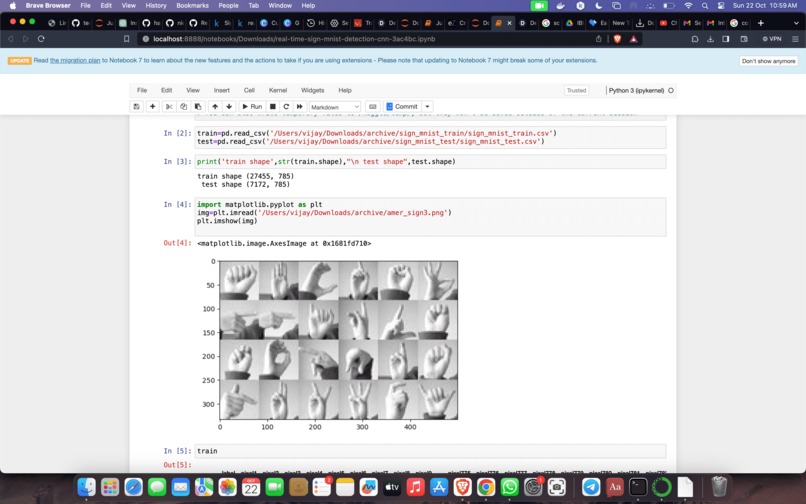
Sample code
-
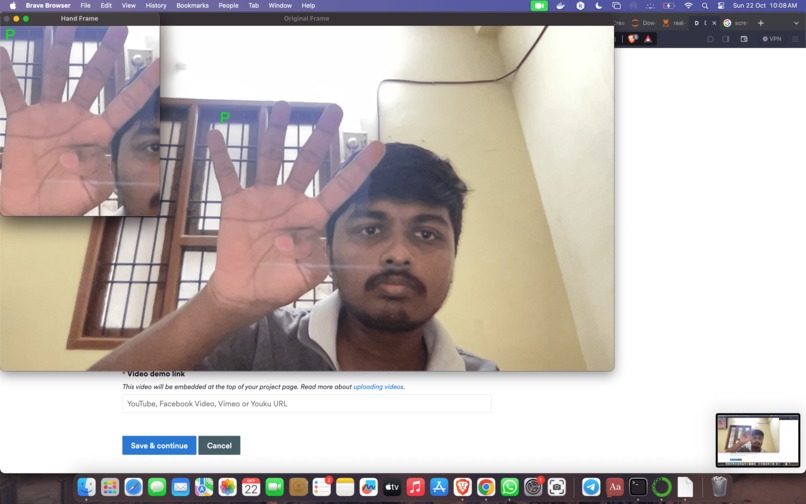
sign mnist detection 2
-
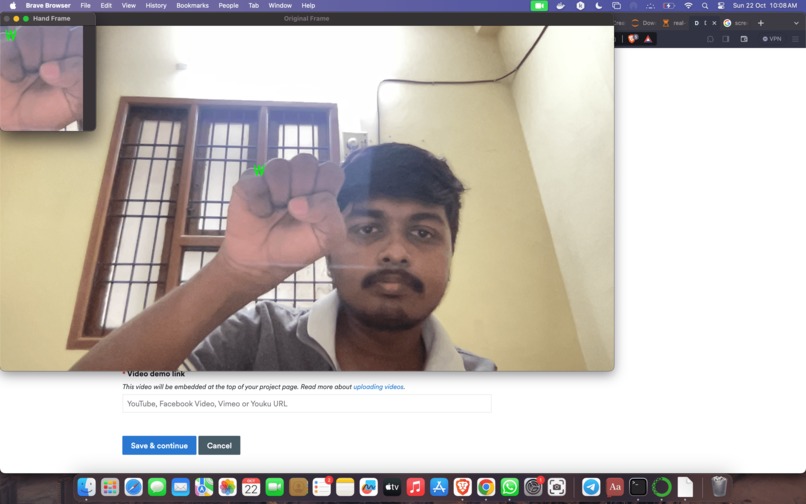
sign mnist detection 1
Inspiration
The inspiration behind our project came from a desire to bridge the communication gap between individuals who use sign language and those who do not. Sign language can be a significant barrier for those who are not familiar with it. We wanted to create a tool that could make it more accessible and inclusive. Through this project, we hope to empower the deaf and hard of hearing community and facilitate better communication.
What it does
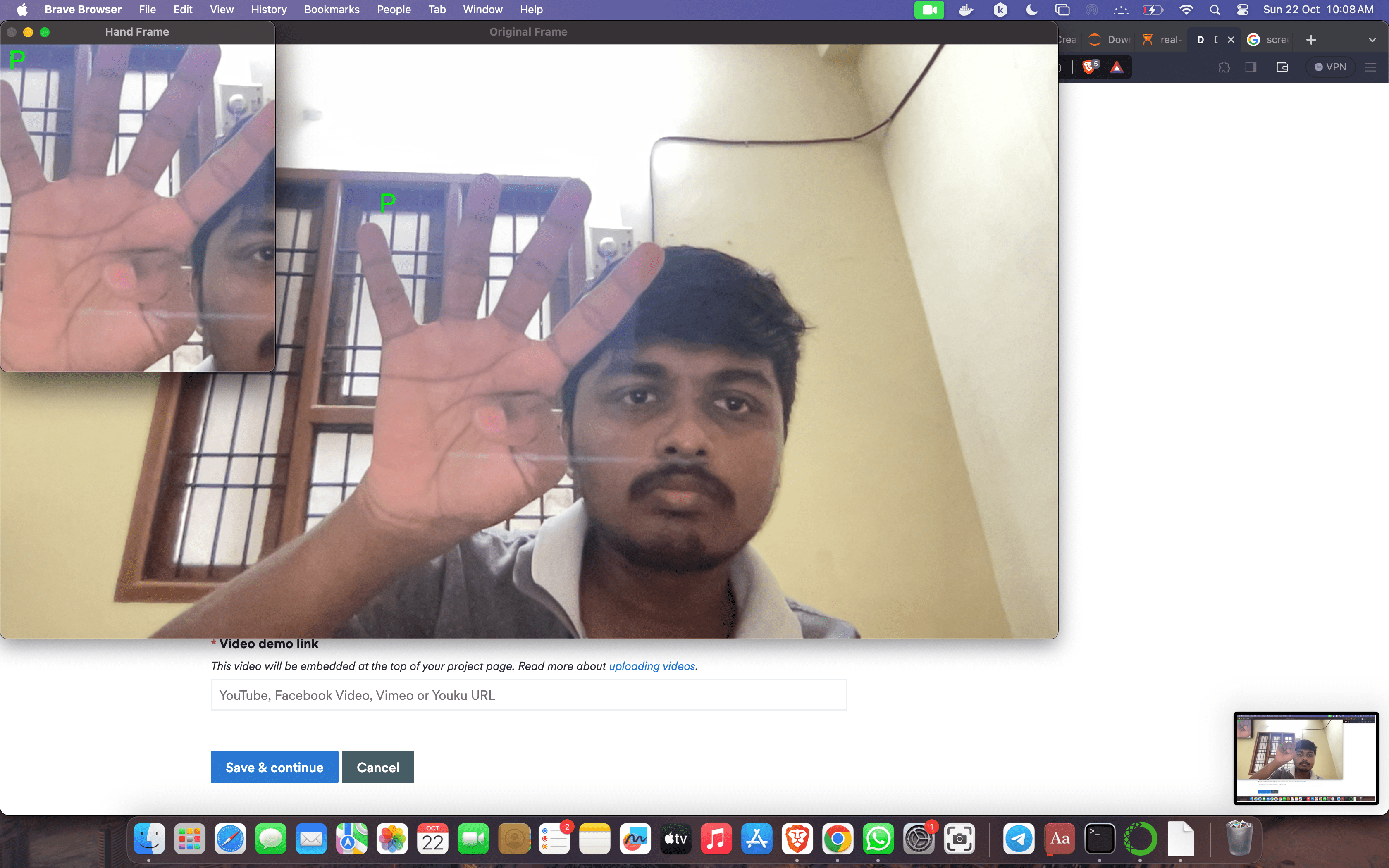
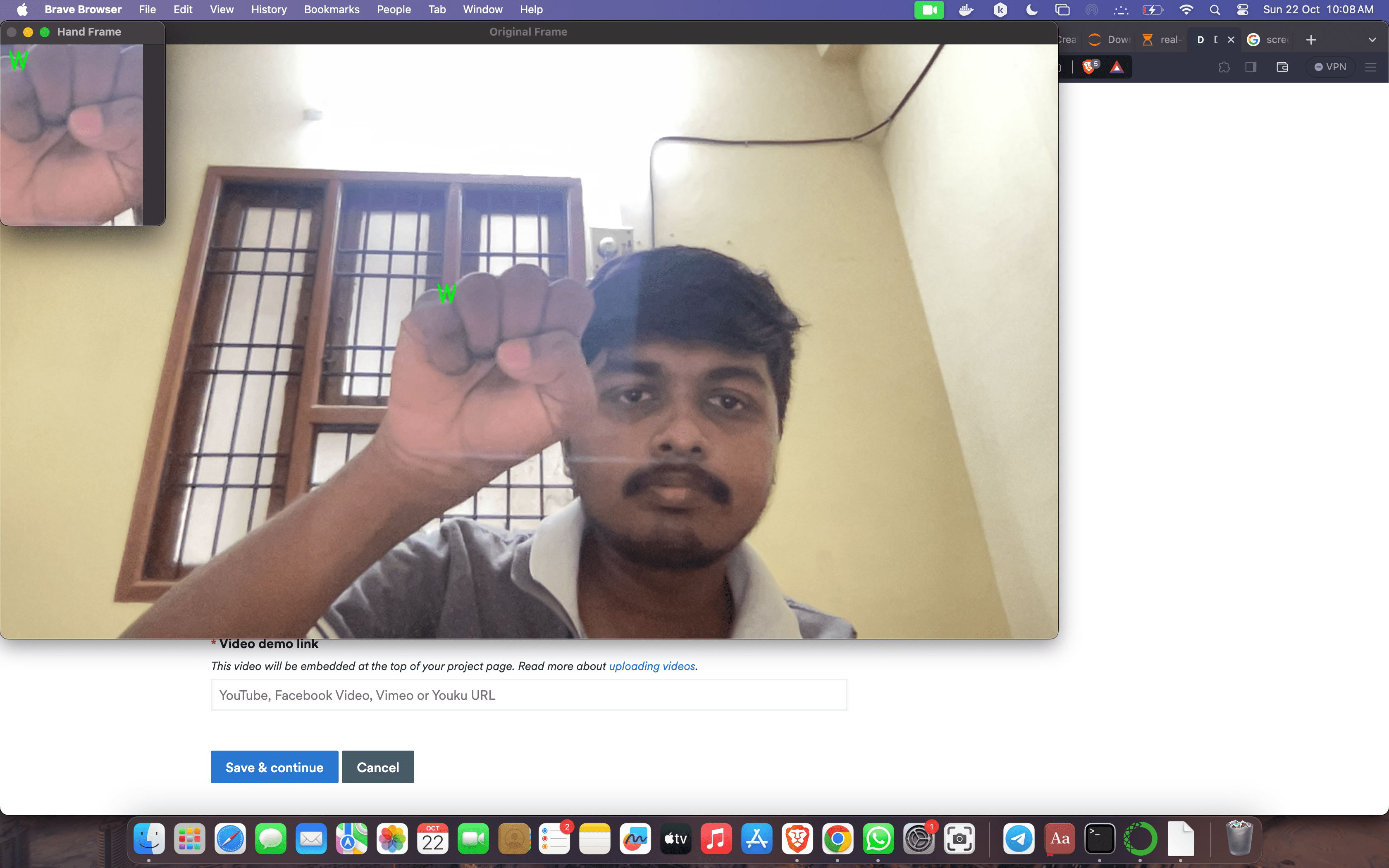
Our project is a sign language to English text conversion system built using Convolutional Neural Networks (CNN). It takes real-time video input of a person signing the alphabet in sign language and processes it to recognize and convert the signed alphabet into corresponding English text. It has the potential to make sign language more accessible and inclusive in various communication scenarios.
How we built it
We built our sign language to English text conversion system using software components like:
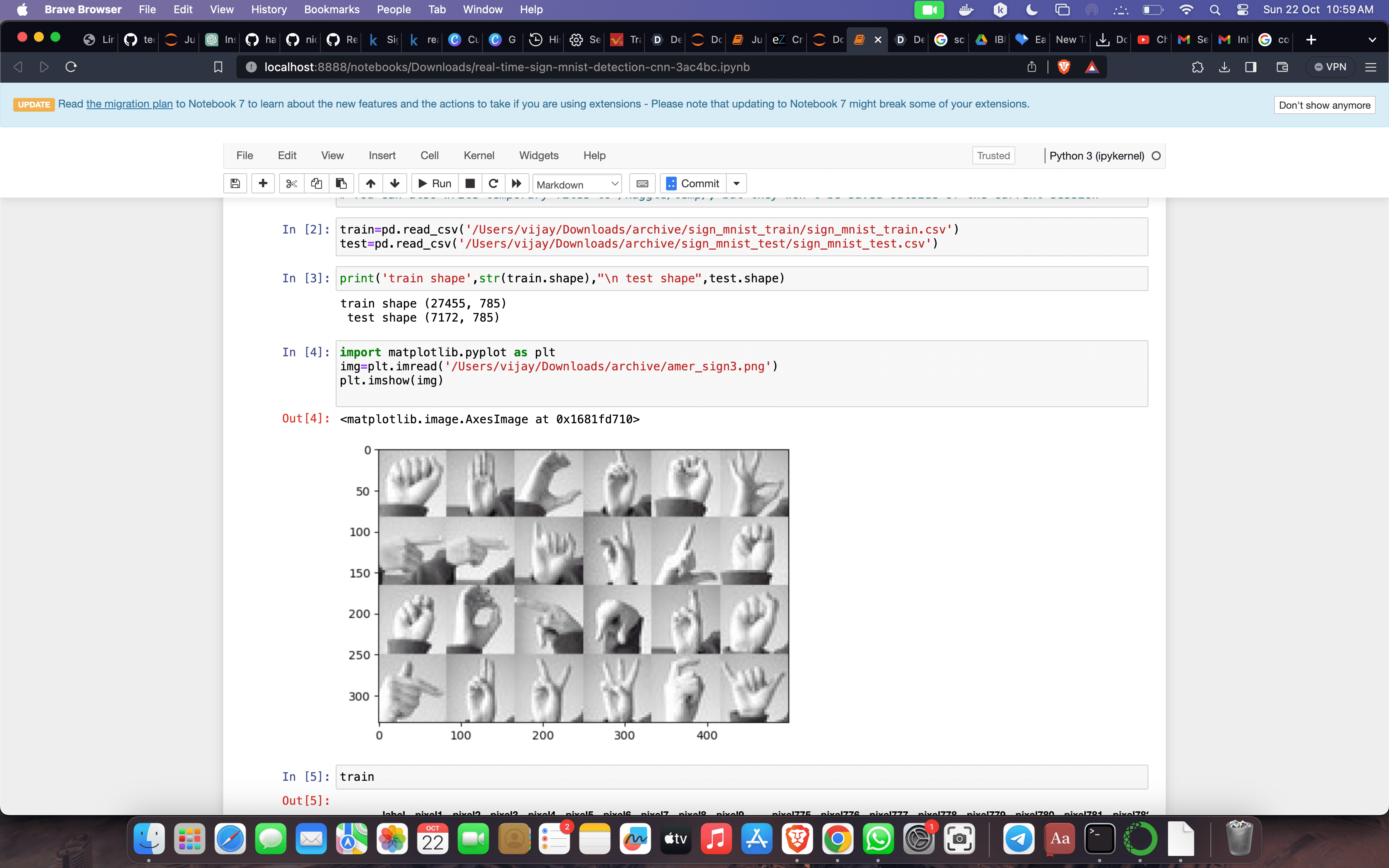
Data Collection: We took data from Kaggle. This dataset served as the foundation for training our CNN model.
Preprocessing: We preprocessed the image and video data to standardize it and prepare it for training. This involved tasks like resizing, noise reduction, and frame extraction.
CNN Architecture: We designed a Convolutional Neural Network (CNN) architecture for the alphabet recognition task. CNNs are particularly well-suited for image and video data due to their ability to capture spatial features.
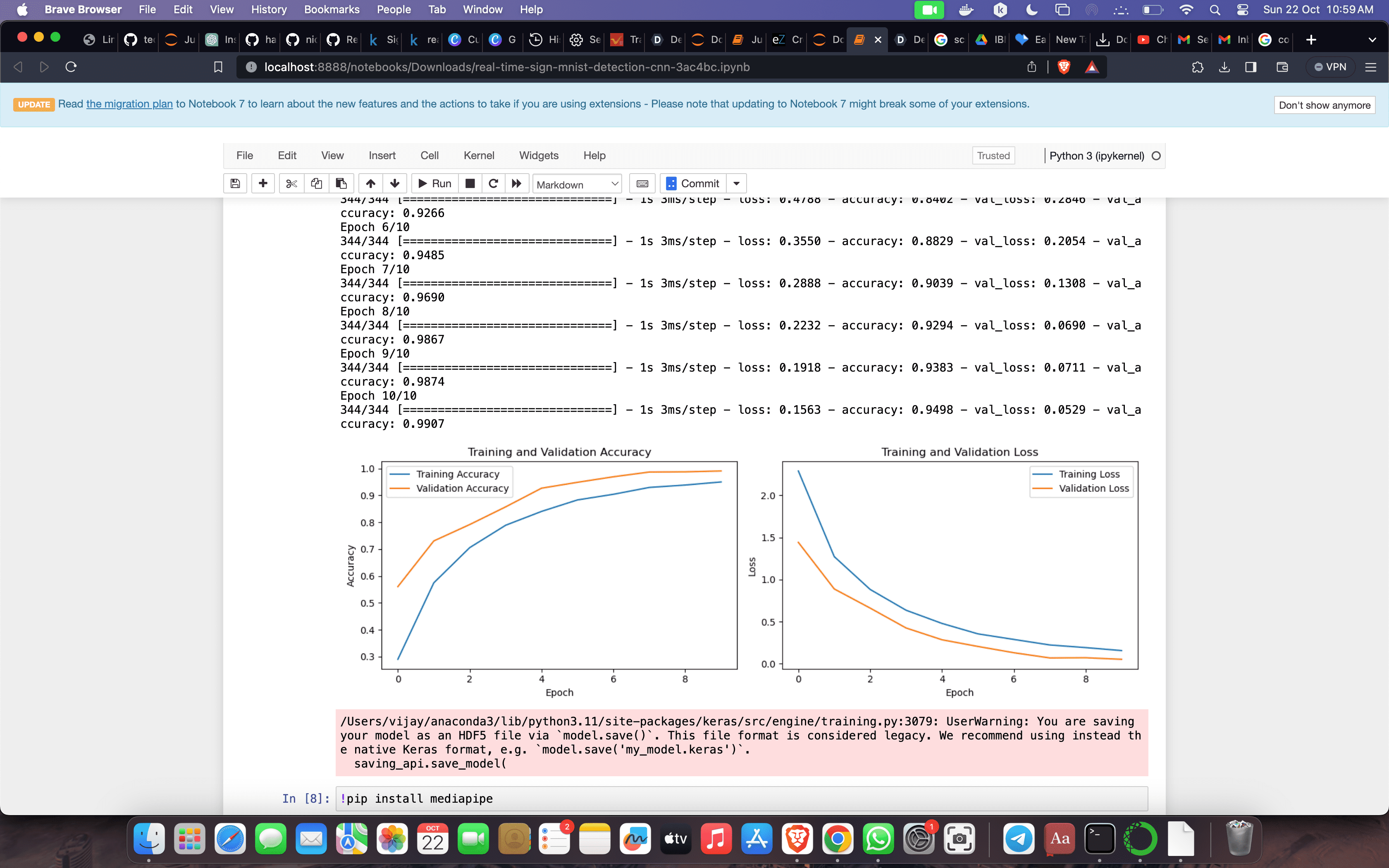
Training: We trained our CNN model using the prepared dataset. This phase involved optimizing hyperparameters and ensuring that the model could recognize sign language alphabets accurately.
Challenges we ran into:
Model Complexity: Designing a CNN architecture that could accurately recognize sign language alphabets required a deep understanding of neural networks and computer vision.
Real-time Processing: Ensuring real-time processing of sign language gestures in video data can be challenging, as it demands high computational efficiency.
Accuracy and Generalization: Achieving high accuracy and ensuring that the system can recognize a wide range of sign language variations and expressions was a significant challenge.
Accomplishments that we're proud of
We are proud to have accomplished the following:
Effective Model: We successfully developed a CNN model that can accurately recognize (99%) sign language alphabets and convert them into English text.
Real-time Processing: Our system is capable of real-time processing, making it practical for use in various communication scenarios.
Accessibility: Our project contributes to making sign language more accessible and inclusive, promoting better communication and understanding.
Learning Experience: We gained valuable experience in computer vision and deep learning, along with setting up and working on the LinuxOne platform, which will serve us well in future projects.
What's next for "SignScripter"
Our project "SignScripter" is just the beginning of our journey towards improving communication and accessibility for the deaf and hard of hearing community. Here are some directions we plan to explore in the future:
Expanded Vocabulary: We aim to expand the system to recognize and translate a broader range of sign language vocabulary and expressions.
Gesture Recognition: In addition to alphabet recognition, we intend to extend the system to recognize common signs and gestures used in everyday conversations.
Mobile Applications: Developing mobile applications for easy access, allowing users to carry this tool in their pockets and use it whenever they need to communicate.
Multilingual Support: Expanding our system to recognize and translate sign languages into multiple other languages, other than just english, thereby promoting cross-cultural communication.
We are excited about the potential of our project to make a positive impact on the lives of many, and we look forward to the journey ahead in making communication more inclusive and accessible for all!
Built With
- cnn
- kaggle
- linuxone
- machine-learning
- numpy
- opencv
- pandas
- python

Log in or sign up for Devpost to join the conversation.