Inspiration
The inspiration behind Realtime iOrbit Agent came from a personal need for more mindfulness in a tech-driven world. I observed how digital tools often increase stress instead of reducing it. This project was born out of a vision to flip that narrative — to create an AI that not only responds to tasks but also responds to how you feel. I wanted to build a tool that helps people breathe, think clearly, and stay mentally balanced, all in real time.
What it does
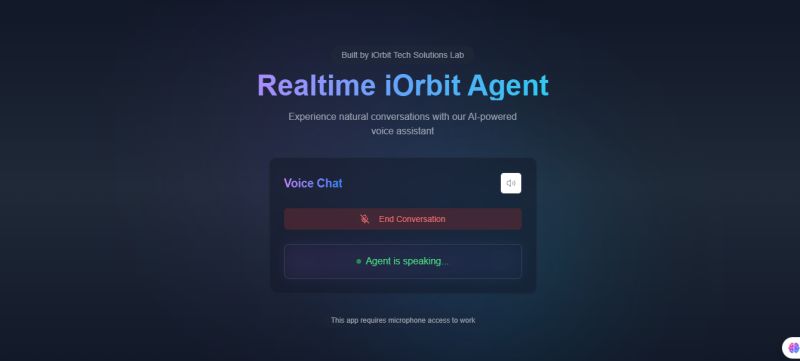
Realtime iOrbit Agent is an intelligent mindfulness companion that engages users in real-time, natural conversations aimed at improving focus, calm, and well-being. Whether you're working, overthinking, or just need a moment to pause, it steps in with gentle, empathetic support — offering breathing prompts, reflective dialogue, or even short affirmations.
Key features:
- Real-time conversation flow
- Emotion-aware interaction
- Mindfulness micro-prompts
- Voice/text input options
How we built it
We used:
- Natural Language Processing (NLP) for emotionally intelligent conversations
- JavaScript & Node.js for the backend real-time engine
- Socket.io for fast, two-way communication
- Custom mindfulness algorithm based on CBT and mindfulness principles
- Lightweight frontend using React and calming UI/UX design principles
Every part of the experience was designed with emotional well-being in mind — from the color palette to the sound tones.
Challenges we ran into
- Creating natural, mindful AI responses without sounding robotic
- Avoiding notification fatigue while still being helpful in real-time
- Achieving real-time responsiveness with minimal delay
- Designing for emotional safety — ensuring the AI doesn't overwhelm or give the wrong kind of support during sensitive moments
Accomplishments that we're proud of
- Developed a working prototype that delivers real-time, mindful interactions
- Positive feedback from early users who reported improved focus and emotional clarity
- Integrated multiple wellness features without sacrificing performance
- Designed a seamless voice + text interface
What we learned
- Empathy is as important as code when building mental wellness tools
- Real-time AI requires more than just speed — it requires emotional timing
- Designing for peace is a design challenge in itself
- Simplicity and silence can be more powerful than overloading users with features
What's next for Realtime iOrbit Agent
- Integrate with wearable devices for biometric-based emotional feedback
- Build a mobile-first version with meditation, journaling, and breathing exercises
- Launch closed beta for daily stress management in remote work environments
- Explore multi-language support for global impact
Built With
- javascript
- react
- tailwinds

Log in or sign up for Devpost to join the conversation.