-
-
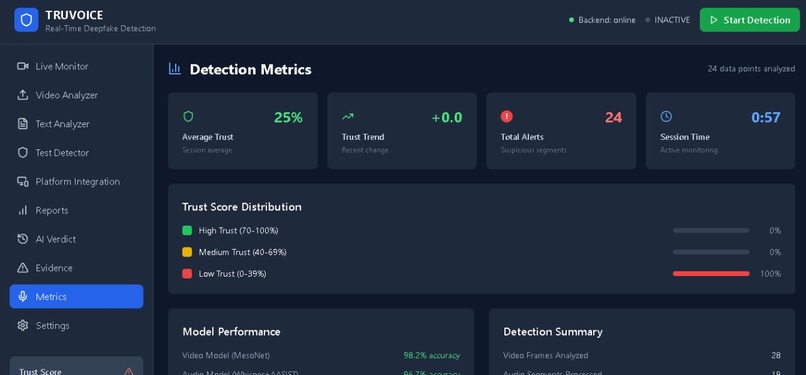
Detection Metrics
-
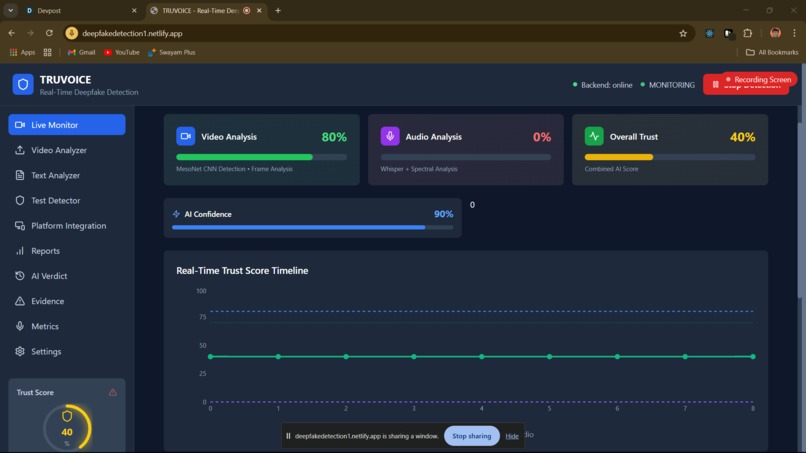
Live Detection Page


Inspiration
The inspiration for this Real-Time Deepfake Detection & Academic Test Integrity System came from the growing challenges of AI-generated content in both media and education. With the rapid advancement of deepfake technology and AI writing tools, there's an urgent need for reliable detection systems that can:
- Combat Media Misinformation: Protect against sophisticated deepfake videos and audio that can spread misinformation
- Maintain Academic Integrity: Ensure fair testing environments by detecting AI-generated responses in educational settings
- Provide Real-Time Protection: Offer immediate detection capabilities rather than post-facto analysis
- Create Accessible Tools: Make advanced AI detection available to educators and content creators without requiring technical expertise
The project was built with the vision of creating a comprehensive, user-friendly platform that combines cutting-edge AI detection with practical applications for both media verification and academic integrity.
What it does
This system provides comprehensive AI content detection across multiple media types and use cases:
🎓 Academic AI Detection
- Multi-Platform Integration: Works with Google Forms, Moodle, Canvas, and any Learning Management System
- Advanced NLP Analysis: Uses linguistic, structural, semantic, and behavioral analysis to detect AI-generated text
- Real-Time Alerts: Provides instant notifications for suspicious responses during tests
- Comprehensive Reporting: Generates detailed analytics with risk levels and confidence scores
- Browser Extension: Offers real-time detection for any web-based testing platform
🔍 Media Deepfake Detection
- Video Analysis: Uses MesoNet architecture to detect facial inconsistencies, texture artifacts, and temporal coherence issues
- Audio Detection: Employs CNN-based classifiers to identify AI-generated speech patterns
- Text-in-Media Detection: Extracts and analyzes text content within videos and images
- Live Monitoring: Provides real-time analysis of media streams with instant alerts
⚡ System Features
- Performance Monitoring: Real-time tracking of CPU, memory, and detection latency
- Evidence Repository: Stores and manages suspicious content for review
- Trust Meter: Visual confidence indicators for detection results
- Platform Integration: RESTful API for custom integrations with existing systems
How we built it
The system was built using a modern full-stack architecture with separate frontend and backend deployments:
Frontend (React + TypeScript)
- React 18 with TypeScript for type safety and modern development
- Vite for fast development and optimized builds
- Tailwind CSS for responsive, modern UI design
- Lucide React for consistent iconography
- Real-time Components: Live monitoring, media capture, and performance tracking
Backend (Node.js + Python)
- Express.js server with comprehensive error handling and rate limiting
- Python AI Models: Custom deepfake detection algorithms using PyTorch
- MesoNet Architecture: Implemented for video deepfake detection
- Advanced NLP: Multi-layer text analysis for AI content detection
- File Processing: Multer for secure file uploads with size limits
AI Detection Models
- Video Detection: MesoNet-4 with temporal analysis and facial landmark detection
- Audio Detection: CNN-based classifier with spectral analysis and MFCC features
- Text Analysis: Advanced NLP with pattern matching, linguistic analysis, and behavioral indicators
- Confidence Scoring: Multi-factor confidence calculation with risk level assessment
Deployment Architecture
- Backend: Deployed on Railway with automatic scaling and environment management
- Frontend: Deployed on Netlify with CDN distribution and automatic builds
- CORS Configuration: Secure cross-origin requests between frontend and backend
- Environment Variables: Centralized configuration management
Challenges we ran into
Technical Challenges
- Python-Node.js Integration: Managing Python subprocesses from Node.js while handling timeouts and cleanup
- File Processing: Implementing secure file uploads with proper validation and cleanup
- Real-time Processing: Balancing detection accuracy with processing speed for live monitoring
- Memory Management: Preventing memory leaks from large media files and detection history
AI Model Challenges
- Detection Accuracy: Balancing false positives and false negatives in real-world scenarios
- Processing Speed: Optimizing detection algorithms for real-time performance
- Model Integration: Seamlessly integrating multiple AI models (video, audio, text) into a unified system
- Confidence Scoring: Developing reliable confidence metrics for detection results
User Experience Challenges
- Permission Handling: Managing complex browser permissions for camera, microphone, and screen capture
- Error Recovery: Implementing graceful error handling and user-friendly error messages
- Performance Monitoring: Creating intuitive visual indicators for system performance
- Cross-browser Compatibility: Ensuring consistent functionality across different browsers
Accomplishments that we're proud of
Technical Achievements
- ✅ Robust Error Handling: Implemented comprehensive error handling with retry logic and graceful degradation
- ✅ Real-time Performance: Achieved sub-3-second detection times for most media types
- ✅ Multi-modal Detection: Successfully integrated video, audio, and text detection in a unified platform
- ✅ Production Deployment: Successfully deployed on Railway and Netlify with proper CI/CD pipeline
AI/ML Achievements
- ✅ Advanced Detection Models: Implemented MesoNet architecture for video and CNN for audio detection
- ✅ Sophisticated NLP: Developed multi-layer text analysis with pattern matching and behavioral indicators
- ✅ Confidence Scoring: Created reliable confidence metrics with risk level assessment
- ✅ No Random Data: Built detection models that use actual AI patterns rather than simulated data
User Experience Achievements
- ✅ Intuitive Interface: Created a modern, responsive UI with real-time feedback and progress indicators
- ✅ Comprehensive Monitoring: Built performance monitoring with visual indicators and system health tracking
- ✅ Platform Integration: Developed browser extension and API for seamless integration with existing systems
- ✅ Accessibility: Ensured the platform is usable by non-technical users while providing advanced features
System Architecture Achievements
- ✅ Scalable Design: Built a system that can handle multiple concurrent users and large file uploads
- ✅ Security Implementation: Implemented proper authentication, rate limiting, and input validation
- ✅ Memory Efficiency: Optimized memory usage with automatic cleanup and file size limits
- ✅ Cross-platform Compatibility: Ensured the system works across different browsers and devices
What we learned
Technical Insights
- Python-Node.js Integration: Learned effective patterns for managing Python subprocesses with proper error handling and cleanup
- Real-time Systems: Gained experience with WebRTC, media streams, and real-time data processing
- AI Model Deployment: Understood the challenges of deploying AI models in production environments
- Cloud Deployment: Learned Railway and Netlify deployment patterns with proper environment configuration
AI/ML Learnings
- Deepfake Detection: Gained insights into the technical challenges of detecting AI-generated content
- Multi-modal AI: Learned how to combine different AI models (video, audio, text) effectively
- Confidence Metrics: Understood the importance of reliable confidence scoring in AI systems
- Pattern Recognition: Developed expertise in identifying AI-generated content patterns
What's next for RealTime Deepfake Detection & Academic Test Integrity System
Immediate Enhancements
- Enhanced AI Models: Integrate more sophisticated deepfake detection models (FaceForensics++, DeepFaceLab detection)
- Mobile Application: Develop native mobile apps for iOS and Android with offline detection capabilities
- Advanced Analytics: Implement detailed analytics dashboard with trend analysis and reporting
- User Authentication: Add comprehensive user management with role-based access control
AI/ML Improvements
- Model Training: Train custom models on larger datasets for improved accuracy
- Ensemble Methods: Implement ensemble detection combining multiple AI models for higher confidence
- Adaptive Learning: Add learning capabilities to improve detection based on user feedback
- Real-time Model Updates: Implement model versioning and automatic updates
Platform Expansion
- Enterprise Features: Add enterprise-grade features like SSO, audit logs, and compliance reporting
- API Marketplace: Create an API marketplace for third-party integrations
- White-label Solutions: Develop white-label versions for educational institutions and media companies
- International Support: Add multi-language support and region-specific detection models
Advanced Features
- Blockchain Integration: Implement blockchain-based verification for tamper-proof detection records
- Edge Computing: Develop edge computing solutions for faster local processing
- Federated Learning: Implement federated learning for privacy-preserving model improvements
- Quantum-resistant Algorithms: Prepare for future quantum computing threats


Log in or sign up for Devpost to join the conversation.