






About the Project
The Story Behind Realmrise: Genesis
Modern online games often bring players together for a single match, a short campaign, or an isolated experience that disappears once the session ends. Social platforms, on the other hand, connect millions of people every day but rarely transform those communities into living worlds where every interaction leaves a permanent mark.
Realmrise: Genesis was born from a simple question:
What if an entire Reddit community could build, govern, and shape the same fantasy civilization over months or even years?
Rather than creating another strategy game focused on individual progression, Realmrise: Genesis reimagines Reddit as a persistent world where every decision contributes to a shared history. Every kingdom rises through cooperation, every war changes political boundaries, every discovery unlocks new opportunities, and every victory or failure becomes part of a continuously evolving narrative.
At its core, Realmrise: Genesis combines community collaboration, persistent simulation, and intelligent world-building. Instead of resetting after every match, the world continues to evolve even when players are offline. Weather changes, economies fluctuate, populations grow, heroes become legends, alliances form, kingdoms fall, and new civilizations emerge. When players return, they discover that the world has moved forward because of the collective actions of thousands of participants.
The project leverages Reddit's social ecosystem and Devvit's server-side capabilities to create a massively shared strategy experience without requiring players to install a separate game client. Reddit discussions become diplomacy, comments become strategic decisions, votes influence government policies, and community participation directly affects the future of the world.
Unlike traditional multiplayer games that rely primarily on scripted content, Realmrise: Genesis is driven by the collective decisions of its players. Every alliance, declaration of war, trade agreement, exploration mission, technological breakthrough, and political decision permanently shapes the world's history. AI does not invent these stories—it documents and enriches the history created by the community, transforming player-driven events into immersive chronicles that preserve each civilization's unique legacy. Every Reddit community writes its own history through collaboration rather than following a predetermined narrative.
Realmrise: Genesis was also designed around the reality of how Reddit is used: most players check in from their phones throughout the day. Rather than expecting long play sessions, the experience is built around quick but meaningful interactions. In just a few minutes, players can collect resources, respond to world events, vote on kingdom decisions, manage heroes, negotiate diplomacy, or begin new construction projects before returning later to discover how the shared world has evolved.
To support this persistent universe, the game stores world state using Devvit's built-in Redis-backed storage. Player profiles, kingdoms, guilds, heroes, world events, quests, and leaderboards remain synchronized across Reddit sessions without requiring external infrastructure. This architecture enables scalable, reliable gameplay while remaining tightly integrated with the Reddit platform.
At the heart of Realmrise: Genesis is a Daily World Simulation that advances the civilization every day, whether players are online or not. Each daily simulation updates weather, population growth, economies, diplomacy, exploration, warfare, research, and world events, ensuring that no two days unfold in exactly the same way. A peaceful kingdom may awaken to a prosperous harvest, a scientific breakthrough, or the discovery of ancient ruins, while another may face famine, political unrest, or an unexpected invasion. Every new day creates fresh opportunities, challenges, and stories that encourage players to return and discover how their civilization—and the wider world—has changed since their last visit.
Beyond entertainment, the project explores a broader vision of community-driven digital societies. It demonstrates how persistent simulations, AI-generated narratives, and collaborative decision-making can transform online communities into living ecosystems where participants create history together instead of merely consuming content.
Ultimately, Realmrise: Genesis is not simply a strategy game. It is an experiment in persistent digital civilization—a living world where every player becomes an author of history, every community shapes its own destiny, and every generation of rulers leaves a legacy for those who follow.
What it does
Realmrise: Genesis transforms a Reddit community into a persistent fantasy civilization where thousands of players collectively build, govern, and evolve a shared world. Instead of isolated matches that reset after each session, every decision permanently influences an evolving universe that continues to progress even when players are offline.
Players begin by founding or joining a kingdom, gathering resources, constructing settlements, recruiting armies, training legendary heroes, researching new technologies, and forming alliances with other communities. Every action contributes to the long-term development of the kingdom and influences the balance of power across the world.
Behind every player interaction is a living simulation engine that advances the world through recurring game cycles. During each simulation cycle, the system updates population growth, resource production, weather conditions, seasonal changes, economic markets, diplomacy, warfare, exploration, technological progress, and random world events. These interconnected systems ensure that every decision has meaningful consequences that ripple throughout the game world.
The Daily World Simulation is the heartbeat of the game. Every day the world advances through a new simulation cycle that generates evolving economies, changing weather, diplomatic shifts, military conflicts, technological discoveries, seasonal events, and unexpected global occurrences. Players return not to repeat yesterday's tasks, but to discover what happened while they were away and decide how their kingdom will respond to an ever-changing world.
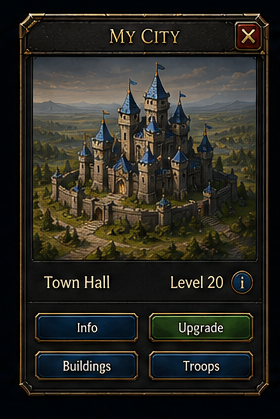
Players experience this evolving civilization through an interactive Phaser-powered world optimized for both desktop and mobile devices. The interface follows a portrait-friendly, mobile-first design with responsive layouts, touch gestures, intuitive camera controls, large tap targets, and lightweight menus that allow players to navigate kingdoms comfortably with one hand. Fast loading, optimized assets, smooth animations, and efficient rendering make it possible to complete meaningful daily actions in only a few minutes, while still offering deeper strategic gameplay for longer sessions.
The project uses Reddit's Devvit platform to make community participation a core gameplay mechanic. Commands, discussions, votes, and collaborative decisions become part of the game's governance system. Communities elect leaders, negotiate alliances, declare wars, establish trade agreements, and collectively decide the future direction of their civilizations.
Every significant event in Realmrise: Genesis originates from player decisions. Communities found kingdoms, negotiate treaties, wage wars, establish trade routes, elect leaders, recruit legendary heroes, and expand their civilizations through collective action. Rather than generating stories independently, the AI acts as a chronicler that transforms these community-created events into immersive historical records. The result is a living history written by players and preserved through intelligent storytelling, giving every kingdom a unique identity built from genuine community contributions instead of scripted content.
To support a persistent experience, the game stores players, kingdoms, heroes, guilds, world state, quests, and leaderboards using Devvit's Redis-backed storage. This enables every Reddit session to continue exactly where the previous one ended without requiring external game servers for core persistence.
The project follows a modular simulation architecture where specialized engines independently manage economy, weather, diplomacy, warfare, exploration, achievements, heroes, and world events. Each engine contributes to a deterministic simulation pipeline, making the game scalable, maintainable, and extensible as new gameplay systems are introduced.
Ultimately, Realmrise: Genesis is more than a strategy game. It is a persistent social simulation where communities collaboratively create civilizations, respond to an ever-changing world, and write a living history that belongs to every participant. Every decision matters, every event becomes part of the world's legacy, and every player helps shape the future of an evolving digital civilization.
How we built it
The interactive client is built with Phaser, which serves as the visual engine powering the game's persistent world. Rather than using Phaser only for rendering sprites, we designed the frontend around Phaser's scene system to create a modular experience where Kingdom Management, World Exploration, Diplomacy, Battles, Research, Guild Management, and Historical Chronicles each operate as independent scenes with their own lifecycle, transitions, and state management.
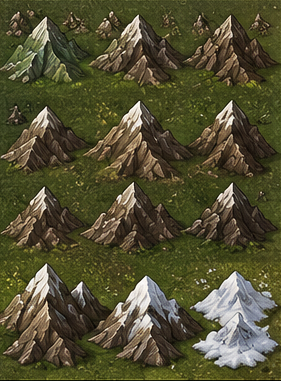
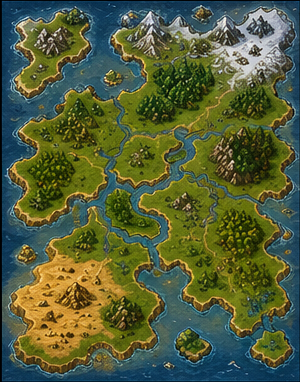
Phaser's camera system enables players to seamlessly navigate an expanding world map through smooth panning, zooming, and viewport management while maintaining performance across desktop and mobile devices. Tilemaps are used to represent kingdoms, terrain, settlements, roads, forests, mountains, rivers, and regions, allowing the world to grow dynamically as civilizations expand. Camera controls, fog-of-war overlays, minimaps, and layered rendering help players understand the evolving geopolitical landscape without overwhelming the interface.
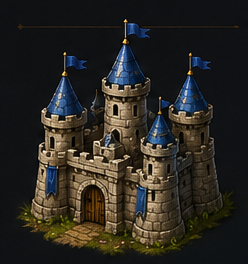
To create a living world, Phaser's animation system brings kingdoms to life through animated buildings, moving heroes, marching armies, resource production, weather effects, seasonal transitions, particle systems, and environmental events. Battles are visualized through interactive combat scenes that communicate strategic outcomes while preserving the underlying deterministic simulation managed by the backend. These visualizations transform simulation data into engaging gameplay without sacrificing consistency. The simulation engine was specifically designed around a recurring Daily World Simulation rather than isolated gameplay sessions. Every simulation cycle executes the same deterministic sequence, ensuring that the world evolves consistently for every player regardless of when they connect. This architecture enables meaningful long-term progression where kingdoms continue growing, alliances shift, discoveries emerge, economies fluctuate, and historical events unfold between player visits, creating genuine anticipation for the next day's simulation.
Performance was a major design goal. Phaser's rendering pipeline efficiently manages large numbers of world objects through optimized sprite rendering, layered containers, asset management, and reusable game objects. This allows the application to display evolving civilizations, expanding settlements, animated units, and dynamic world events while remaining responsive inside Devvit Web.
User contributions are treated as first-class game data throughout the architecture. Every vote, diplomatic agreement, battle outcome, construction project, hero achievement, exploration discovery, and community decision is stored as part of the persistent world state. During each Daily World Simulation, these contributions influence future economic conditions, political relationships, technological progress, territorial expansion, and global events. AI is then used only after the simulation completes to convert the community's collective actions into readable historical chronicles, ensuring that players remain the authors of the world's evolution while AI serves as its historian.
The interface was designed from the beginning as a mobile-first experience because Reddit is primarily accessed on phones. Phaser's responsive rendering and input systems enable portrait-oriented layouts, adaptive user interfaces, touch gestures, one-thumb navigation, and smooth camera controls that remain intuitive across a wide range of screen sizes. Large tap targets, contextual menus, lightweight overlays, and efficient asset loading reduce friction while keeping interactions fast and accessible. Players can complete meaningful kingdom management tasks, respond to world events, or participate in diplomacy during short daily sessions without sacrificing the depth expected from a long-term strategy game.
By making Phaser the foundation of visualization, interaction, animation, and world navigation—not simply a rendering library—Realmrise: Genesis demonstrates how the framework can support a large-scale persistent strategy experience within the Reddit Devvit ecosystem.
Challenges we ran into
Building Realmrise: Genesis presented a fundamentally different set of challenges from developing a traditional multiplayer game. Rather than creating isolated game sessions, we set out to build a persistent digital civilization where every player action could influence an evolving world shared by an entire Reddit community. This required solving architectural problems around persistence, synchronization, scalability, and long-term maintainability from the very beginning.
One of our first challenges was designing a world that continues to evolve even when no individual player is actively interacting with it. Unlike conventional games where gameplay advances only during active sessions, Realmrise: Genesis needed a deterministic simulation engine capable of updating weather, economy, diplomacy, population, exploration, and world events while preserving consistency across every kingdom. We addressed this by separating the simulation into independent engines that execute in a predictable sequence, ensuring that each subsystem contributes to the world's evolution without creating conflicting state updates.
Another major challenge was managing persistent data efficiently within the Devvit ecosystem. Because the game stores players, kingdoms, guilds, heroes, quests, leaderboards, and the global world state, we needed a storage strategy that was both scalable and easy to maintain. Instead of allowing every component to access storage directly, we introduced a centralized StorageService that abstracts Devvit's Redis-backed storage behind a consistent interface. This reduced code duplication, improved maintainability, and established a clear separation between game logic and persistence.
Designing for community-scale gameplay introduced additional complexity. Multiple users can interact with the same kingdom, participate in guilds, vote on decisions, or trigger world-changing events within short time intervals. This required careful consideration of data consistency, deterministic processing, and authoritative server-side game logic so that every player observes the same world state regardless of when they connect.
Designing the Daily World Simulation presented one of our greatest gameplay challenges. We wanted players to feel excited about returning every day without making them feel punished for missing one. Achieving that balance required carefully tuning progression, resource generation, exploration, diplomacy, and world events so that each simulation introduces meaningful change while still allowing players to recover, adapt, and pursue multiple long-term strategies.
Balancing realism with enjoyable gameplay also proved challenging. The simulation includes interconnected systems such as resource production, technology, diplomacy, warfare, exploration, and environmental conditions. Small adjustments in one subsystem can cascade throughout the economy or unintentionally make certain strategies overwhelmingly dominant. To address this, we designed the simulation as modular components with clearly defined responsibilities, allowing individual systems to be tuned independently while preserving overall balance.
Another challenge involved creating a world that remains engaging over long periods without relying solely on scripted content. We wanted every community to experience a unique history rather than replaying identical scenarios. This led us to adopt a procedural simulation approach where global events emerge naturally from interactions between systems. Dynamic chronicles then transform these events into meaningful narratives, giving every civilization its own evolving identity.
Another important challenge was ensuring that player contributions remained the primary driver of the experience. It was tempting to rely heavily on procedural content generation, but doing so would have reduced community ownership of the world. Instead, we designed every major system so that meaningful events emerge from player decisions and interactions. AI supports the experience by organizing and narrating these events rather than replacing the creativity of the community, preserving the authenticity of each civilization's history.
From an engineering perspective, we also focused heavily on extensibility. We anticipated that future versions would introduce additional mechanics such as AI-controlled kingdoms, dynamic diplomacy, seasonal events, expanded hero systems, and richer world exploration. To avoid future rewrites, we adopted a modular architecture with clearly defined interfaces, enabling new simulation engines and gameplay systems to be integrated with minimal changes to existing code.
Finally, one of our biggest lessons was that building a persistent world is as much an architectural challenge as it is a gameplay challenge. Success depends not only on implementing exciting features, but also on designing systems that remain deterministic, maintainable, scalable, and resilient as the community and game world continue to grow. These challenges ultimately shaped many of our architectural decisions and laid the foundation for a platform capable of supporting long-term, community-driven world building.
Accomplishments that we're proud of
Realmrise: Genesis represents more than the completion of a game prototype—it demonstrates the successful creation of a scalable foundation for a persistent, community-driven digital civilization. One of our proudest achievements was transforming Reddit from a discussion platform into the backbone of a living strategy game where every player contributes to a shared and continuously evolving world.
We are particularly proud of the modular simulation architecture that powers the project. Rather than building a monolithic game engine, we separated the world into independent simulation systems responsible for economy, diplomacy, warfare, exploration, weather, population growth, technology, heroes, achievements, and dynamic world events. This architecture enables each subsystem to evolve independently while contributing to a consistent global simulation, making the platform significantly easier to maintain, extend, and test.
Another major accomplishment was designing a persistence layer that treats the game world as a long-lived civilization instead of a temporary game session. By leveraging Devvit's Redis-backed storage and implementing a centralized StorageService, we created a reliable persistence model where players, kingdoms, guilds, heroes, quests, marketplaces, leaderboards, and the global world state remain synchronized across Reddit sessions without requiring dedicated external infrastructure. This approach demonstrates how complex persistent applications can be built entirely within the Devvit ecosystem.
We are also proud of creating a deterministic simulation pipeline. Every simulation cycle follows a structured sequence that updates environmental conditions, resource production, population dynamics, diplomacy, warfare, exploration, technological progress, and world events before safely persisting the updated state. This predictable execution model provides consistency, simplifies debugging, and establishes a strong foundation for future optimization and scaling.
From a software engineering perspective, we intentionally designed the system around clear separation of responsibilities. Simulation engines focus solely on business logic, storage is isolated behind service abstractions, and the web interface is responsible only for visualization and player interaction. This layered architecture reduces coupling between components, improves code maintainability, and enables future contributors to extend the platform without introducing unnecessary complexity.
We are equally proud of building for longevity rather than short-term demonstration. Every major architectural decision—from modular simulation engines and typed data models to service-oriented storage and scene-based user interfaces—was made with future expansion in mind. The platform is prepared to support AI-driven storytelling, dynamic diplomacy, additional civilizations, seasonal world events, richer economic systems, and new gameplay mechanics without requiring fundamental architectural redesign.
Perhaps our greatest accomplishment is building a world where the community creates the content instead of simply consuming it. Players establish kingdoms, negotiate diplomacy, create governments, wage wars, discover new lands, develop technologies, recruit legendary heroes, build trade networks, and shape the political landscape through their own decisions. Every contribution permanently becomes part of the world's history. AI enhances this experience by documenting and presenting these events as evolving chronicles, but the stories themselves belong to the community. This balance between player agency and AI-assisted storytelling creates a living civilization authored collectively by Reddit users.
We are especially proud of how Phaser became more than a rendering framework. Its scene architecture, animation system, camera controls, tilemap support, responsive input handling, and high-performance rendering enabled us to build an interactive visualization layer capable of representing an evolving civilization instead of isolated game levels. Rather than presenting static menus, the frontend visualizes world growth, diplomacy, exploration, battles, and environmental change as a living, navigable world that updates alongside the persistent simulation.
We are especially proud of creating a Daily World Simulation that gives players a compelling reason to return. Instead of relying on repetitive login rewards or artificial timers, every new day advances the shared civilization itself. Kingdoms expand, alliances evolve, discoveries reshape strategies, economies fluctuate, heroes complete journeys, and unexpected world events create entirely new challenges. The anticipation of discovering what happened since the previous simulation becomes one of the game's core progression systems.
We are also proud of creating a mobile experience that complements Reddit's browsing habits. Instead of adapting a desktop strategy game to smaller screens, we designed the interface around quick daily interactions with responsive layouts, touch-friendly controls, streamlined navigation, and efficient rendering. Players can make meaningful strategic decisions in only a few minutes while still benefiting from a rich world that continues evolving between sessions, making the experience well suited to how Reddit communities engage throughout the day.
Finally, we are proud that this project embodies the engineering principles we set out to achieve: modularity, scalability, persistence, maintainability, and extensibility. Rather than optimizing solely for a hackathon demonstration, we built a foundation that could realistically evolve into a production-ready platform capable of supporting long-term community engagement and continuous world evolution. That architectural vision is the accomplishment we value most because it transforms Realmrise: Genesis from a prototype into the beginning of a sustainable and expandable digital ecosystem.
What we learned
Building Realmrise: Genesis fundamentally changed how we think about designing large-scale software systems. We began the project intending to create a strategy game, but quickly realized that building a persistent digital civilization requires many of the same engineering principles used in enterprise software: modular architecture, reliable state management, deterministic processing, scalability, and long-term maintainability.
One of our biggest lessons was the importance of designing architecture before implementing features. As the project evolved, we found that investing time in defining clear boundaries between simulation engines, storage services, data models, and user interfaces dramatically reduced complexity. Separating responsibilities made the codebase easier to reason about, simplified testing, and allowed individual systems to evolve independently without introducing unnecessary coupling.
We also gained a deeper appreciation for persistent state management. Unlike traditional games where sessions begin and end independently, a persistent world requires every action to become part of an evolving history. This shifted our focus from building isolated gameplay mechanics to designing reliable data models, predictable simulation pipelines, and robust storage abstractions capable of maintaining consistency across thousands of future interactions.
Another important lesson was understanding the value of deterministic simulation. We discovered that complex systems become significantly easier to debug, validate, and extend when every simulation cycle follows a clearly defined execution order. By processing environmental changes, economic activity, diplomacy, warfare, exploration, and world events in a predictable sequence, we established a foundation that supports reproducibility and long-term stability as additional mechanics are introduced.
We also learned that long-term player retention is driven more effectively by meaningful world progression than by repetitive reward systems. By allowing the civilization itself to evolve through a Daily World Simulation, players return out of curiosity, strategy, and community participation rather than obligation. That shift fundamentally influenced how we designed progression throughout the project.
Working within the Devvit ecosystem also demonstrated that platform constraints can encourage better architectural decisions. Rather than relying on external databases or numerous backend services, we learned how to leverage Devvit's Redis-backed storage effectively by centralizing persistence through a dedicated StorageService. This reinforced the importance of abstraction layers that isolate infrastructure concerns from business logic, making the overall system more portable and maintainable.
Beyond technical implementation, we learned that the most engaging persistent worlds are built by communities rather than algorithms. Players become significantly more invested when they know their decisions permanently influence a shared civilization. AI is most valuable when it amplifies community creativity instead of replacing it. By allowing players to generate kingdoms, diplomacy, wars, alliances, discoveries, and historical moments while AI organizes these events into compelling narratives, we created a system where technology supports collaboration rather than overshadowing it.
Perhaps the most valuable lesson was recognizing that sustainable software is built around extensibility rather than feature count. Instead of optimizing solely for a hackathon demonstration, we focused on creating reusable components, well-defined interfaces, typed domain models, and modular services that can support future capabilities such as AI-driven storytelling, adaptive world events, richer diplomacy, and increasingly sophisticated simulation systems without requiring major architectural changes.
Finally, this project reinforced an important engineering principle: successful software is not defined by the number of technologies it incorporates, but by the clarity of its design decisions and the problems it solves. A well-structured architecture, transparent data flow, scalable persistence strategy, and maintainable codebase provide far greater long-term value than adding unnecessary complexity. Those lessons will continue to influence how we approach future projects, whether they are games, AI platforms, or enterprise-scale applications.
What's next for Realmrise: Genesis
Realmrise: Genesis is designed as the foundation of a long-lived social simulation platform rather than a standalone hackathon project. While the current implementation establishes the core mechanics for persistent world simulation, the next phase focuses on transforming the platform into a continuously evolving digital civilization capable of supporting large Reddit communities over months and years.
Our immediate priority is expanding the simulation engine to create a richer and more dynamic world. Planned additions include advanced diplomacy systems, AI-controlled kingdoms, dynamic trade networks, seasonal economies, cultural development, religion, political governance, espionage, naval exploration, and procedural world generation. These systems will interact through the existing modular architecture, allowing the complexity of the world to increase without compromising maintainability.
We also plan to expand community-driven storytelling through adaptive AI systems that preserve player agency. Future AI features will generate richer chronicles, historical archives, personalized summaries, diplomatic reports, legendary biographies, and world newspapers based entirely on events created by players. Rather than inventing the world's history, AI will continue acting as the historian of an evolving civilization whose direction is determined by Reddit communities themselves.
As the platform grows, we intend to enhance scalability by introducing distributed simulation scheduling, optimized caching strategies, background processing pipelines, comprehensive monitoring, automated testing, and continuous deployment workflows. These improvements will ensure that Realmrise: Genesis remains responsive and reliable as player populations and simulation complexity increase.
Another major focus is expanding community governance. Future versions will allow players to elect rulers, establish constitutions, enact laws, vote on kingdom policies, manage taxation, negotiate treaties, form federations, and create inter-kingdom alliances. These mechanics will deepen collaborative decision-making while reinforcing Reddit's existing strengths as a platform for discussion and community participation.
To improve player engagement, we plan to develop a richer web experience featuring interactive world maps, animated battles, historical timelines, economic dashboards, diplomatic relationship visualizations, achievement systems, seasonal competitions, and comprehensive leaderboards. These tools will help players understand how their decisions influence both their kingdoms and the broader world over time.
Future releases will further refine the mobile experience through richer touch interactions, gesture-based map navigation, adaptive accessibility settings, performance optimizations for lower-powered devices, improved offline asset caching, customizable interface layouts, and additional visual polish. Our goal is to make Realmrise: Genesis feel as natural to play during a quick mobile check-in as it does during longer strategic sessions on desktop.
Also future updates will expand the Daily World Simulation with richer seasonal events, evolving civilizations, legendary quests, dynamic trade routes, cultural festivals, political crises, natural disasters, and world-spanning story arcs. Our goal is for every new day to feel genuinely different, giving players fresh reasons to return, collaborate with their communities, and shape the next chapter of their civilization's history.
From an engineering perspective, we will continue strengthening the platform's production readiness through improved observability, structured logging, performance profiling, automated regression testing, security hardening, disaster recovery strategies, and robust data migration mechanisms. These capabilities will ensure the platform remains maintainable as new gameplay systems and larger communities are introduced.
Beyond gameplay, we see opportunities for Realmrise: Genesis to serve as a research platform for studying collaborative decision-making, emergent economic systems, digital governance, and persistent online communities. The simulation architecture provides a unique environment for exploring how large groups cooperate, compete, negotiate, and adapt within complex virtual societies.
Ultimately, our vision extends far beyond building another strategy game. We aim to create a living world that continuously evolves through the collective imagination of its players—a platform where every Reddit community becomes a civilization, every decision leaves a lasting legacy, and every generation of players inherits a world shaped by those who came before. By combining persistent simulation, scalable engineering, AI-assisted storytelling, and community-driven governance, Realmrise: Genesis has the potential to redefine how social platforms can become shared, living worlds rather than simply places where conversations happen.
Built With
- css3
- devvit
- devvit-web
- express.js
- game-development
- git
- github
- html5
- javascript
- mobile-first-design
- node.js
- npm
- persistent-storage
- phaser.js
- redis
- responsive-design
- rest-api
- simulation-engine
- socket.io
- state-management
- typescript
- vite
- vs-code
- websockets

Log in or sign up for Devpost to join the conversation.