-
-
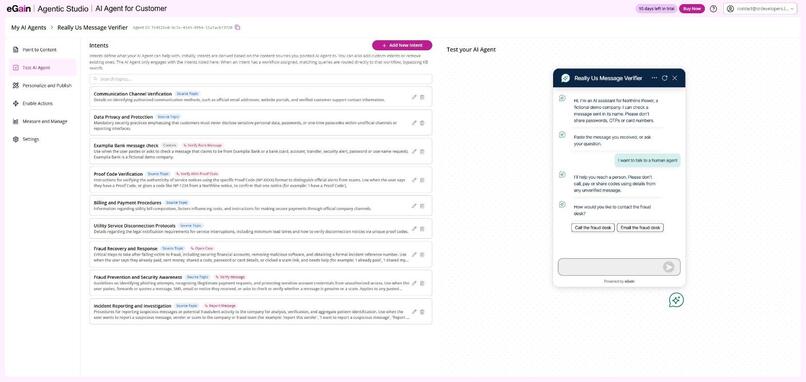
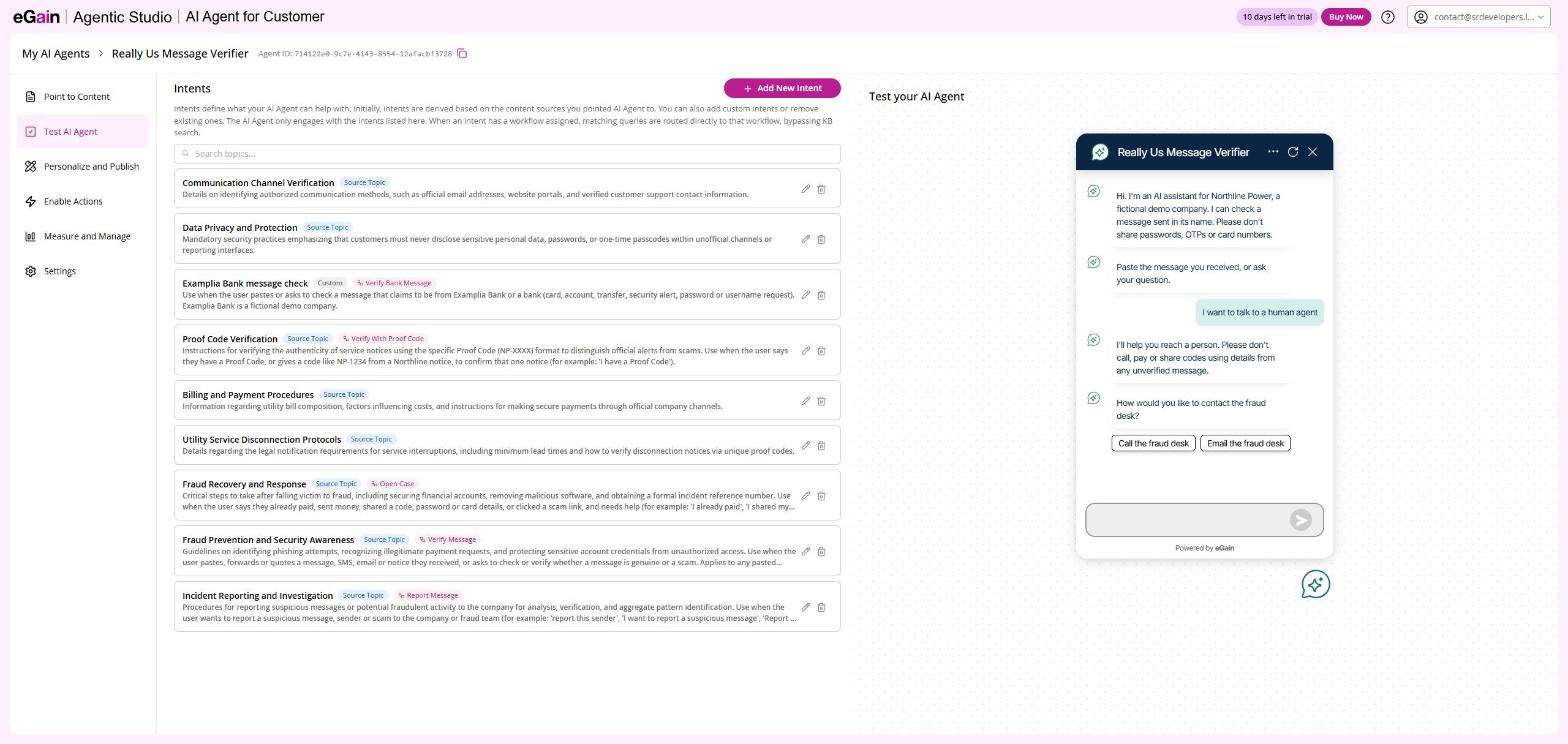
eGain Studio: intents wired to 5 process workflows; Test AI Agent shows escalation (call or email)
-
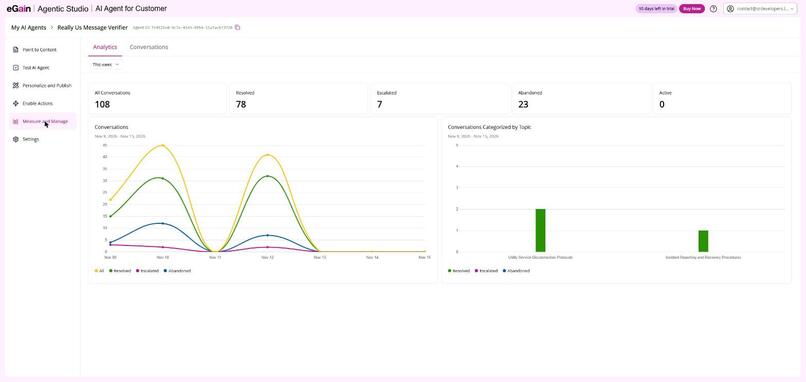
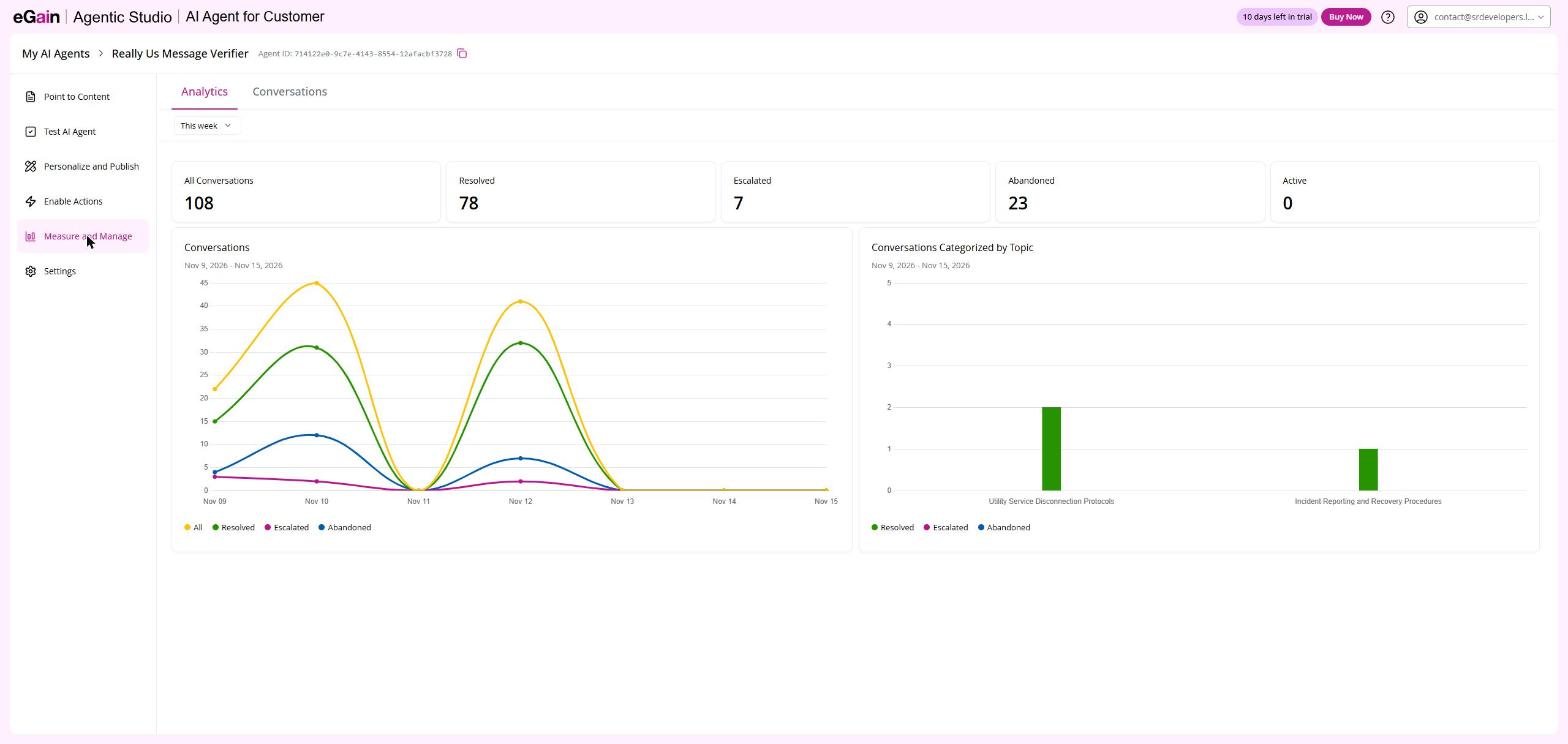
eGain analytics: conversations resolved, escalated and abandoned during testing
-
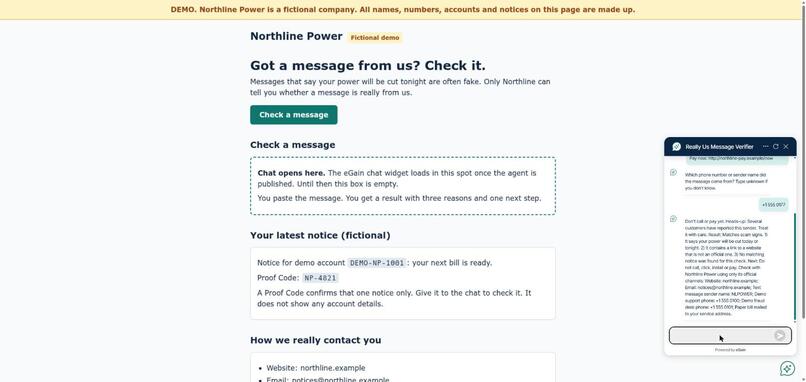
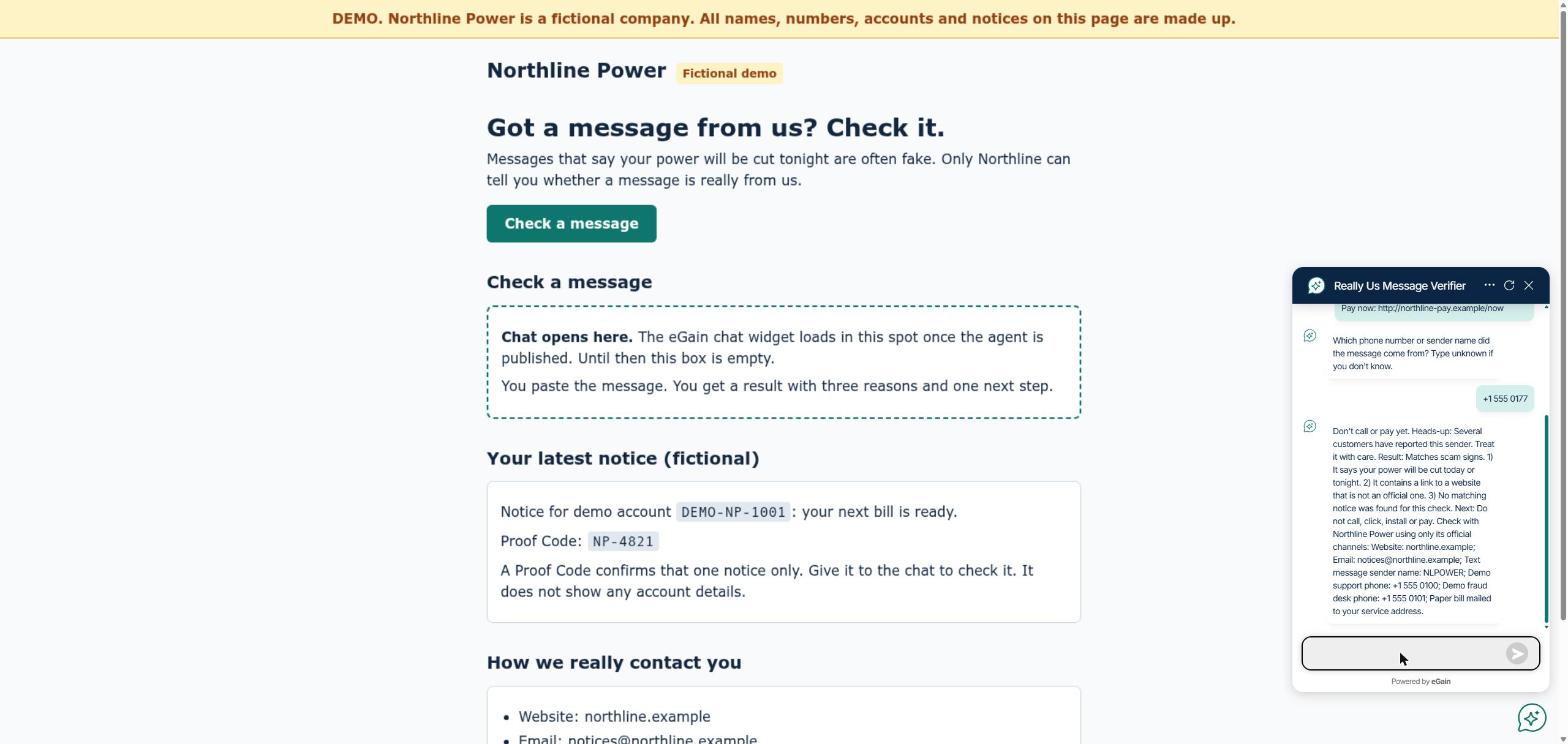
Live demo: rule-based verdict with the human-approved heads-up for a reported sender
Inspiration
People reported losing $3.5 billion to impostor scams in the US in 2025, and impostor scams were nearly 1 in 3 fraud reports (U.S. FTC, June 2026). A text says "your power will be cut off tonight, pay now" or "your bank account is locked". The customer panics and pays. The company finds out late, one complaint at a time.
Scammers pretend to be your company. Really Us lets customers check before they act, and warns the next customer once a person approves.
What it does
- Verify a message: paste it into the eGain chat. A workflow calls our API, which returns a deterministic verdict, three plain reasons and one next step.
- Proof Code: a code printed on a real notice confirms that one notice (and only that one).
- Report a sender: the agent takes a real action and returns a receipt (RPT-...).
- Open a case: for people who already paid or shared details; returns a case number and safe steps.
- Outbreak + human approval: when three different chat sessions report the same sender, the Trust Console flags an outbreak. Nothing goes out until a person approves. After approval, the next customer who checks that sender gets a heads-up.
- Knowledge answers from the company's own articles, with sources.
- Escalation: call or email the fraud desk.
- Second company, same API: Examplia Bank runs the same verify flow.
AI suggests. The workflow decides. A human approves.
What it will not do (judgment)
It never asks for passwords, one-time codes or card numbers. It never calls a message "safe". A Proof Code confirms one notice only. No outbreak warning reaches customers without human approval. It sends no real SMS or email (alerts are simulated). When it cannot help, it hands off to a person.
How we built it
- eGain AI Agent: knowledge base (6 articles), intents routed by description, a pre-chat greeting, five process workflows (Verify, Proof Code, Report, Open Case, Bank), an escalation workflow with two contact options, and API actions.
- API: TypeScript on Netlify Functions with Netlify Blobs. Rule-based verdicts so the same message always gets the same answer. Outbreaks count distinct chat sessions, not repeat reports.
- Trust Console: reports, cases, outbreaks, simulated alerts, live feed, approve button, knowledge draft for a person to review.
- Quality: 296 automated API tests plus an end-to-end harness, all passing. On the published agent we hand-checked the core flows (verify, Proof Code, report, open case, escalation, bank, outbreak chain) and 6/6 new-rule samples (T24). Of the 23 cases in docs/TEST_PLAN.md, 13 were checked live on 12-13 Nov on the published agent or the production API (T1-T5, T7, T9, T10, T14-T17, T19); the rest are covered by the automated tests only. See "Live validation" in the README.
Challenges we ran into
Intents route by description only, so every description had to be written carefully. Each workflow runs once per chat and verifies the first message, so the demo and reviewer steps are designed around that. Retraining the agent once regenerated our intents, so we rewired them by hand and stopped retraining.
Accomplishments that we're proud of
The full chain works live: verify, report from three chat sessions, outbreak, human approval, heads-up for the next customer.
What we learned
Keep the AI in a suggesting role; let rules and a person make the decisions that affect customers.
Known limits (honest)
All data is fictional and alerts are simulated. Proof Codes are demo-only. No rate limit. Senders are stored as a hash plus the last four digits. Outbreaks count distinct chat sessions, not verified people, which is why a person must approve every warning. It is a reusable template, not a multi-company platform. Detecting the same scam text across different sender numbers is future work. Questions about restoring power after a disconnection get the out-of-scope reply with a hand-off to a person.
What's next
Message-pattern detection across numbers, per-company data separation, real notification channels behind the same approval step.
Try it
Use a new chat for each test (refresh icon in the chat header) and send the test as the first message:
- Paste:
Northline Power: Your power will be cut off tonight unless you pay $120 within 30 minutes. Pay now: http://northline-pay.example/now, senderunknown. - Same text, sender
+1 555 0177: see the approved heads-up. I have a Proof CodethenNP-4821.Report a suspicious message, a sender, click Yes.I already paid.I want to talk to a human agent.Examplia Bank security: confirm your password and username to unlock your account., senderunknown.How does disconnection for non-payment work?
Built With
- egain
- html5
- netlify
- node.js
- typescript
- vitest
